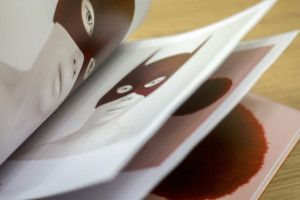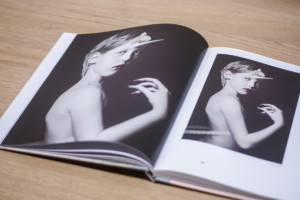
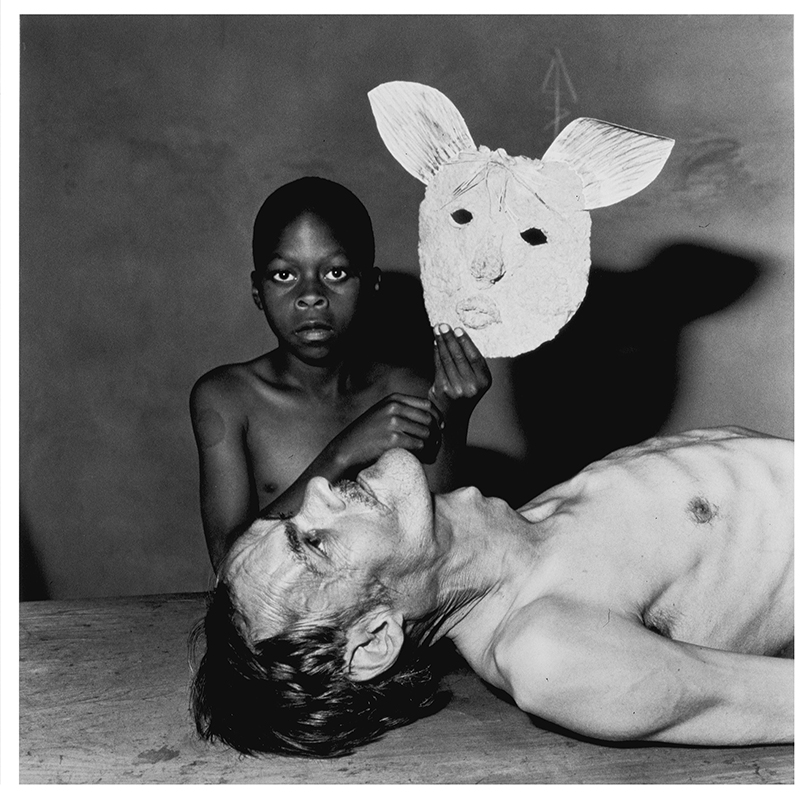
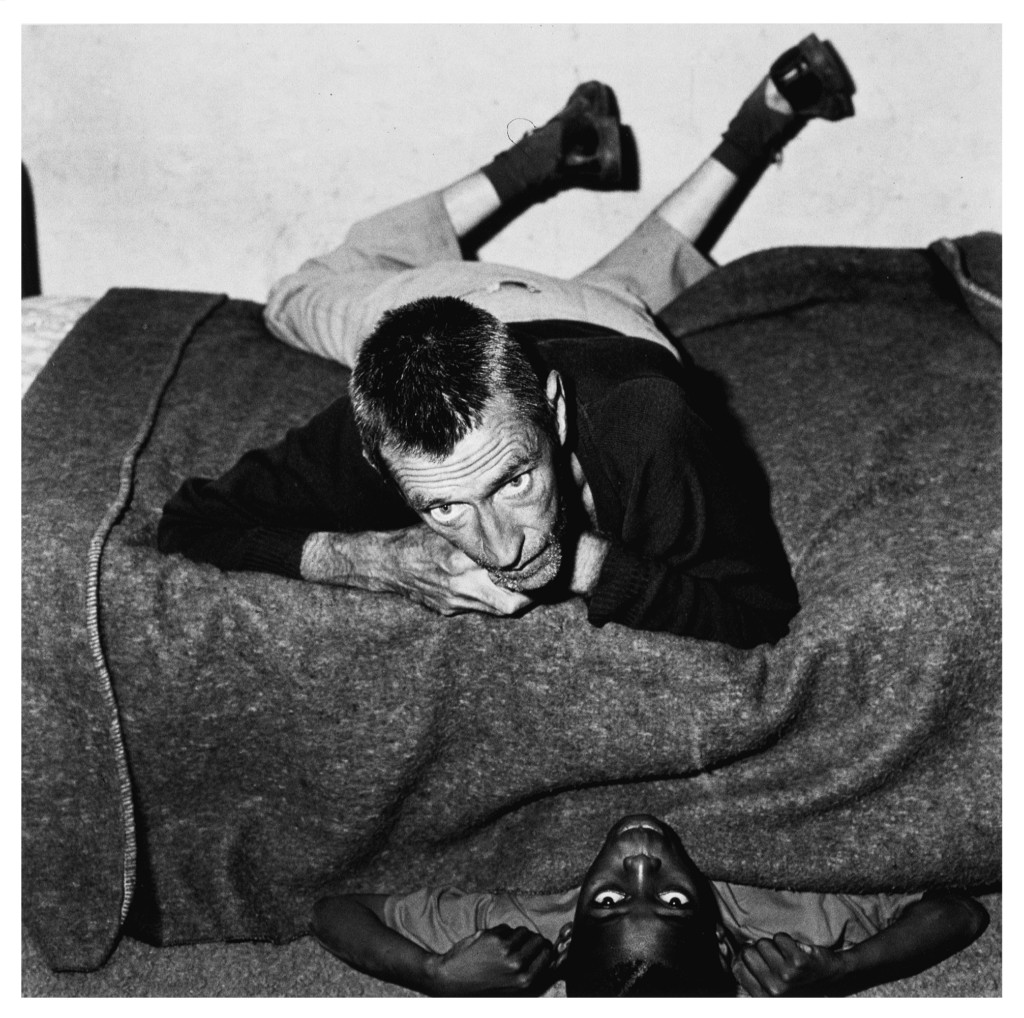
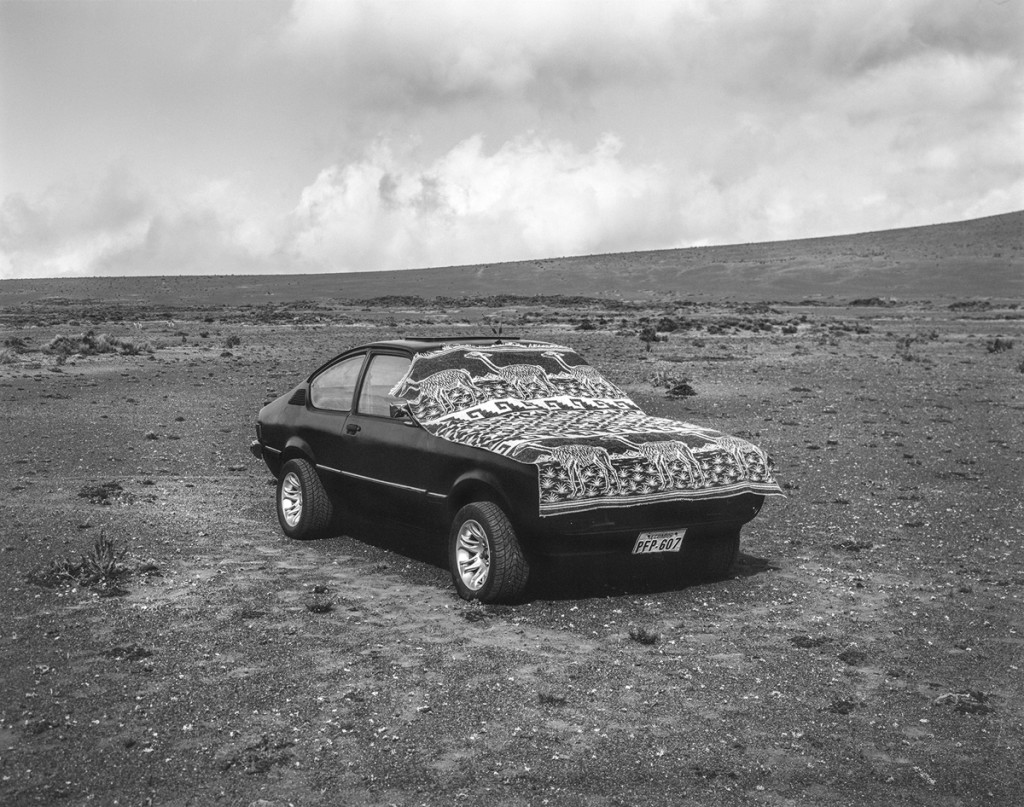

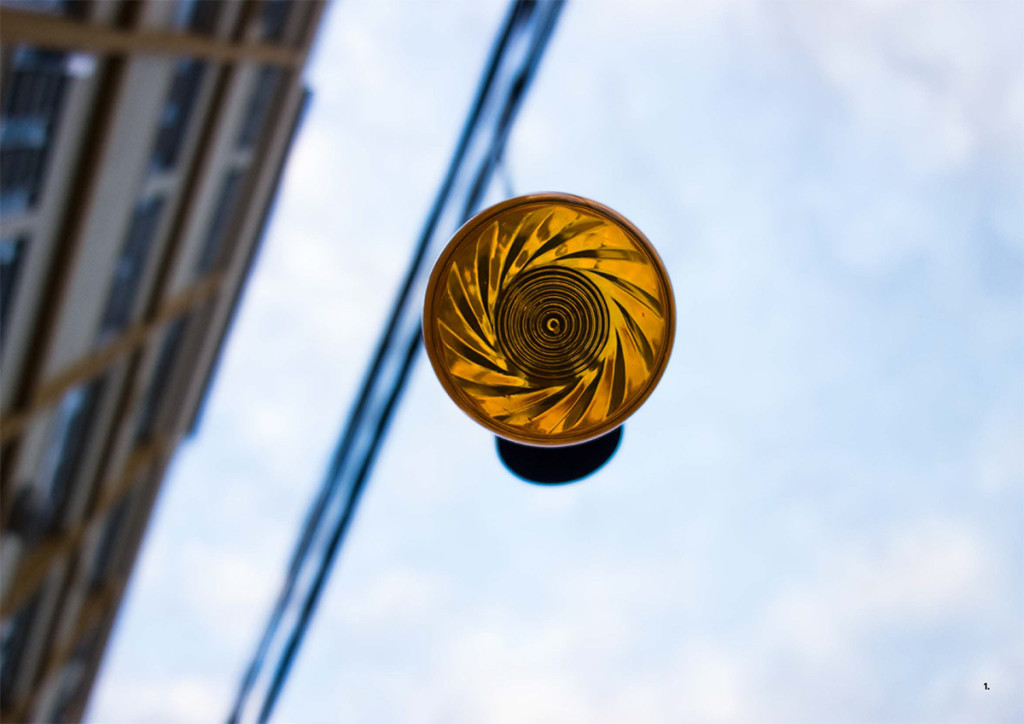
Galería SENDA presents their first editorial project through the work of Oleg Dou

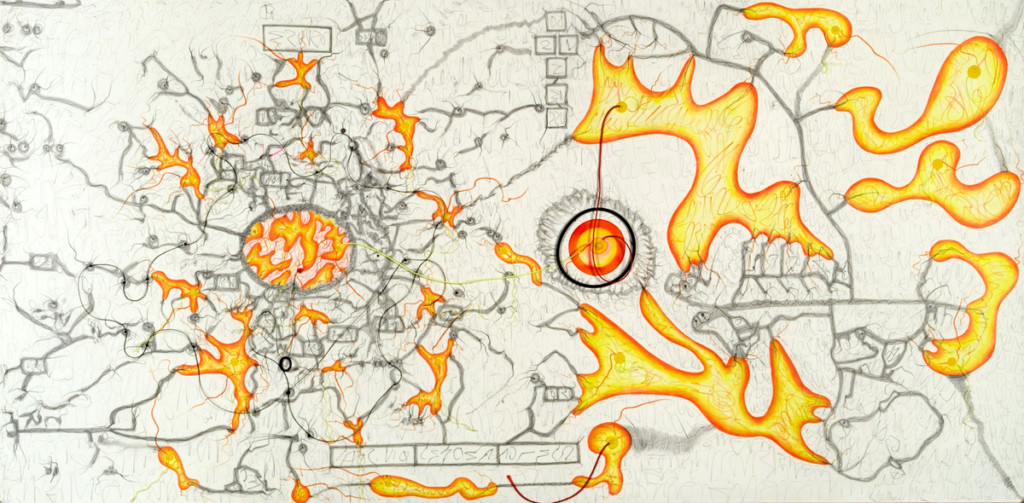
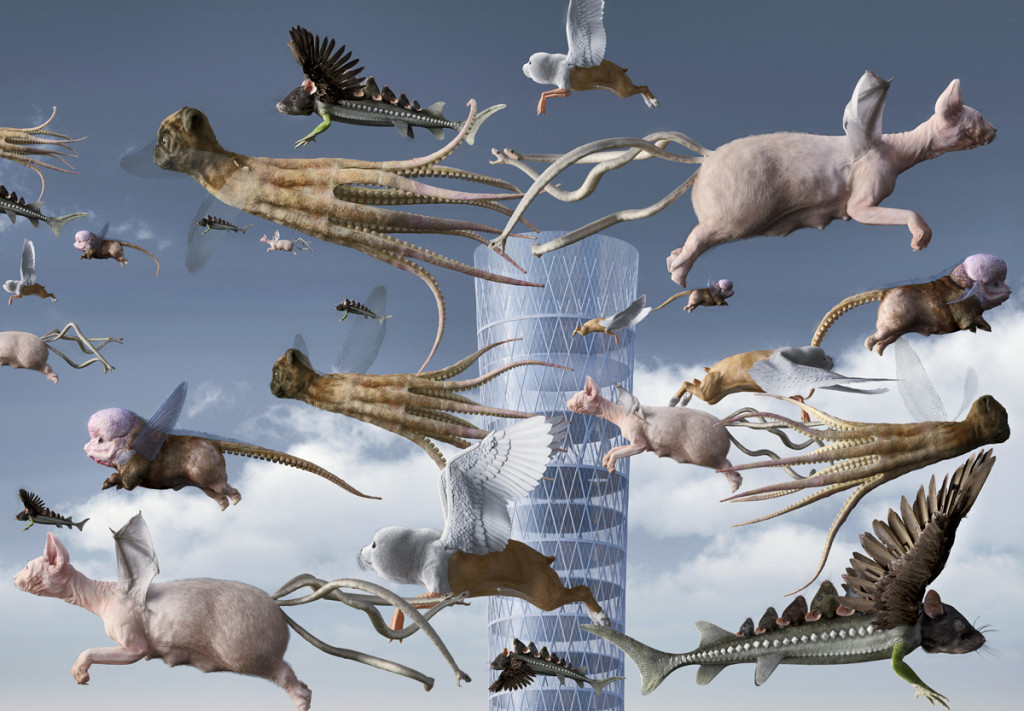
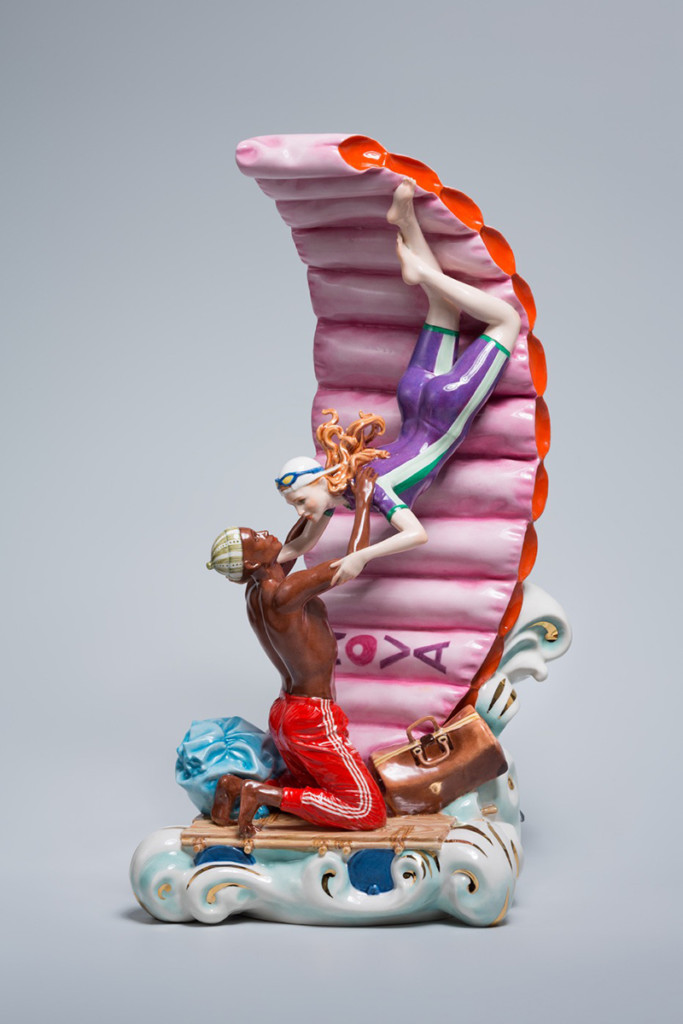
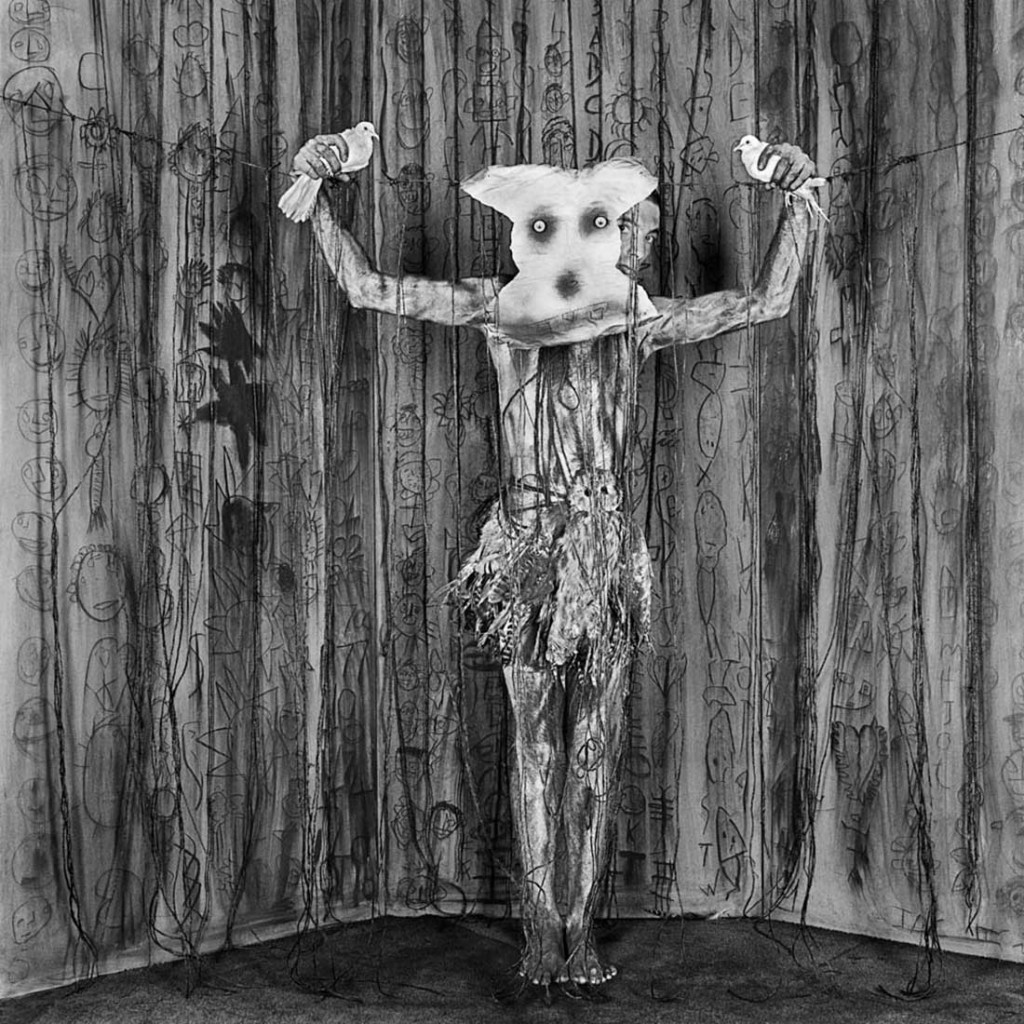
After years of having celebrated exhibits and developing projects together, Galeria Senda brings to light the second edition of Russian photographer Oleg Dou’s first monograph, introducing us to his new series produced between 2012 and 2016.

The first edition was published four years ago, when Dou was 28 years old. This includes some of his most remarkable works, such as Cubs (2009 – 2010) which demonstrates the results of curious mutations, the ghostly series Nuns (2006 – 2007) and the unsettling and experimental series Another Face (2011).

Oleg Dou says he uses photography as a medium to allow the spectator to enter a world that ranges between “what is beautiful and what is repulsive”. He is fascinated by the curiosities of the human face and the limits between reality and what is behind it, rendering that which is strange and different as a base of his aesthetics.

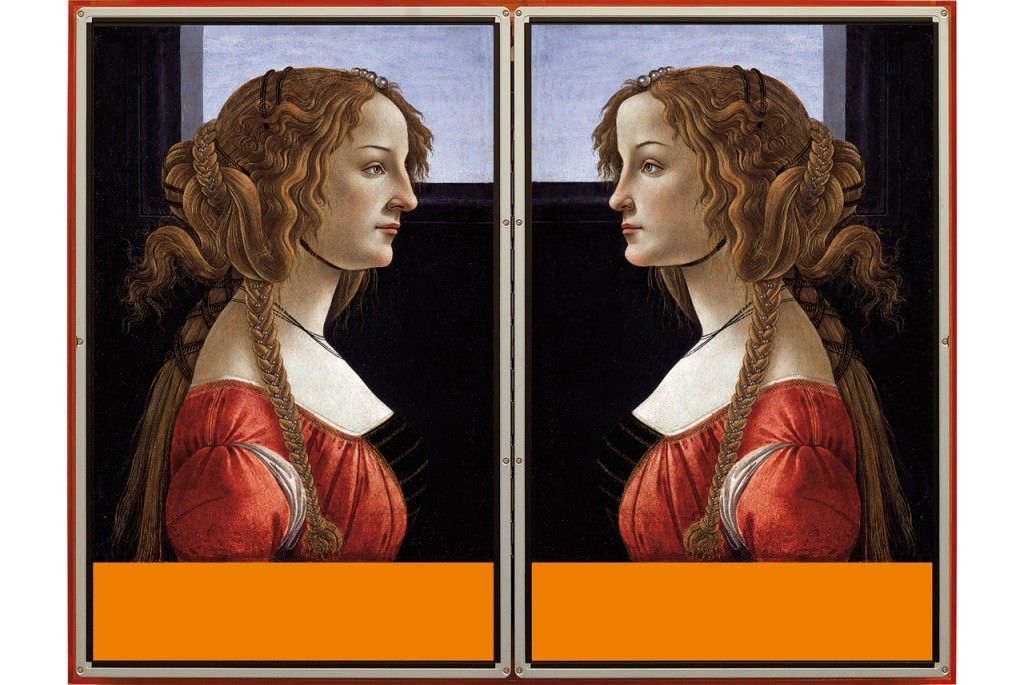
In our second edition, a new series called Mushroom Kingdom is presented. Here Dou demonstrates the adorably haunting faces of childhood, which, according to him, is  a time “full of clowns and monsters under the bed”. He also introduces the piercingly elegant series Heaven in My Body, which gives off traces inspired in the sacred and mystical art of the XV and XVI centuries, especially Madonna with a child (c. 1452). Currently, some of these works, within others, are being shown in the exhibit “Lonely Narcissus” in Moscow.

28|32 is the first monograph of this young artist, but it will not be the last. As the gallery owner Carlos Durán says in the prologue, “many other [of Dou’s monographs] will be brought to light in the years to come.” It is clear that Dou will continue to promote and develop his work and will never cease to surprise us.

libro-01_5-new-size libro-01_4-1-new-size

Miralda presents the artist book El Internacional at CaixaForum

The catalan artist will officially present his new publication “El Internacional (1984 – 1986): New York’s Archaeological Sandwich” at CaixaForum Barcelona on Wednesday, December 14th.


Miralda recieved the Artist’s award from La Caixa’s Fundación Arte y Mecenazgo in 2015. 20,000 € of the endowment has gone towards editing and publishing book, recently brought to light.


Just as this book is no ordinary one, the restaurant was nothing ordinary either. It was considered an experimental and innovative space, a fusion of gastronomy with performances, installations, and other artistic showings. El Internacional became an emblematic place of cosmopolitan life in New York in the 80’s. Not only was it able to restore the tapas concept in the city, something unknown in the United States culinary culture during that time; but it was also a meeting point to merge art with the rituals of food.


The “artist’s book” goes over the history of the restaurant and weaves through some of the most relevant moments that took place there, thanks to the testimonials shared by those who frequented the restaurant. Besides the recipes, menus, and memories, the book illustrates the urban history of a city that is constantly evolving, and the history and concept of El Internacional Tapas Bar & Restaurant, a social and artistic experiment that left an imprint in TriBeCa neighborhood in New York.

New Measures Initiated to Remedy the Surprising Pitfalls of Collecting Video Art

vía artsy.

Imagine you’re an art collector (for some of you who already are, that won’t be very hard). Not a big-time buyer with a slew of lawyers to review a purchase, but someone looking for a work that strikes your fancy. And as you walk through the aisles of an art fair, suddenly you see a dazzling video projected onto the wall of a booth. You reach for the proverbial wallet. But right before the purchase takes place, from the depths of your mind a strange question materializes, one you might never ask yourself if you were buying a sculpture or a painting or a drawing: What are you actually buying when you buy a work of video art?

The answer isn’t quite what the uninitiated might expect. The tricky nature of video art has proven to be an unpleasant surprise for collectors in the past. In all likelihood, if you’re even asking this question it means you’re savvy enough to know something about the particular pitfalls of video art. “The first problem was that people didn’t understand what they were buying when they were buying a video,” says Carlos Durán, founding co-director of LOOP, the Barcelona-based art fair dedicated to video art. “Buying a piece is not buying the rights.” Recently, LOOP has released a non-legally binding protocol that artists, galleries, and collectors can use to discuss and clarify what a purchaser is and is not receiving when they buy a work of video art.

When it comes to video, it is the rights to the work that confer the powers and privileges typically associated with actual ownership of a piece of art. These rights reside not with a physical object but with the artist, so buying a USB stick in a fancy box from a gallery doesn’t necessarily transfer these rights. Thanks to the way copyright laws are formulated, video pieces are governed like a movie downloaded from iTunes—specifically, the artist retains the rights to data migration, exhibition, and distribution long after the work is sold. Stories abound of collectors trying to lend videos to museums only to be told that they cannot without the permission of the artist. Trouble can also arise when collectors try to move a video work from one format to another—say VHS to DVD. Again, this is the artist’s prerogative, though Durán says that today collectors copying and moving work is much more widely accepted than it was a few years ago.

Much of the protocol introduced in LOOP’s new initiative echoes how physical art is treated while attempting to address the specific challenges that come with video work. The protocol asks the parties (collectors, gallery, and artist) to agree to, among other things, the edition number of the video, technical details for installation, and channels through which the work has and will be distributed (to avoid it unexpectedly popping up on YouTube). Among the rights discussed and agreed to are those of copying and exhibiting the work, while the purchaser agrees to inform the artist when the work is being loaned or sold.

Such agreements are not required for most transactions involving paintings or other physical mediums, as they are automatically governed by a different set of legal strictures. Purchasing a sculpture generally means it can be lent to a museum by the owner. It can be shown off at a party. The collector can rest easy that infinite copies of it will not be made. And it will never face technological obsolescence and cease to be viewable. The case is markedly different for intangible video works.

Though a lack of transparency certainly isn’t foreign to the art market at large, the complex legal status of video art brings special challenges. The edition number, museum lending rights, and format of the piece are among the key aspects the document requires to be laid out in black and white. The goal is for the parties involved in the transaction to go through document together step-by-step, in order to ensure clarity and confidence between parties. According to Durán, the protocol was used in several sales at the most recent edition of LOOP in Barcelona. Even if confusions around video art are large, LOOP is betting that a simple, straightforward document can be part of solution.

Alain Servais—a longtime collector who has written on issues inherent to the video art market—is more skeptical. “Recognizing that something must be done is one step,” said Servais. “But I am positive that this is not what needs to be done as it does not begin from a sound and objective understanding of what ‘legal item’ art video is.” Servais argues that, because of their digital intangibility, videos simply cannot be governed like physical works, and that there are other contracts out there which legally secure your rights to a video, unlike the LOOP protocol. “Either it’s a contract, or it’s not. A contract is something you can challenge and enforce in court. This is what it should be.” For his part, Durán says that the protocol can be useful to those looking for clarity rather than a contractual obligation (the two are also not mutually exclusive and the fair offers a 17-page accompanying legal document).

LOOP itself is using the document to purchase a video by Ângela Ferreira that was shown at the fair. “We’re getting the exact details of the film—how exactly she’s going to send it to us (on what device, in what file format)—on paper, which is always tricky, especially when you think about the obsolescence of the technology in 10 years’ time. She’s also agreeing on something that is really important to us as a purchaser, which is that we can lend this work to institutions,” LOOP fair manager Anna Penalva Halpin told me. She also noted that the work is to go on view at Museu d’Art Contemporani de Barcelona, adding that “[the protocol] is a way to set the conversation about all these things.” Indeed, though some disagree over what conversation must be had and about how to ultimately solve the issues surrounding video art, there is general agreement that if the market is to grow the discussion cannot wait.

Jordi Bernadó will illustrate Amics del Liceu’s book

On its 25th anniversary, Amics del Liceu is preparing the edition of the “Temporada de l’Ópera”‘s book with illustrations by Jordi Bernadó. It is the first time that Amics del Liceu invited a photographer to particiar in this special project.

Amics del Liceu is a club that was born with the aim to support the activity of the Gran Teatre del Liceu and be a platform for dissemination of opera and music. The annual edition of “Temporada de l’Ópera” has collected national and international firms and works by artists of great prestige who have made illustrations especially for this project including other gallery artists such as Gino Rubert.

The photographs can be seen in the space of Galeria Senda after the official opening on September 26 2016 at 7:30pm.

José Pedro Croft, the representative of Portugal in Venice Biennale, will exhibit at Galeria Senda on March 2017

Critics consider José Pedro Croft one of the renovators in Portuguese sculpture, and one of the most representative figures in the artistic international panorama. He personifies a coherent and constant artistic trajectory, who aside from working with Galeria Senda for more than fifteen years, Croft will have a solo show in the space in Barcelona in March 2017.

Invited by Álvaro Siza, one of the most important names in the architecture field, José Pedro Croft will work together with him in a large project that will begin in the Architecture Biennial in Venice and will culminate in the Arts Biennial in 2017. Although Portugal does not have an official pavilion in any of the Biennials, his project will represent the country for both events.

The Portuguese exhibit is the only one, because it will be installed in the island of Giudecca in Venice, where Siza’s social dwelling project, created in 1985, can be found: Campo di Marte. This project, related with social architecture, was formed by four architects (Aldo Rossi, Arlos Aymonino, Rafael Moneo and Siza himself) and he was never able to complete it because he didn’t have enough funding. Campo di Marte was composed by four buildings that conform an interior patio where José Pedro Croft is in charge of creating a source of dialogue with a space built by these buildings. All of this will take place in the 15th Architecture Biennial, which will be from May 28th until November 27th of this year.

In reference to the 57th Arts Biennial in Venice (from May 13th until November 26th in 2017), Croft also represented Portugal with an installation curated by João Pinharanda, which will create dialogue with Siza’s architecture project. The artist will build a monumental sculpture in the Campo di Marte and it will be made with iron, mirrors and glass, three elements that characterize Croft’s artistic proposal.

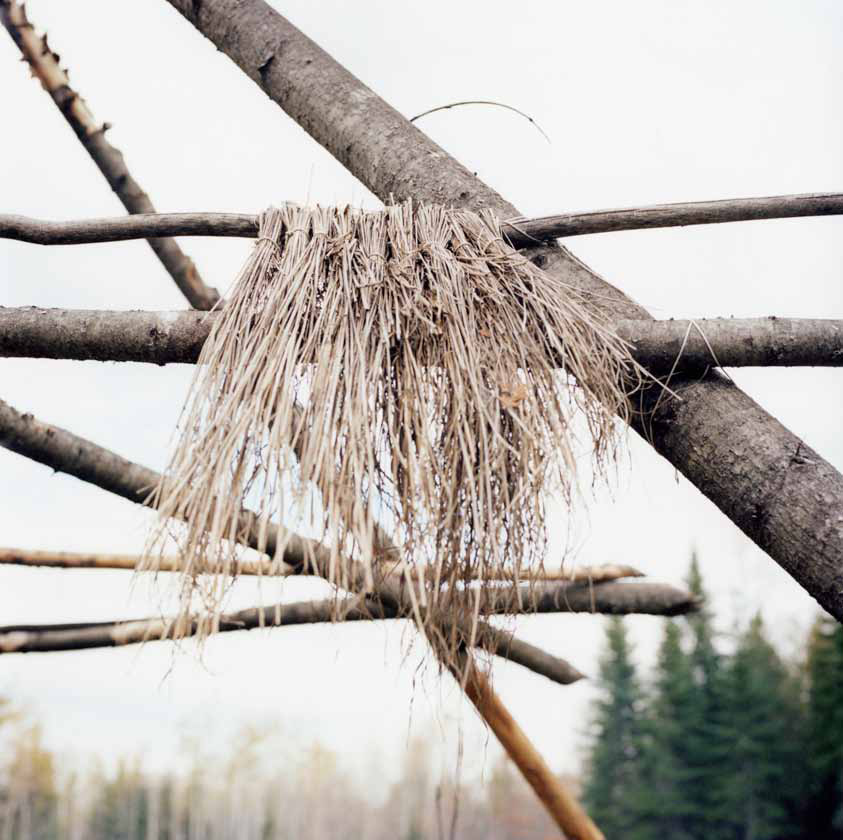
Adrián Balseca, participates in Ecuador: The center of the world (and a little beyond)

Pablo José Ramírez , curator and political theorist, has written an article for the space Cites and Places on the page of the Cisneros Collection, based on European migration to Ecuador and its influence in the architecture and other elements of the country.

Ramirez comments: “Reflecting on the relation between history-aesthetics-politics, I will try, with this text, to sketch, draw and imagine views that come close to the modern and contemporary Ecuador, through different conceptual paths through the pre-Colombian and colonial history.”

In the text there are images of courtesy from artists such as Adrián Balseca, Oswaldo Terreros, and José Falconi, who reflect the artistic and thought-provoking focus that they give to Ecuador and its unfinished modernity.

“This critical approach from contemporary art in Ecuador is not necessarily founded in the logics of “socially compromised art”, nor much less in art that discusses politics, but rather a much wider meaning. These proposals sabotage different places of power: collections, archives, national emblems, normalized identities” (Ramírez, 2016)

Complete article here.


¿Who was really Ángeles Santos?

As part of the Women’s Views Biennial  2016, galería  SENDA  has organized a talk focused on  life and work of Spanish artist Ángeles Santos Torroellla.

The  WVB-2016 it is an event that brings together different initiatives to show the creative activity of women and their large demonstrations in a national and international way. It’s taking place from March to December 2016, the Women’s Views Biennial will bring together initiatives that make women and gender issues a source for reflection, debate and creation.

Ángeles Santos Torroella is a painter  that  deserves an special place in the Spanish surrealist painting, born in Portbou in 1911, moves at sixteen years old to Valladolid where she takes painting classes and two years later created, whats it’s going to be  his first major work, Un Mundo,  large format oil that caused a sensation among the intellectual media of the time, particularly considering that the artist was a young woman living in the provinces, too far from the capital’s cultural scene to have come across any of the advances of the new art movements.  Currently this work is exposed as a permanent work in the National Museum Centro de Arte Reina Sofia. In 1929 she has his first solo show at the Ateneo of Valladolid , since that she begins a long artistic career full of  ups and downs that ends after his dead in 2013.

Talk:  Life and work


Speakers:

 Anna Capella, art historian, curator of expositions , ex director of  the Museo del Empordà and  current director of   Museo of Mataró, author of the book  Ángeles Santos, Between life and painting (2011).

 Cristina Massanes, Journalist and writer , was curator of the exposition  (Re)visions del món. 100 anys d’Ángeles Santos Torroella (2011).


 Rosa Brugat, Visual art,  Author of the  video art Buenas noches, Inspired  in the paint, El mundo de Mª Santos Torroella, the video will be displayed after the talk.


Date: 7 julio 2016

Time:  19 hrs

“Imaging Faith” of Isabel Rocamora in The Summerhall, Edinburgh.

Isabel Rocamora’s Imaging Faith centres on Faith, a film triptych which intimately observes the act of worship of the three monotheistic religions in Jerusalem. Set in the wilderness of the Holy Land – the historically significant landscapes of the Judean desert, far from the built and contested territories – an Orthodox Jew (Cohen descent), a Greek Orthodox Christian (Father, Church of Nativity) and a Sunni Muslim (Quran reader, Al Aqsa Mosque) perform their morning prayers. In time, their synchronous action reveals an uncanny similarity of inner state and gestural intention. Questioning segregation while celebrating difference, Faith contemplates issues of human belief, inviting reflection on one of the most tragic, world resonating conflicts that persist in this new century.


In the adjoining gallery a series of still images offer a window into Rocamora’s research in Jerusalem, culturally and politically contextualising the film triptych. A dedicated reading room provides a contemplative space in which six contemporary thinkers (historians, theologians and philosophers, including Gil Anidjar, Mark Cauchi, Victoria Rocamora and Simon Critchley) have been invited to curate passages from seminal texts in response to the themes of the exhibition.


Imaging Faith presents the UK premiere of this new body of work by the Edinburgh-based artist as well as the first exhibition of Rocamora’s work in Scotland.


Galeria SENDA organises talks about Europe

Regarding this year’s topic of DOCfield>16 “Europe: Lost in translation”, Galeria SENDA has organised a series of conversations with interesting characters in the context of the work “Europa” by Jordi Bernadó.

In this project, Bernadó starts a journey through 27 cities, portraying landscapes and perspectives of the continent to create the book “Europa”. The following conversations are inspired in those images:


First talk: “Europe has not always existed”
Tuesday May 24th, 2016. 19h.
Galeria Senda

docfield_lahuerta

Juanjo Lahuerta: He’s an Architect and professor of Art History and Architecture in the School of Architecture of Barcelona. He has been a member of the Collegio Docenti della Scuola Dottorati del Istituto Universitario di Architettura IUAV of Venice and has had the title of the Kina Juan Carlos I Chair of Spanish Culture and Civilization in New York University. He’s currently the Chief of Collection of MNAC.


Second talk: “Europe and its ghosts”
Monday June 13th, 2016. 19h.
Galeria Senda

docfield_roma

Valentín Roma: He holds a PhD in Philosophy and a BAS in Art History. He was the Head Curator of MACBA until 2015. In 2009, he won the contest to curate the first Catalonian Pavilion for the Venice Biennale. He’s currently the Director of La Virreina Centre de la Imatge.


Third talk: “Europe in the labyrinth”
Monday June 27th, 2016. 19h.
Galeria Senda

docfield_corona

Juan Corona: He holds a PhD in Economic Sciences; he’s a professor in Applied Economics and a permanent member of the Royal Academy of Doctors. Author of a vas work in economics and enterprises matters, he has also been an advisor for the World Bank, the Inter-American Development Bank and several programmes of the European Union.


Anna Malagrida was awarded with the Carte Blanche of the PMU and Centre Pompidou

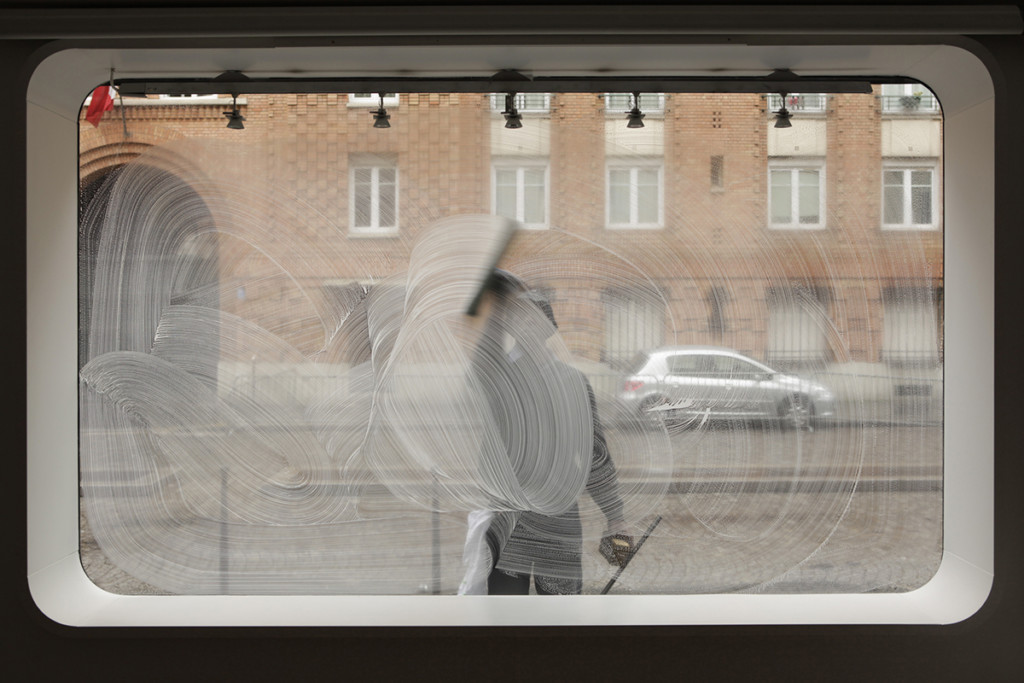
After the jury’s deliberation among six finalists, Anna Malagrida received the award on January 20 of this year. In her project, Anna imagines the places “of Paris” as a scenic device in which, from their movement, the characters will become the actors, the reflections of the city mixed with the insides of cafe’s, the decoration; and the words united in the universe of chance, the text.

Through the “Carte Blanche” award, the PMU shows its compromise with contemporary photographic creation, giving carte blanche to the artists so they can take their vision into the universe of chance.

For the seventh edition, the PMU has launched an open call to any professional photographer or artist. The winner will get a prize of 20,000 euros for the realization of an unpublished project, a book from Filigranes publishing and an exhibition in the Photographic Gallery of the Centre Pompideu from September 28th to October 17th 2016.

The Photographic Gallery is an open space of the Centre Pompideu of free entrance and dedicated exclusively to photography. This new gallery of 200 m2 wants to open the richness of the photographic collection of the Centre Pompideu to the public, conformed by more than 40,000 pieces and more than 60,000 negatives.

“Anna Malagrida opens a window to a space that confronts the urban and the human and proposes a sensible interpretation of a social link form that unites behind the windows” Benoît Cornu, Communications Director of the PMU, president of the jury.