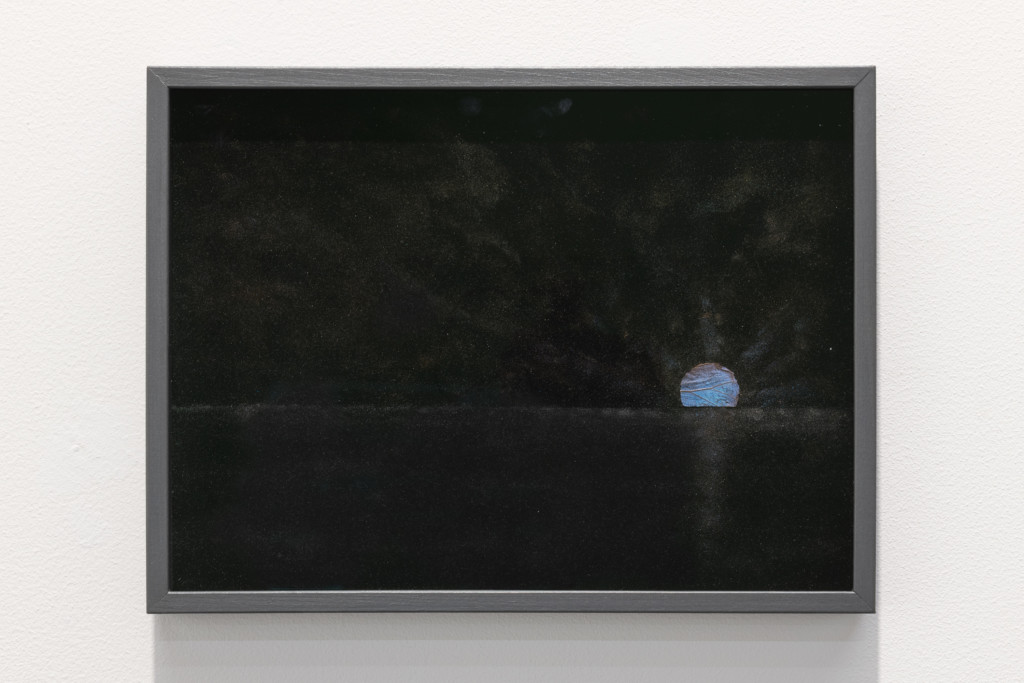
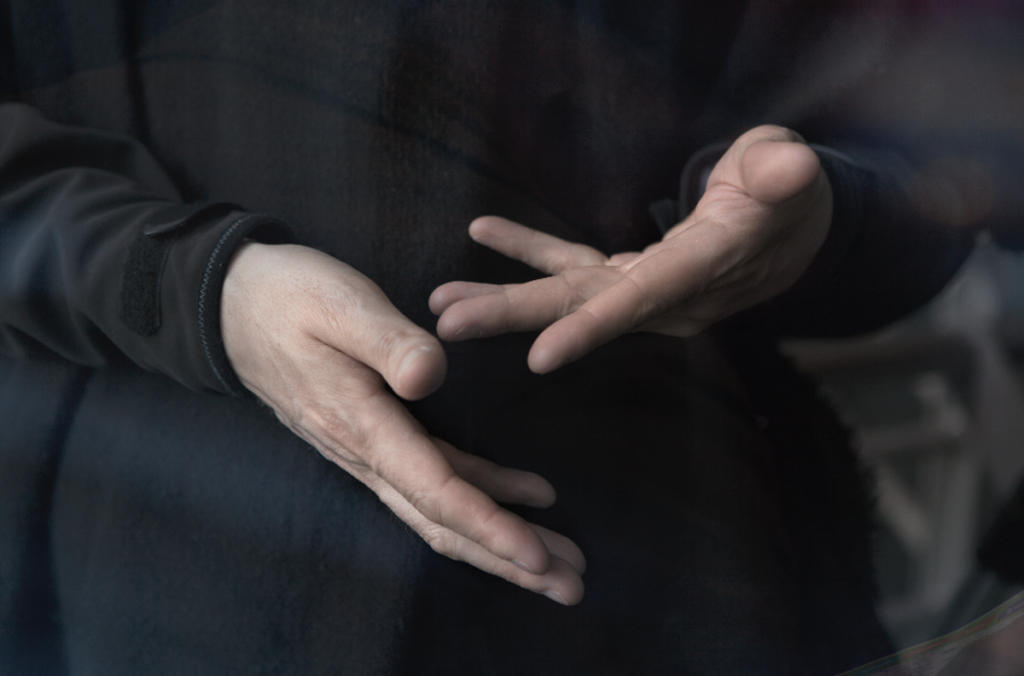
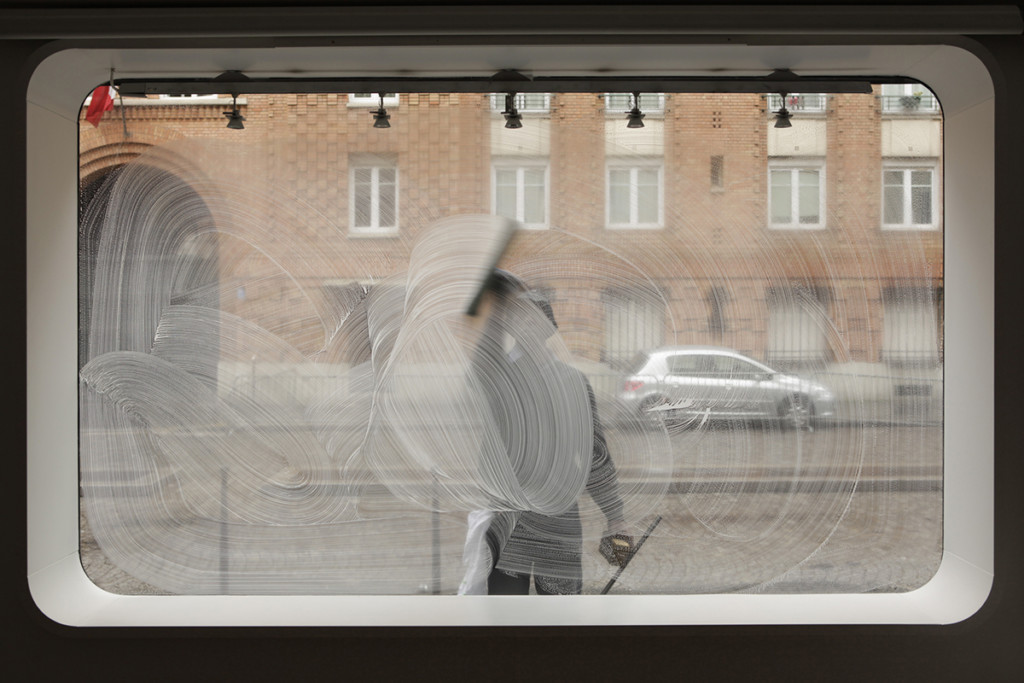
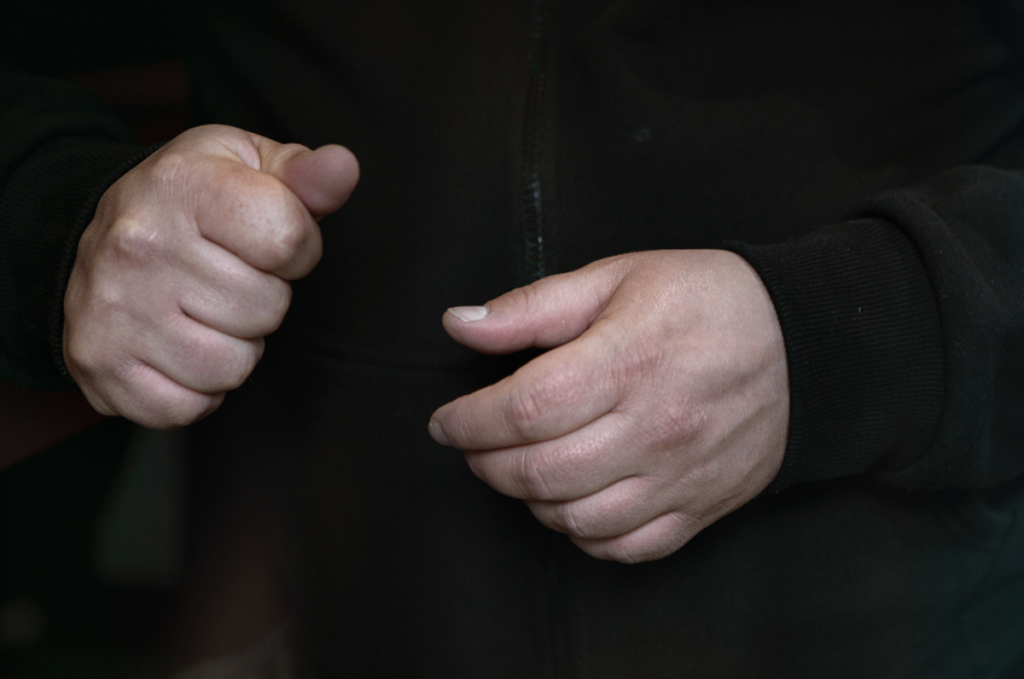
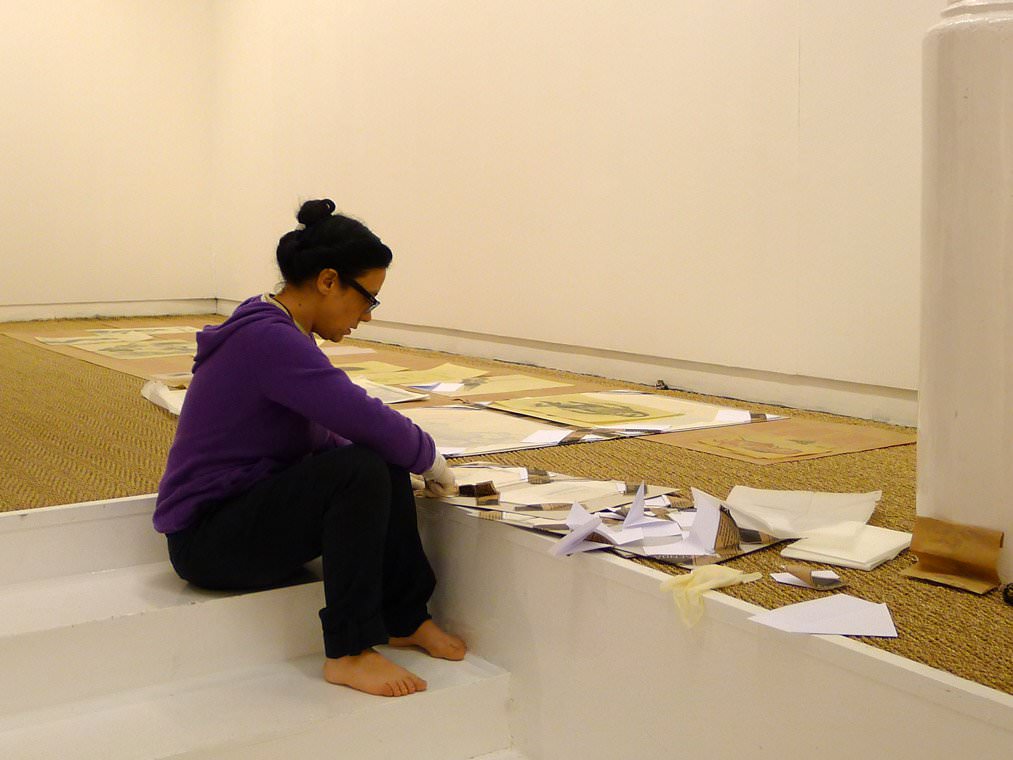
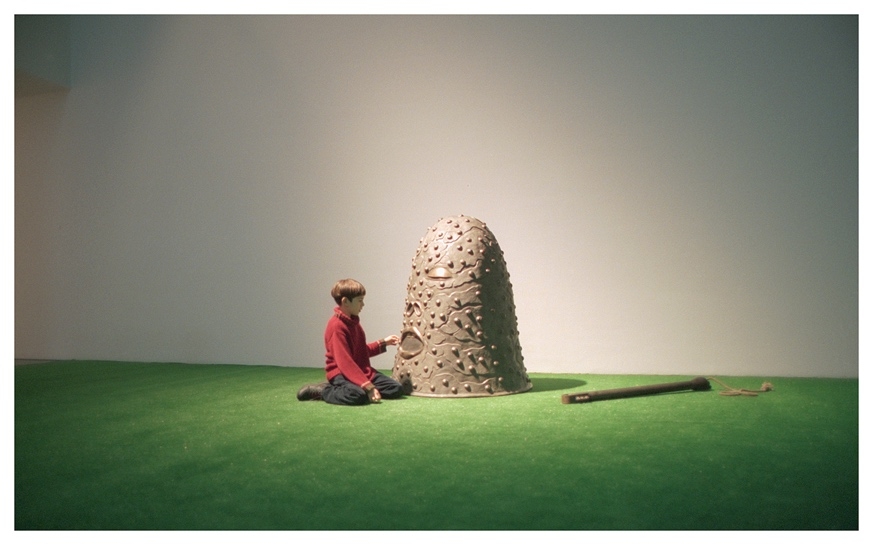
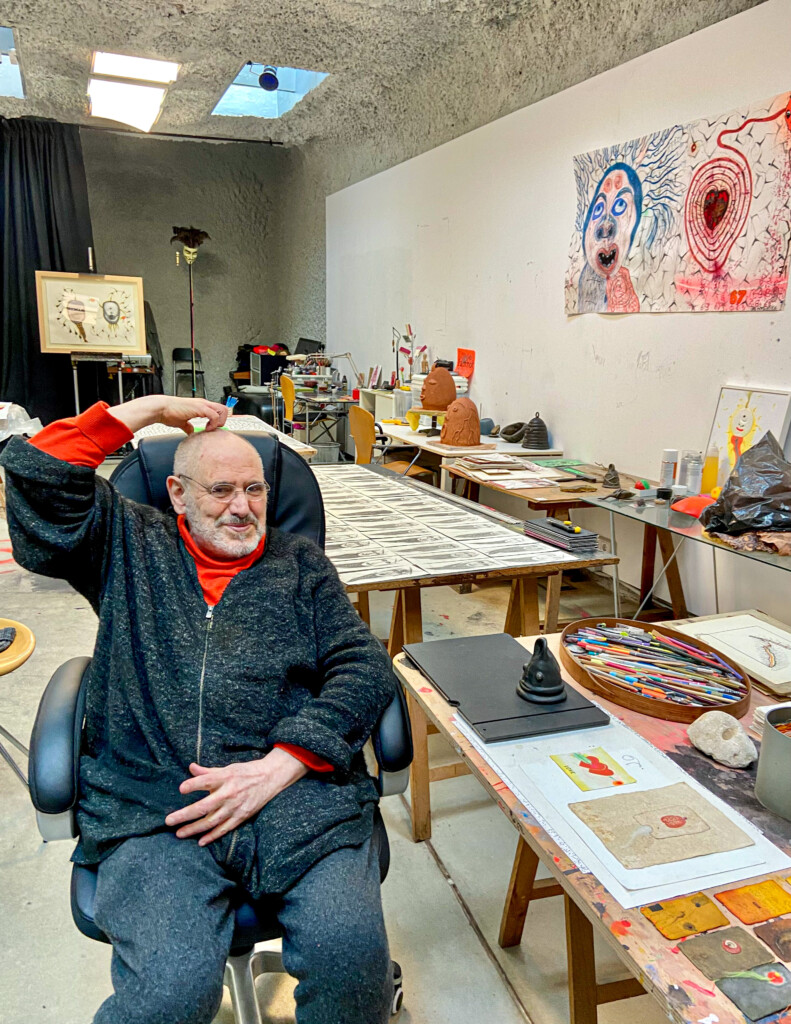
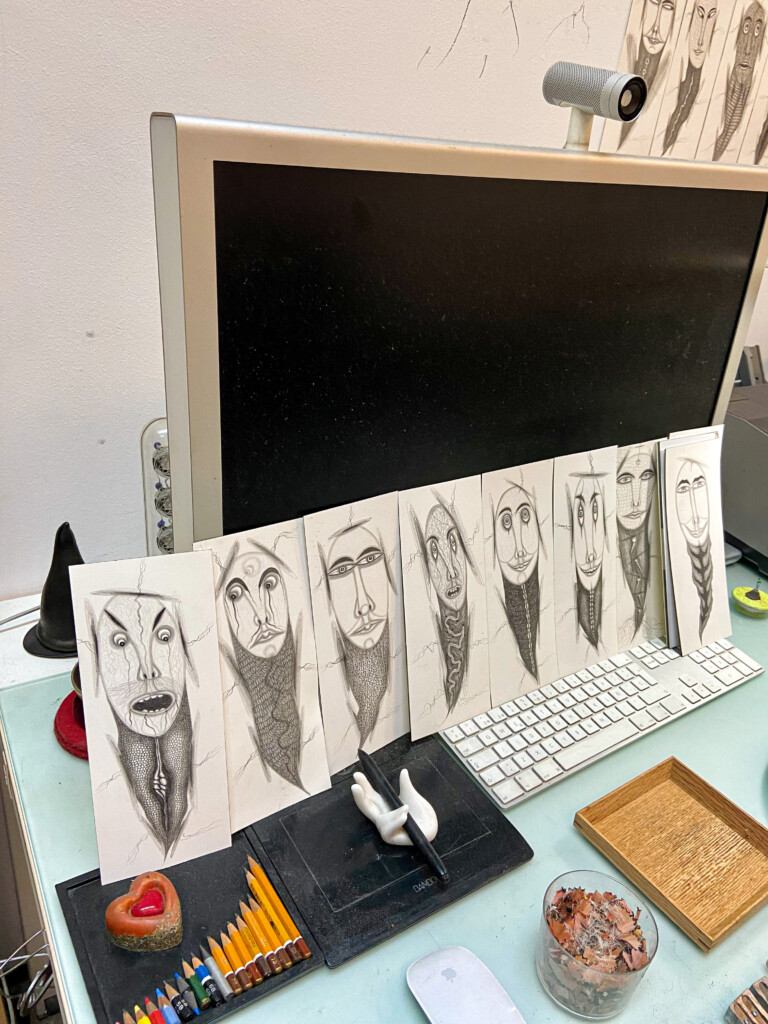
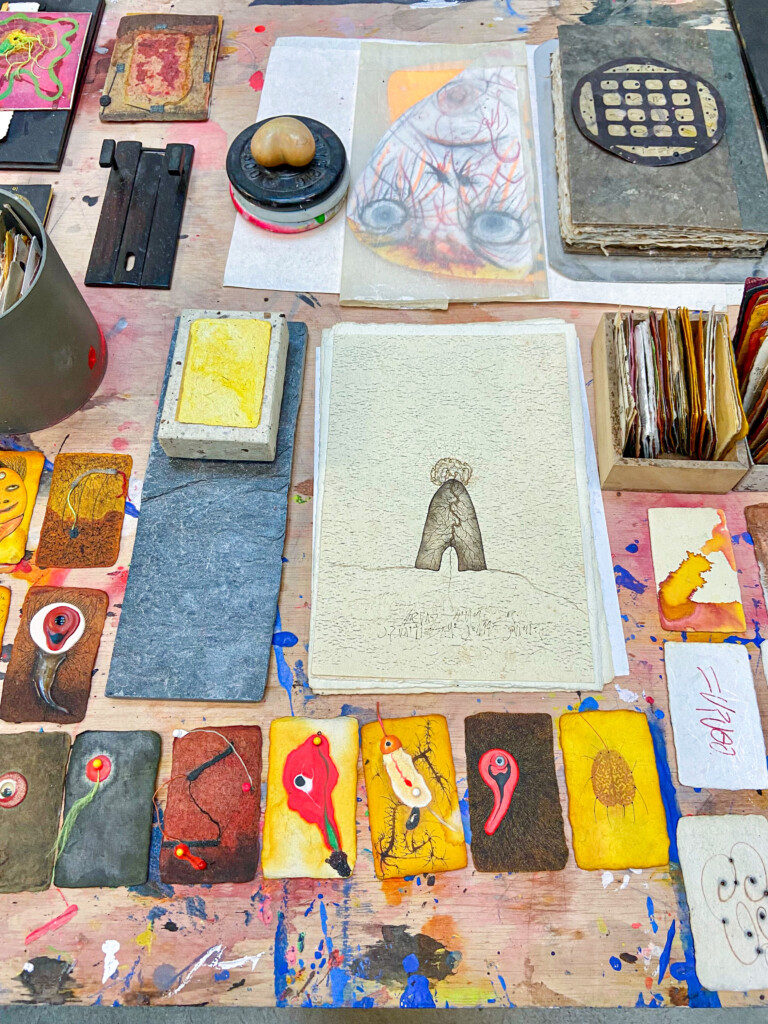
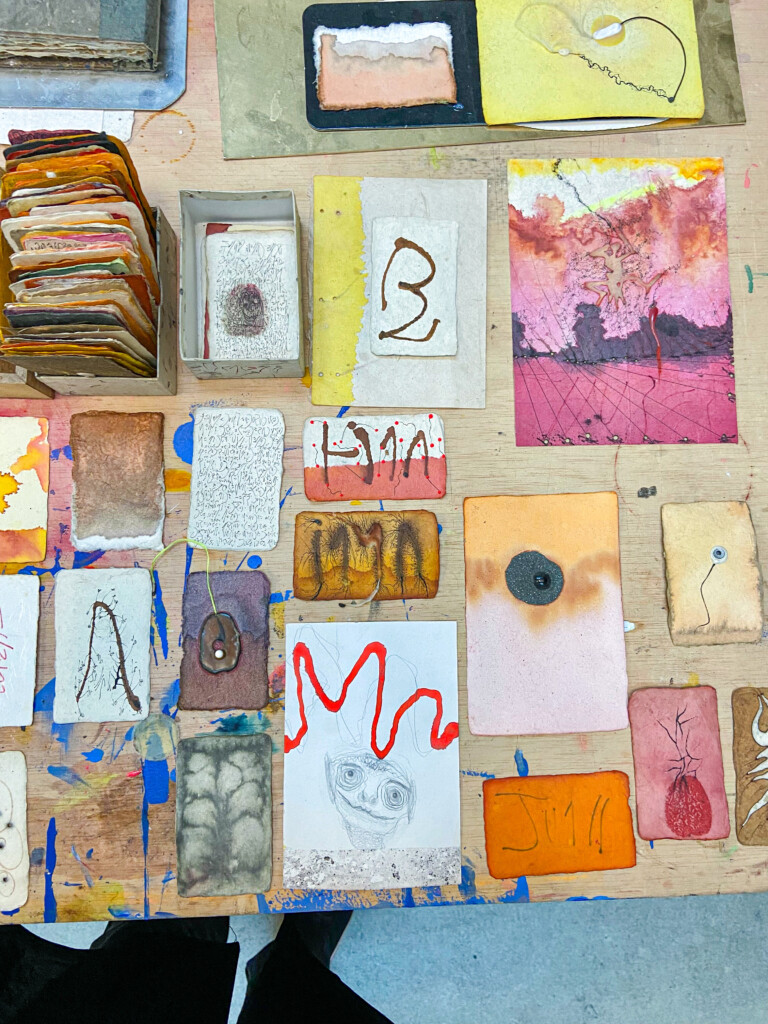
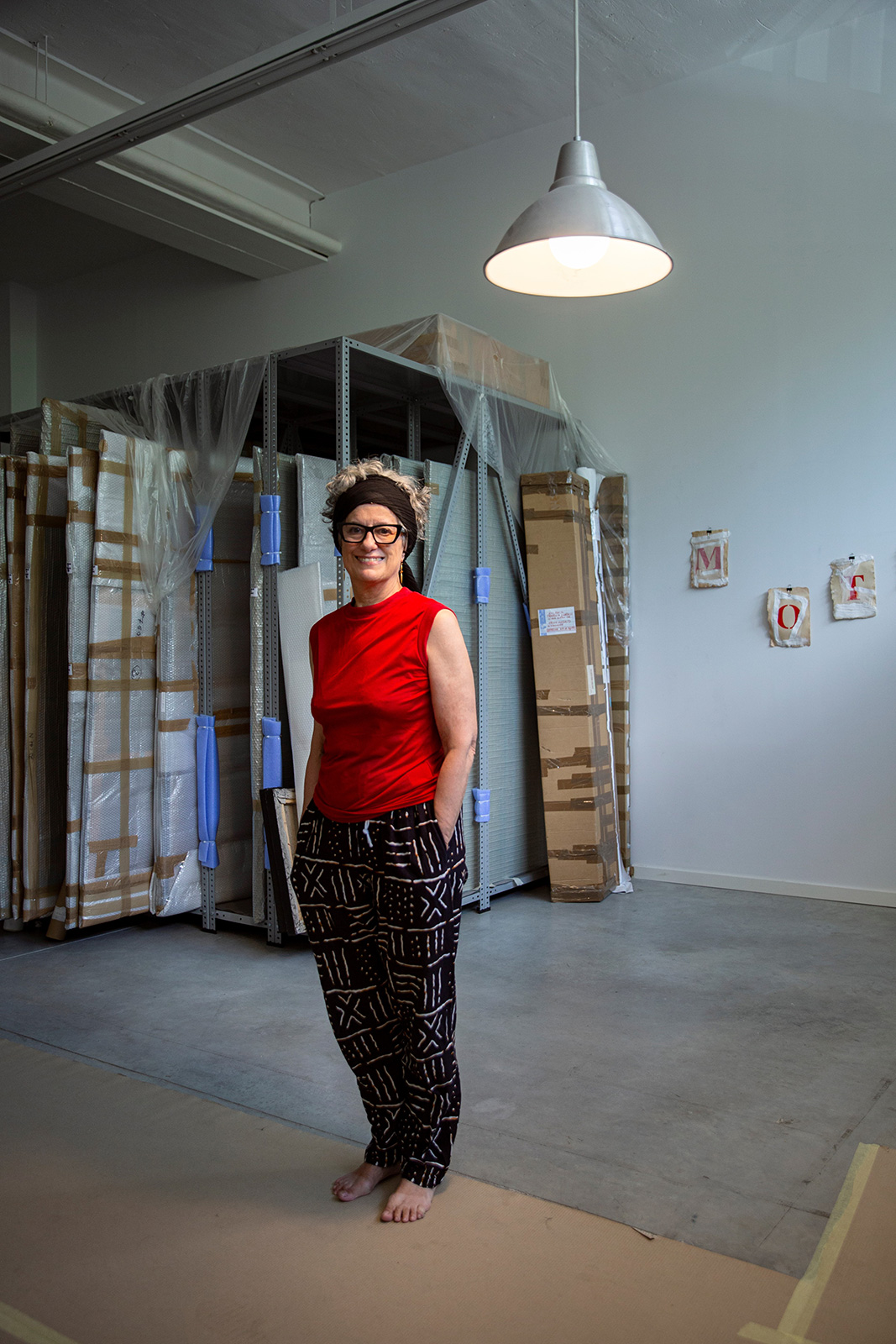
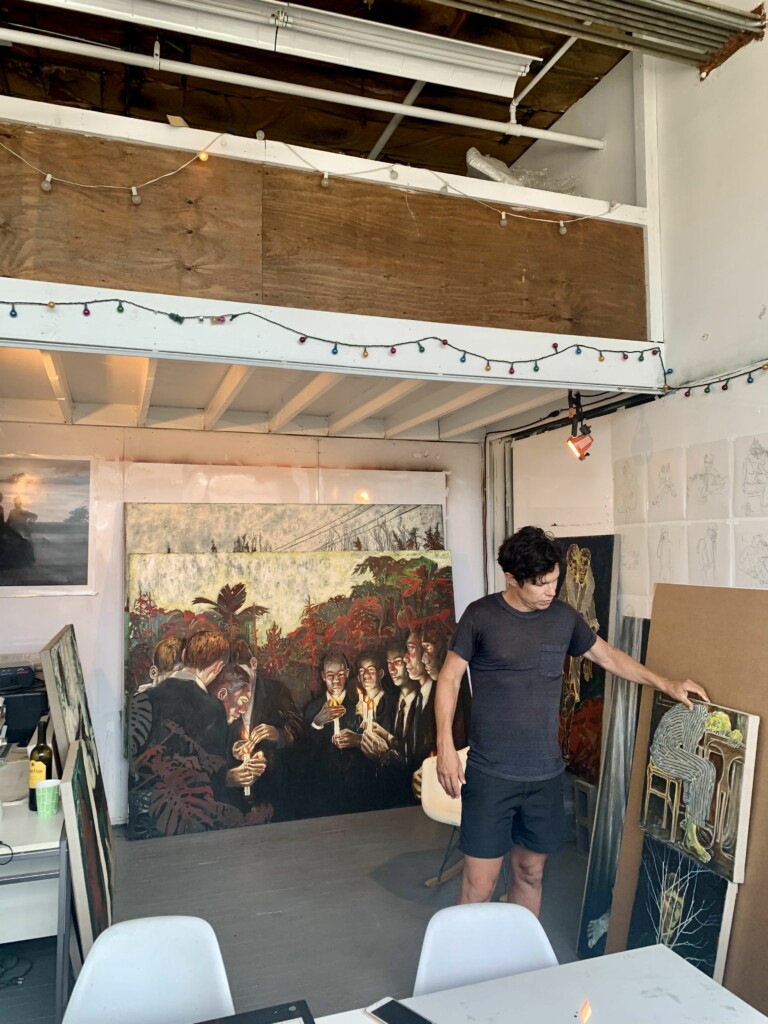
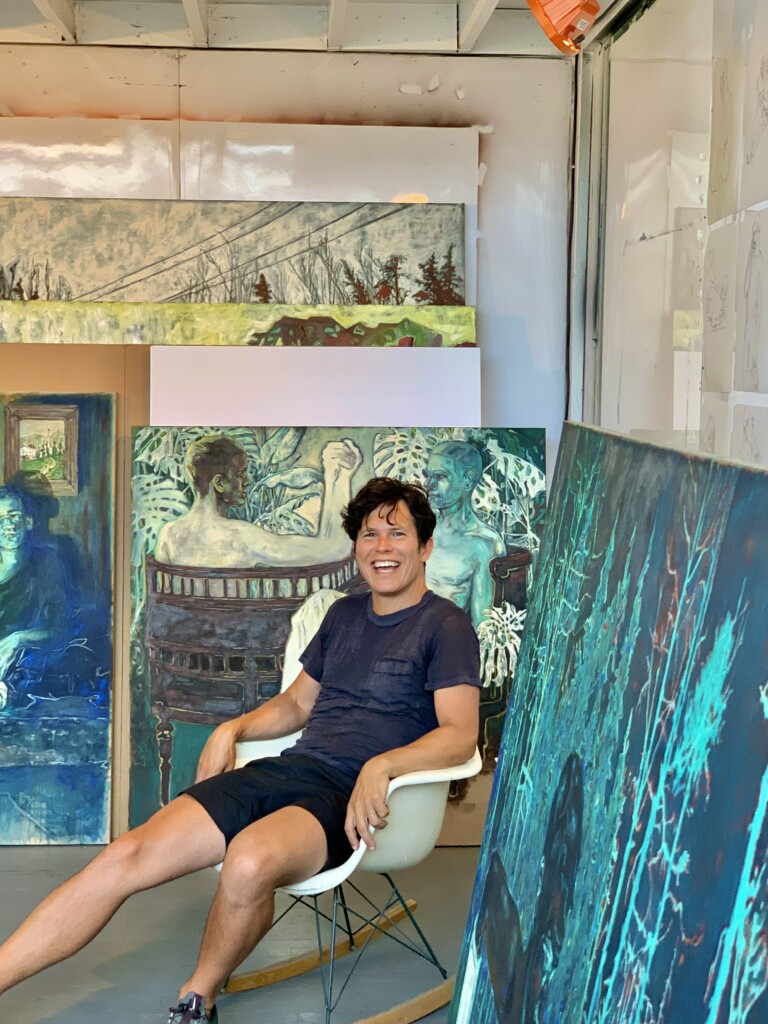
This morning, along with Chus Roig, we have visited Evru Zush at his home studio in Barcelona.
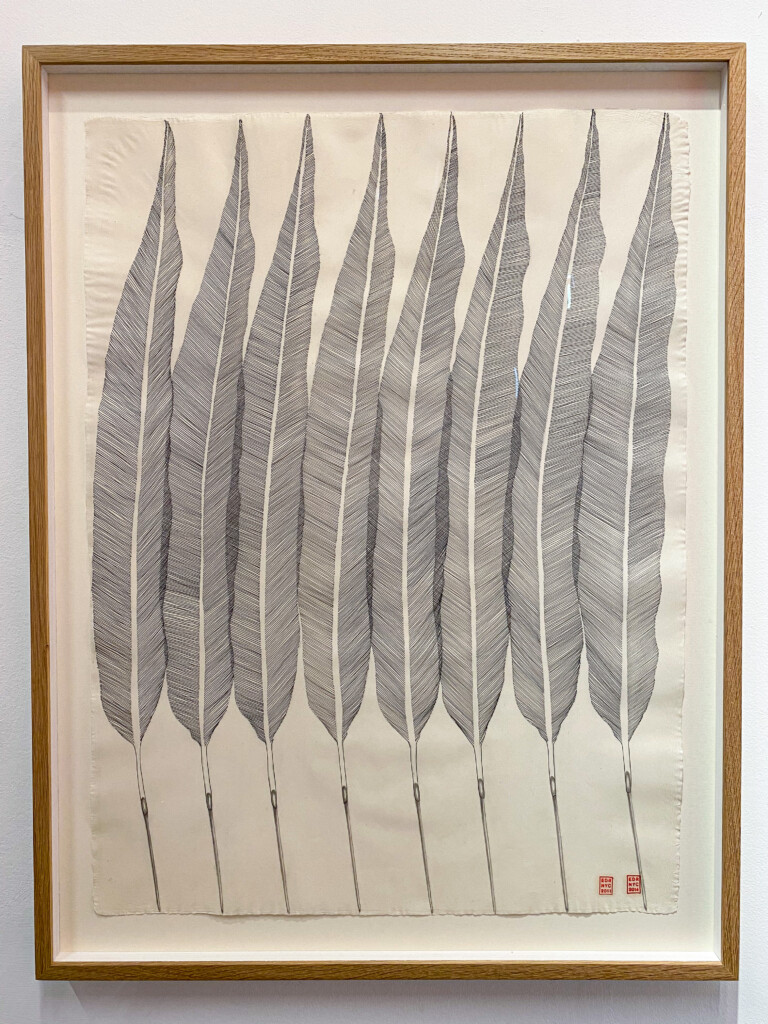
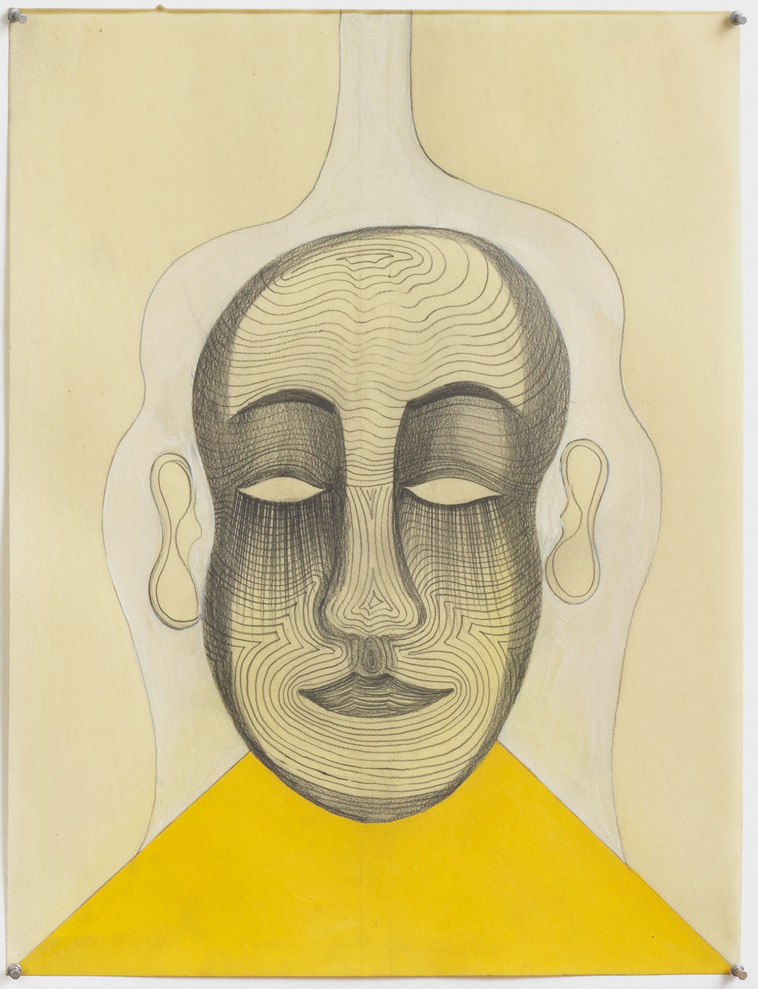
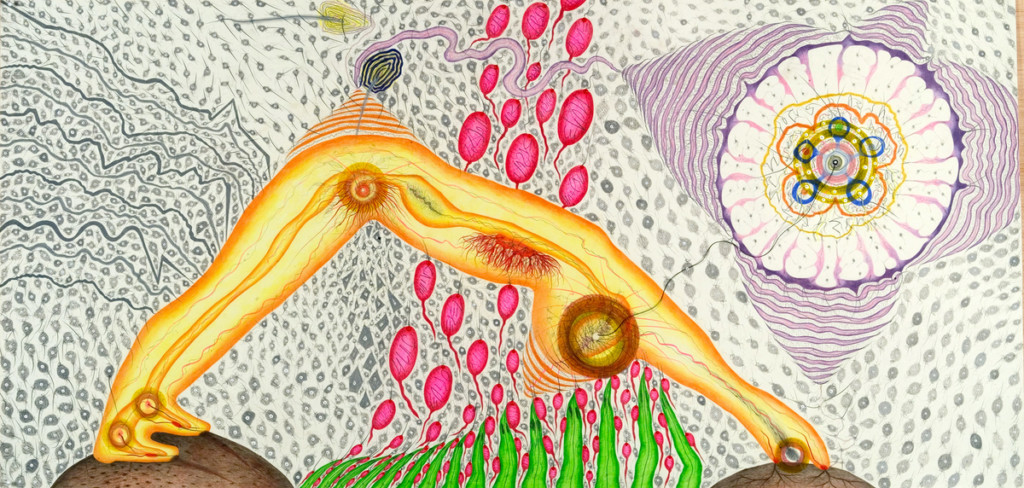
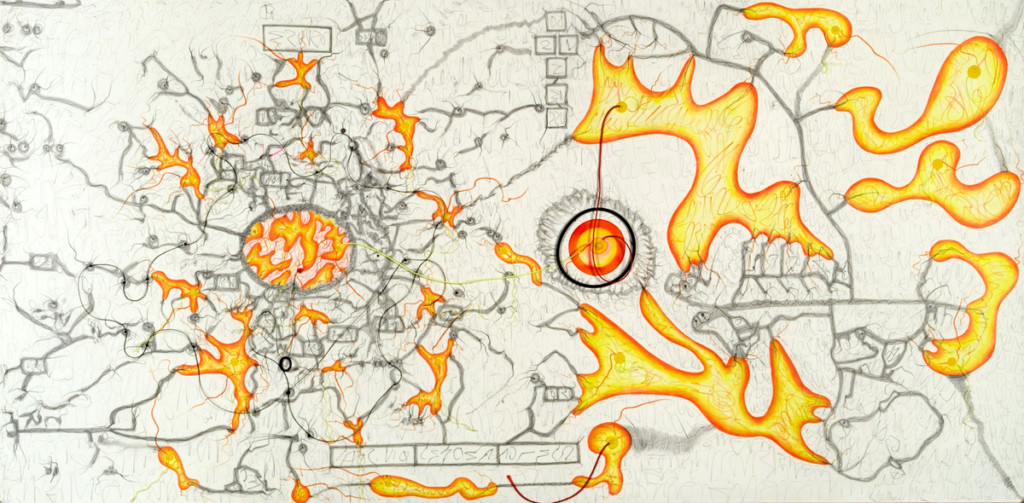
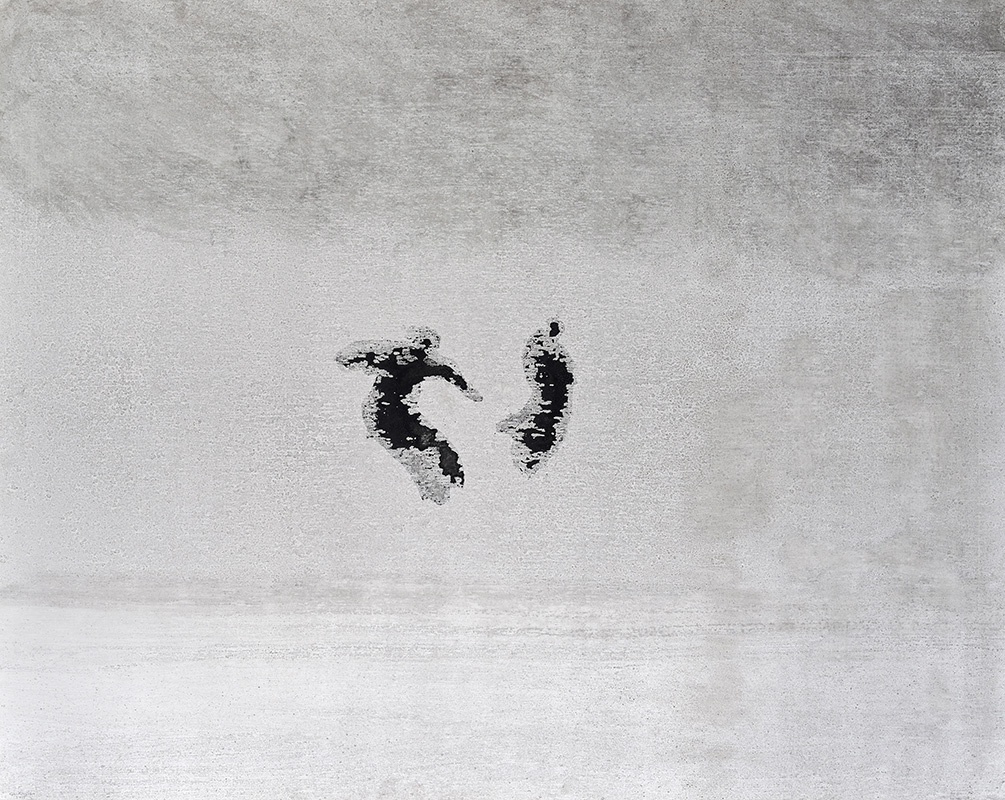
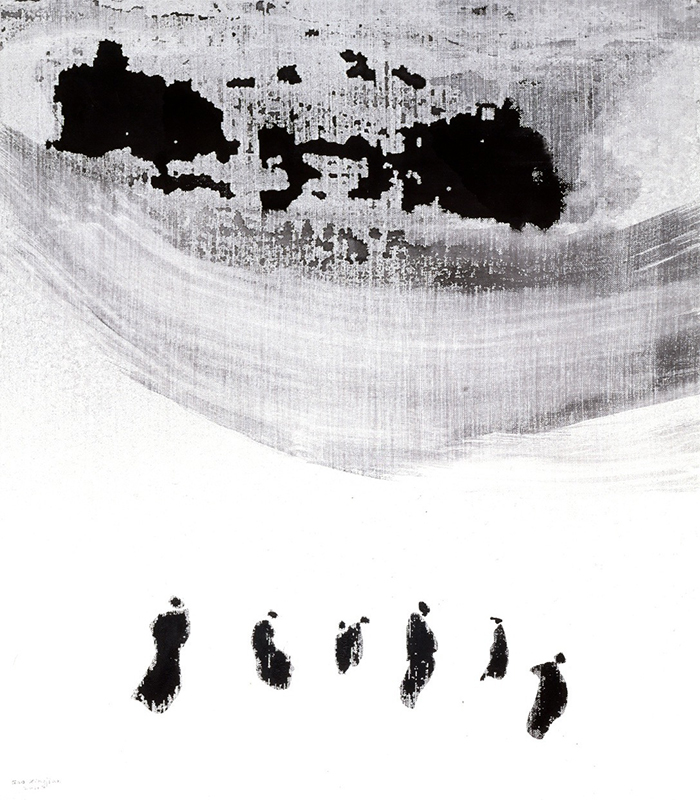
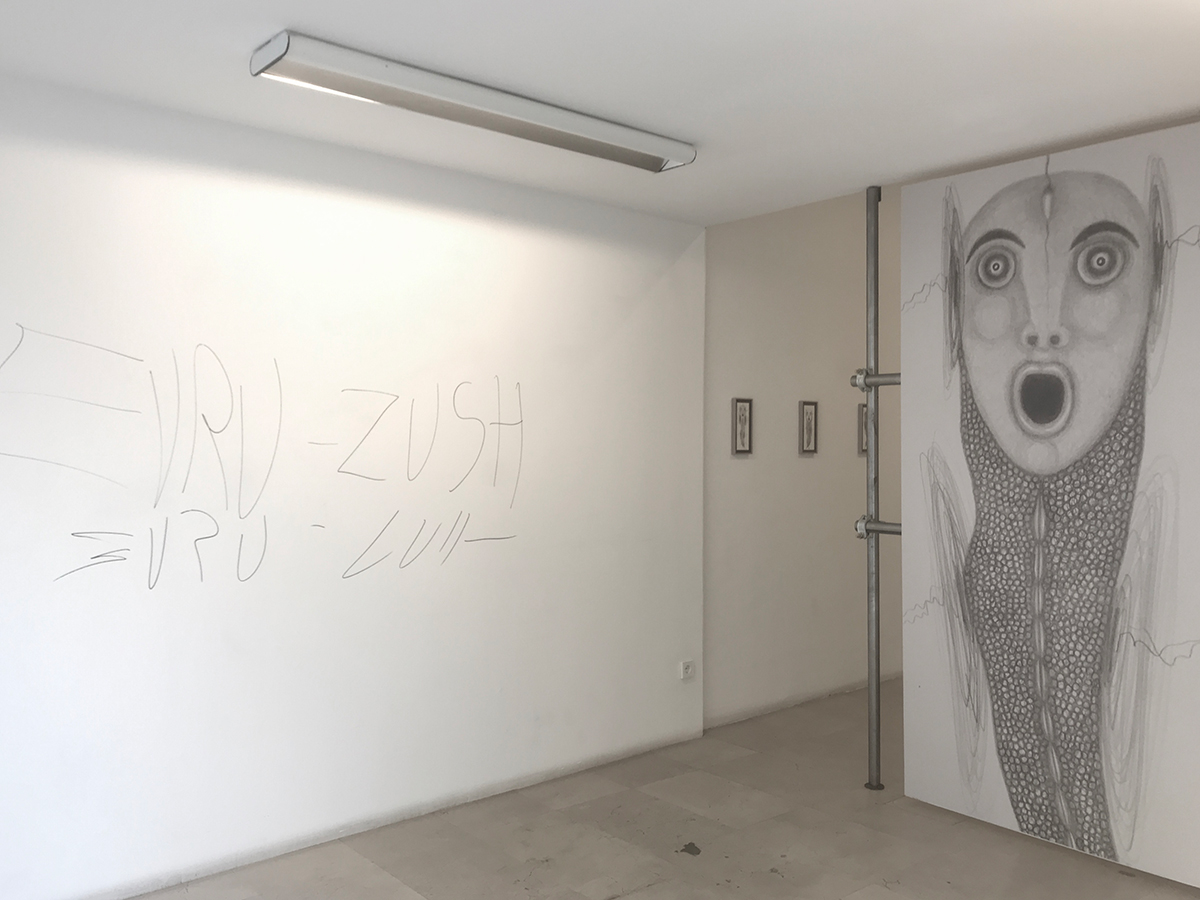
We remember his exhibition “Volver a ser” at Galeria SENDA almost three years ago, an exhibition of small-format pencil drawings with which he presents hybrid beings with a human face and a snake body.
Evru Zush‘s work is characterized by the construction of a personal and autobiographical mythology, based on images that seem to overflow and the creation of his own style of writing, giving rise to multiple parallel universes that maintain a subtle balance where the logic of composition barely keeps the chaos in check.
During the creative process of his latest exhibition at the gallery, Evru Zush noticed that the drawings he was working on corresponded to the iconographic structure of the representations of the “Nagas”, Hindu deities with a human face and torso, generally female, and snake body. In this way, Evru’s constant desire to “be again” materializes, in the present exhibition, in the representation of snakes, beings that, like the artist himself, shed their skin in a natural process of renewal and increase.
Exhibition “Volver a Ser” Evru Zush in Galeria SENDA 2020
On January 12 at 7 pm Imma Prieto, director of Es Baluard, and Mateo Feijoo, curator of the El Archivo del Polvo project, will present LOVE SONG at Galeria SENDA
The exhibition is dedicated to the life and work of Lawrence D. “Butch” Morris (02.10.197 Long Beach CA.- 01.29.2013 Brooklyn, NY) whose music can be heard during the course of the exhibition courtesy of the artist’s legacy – with our thanks.
Del Rivero will present a selection of works taken from various projects carried out throughout his career that culminate in the concept of admiration for life and experience – leitmotiv and essence of the artist’s inspiration.
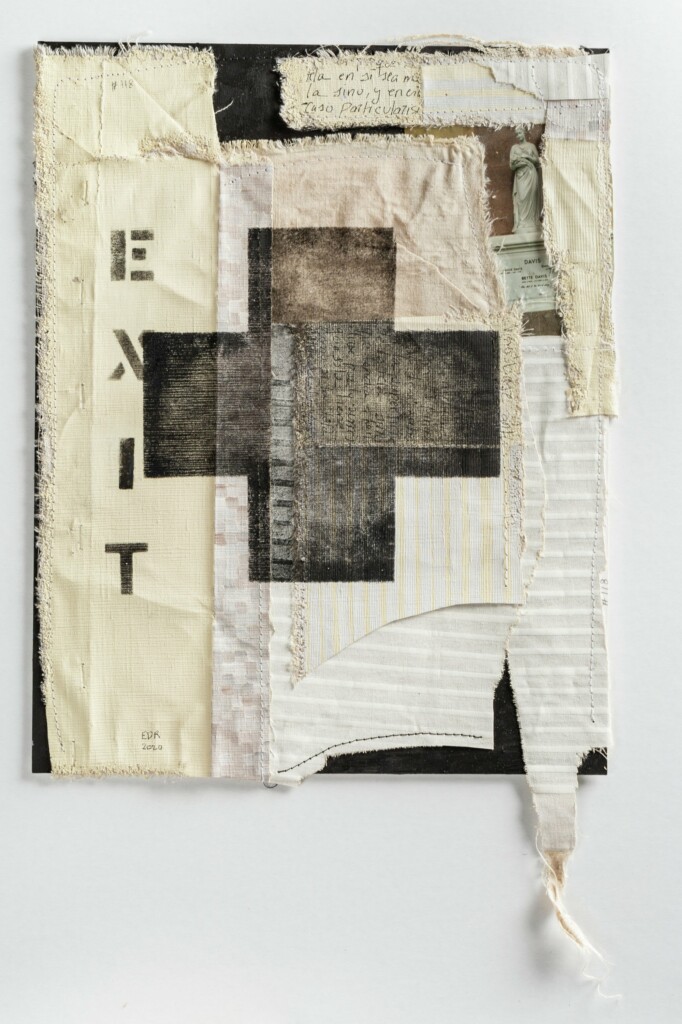
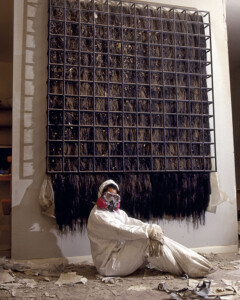
In the context of the last stage of the ”Dust Archive” (2001-2021), Love Song will include the 30 collages-assemblages that were presented in Es Baluard, Palma de Mallorca, built with pieces of painting rescued from his study of works destroyed during the 9/11 attack.
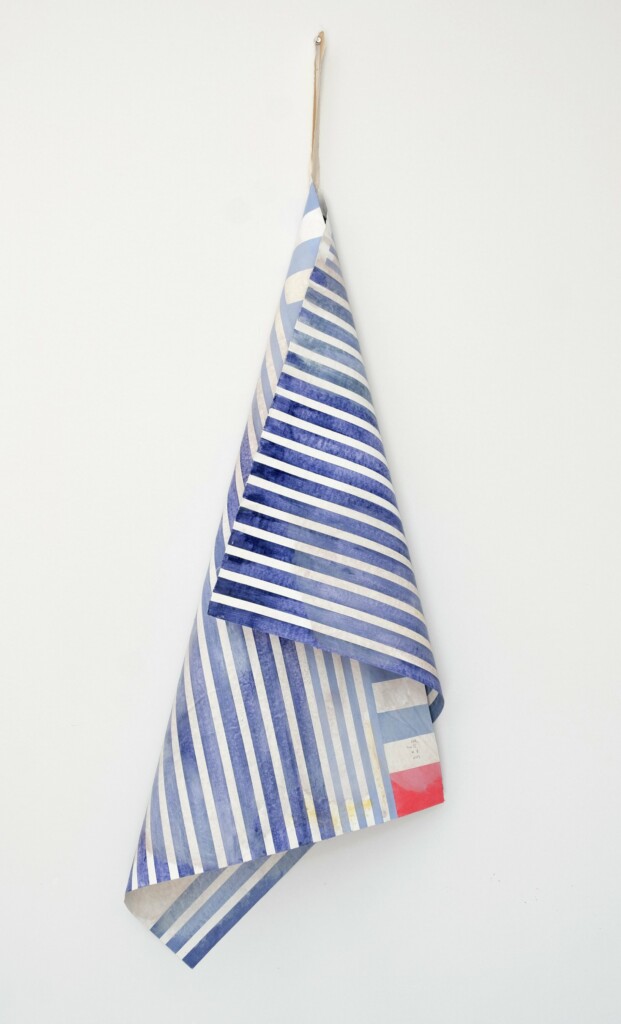
From “Letters from Home”, where the artist delves into the domestic with the kitchen table as a banner, the artist proposes a conceptual experience with kitchen towels-paintings from different years.
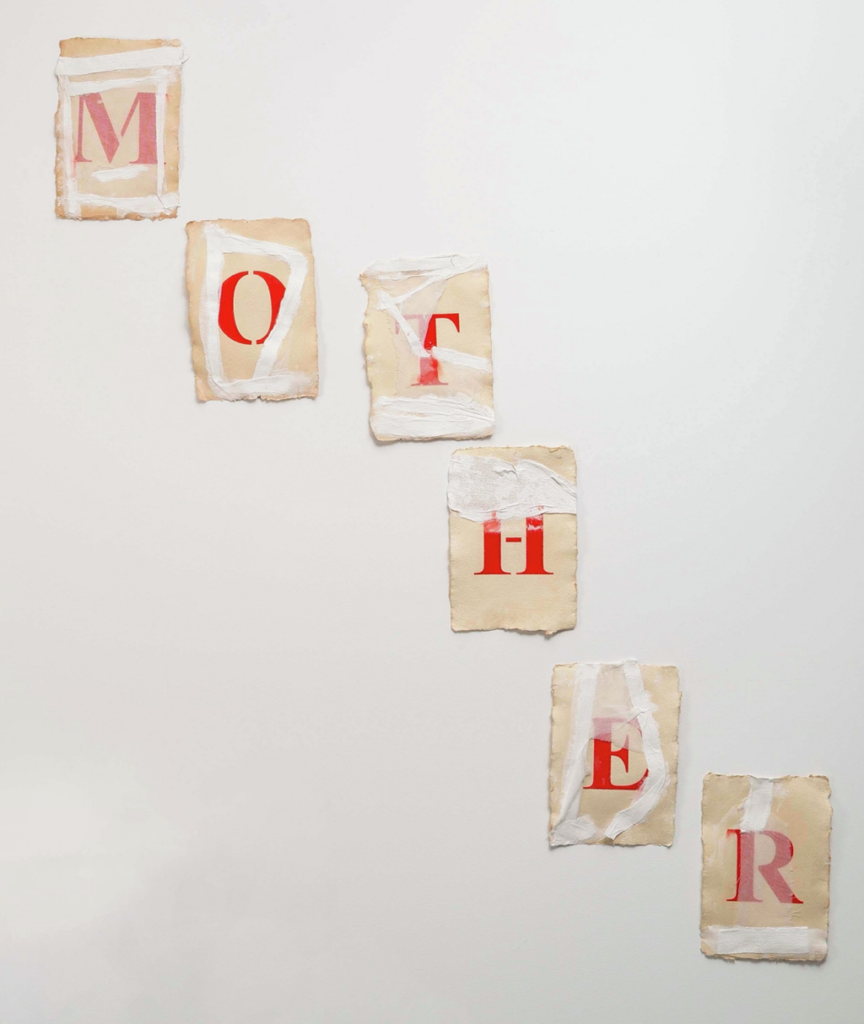
Elena also incorporates works related to the “Letters to the Mother” , another of her great projects since 1991, with elements that she has used constantly throughout her career such as needles, painting, embroidery and fabrics.
The exhibition is completed with ”Fragments of my Ruin”, a work in which all his ethical and aesthetic concerns of recent years come together in a large installation.
The artist Elena Del Rivero for Metal Magazine
With a photograph of Butch walking through the East Village in New York and taken by Elena in 2008, the exhibition will close along with others taken during the Black Lives Matter demonstrations in the Soho neighborhood. The images will accompany us throughout the visit as a reflection on the historical, the collective and the personal in the context of an immediate present.
Elena del Rivero has lived and worked in New York, USA, since 1991. She has had individual exhibitions at the Museo Nacional Centro de Arte Reina Sofía (Madrid); New Museum (New York), Corcoran Gallery of Art Washington D.C.); International Center of Photography (New York); The Drawing Center (New York); or the Patio Herreriano Museum in Valladolid, among others.
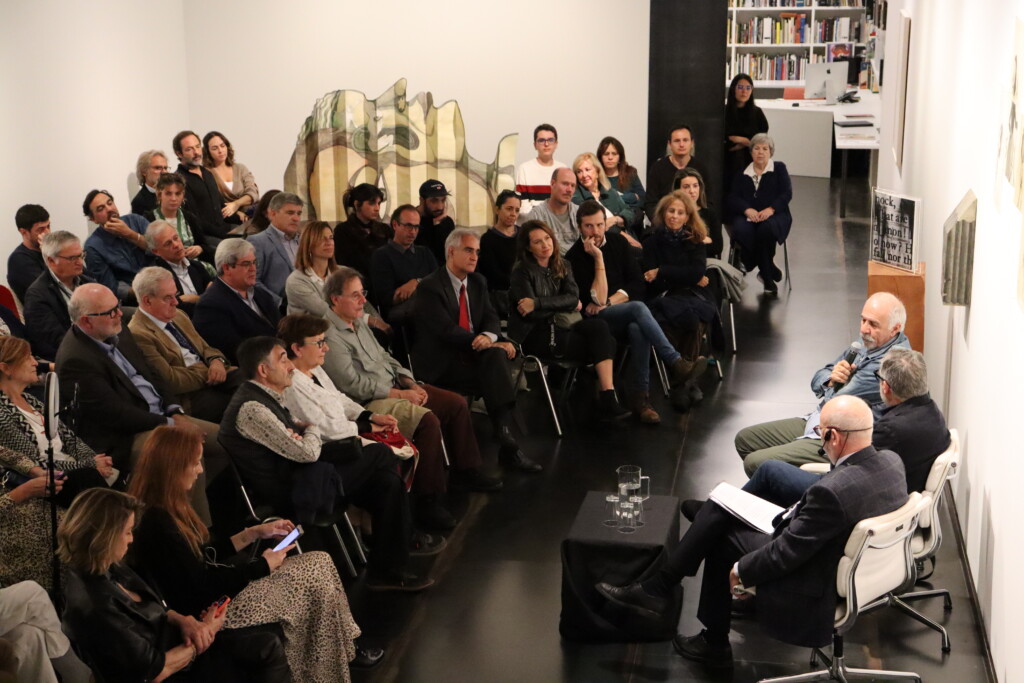
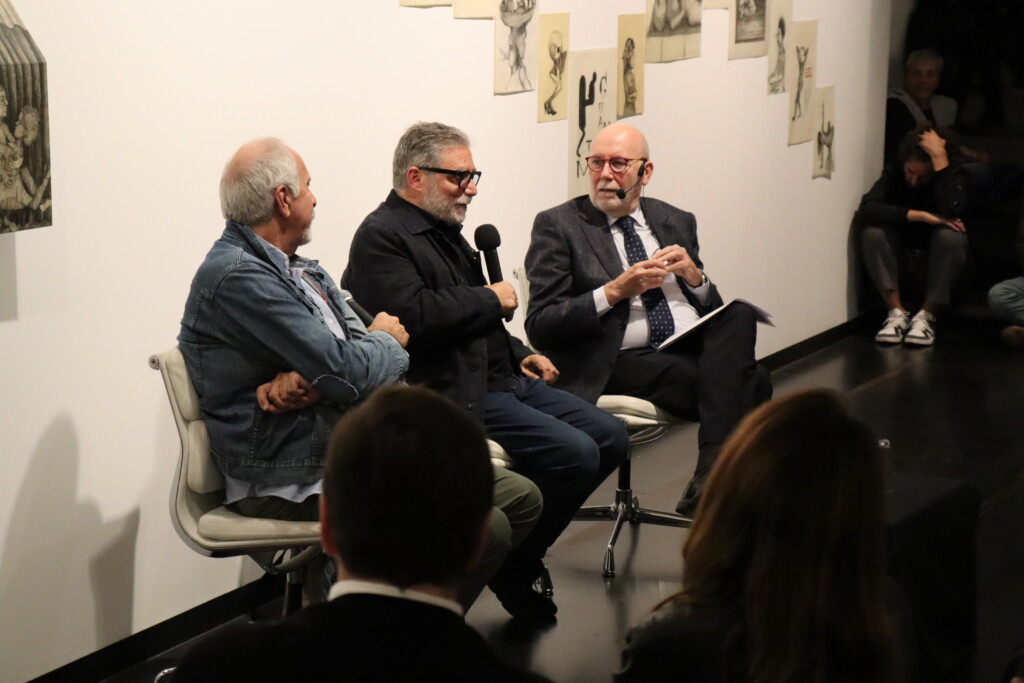
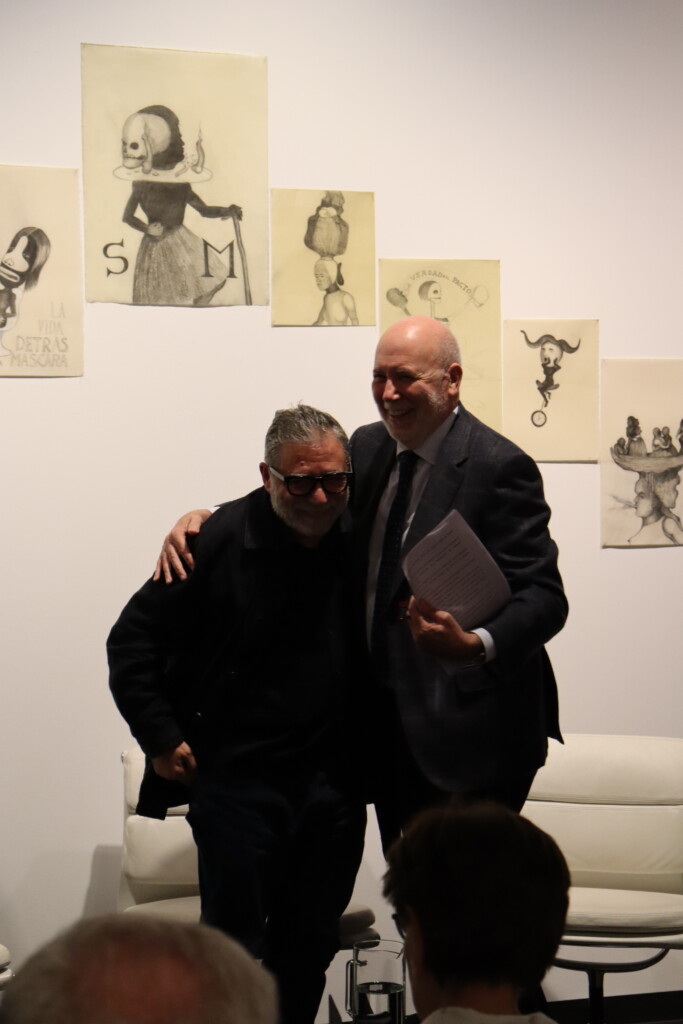
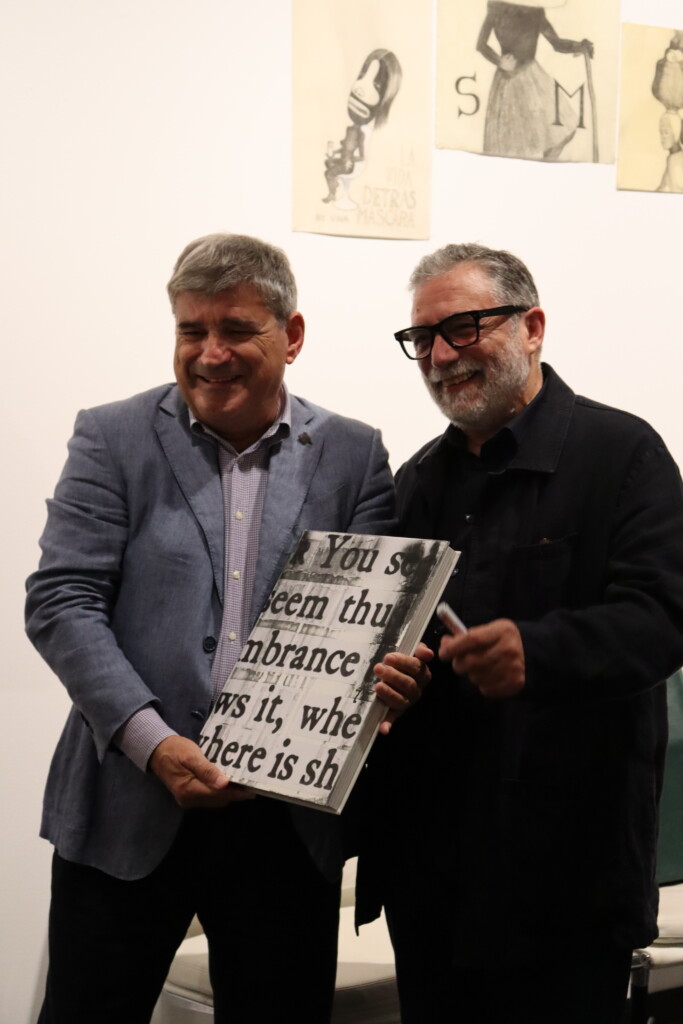
Last Monday, November 7, Barcelona became the epicenter of art and reflection when Galeria SENDA opened its doors to welcome three prominent names from the cultural world: sculptor Jaume Plensa, photographer Jean-Marie del Moral and journalist Màrius Carol. The reason for this meeting was the presentation of the book “Interior, 2022”, a work that transcends the printed pages to explore the challenges and opportunities faced by creators in the context of a globalized market.
The theme of the talk, entitled “Shared Challenges. Creating in a Global Marketplace“, addressed profound and pertinent questions about the creative process in the contemporary world. How do artists face the pressure of producing in a globalized environment? What impact do market trends have on creativity and originality? These were some of the questions raised during the conversation, which turned into an exciting dialogue between creative minds.
Jaume Plensa, known for his imposing sculptures that explore the relationship between the individual and the environment, shared his vision of the need to maintain authenticity in a world flooded with external influences. For Plensa, true creativity arises from the connection with oneself and the surrounding environment, and it is crucial to preserve that connection in a globalized context.
For his part, Jean-Marie del Moral, whose photography captures the essence of urban life and human diversity, spoke about the role of art as a tool for expression and resistance in an increasingly homogenized world. For Del Moral, creativity is an act of resistance against uniformity, a way of celebrating the diversity and complexity of the world we inhabit.
Màrius Carol, a journalist with a long career in the cultural field, provided a unique perspective on the role of the media in the promotion and dissemination of contemporary art. In a world where attention is fragmented and information is constantly flowing, Carol stressed the importance of telling authentic and meaningful stories that connect with audiences on an emotional level.
The presentation of the book “Interior, 2022” marked the beginning of a series of #SENDATalks, a typology of talks organized by Galeria SENDA that brings together artists, creators and thinkers to explore relevant topics in the world of art and culture. These meetings provide a platform for the exchange of ideas, debate and reflection, fostering an open and enriching dialogue between different disciplines and perspectives.
The event concluded with a question and answer session, where the audience had the opportunity to interact with the speakers and delve deeper into the topics discussed. The atmosphere was one of inspiration and camaraderie, leaving a lasting impression on all present and sowing the seeds for future conversations and creative collaborations. In short, the talk at Galeria SENDA was much more than a book presentation; it was a transformative encounter that illuminated the complexities and challenges of the creative process in the 21st century, and demonstrated the power of art and culture to bring people together and enrich our lives.
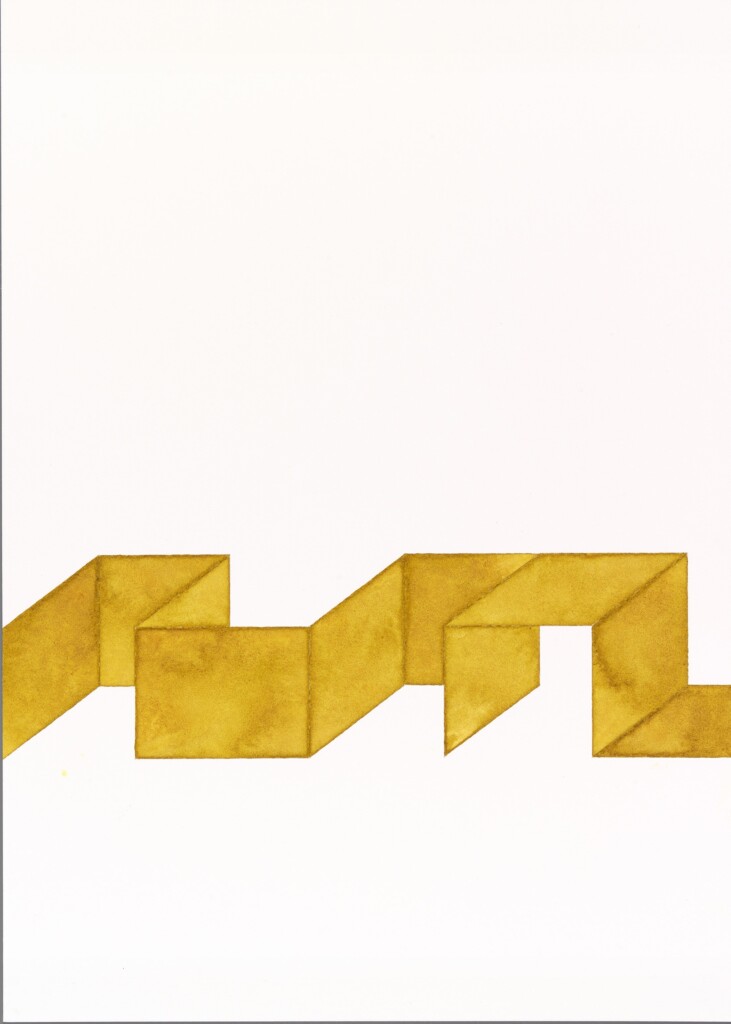
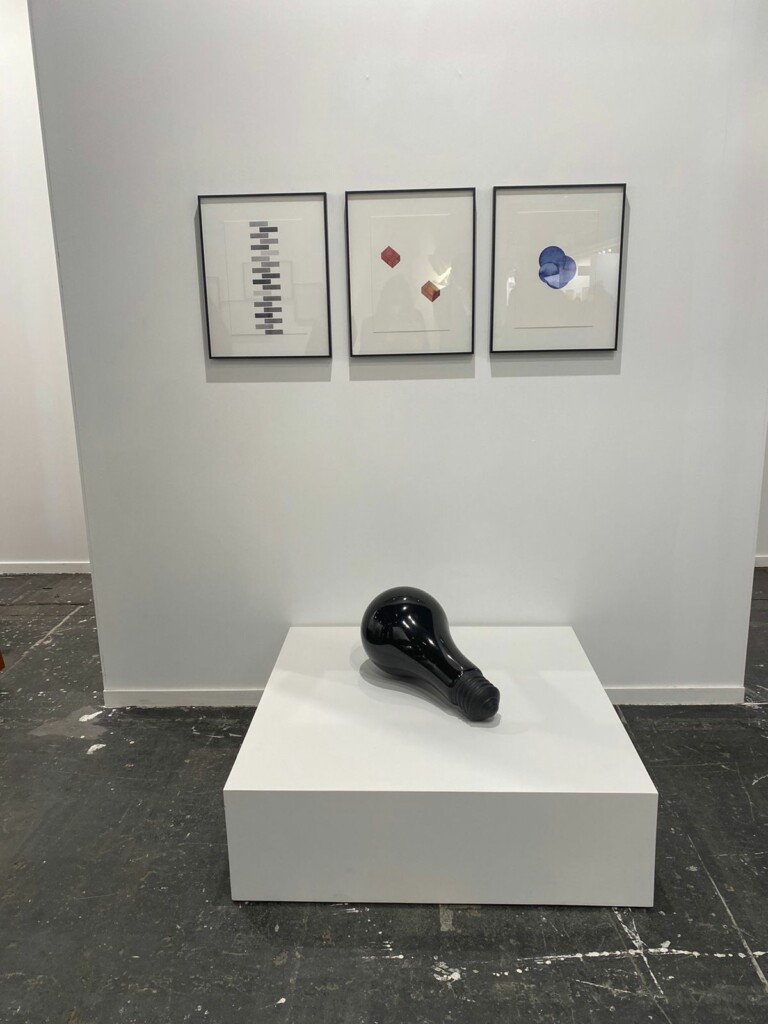
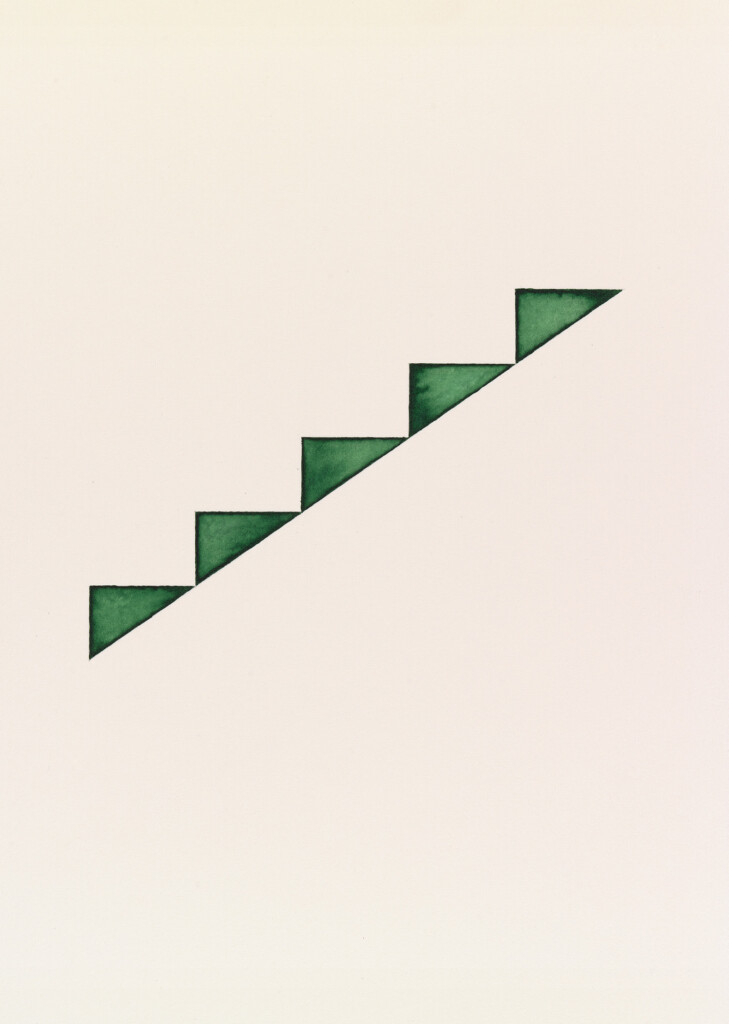
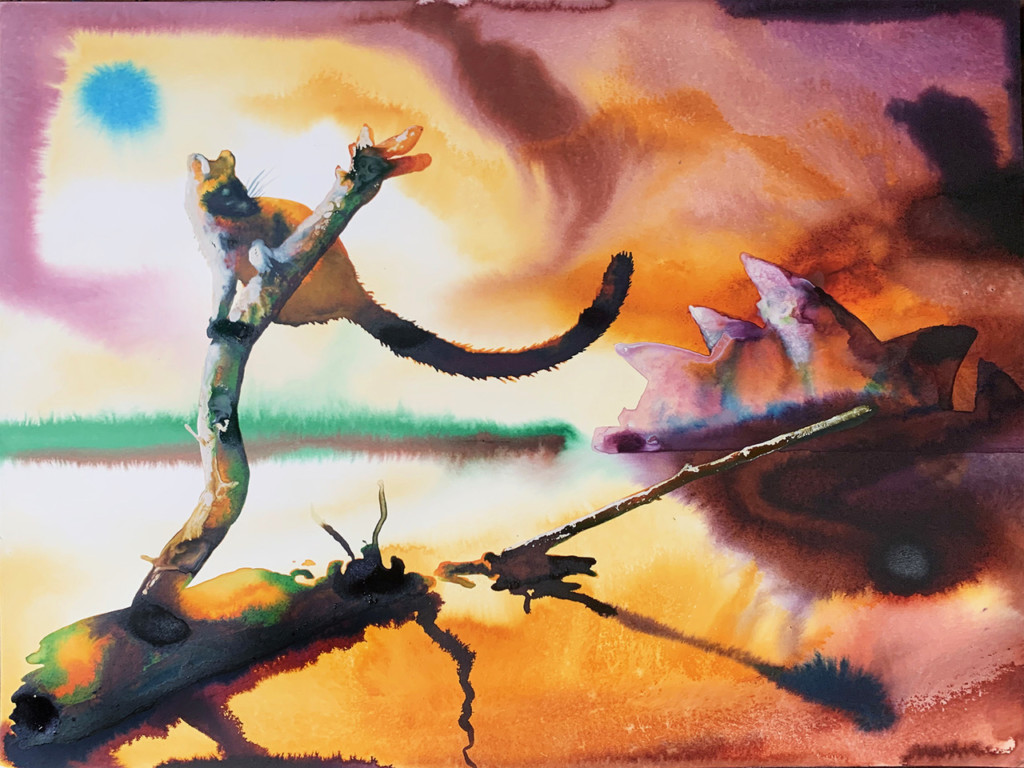
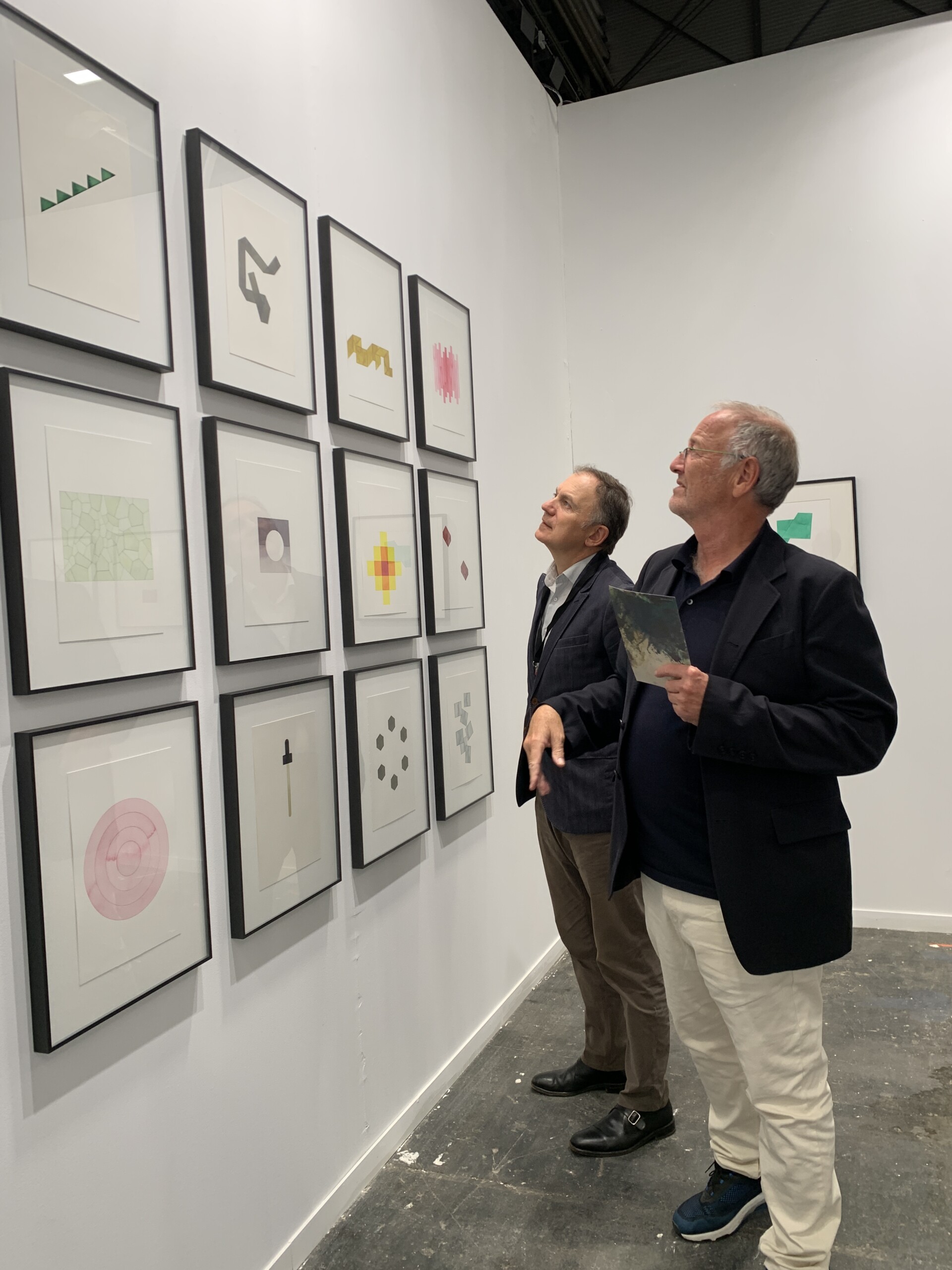
In this edition of the fair Estampa we present a single show by the Brazilian artist Iran Do Espirito Santo with a sample of watercolors produced throughout the confinement, with which the artist inaugurates the use of color while remaining faithful to his own refined and austere style.
Galeria SENDA booth at Estampa art fair, IFEMA Madrid
In this exhibition entitled “El Pangolín”, Do Espirito Santo builds perfectly balanced geometric representations thanks to a gaze focused on detail.
The title is shared with the writings of Enrique Juncosa co-published by SENDA Essay and by Turner, which will be presented during the fair. The watercolors illustrate this anthology and create a relationship between the two poetics: the pictorial discourse and literature harmonize in a single aesthetic in which the delicate works of Espírito Santo shape the game of ideas that Juncosa proposes to us.
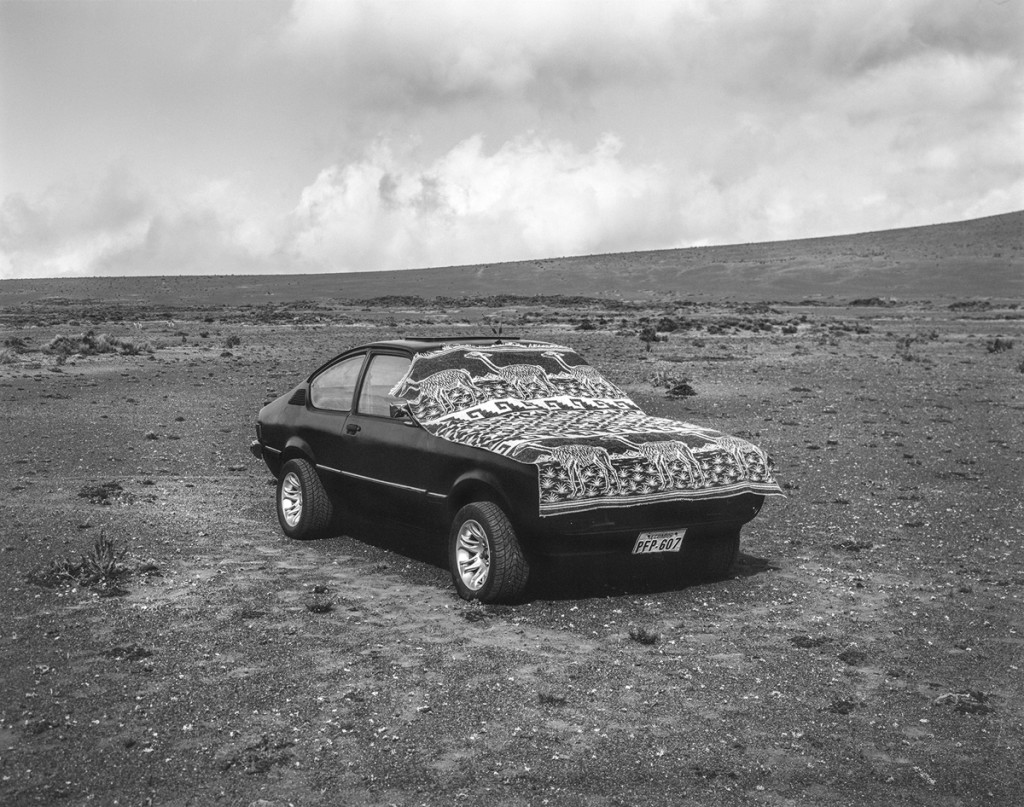
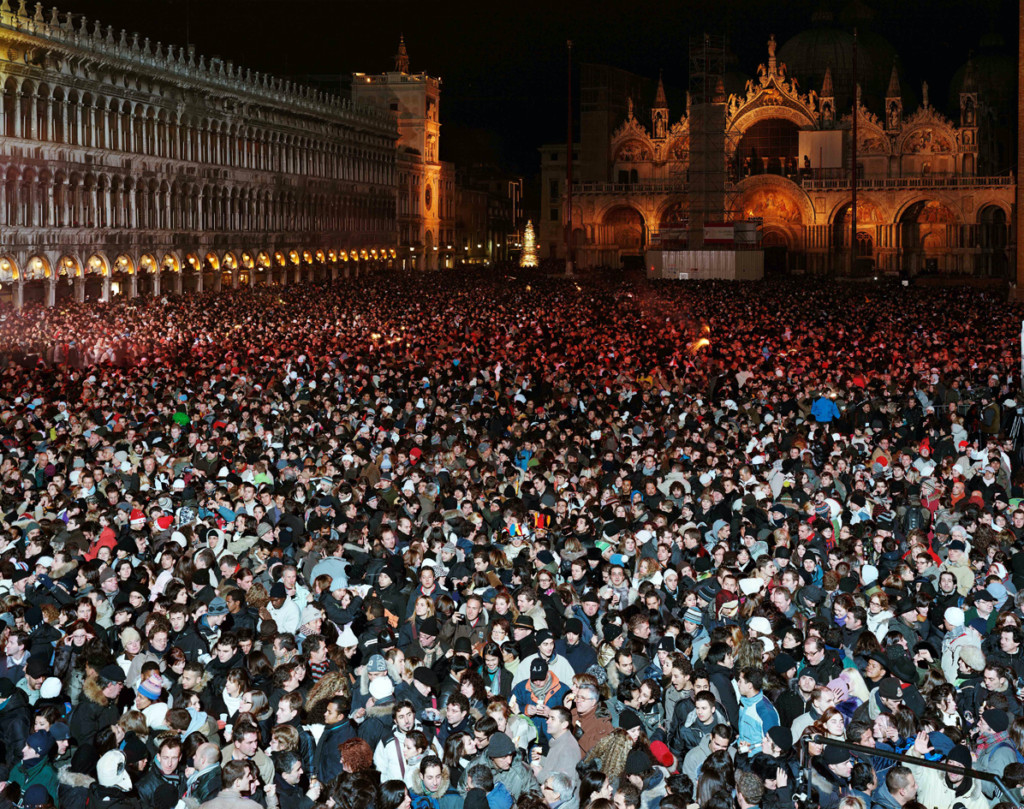
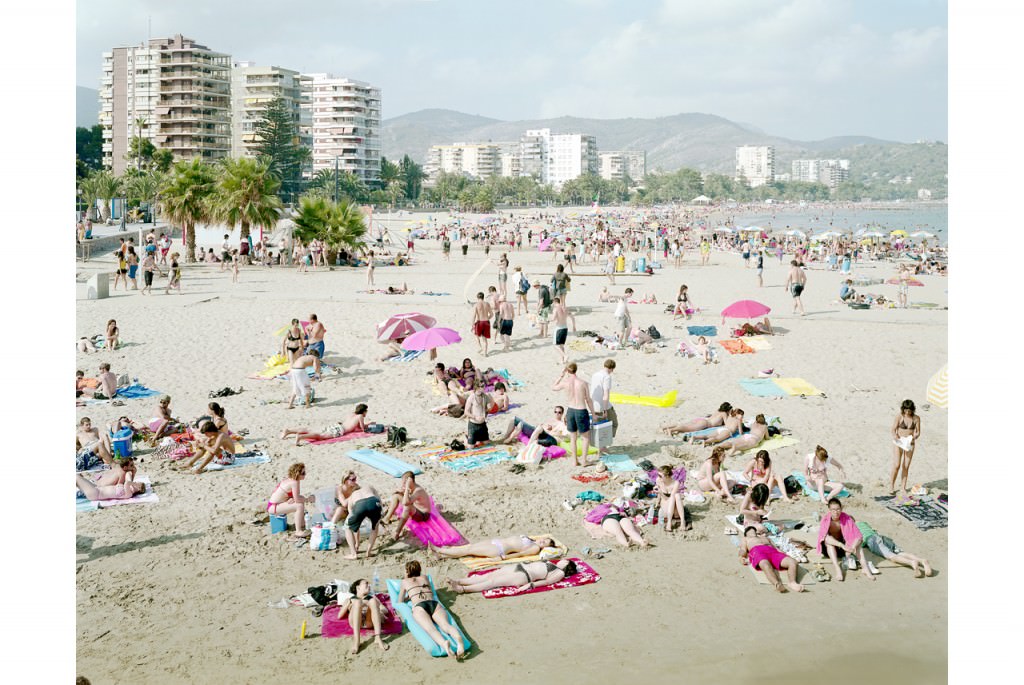
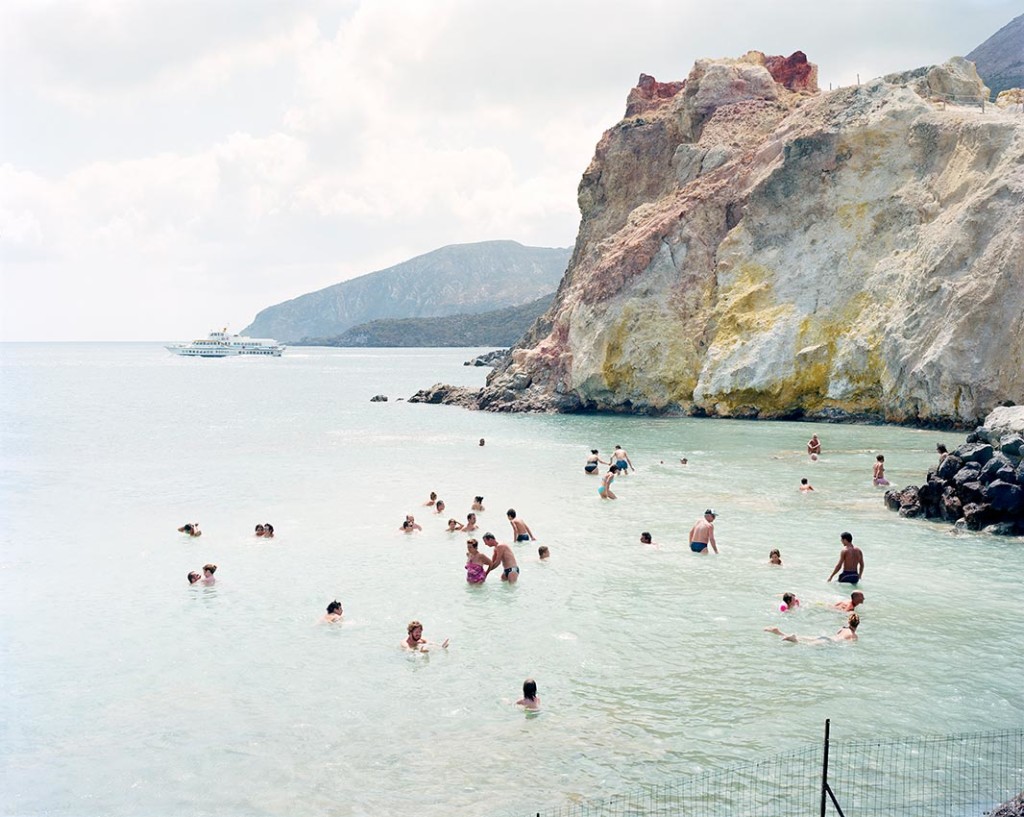
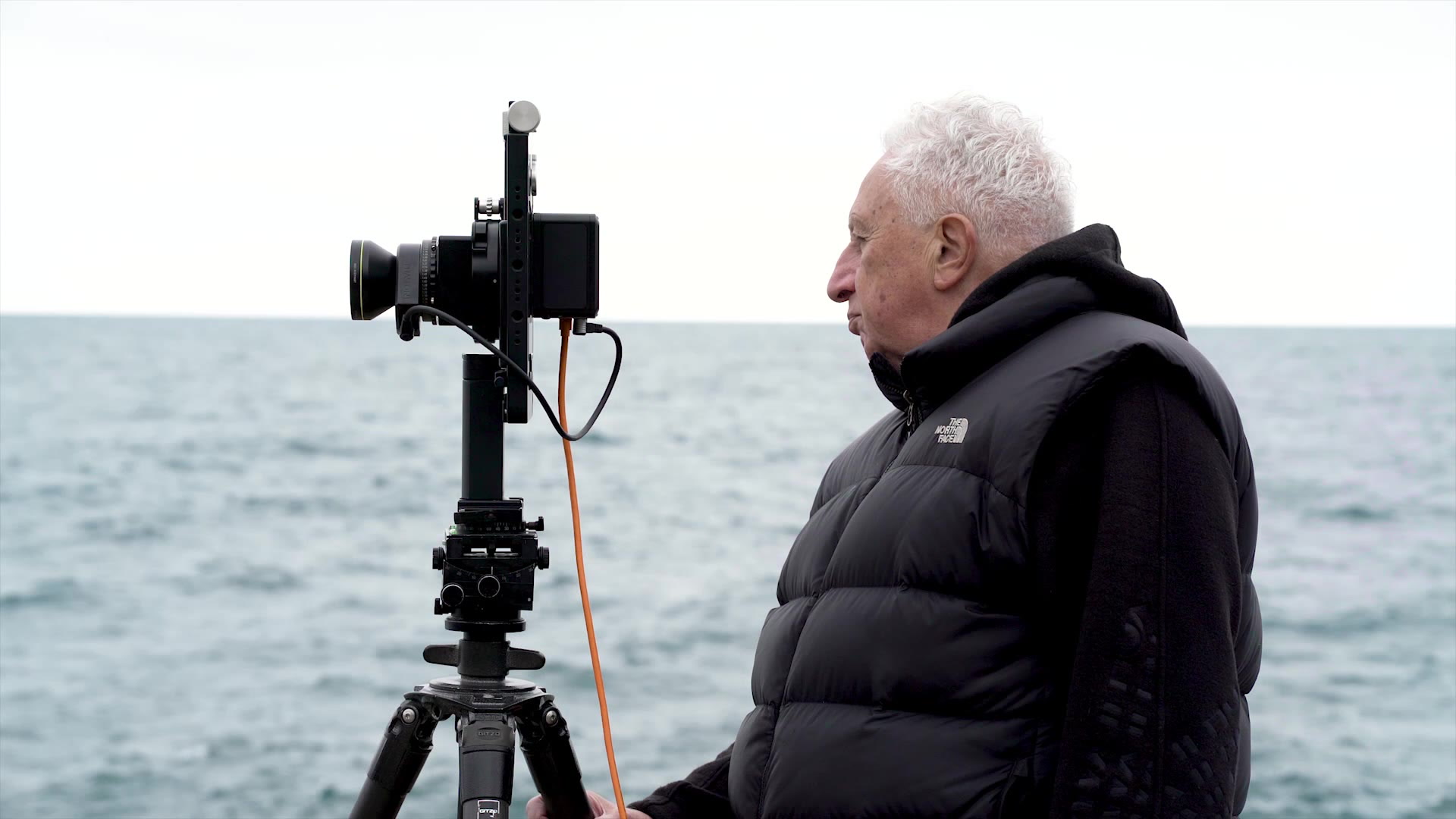
Since 1993, the Italian Massimo Vitali stands on a platform several meters high, and with a large camera he photographs beaches, nightclubs, ski resorts, supermarkets, swimming pools and other busy leisure areas.
The work of this contemporary photographer embodies the essence of leisure activity in the summer season.
But there’s more than meets the eye when it comes to this author’s idyllic seascapes. Vitali responded to the political turmoil in Italy in the 1940s, launching his beach series in the mid-1990s as a political commentary on mass tourism and social complacency. While Vitali’s photographs seem to depict the paradisiacal appearance from each place he captures, his work actually focuses on the individuals who appear in the composition and their collective response to society.
Using the beach as a platform for social research, Vitali sought to photograph bathers in their most vulnerable state in order to document society in its most authentic state Most of the artist’s work captures tourist destinations in Italy as it retains the idea that taking quality photos does not necessarily require traveling outside of your local community. Some of the famous places immortalized in Vitali’s work include Spargi Cala Corsara Cala Mariolu Porto Miggiano and Cefalù Viareggio however Vitali has since it has expanded beyond the borders of Italy to vacation spots in Brazil, Greece, Turkey and Spain.
Massimo Vitali, by Wallpaper*
Since the start of his iconic beach series, Vitali has continued to explore the natural environment, but instead focused on the impact of human disturbance on nature In contrast to his coastal scenes, Vitali focuses less on the pleasure and leisure of people and, instead, in the complex relationship between humans and their impact on the environment his most recent series entitled Disturbed Coastal Systems (April 2017) reveals an implicit message of the tension built between the man and nature.
Dates
08.09.2022- 02.10.2022
Organizer Government of Cantabria. General Directorate of Culture and PHotoESPAÑA
Headquarters
Central Library of CantabriaC/ Ruiz de Alda, 19, 39009 Santander
It has been confirmed that Do Espirito Santo will be making a large wall painting (a version of ‘En Passant‘) at the exhibition of Contemporary Latin American Art that has the Cisneros collection as a starting point. Open on April 30th, 2023.
“The letter seems to me a beautiful metaphor of society: a single letter is nothing; but together with others it can form words, concepts; this is the power of community.” – Jaume Plensa
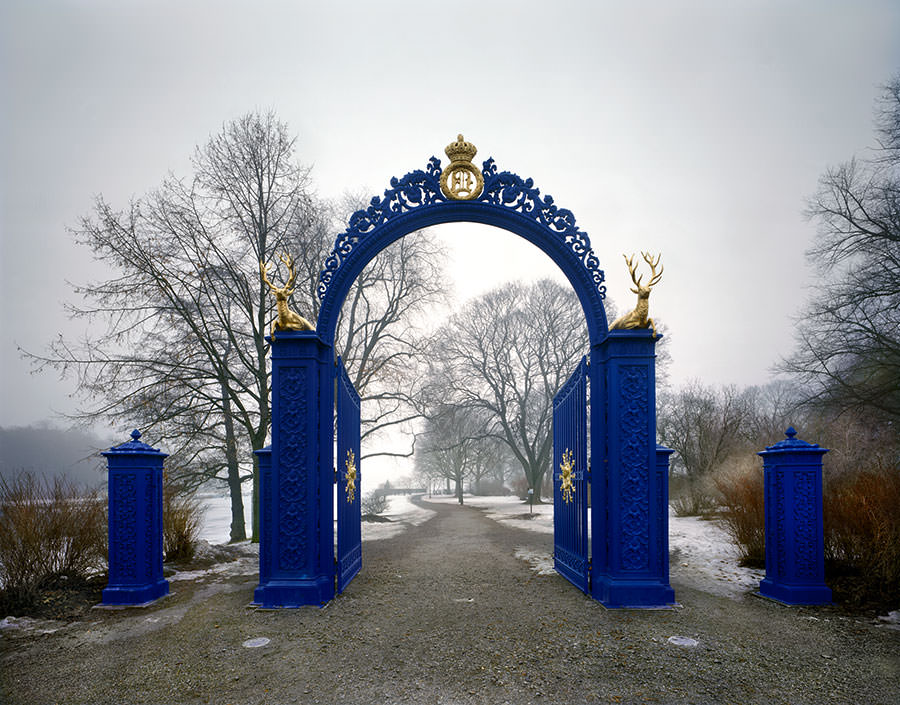
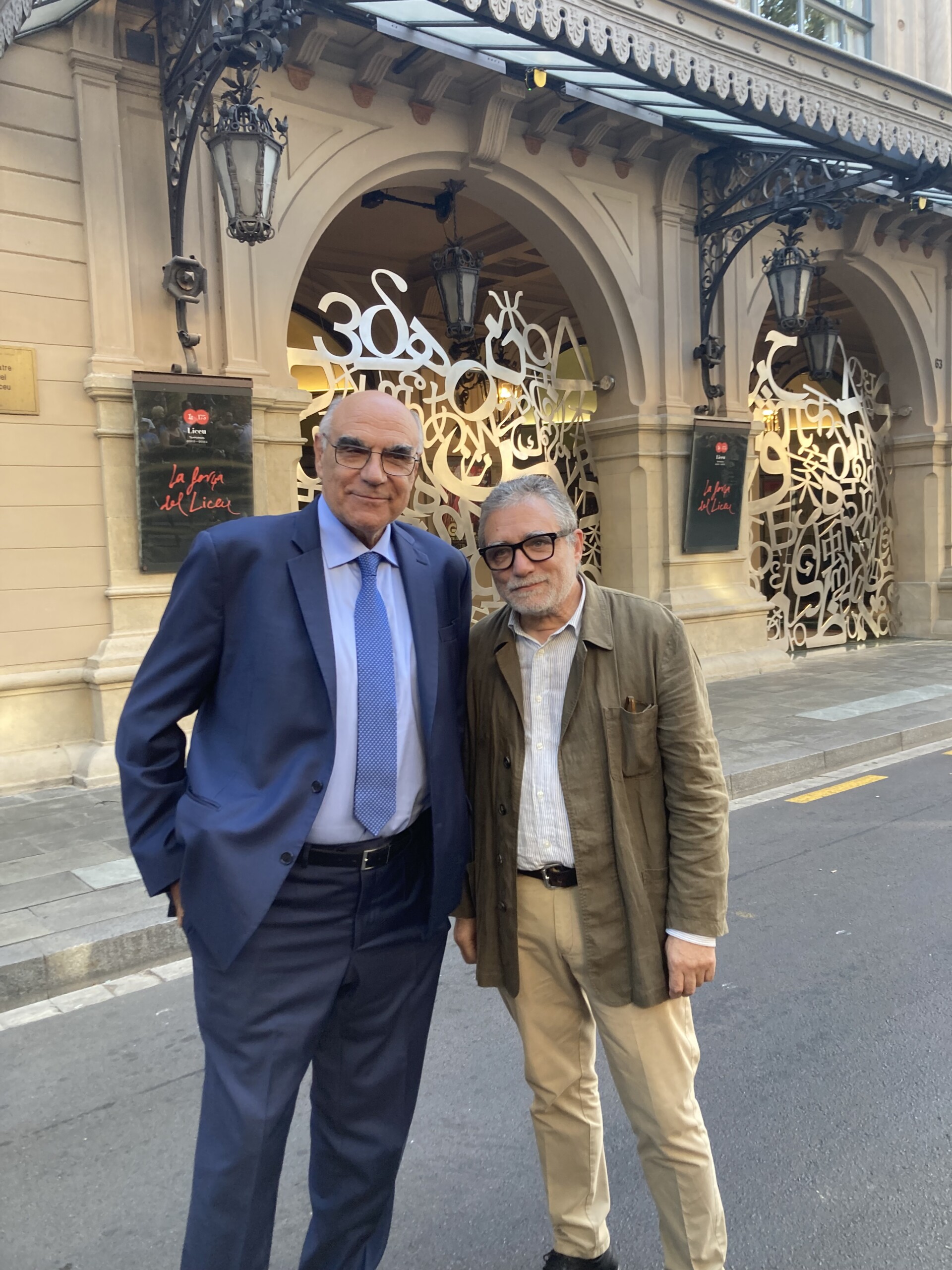
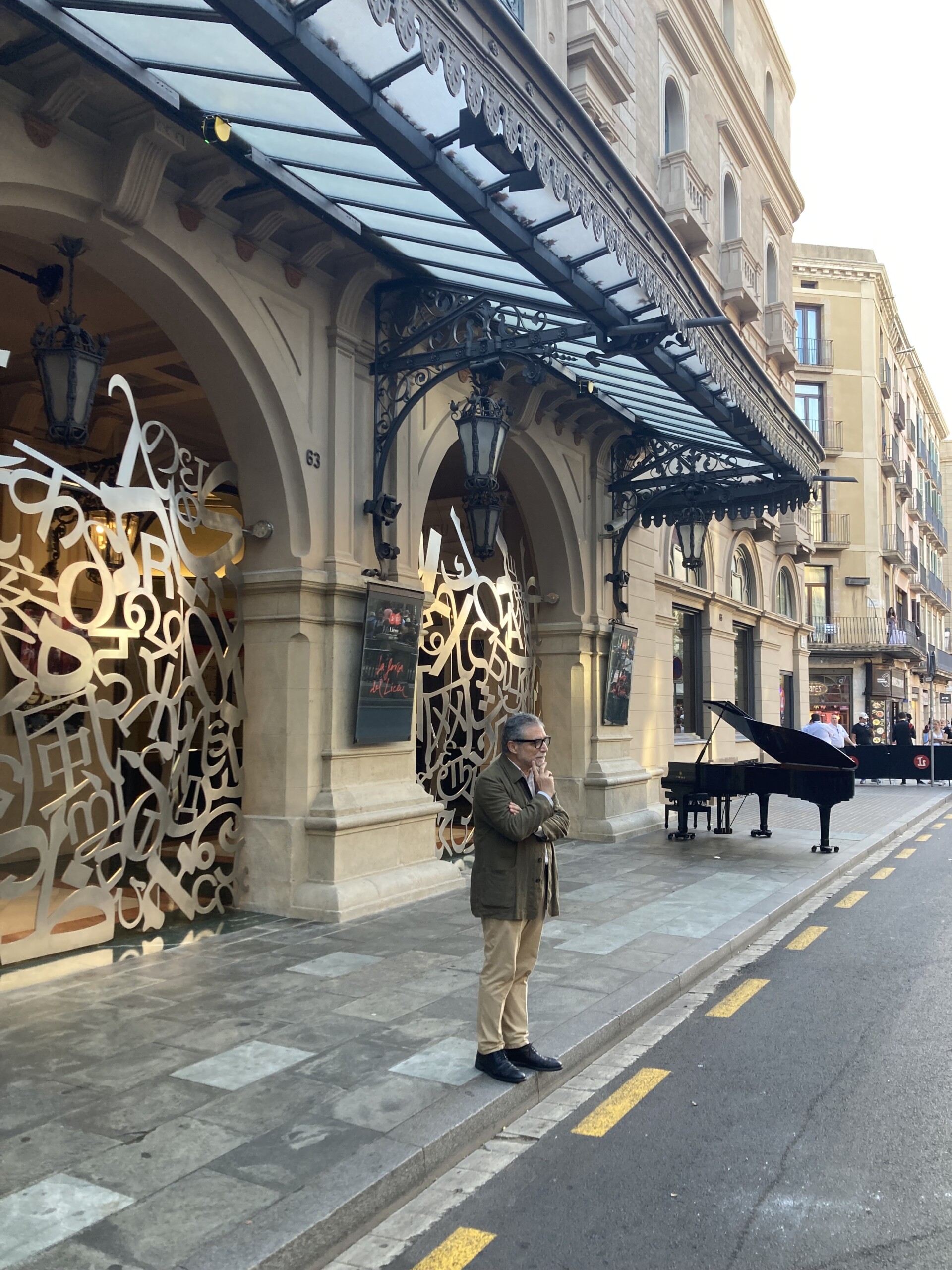
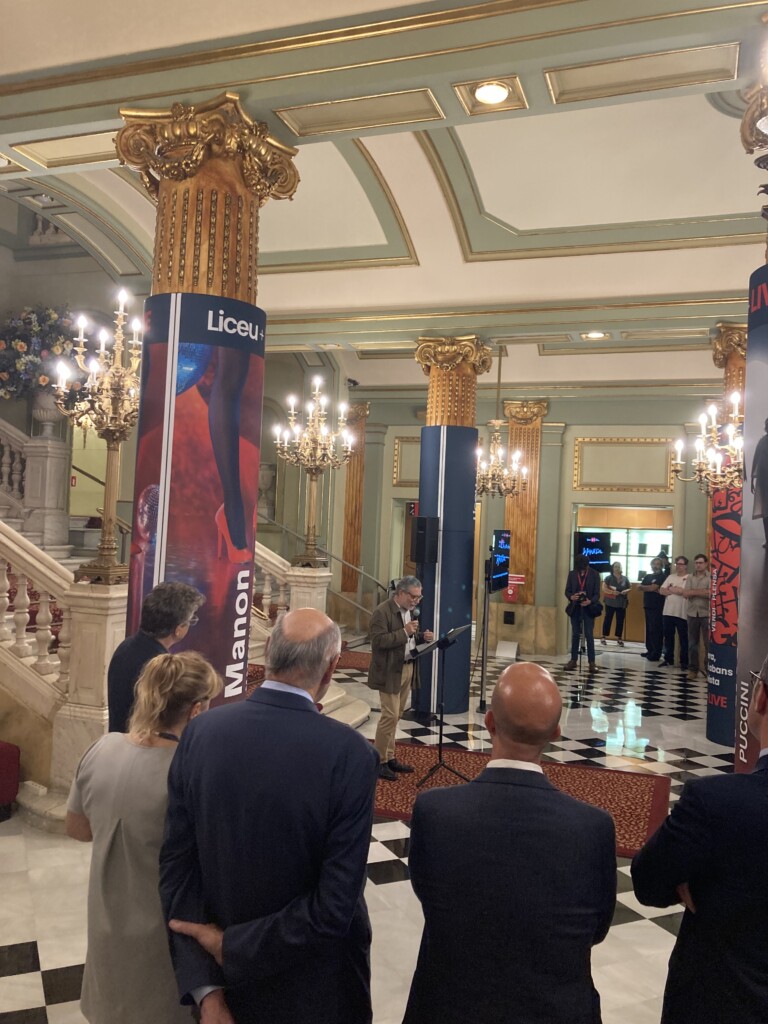
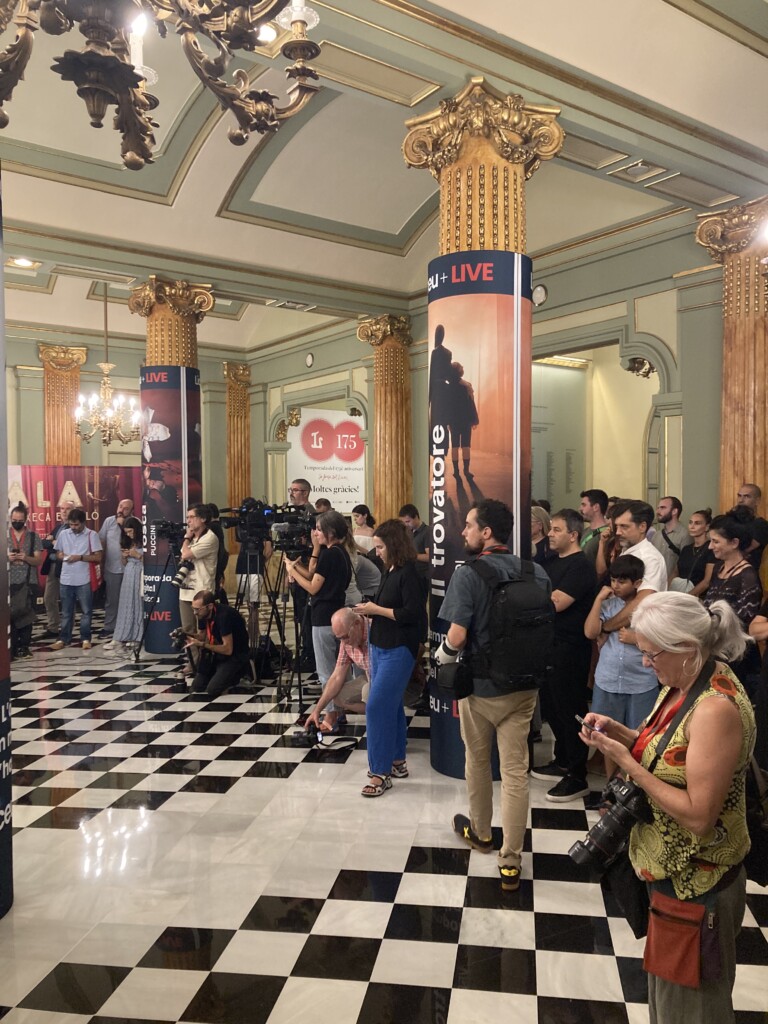
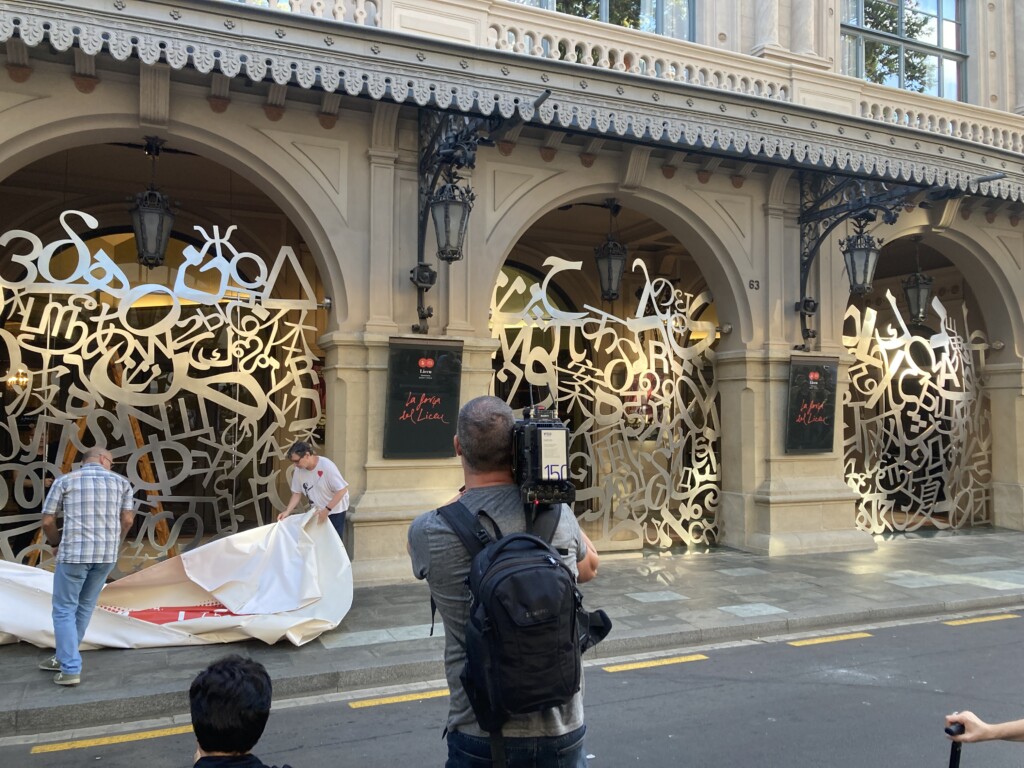
The Gran Teatre del Liceu opened the 2022-2023 season yesterday, Monday, with the new doors, or ‘Constellations’, the work of sculptor Jaume Plensa, highlighting the celebration of the 175th anniversary of the historic Barcelona institution.
The artist Jaume Plensa next to Salvador Alemany, president of the Fundació del Gran Teatre del Liceu
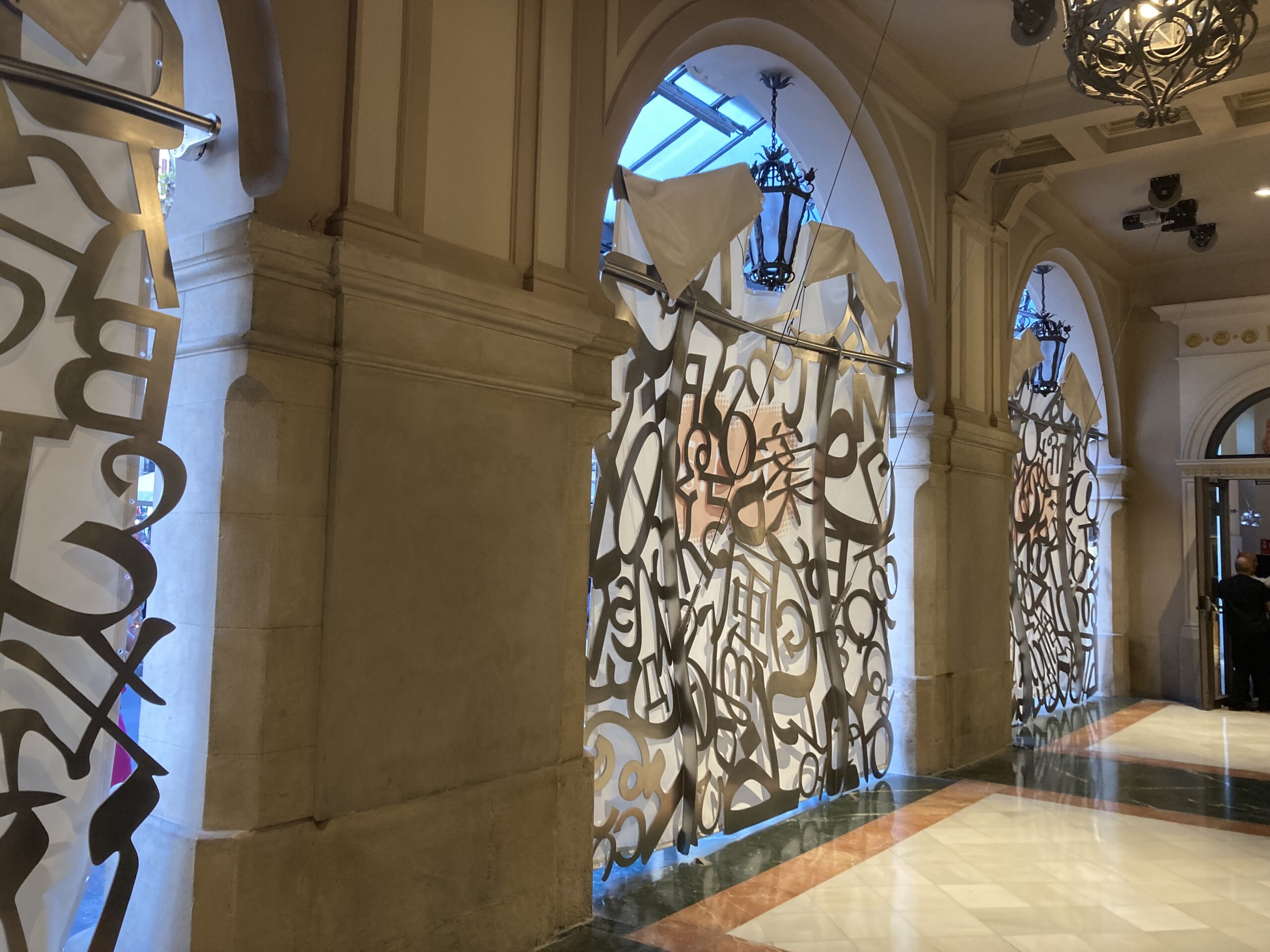
The doors (stainless steel, 4 x 4 m) are inspired by two classics of Catalan culture: the architect Antoni Gaudí, and the painter Joan Miró, with his nearby Pla de la Boquería mosaic, in addition to the close relationship with the name of one of his most original series ‘Constel·lacions (1939)’.
“I think this dialogue between the past and the future gives us the key to the present: the contemporary gesture at the heart of society, embracing music with words and voice with writing.” The artist said yesterday at the opening ceremony at Las Ramblas.
Plensa intends to vindicate the diversity of the promenade with letters from nine alphabets engraved on the railings – intermingling Arabic, Latin or Chinese – that will reflect their moving shadows on the floor of the entrance, when the doors reach the light of the lamps of the portal.
During the presentation of the doors, the Minister of Culture, Natàlia Garriga, also expressed the importance of this work for the city: “I want to thank all the members of the Board of Trustees who accepted it so quickly, that they see so lucidly that this proposal would be key for the Liceu, but also for the Ramblas, Barcelona and Catalonia.” And she has added that “having art available to everyone makes it possible for citizens to know and value it. I am sure that these doors will awaken the love for art in many pedestrians, and in the spectators who pass through them to enjoy the opera in this important facility.”
For his part, the Deputy Mayor for Culture, Education, Science and Community of the Barcelona City Council, Jordi Martí, has emphasized above all the commitment of the Liceu to “link to contemporary artists of the city and to do it in a total and determined way, not just with a small gesture. Today we are opening three doors, but we will also be able to see Macbeth with the stage direction of Jaume Plensa.” Martí has insisted that the doors “improve the artistic environment of the Ramblas” and wanted to thank the artist for his “humble and restrained gesture because Constelaciones are integrated into the landscape and do not become an isolated work of art.”
After the institutional parliaments, the act has continued with the first official opening of the doors while the Coro del Gran Teatre del Liceu performed the Wagnerian piece Freudig begrüß en wir die edle Halle (Tannhäuser, act II) on the Rambla, directed by the director of the Choir, Pablo Assante, and accompanied on piano by David-Huy Nguyen-Phung. A piece from the second act of the Tannhäuser that celebrates the entrance of the guests and that wants to be a symbolic and metaphorical gesture of doors that invite the public to enter and enjoy the universal language that is music.
“The alphabet represents a harmony that celebrates the great diversity of the world,” said Plensa. The president of the fundación del Liceo, Salvador Alemany, has stated that the sculptor’s work is “a gift that gives prestige to the Rambla and the Liceo”.
No es la primera vez que el escultor dispone de una obra cerca de un núcleo cultural de la ciudad condal. Carmela, un rostro de cuatro metros, mitad niña y mitad adolescente, preside la fachada del Palau de la Música. El artista, Premio Nacional de Artes Plásticas 2012, ha proyectado sus conocidos rostros en otras capitales como Madrid, (Julia) o New York (El alma del agua).
Plensa will maintain his relationship with the Liceo in the new season as the person in charge of the scenery of the Macbeth of Verdi, que se estrenará el próximo febrero.
Technical and operating elements
As for the technical details, these doors weigh around 500 kilograms each and migrate on a single axis that is embedded at the start of the arch just above the capital; of the pilasters. The convexity of the doors does not exceed the outer plane of the pilasters and means that the minimum passage below the open sheepfold is about 3 m high. One of the characteristics of the structure is that the doors do not open laterally, but have an opening movement from bottom to top. In this way, in addition to physical sculpture, we also seek a set of dialogues with spaces, reflections and optical visions of light and shadow. Thus, all those who walk the ground of the Rambla will be able to walk on this carpet of shadows of the installation itself. The work is integrated without affecting any other past element incorporated prior to the facade of Oriol Mestres from 1874 and recovered in 2019.
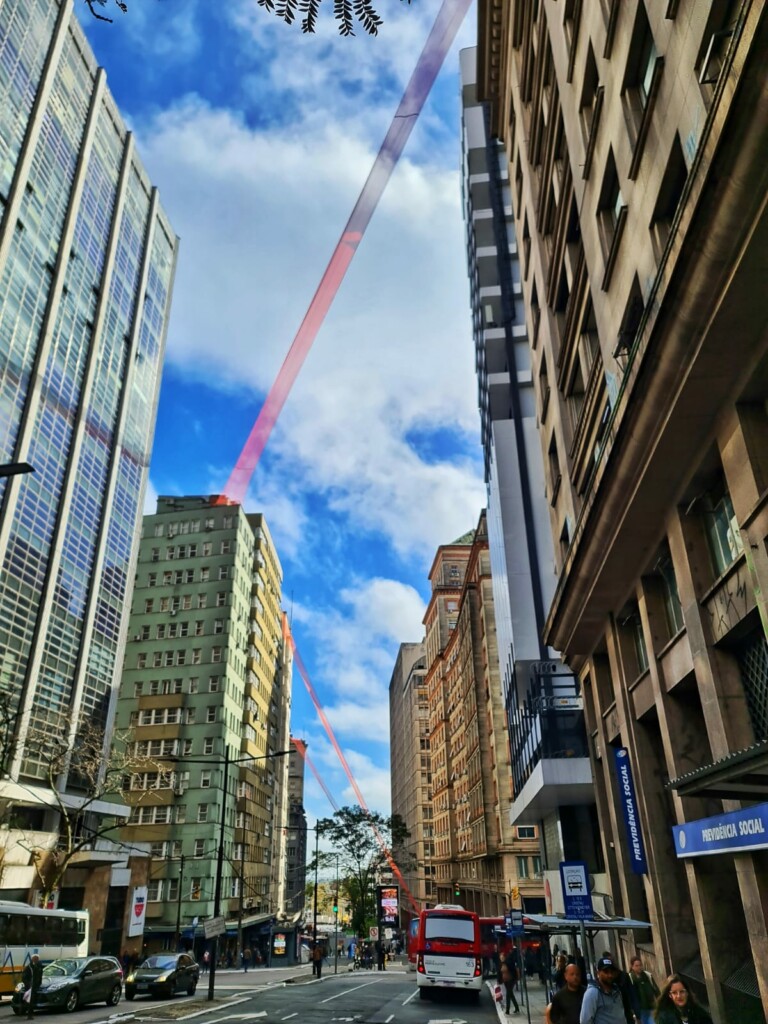
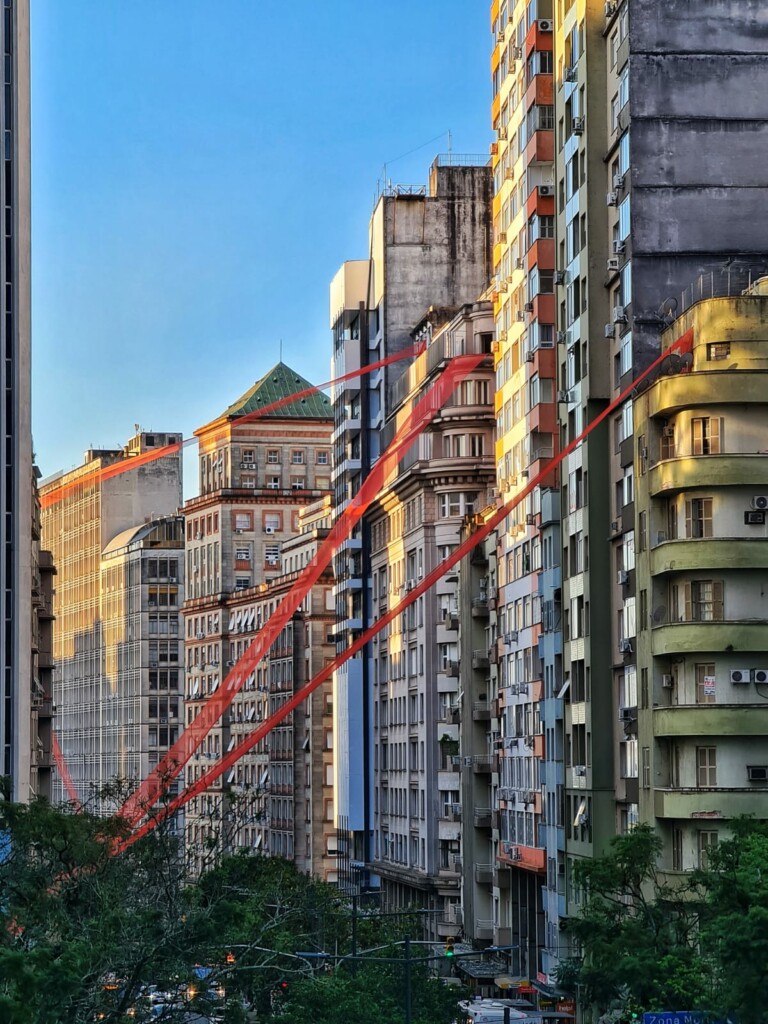
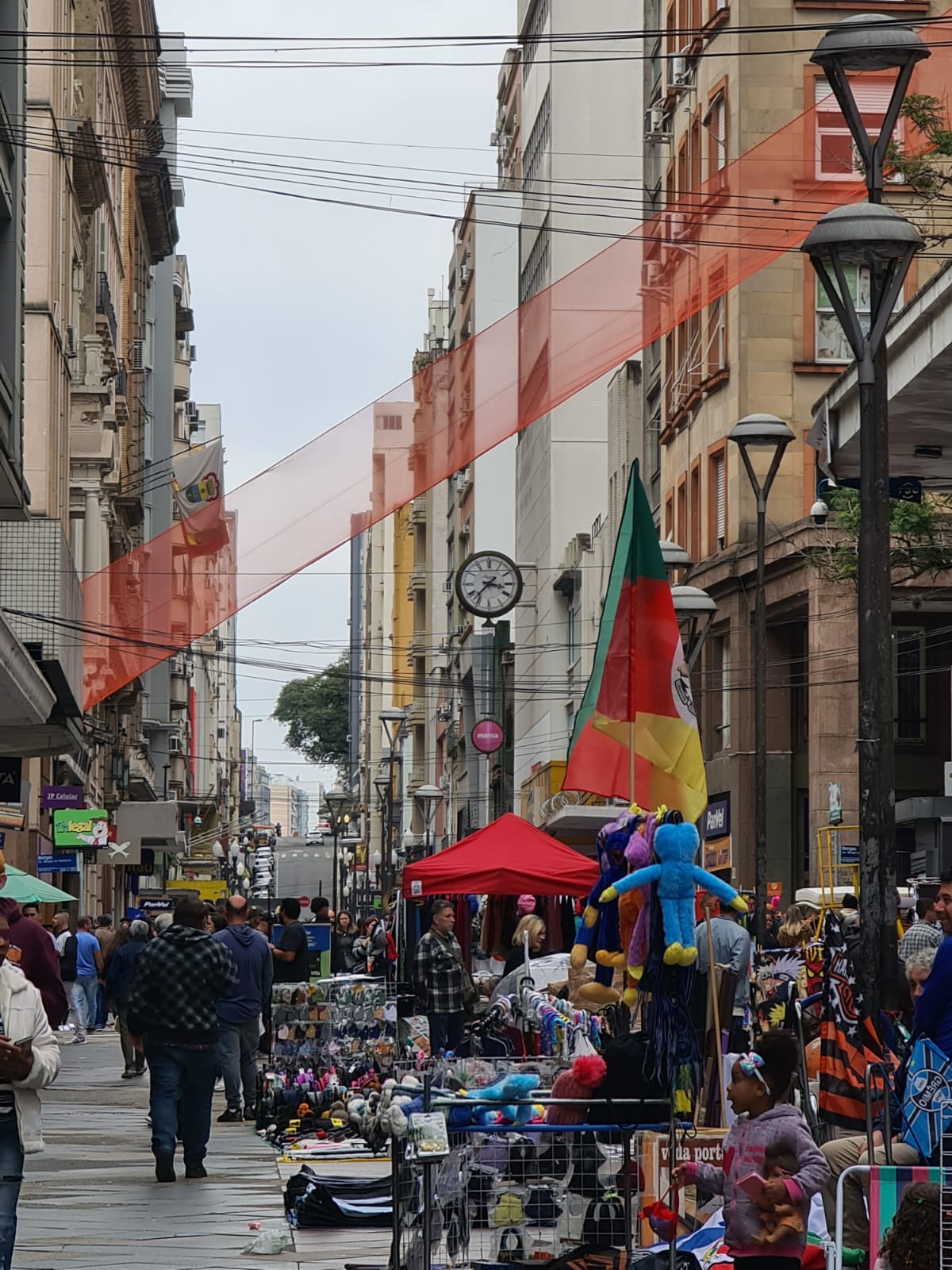
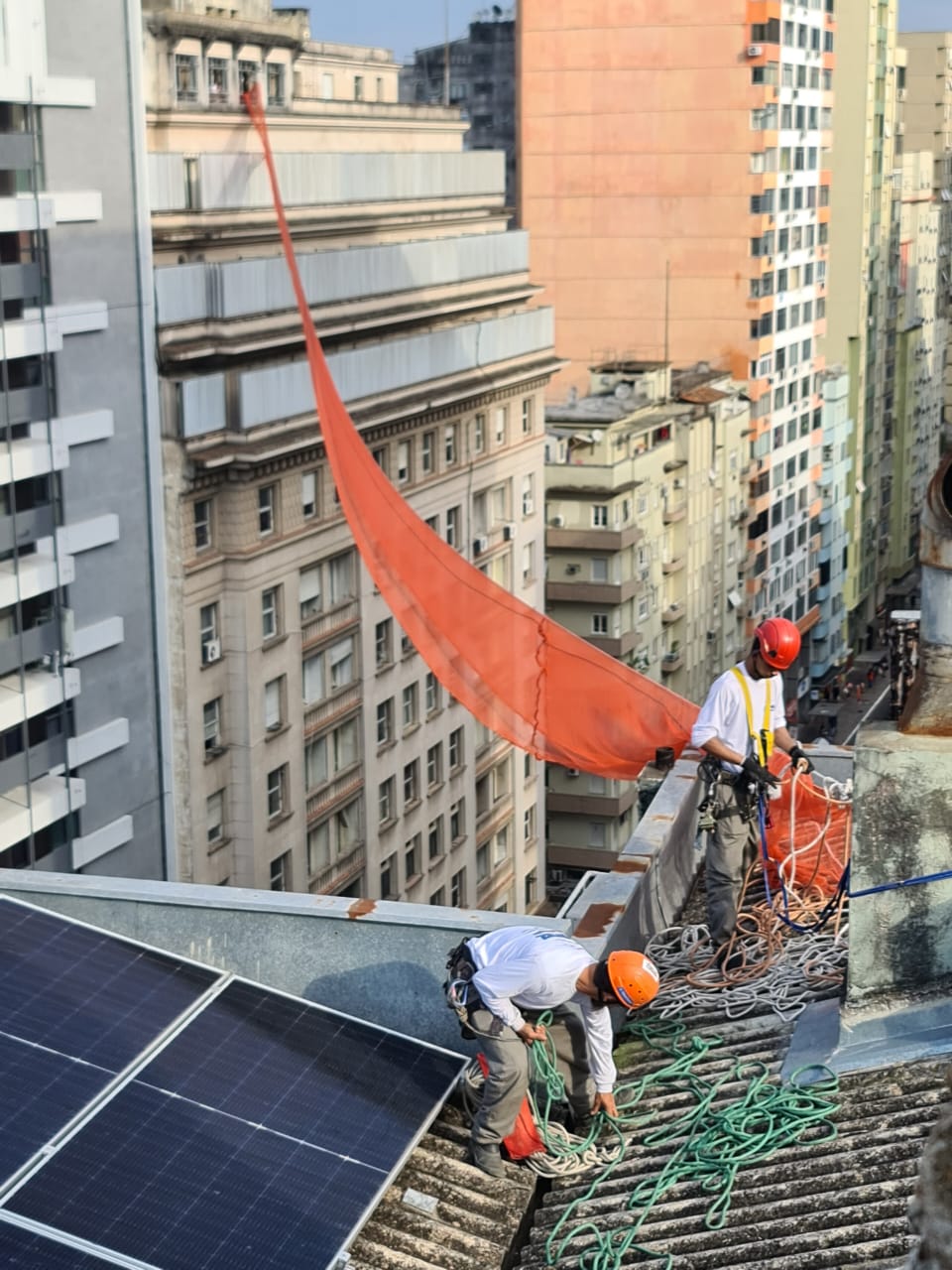
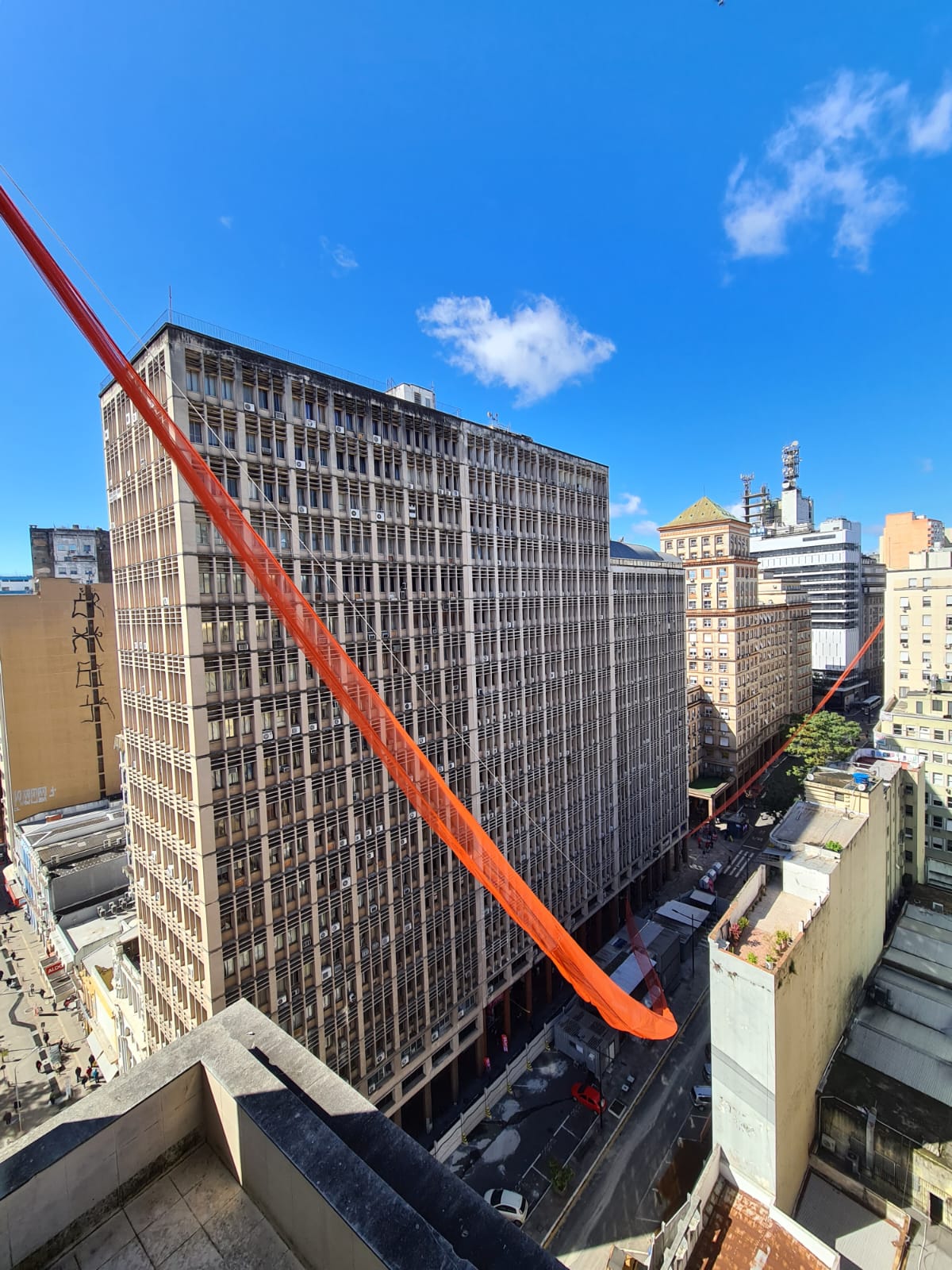
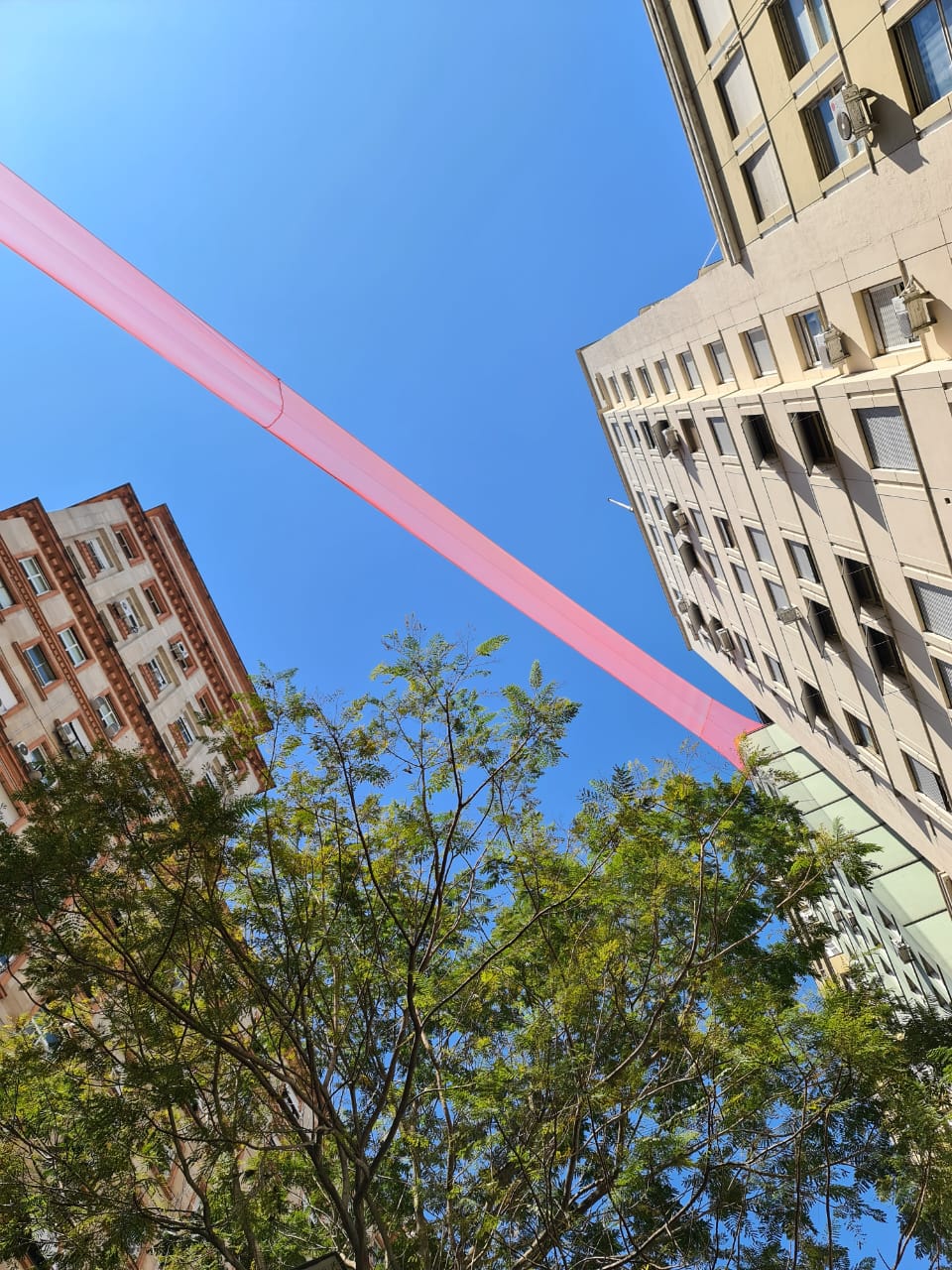
Anyone passing through Borges de Medeiros Avenue, in the Historic Center of Porto Alegre, should be curious about the bands of orange colors that connect between the buildings.
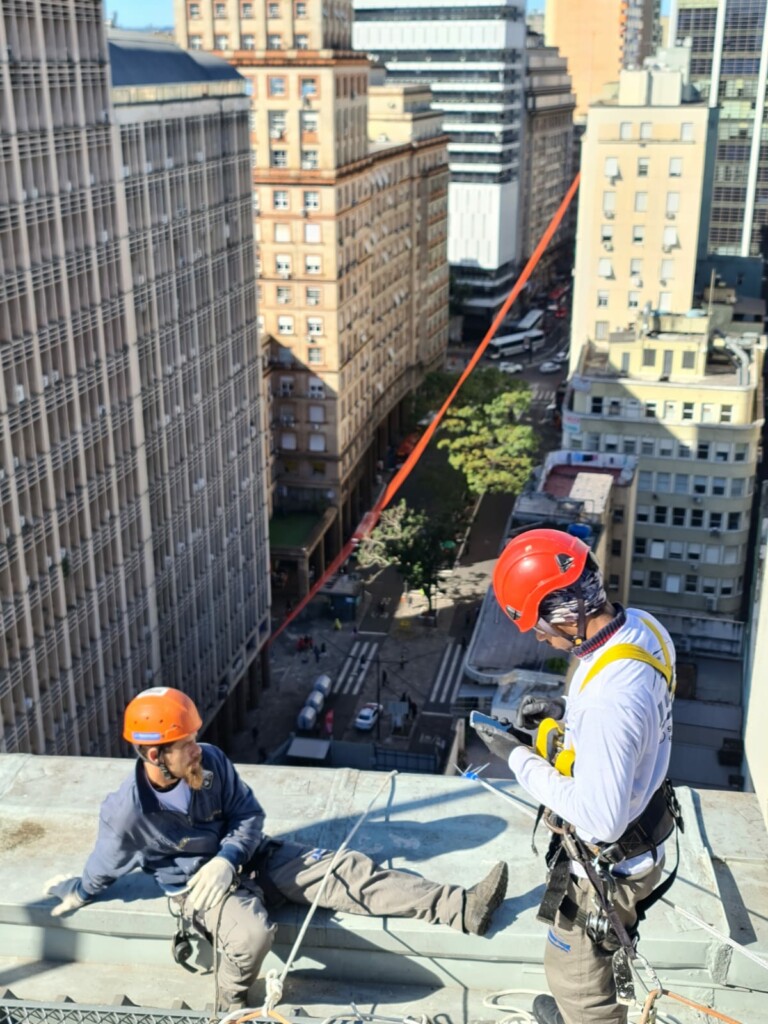
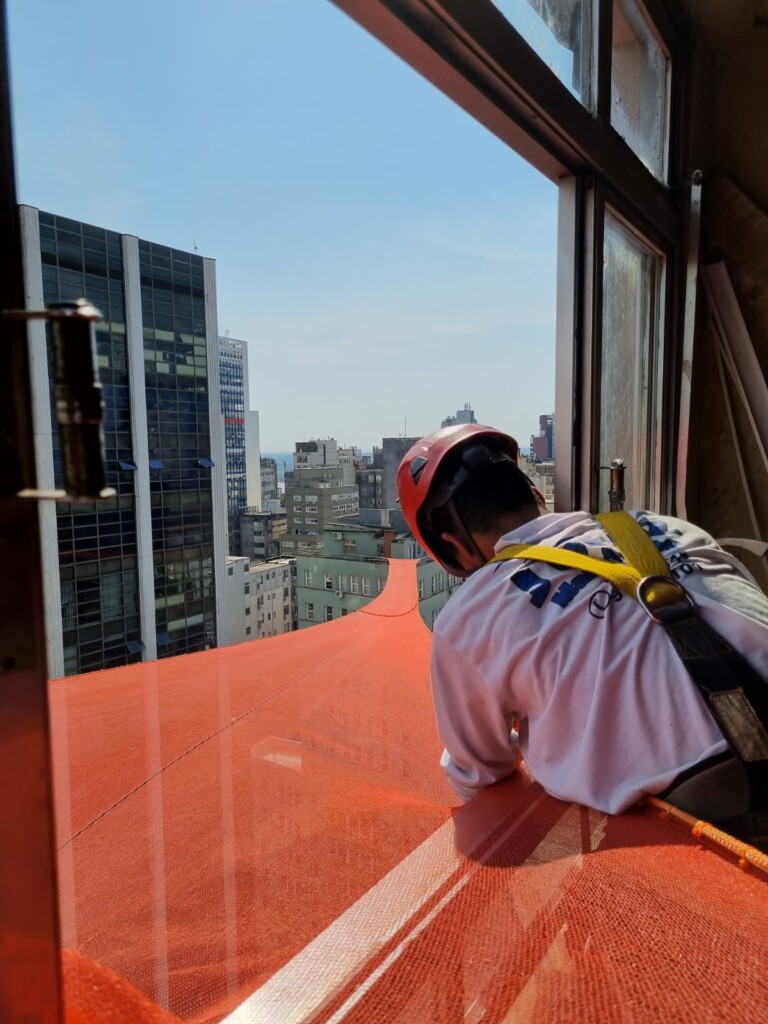
This is the work “Batimento”, by Túlio Pinto, which is participating in the 13th edition of the Bienal do Mercosul.
In this edition of the Bienal do Mercosul, the artist reflect on collective experiences. With free access, the exhibitions – which focus on the theme Trauma, Dream and Escape – aim to provide immersive essays through the senses and perception of visitors.
The event is signed by the general curator, Marcello Dantas, and the assistant curators Tarsila Riso, Laura Cattani, Munir Klamt and Carollina Lauriano.
It is a project that uses the city as a support to carry out a great pictorial graphic intervention through the use of an industrial material that is the canvas used for the facades of buildings under construction or restoration.
The orange color of the vectors intends to generate a pictorial touch with the blue color of the sky. This is due to the complementary relationship of colors.
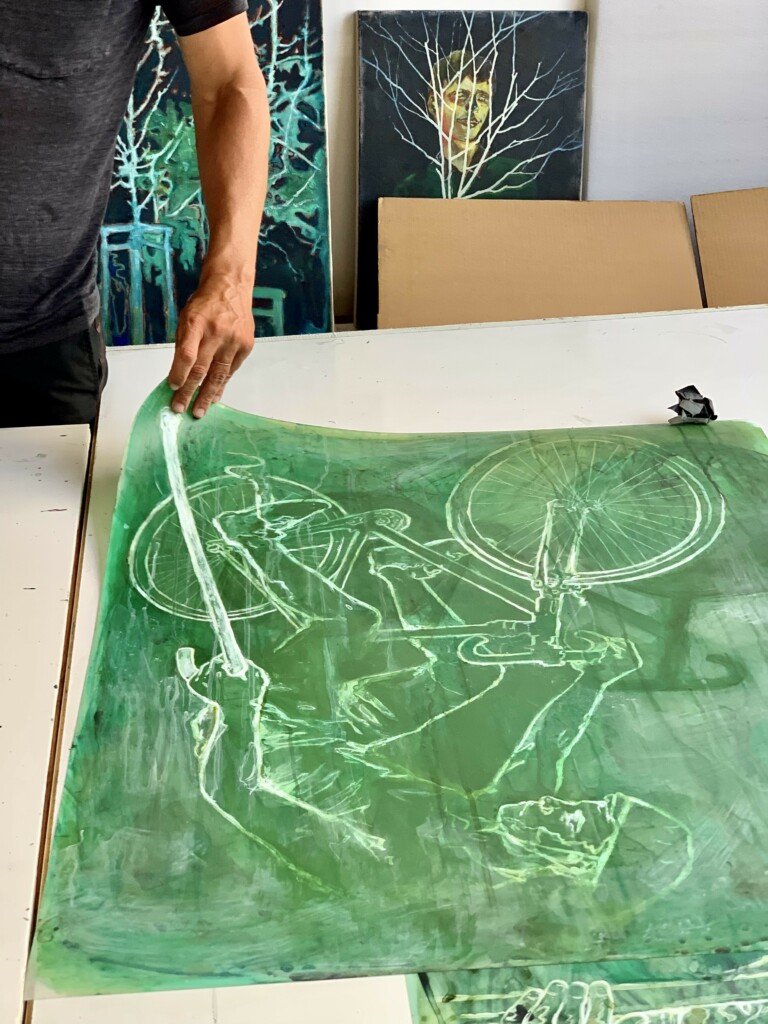
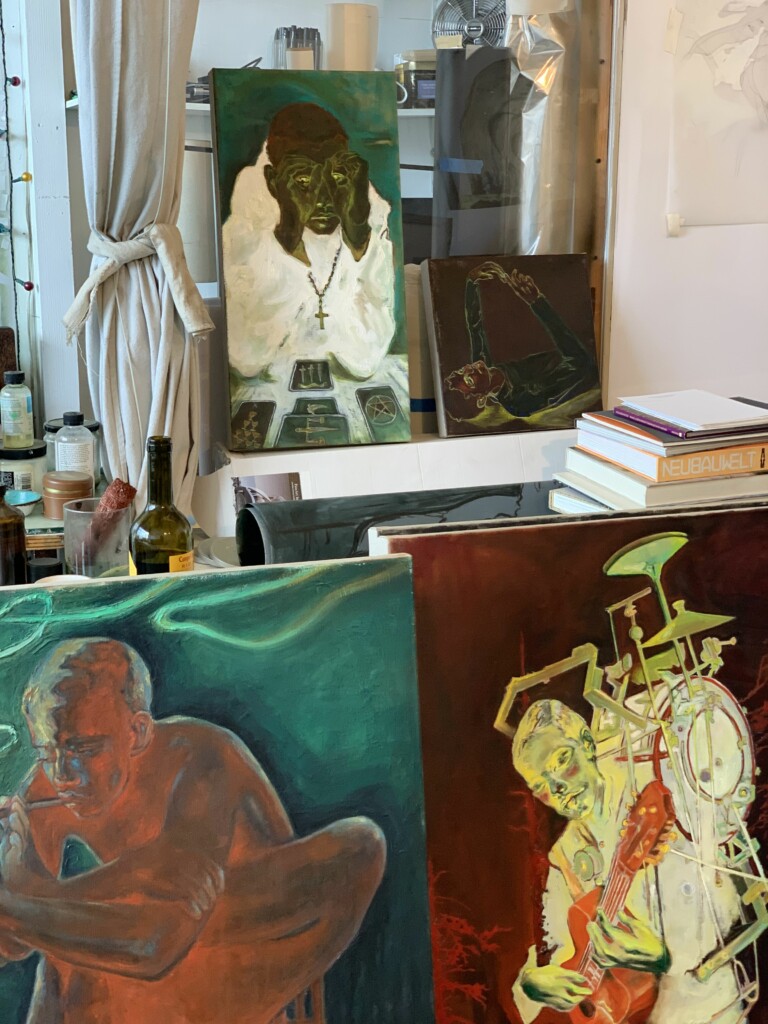
‘I normally start my day drawing,’ says Anthony Goicolea at his studio in Williamsburg, Brooklyn. ‘Eventually, one of those drawings will tell a story, then it becomes a painting.’
The New York based artist, first-generation Cuban-American, invited us to his luminous studio a Sunday afternoon in New York City.
Making use of a variety of media, Goicolea explores topics ranging from particular history and identity, through cultural tradition and heritage, to alienation and displacement.
His diverse oeuvre encompasses digitally manipulated self-portraits, landscapes, narrative tableaux executed in a variety of media, including black-and-white and color photography, sculpture & video installations, and multi-layered drawings on Mylar.
As I walk in, I am immediately captivated by the atmosphere of the studio. In the heart of Brooklyn, illuminated by a radiant mid-afternoon sun, we are greeted by some of Goicolea’s most recent pieces displayed around the space. All of them dialogue with one another creating at first an aura of contemplation and after a few minutes, of debate.
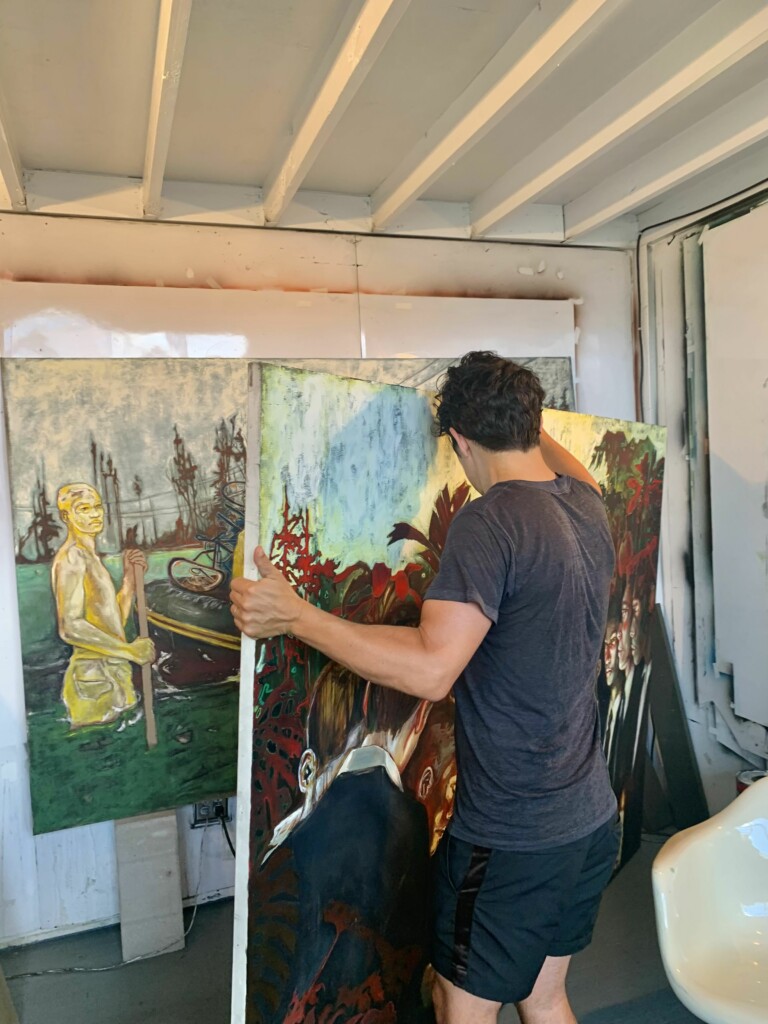
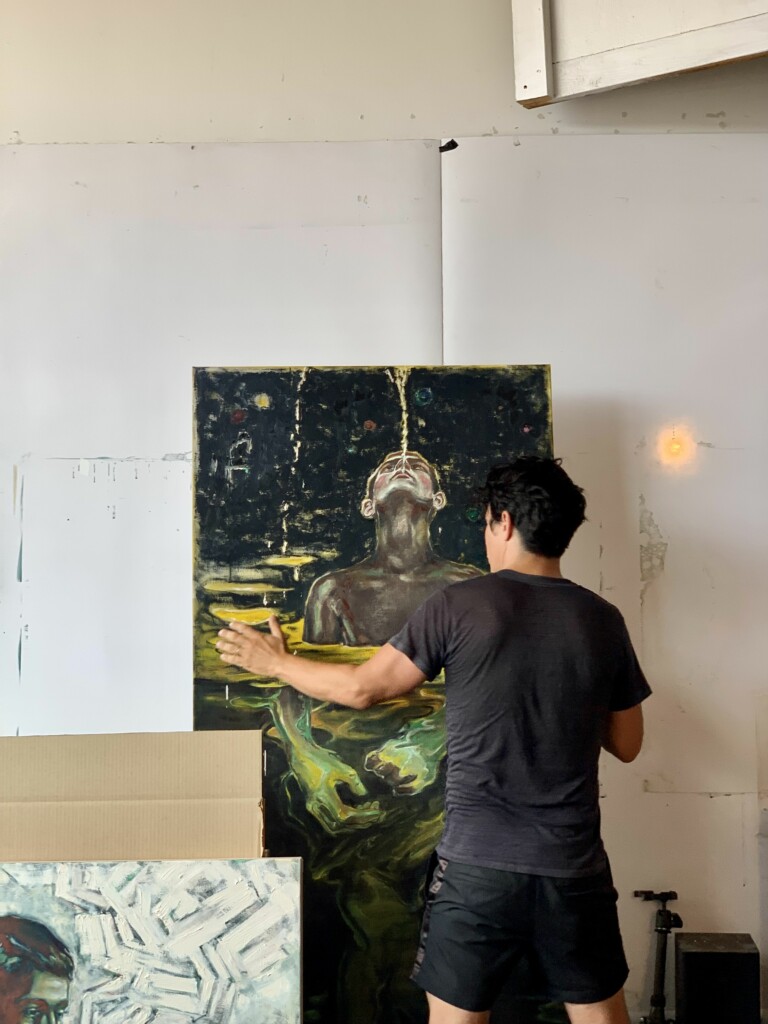
Goicolea at the studio, behind him: ‘Vigil, 2021’
The artist showing one of his recent projects
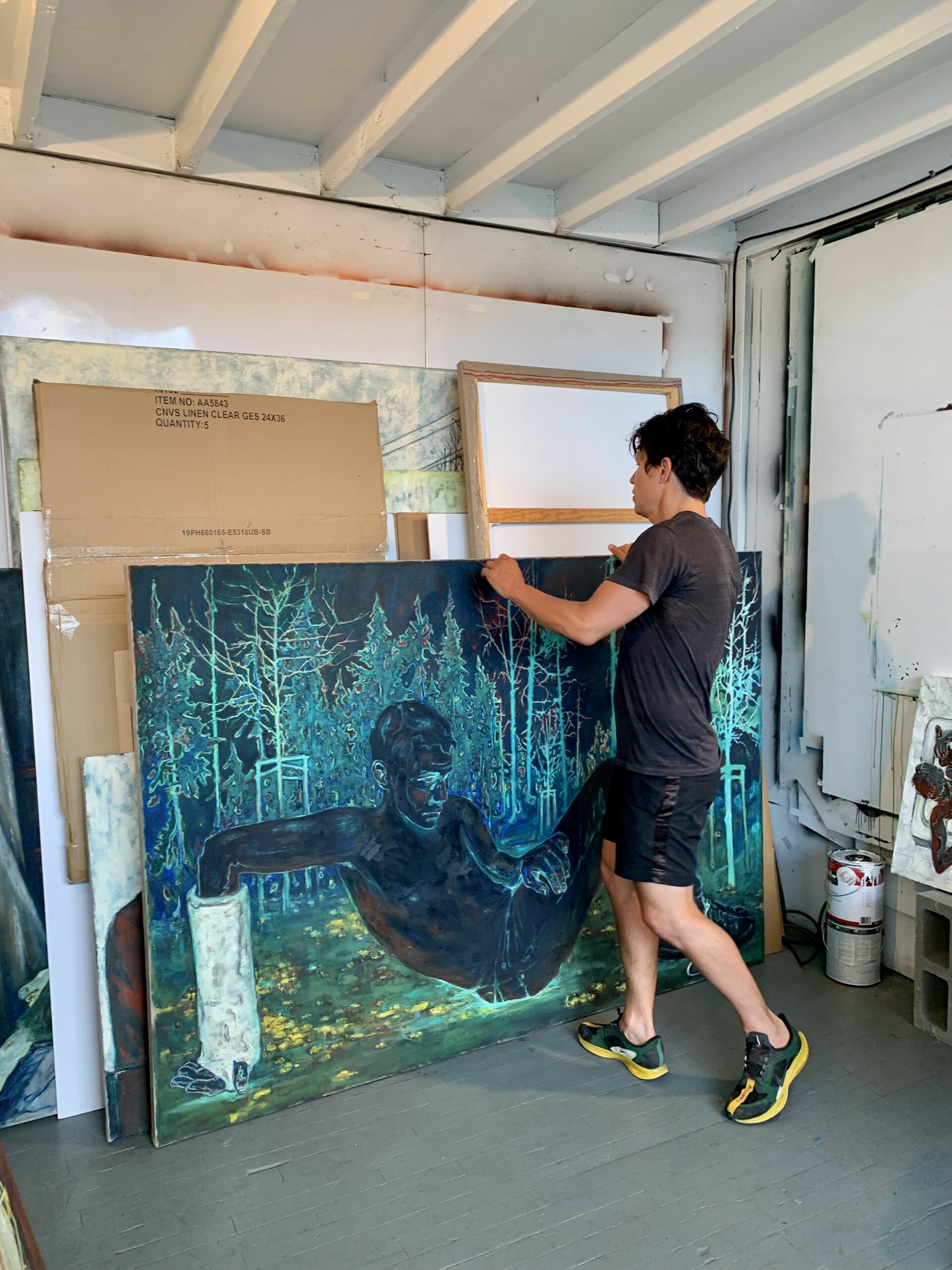
Anthony moves comfortably around the room picking out different paintings and carrying them from one place to another to get a better view. His active and energetic spirit gracefully guides us around the studio, showing us his latest creations and allowing us to enter his most personal creative space.
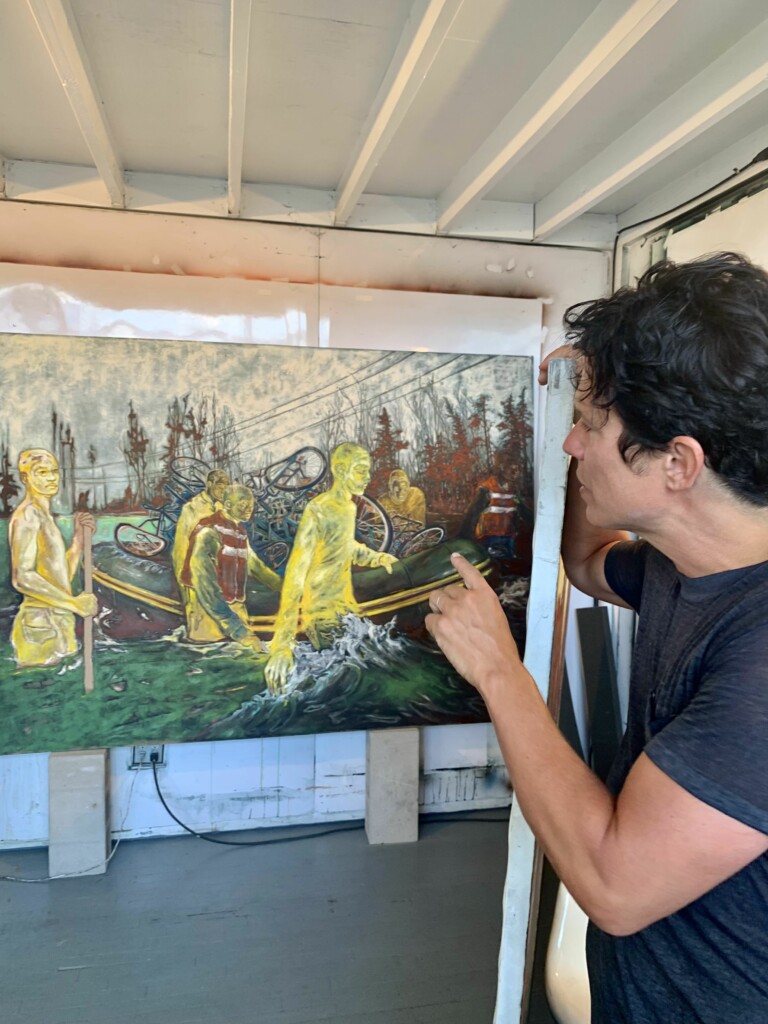
In ‘Crossing, 2021’, an oil on linen from 2020, four visible figures stand in front of an inflatable boat full of old bicycles, two other figures stand behind merging with the background.
Goicolea holding ‘Vigil, 2021’
The artists points at one of his recent works: ‘Crossing, 2020’
As an unresting curious artist, he’s always looking for innovating challenges. I noticed the great variety of sizes of the canvases and discovered that the dimensions weren’t random. Goicolea builds his own canvases to give life to his paintings, facilitating the process of projecting his drawings onto the fabric in a more personal and approachable way.
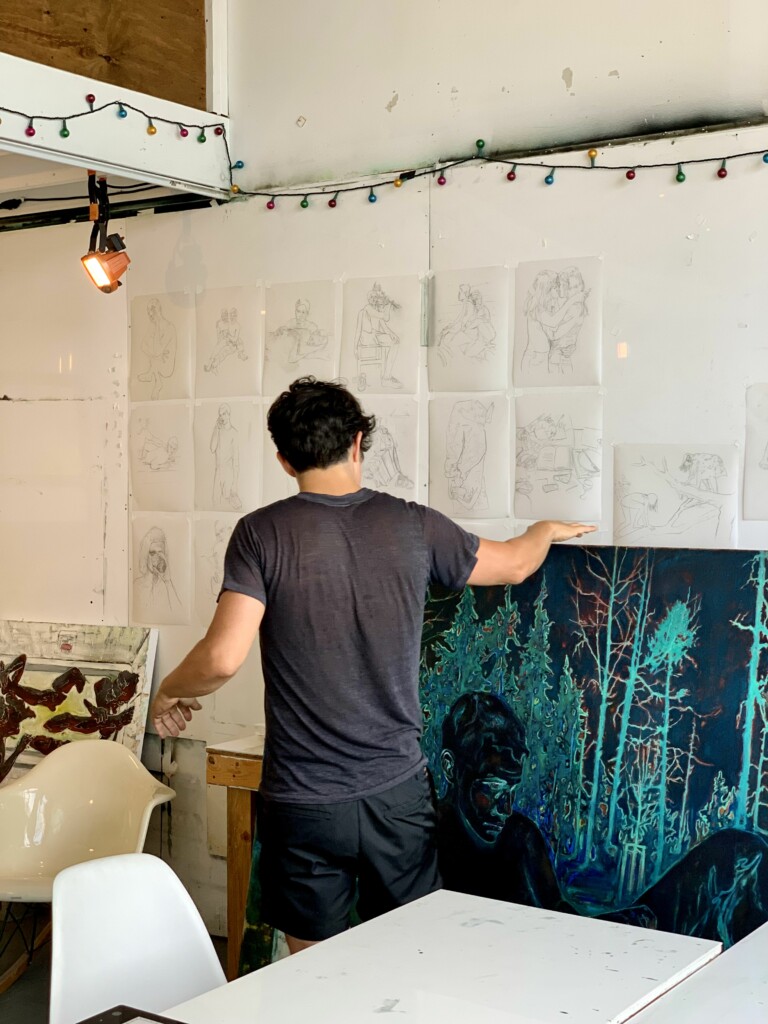
Goicolea’s pencil drawings on the wall
In the far back: ‘Portrait of A Franciscan Monk Giving A Confessional Reading to Aldo Londi Circa 1962, 2020’
The artist carrying ‘Fountain, 2021’
In past series, many of the images were devoid of humans. In those works, primitive lean-tos and crudely constructed shanties coexist in an uneasy union with the technological vestiges of an industrialized society. Suggesting a world on the brink of obsolescence, these chilling images further cement the pervasive undercurrent of human alienation—from one another as well as the natural environment—that can be traced throughout the artist’s work.
‘Odalisque with Kickstand, 2021′
However, it seems like Goicolea has officially entered –or, revisited– a phase in which his own personal history becomes the root of his inspiration by, once again, exploring his roots and family heritage with a different technical perspective.
These poignant, almost cinematic images are characterized by a fervent search for ancestral & social connections to his homeland: Cuba— revealing nostalgia for a past that the artist didn’t experience & a sense of cultural dislocation and estrangement.
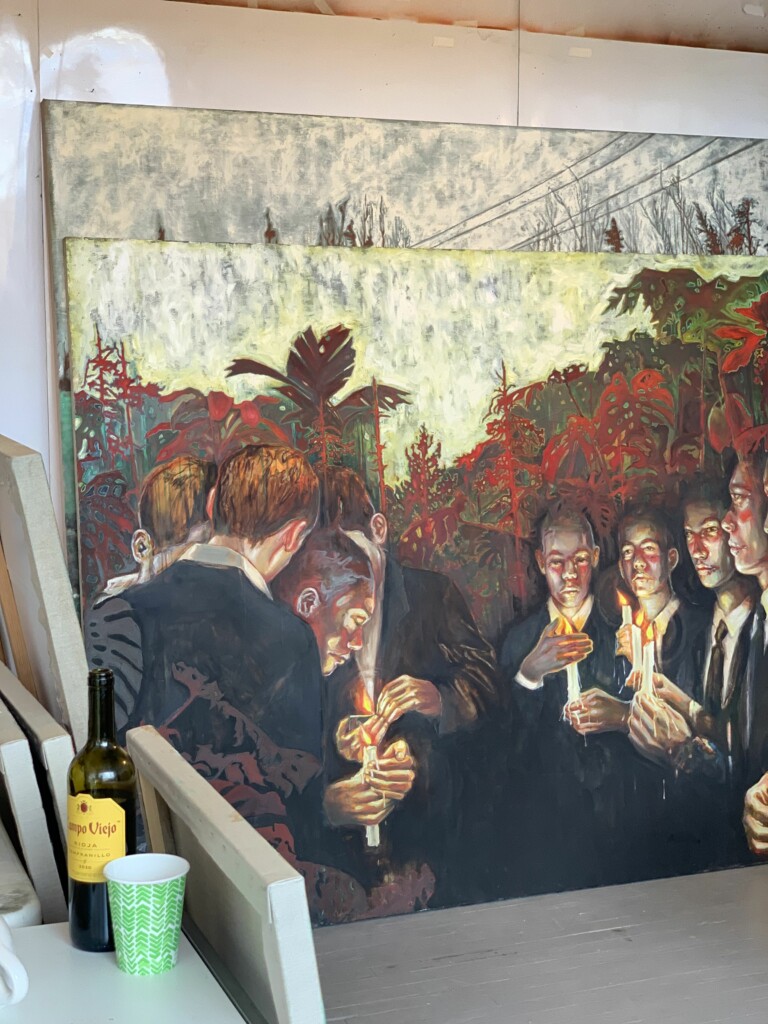
‘Vigil, 2021’
Anthony posing for Galeria SENDA during our Studio Visit
See anything you like?
Visit our shop or send us an e-mail to: info@galeriasenda.com
Follow our social networks so you don’t miss any news or gallery activity!
The artist based in Barcelona has just presented a new series of sculptures in the shopping center La Roca Village. The collection represents a novelty for the artist who usually works on large-scale public murals.
Striking sculptures by American-born Japanese artist Mina Hamada dot the streets of the space. In June, the creator inaugurated a project conceived together with La Roca Villageand the galleryLAB36. The idea behind Colorful Walk, conceived ex profeso for that place, is to support local talent.
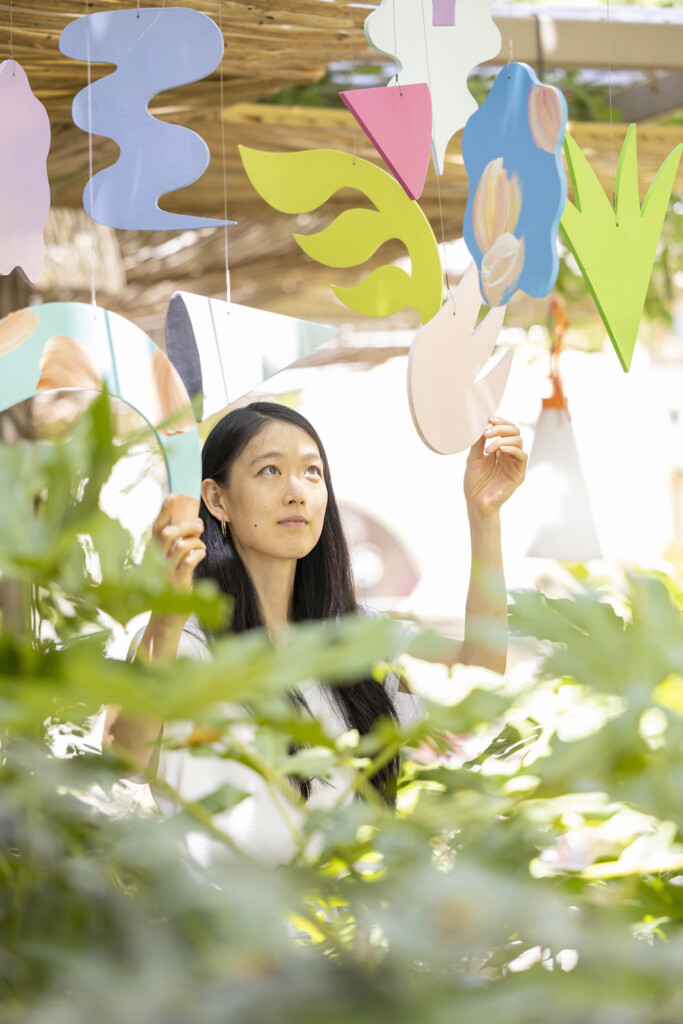
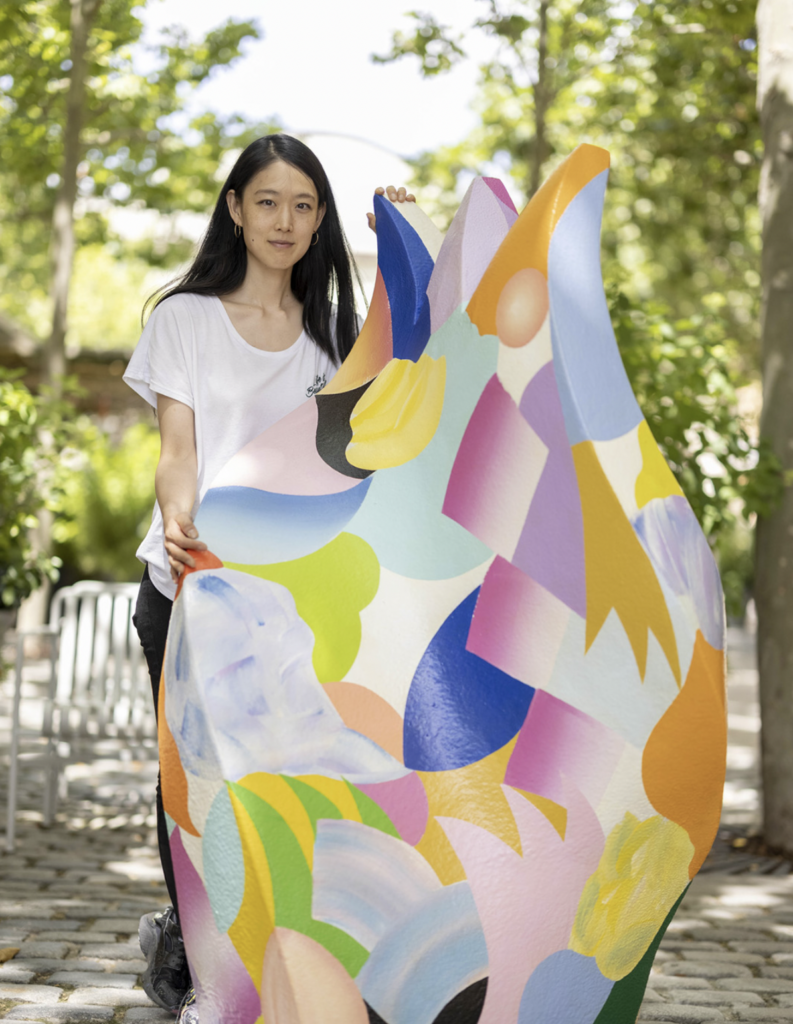
Three colorful geometric sculptures and a set of hanging wooden mobiles can now be seen at the entrance of La Roca Village. A final three meter tall sculpture will be installed later this summer. Mina talks about her work process, her iconic style and how she approaches a new medium.
Hamada transmits its good vibrations through itsfree and organic forms, in a style characterized by color, rhythm and improvisation. Although it is mostly known for its mural artof enormous dimensions, the artist explores other formats such as canvas or sculpture without abandoning the artistic language that identifies her. You can currently enjoy his circular and rectangular canvases in an individual exhibition that he has done for the galleryLAB36 titled Transition.
The La Roca Village project began to take shape in 2021 and, after several meetings, Hamada and the team created for the occasion, chose to develop strong>works with volume. The artist, who has worked in various disciplines, from paintings to murals or work on paper, is the first time that she has developed such large works in three dimensions:
“It’s a new challenge for me. With Paseo Colorido I can bring people closer to my work and make them interact with it.”
Hamada’s proposal is articulated through three groups of sculptures: Dream Passage, with large-scale works (300 x 200 x 150 cm) ; Summer whims, which are three small format pieces; and Aerial landscape, a mobile installation. The artist is excited about the opportunity to give volume to her creations, because “they look like characters that come out of my paintings and have a soul.”
Follow the full story on our social networks @galeriasenda #galeriasenda