Exposición online “Naturalmente”

All of them propose an immersive experience in a common universe that is accessed from a multiplicity of approaches and that responds to a single logic: that of artistic creation.

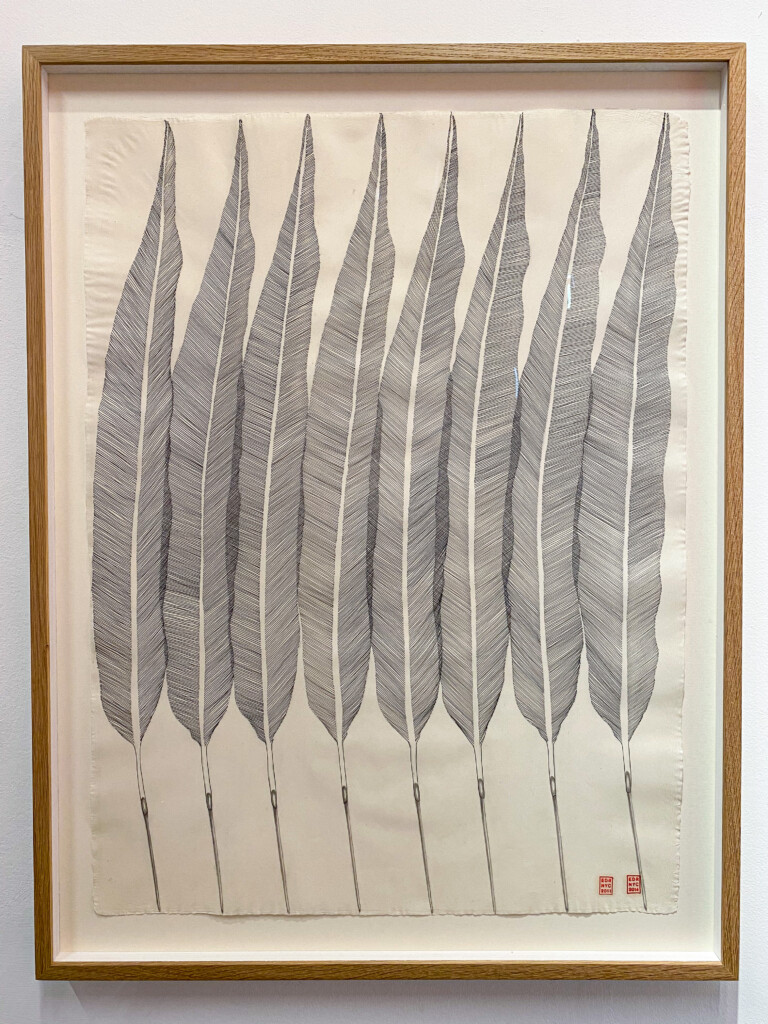
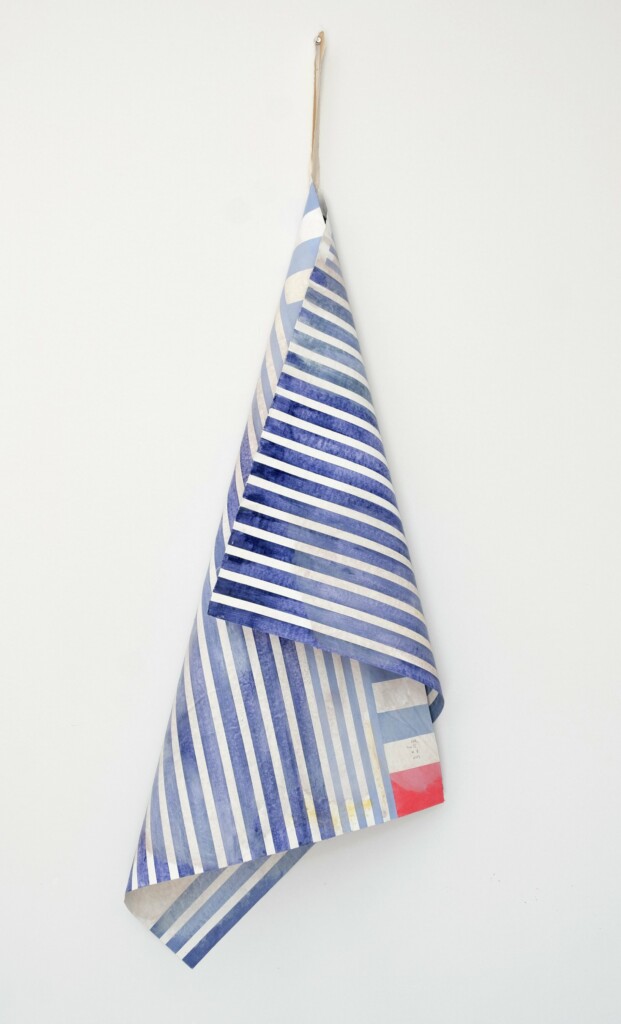
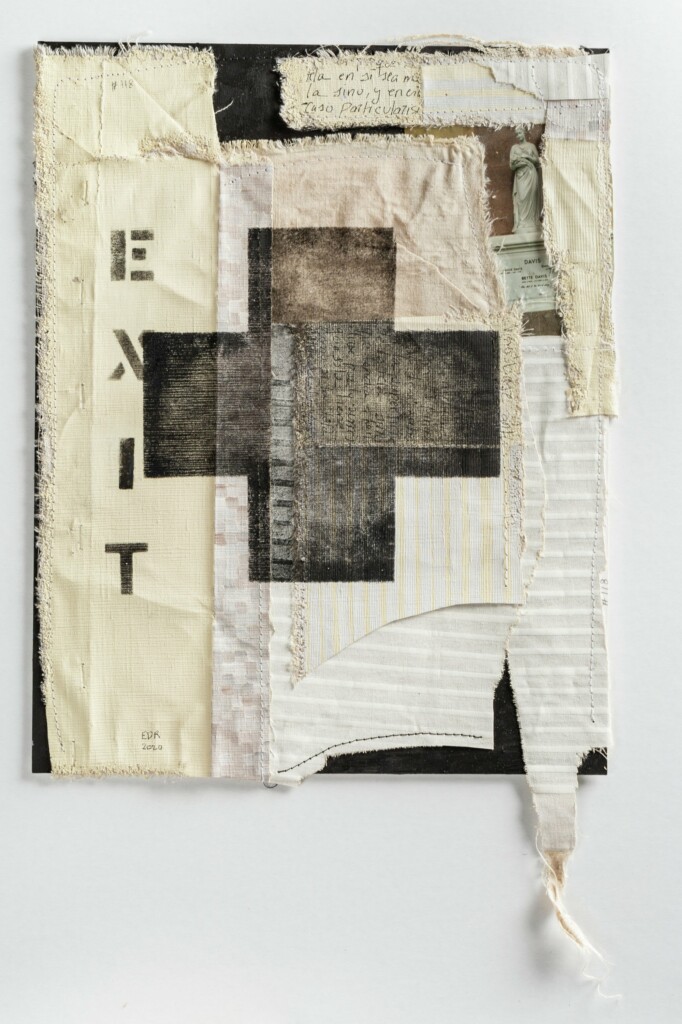
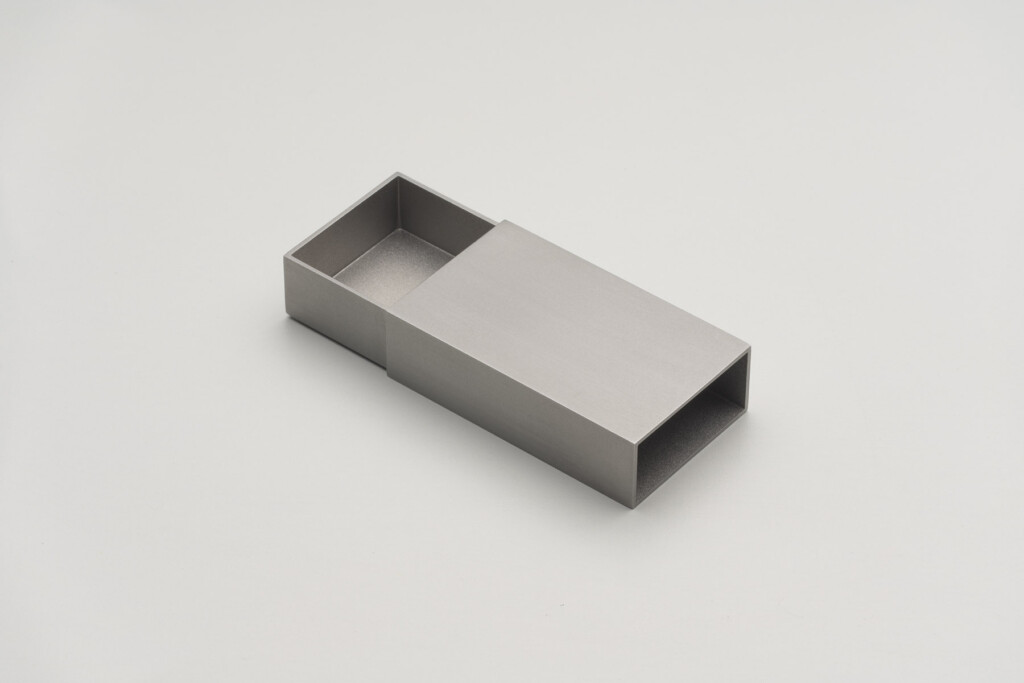
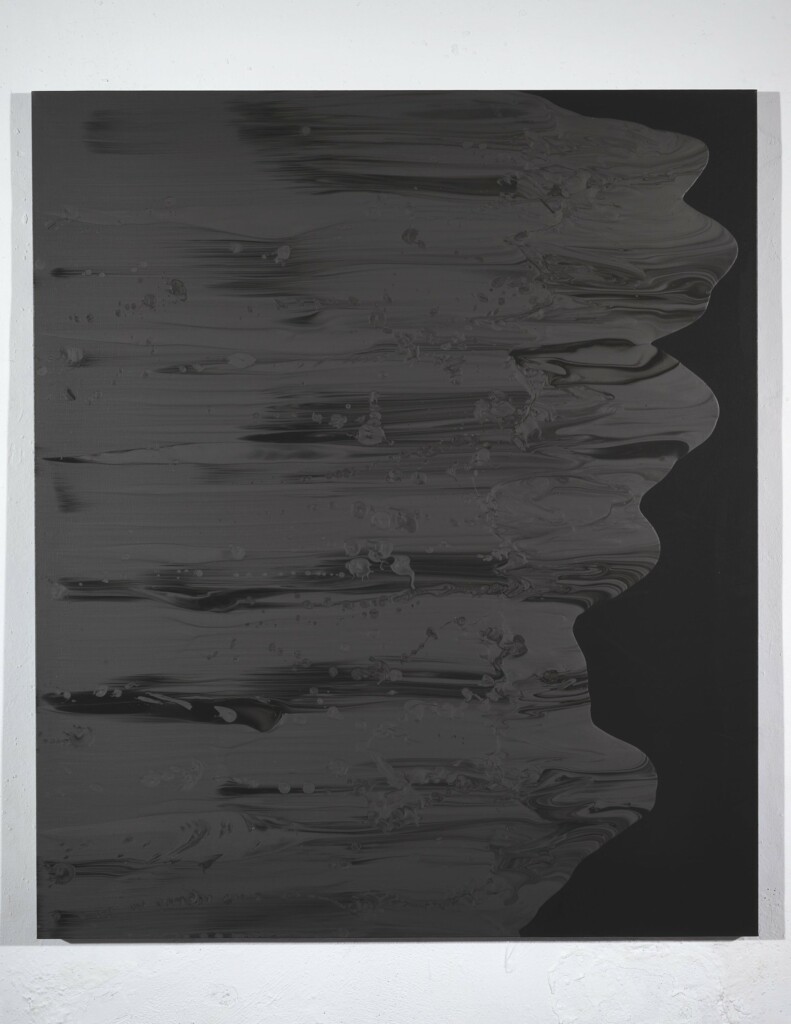
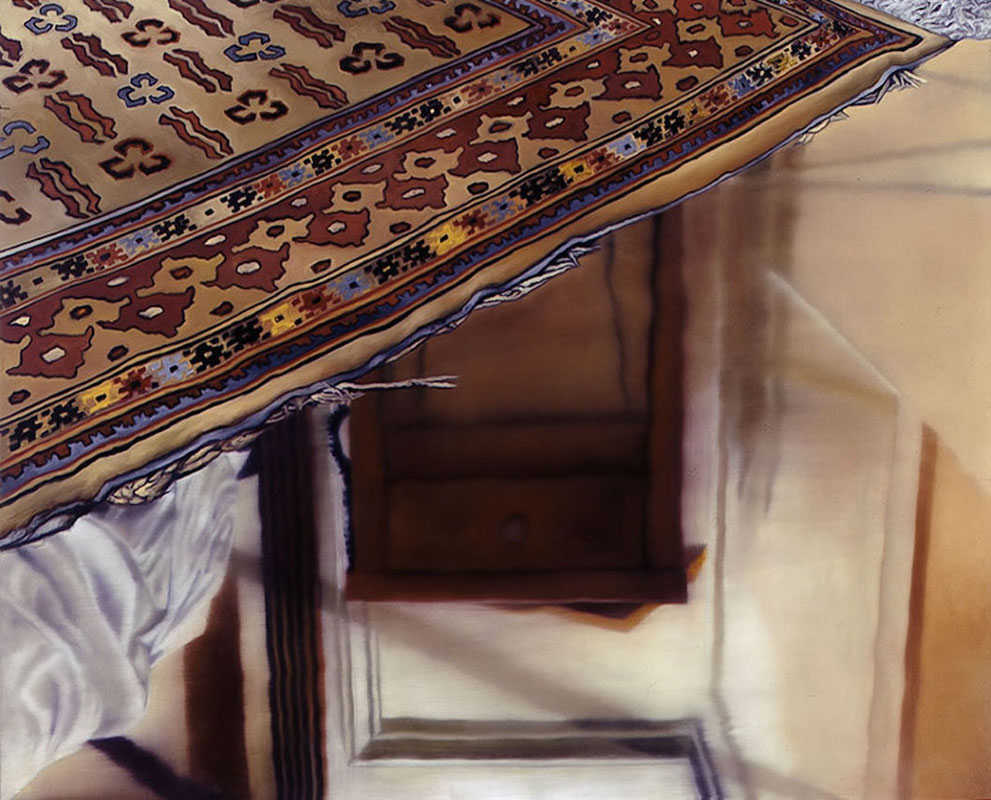
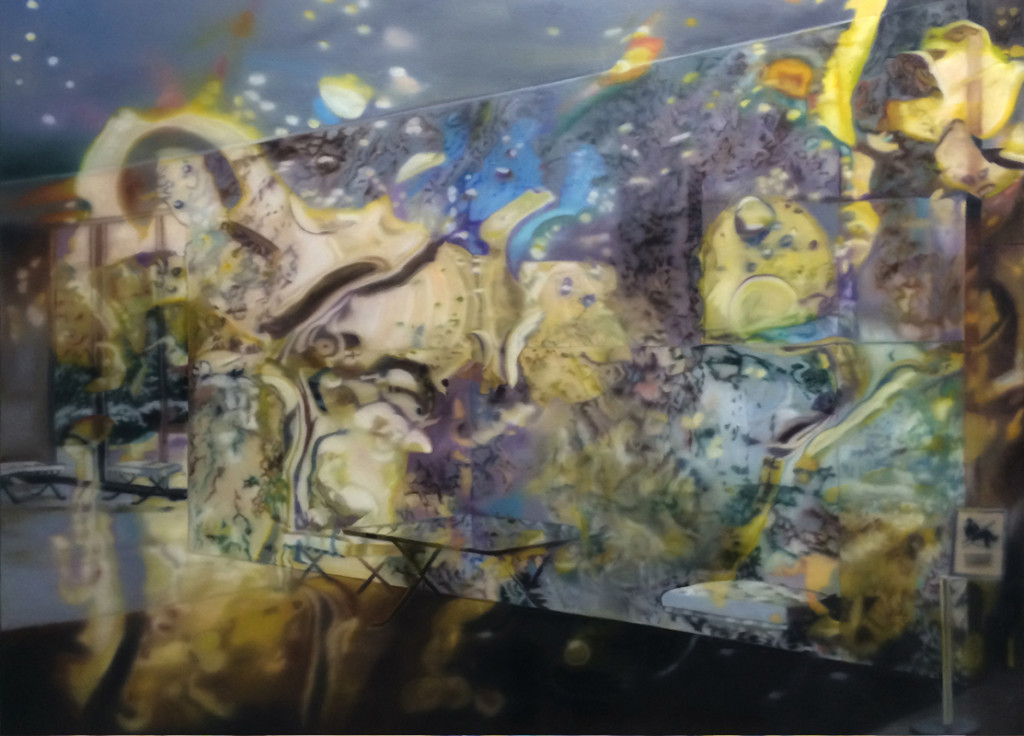
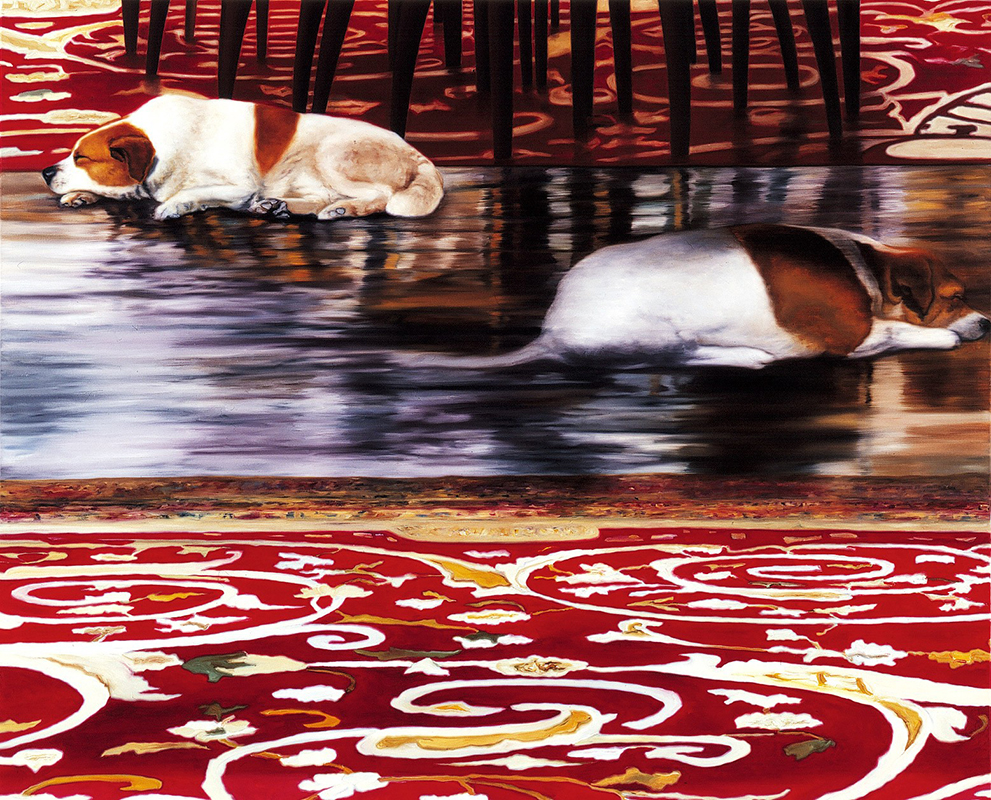
Inspired by their experiences, each artist builds their language, not only as a way to escape from themselves but above all as a communication tool. The delicacy of the supports and materials undergoes a metamorphosis to consolidate into strong works that, however, maintain elegance and softness. The play of textures and contrasts is a constant within the exhibition that, through the various techniques, invites the viewer to enter the particular universe of the works. The exhibition layout of the room itself generates these dialogues.

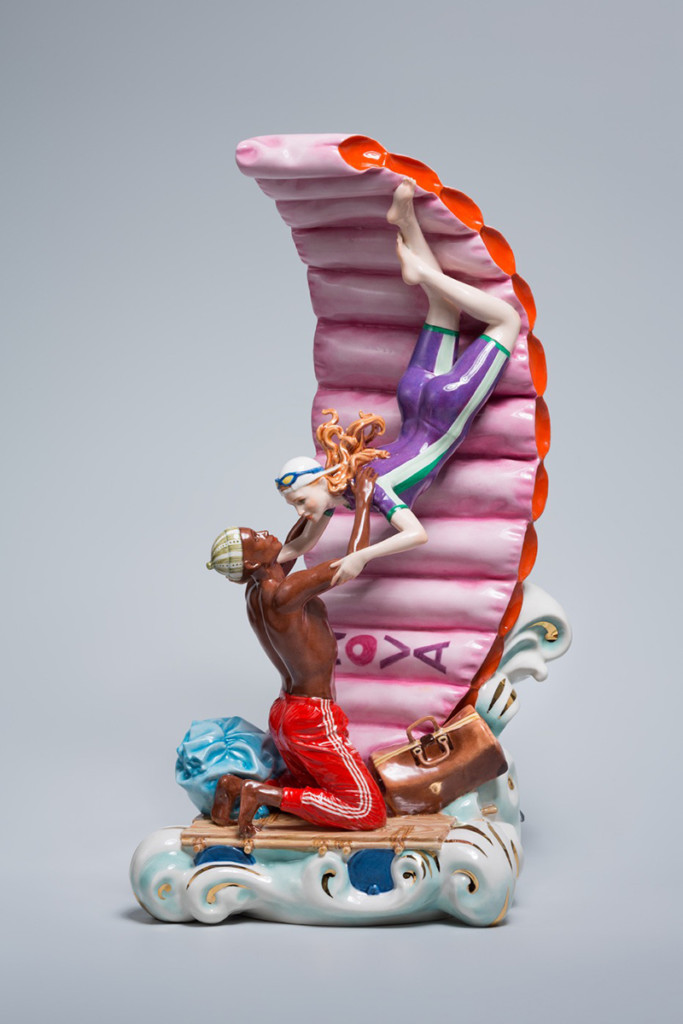
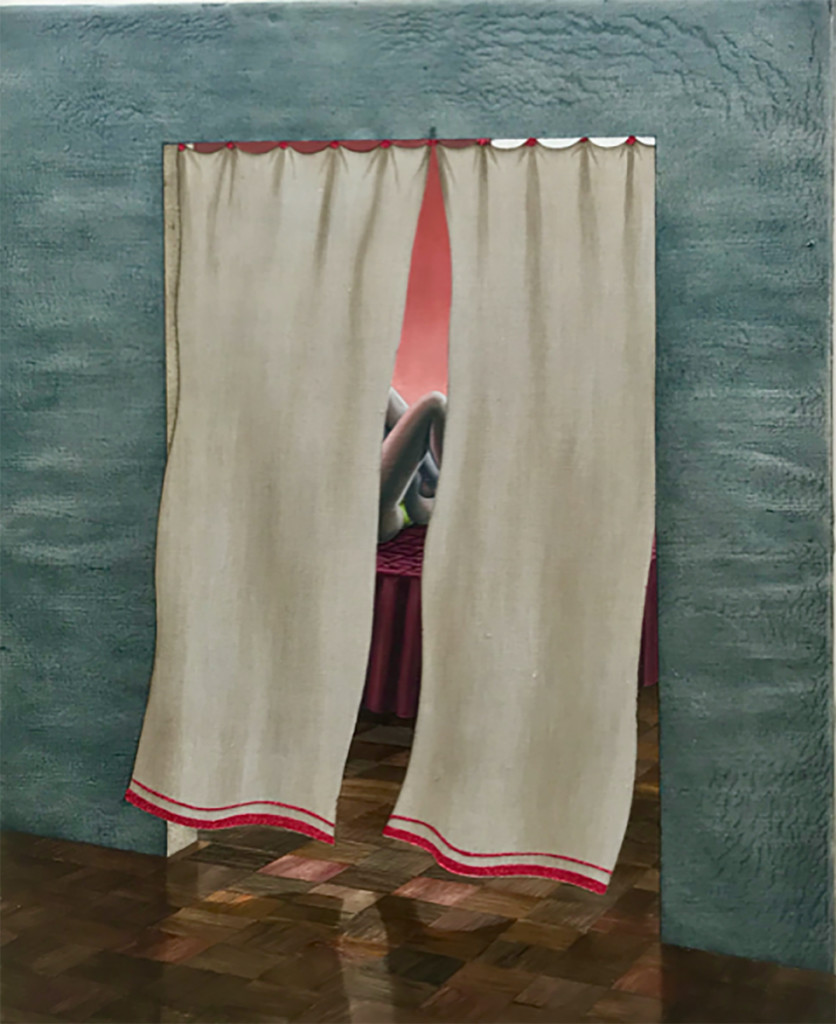
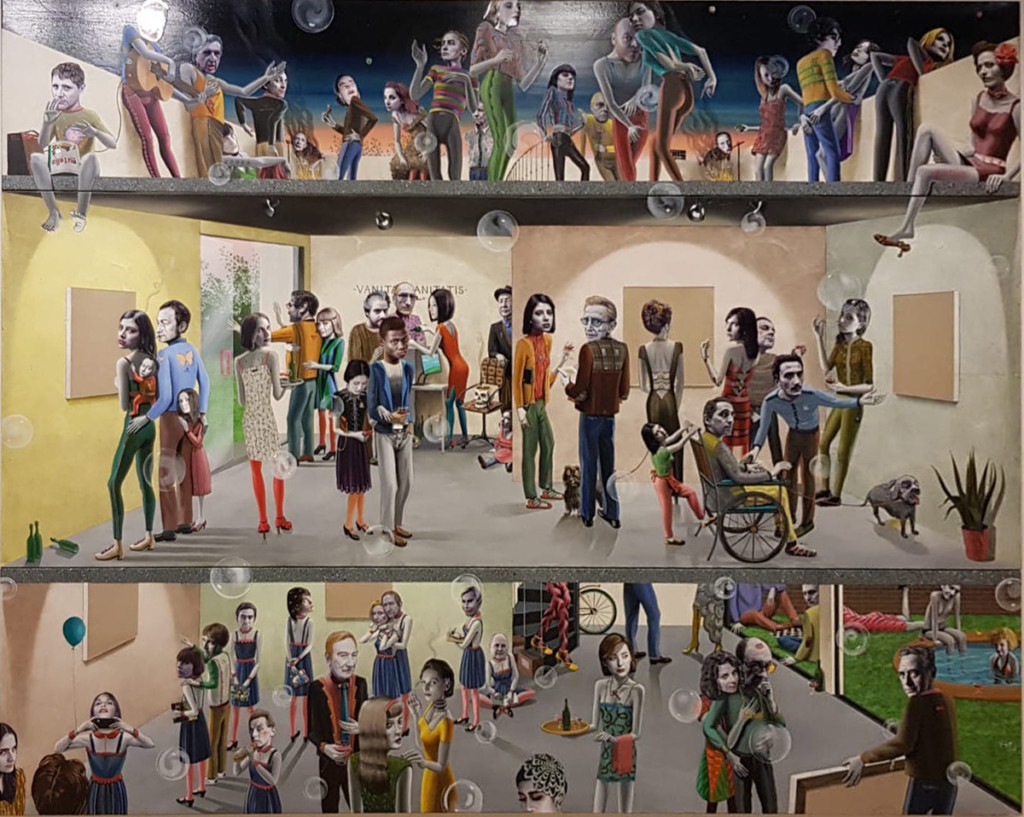
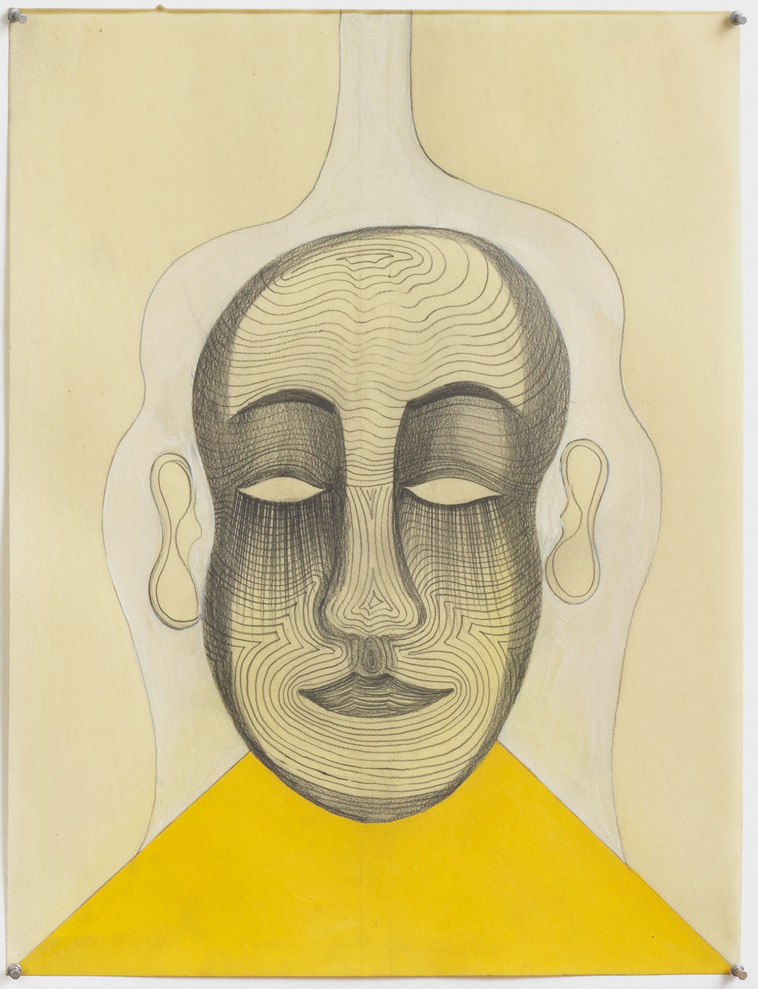
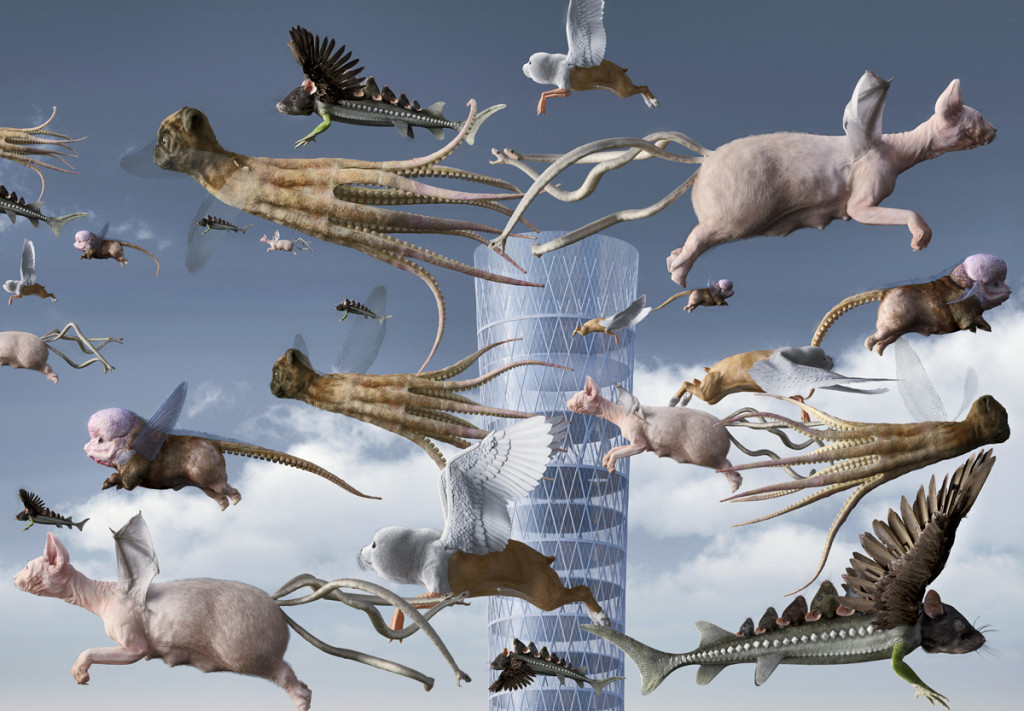
The artists who star in this exhibition stand out for the echo they generate in their respective communities. Hamada and Cascales intervene in physical spaces, the same ones that Malagrida and Sussman portray. The environment is equally essential in the work of AES + F, which builds a performative microcosm. In León y Jaramillo it is precisely this infinite possibility of the cosmos that inspires his work. The artists expose their way of being and interpreting the world, thus turning art not into a final product, but into the foundation of their expressions.

Intervenciones urbanas

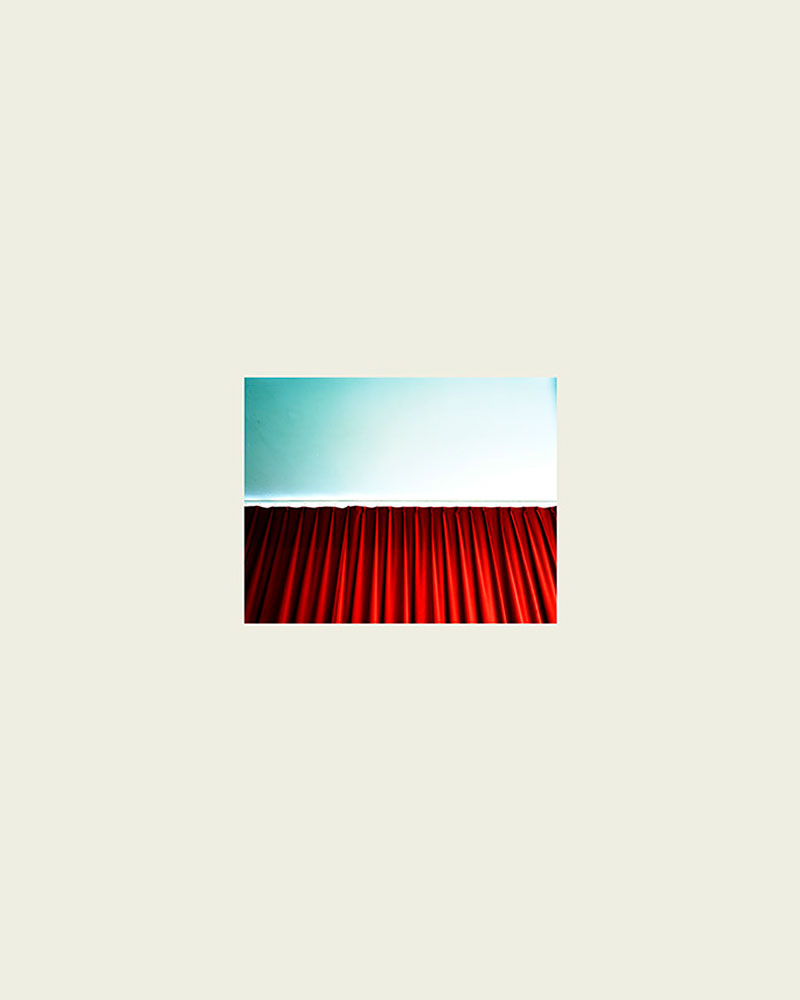
INTERVENCIONES URBANAS is a collaborative online exhibition that brings together works by Mina Hamada (USA), Antoni Miralda (Spain), Adrián Balseca (Ecuador), Anna Malagrida (Spain), Ola Kolehmainen (Finland) and Massimo Vitali (Italy).

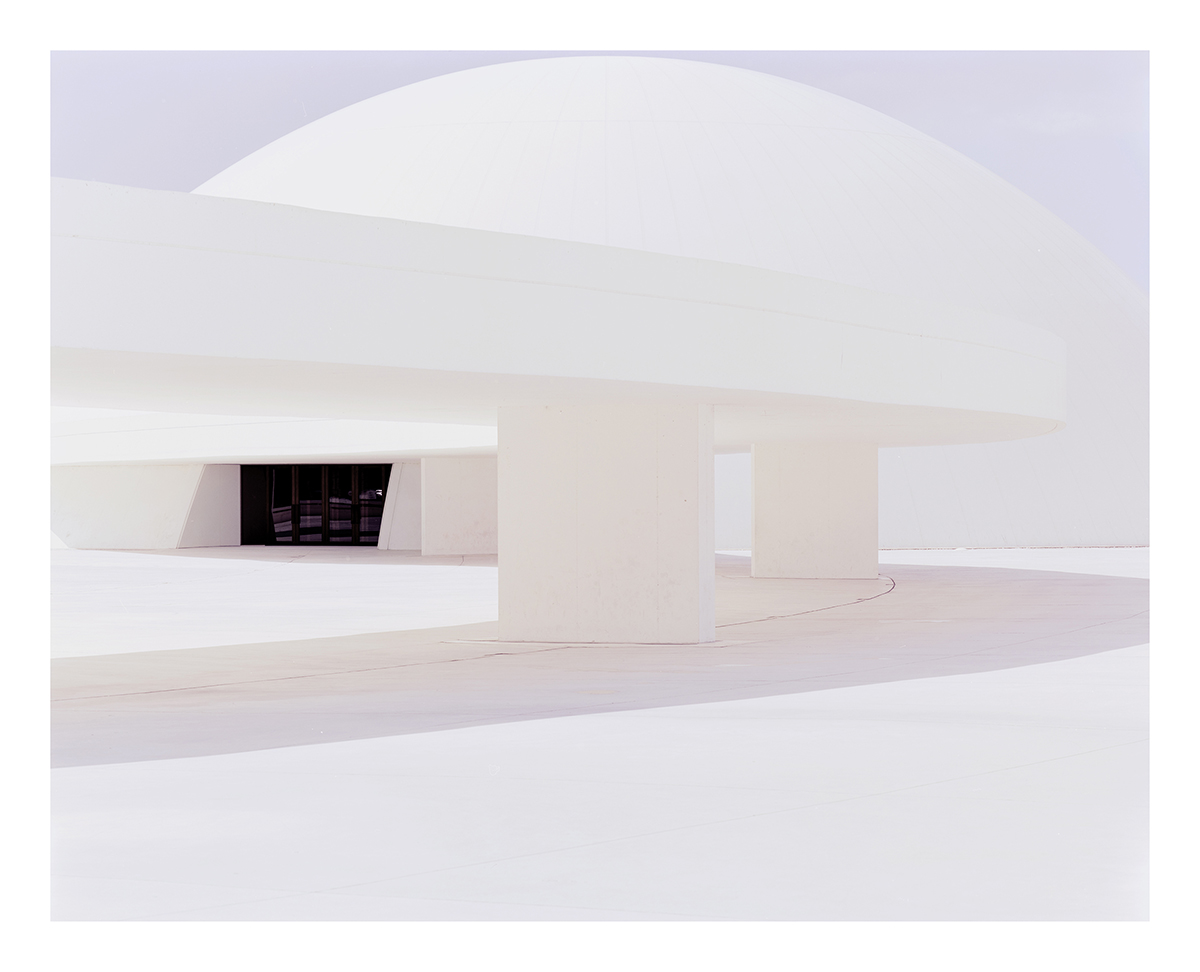
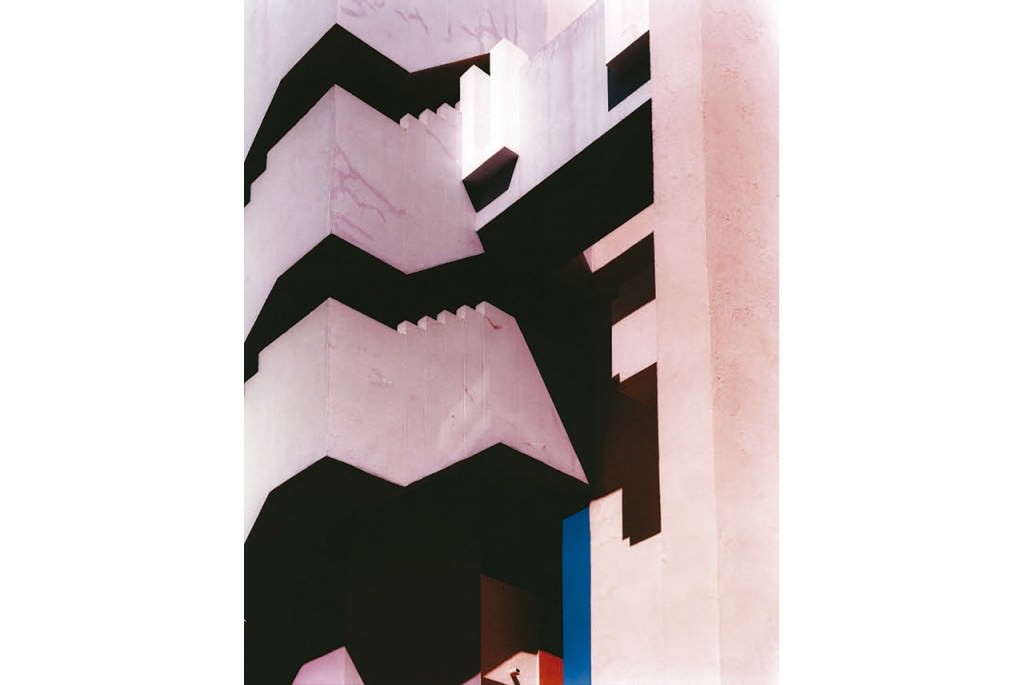
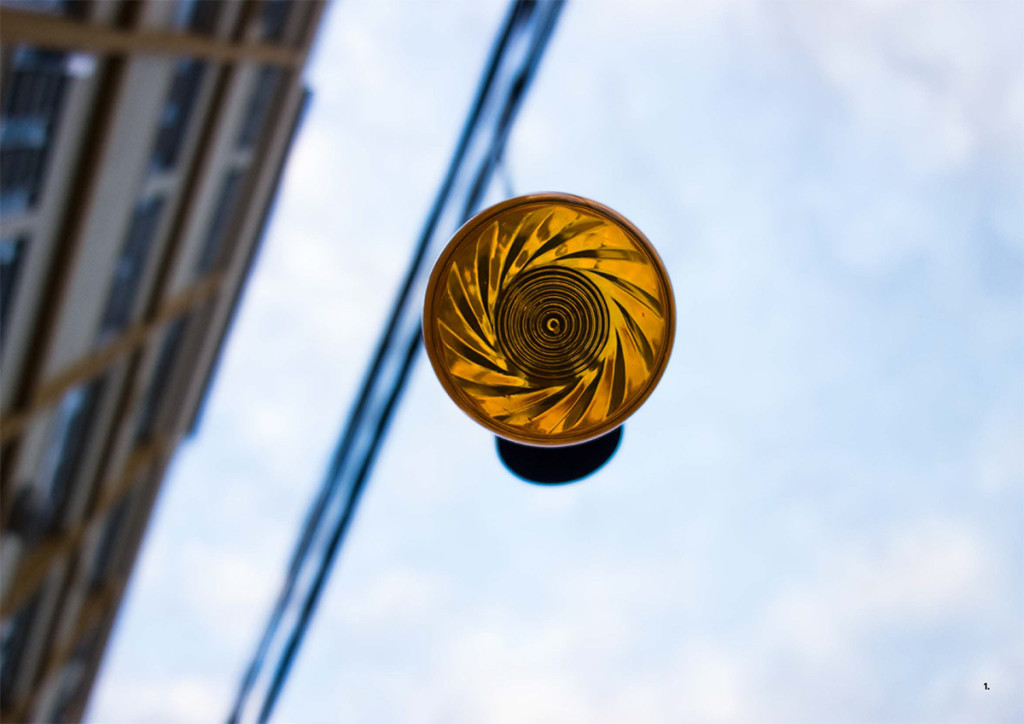
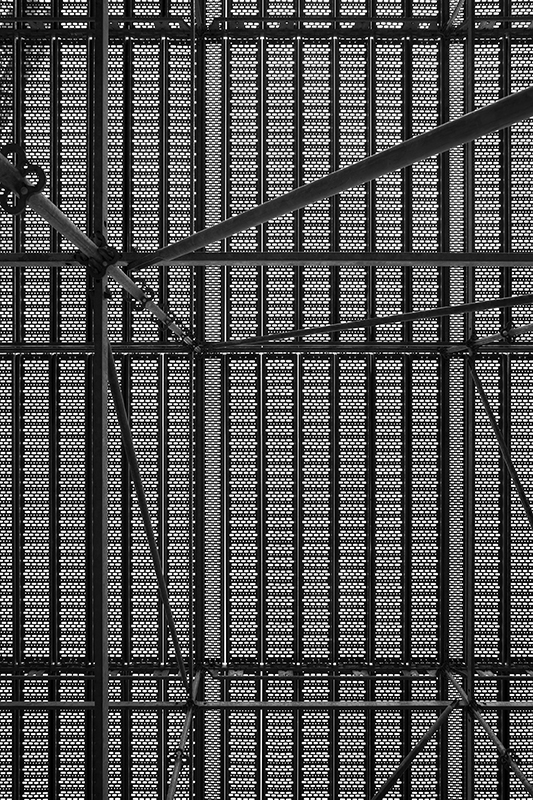
The selected artists share an interest in thinking about the urban scene, whose works are produced using different techniques that, nevertheless, dialogue with each other to build a narrative. Architecture appears as a central subject in the works of Ola Kolehmainen and Adrian Balseca, highlighting the singularity of the buildings and the creation of tensions with their surroundings. These same walls are transformed into a support for the urban art produced by Mina Hamada’s graffiti, thus integrating art into the urban space.

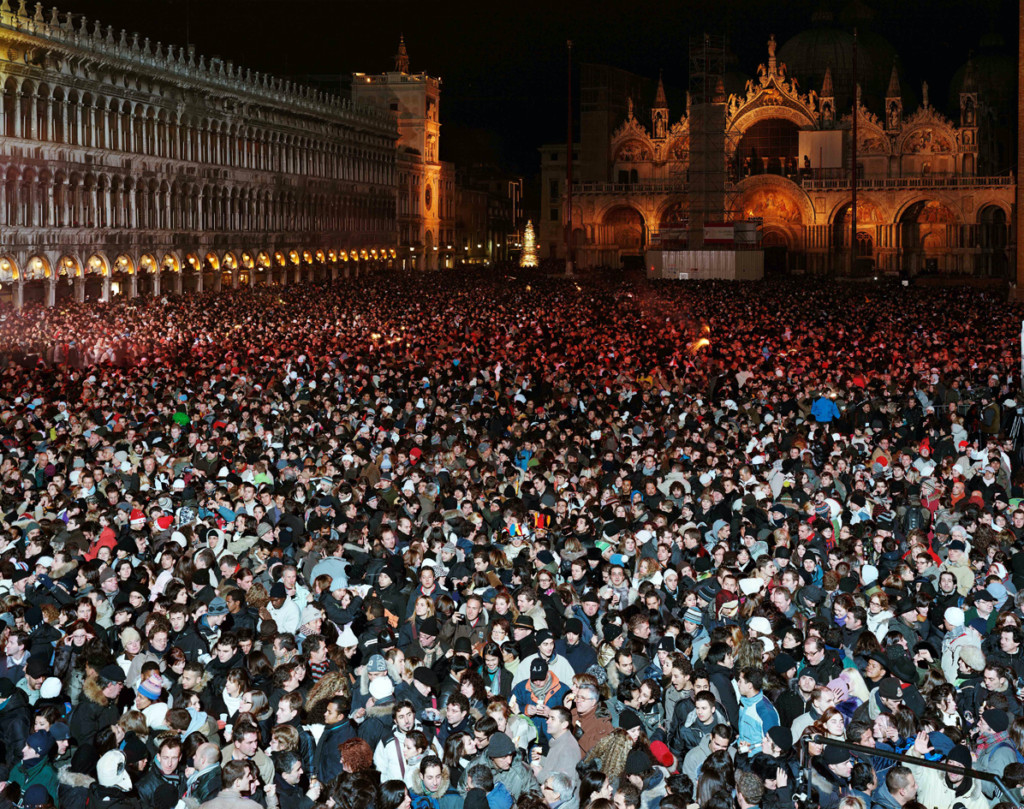
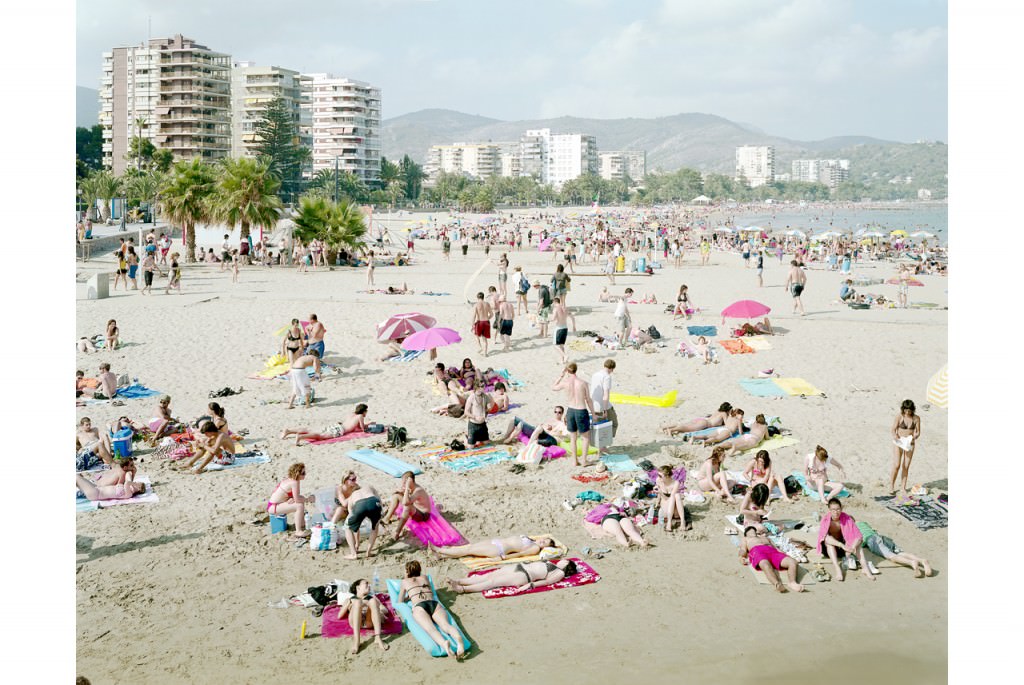
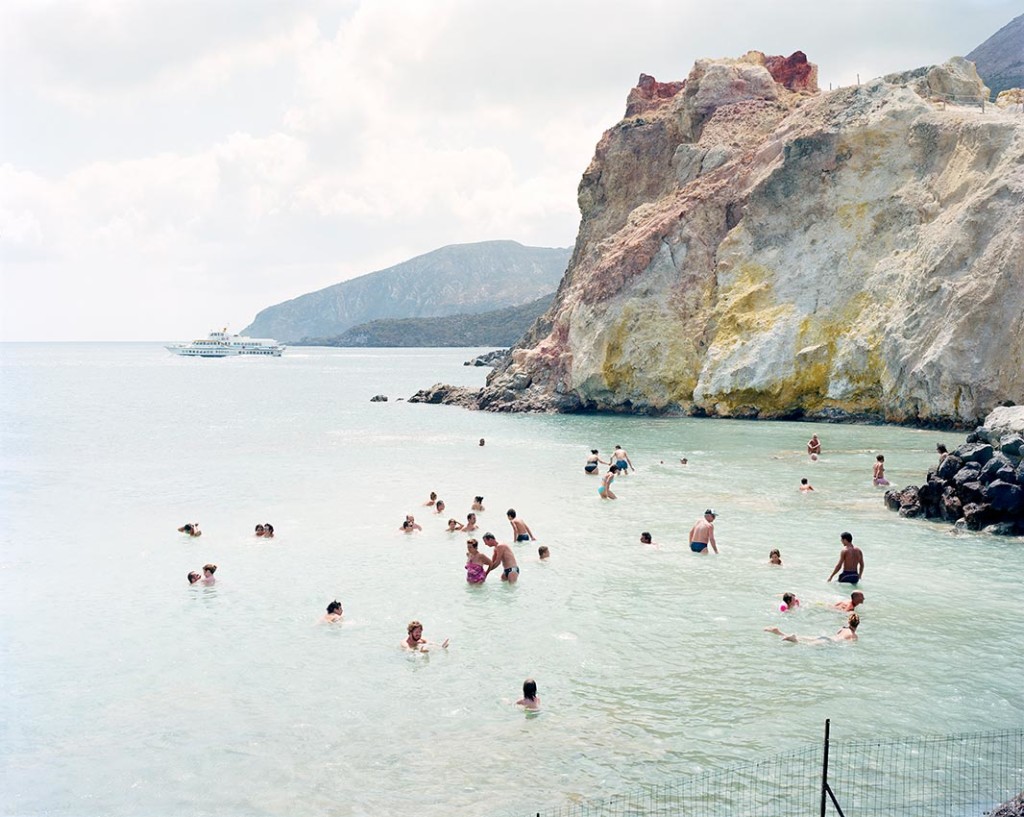
The city, the stage of our daily life, is the background that builds the visual language of Massimo Vitali, Antoni Miralda and Anna Malagrida. Vitali’s human constellations highlight the subtleties of reality, while Miralda and Malagrida make interventions in the spaces, creating games of oppositions that make us reflect politically and aesthetically on the urban landscape.

Through dialogue, INTERVENCIONES URBANAS builds a symbolic universe in which the personal views of each artist invite us to read the urban space and human relations through a new lens.


Artsy : https://www.artsy.net/viewing-room/galeria-senda-intervenciones-urbanas

JORDI BERNADÓ, “If not, tomorrow”

Of the nine books that the poet Sappho (630 BC) composed, only one poem has survived in its entirety. The rest, what has come down to us are fragments, and the poet Anne Carson collects them, translates and reinterprets them in a book of disturbing beauty called ‘If not, winter’, where what we read captivates us especially because of what it is intuited behind those verses.

The artist Jordi Bernadó (Lleida, 1966) is inspired by this title, ‘Si no, el Invierno’ in an exhibition that is a double wink to Safo and Anne Carson to also recover fragments through which he constructs a look at a world, ours, where the ground has begun to crack. And it is from there, from the crack, from where Bernadó tracks the elusive beauty through the tracks it leaves when it retires.

In continuous migration towards territories yet to be discovered and occupied, in a moment of loss of common orientation, the human being needs to land somewhere. Although it is in a question that opens looking for a map of new references and reclaiming old ones. But far from wanting to offer certainties, the images that make up ‘If not, tomorrow’ rather they are signs that point to the emergence of a new reality, signs linked by an invisible thread, a questioning, that orders them.

How to live? How do we inhabit space? What do we do to find a place that is not a mirage?

This exhibition was born from the need to navigate uncertainty, to know how to interpret silences and signals. Perhaps it is no longer enough to make an inventory of man’s mistakes and it is now convenient to glimpse and draw a map of the truths of nature and the exemplary nature of people. And perhaps from there, without losing sight of wonder and doubt, to continue. That everything is ephemeral is also a hypothesis of eternity

JAUME PLENSA, “La Llarga Nit”

Jaume Plensa presents “La Llarga Nit” at Galeria Senda, an exhibition in which he praises the mysteriousness of the night, capable of infusing both stillness and inspiration to the soul of every poet. The works included in the exhibition- ranging from grandiose sculptures suspended by subtle strings, to delicate works on paper- present themselves as a polyphonic choir of figures of dormant and silent appearances, of which a lyrical and contemplative dimension, typical of the spanish artist, stands out. With this new display, which reflects upon the dilation of time imposed by recent global socio-political changes, Plensa suggests that by having been forced to stop the machinery of doing, humanity is putting the machinery of thought into action once again, one which will generate new forms of modus vivendi in the world.

“You weren’t born just to be asleep; you were born to contemplate the long night of your village”
Vicent Andrés Estellés, Propietats de la pena (translation)

A literary imagery characteristic of Blake, Shakespeare or Goethe, among other renowned authors of the past who accompany Plensa in his creative process, the stillness of twilight is a recurrent theme which emerges constantly from the artist’s work throughout his forty years of career. It is in the night’s silence that words, which seek to tell the truth of things, flourish in the artist’s mind, to shape themselves into his work. Darkness isn’t absence of light, it is poetry. Darkness takes you away from reality, it projects images found in one’s memory; it expands space and time. It accompanies man in his hopes of overcoming the limitations of being present and reaching another timeless dimension of poetic imagination. The night is also the door to dreams, that dimension which hopeless romantics described as the language of the soul, which was later considered by Freud to be a privileged pathway to the subconscious’ most intimate desires. It is thus how Plensa invites us once again to close our eyes, in order to listen closely to our most profound being and to abandon the burden of thought altogether.

La Llarga Nit includes a series of large sculptures with which Plensa creates a perfect harmony between light and shadow, silence and words, time and space, idea and creation. In particular, both the dimension of sound as that of light are the invisible raw material of Plensa’s sculptural investigation, from which the human figure springs in a multiplicity of shapes.

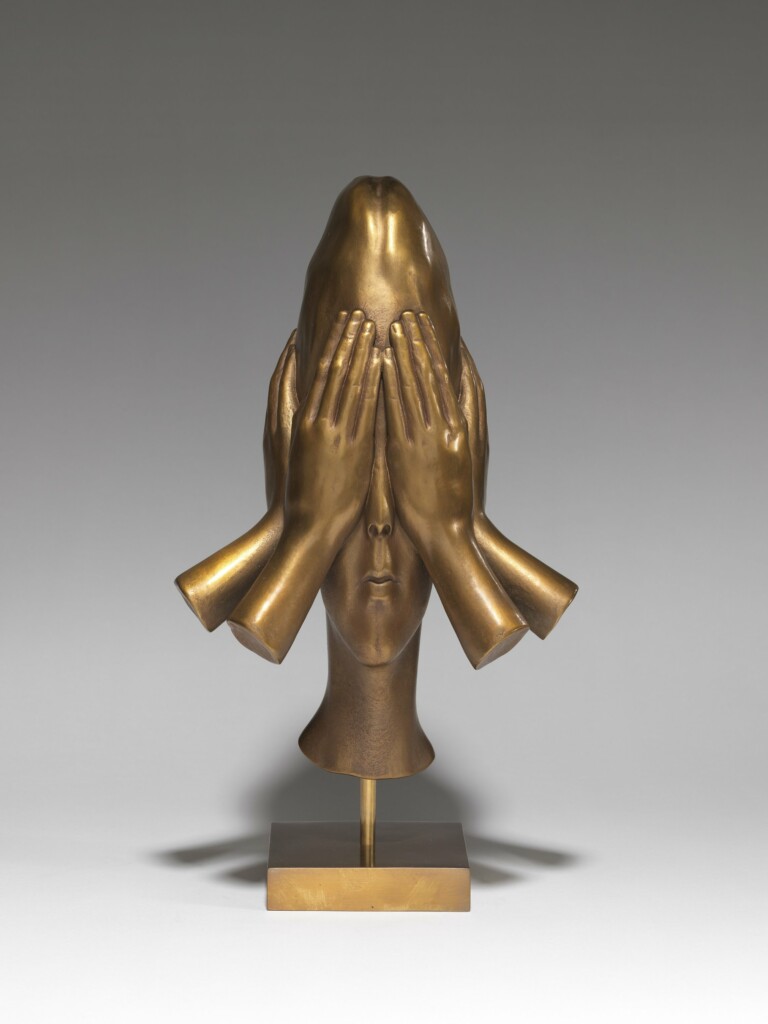
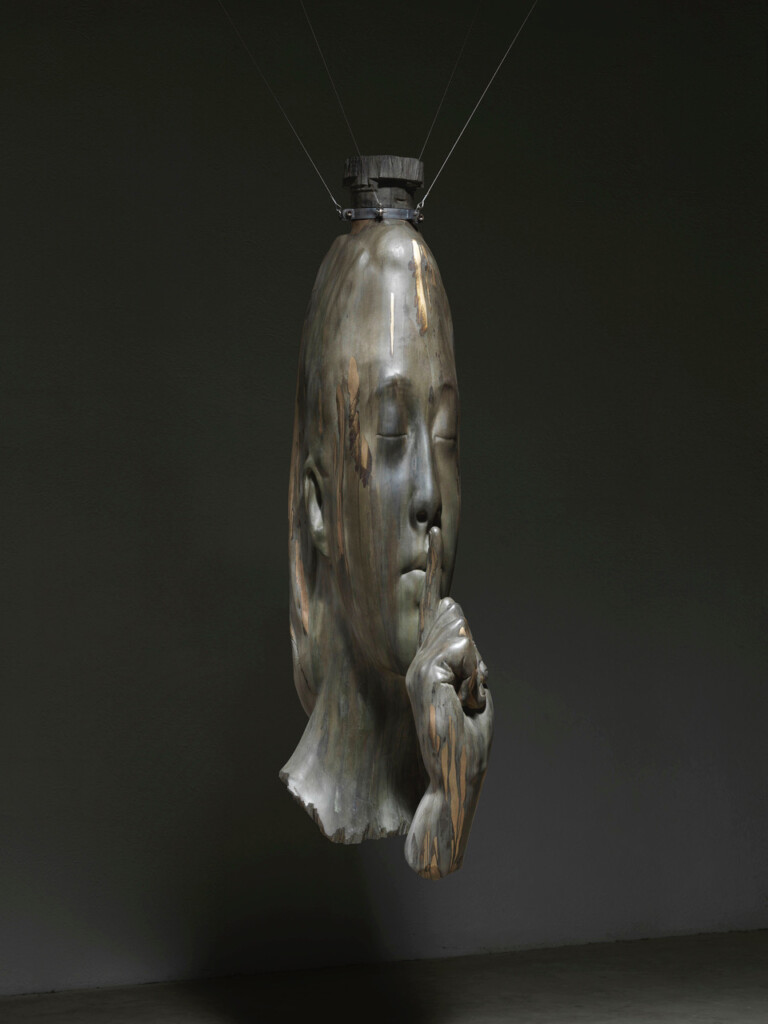
The central piece of the exhibition, Minna’s Words presents itself as a monumental presence that simultaneously emanates peace and serenity. This portrait of a young lady, cast in bronze and suspended a few centimetres above the ground, invites silence with the gesture of a hand over her delicate mouth. Detained in a liminal space between the earth and the sky, in the fine line between profanity and divinity, this piece stands out for its symbolic and spiritual weight.

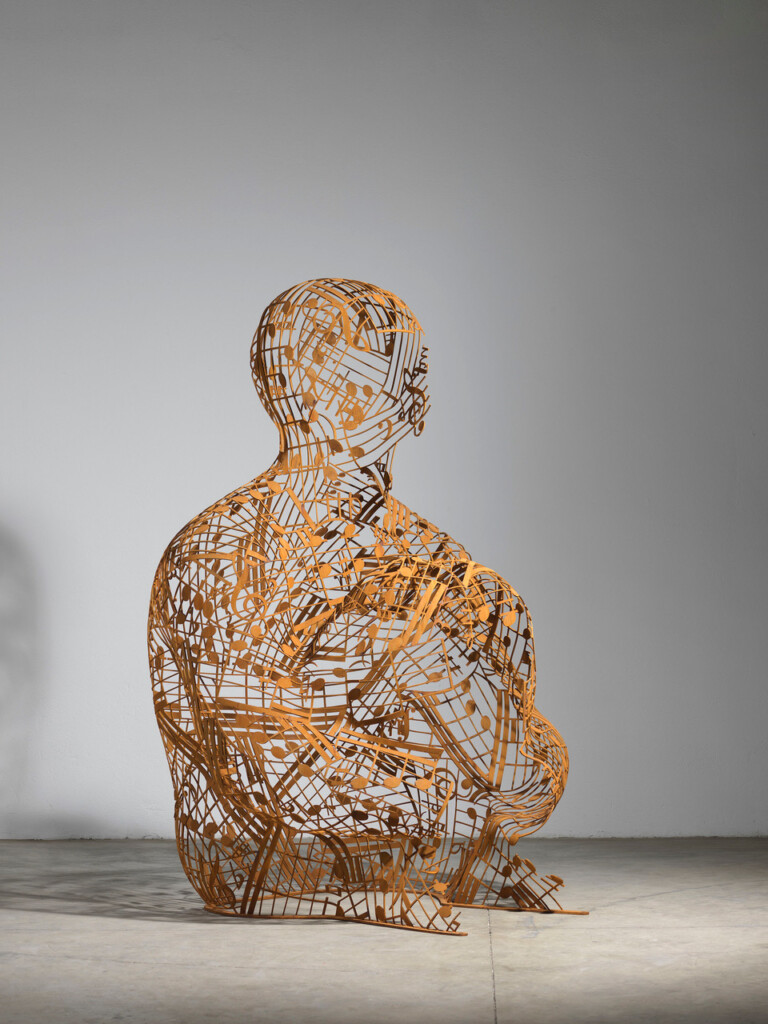
Invisible Ana is an iron mesh head, suspended by subtle strings, which levitates in the room delicately. It is part of a series of portraits Plensa has conceived like metal armour that, instead of shielding the body as a means of protection, evidentiate its fragility and suggest that vulnerability is the veritable human strength.

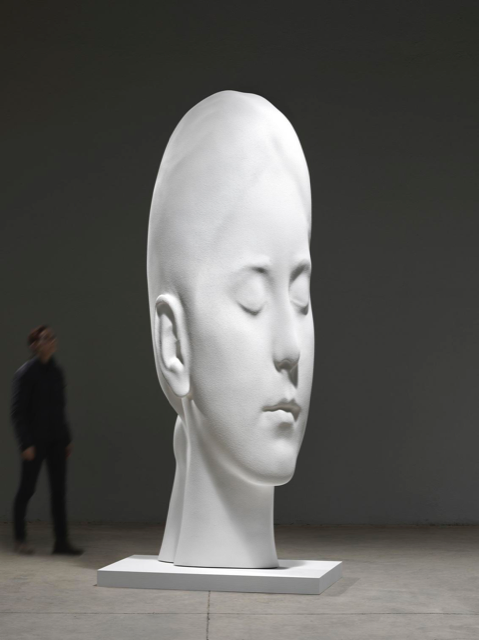
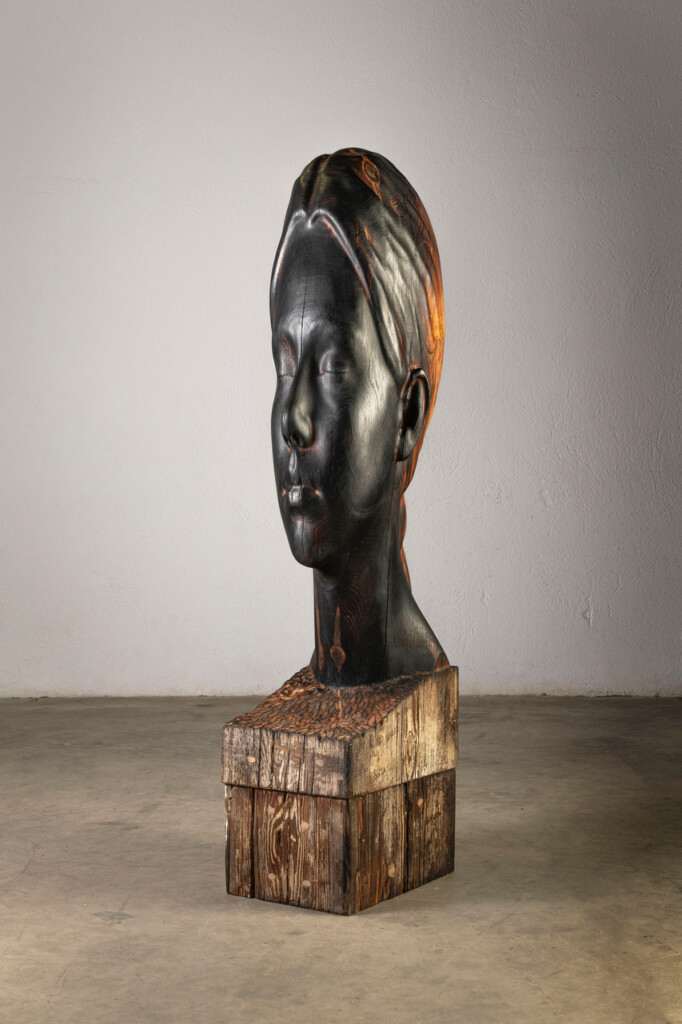
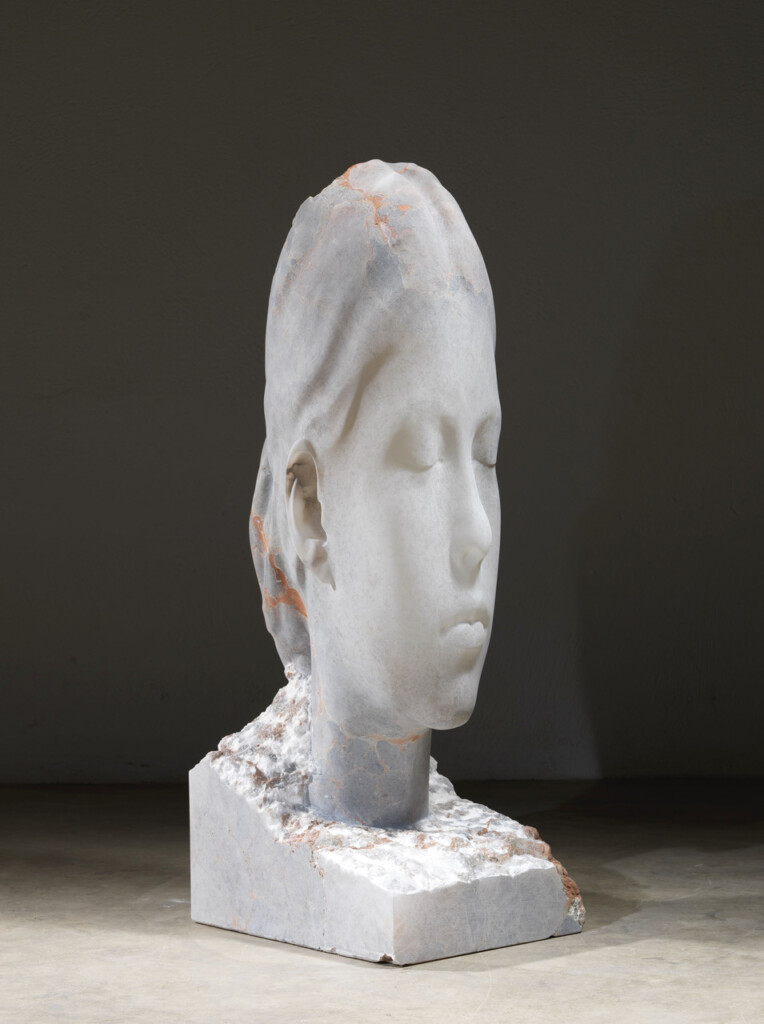
Almost three meters tall, Laura Asia is a bronze sculpture with which the artist continues his exploration of perspective through the figure’s distortion, a recurrent technique in a lot of his sculptures conceived for public spaces which invites the viewer to come closer to the piece and to envelop it to decipher its optical effect. When looked at directly upfront, the portrait of the young girl seems realistic, but when looked at closely it comes across as a figure that plays with the spectator’s perception. As in all of his bronze and marble portrayals, the features appear to be incredibly soft and smooth, a homage to the purity of youth.

The exhibition further presents a series of works on paper, created by the artist ex profeso for this show. With simple strokes of charcoal on Japan paper, these graceful and unique drawings echo his insatiable study of puerile physiognomies.

Do you want to visit the exhibition virtually? Click here.

Download the press release here.

Download the compilation of reviews and press articles of “La llarga nit” here.
From Within (Second within)

The group show “From Within” brings together the works produced by young national and international graduates of the master programme in Artistic Production and Research at the University of Barcelona, with specialization in “Art and Intermedia Contexts”.

Rethought through the lens of the excepcionality of the present moment, this year edition bring us the second part of the exhibition that look place last summer during the Art Nou 2020 context. The exhibition results from the close and enriching collaboration established with Senda Gallery by Pep Montoya, the late coordinatos of the Master program, whose unfortunate and premature passing was due to the Covid19 pandemic. Therefore, for this occasion, we would like to share a fragment from Pep’s notes that we think defines his character and approach, wich he shared throughout his career, both as a professor and an artist:


The artistic environment and tradition in Barcelona are very complex. At least three layers of action coexist in it: the public, the private, and the constantly emerging. This dynamism is largely nourished by the students of the Faculty of Fine Arts and, especially, by the students from the master program. This is why ProdArt´s goal is to enhance learning thought art practice and thought, and to generate both visual content and arguments for a critical reflection on the present time. Collaboration, participation, and dialogue are essential for artistic creation and dissemination. Hence the excitement…[ from the inside out ].
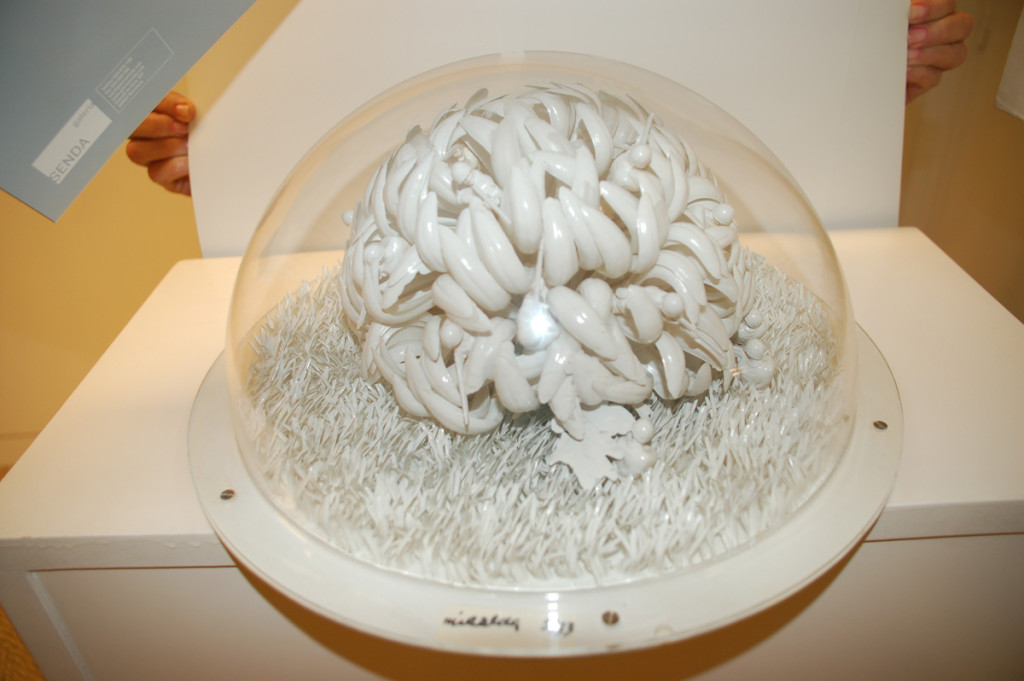
 

In memory of Pep Montoya

CARLA CASCALES ALIMBAU, Le Temps

The change in the conception of time experienced during the months of confinement has given rise to Carla Cascales Aliumbau’s reflection on the constant self-imposed rush in our society.
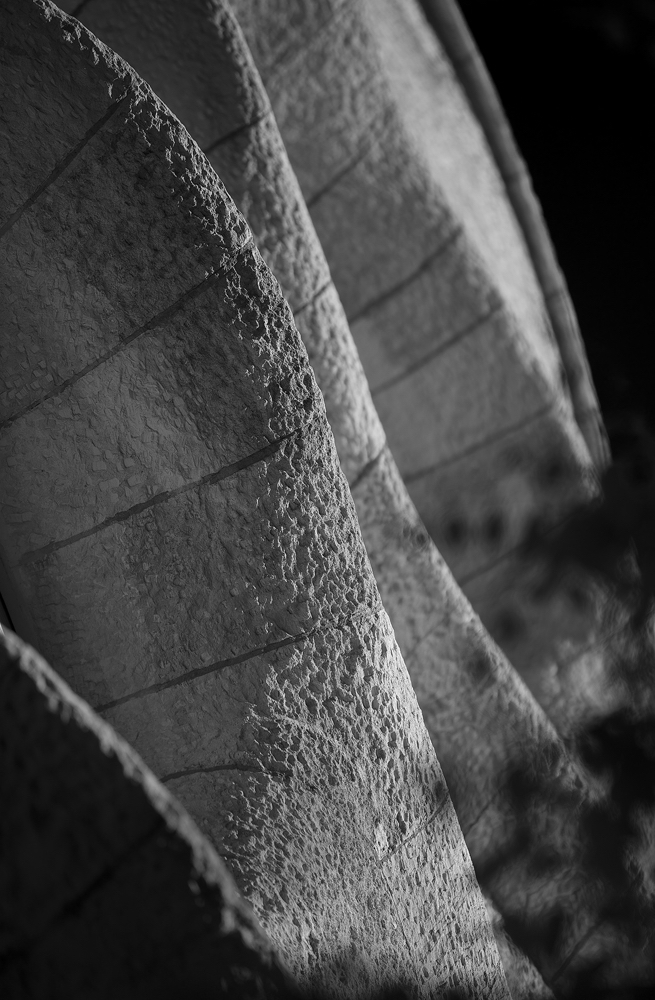
The artist recreates a feeling of stopped time, where the absence of color makes all the pieces merge with each other. It is in these instances that what usually goes unnoticed, such as textures, shadows, cracks and subtle movements, take importance.
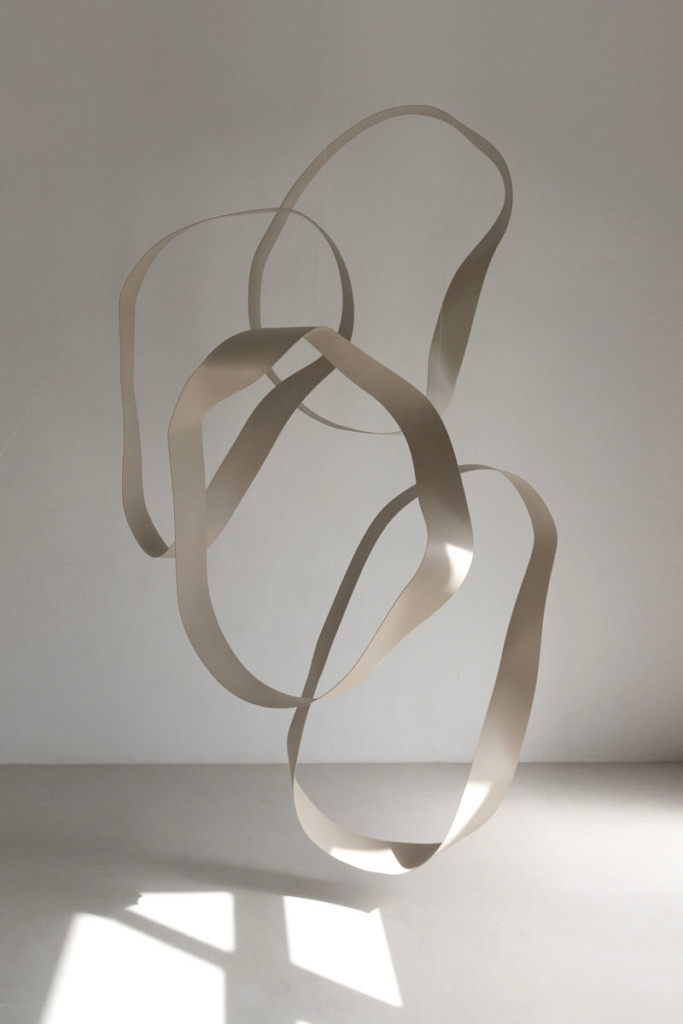
Diving underwater is one of those moments where time slows down, where there is no room for rush. The series of mobile sculptures, “Posidonias”, is a tribute to that bubble of silence, to the ductile movement of algae, pieces rocked by their own inertia, without exerting resistance, since for the artist the stopped time is not the absence of movement but calm. All the pieces have in common the static fluidity, as if by blinking or looking away they were to continue moving.
The sample also reflects the passage of time, the importance of roots and degradation as a symbol of beauty. In a year in which distant trips were canceled, Carla decided to visit the small Andalusian town where her grandparents were born before emigrating to Barcelona. There again she felt that time retained, without noise, without distractions, walking through the almond groves that her great-grandfather planted years ago and that are still there today.
As a tribute to these roots, most of the works are titled according to fragments of Bodas de Sangre, by García Lorca. It is not by chance that Carla makes reference to this tragedy – a work that is a fusion of pain and joy, which, according to the artist, is not far from how life can sometimes feel.
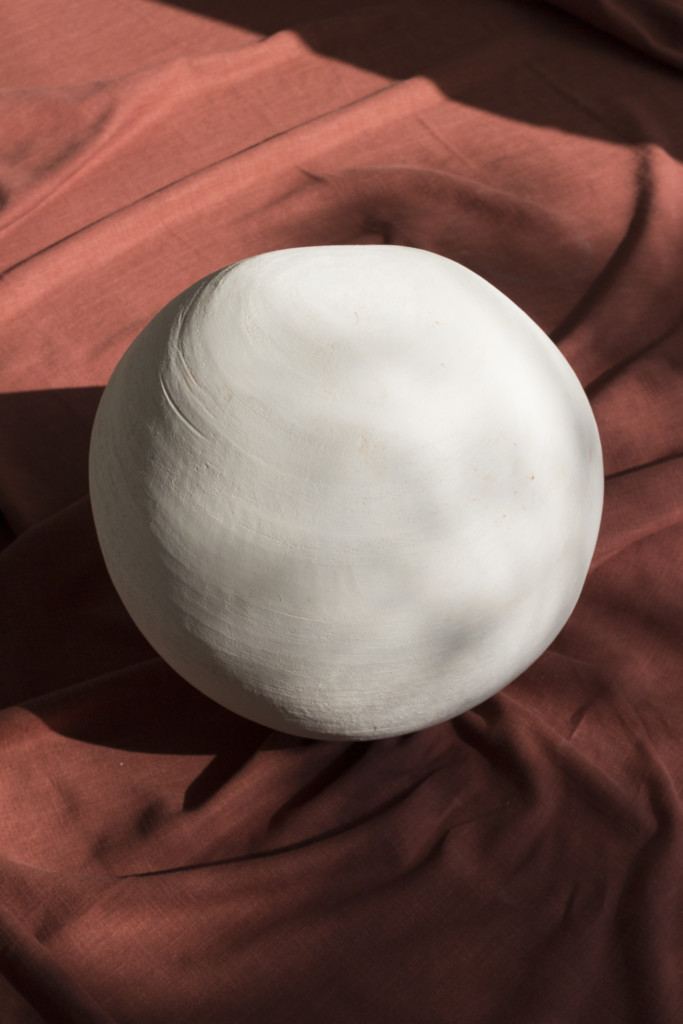
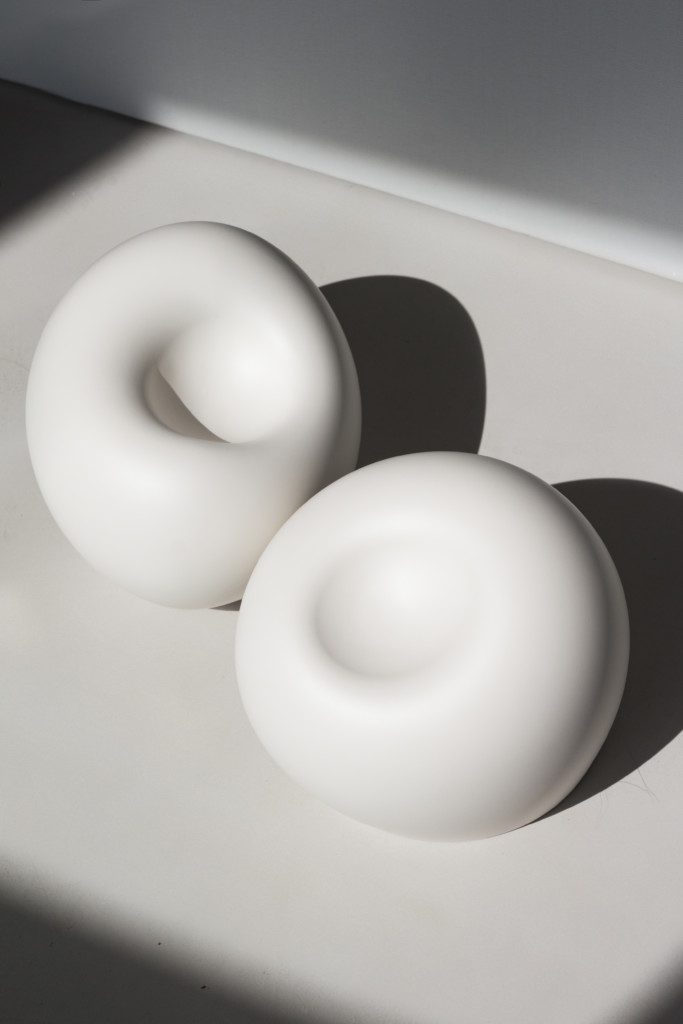
Carla was fascinated by the connection between the houses of the small Mediterranean fishing villages that she has seen since she was a child and those of the Andalusian countryside, the textures of the whitewashed  and irregular houses that perfectly adapt to their surroundings and that she seeks to evoque in her ceramic sculptures.
Without the calm of present time, without stopping, it is easy to get lost in a jumble of thoughts. This exhibition is a tribute to the time dedicated to knowing one’s own authenticity.
The soundtrack that accompanies the exhibition was composed by Marta Cascales Alimbau and it is available on Spotify.
_____________
Carla Cascales Aliumbau (1989) was born and currently works in Barcelona. Her work encompasses different media, incluiding drawing, painting and sculpture, which echoes a minimalist aesthetic while it is also influenced by architectural currents such as brutalism, evident in her use of raw materials. Likewise, her fascination for the Japanese aesthetics of the “Wabi Sabi” confers to her work a notion of beauty based on transience and impermanence. Her work process is a constant aesthetic search for the essence of form and the balance of materials, highlighting their irregularities and imperfections in contrast to the austerity of their shapes. She has held individual exhibitions in Madrid, London and New York and artistic installations in institutions such as the Matadero Creation Center in Madrid or La Caixa, ImagineBank in Barcelona. She has carried out art residencies in San Francisco in 2017, Florence in 2018, and Tokyo in 2019.

2nd International NASEVO Prize

Lab36 exhibits the finalist projects of the II NASEVO International Prize organized by the Ernesto Ventós Foundation. The theme of this edition is the nose and the sense of smell presented by the collage technique. The purpose of this contest is to allow younger artists to show their creations without losing the foundation’s philosophy and values: “Learning to smell through art.”

The winner was the work Horizonte y olfato: eclosión geográfica de un espacio y tiempo silenciado, by Marta de los Pájaros. The artist recreates the universal smell of Gaea (considered Mother Earth in Greek mythology), and that metaphorically represents the smell of humanity. The work raises a reflection on the philosophical disaffection that the western tradition has developed concerning smell.

The Ernesto Ventós Foundation is a family project, full of enthusiasm and a sense of responsibility, arising from the need to share with society through art and the olfactory world, part of what it has given us.

The Foundation was formally created in 2019, but its activities aimed at sharing art from an olfactory perspective already existed in 1996 with the olorVISUAL collection and with NASEVO in 2003.

DOMESTIC ODYSSEYS. A group show online exclusive

The exhibition brings together the artists who have participated in the Instagram initiative “Welcome Home”, by featuring a selection of the artworks they produced within their domestic confinement, during the lockdown. Ranging from painting to photography, video, drawing, and sculpture, the works result from the drive of their authors to overcome the challenges of the quarantine through imaginative and ingenuous ways of doing and thinking, within and beyond art-making practices. Hence turning their domestic space and time of confinement into an inspiration enabler.


Recalling the 1968 epic science fiction movie 2001 A Space Odyssey by Stanley Kubric, DOMESTIC ODYSSEYS addresses the exploration of an unknown domestic life – as opposed to the unknown extraterrestrial life of the futuristic movie. Echoing the voyage to Jupiter imagined by Kubric, the exhibition theme offers a pretext to re-think our relationship with our domestic environment – an intimate space that, during the confinement, has suddenly and paradoxically turned into an unfamiliar and, sometimes, unsettling place of dwelling, into otherness.


 And yet, having transformed their homes into temporary studios (or vice versa), and hence, making a virtue of necessity, the artists of the DOMESTIC ODYSSEYS exhibition have been able to find the most authentic inspiration in their new domestic space. In some way, the artworks featured in the exhibition are the repository of untold intimate domestic tales, joys, and struggles – what we would call «domestic odysseys» – as well as of the desire to re-domesticate our unknown dwelling spaces.


Although they saw their exhibitions and plans for 2020 canceled or postponed, by reinventing themselves within precarious and temporary contingencies, once again they have shown to the world that art, as a form of knowledge production, can acquire multiple shapes, but it never ceases to be and manifest itself. Like in other moments in history, artists have been able to challenge the most critical times, turning art into an inspiring and resilient way of thinking, being, and doing differently.

TEDIUM. Senda at the Pushkin Museum of Moscow

TEDIUM is a video art screening program, co-curated by Galeria SENDA and the Pushkin State Museum of Fine Arts of Moscow, which features the work of Spanish and Latin American artists with whom Galeria Senda has collaborated throughout almost thirty years: Glenda León (Cuba, 1976), Teresa Serrano (Mexico, 1936), Miguel Angel Rios (Argentina, 1953), Anna Malagrida (Spain, 1970), Isabel Rocamora (Spain, 1968), Adrián Balseca (Ecuador, 1989) and Miralda (Spain, 1942).


With this initiative, the Pushkin Museum invites Galeria SENDA to participate in the museum’s 100 WAYS TO LIVE A MINUTE, a digital project “where people who create and reflect on art share their experiences of meaningful living of time”.


While the curatorial concept behind the program revolves around the notion of “tedium”understood as a human emotion of inquietude, that results from a particular experience of time —  the final video art selection (defined jointly by SENDA and Pushkin Museum) offers to the digital public of both institutions an overview of the work of some of the most interesting artists from the Ibero-American artistic panorama, who employ the medium of video to explore intimate themes or to address identity, inquietudes and social matters.


“All of humanity’s problems stem from man’s inability to sit quietly in a room alone,” said the seventeenth-century theologist and scientist Blaise Pascale. And yet, these days, we are learning not to fear the silence of time. Confined in our domestic space and forced to reduce our social life and work activity, we experience time’s most unexpected dimensions. Dealing with an unknown pacing of seconds, minutes, hours and days, we are learning to domesticate tedium — an intimate human emotion that has been an object of fascination and exploration of poets and philosophers for centuries — from Lucrecio to Leopardi, to Baudelaire and Oscar Wilde, amongst many others. In this instance, we might also discover that tedium can be a prelude for new ideas, unexpected sense of awareness or artistic inspiration.


Art can teach us a lot about unconventional ways of conceiving and experiencing time. In particular, video art is devoted to a distinct aesthetic (and politics) of time perception, often recalling the emotion of tedium: it breaks with the established modes of moving image storytelling of television and cinema, offering unconventional narrative timing to the eyes and the hears. In some way, video art turns us into pensive spectators, inclined to the patient awaiting of the unexpected, which might never come.


SENDA’s passion for video art is cultivated by supporting artists that work with video and moving images techniques, as well as by fomenting the culture of collecting video art in different ways. For instance, the director of SENDA, Carlos Durán, is the co-founder of the LOOP Barcelona festival and fair, a polyhedric international event, entirely dedicated to moving images arts. Celebrating its 18th edition in November 2020, LOOP has turned Barcelona into a reference of the international video art scene.


The video works featured in TEDIUM will be exclusively broadcasted by Pushkin Museum as part of their 100 WAYS TO LIVE A MINUTE on-line project, in a section, specially designed for this collaboration, of the website https://100waystoliveaminute.pushkinmuseum.art/?lang=en.

TEDIUM will unfold in three appointments: Saturday, May 30, Wednesday June 3, and Saturday June 6. Each day, at 19.00 Moscow time, a series of video artworks will be presented to the public and made available to be watched for 24 hours.


Saturday, May 30 (19:00 Moscow time  / 18:00 Barcelona time)

Glenda León (Cuba, 1976):

Hablando con Dios / Talking to God (2018)

Espejismo II / Mirage II (2019)       

Cada Respiro II  / Each Breath II (2015) 

Suspension / Suspension (2003) 

Anna Malagrida (Spain, 1970):

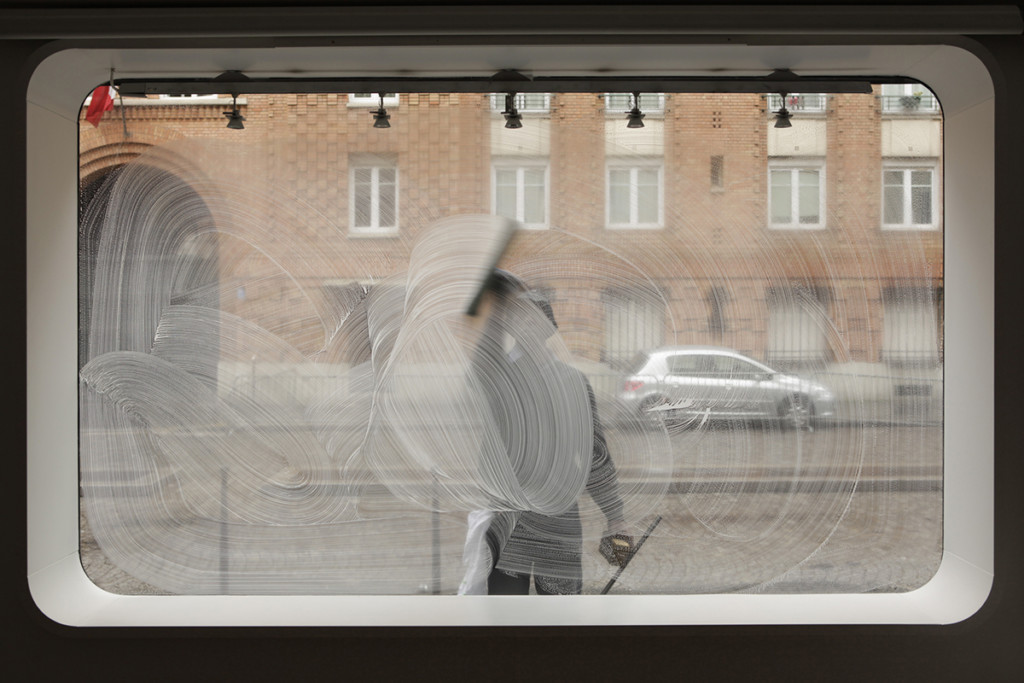
_El Limpiador de Cristales / The Window Cleaner (2010)

_Frontera / Border (2009)

_Danza de Mujer  / Woman Dance (2007)


Wednesday, June 3 (19:00 Moscow time  / 18:00 Barcelona time)

Adrian Balseca (Ecuador, 1989):

_Grabador Fantasma / Phantom Recorder (2018)

_Suspensión I  / Suspension I (2019) 

_Medio Camino  / Halfway (2010)

Miguel Ángel Ríos (Argentina, 1943):

_Landlocked (2014)

_Piedras Blancas / White Stones(2014)

_Mulas / Mules (2014)


Saturday, June 6 (19:00 Moscow time  / 18:00 Barcelona time)

Isabel Rocamora (Spain, 1968):

_Horizonte de Exilio / Horizon of Exile (2007)

Teresa Serrano (Mexico, 1936):

_A Room of Her Own (2003)

Miralda (Spain, 1955):

_Apocalypse Lamb New York (1989–2018)

_Apocalypse Lamb Barcelona (1997–2018)


PETER HALLEY, New Paintings

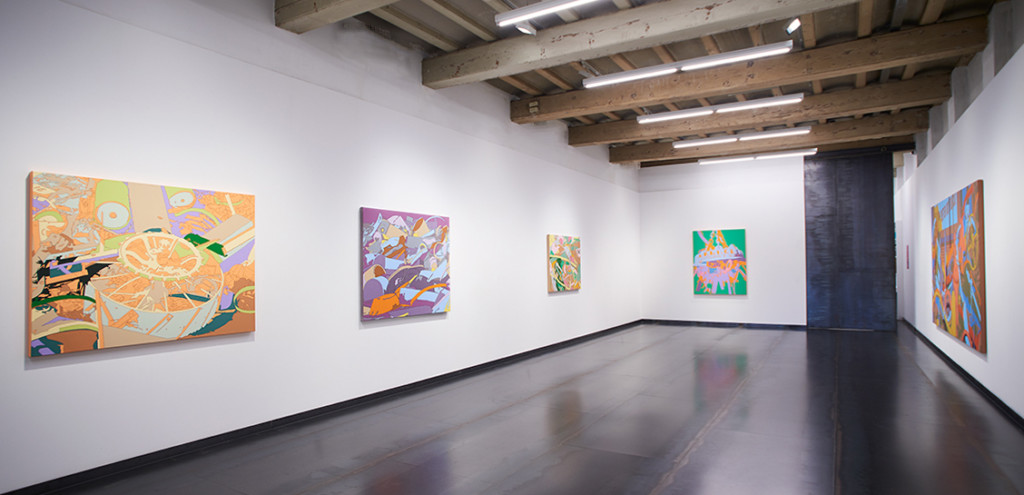
The new paintings presented by Peter Halley in Barcelona embody an important step in his career. The classic “cells” and “prisons” with or without a “circuit”, now expand, reshaping the edges of the canvas and leaving the rectangle behind.
Being true to his imagery – created already in the 80s – Halley introduces his sixth exhibition at Galeria Senda, the most committed one.

The colour palette of this new series also manifests a significant change. With an abundance of fluorescent yellow, violets and, above all, pinks (clear, warm and intense), Halley’s compositions become particularly luminous. The artist plays with different layers of preparation to give consistency and depth to the pictorial surface, as well as the use of “Roll-A-Tex”, a lumpy commercial paint, very popular in the 70s and 80s for home decoration, which has accompanied the artist for decades. With this, Halley creates contrasts of textures and reliefs between the compositional elements and combines the industrial and urban register with the sensuality of a tactile experience.

Peter Halley became known in the mid-eighties in New York as the driving force behind Neo-conceptualism, a current that appears as a reaction to Neo-Impressionism and which represents a resurgence of geometric abstraction. His style reflects the idea of language as a stable and self-referential system, and criticises the transcendental claims of minimalism. Furthermore, his work is influenced by the social theory of Structuralism, which proposes the analysis of socio-cultural systems and languages, based on deep symbolic configurations and structures that condition and determine everything that occurs in human activity.

“In our culture, geometry is usually considered a sign of the rational.  I, for whatever reason, have reversed that idea in my mind, and geometry,  has a primarily psychological rather than intellectual significance”, he states in his essay “Geometry and the Social” of 1991.

Thus, the cells and conducts that Peter Halley articulates and combines in his canvases are not a simple abstract geometric composition, but rather a symbolic image of the social schemes that surround us. In this way, the turning point in the format that Halley presents in the exhibition New Paintings in Senda Gallery also reflects a turn in his analysis of the models of organisation and communication in contemporary societies.

Examining these new works, it can be seen that these cells no longer fit into the regular structure of the canvas, but rather – as a metaphor of today’s society – establish a different relationship with it.  Opting for free and open forms, the cells impose their own designs, challenging the rectangular and immobile structure of the traditional canvas.  The irregular compositions that result from these formal searches by Peter Halley, although rigorously balanced and harmonious, seem to describe the profound changes in society in the digital era, as well as in the system of cognitive work.  Thus, through an internal metamorphosis in Halley’s iconic visual language, the American artist’s pictorial discourse echoes the flow of information generated by the new technologies, as well as the new communication regimes, usually dominated by the younger generation.

Escritos sobre arte (Senda Ensayo, 2020), the volume to be presented in the context of Peter Halley’s New Paintings exhibition is the first Spanish translation of the most innovative and personal essays written by Halley from 1981 to 2001. While offering a critical view of the changes affecting the field of art and culture in the period of so-called “post-modernity”, these texts offer a different approach to Peter Halley’s experience and his exquisite intellectual work.