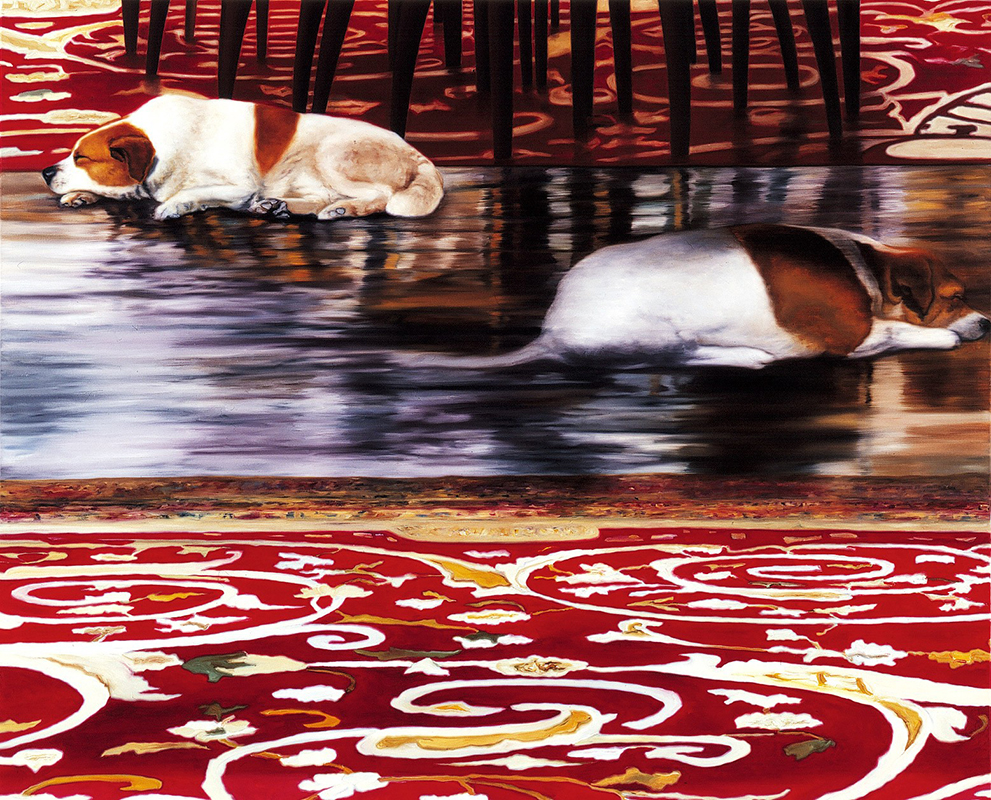
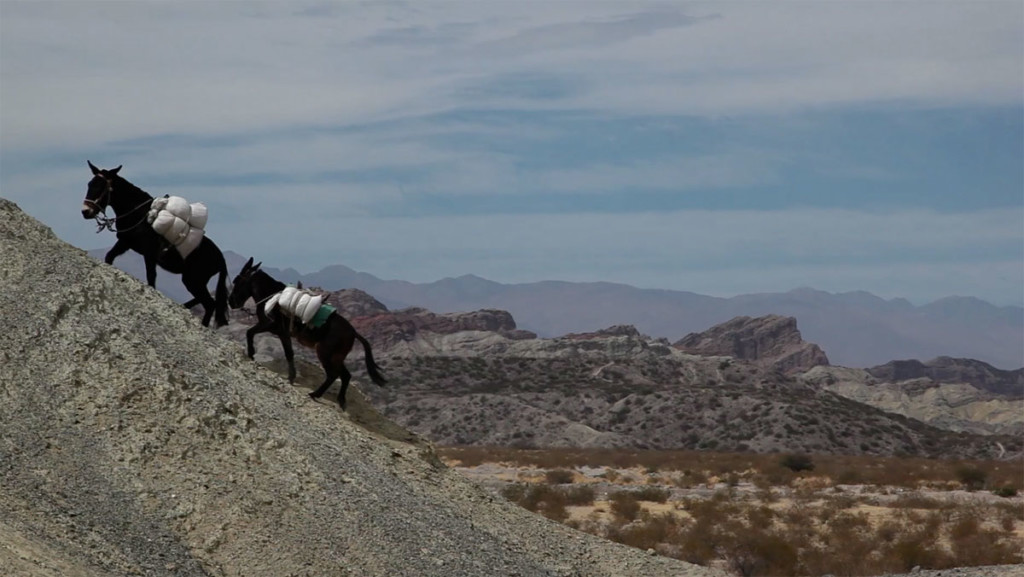
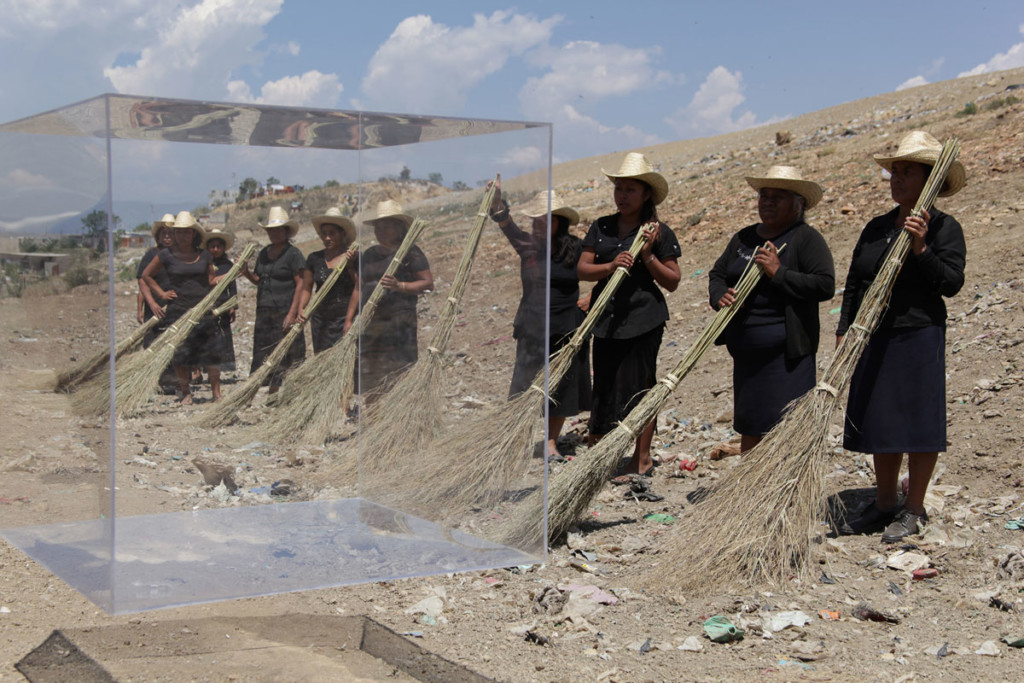
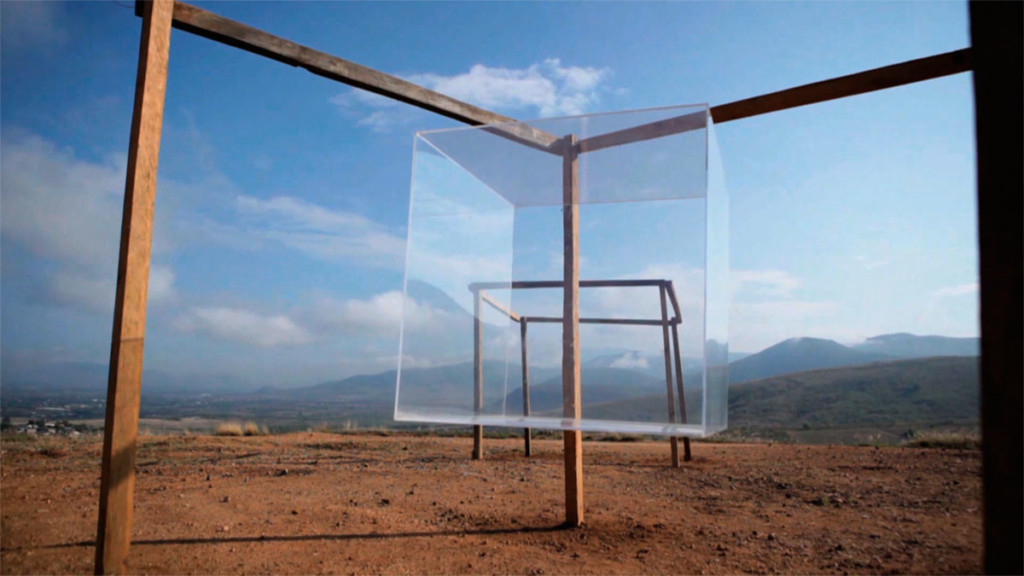
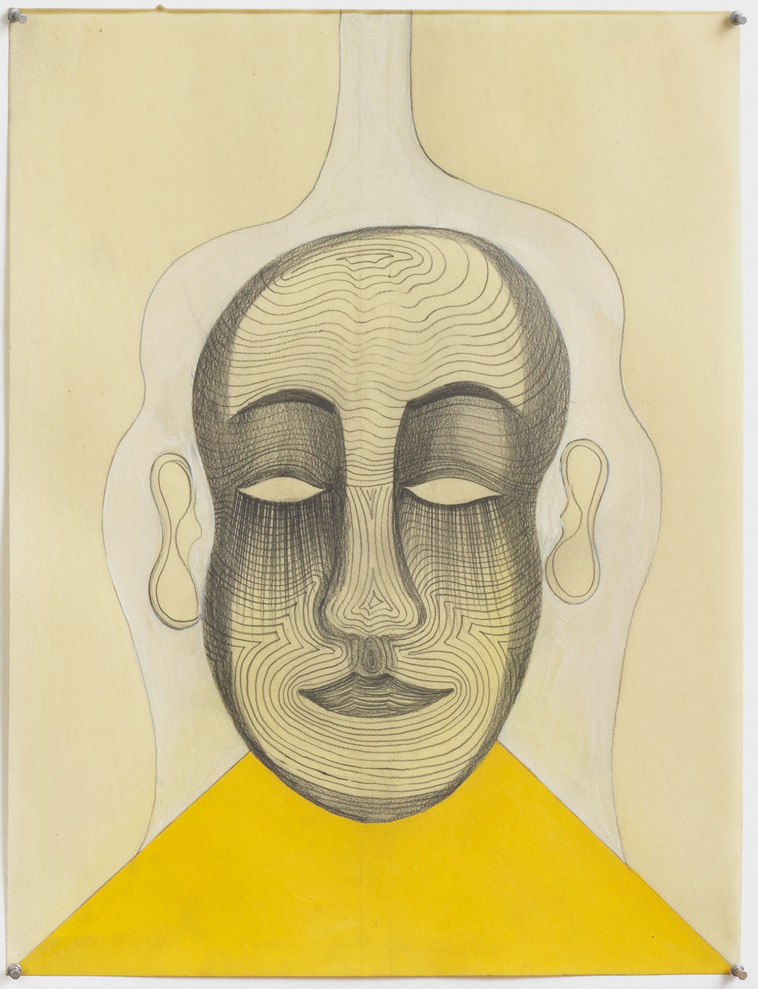
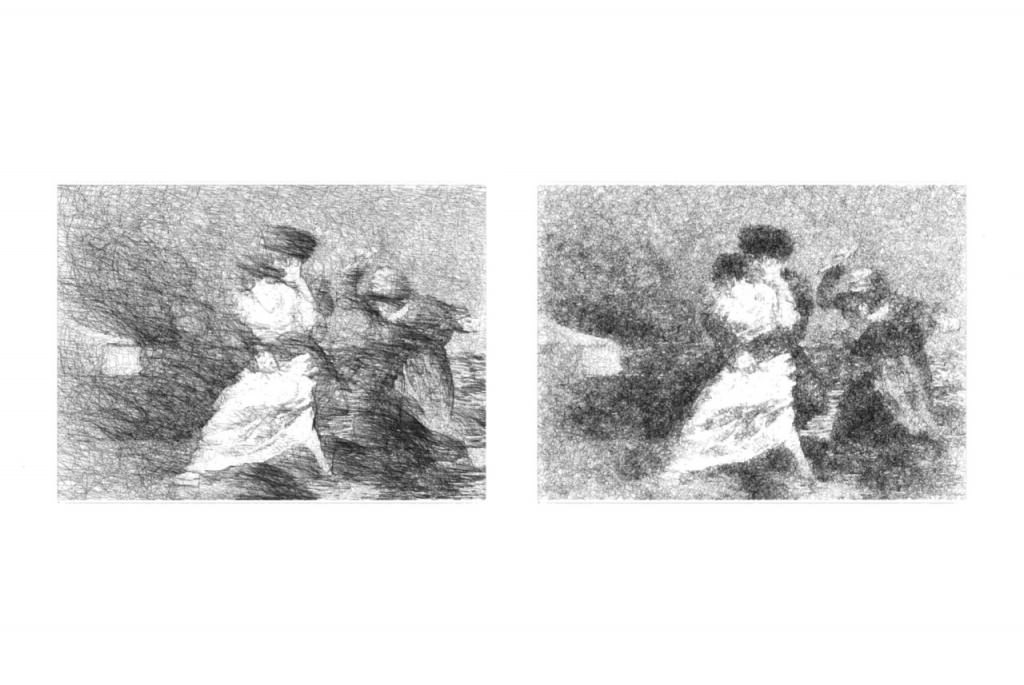
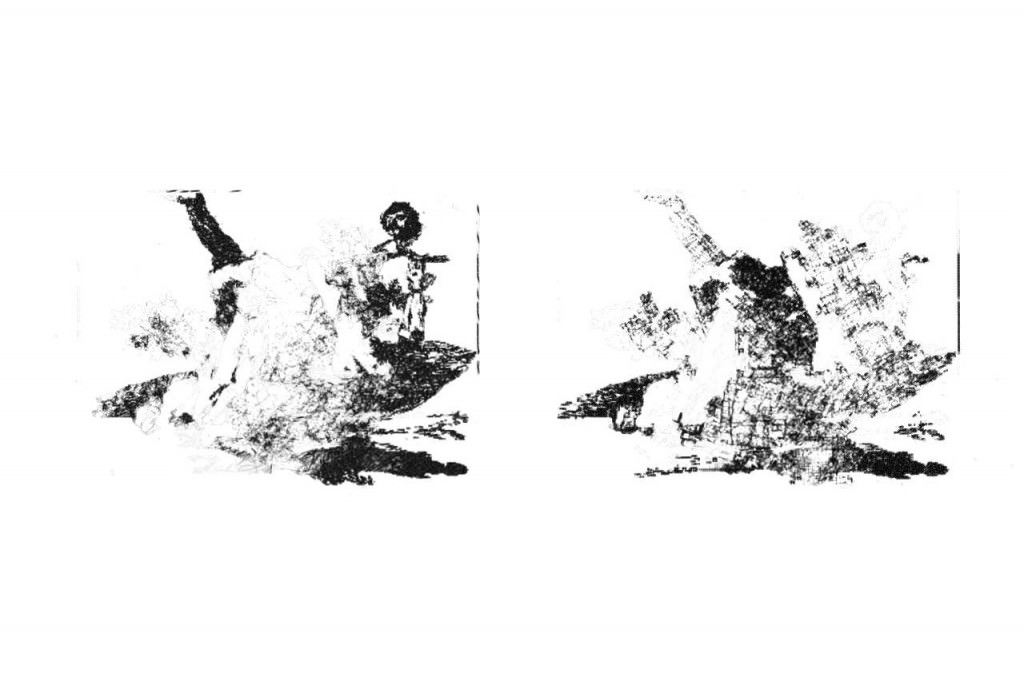
Teresa Serrano, The forgotten history of the first drug war

Without any doubt drug trafficking and the war against drugs in Mexico has generate a rich popular imagination around it. This set of strongly symbolic images has disrupted lot of the relations that we build with the culture that drift in the drugs world and with the nature related to it.

The case of poppies (Papaver Rhoeas L.)  is definitive of this demonization of the nature related with drugs. Once common silvester plant, today is a beautiful flower demonized for its uses on the production of narcotics, for this reason, its a flower that have lost its natural condition on the loose. It has turned in a covert flower, prisoner in the clandestine laboratories of drugs.

In a very acute way, Teresa Serrano has treated not only  with reflexión and criticism but also poethicaly the politics related with the war against drugs in her native country, Mexico, starting with the poppies as a powerful argument.

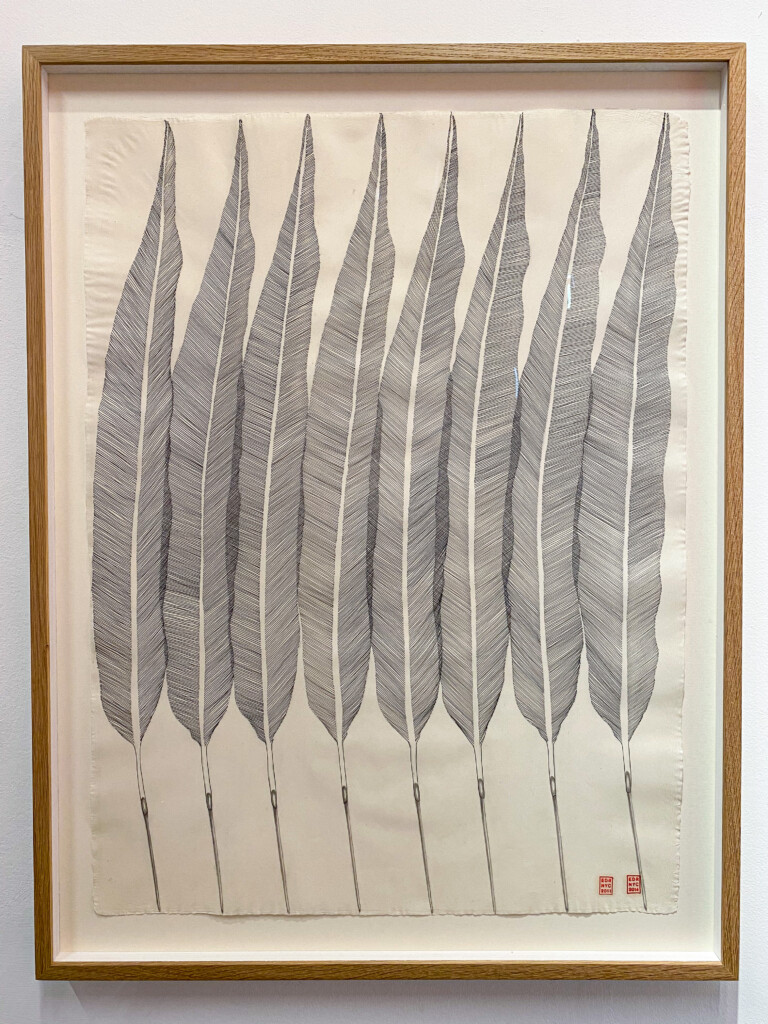
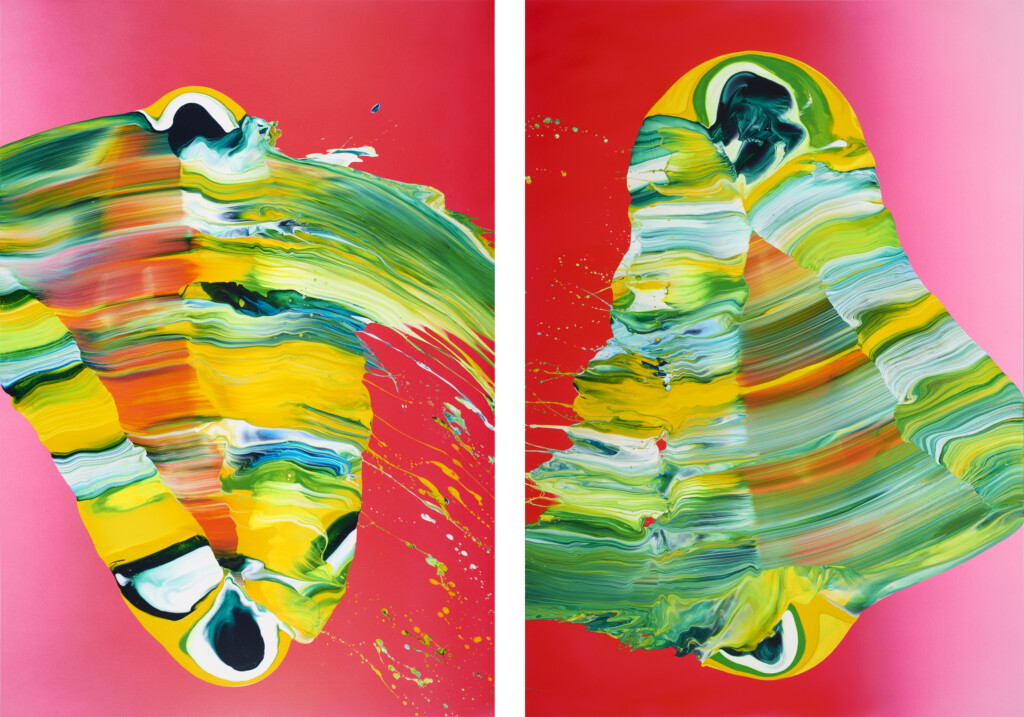
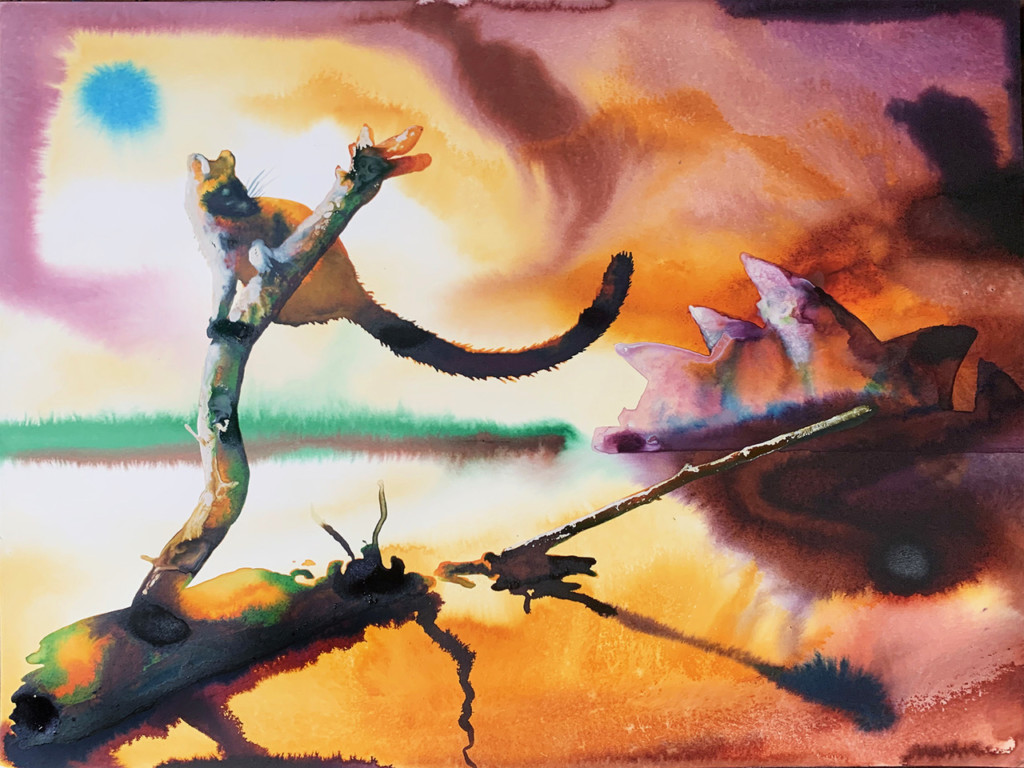
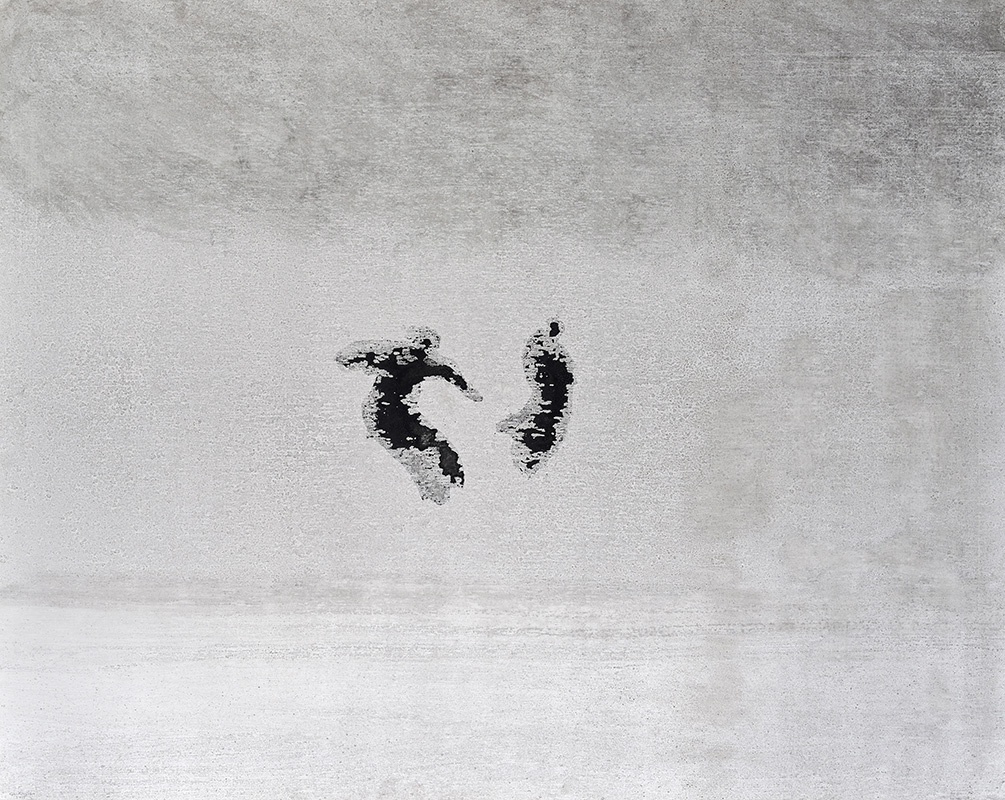
In 2016, she dedicated herself to the production of 24 poppies that, like the artista explain, were “directly painted with acrylics on Fabriano paper, Strathmore and Canson paper folders, without previous drawing. Paintings made in a purist and botanic way. They are tribute to the beautiful flower of the poppy, red and velvety flower that produces heroine. Due to the war against drug trafficking in Mexico, the flower doesn’t grow spontaneously in the field. It has being stigmatized. It is just in possession of the traffickers that have caused the death of more than 60.000 deaths in mexican land, that reminds to a mass grave of missing persons”

This repetitive gesture around reproduction of poppies that reminds the well known aphorism of Gertrude Stein: “a rose is a rose is a rose”, had in turn its counterpart in a video production: technique in which Teresa Serrano is pioneer in Latin America.

Her video Amapola also from 2016, is a paradigmatic work not only because of the topic by itself but also of the artistic production of this important Mexican artist. On it, she recovers the flower from its stigma, and in a gesture of resistance against its negative condition, enriches it from a kinder and more universal imagination, because Teresa Serrano sings Amapola in her video, a very famous song of the cadiz composer José María Lacalle: a popular and classical hymn about this flower. The video undoubtedly puts both universes in tension – the negative, represented in a single poppy in the middle of a vast field – and the positive, embodied in the romantic and sentimental song of Lacalle.

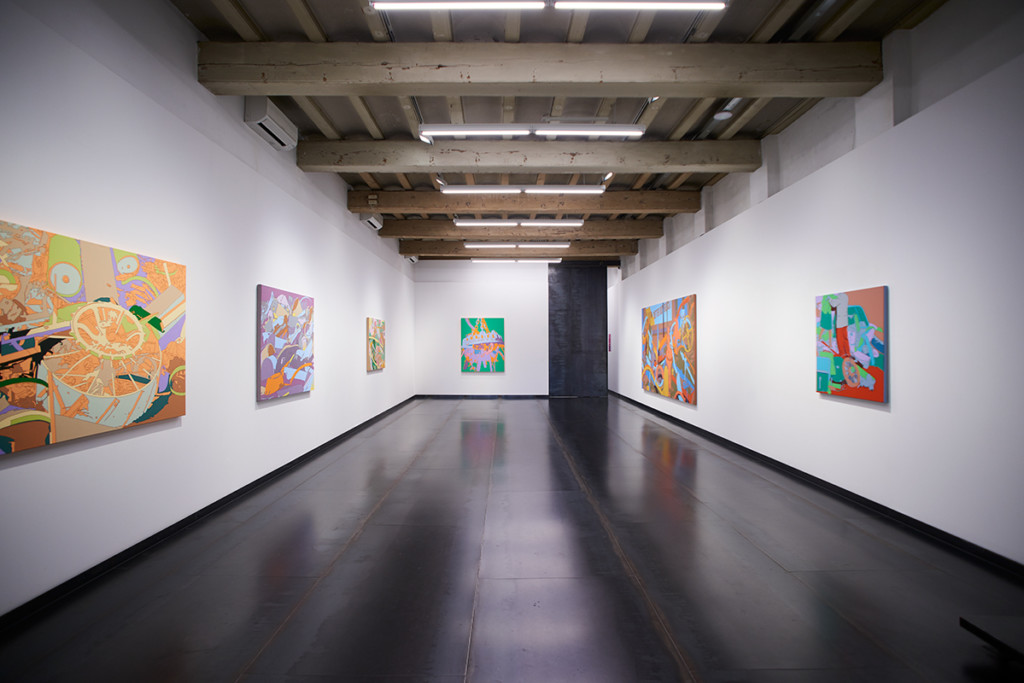
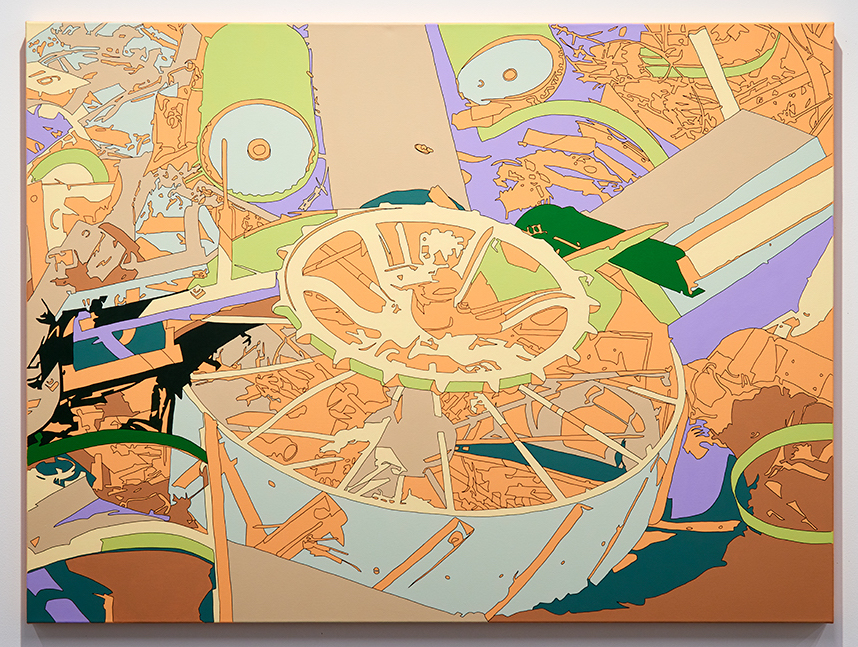
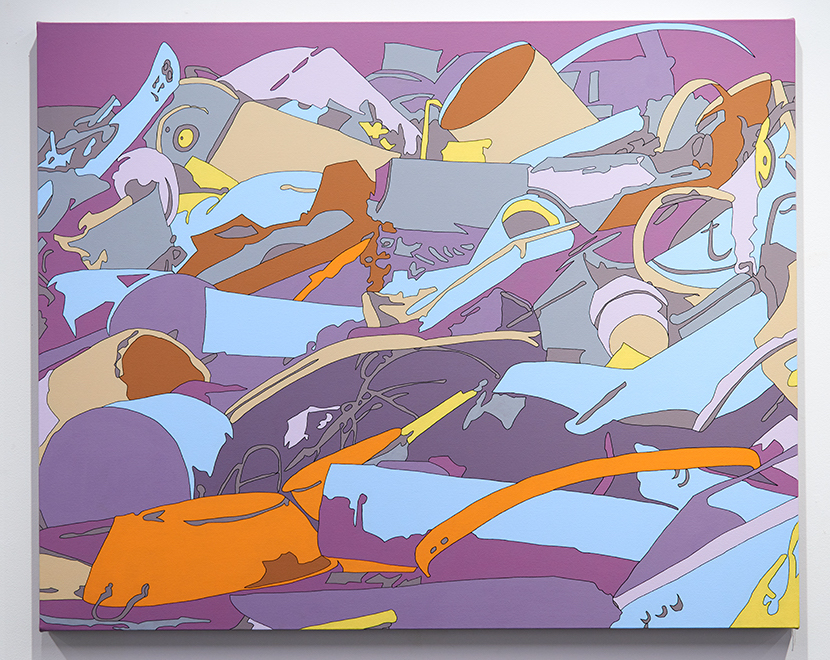
However, The forgotten history of the first drug war is an even more suggestive project because it crystallizes the historical dimension that the work of this artist already has, showing the attentive look that Serrano has always devoted in his work to the  sexual, social, political and religious tensions in the world of today. This is evidenced by the incorporation into the exhibition of six historical pieces, made a quarter of a century before and on this same subject.

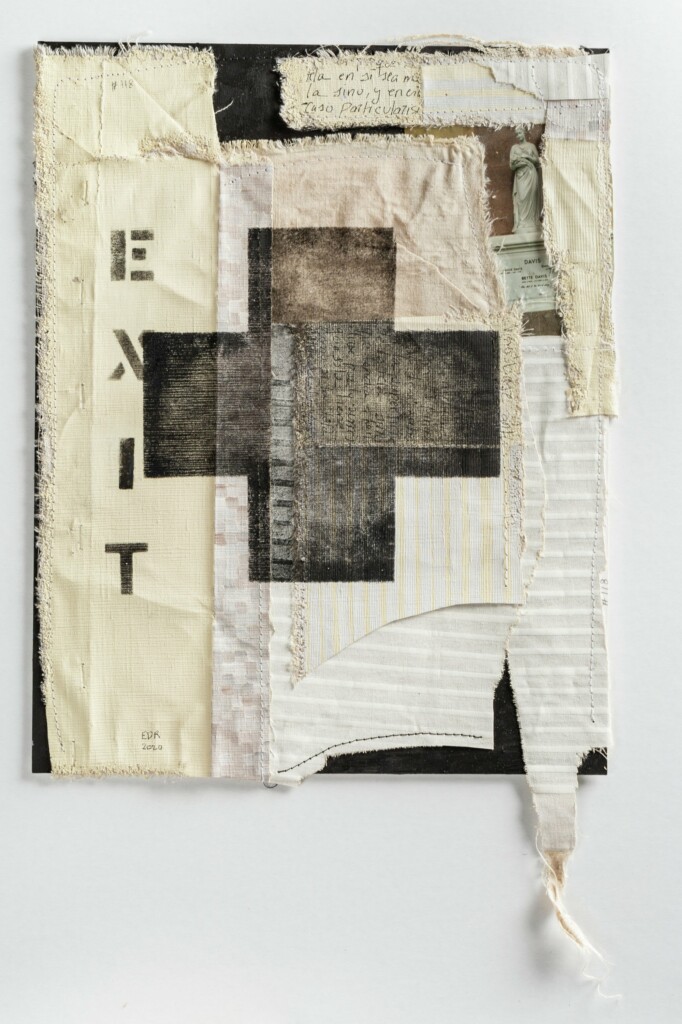
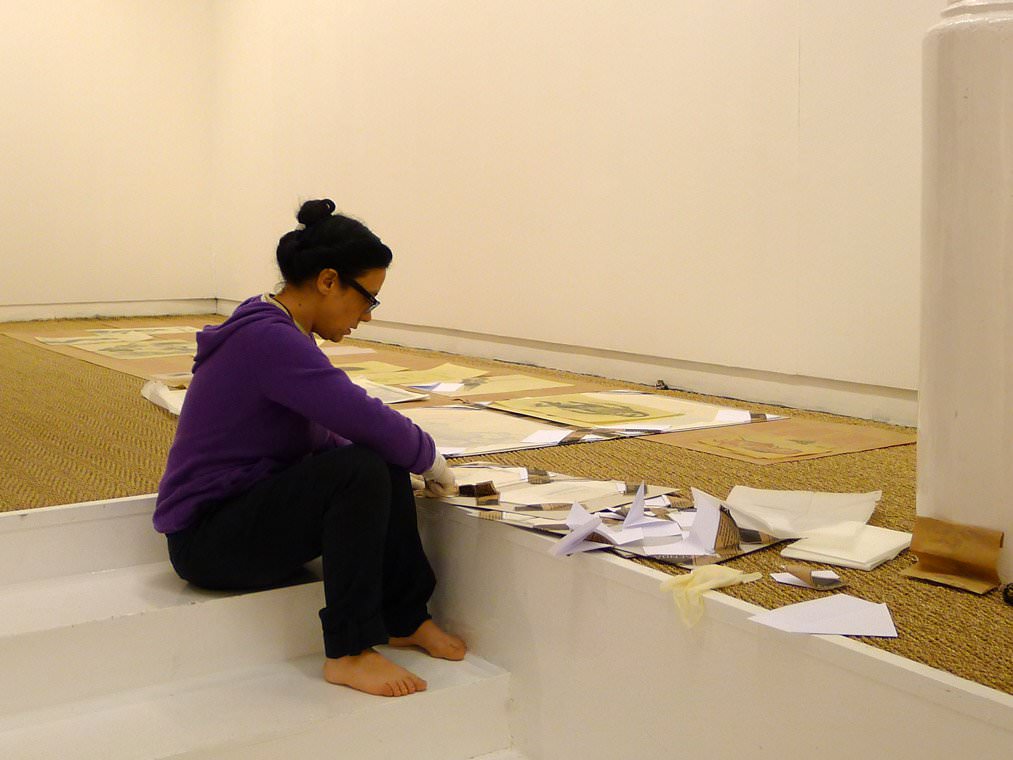
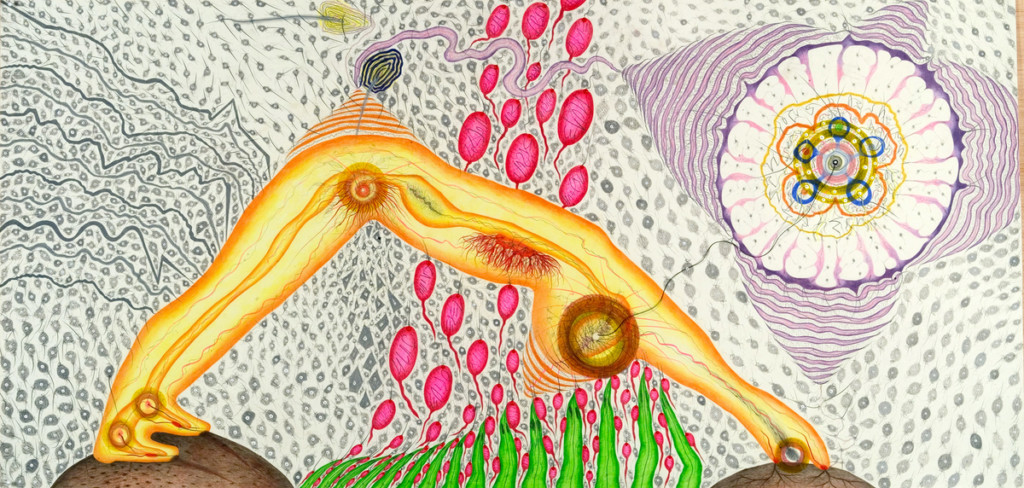
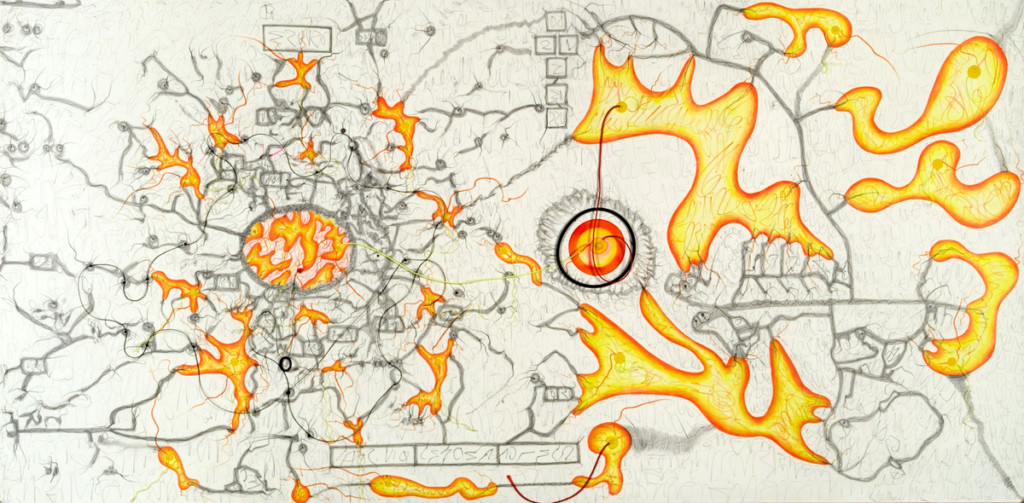
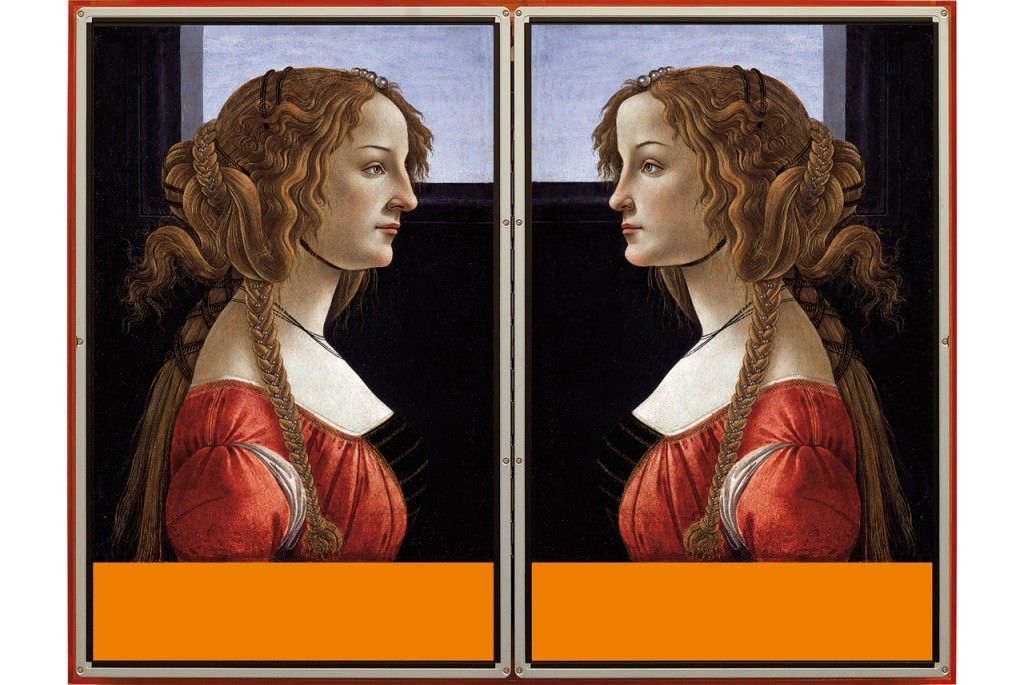
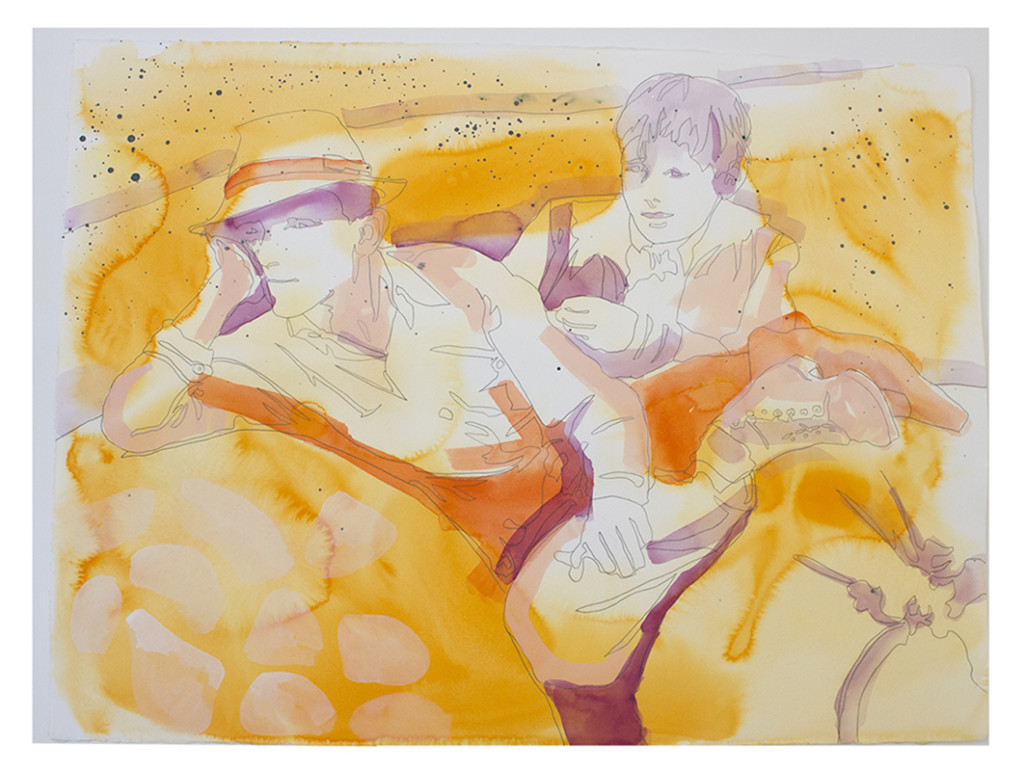
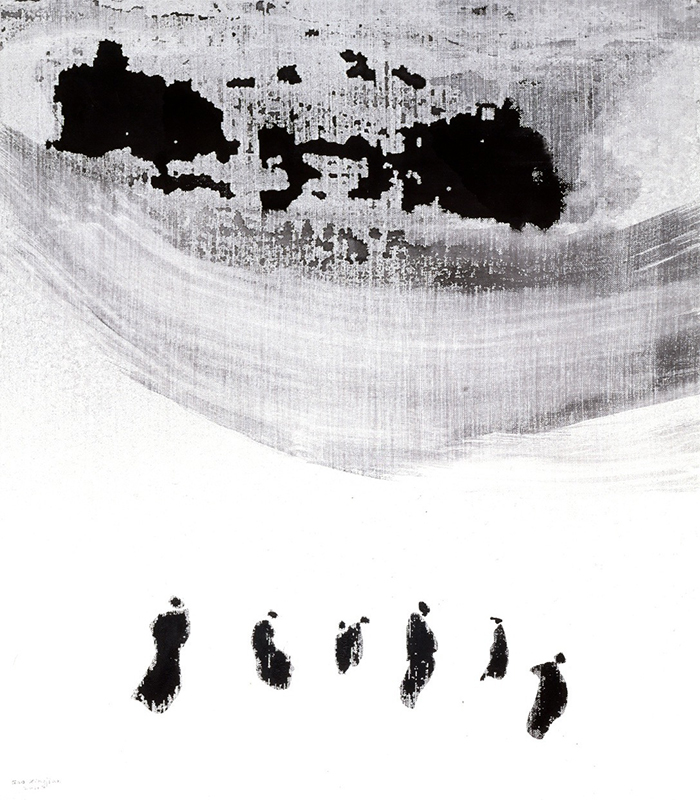
In 1993 Teresa Serrano addressed the problems of what was then the first war on drugs in a series of diptychs made with collage and painting. In these works the artist incorporates the poppies from an imaginative register in which the flower was not the secret and negative plant of our days, even though during those years she was suffering her first battles from the Mexican anti-narco organizations and the American DEA. In the diptychs, the flowers face their derived products from the commercial scope of old and kind pharmaceutical advertisements. This “mirroring” condition is doubled since the collage is made with the proper ads of the poppy derivatives while the painting and the drawing delineates the flowers themselves.

These diptychs announced in turn, thanks to the textual inscriptions of Serrano, that the present of the flower was that of his first war. Paradoxically, these sentences placed the beautiful painted or drawn poppies and their pharmaceutical products in the romantic space of their history.

With The forgotten history of the first drug war the artist reminds us that this war is already a forgotten story (and perhaps a lost war) and that the poppy is living a permanent conflict for its natural subsistence away from this rather artificial war against drug trafficking and his negative imaginary. At least the poppy survives, against the current of its disappearance, in the intelligent and subtle work of Teresa Serrano.

Carlos Palacios
Catalina Jaramillo presents “Las Palabras del Optimista”

The Colombian artist Catalina Jaramillo presents her latest work  Las Palabras del Optimista around the sixth edition of ArtNou Barcelona 2017, event that is responsible for generating a boost to emerging art and the new artistic generations. 

Jaramillo is a young artist  graduated in visual arts in the National University of Colombia. Her work revolves around contemplation, with constants reference to literature, fiction and her own biography using the drawing in non-traditional media. Her pieces has been exhibited individually in deferents galleries in Latin America.

The Spirit of Imagination by Jordi Bernadó & Quimet Sabaté

The history of discoveries it is understood through chance and serendipity. In this case it is a story of crossed roads between two persons that created their Works from two opposing points of views what occupies us. The exhibition invites us to reflect to what extent we have control in our lives and professional careers, or about the games the future holds for us.

In the end, each life is no more than the sum of contingent facts, a chronicle of chance intersections, of flukes, of random events that divulge nothing but their own lack of purpose

The New York trilogy, Paul Austier

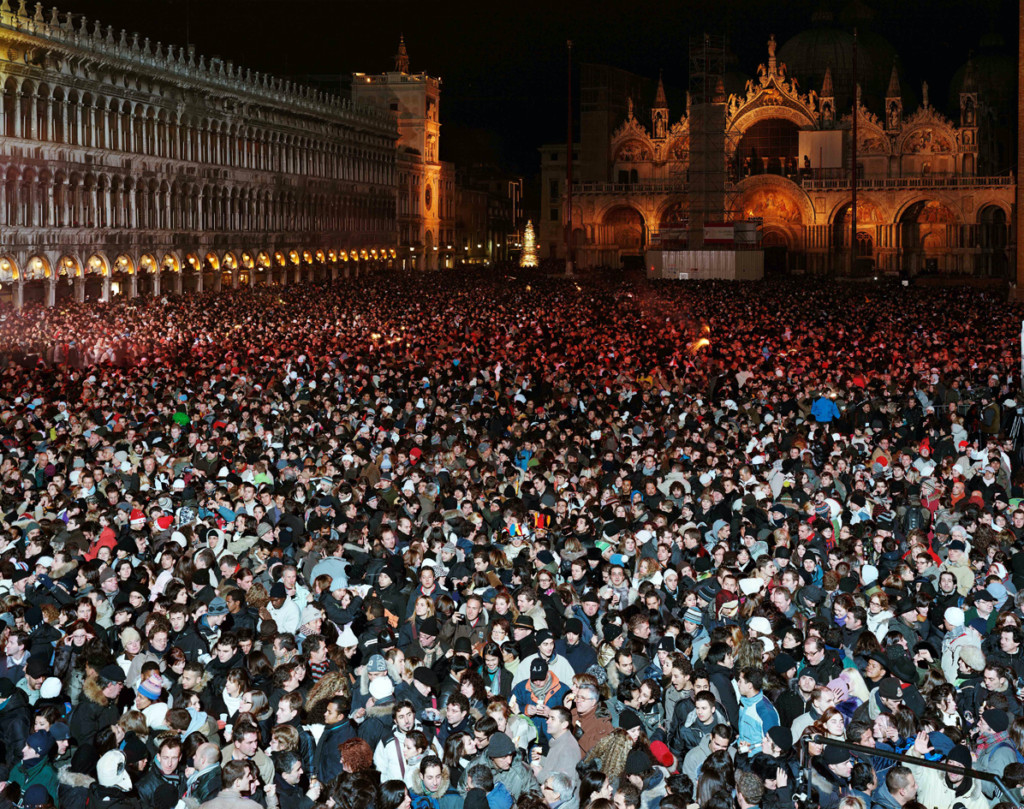
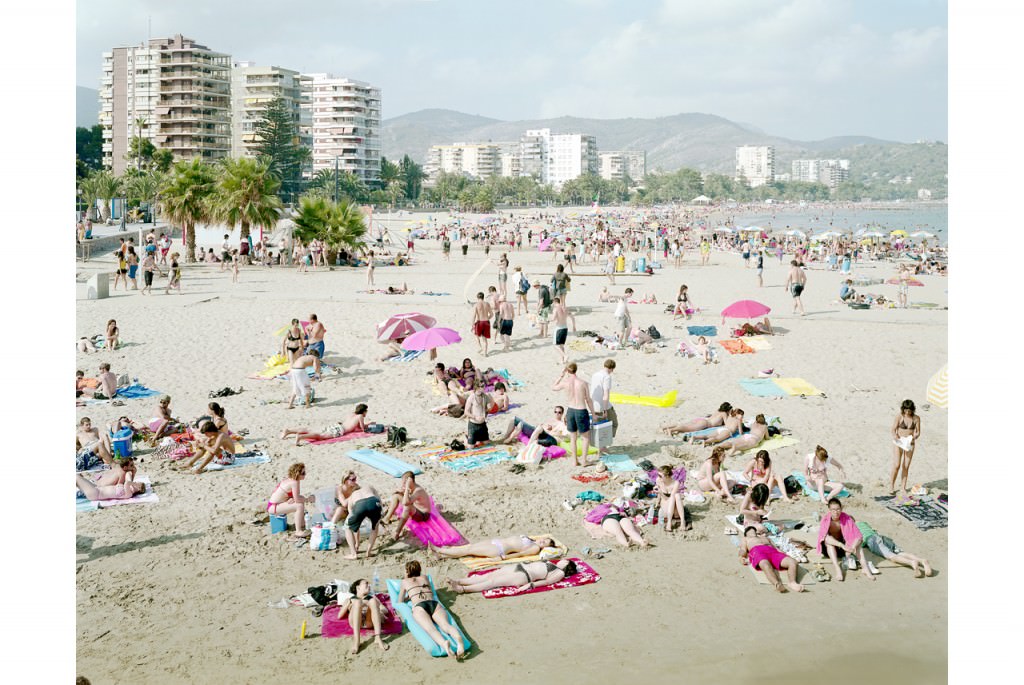
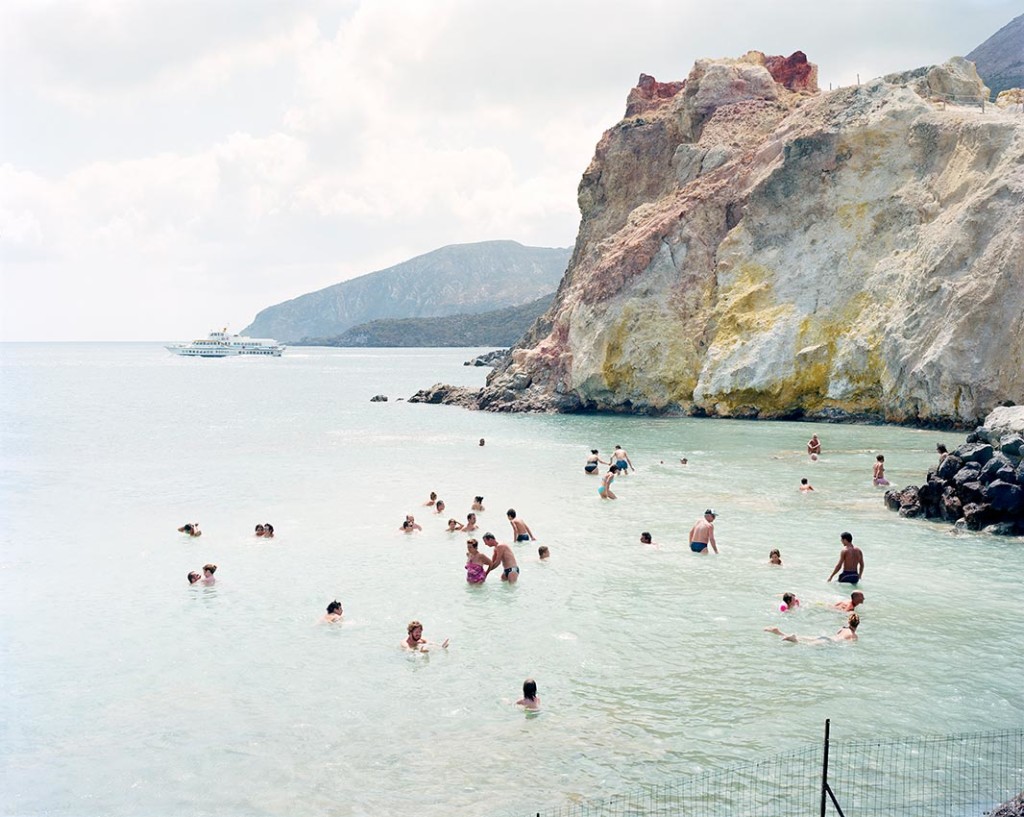
The origin of the chain of coincidences draw from an artistic project of galleria SENDA that analyse the Rambla’s transits, main tourist artery of Barcelona, through the eyes of the recognized photographers Massimo Vitali and Jordi Bernadó. Vitali focus his work on the leisure spaces and hence on public spaces, on his part Bernadó discover us the inner of its buildings. After more than a year of work, the exhibition is finally placed in Arts Santa Mònica of Barcelona by the offering on the initiative of the institution.

While looking for extravagant places, Jordi Bernadó submerged himself in the underworlds of La Rambla and went in El Portal de la Pau, in the Quimet Sabaté studio. It is a unique painter’s workshop exaggerated and open to the public. In the first meeting, Jordi Bernadó took pictures and included them in the exhibition of Art Santa Mònica.

And so, in gratitude with his hospitality, Jordi hive as a gift a batch of his photography books to Quimet Sabaté. At that time, he activates unconsciously a two-way path. Quimet Sabaté decide to tear some pages away of Jordi’s books to use them as canvas, painting surrealistic elements and reproducing new compositions as of the original photographs. This works were sold as souvenir to tourists for a small fee.

It was only later when Bernadó discover that his pictures have been reused. At that moment he decides to exhibit his photographs adding the wrested pages painted by Sabaté in his exhibition “Fragmentos para una cronotopografía del simulacro” hold in MACUF in Coruña (2011).
Some months ago, Bernadó decided to take a new look of Sabaté’s studio containing a number of the photography’s intervened by the painter. In the present exhibition, we meet the result of this relationship and this ramified path through Bernadó’s photographs and Sabaté’s contributions.
Bernadó’s production of the last years is characterized by the induction to doubt, if the images he present are an expression of what we are looking to or just a simulation. Quimet use Bernadó’s photos adding erotic imagery and stereotypical surrealistic elements, creating a humorous vision without a further intellectual pretension. In this sense, we find images where the ambiguity, the paradox and the misrepresentation of Bernadó are merged with the superimposed fictions of Sabaté. The result is a game of mirrors that delve in the concept of representation as a simulation.

STEPHAN BALKENHOL, New Sculptures

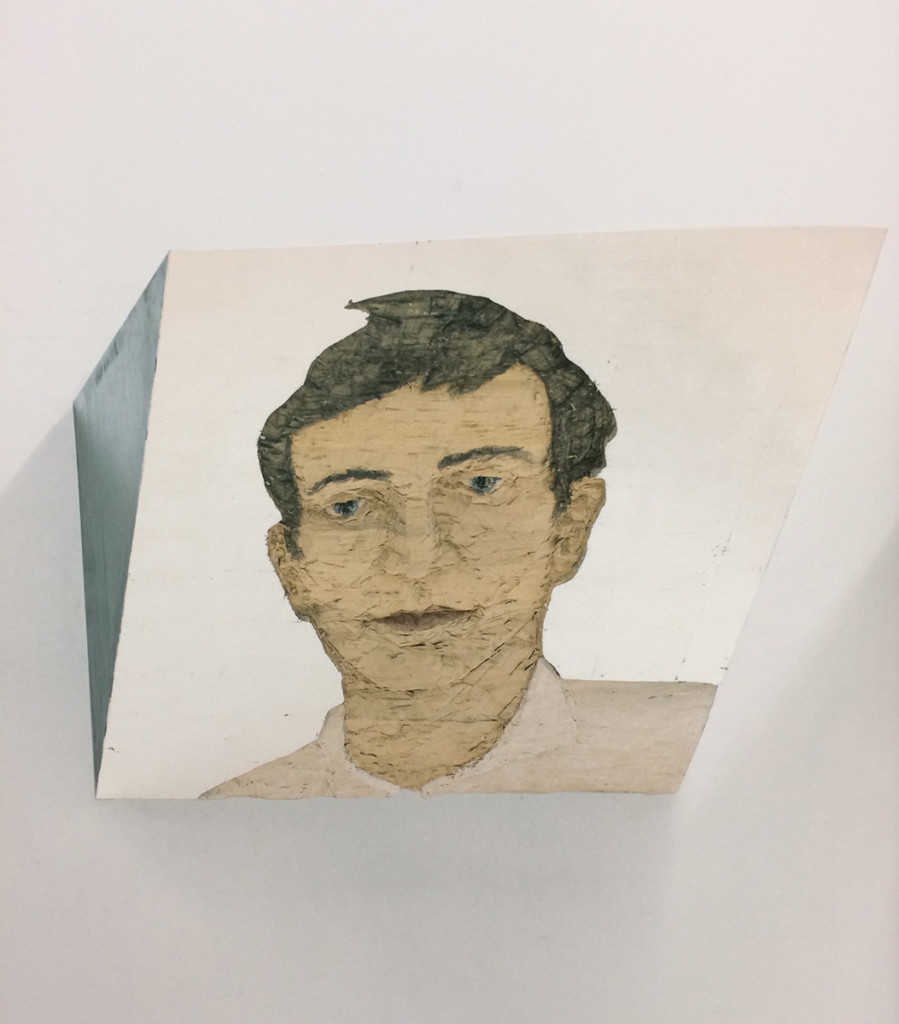
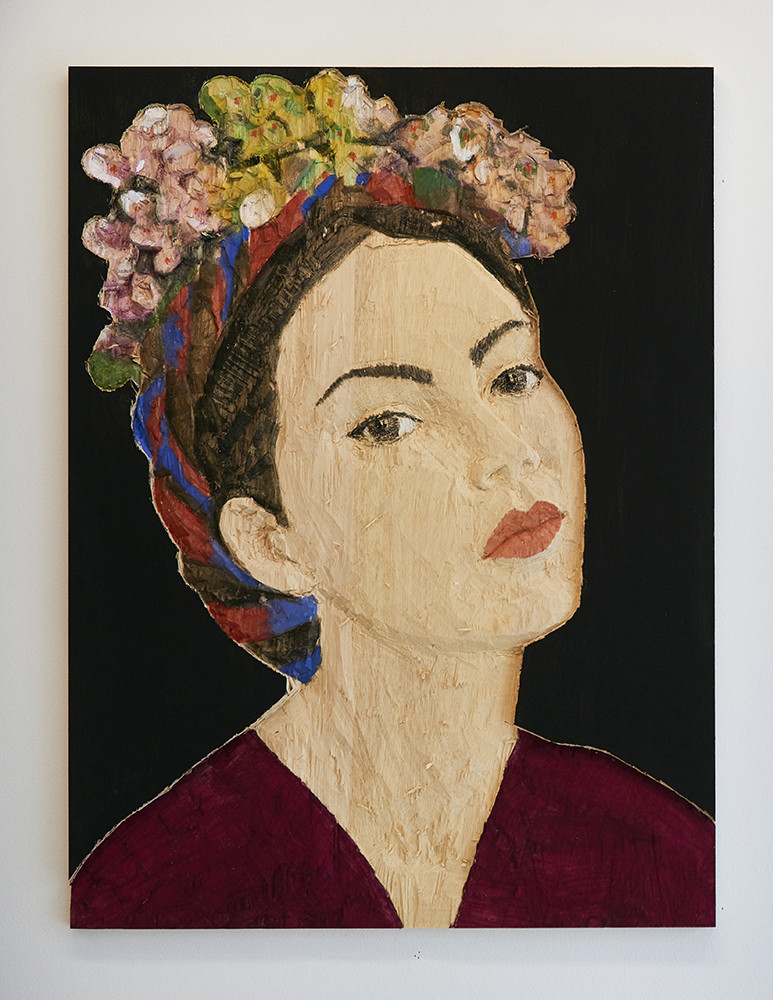
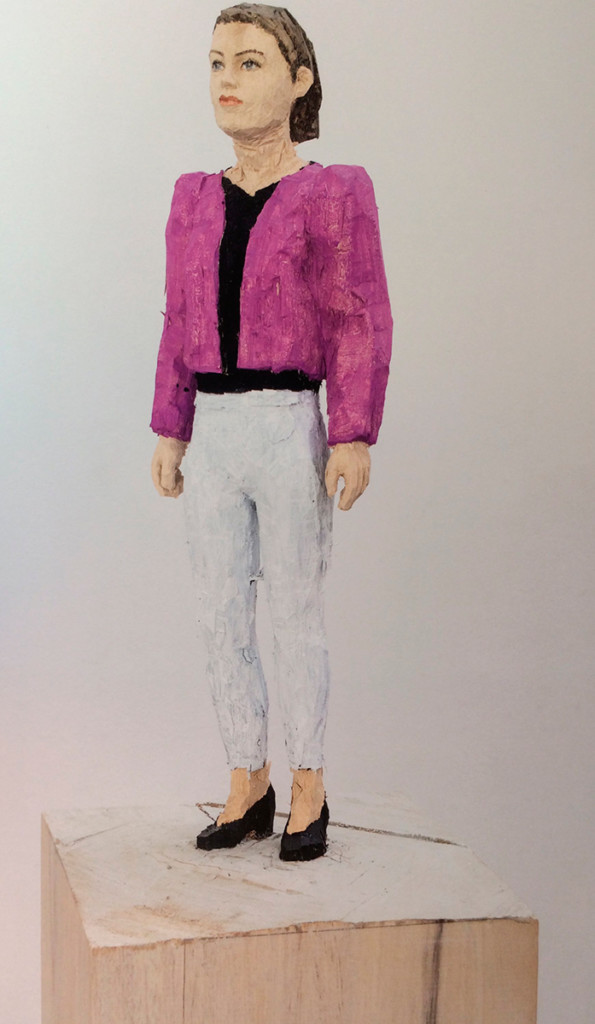
Stephan Balkenhol is characterized by his strive to reground figurative sculpture. His ability to
carve, alongside a constant investigation of the role of sculpture within the contemporary art
production, make him stand out from the prevailing tendencies. The artist uses soft wood, such
as Popler and Wawa, which can be seen in the reminiscent chisel marks, cracks or knots left as a
hint to his technique. Balkenhol uses for the most of his works a single block of wood,
polychromatic, delimiting the sculpture from its own pedestal, which is carved in a totem style.
His way of carving wood is, in a way, a continuation of the popular and medieval techniques.

The human figure is usually the driving force of his work. His characters are generally
anonymous men and women, with expressionless faces that are often depicted standing and
ordinarily dressed. Their postures, however, seem rather trivial and mysterious. The lack of
expression makes the game of interpretation quite difficult, but its presence hooks the viewer
to the gaze of these human sized figures. Elements that can be regarded as capricious, such as
the position of the hands or the inclination of the heads, become the hidden keys that reveal
the relationship between the figures, as well as tightening the link between the statues, the
viewer and the locations they occupy.

Balkenhol is able to strengthen his work with the viewer, who immerses himself In a deep
atmosphere of complicity. It is his link with what is contemporary that makes him differ
between sculptural scale, which he takes to be the ideal scale, and the human scale, considered
the mere standard. The artist says the following, as a way of inviting us to dechypher his secret
‘my sculptures do not narrate. There is something secret about them and It is not I who ought
to betray their secret’.

Meridianos by Sandra Vásquez de la Horra

Sandra Vásquez de la Horra has developed a poetic work, which illustrates stories inspired by memories, the unconscious and by sexuality. From a predominance of the female figure, her work reveals the personality of the artist through a synthetic language based on her mark, typography and austerity. In this exhibition, Sandra Vásquez de la Horra, focus her production on the mystical and religious traditions of the Iberian Peninsula influenced by the black legend and the ancestral folk traditions.

This exhibition represents a technical evolution of her work. Sandra keeps on her personal technique of sealed drawings with transparent wax film, that gives permanence and protection to the artwork. In past exhibitions she presented her drawings in installations of small papers habitually distributed in diverse forms. These structures were intertwined asymmetrically without narrative content. On this occasion, Sandra Vásquez de la Horra presents big size work fractionated in sheets of paper that make up a unique artwork. This change of the scale increases our approach towards the artwork. They are pieces of human size and proportional to spectator which radiate a kind of voyeurism, and they fix the public’s gaze on a sort of direct confrontation.

Moreover, Vásquez de la Horra has started to work with three-dimensional pieces made by paper with drawn surfaces. These simple structures with prism shape are similar to architectonic constructions of little houses. Each one of the four sides of the houses is composed by an independent pictorial plane, where the spectator fuse in, in a total connection with the artwork. The inspiration for these houses was the childhood memories of the artist in Viña del Mar, Chile. The modernist house was the artist has grown up with big windows that shown a park with huge green environment, where it was located. Besides this atmosphere, animal’s pictures and the rich nature comes from the magic of the artwork that brings us into a dreamy lecture of the work.

As a further step, Sandra Vasquez de la Horra will presenting as well, a sequence of ceramic sculptures recently produced in a ceramic workshop in Barcelona, and that she will be using as preliminary works to produce for the very first time a bronze sculpture.

Anna Malagrida: Cristal House

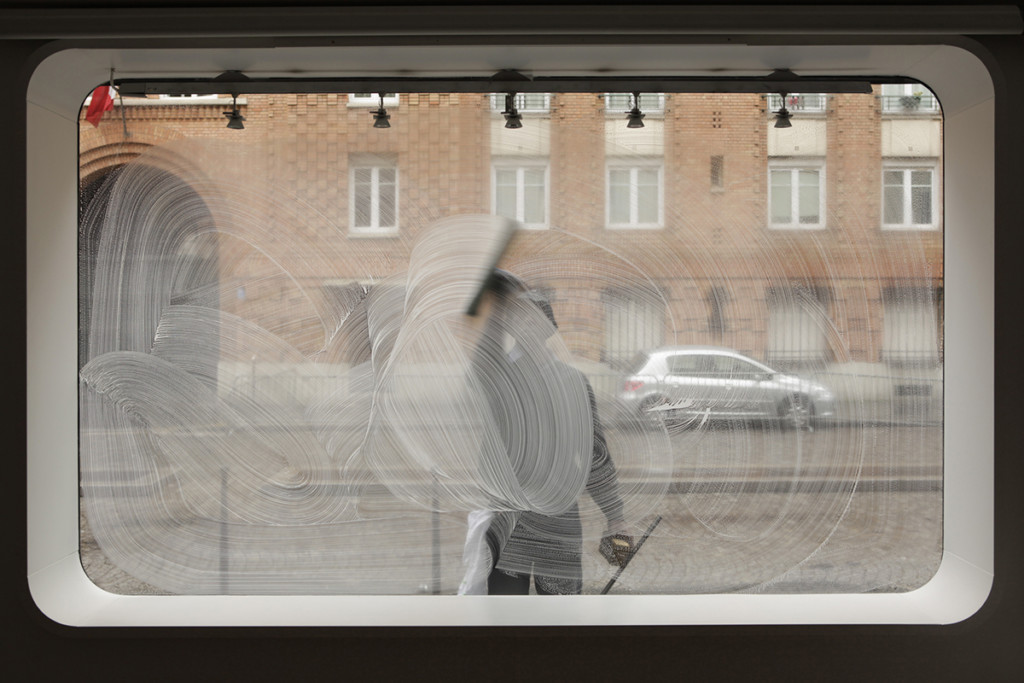
Cristal House (crystal house) is the name of a racing horse. In her new project, Anna Malagrida draws upon photography, text and video to carry out the attempted depletion of a place: a horse-race betting house located in the center of Paris. From the street and through the large windows, Malagrida shoots repetitive movements and the waiting of the gamblers. Located in the interior of the room, she meets them and carefully listens to them. Lured by great megalopolis, a large majority of the gamblers are migrants coming from all over the world dreaming of a better life. The notions of dreaming and the inherent hope to every gambler unfolds into the image of the one who migrates.

A strange game of reflections places the audience before the hopes of the hapless. Their words, reproduced in the text fragments, shape the lives and dreams that converge in this venue of encounter and gamble. From the interior of this Cristal House, the camera records through the windows a passage of the life in the streets, showing the movement of the city while revealing its multiculturalism and intense pace. Malagrida attempts to depict all every-day things and events that the camera manages to capture through different perspectives given by the windows. Thus, the betting house is transformed into a theatre of hope and the city into its scenery. Seductive, a promise of a better life, the metropolis gathering individuals coming from all over the world becomes a transit space, of fortuitous intersections, and a multiplier of solitudes.

José Pedro Croft: Novos trabalhos, velhos territórios.

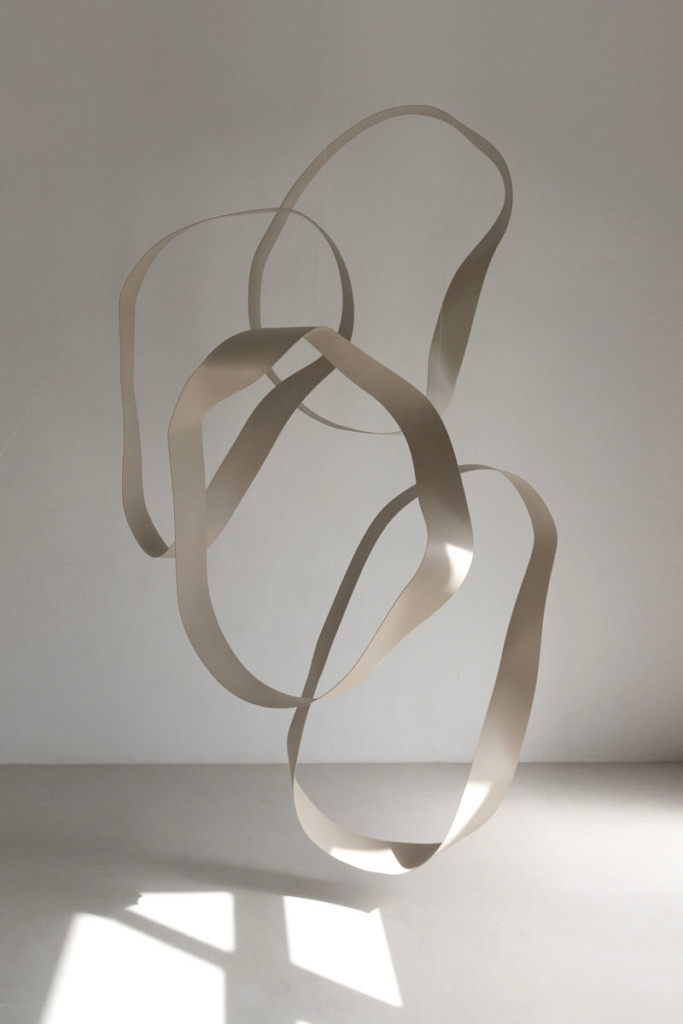
“Novos trabalhos, velhos territórios” will be the fourth solo exhibition by José Pedro Croft in Galeria SENDA. His work is based in sculptures and drawings, where he explores with different materials, colos and perspectives to create new volumes and an altered sense of space. The artist was the representative of Portugal on the las edition of the Venice Biennale of Architecture in 2016 and he will also represent his native country at this year’s Venice Biennale.

Ola Kolehmainen: “Sketches of Spain”

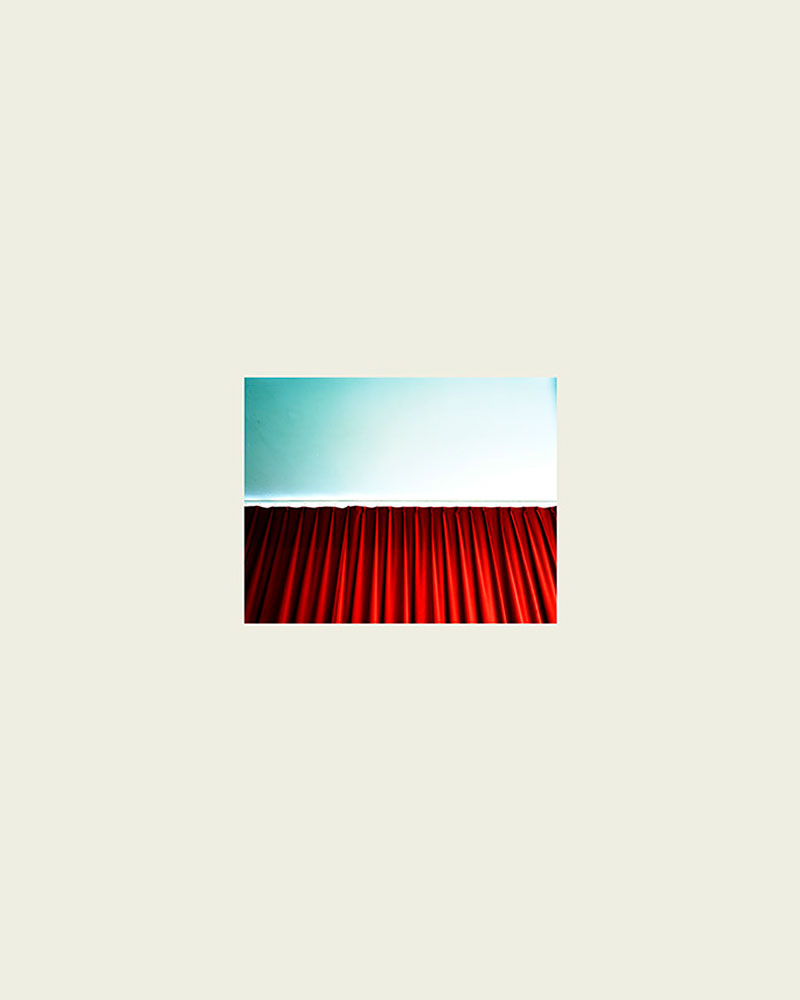
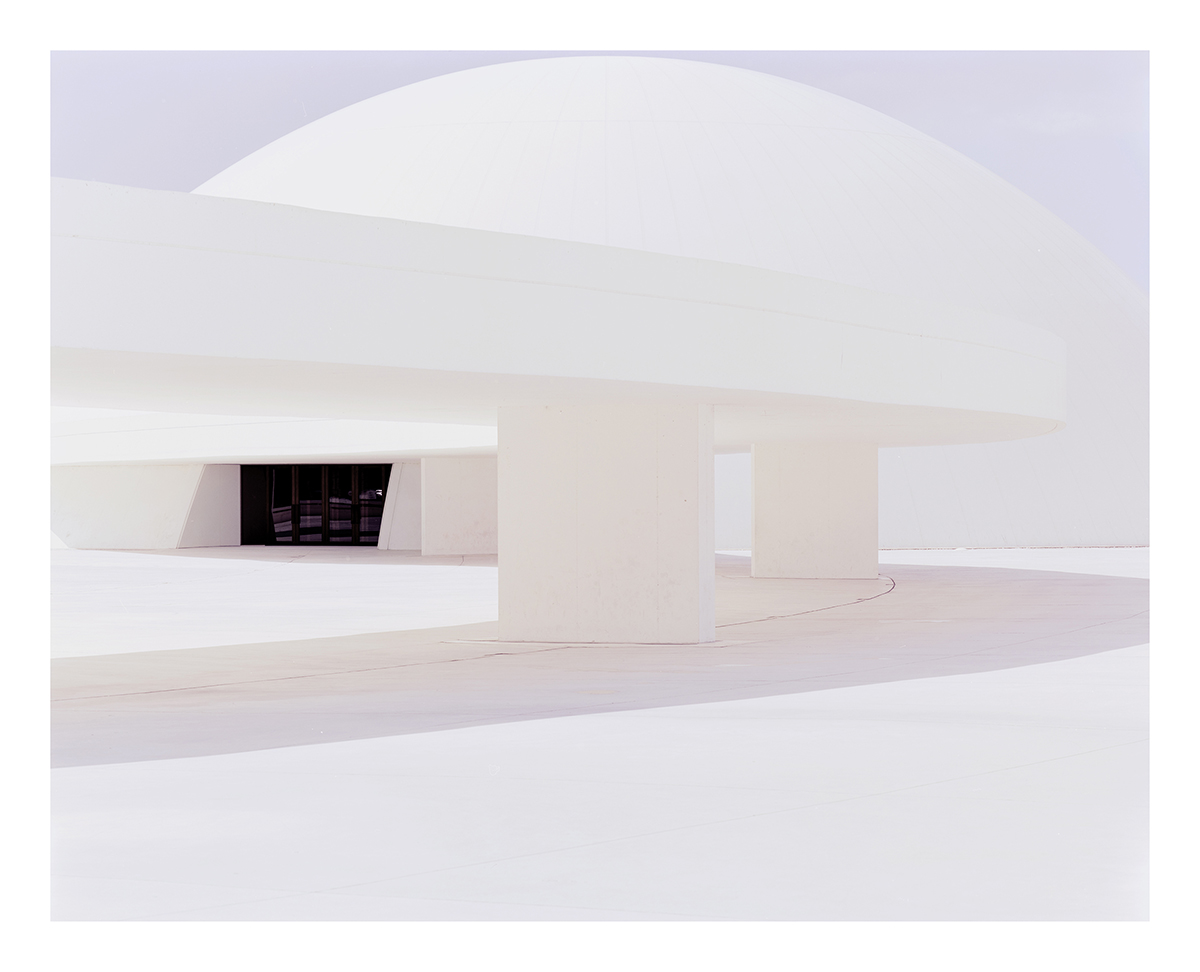
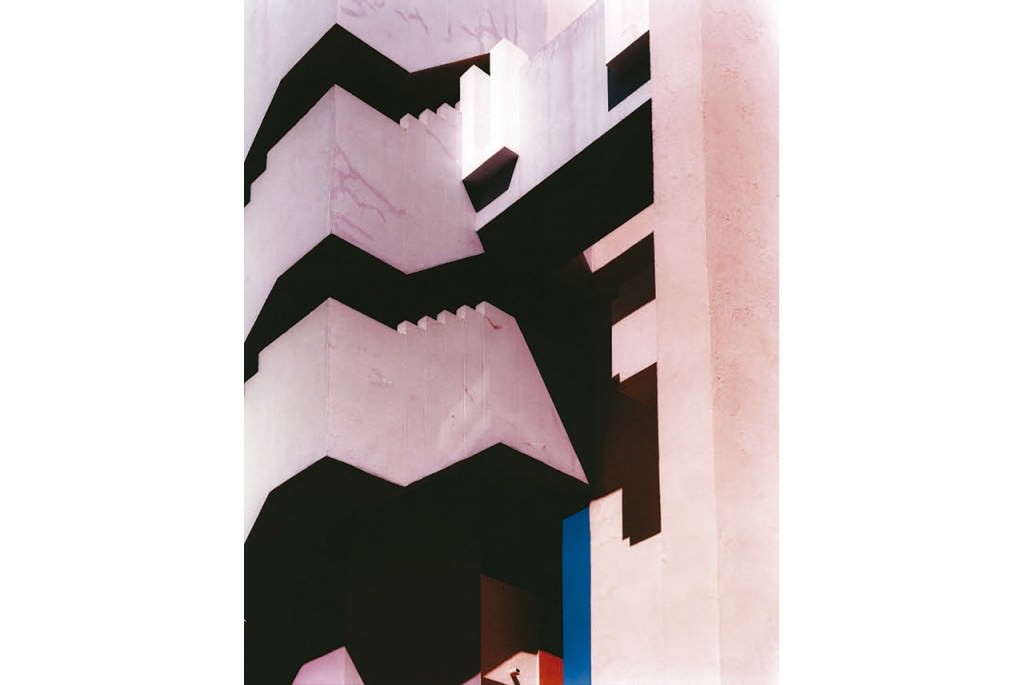
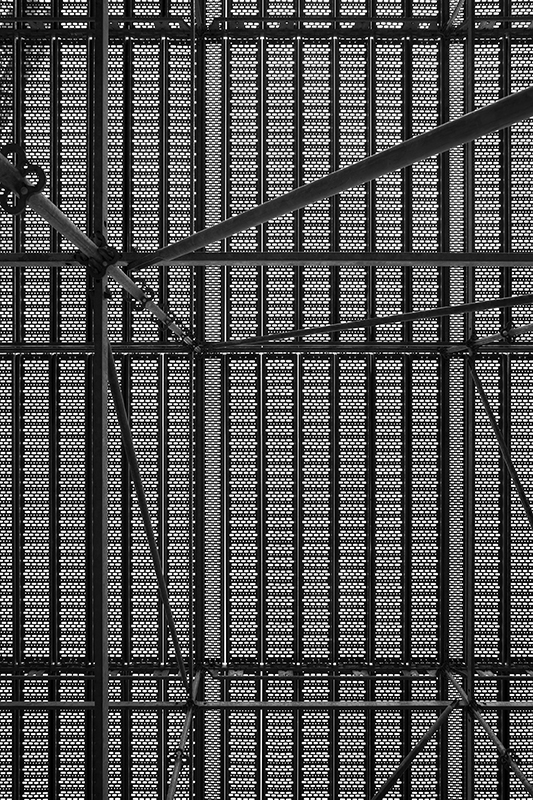
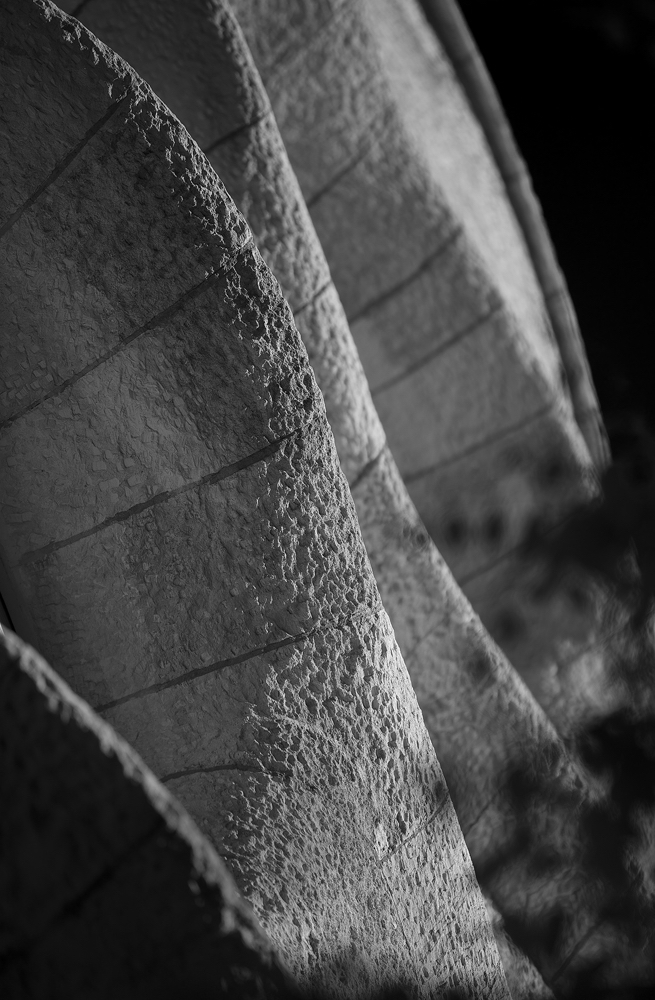
“Sketches of Spain” outlines a decade of studies by Kolehmainen of the most emblematic contemporary buildings in Spanish territory. Through his particular perspective, the artist reflects on the dialogue between building and light and the influences found in the works by Bofill, Mies van der Rohe or Ambasz.

Solo show Ahmet Ertug in Istanbul

Galeria Senda will have its first collaboration with the acclaimed Turkish photographer Ahmet Ertug in Istanbul, his hometown, with a show of his renowned large-format photographs of the Byzantine and Ottoman architecture and art.

Solo show Oleg Dou in Vienna

With 112 galleries from 28 countries, viennacontemporary, is the largest and most prominent art fair in the region, the highest concentration of Eastern European galleries worldwide. Senda participates for the first time in these event, presenting a solo show of the recognized Russian artists  Oleg Dou.