
GONZALO GUZMÁN, Colisión

Gonzalo Guzmán (Madrid, 1991) educated as an industrial designer and has been working in sculpture since the time of the pandemic, when he began to have lucid dreams, an experience that can affect up to 50% of the population at least once in their lives. In them, the subject is aware that he is living a dream and from that point he takes control of his development.

Collision is his first solo exhibition at Galeria SENDA, as part of the Art Nou festival, Barcelona’s emerging art festival, which aims to promote the talent of young artists and, among other things, give them the opportunity to exhibit, as in this case, for the first time in a gallery.

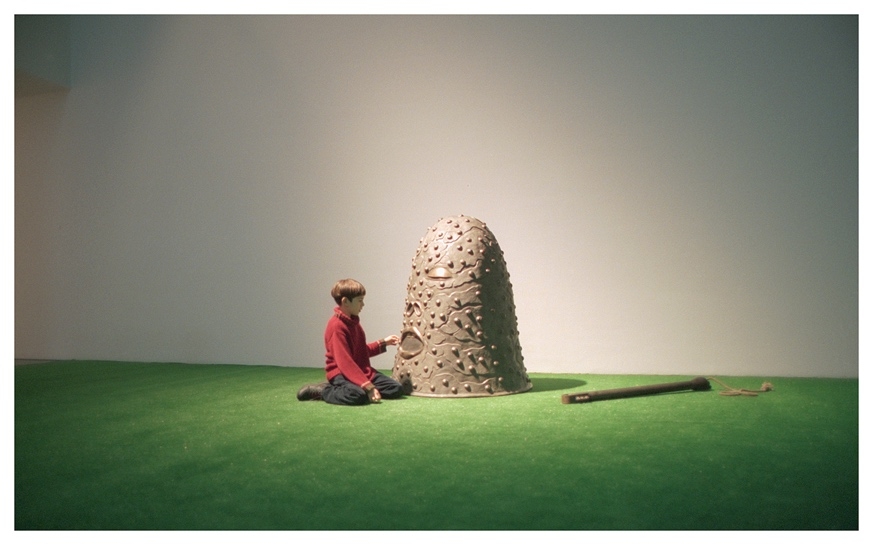
Lucid dreams have marked Gonzalo Guzmán, and as a result of experiencing them, he decided to radically change his life and dedicate himself fully to sculpture in order to capture his dreams. His artistic production is made up of metallic pieces of stainless steel that refer to megalithic monuments such as dolmens, which often appear in his dream world. The creation of sculptures is a form of research to translate these figures into reality. The fact of materialising them enables Guzmán to interact with them on the real plane, and at the same time other people can do so. In addition, the material embodiment of these works raises awareness of how dreams can transform our surroundings.

The centrepiece of the exhibition is Collision, a structure that has also been the protagonist of his dreams. This installation is composed of the representation of a three-metre stainless steel stalactite suspended from the ceiling of the gallery on a reflective surface. The reflection of the stalactite on the area generates the illusion that there is also a stalagmite and, therefore, they are two structures that are about to touch. The strength of the composition lies in the closeness of an impossible collision; in the tension of volumes about to collide.

When looking at the installation, the spectator may question whether he is really looking at a six-metre structure or a three-metre structure reflected on a surface. However, neither of the two options is wrong. Likewise, the perception of time is also altered through the presence in the exhibition of an inoperative clock, since when we dream the notion of time fades away. The public will also be able to contemplate other sculptures by the artist present in his dreams that allude to megalithic structures.

The questions suggested by the observation of Collision lead us to reflect on the blurred boundaries between what is and what is not real. This same situation happens in lucid dreams where the unknown remains as to what is part of them, and consequently, the apprehension of reality and our belief system may collide.

The structure is suspended from a false tensioned ceiling illuminated with LED lights, which has been implemented by Barrisol and the company Instalación de Materiales Acústicos y Decorativos (IMAD).

Abaut the artist GONZALO_GUZMAN_SENDA_mayo2023


www.barrisol.com / www.imadsa.es

TÚLIO PINTO, Empatía

Túlio Pinto is for the first time at Galeria Senda, for a solo show, displaying his sculptures of glass bubbles delicately trapped between pieces of rusty steel, disregarding, for this collection, other materials, typical of him, such as stones, steel and ropes. Once again, the Brazilian artist is trying to test the limits of ordinary, industrial materials, creating apprehension in perfectly balanced, harmonious compositions.

The exhibition ‘Empathy’ is comprised of six sculptures made in Spain, that together bring about a place of experience and reflection. Túlio presents multiple arrangements articulated with the same materials to examine the unnatural encounter between different elements. The dialogue created through these engagements are metaphors for the conditions of existing. Concepts of transformation, balance and impermanence are all brought to light, open to interpretation of the viewers. Strikingly, rather than assigning meaning to materials, Túlio uses the features of the mediums to form a definition.

With subtle references to Russian Constructivism, Túlio Pinto has a very unconventional approach to sculpture. He obtains pieces of his sculptures in natural conditions and establishes an unstable interaction with their different properties such as their weight, density and dimension. Nothing is glued or fixed, everything stays in place with the pressure of the blown glass and the weight exerted by the steel tapes. Túlio creates a visual representation of the magical empathy between two materials that are not known for complementing each other. The juxtaposition of not only the temperaments of the materials but also their placements that Túlio so deliberately selects gives his work a sense of duality. There is constant contrast between the materials- from the fragility, transparency and shininess of glass to the the rigidity, opacity and dullness of the steel. There are also references to the materialization of the invisible force- gravity. A force taken for granted despite its power over everything on earth.

As a child, Túlio had a peculiar habit of collecting stones he found near his home and taking them with him on vacation. He would release these stones into different soils, hoping to generate some kind of existential crisis for the minerals of the earth. To this day, he still displaces stones and challenges limits of their resistance. Túlio Pinto never ceases to push the boundaries.


Download the press release here

We invite you to follow us on social media so you don’t miss any news or gallery activity!

Share your experience with us using @galeriasenda & #galeriasenda


ANTHONY GOICOLEA, Back To One

We are pleased to announce that Galeria SENDA will be presenting a solo exhibition by Anthony Goicolea (Atlanta, 1971), opening Thursday April 13th at 7pm. This marks Goicolea’s third solo show with the gallery and will feature a selection of his most recent works.


ARTIST STATEMENT

My work is a visceral reaction to a lifetime navigating the coded boundaries that exist between cultures, genders, ages, and traditions.

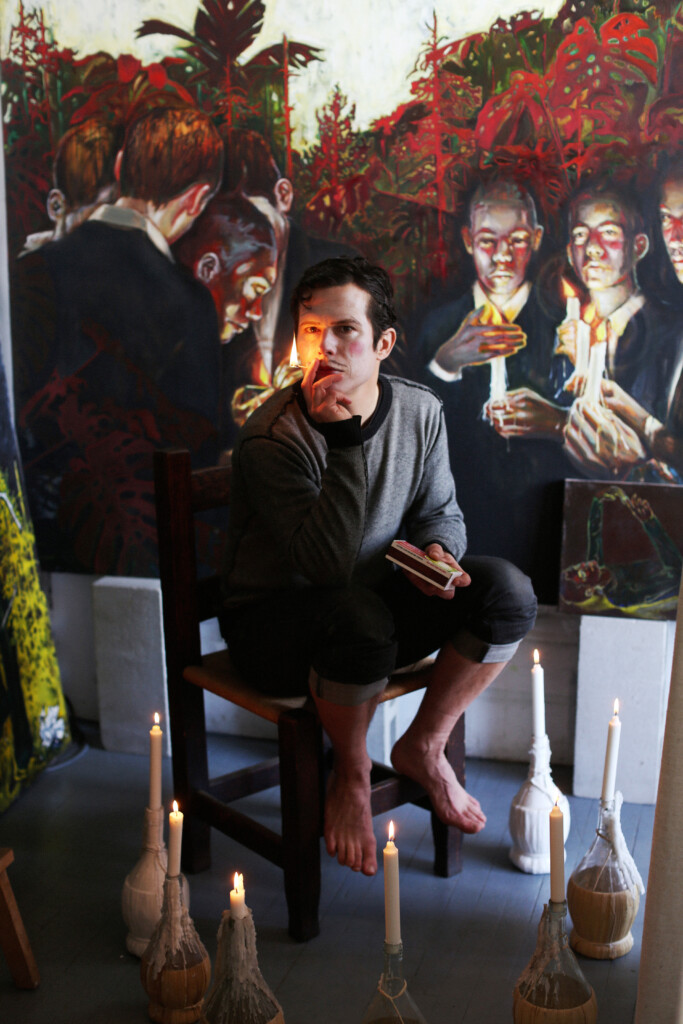
I paint fictional scenarios through the lens of my personal and family history. Growing up Cuban, gay and Catholic in the Deep South during the early 1970s forged my awareness of social constructs such as regional traditions, rituals, and history, and how those elements play out and define arenas of identity, gender, and place.

I was coming of age in the midst of the Cuban refugee crisis coupled with the advent of the AIDS crises and the rise of the religious right, a confluence of events that remarkably parallels our current cultural and political climate.

My paintings are poignant, cinematic portraits that mix cross-cultural references. I use coded cultural signifiers gleaned from folklore, mythology, religion, and fairytales, in my paintings to draw parallels between past and present.

These works are characterized by a feeling of familiarity and dreamlike otherworldliness. I gravitate towards scenarios that focus on the figure caught in a transitional “in-between state” that defies clear interpretation as a result of conflicting cultural touchstones or signifiers. Many of the figures are painted in a moment of fatigue or ennui. Their acrid colors, androgynous poses, and deadpan stares are rendered in a thick scumble over rough linen to reveal past layers of paint.

The similarities between the advent of AIDS and the Covid-19 pandemic, the refugee crises of the 70’s and current anti-immigration nativism, and the Reagan era culture wars compared to the resurgent right’s religious attack on race, gender, and bodily autonomy have combined to reawaken memories of navigating familiar terrain in my adolescence. My paintings address these murky childhood memories through a cast of fictional character studies. Like jaded actors from another era, the figures in my paintings mirror the past and stare out with an exhausted gaze knowing the parallels of our current situation have set the stage for yet another repeat performance.

ELENA DEL RIVERO, Love Song

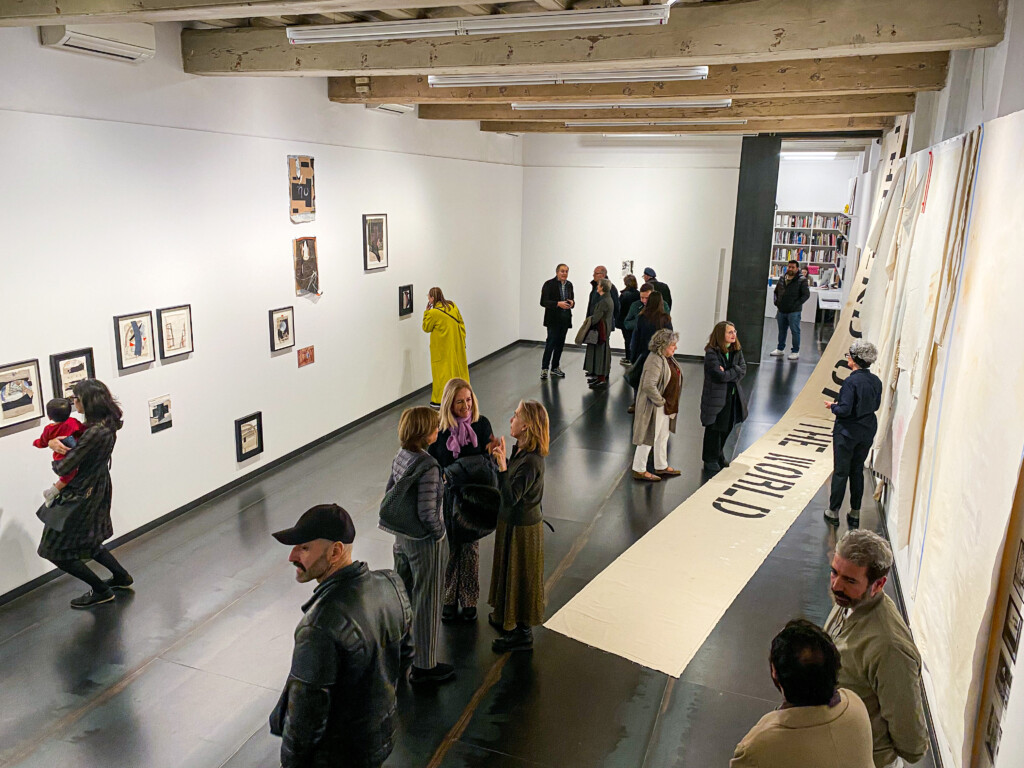
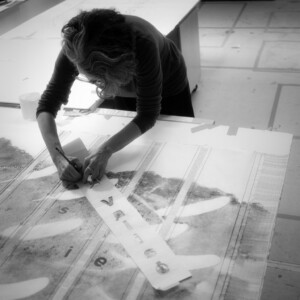
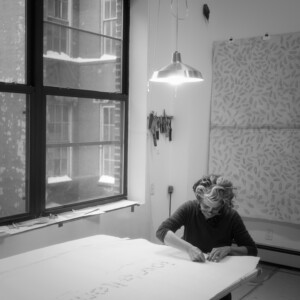
The work of Elena Del Rivero paves the way for two independent lines that dialogue with each other: the historical; that points to the collective pain of loss, and the personal; that is born from the construction process of our existential pillars.

This exhibition is dedicated to the life and work of Lawrence D. “Butch” Morris (02.10.1947 Long Beach CA.- 01.29.2013 Brooklyn, NY) whose music can be heard during the course of the exhibition courtesy of the artist’s legacy – with our thanks.

Del Rivero will present a selection of works taken from various projects carried out throughout her career that culminate in the concept of admiration for life and experience – leitmotiv and essence of the artist’s inspiration.

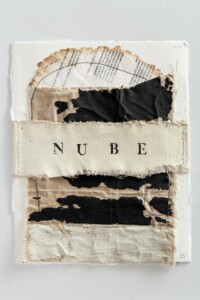
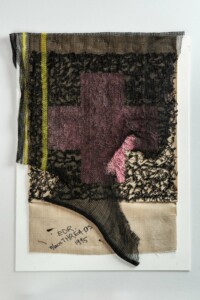
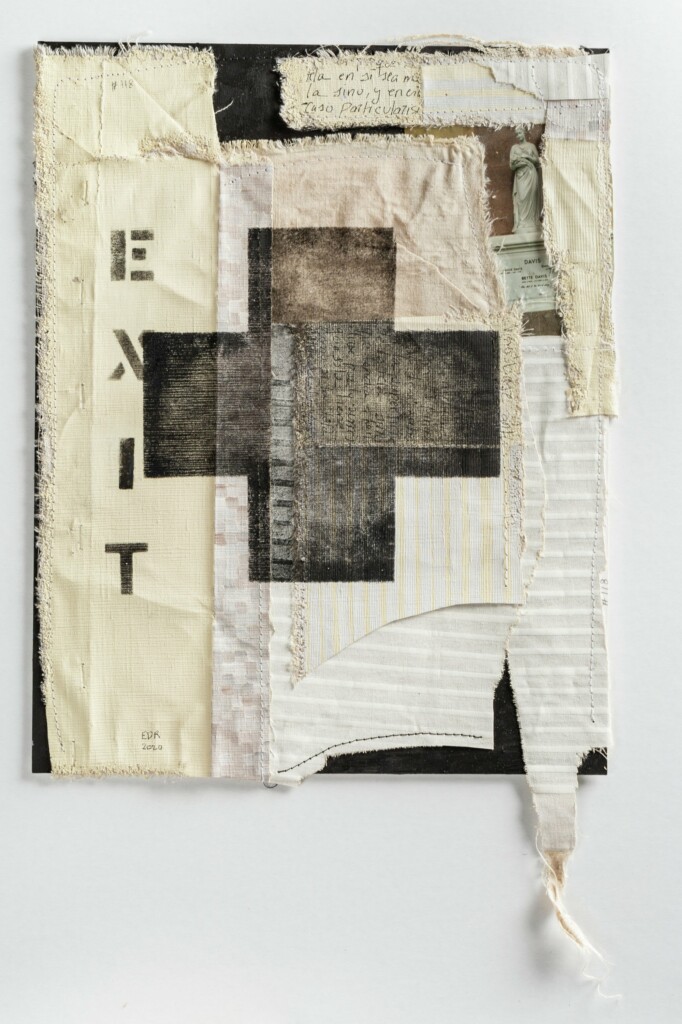
In the context of the last stage of the “Archivo del Polvo” (Dust Archive) (2001-2021), Love Song will include the 30 collages-assemblages that were presented in Es Baluard, Palma de Mallorca, built with the pieces of painting rescued from his studio from the works destroyed during the 9/11 attack.

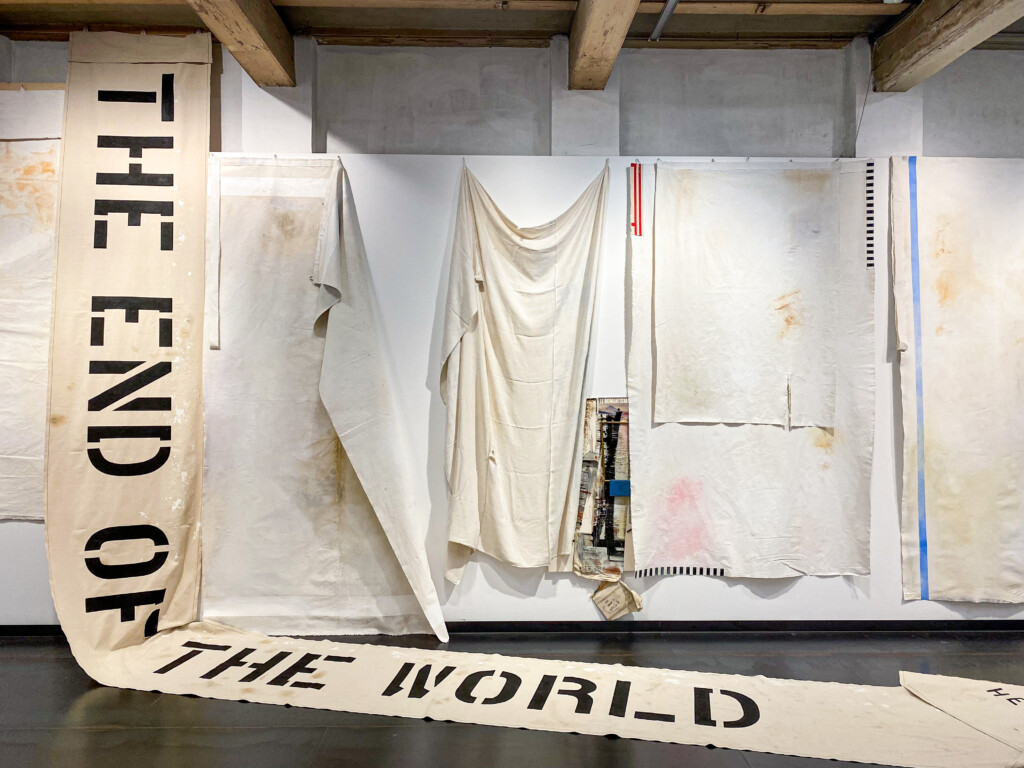
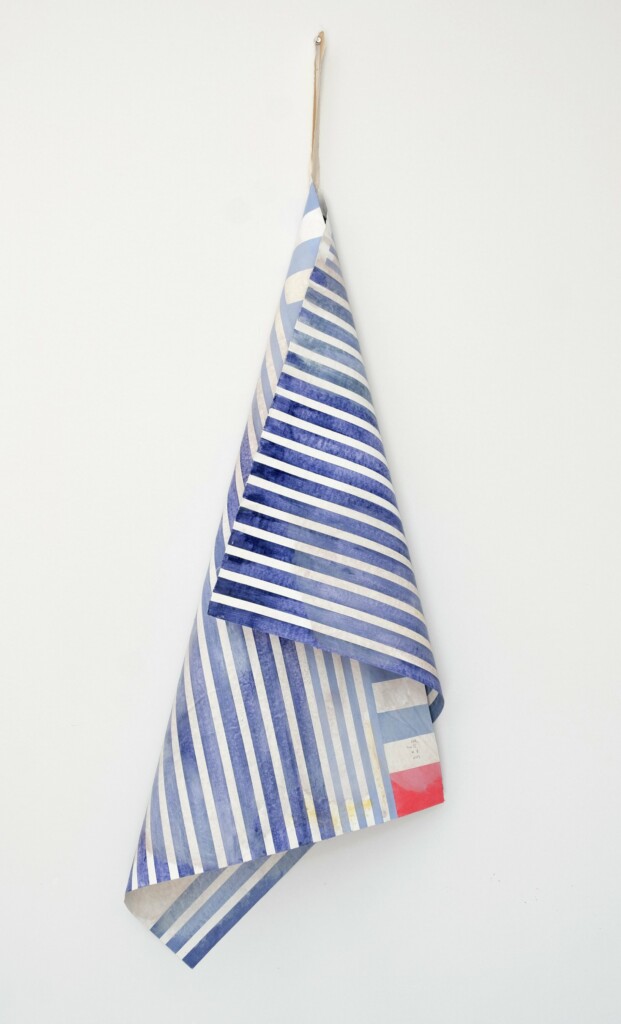
From “Letters from Home”, where the artist delves into the domestic with the kitchen table as a banner, the artist proposes a conceptual experience with kitchen towels-paintings from different years.

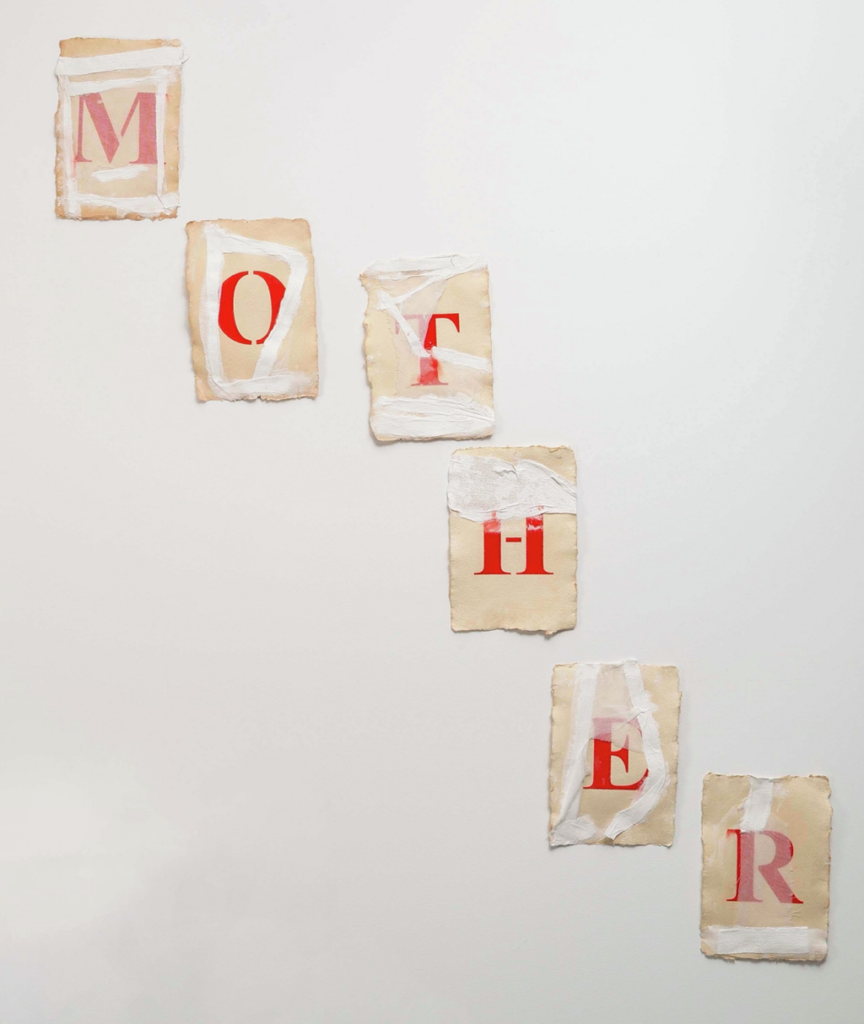
Elena also incorporates works related to “Letters to the Mother”, another of her great projects since 1991, with elements that she has used constantly throughout her career such as needles, paint, embroidery and fabrics.

The exhibition is completed with “Fragments of my Ruin”, a work in which all her ethical and aesthetic concerns of recent years come together in a large installation.

Click here to see available works

With a photograph of Butch walking through the East Village in New York and taken by Elena in 2008, the exhibition will close along with others taken during the Black Lives Matter demonstrations in the Soho neighborhood. The images will accompany us throughout the visit as a reflection on the historical, the collective and the personal in the context of an immediate present.

The uses that the artist gives to the materials manage to organically structure the phases that arose as a result of the attacks, as do her drifts and personal reflections that are consolidated in a strong narrative that is the source of her own artistic process.

In the words of the director of Es Baluard (Museum of Contemporary Art of Palma de Mallorca), Imma Prieto: «The importance of Elena Del Rivero’s project lies in the connection established between a specific event, 9/11, and a relationship that unites past, present and future.

Read Imma Prieto’s statement about “Love Song” here: 

ARTIST BIO

Elena del Rivero has lived and worked in New York, USA, since 1991. She has had individual exhibitions at the Museo Nacional Centro de Arte Reina Sofía (Madrid); New Museum (New York), Corcoran Gallery of Art Washington D.C.); International Center of Photography (New York); The Drawing Center (New York); or the Patio Herreriano Museum in Valladolid, among others.

ANTHONY GOICOLEA, Don’t Make a Scene | #LoopFestival2022

Galeria SENDA presents Anthony Goicolea – “Don’t Make a Scene” (2020)
LOOP Festival, 8 – 20 November 2022

Galeria SENDA is pleased to present Anthony Goicolea in this years edition of the LOOP Festival from the 8th of November till the 20th of November.

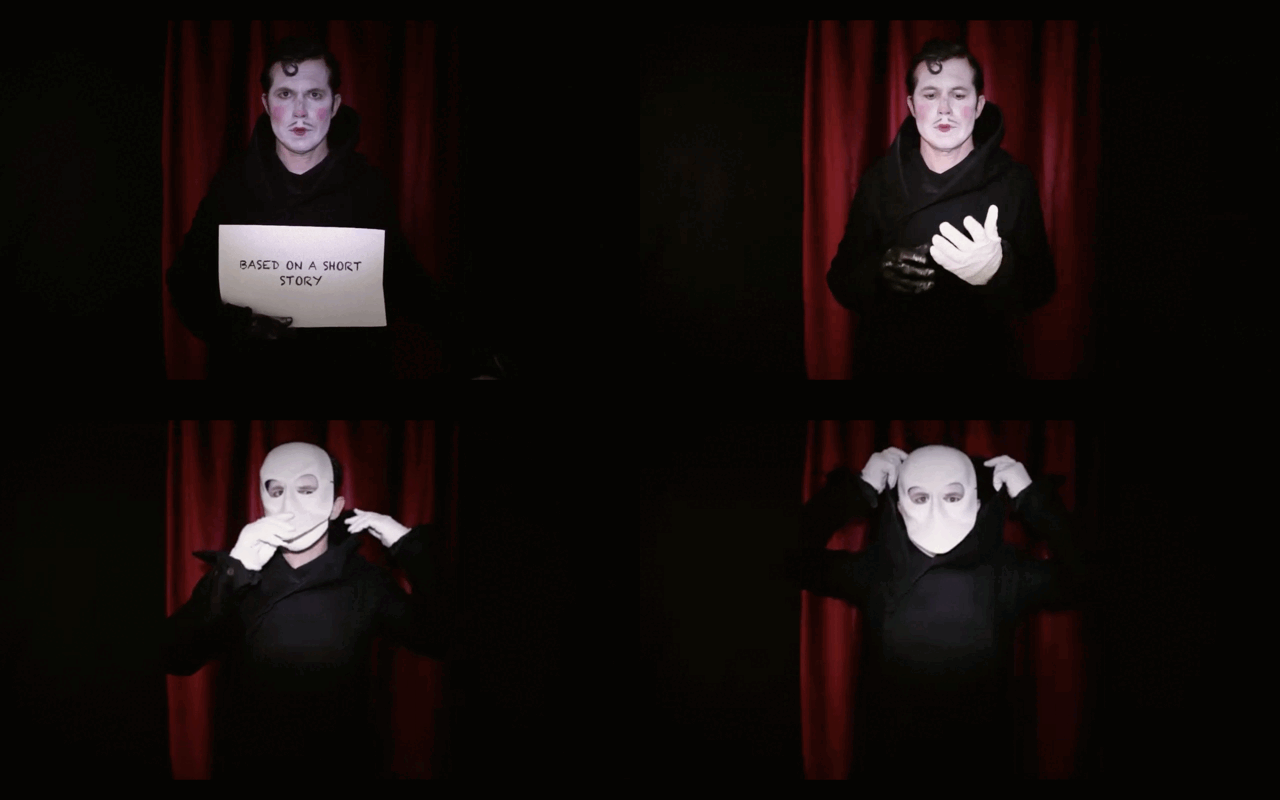
“Don’t Make a Scene” (2020) is a monologue presented in the form of a silent film. The short unfolds as a book of drawings made during the initial six weeks of the Covid-19 quarantine. Each drawing is done on semi-translucent sheets of mylar film. The portraits are character studies presented as actors from a one-act play.

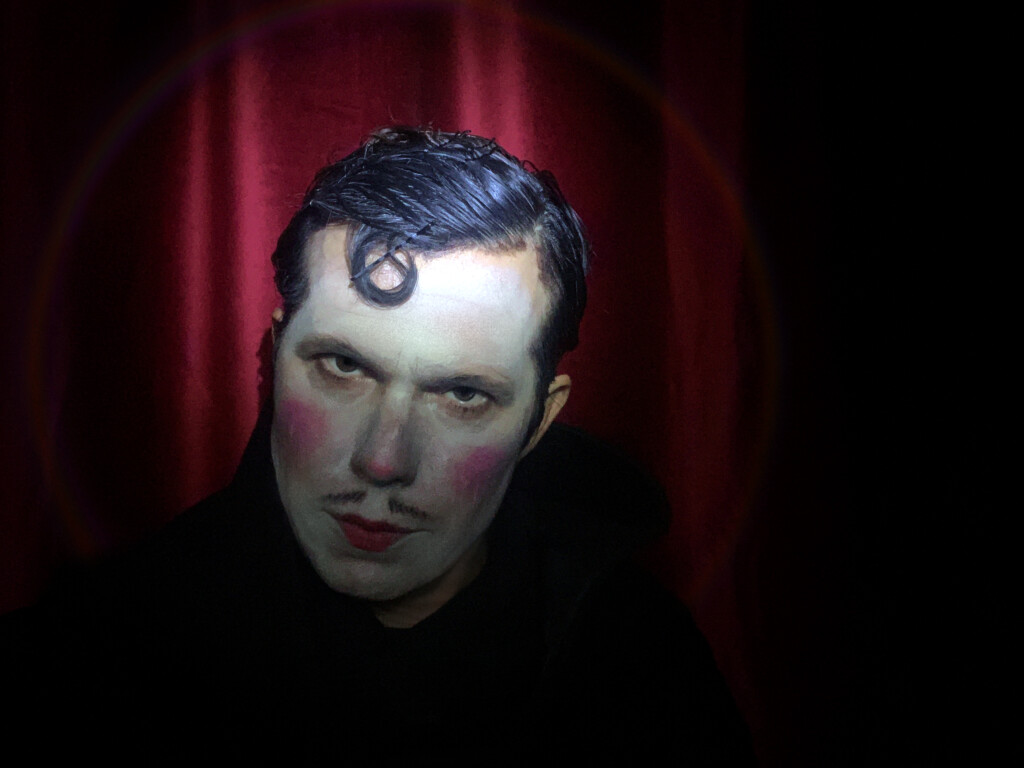
Made during a six-week period of forced isolation, Goicolea casts myself as the emcee in the guise of an early 1900’s cabaret host as an allusion to past and present pandemics.

Stills from the original video

Dressed in period stage drag the emcee enters in a black cloak and beaked mask. During the 17 th-century plague, European physicians wore beaked masks, leather gloves, and long coats in an attempt to fend off disease. The mask is removed to reveal pancake make-up and reddened cheeks that were often used to hide early signs of “Consumption” or the “White Plague”. And the pomaded coifure, rouge, lipstick and stage make up has links to paintings made during the pandemic of 1918 as well as referneces to drag and queer communities affected by the on going AIDS pandemic.

The musical accompaniment is a slow unfolding waltz whose beat is in sync with the rhythmic turning of the pages. The slow steady beat marches onward toward isolation, tedium, fear and the final hooded figure of death.

ARTIST BIO
Anthony Goicolea is an American born artist of Cuban origin. Known internationally for his photographs, drawings, paintings, sculptural installations, and films, the artist works across mediums creating a self-referential visual language that explores identity, migration and transition, displacement and alienation, as well as assimilation and group dynamics. Goicolea uses the architecture of the human body and constructed landscapes to create worlds predicated on fantasy but based in reality.

About LOOP Barcelona

LOOP Barcelona is a platform dedicated to the study and promotion of the moving image. Founded in 2003, since its creation it offers a specialized audience a curated selection of video-related contents from challenging perspectives. An international community of artists, curators, gallerists, collectors and institution directors, team up to develop projects, which aim at exploring the capacities of video and film in today’s contemporary art discourses.


#SENDATalks | Shared challenges. Creation in the global market.

#SENDATalks | Jaume Plensa / Jean-Marie del Moral / Marius Carol

Shared challenges. Creation in a global market.


Monday, November 7th, 7 p.m. (CEST)

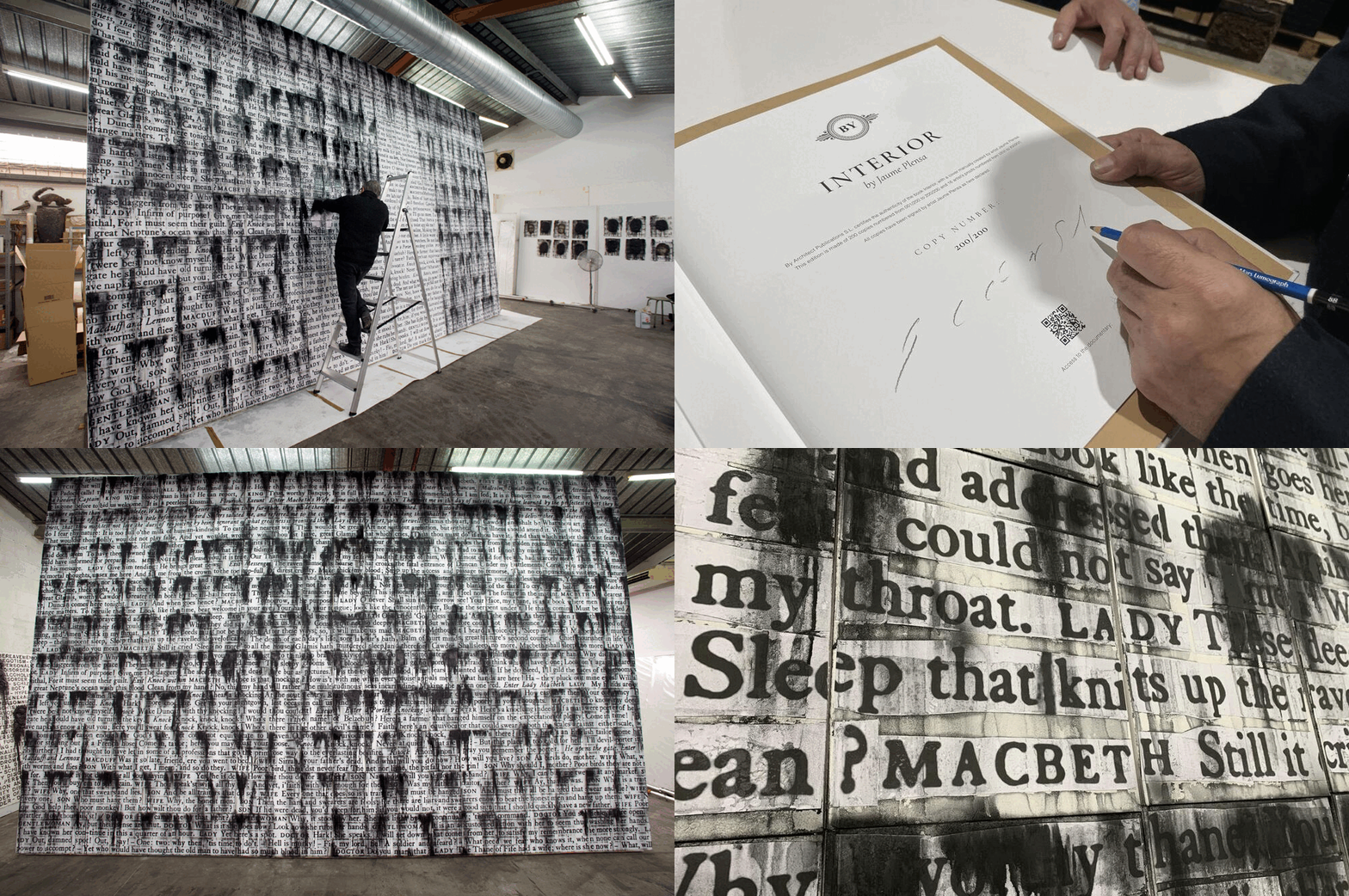
Join us for the talk between the sculptor Jaume Plensa, the photographer Jean-Marie del Moral, and the journalist Marius Carol, next Monday, November 7 at 7:00 p.m. on the occasion of the presentation of the book “Interior, 2022” by the publisher By Publications in Galeria SENDA.

The event will be live online through our Instagram and Youtube account.


Sandra Vásquez de la Horra presents Aura at Galeria SENDA

Chilean artist Sandra Vásquez de la Horra returns to Galeria SENDA to present Aura.

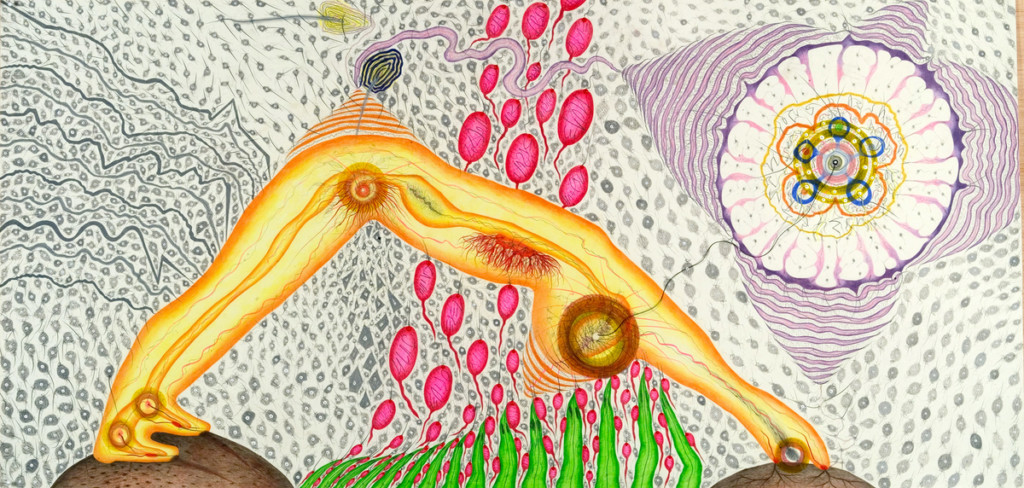
In this exhibition, the artist introduces us to the complex universe of theosophy, which explores the link between the aura and human nature. Through a multiplicity of techniques that range from three-dimensional pieces, charcoal, watercolor and wax; Vásquez de la Horra traces bodies that she conceives as geographic entities, endowing them with labyrinths, landscapes, and mountain ranges. These bodies, now territories, are divided into two planes, the physical-earthly and the mystical.

In the physical aspect, there is a political burden of resistance of the people against the Chilean dictatorship; and in the mystical aspect, the artist takes the concept of the seven planes or chakras to dialogue in unison between the universe and the earth. This is how the bodies captured on paper dipped in wax become thresholds that lie waiting for the energy cosmic. An energy that expands and travels through the soul and its many emotional facets to give life to what we call Aura.


BIO

Sandra Vásquez de la Horra graduated from the University of Design of Viña del Mar. She continued her studies at the Kunstakademie of Düsseldorf being a disciple of Jannis Kounellis and Rosemarie Trockel. Her work has been exhibited at the Bonnefanten Museum in Maastricht, the Pompidou Center in Paris, the Kunst Palast Museum in Düsseldorf and the Albertina Museum in Vienna. In 2009 she won the Contemporary Drawing Prize awarded by the Guerlain Foundation in Paris. In 2012 Vásquez de la Horra participated in The Imminence of Poetics at the São Paulo Biennial. His work can be found in important public collections such as the MOMA in New York, The Art Institute of Chicago, the Pompidou Museum in Paris, the Pinakothek der Moderne in Munich, the Kunst Palast Museum in Düsseldorf, and The National Gallery of Victoria in Australia. among other. Sandra Vásquez de la Horra currently lives and works in Berlin.

Share your experience at the gallery with us! Let’s connect!

@galeriasenda #galeriasenda

AVAILABLE PIECES HERE


(To view or purchase available pieces please head to our online shop or contact us via e-mail / phone and we will happily assist you.)


PRESS


AITOR ORTIZ, Gaudí, Impresiones íntimas

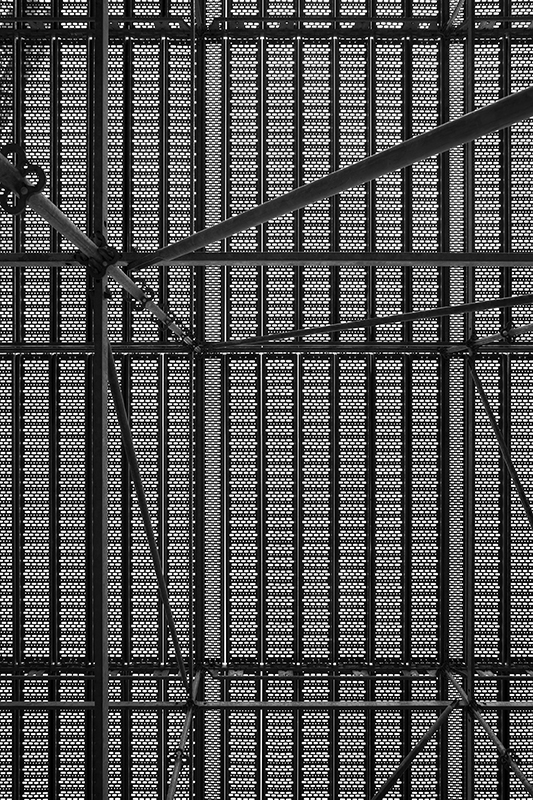
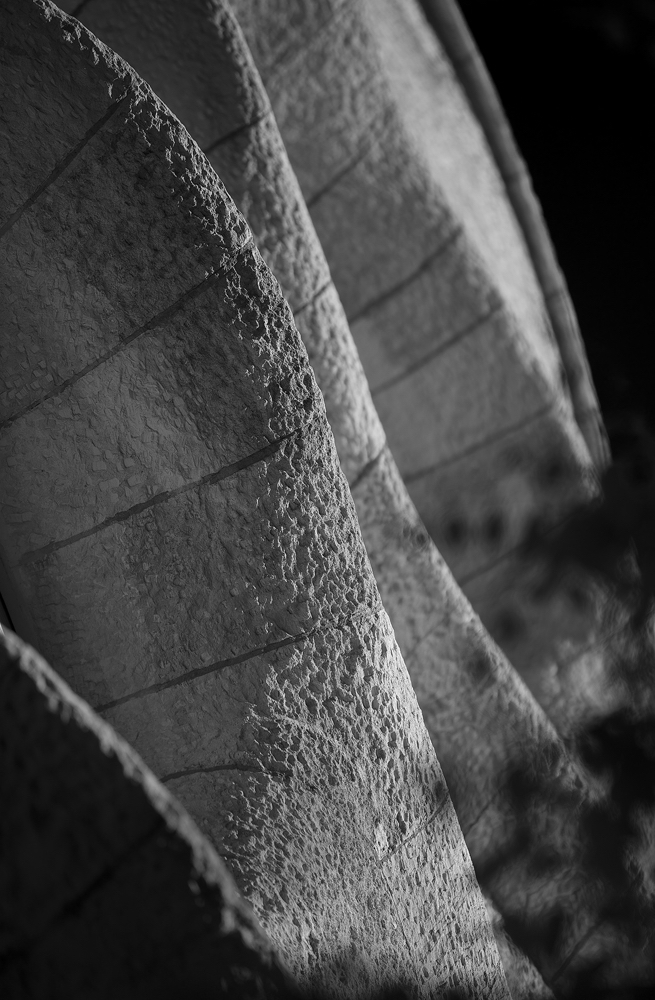
Aitor Ortiz’s work has been intimately related to architecture, to the extent that it has been buildings and structures of all kinds, repeatedly observed from the most diverse angles, that have been the focus of attention of almost all his photographs, even those in which the subject has ceased to be recognizable.

However, his photographs are not merely illustrative, nor are they conceived for the greater glory of architecture. On the contrary, their real interest lies in what the author himself defines as “dilemmas between representation and interpretation” of the original referents.

Photography, understood as a medium, was an essential tool for Gaudí’s university learning thanks to the discovery of photographic albums of the great expeditions. These sources influenced his heterodox and cosmopolitan vision of architecture and the development of his constructive ingenuity. Photography was for him like a workshop tool, recording and inverting his models made with catenaries to check their final result.

Gaudí’s works have been revisited many times. The saturation of photographs taken of his works has shaped a generalized vision of an excessive, colorful, figurative, expressionist and rather corny architect, but tremendously popular. However, his architecture is much more avant-garde and rich: Gaudí went from neoclassicism to modernity and knew how to incorporate the constructive advances motivated by the second industrial evolution.

The review of his work through millions of photographs available in publications and on the Internet has imposed itself in a vulgar and repetitive way to the direct experience with his work and, consequently, has caused a trivialization effect in the dissemination of his works.

This series, carried out interruptedly for more than four years, flees from any preconceived idea about Gaudí’s work. It is a clean and complete review of his most significant works. The photographic work focuses especially on his creative process, the laboratory of genius, where he materialized his designs and his models, which are deliberately presented at the same level as the built work.
The ambiguity and synthesis of Aitor Ortiz’s images make us distance ourselves from the “here and now” to become representations of constructed, designed or simply imagined spaces.

By photographing Gaudí’s architectural work, Aitor Ortiz does not cease to be who he was or who he is, for he has managed to find a Gaudí parallel to the spectacular one that amazes us with its forms and chromaticism. The black and white look of the Basque photographer invites us to know another Gaudí that is no less than the previous one, although it has not been observed with thoroughness: a more subtle and delicate Gaudí, a barely imperceptible Gaudí, almost secret, a Gaudí that goes unnoticed among the fanciful creations of his undulating imagination.

Aitor Ortiz’s camera is an eye that reveals what is visible, yet invisible to an eye overwhelmed and exhausted by a story overflowing with narrative richness.


In a World of People, I am a Wall

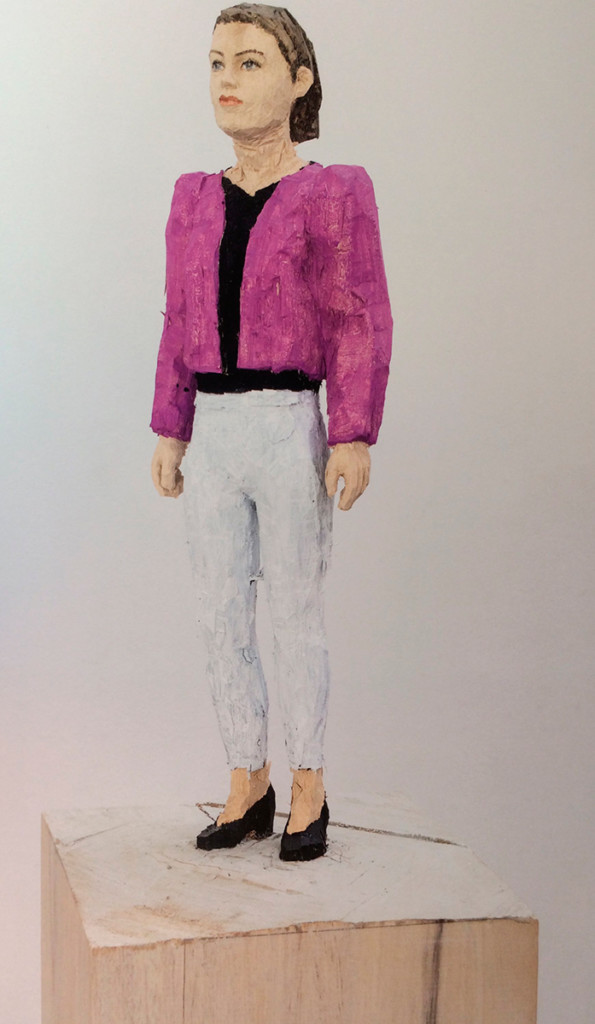
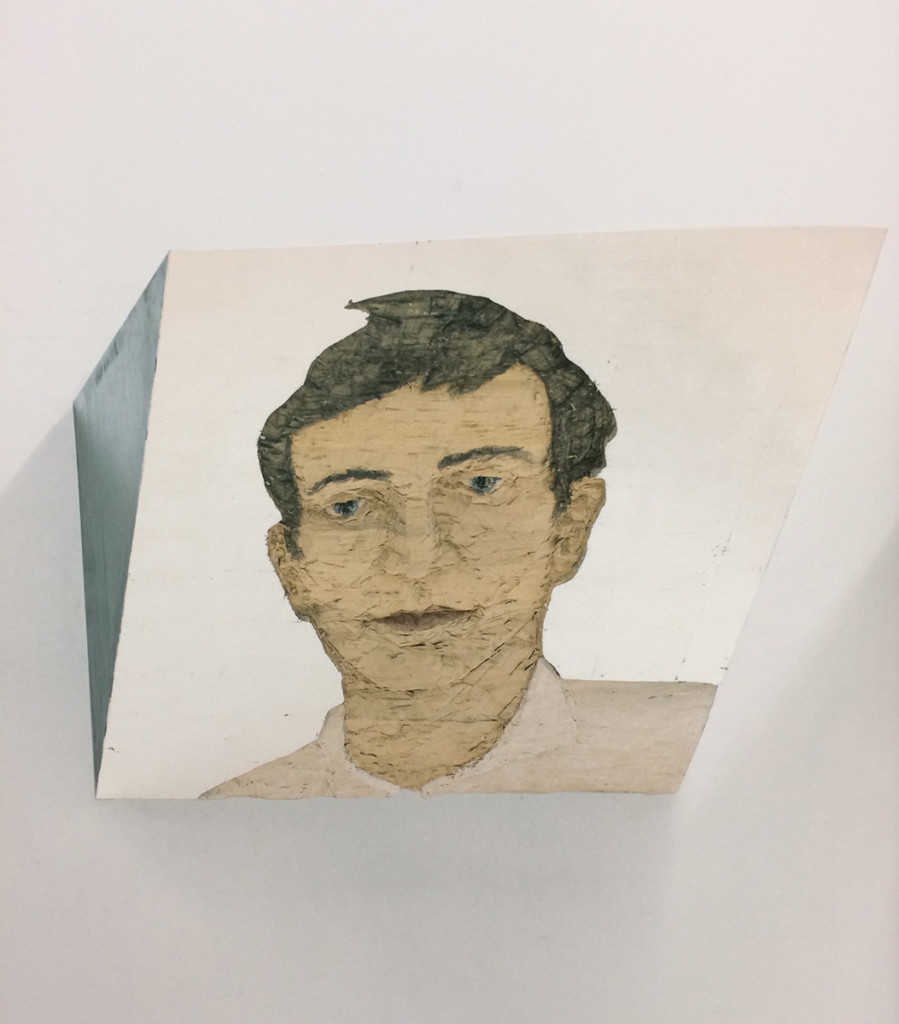
“In a world of people, I am a wall”. Within the space of the gallery, a discourse is created between the figurative art of Jaume Plensa and Stephen Balkenhol and that of Tulio Pinto and Jose Pedro Croft’s abstraction influenced by minimalism. This collective showcase plays around with notions of size, balance and presence, as well as demonstrating that space can be dominated by notions of the real and the symbolic, alike.

IRAN DO ESPIRITO SANTO, El Pangolín

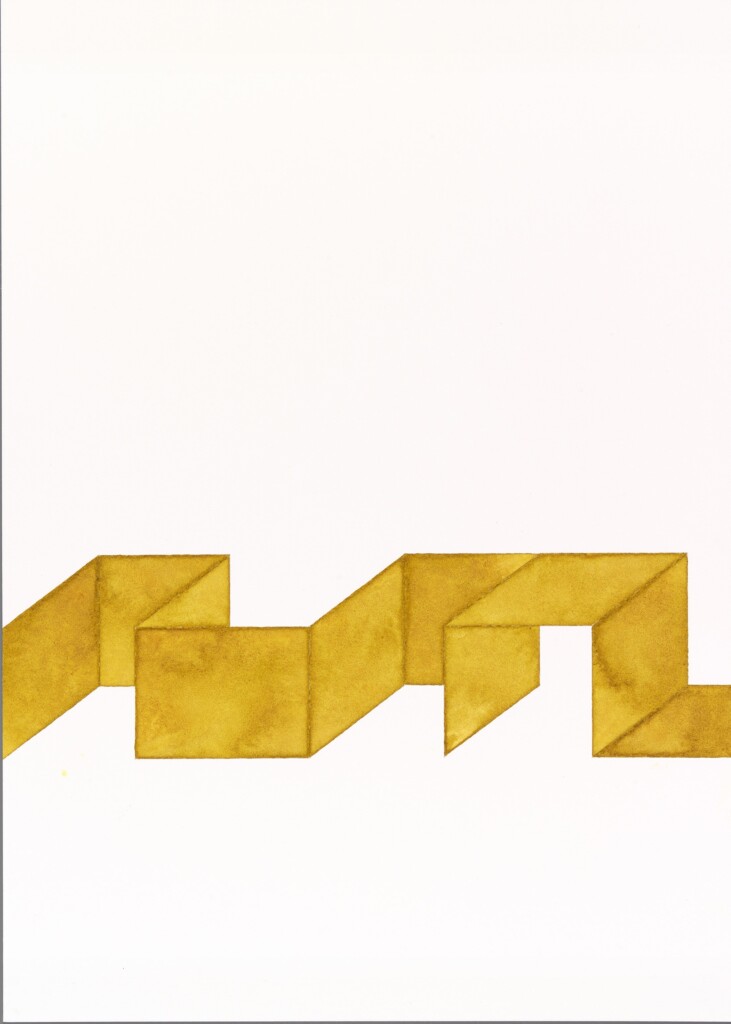
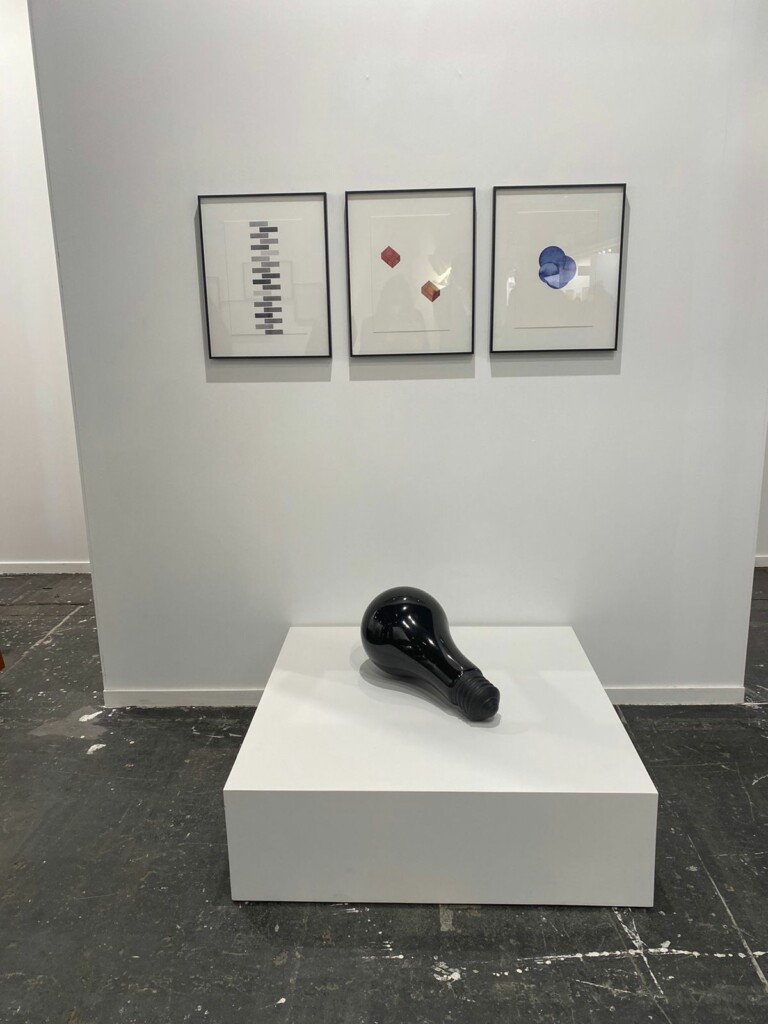
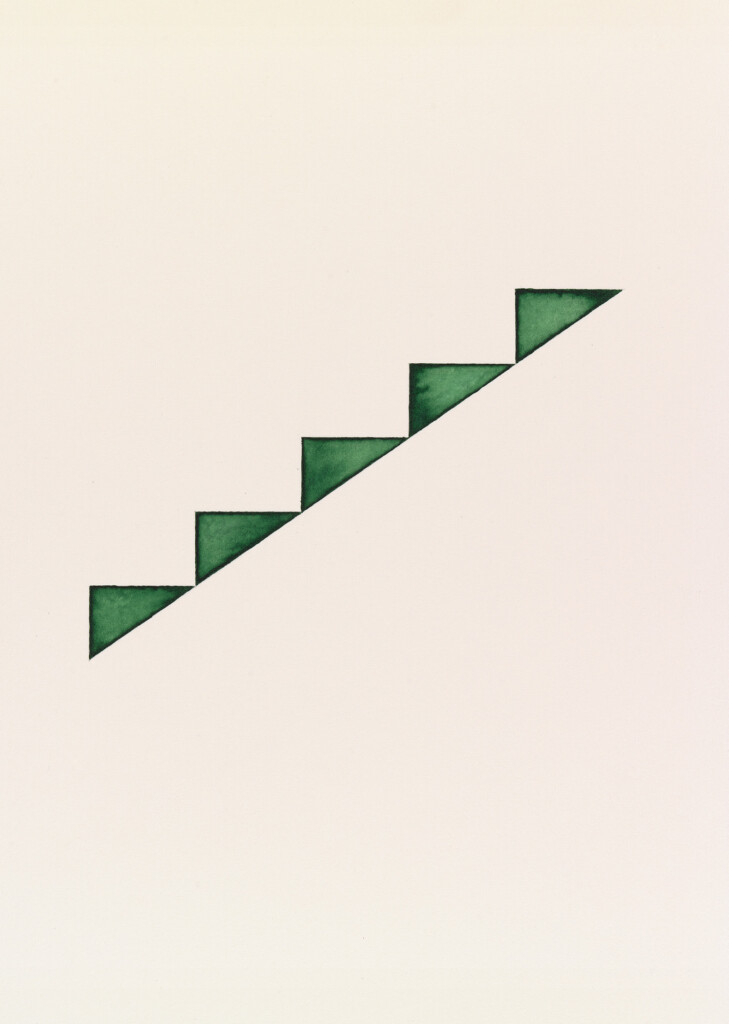
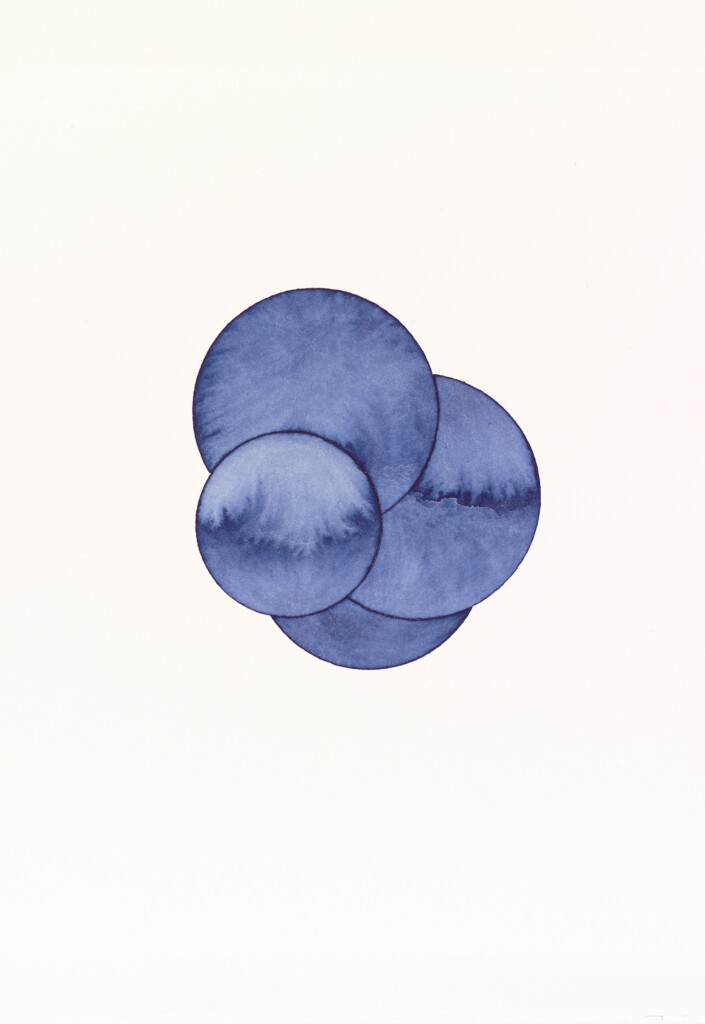
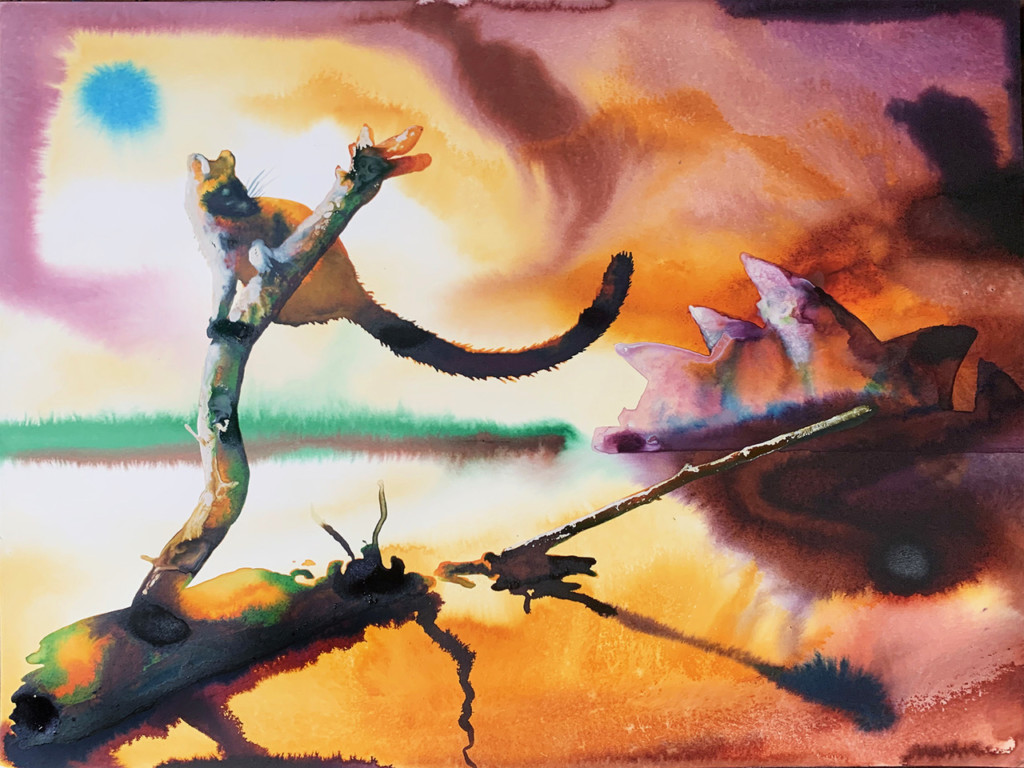
Espírito Santo exhibits in Senda a new series of watercolors, produced during the months of confinement. The artist inaugurates the use of color while remaining faithful to his own refined and austere style.

The attention to the forms and the delicacy of the tonalities are the main aspects that intertwine the whole series, exhibiting a softer facet that, nevertheless, maintains its own conceptual references.

One of the distinctive aspects of Espírito Santo’s work is his reductionist aesthetics. In this exhibition, he builds geometric representations perfectly balanced as a result of his focus on detail. The paulista artist chooses monochromatic tones, making use of gradient and soft colors to give depth to the works. The watercolors create a dialogue between the precision of the details and the purity of the forms. In this series, Iran do Espírito Santo reinvents itself throughout his work and invites us to get in touch with another facet of his visual language by proposing a new aesthetic experience.

The exhibition is the product of the long worked project El Pangolin, an anthology that includes the publication of Enrique Juncosa’s writings co-published by SENDA Ensayo and Turner.

The watercolors illustrate this anthology and create a connection between the two poetic: the pictorial discourse and literature are harmonized in a single aesthetic, in which the delicate works of Espírito Santo give shape to the play of ideas proposed by Juncosa.

The series of watercolors The Pangolin transports the visitor to the multiple realities constructed by Espírito Santo and invites us to redirect our view on his compositions.


Iran do Espírito Santo (Mococa, 1963) is internationally known for his ambitious site-specific installations, as well as for his figurative or abstract sculptures, which are part of the aesthetic translation of minimalism. His works are part of collections at the MoMA in New York, the MACBA in Barcelona and the Museum of Modern Art in São Paulo.

Enrique Juncosa (Palma de Mallorca, 1961) is a writer, exhibition curator and cultural manager. He was director of the Irish Museum of Modern Art in Dublin from 2003 to 2012, for which he received the Order of Civil Merit from the Spanish State, and before that he was deputy director of the Reina Sofia Museum, Madrid (2000-2003) and the IVAM, Valencia (1998-2000) and is one of the most solid voices in the field of abstraction on the Spanish curatorial map.


Download the press release here

Download the compilation of reviews and articles: Diario de MallorcaEstrella RotaArticulo José Carlos Llop , Blog de Álvaro Valverde