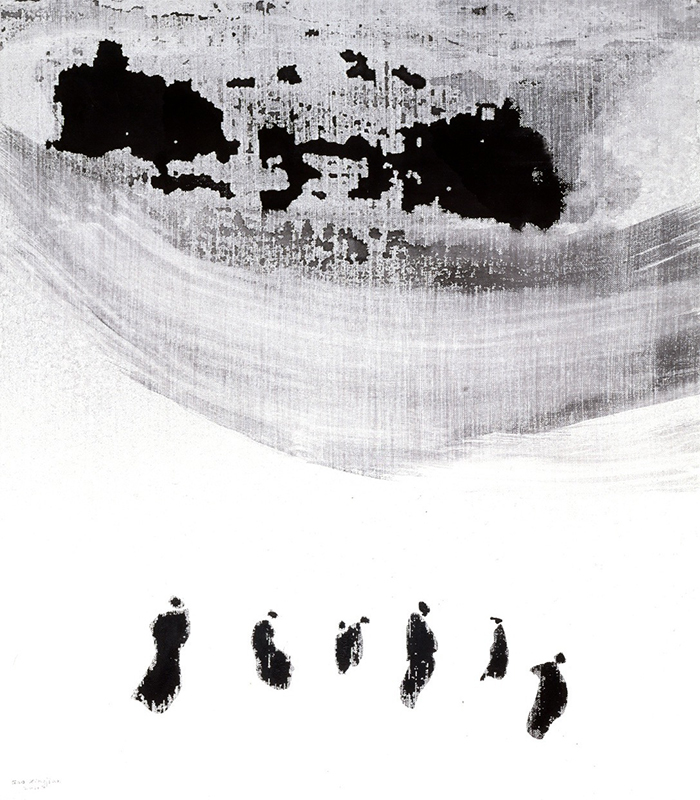
VICTORIA IOUDINA. Les aigües que esculpeixen el foc

The work takes as its starting point the phenomenon of sea glass: fragments of discarded glass objects that, after years of exposure to the movement of waves, sand and salt, gradually lose their sharp edges and original form. What was once sharp and dangerous becomes smooth and rounded through erosion. Ioudina translates this physical process into the realm of the body and lived experience, approaching erosion as a force capable of altering what it touches and producing new forms.

Throughout the film, the beach functions as a liminal space in which body, water and matter come into contact. Skin becomes a surface of transition between a tangible exterior and an inner fissure that appears in the form of fragments of broken glass. The film thus constructs a sensory imaginary in which the boundaries between organism, landscape and matter begin to blur.

The title of the work emerges from a material paradox: glass, produced through fire, is ultimately shaped by its opposing element, water. From this tension, Les aigües que esculpeixen el foc reflects on erosion, healing, spirituality and the possibility that what has been fragmented may, over time, take on a different form.

The presentation of the work at LAB36 is part of LOOP City Screen, the programme that extends LOOP Barcelona across different spaces in the city and places moving image practices in dialogue with the contemporary art scene.

Technical details

Les aigües que esculpeixen el foc
Experimental short film
Spain
Duration: 13 min 28 sec
No dialogue

Credits

Director: Victoria Ioudina
Screenplay: Victoria Ioudina, Joel Jiménez and Quim Guardiola
Producer: Victoria Ioudina
Executive Producer: Kai Urban
Director of Photography: Joel Jiménez
Editing: Quim Guardiola
Sound Design: Martí Albert

MARCEL R. JULIANA. An Aquatic Stroll

Prologue

Before becoming an exhibition, An Aquatic Stroll begins as an open process.

In the weeks leading up to the opening, Marcel R. Juliana will intervene on the walls of Galeria SENDA’s Mezzanine, allowing the drawings to gradually emerge before the eyes of visitors. This action transforms the space into a site of work and observation, where the public can encounter the first gestures, paths, and intuitions that shape the exhibition.

More than a preview, this intervention invites visitors to accompany the artist at the beginning of his stroll: a journey that will gradually unfold until it becomes an exhibition.

About the exhibition

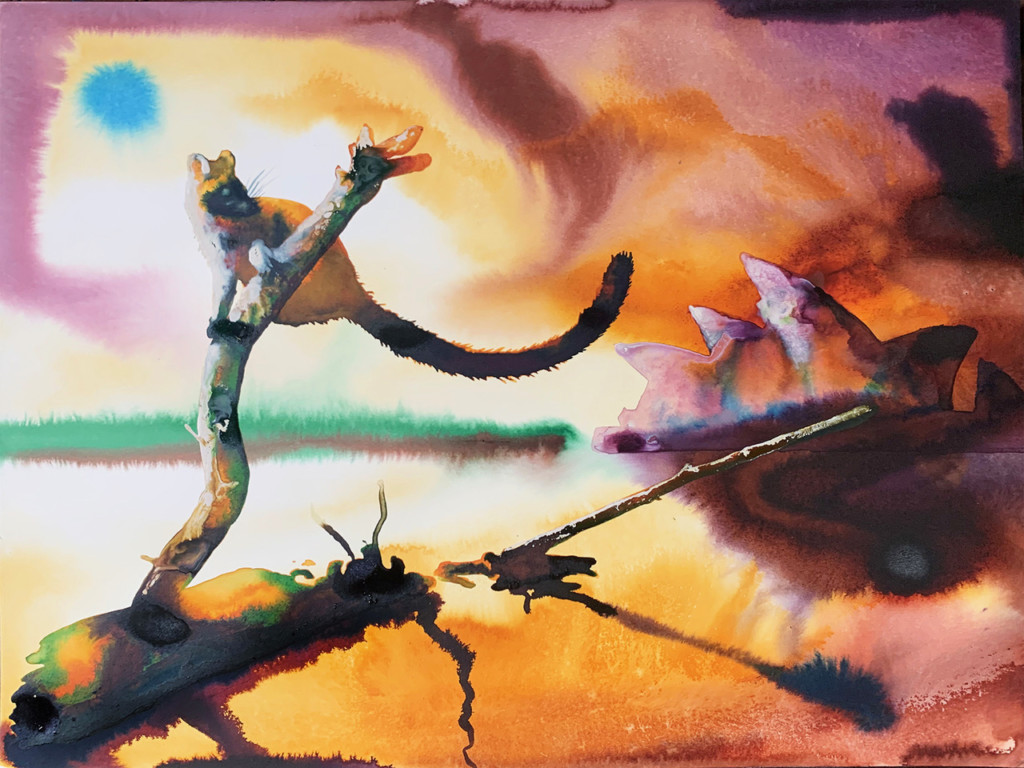
Presented as part of Art Nou 2026, the exhibition by Marcel R. Juliana unfolds as a drift through a garden where memory, fiction, and observation intertwine through the language of drawing. Conceived as a journey open to discovery, the project takes as one of its points of departure La apócrifa historia del Hércules enamorado y de su león emasculado, a book written by Sergio Mariano Colina, edited by Ignacio Rodríguez Somovilla, and illustrated by the artist himself. Its pages recount the singular story of a sculpture of the Farnese Hercules once located in the Martí-Codolar gardens in Barcelona, a place that, in the early 1940s, echoed the traditions of Italian and French gardens through its parterres, fountains, giochi d’acqua, and intricate hydraulic systems designed to channel water, shape the landscape, and nourish the imagination.

These gardens serve as the starting point for an exhibition that does not seek to reconstruct a specific site, but rather to inhabit the atmosphere that still seems to linger among its pathways. Marcel R. Juliana approaches this territory as one might wander without a predetermined destination, allowing the journey to emerge from whatever appears along the way. A shadow cast on the ground, the irregular shape of a stone, a branch bent by time, or the unexpected presence of a figure become events capable of redirecting the gaze and opening new associations.

A key influence throughout this process has been the Greek dancer Vangélis Liopirákis, whose sensitivity has accompanied the development of the exhibition from its earliest stages. His understanding of movement as a form of attentiveness to space and to the transformations of the body quietly permeates the works. Something of this embodied awareness can be felt in the way figures emerge from and dissolve into vegetation, in the tension of certain gestures, and in the sense of suspension that runs through many of the drawings. The garden becomes more than a setting; it is inhabited by presences that move, wait, disappear, or merge with the landscape. As in a choreography, each element seems to follow its own rhythm while simultaneously belonging to a larger composition in which bodies, plants, shadows, and architecture share the same breath.

For the first time, the artist does not begin with a predefined theme or narrative structure. The exhibition unfolds as a sequence of observations linked together, resembling the movement of a camera advancing slowly and pausing whenever something demands attention. The works emerge from this exercise in contemplation, constructing a fragmented narrative where history and imagination coexist, where the memory of a place encounters the possibilities it still contains.

The exhibition is developed entirely through drawing, understood here as material, method, and way of thinking. Each work seems to ask what happens when the line leaves behind its descriptive function and begins to explore, when drawing ceases to represent the world and starts moving through it. The result is a body of work that invites viewers to linger on what usually goes unnoticed, revealing the extraordinary complexity that can reside within the simplest gestures.

With this exhibition, SENDA joins the Art Nou 2026 programme through a project that understands drawing as a form of knowledge and experience. A walk through a real and imagined garden where each image becomes a pause, an observation, and a possibility for encounter.

Artist: Marcel R. Juliana
Production: Daniela Plou
XAVI BOU. Fluctus

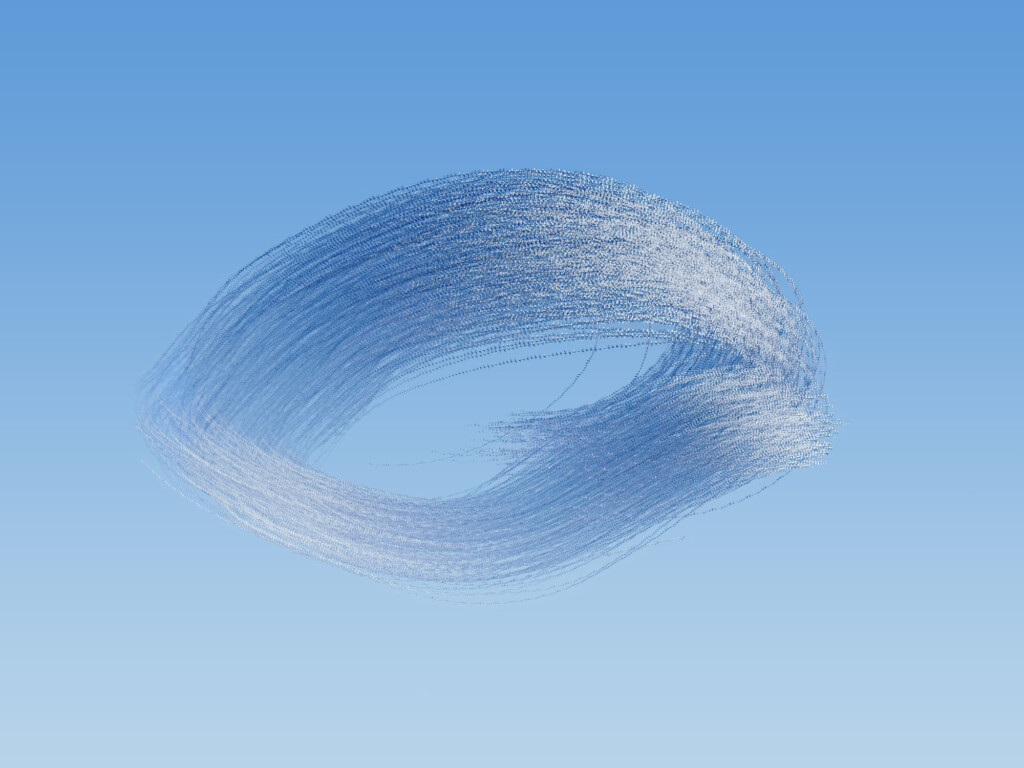
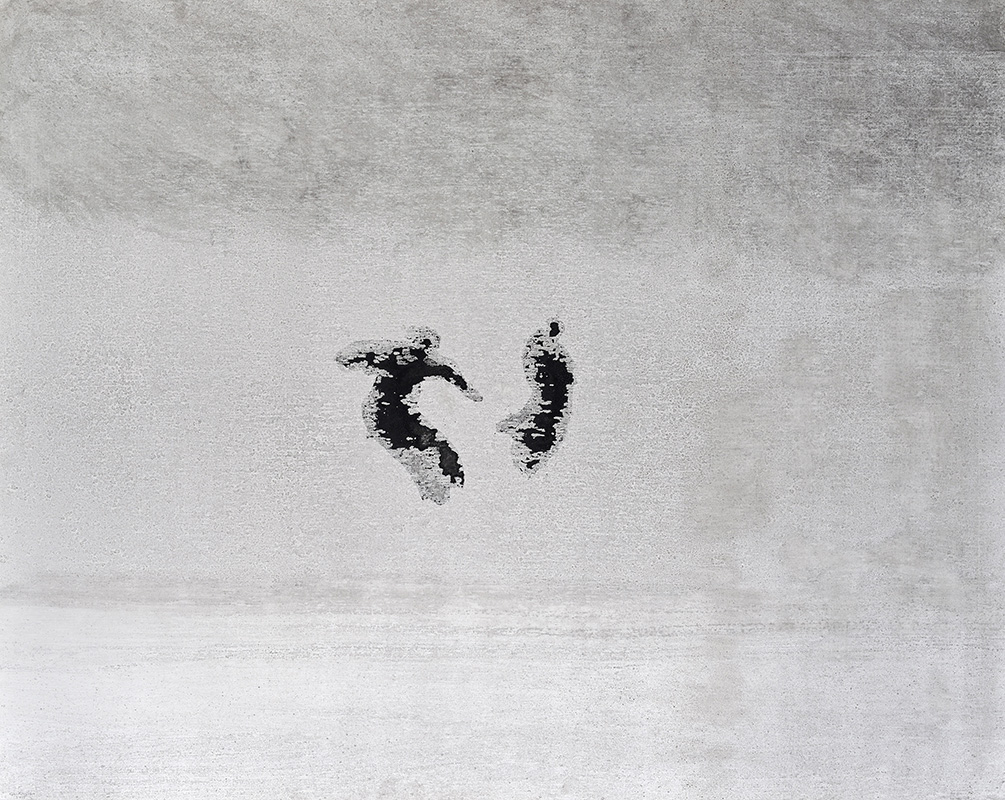
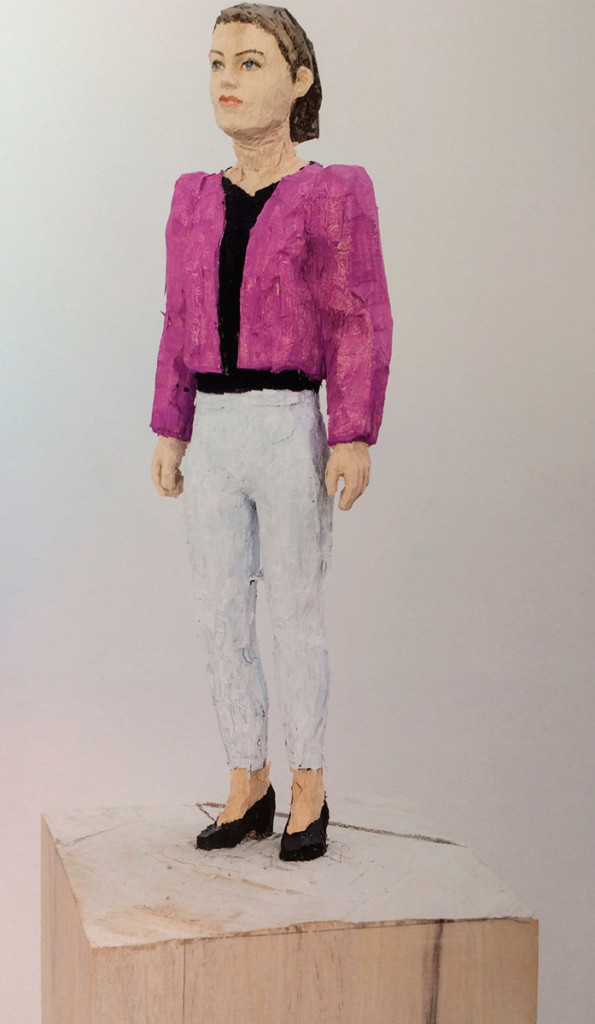
Galeria SENDA presents Fluctus, a new project by Xavi Bou that condenses, in suspended images, the first seconds of a bird’s flight. Recorded in super slow motion from a top-down perspective, the works reveal the singularity of each gesture, the inner structure of movement, and the morphological and chromatic diversity of each species.
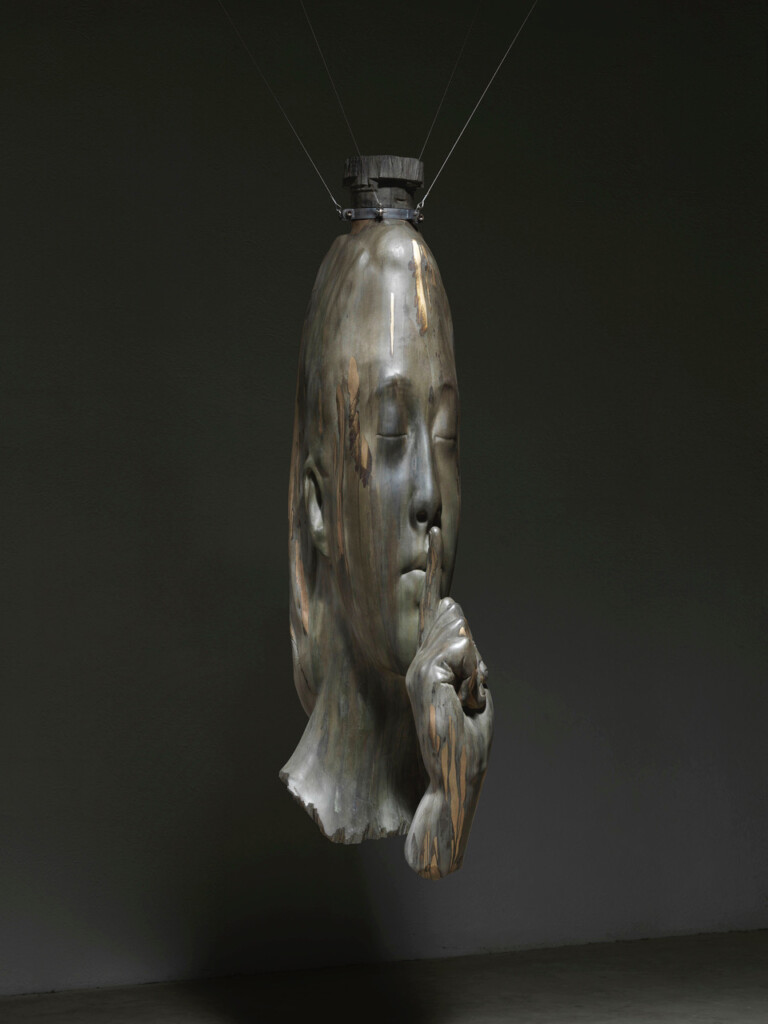
Unlike his renowned Ornithographies, where the focus lay on collective flight and interaction between individuals, Fluctus shifts attention toward the singular body. By isolating the bird against a white or black background, Bou highlights the richness of its forms and colors, which tend to dissolve in group flight. The body thus becomes a living trace: a figure in transition between impulse and direction, between الأرض and air.
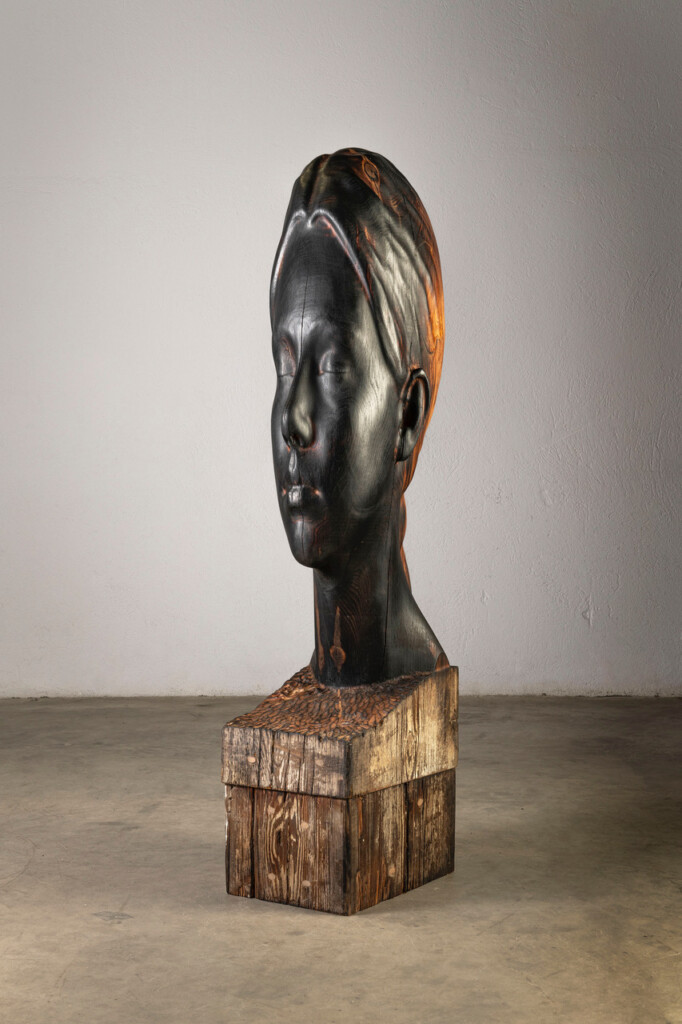
The title, from the Latin fluctus (wave), refers to the temporal expansion of the gesture. Each image functions as a suspended wave that condenses past, present, and future, activating a slowed-down gaze that invites us to observe what usually goes unnoticed. Rather than freezing an instant, Bou constructs a fluid temporality: a way of seeing time as natural choreography.

Created in collaboration with ornithologists and wildlife recovery centers, the project guarantees an ethical and respectful approach: the birds are recorded at the moment of their release, under controlled and safe conditions. Fluctus is conceived as a growing collection, in which each image is presented printed at real scale, evoking the ancient cabinets of curiosities.

In dialogue with the tradition of these cabinets—not as accumulations of rarities, but as devices of visual interrogation—Bou proposes an experience that dissolves the boundaries between art, science, and technology. His images do not document; they reveal: invisible choreographies, trajectories that escape ordinary vision, patterns that remind us that the natural world is not an object of control, but a sensitive territory where everything is in relation.

In a time marked by ecological crisis and technological acceleration, Fluctus is a call for perceptual empathy. An invitation to look with other eyes, to think of animals not as symbols or exotic creatures, but as companions in existence with whom we share a planet and a common destiny.

XAVI BOU. Fluctus

Galeria SENDA presenta Fluctus, un nuevo proyecto de Xavi Bou que condensa, en imágenes suspendidas, los primeros segundos del vuelo de un ave. Grabadas a supercámara lenta desde un punto de vista cenital, las obras revelan la singularidad de cada gesto, la estructura íntima del movimiento y la diversidad morfológica y cromática de cada especie.

A diferencia de sus célebres Ornitografías, donde el interés se centraba en el vuelo colectivo y la interacción entre individuos, Fluctus desplaza la atención hacia el cuerpo singular. Al aislar al ave sobre fondo blanco o negro, Bou pone en valor la riqueza de sus formas y colores, que en el vuelo grupal tienden a diluirse. El cuerpo se convierte así en trazo vivo: una figura en transición entre impulso y dirección, entre tierra y aire.

El título, del latín fluctus (oleaje), remite a la expansión temporal del gesto. Cada imagen funciona como una onda suspendida que condensa pasado, presente y futuro, activando una mirada desacelerada que invita a observar lo que habitualmente pasa desapercibido. Más que congelar un instante, Bou construye una temporalidad fluida: una forma de ver el tiempo como coreografía natural.

Realizado en colaboración con ornitólogos y centros de recuperación de fauna, el proyecto garantiza un enfoque ético y respetuoso: las aves son grabadas en el momento de su liberación, en condiciones controladas y seguras. Fluctus se concibe como una colección en crecimiento, donde cada imagen se presenta impresa a escala real, evocando los antiguos gabinetes de curiosidades.

En diálogo con la tradición de estos gabinetes —no como acumulación de rarezas, sino como dispositivos de interrogación visual—, Bou propone una experiencia que disuelve las fronteras entre arte, ciencia y tecnología. Sus imágenes no documentan, sino que revelan: coreografías invisibles, trayectorias que escapan a la mirada ordinaria, patrones que nos recuerdan que el mundo natural no es un objeto de control, sino un territorio sensible donde todo está en relación.

En un tiempo marcado por la crisis ecológica y la aceleración tecnológica, Fluctus es una llamada a la empatía perceptiva. Una invitación a mirar con otros ojos, a pensar en los animales no como símbolos o criaturas exóticas, sino como compañeros de existencia con los que compartimos un planeta y un destino común.

“Fluctus” de Xavi Bou en TV3