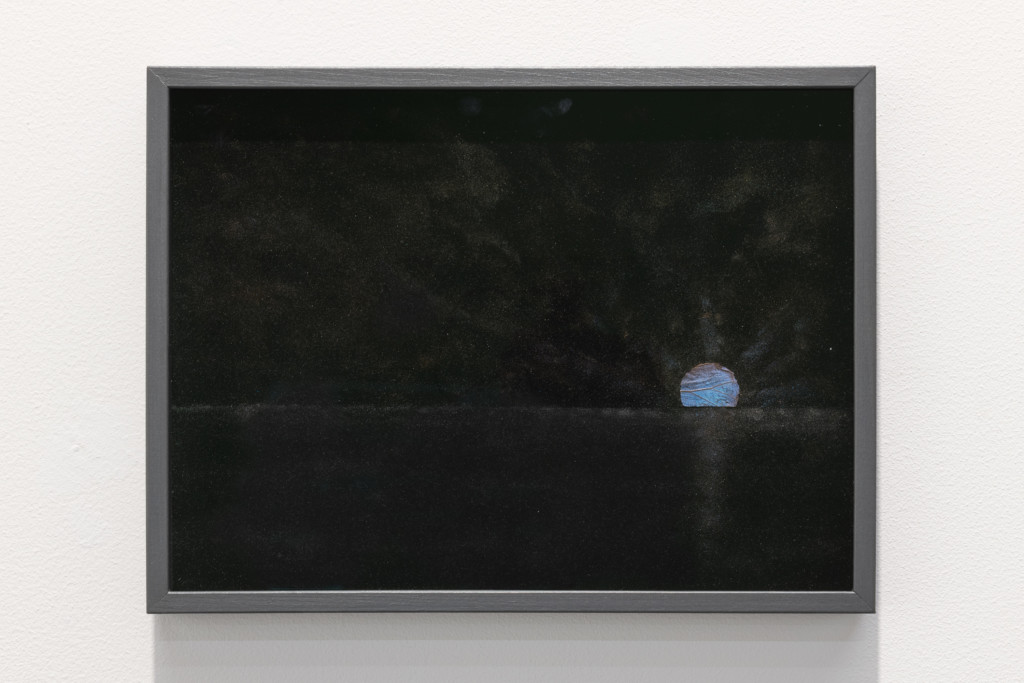
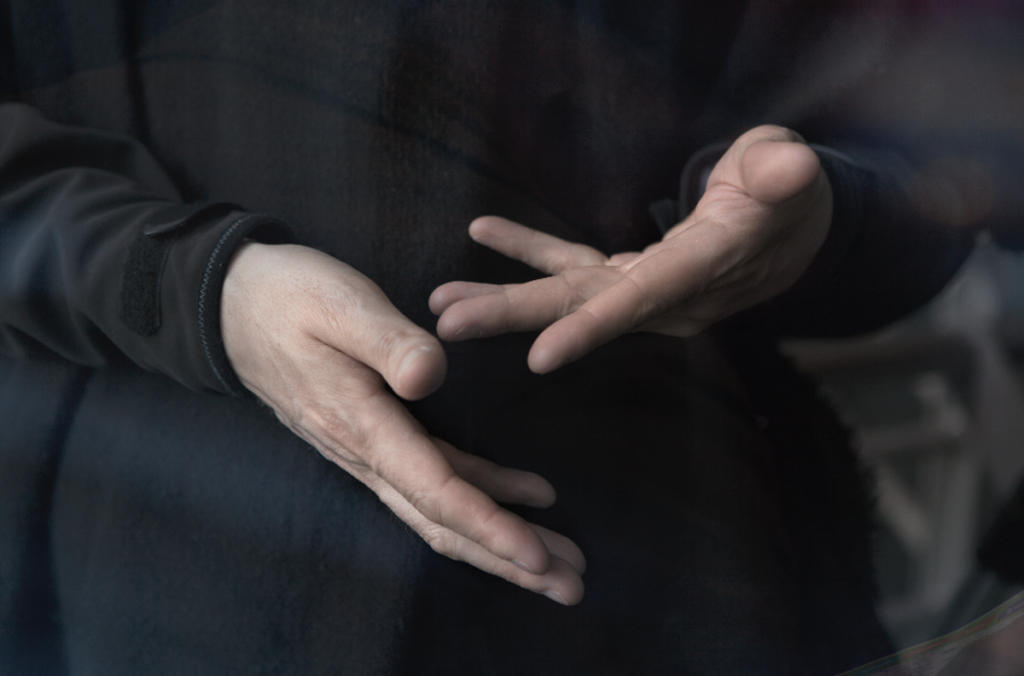
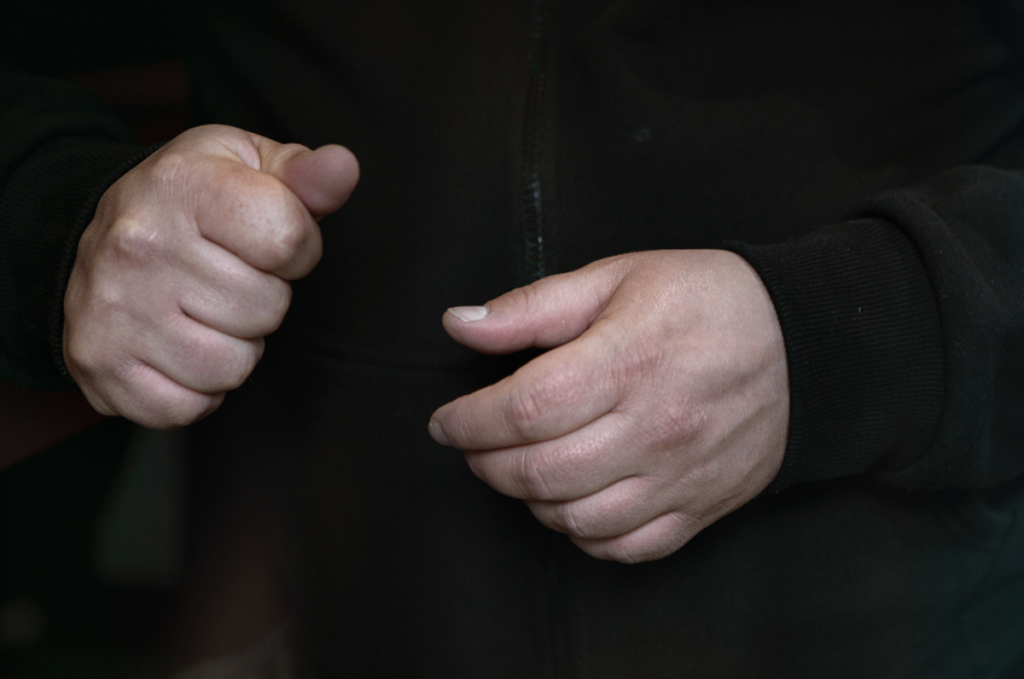
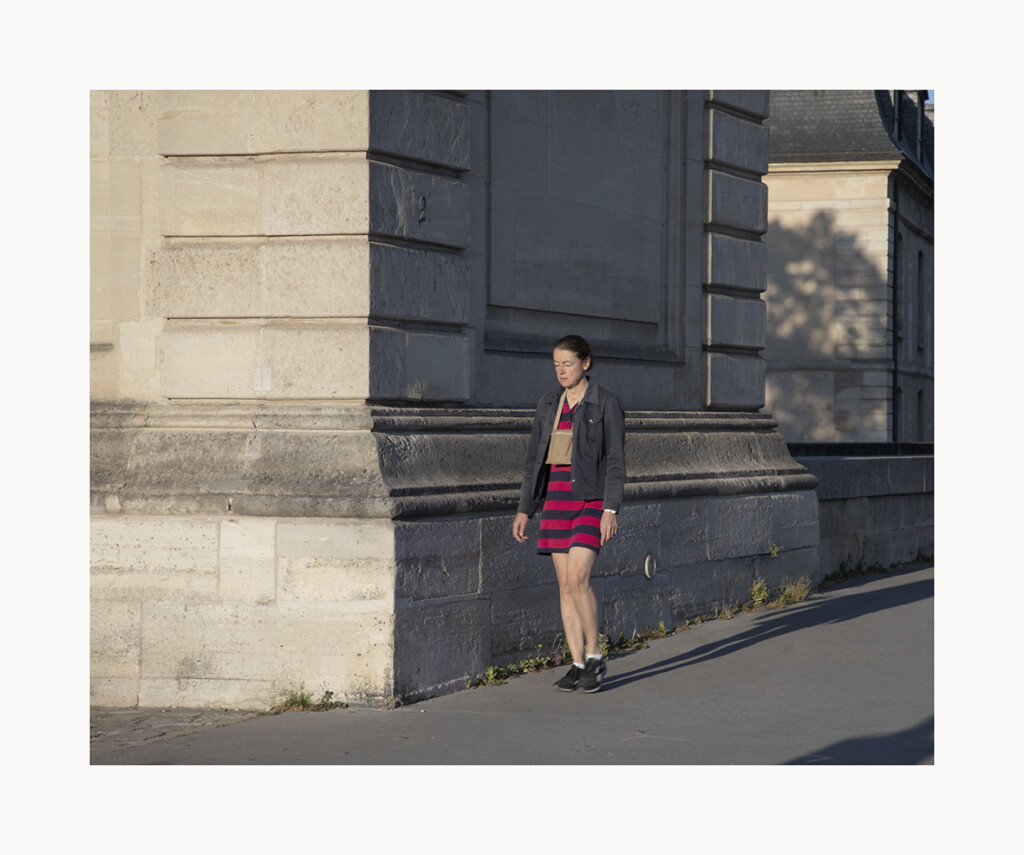
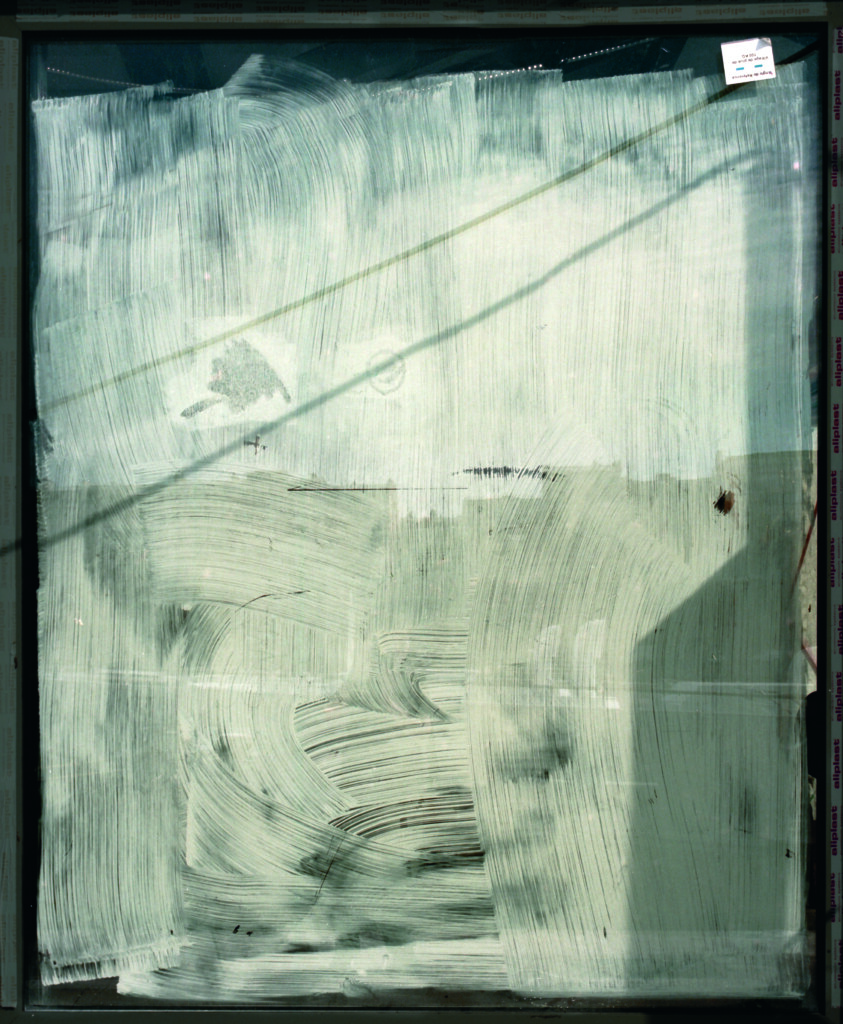
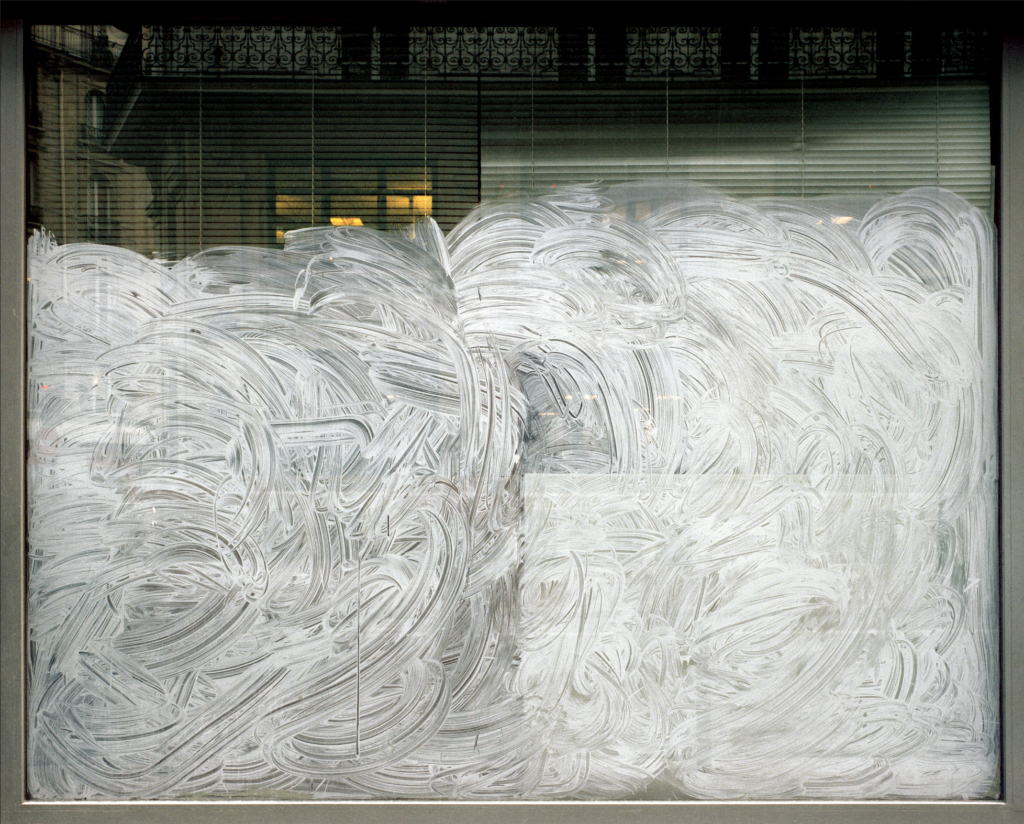
This show offers an immersion into the work of the artist Anna Malagrida (Barcelona, 1970) through photography, video, and installation.
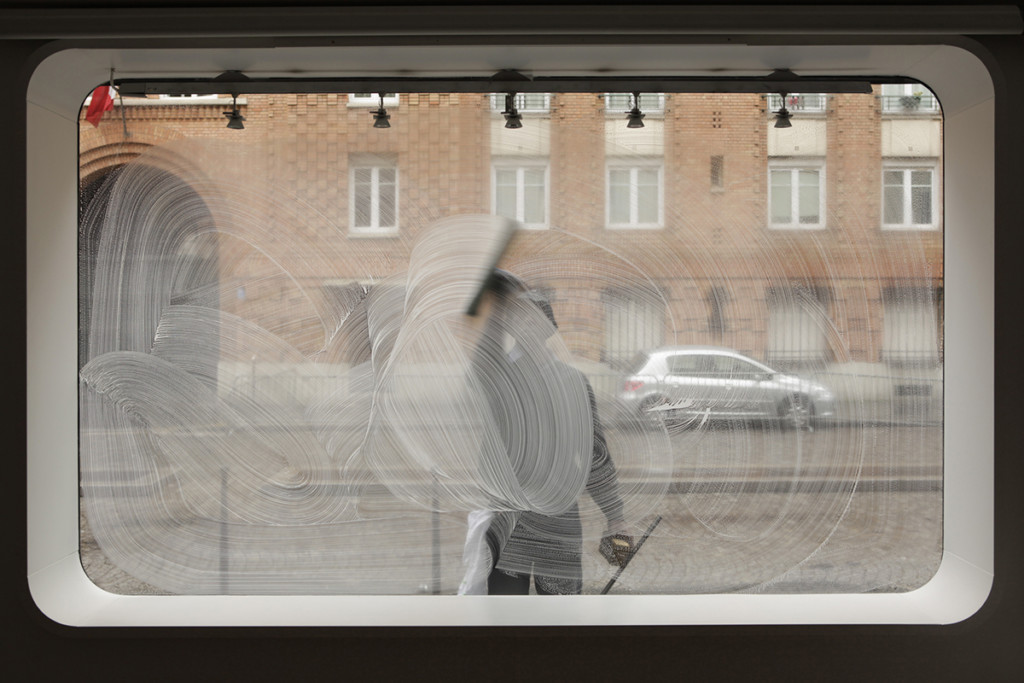
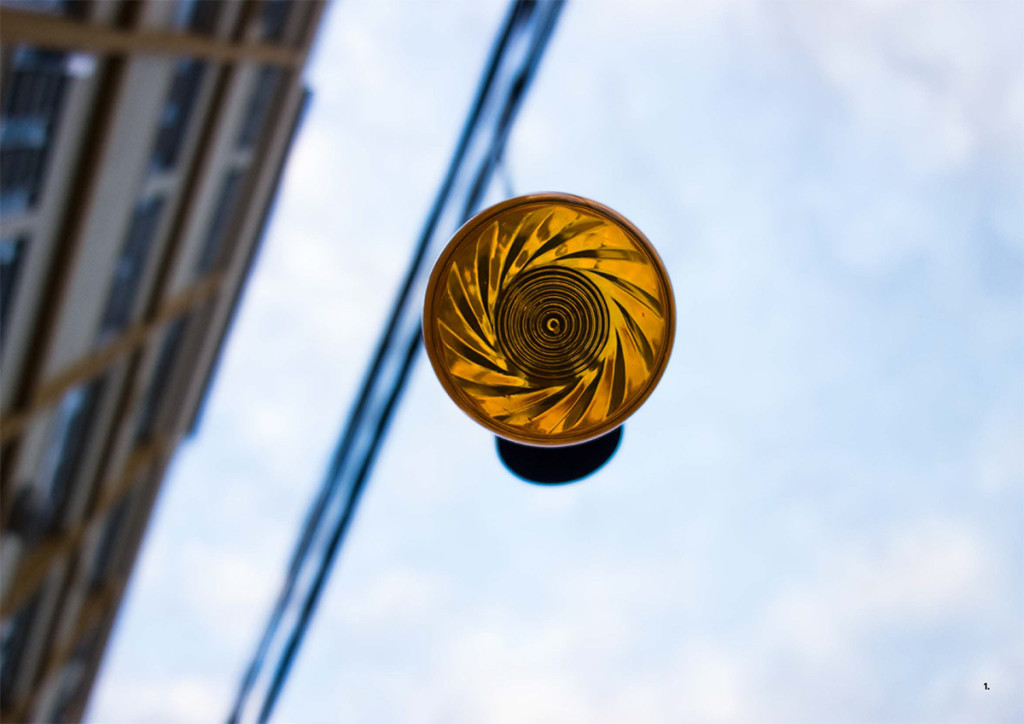
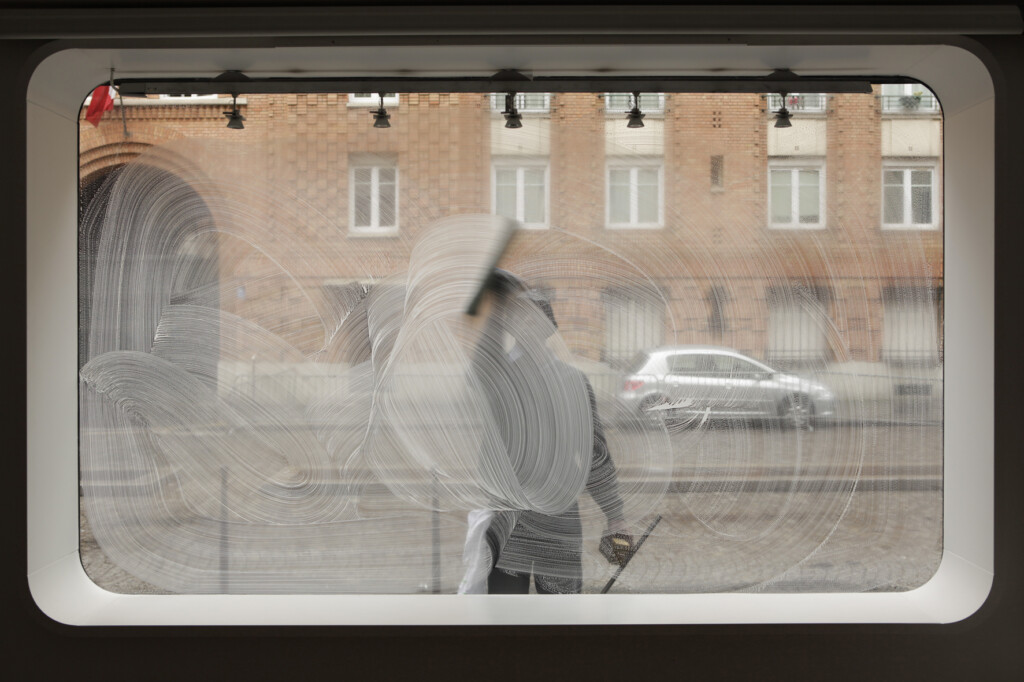
Anna Malagrida, El Limpiador de Cristales (2010). Video (2m 19s)
A game of perspective
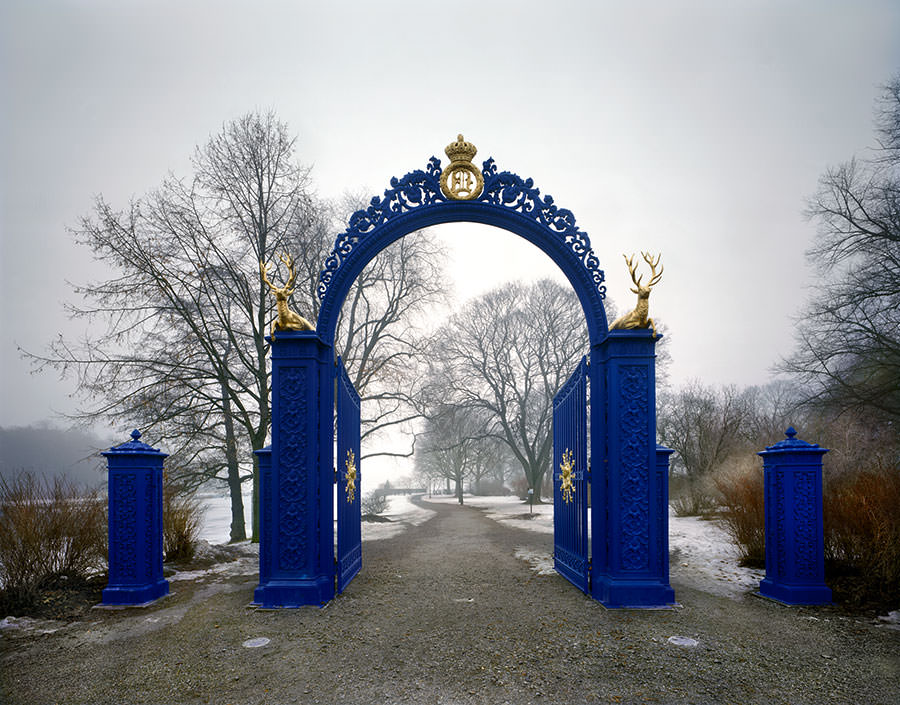
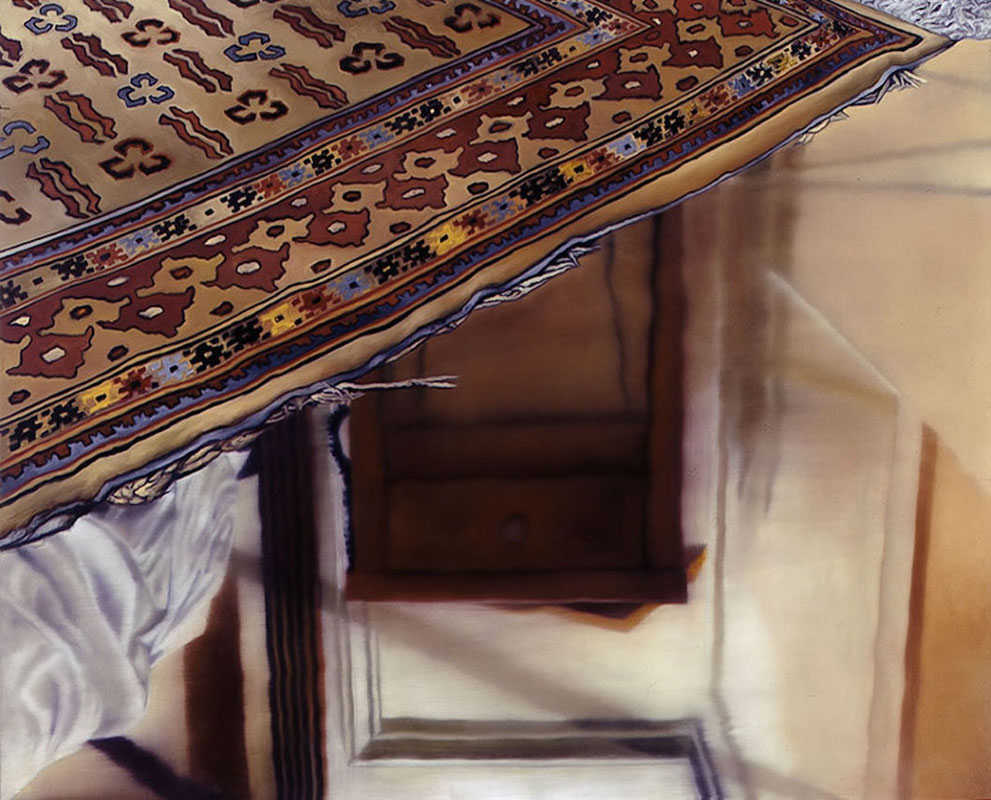
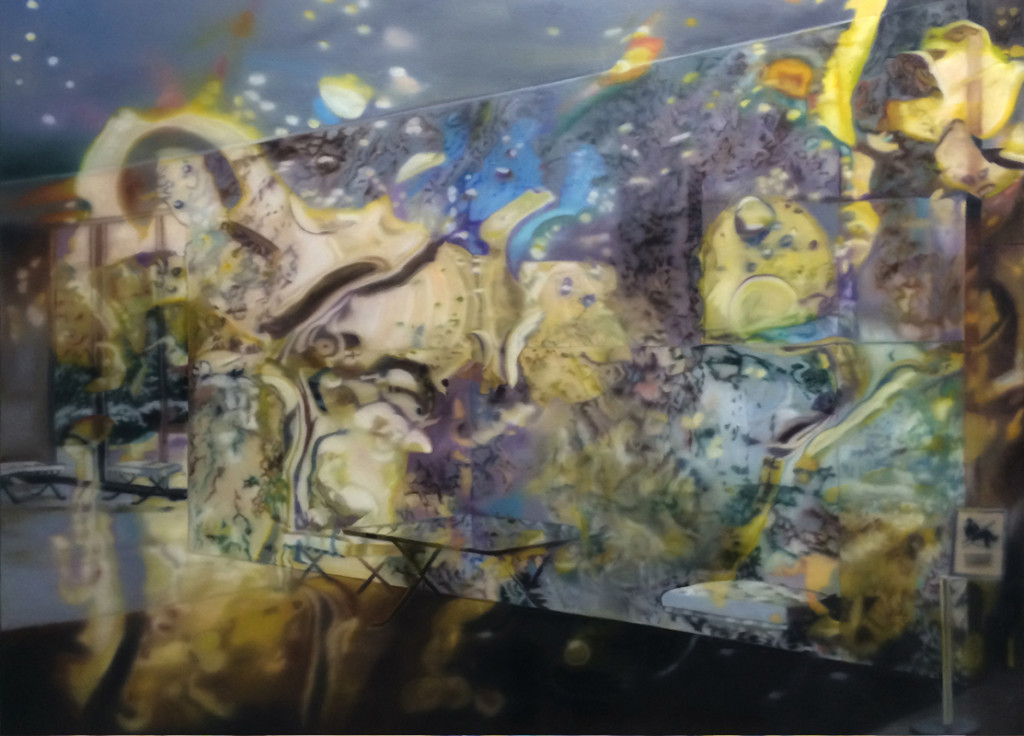
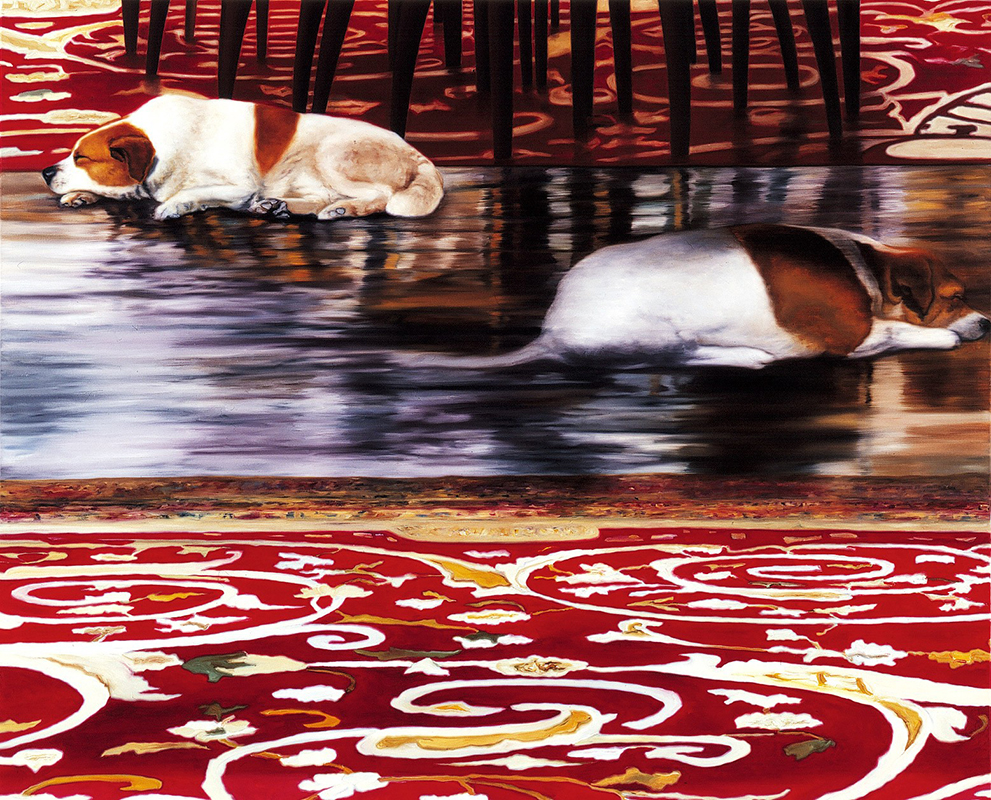
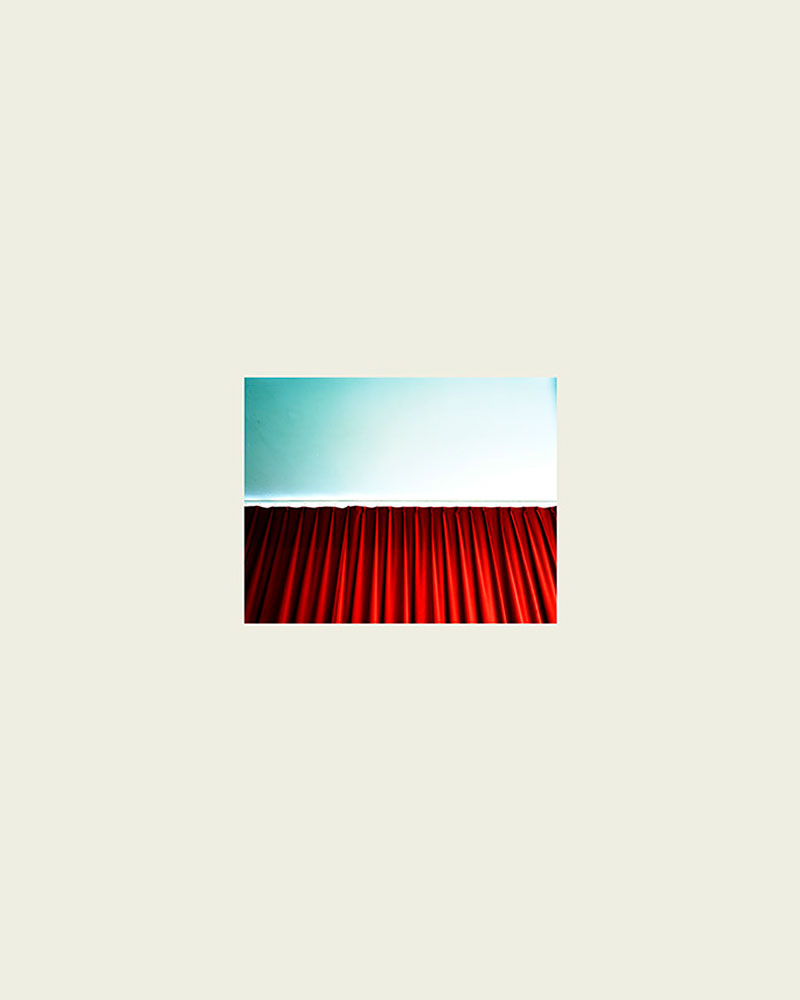
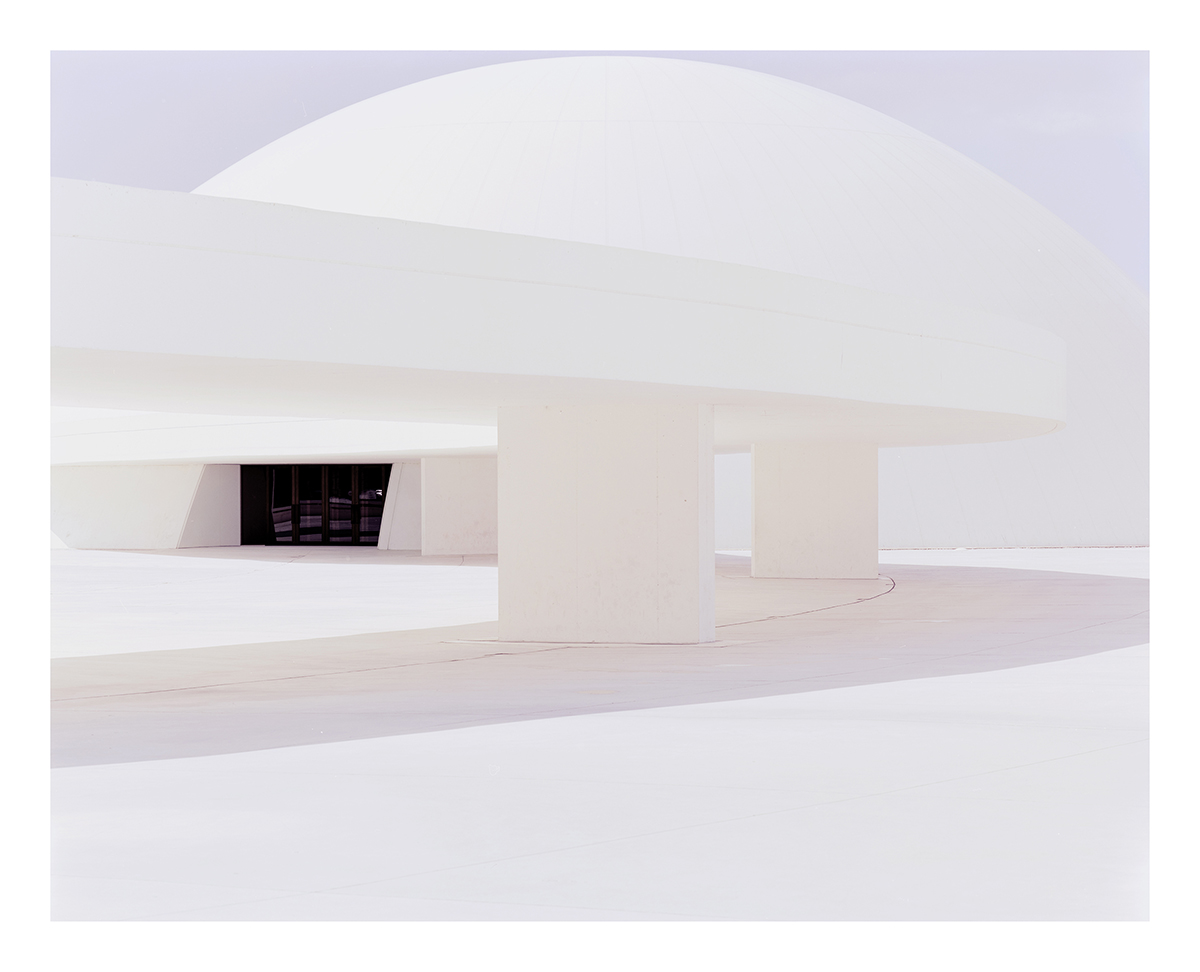
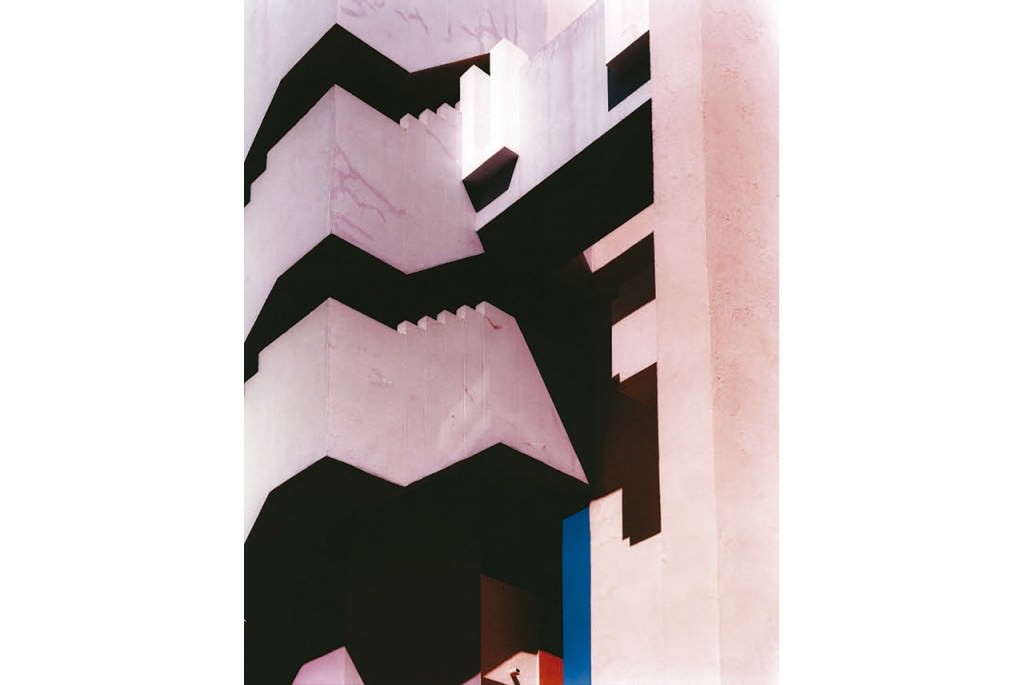
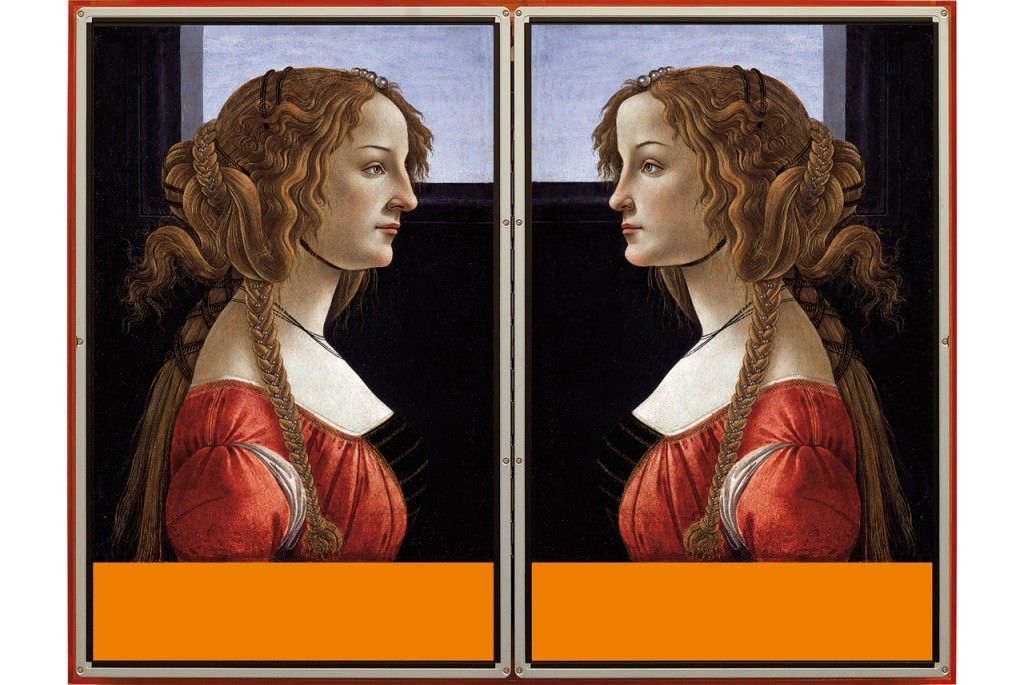
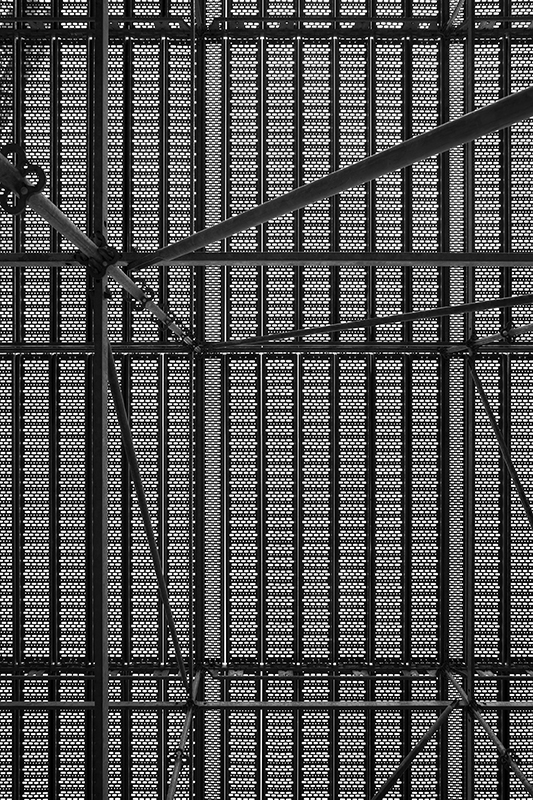
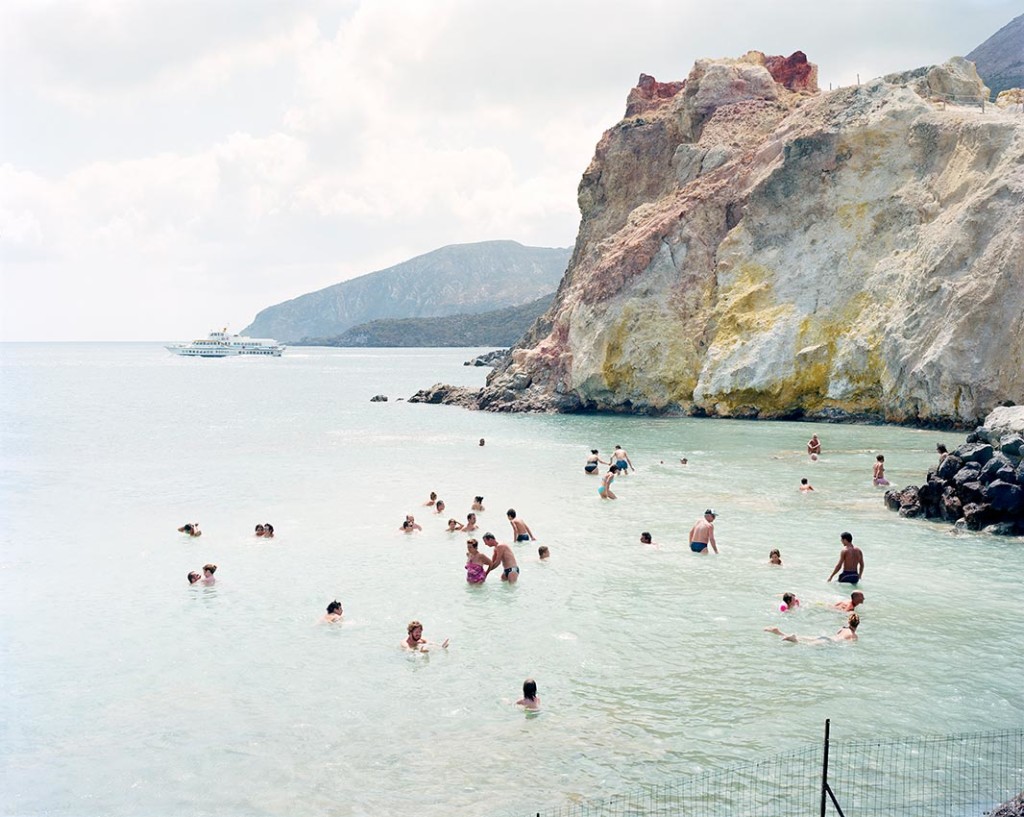
Malagrida’s work explores and recreates, through close observation, our daily experience and the unstable balance between the private and the public. With a game of perspective, she captures interiors and exteriors simultaneously, welcoming the viewer to project on the surface of her pictures and to generate their own visual content inside and outside of the same ones.
In her work, the city turns into a theatre, an ideal scenario to narrate the weak relationship of the human being with its surroundings. A lucid proposal without artifices where the work seduces, brings back together, and locates us between the visible and the invisible.
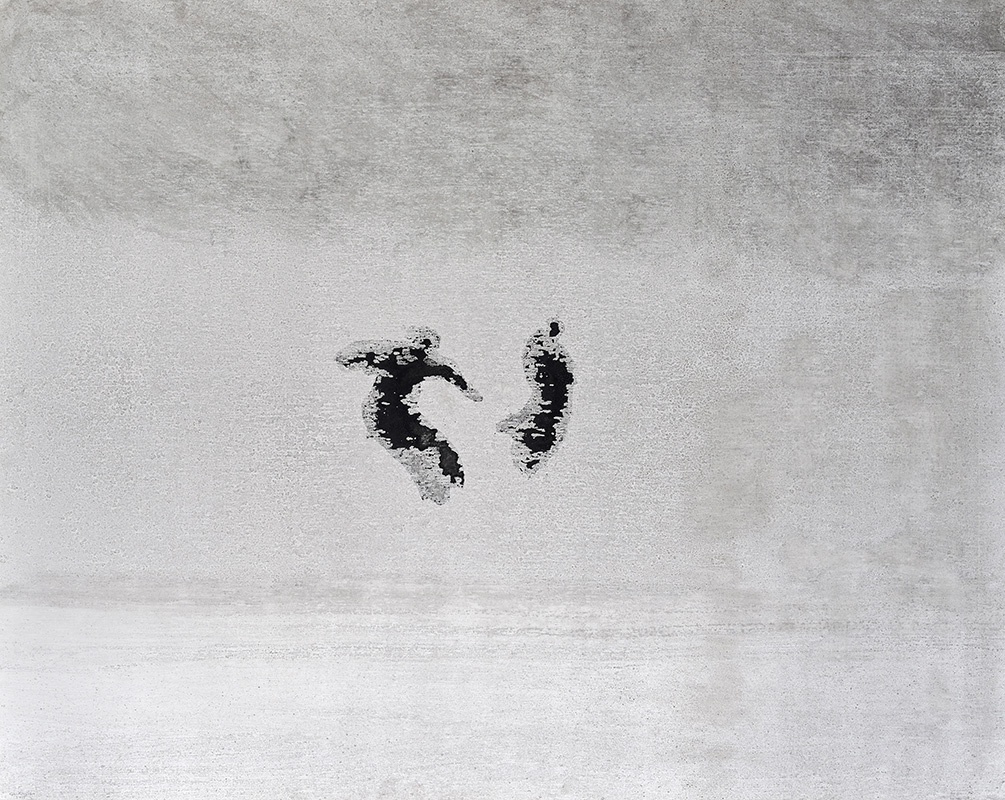
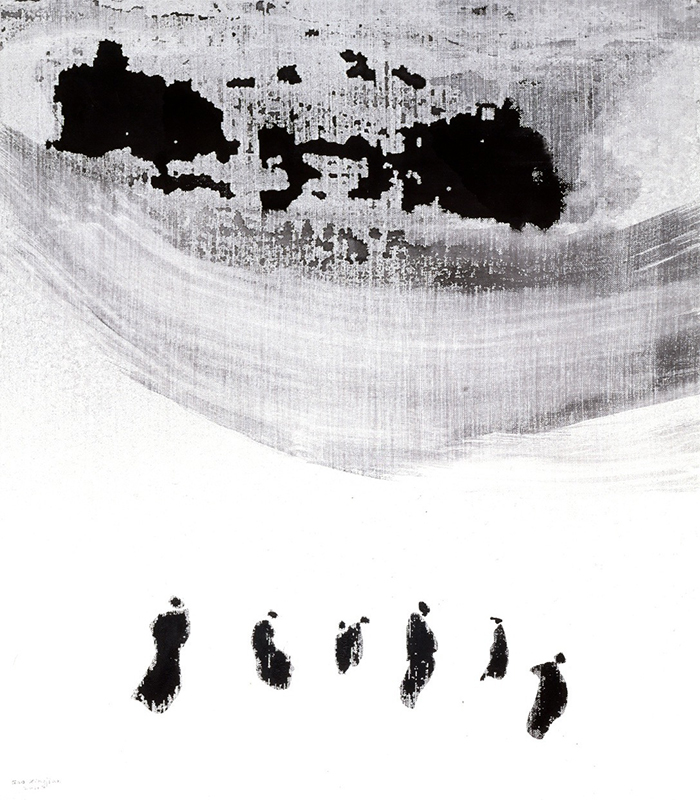
Visually, shows an ambiguity that manifests itself in the texture of the images, blurring the barriers between the appearance and the reality. In this exhibition, the viewer will be submerged in a visual experience gifted with different meanings, and invited to look at the city differently.
Anna Malagrida. Les Invalides, I (2020). Fotografía montada en aluminio y enmarcada (80 x 67 cm). 9 ed.
Anna Malagrida. Quai de Seine II (2009). Impresión Giclée Fine Art (145 x 170 cm). 6 Ed.
Anna Malagrida. Rue Bleue (2008). Impresión digital glicée (145 x 186 cm). 6 Ed.
La llegada del otoño a Barcelona siempre trae consigo un aire de vanguardia, creatividad y tendencia. Como cada año por estas fechas, la ciudad se prepara para vivir uno de los eventos más esperados en el ámbito de la moda: la 080 Barcelona Fashion Week, que se celebrará del 14 al 17 de octubre. La semana de la moda catalana no solo destaca por ser una plataforma clave para diseñadores emergentes y consagrados, sino también por su capacidad de conectar la moda con otras disciplinas artísticas.
Este evento coincide con dos exposiciones que nos invitan a explorar el mundo de la moda desde dos perspectivas únicas.
“Cariàtides” de Gino Rubert en galeria SENDA: El arte de la indumentaria
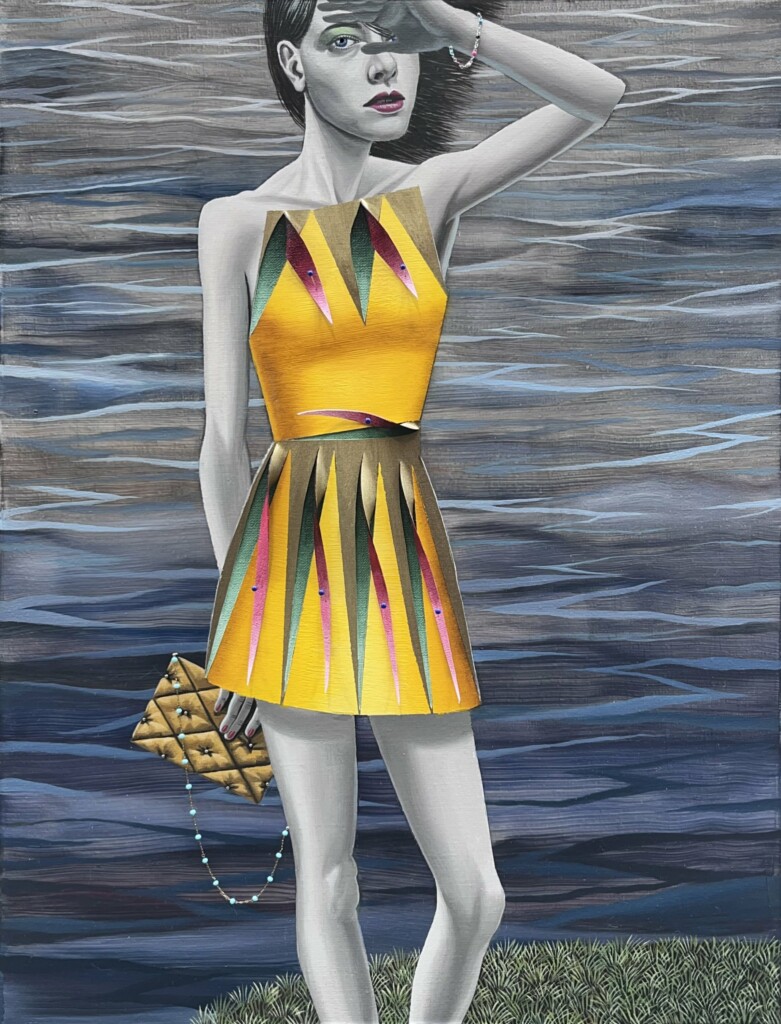
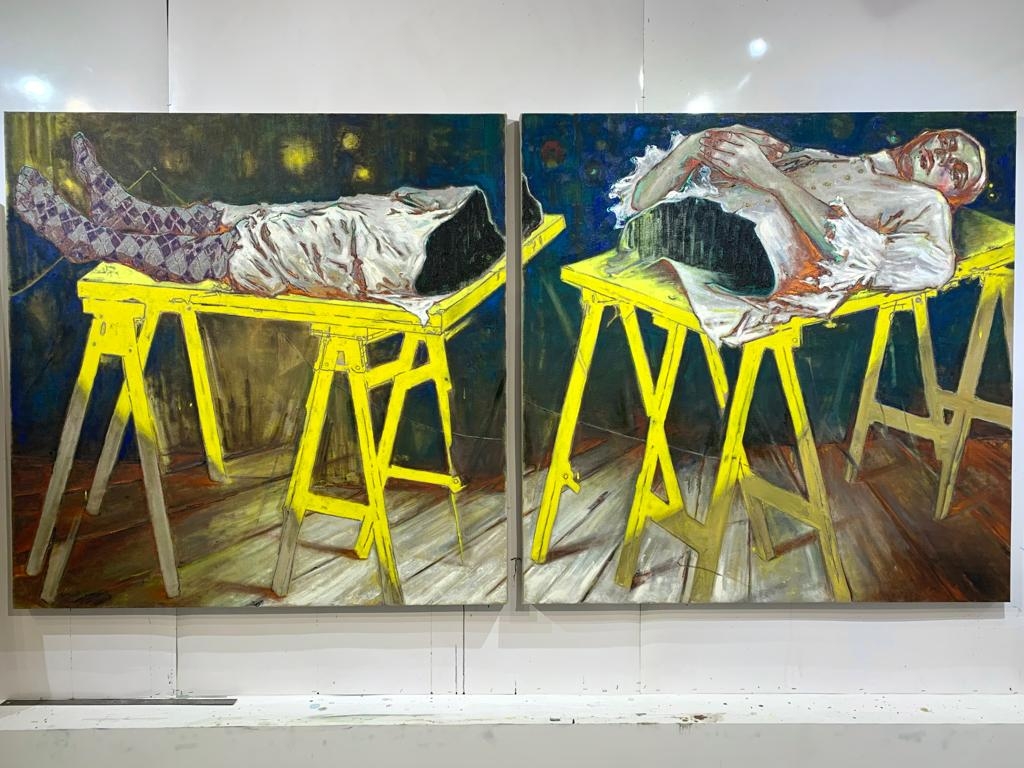
La primera parada artística relacionada con la 080 Fashion Week es la exposición “Cariàtides” del pintor Gino Rubert, expuesta en la galeria SENDA. Rubert es conocido por su capacidad de explorar las emociones humanas a través de figuras que rozan lo surrealista. En esta ocasión, su enfoque pone especial atención en un aspecto fundamental del universo de la moda: la construcción de las prendas.
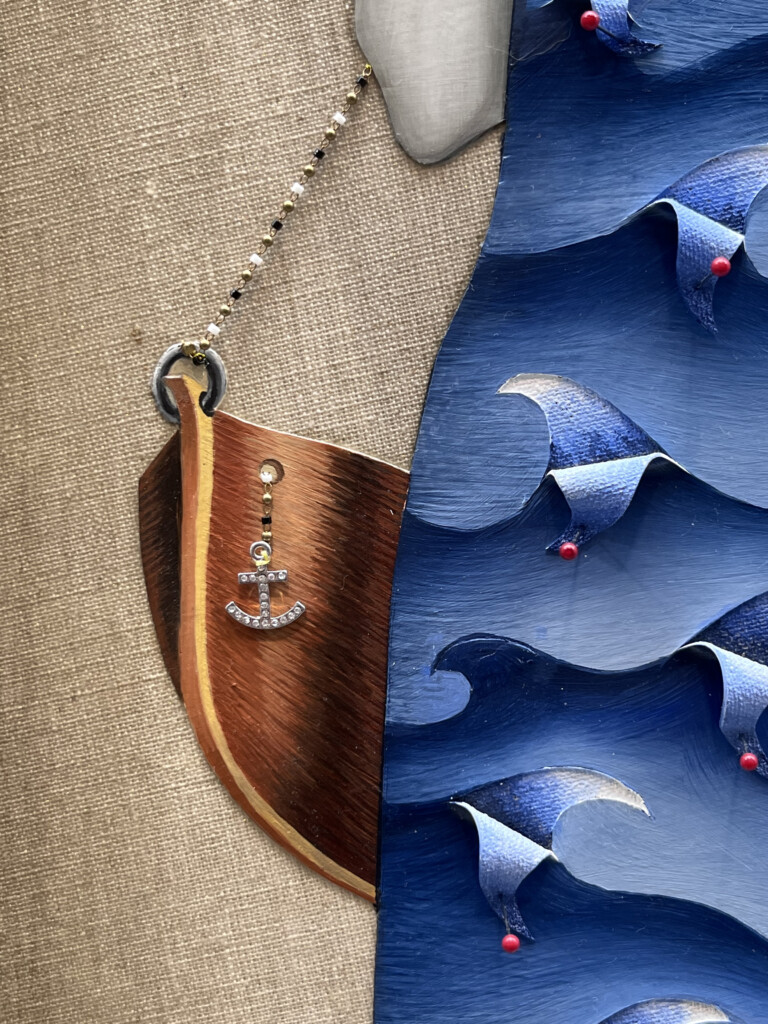
En “Cariàtides“, Rubert juega con texturas, pliegues, alfileres sobre el lienzo e, incluso, piezas de joyería, creando una conexión simbólica con el proceso artesanal de confeccionar ropa. A través de sus obras, se percibe cómo el pintor utiliza la tela como un material moldeable, donde cada pliegue y cada costura se vuelven elementos cruciales para la construcción de la figura femenina. Este acto de construir prendas en el lienzo refleja el minucioso trabajo de los diseñadores de moda y su atención al detalle en la creación de piezas que son tanto artísticas como funcionales.
Así como un modista crea prendas que visten cuerpos, Rubert viste sus figuras femeninas de “Cariàtides” a través de su pincel, utilizando los materiales como metáfora de la conexión entre el arte pictórico y el arte del vestir.
“Into the river” (2024). 54 x 41 cm
“La Tempesta” (2024). 73 x 65 cm. Detalle
“Dos + Uno. 1984/2024” de José Manuel Ferrater en LAB 36: El tiempo y la moda a través de la fotografía
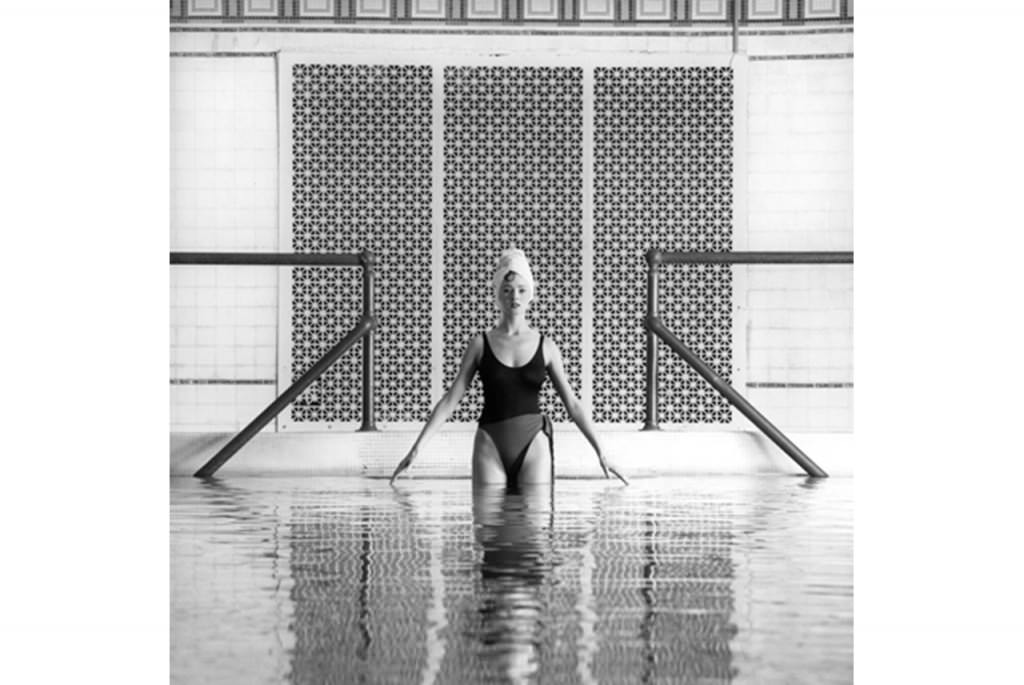
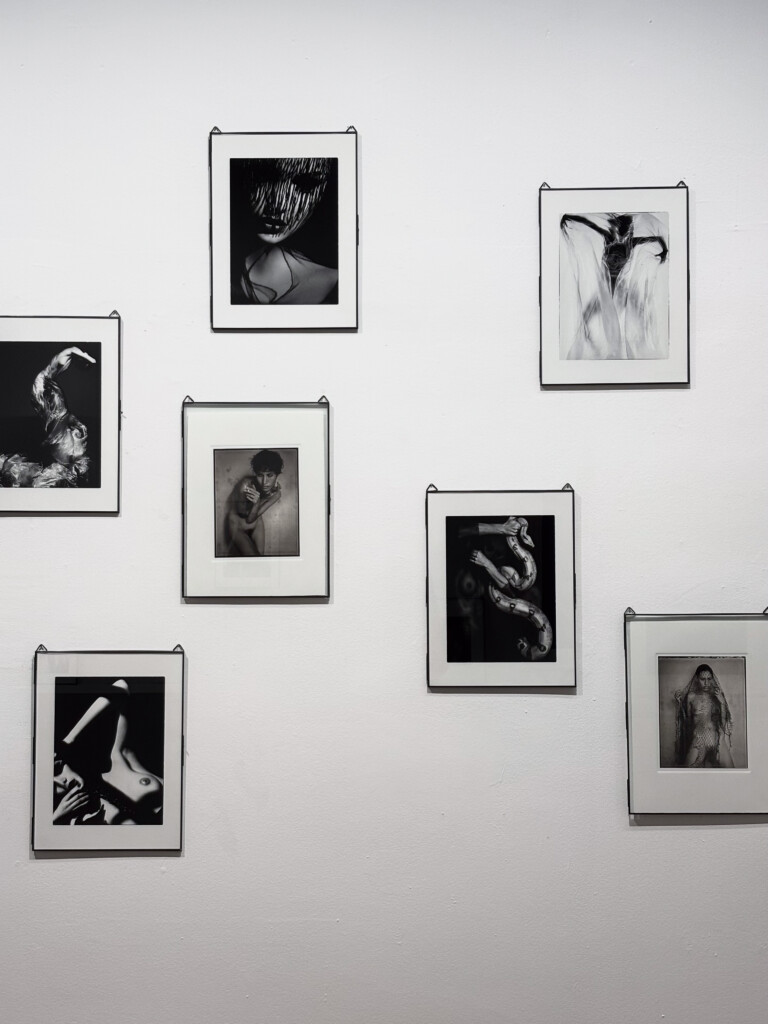
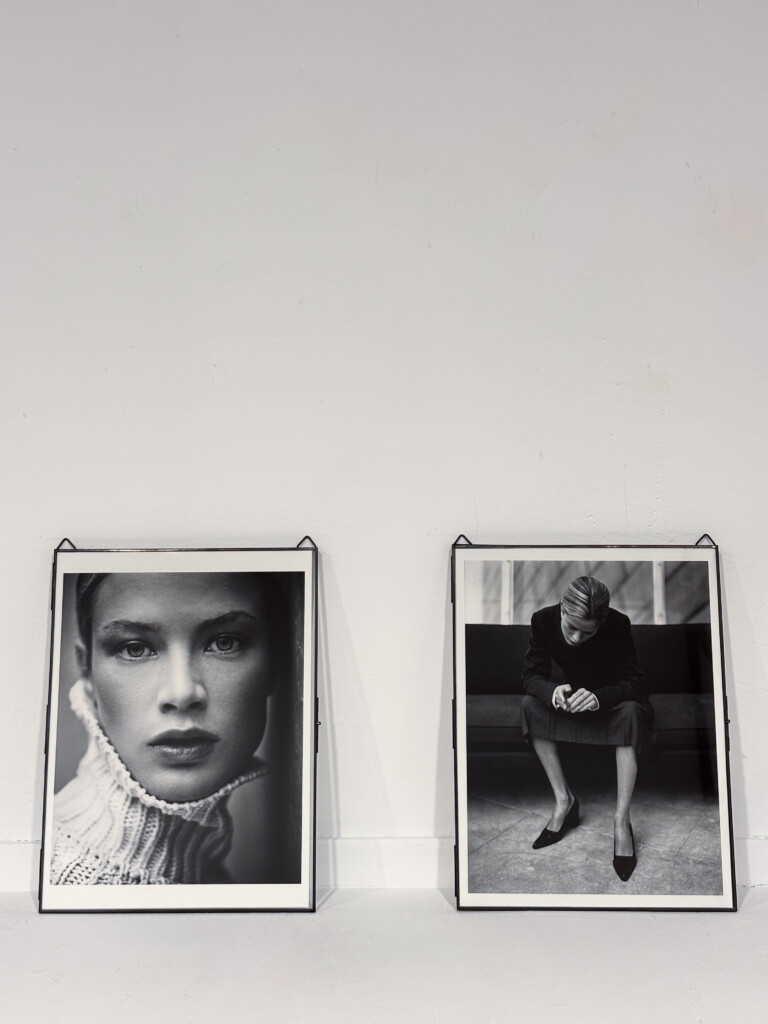
En LAB 36, otra exposición complementa el espíritu de la 080 Barcelona Fashion Week, pero desde una perspectiva fotográfica. José Manuel Ferrater, afamado fotógrafo de moda, presenta “Dos + Uno. 1984/2024”, una retrospectiva que ofrece un fascinante diálogo visual entre diferentes épocas de su carrera.
La muestra consiste en una contraposición de imágenes icónicas de 1984 y sus antagónicas tomadas en la actualidad, permitiendo al espectador viajar a través del tiempo y observar cómo han evolucionado tanto la moda como la fotografía misma. Ferrater, conocido por su capacidad de capturar la esencia del mundo de la moda con su lente, nos ofrece una reflexión sobre los cambios estilísticos y culturales a lo largo de los años.
A través de su obra, vemos cómo los ideales de belleza, los estilos y las tendencias han mutado con el paso de las décadas, pero también cómo algunos elementos perduran. La moda se presenta no solo como una forma de expresión personal, sino también como un reflejo de los tiempos que vivimos. La exposición es, en esencia, un diálogo entre el pasado y el presente, entre la nostalgia de las épocas doradas de la moda y la constante innovación del mundo contemporáneo.
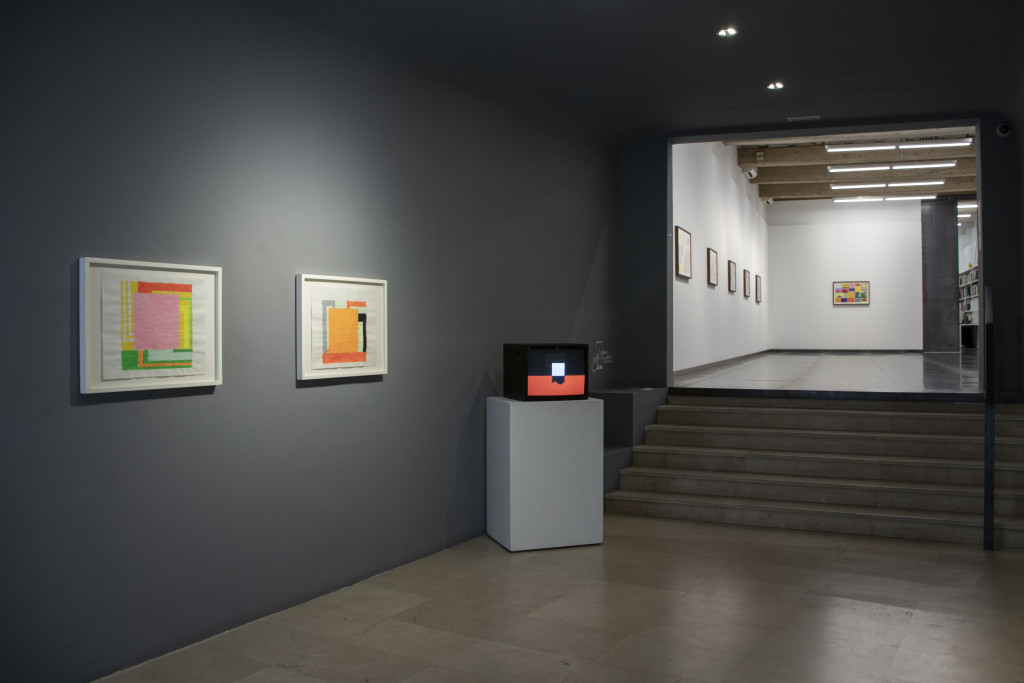
Vista de sala. “Dos + Uno. 1984/2024”
El diálogo entre moda y arte: Un encuentro inevitable
Ambas exposiciones, en su relación con la moda, encuentran un terreno común: la noción de la moda como arte en sí misma. Rubert y Ferrater, desde sus respectivas disciplinas, exploran y celebran la moda como un medio para expresar y desafiar convenciones. Mientras que Rubert se enfoca en la construcción meticulosa de prendas como un acto artístico y escultórico, Ferrater documenta la moda en su contexto sociocultural, inmortalizando momentos y tendencias que han definido épocas.
Este diálogo entre arte y moda se vuelve aún más relevante en el contexto de la 080 Barcelona Fashion Week, un evento que tradicionalmente ha buscado desafiar las barreras entre disciplinas. En un momento en que la moda se enfrenta a una constante demanda de innovación y sostenibilidad, las exposiciones de Rubert y Ferrater nos recuerdan que la moda no es solo tendencia, sino también un arte profundamente ligado a la expresión creativa.
From October 19th, 2024, to January 19th, 2025, the Museo Nacional Thyssen-Bornemisza Madrid will open its doors to a major retrospective of Peter Halley, in collaboration with galeria SENDA. This monographic exhibition, part of the exhibition program of Blanca and Borja Thyssen-Bornemisza’s collection, features 20 paintings by the New York contemporary classic, from both public and private Spanish collections.
This is the first time since 1992, when the Museo Nacional Centro de Arte Reina Sofía dedicated an exhibition to Halley, that Spain has hosted such a comprehensive retrospective of the artist. The exhibition encompasses his production from 1985 to 2024, exploring all stages of Halley‘s career. The selection of works has been carefully curated by Guillermo Solana, artistic director of the Museo Nacional Thyssen-Bornemisza Madrid, and by the artist himself, who has also designed the installation, promising a unique visual and conceptual experience for museum visitors. The exhibition highlights the exceptional reception that Halley‘s work has enjoyed in Spain for almost forty years, presenting twenty large-format works that span his entire career and with which one can observe his evolution over time.
In addition, this exhibition coincides with another show dedicated to Peter Halley at galeria SENDA, on the occasion of more than thirty years of collaboration between the artist and the gallery. Halley will present unpublished pieces designed specifically for the venue, forming a set consisting of a huge mural work that contrasts with a collection of very unique small format. The presentation will take place this December.
“Art and science: shared trajectories”, a dialogue between the artist Xavi Bou and the professor and researcher Josep Perelló, will take place on 4th June at 7pm at galeria SENDA. Framed in Bou’s current exhibition at the gallery, both will offer us their perspective that intertwines art and science.
A meeting of gazes
Xavi Bou, through his project “Ornithographies”, explores the flight of birds using advanced photographic techniques that reveal patterns invisible to the human eye. His work is not only visually stunning, but also invites deep reflection on nature, the importance of preserving wildlife, and our place in it.
Josep Perelló is a professor in the Department of Condensed Matter Physics at the University of Barcelona (UB) and a researcher at the UB Institute of Complex Systems (UBICS). Founder of the OpenSystems-UB group, Perelló promotes scientific research projects with citizen participation and artistic practices. His work in citizen science and collective experiments for public space has been recognised and acclaimed both locally and internationally.
For all this, Perelló‘s historical knowledge and Bou‘s artistic and nature experience converge in a talk that fuses art and science from a different perspective.
The fusion between art and science
During the talk, Josep Perelló will provide a historical perspective on the intersection between art and science, exploring how these two fields have dialogued and influenced each other over the centuries. His experience as head and curator of the Science Area at Arts Santa Mònica, as well as his work at the Barcelona Office of Citizen Science and the Ciutat i Ciència Biennial, provides him with an enriching vision that promises to broaden our understanding and appreciation of this interdisciplinary fusion.
Xavi Bou, for his part, will share his personal experience and creative process. He will take us through the development of his project “Ornithographies”, from the initial inspiration to the technical and artistic realisation of his photographs. It will be a unique opportunity to understand art from the perspective of the person who creates it, and how science can be a powerful tool in the artistic process.
Do you want to attend?
We’ll be waiting for you on 4th June at 7pm at galeria SENDA (Trafalgar, 32). The talk is free and open to the public. You only have to confirm your attendance by clicking on this link and register.
An onironaut who makes his dreams tangible. In a few words, this is how we could define Gonzalo Guzmán, the artist from Madrid who bases his sculptural work on the oneiric study of his dreams. Guzmán trained as an industrial designer and, since the pandemic, has dedicated his time to the art of sculpture. During that period of social isolation, Gonzalo Guzmán began to experience lucid dreams, a state of momentary disconnection between body and mind in which the subject is aware that he is living a dream and can therefore control it. Since then, his artistic project has been growing and exploring new horizons.
Dreams, his object of study
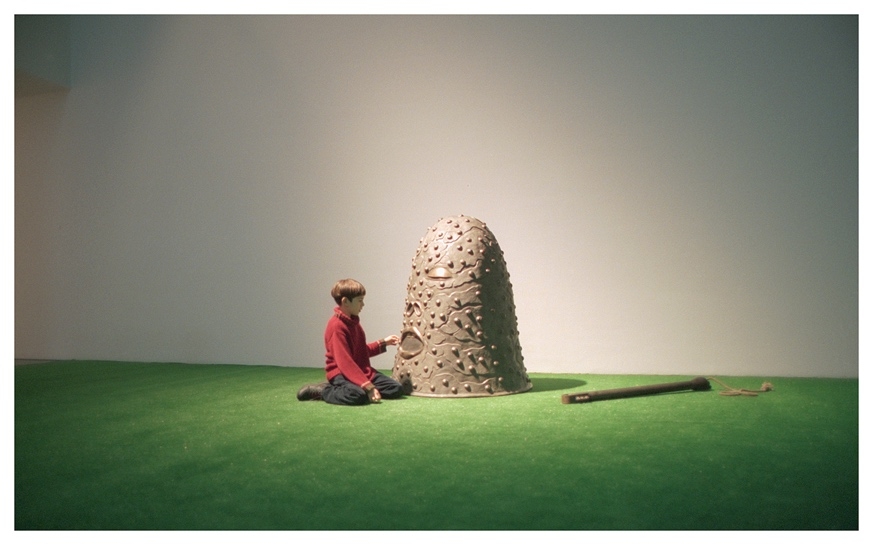
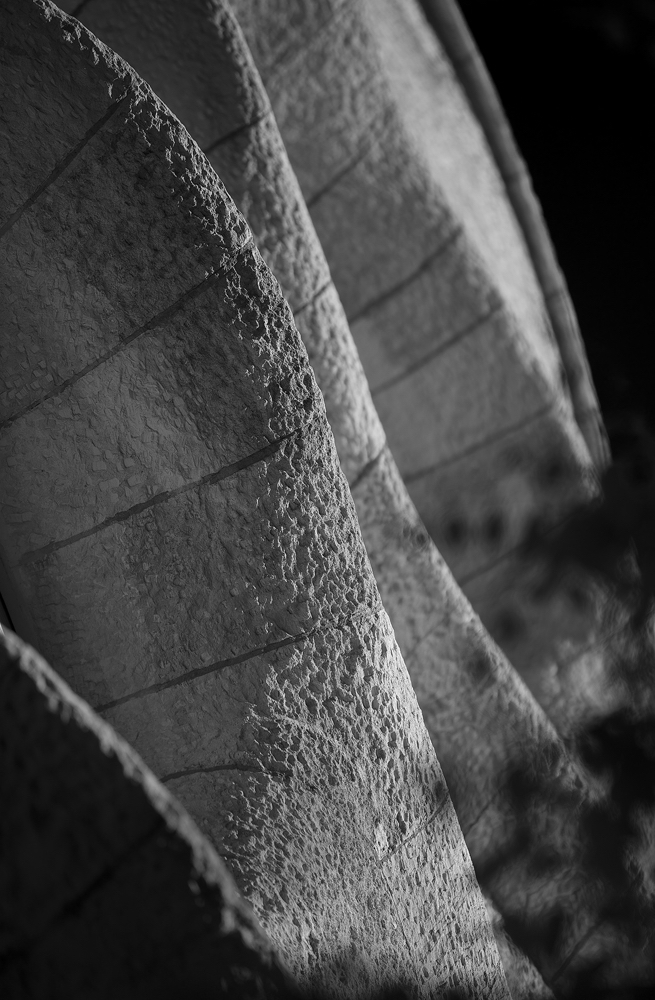
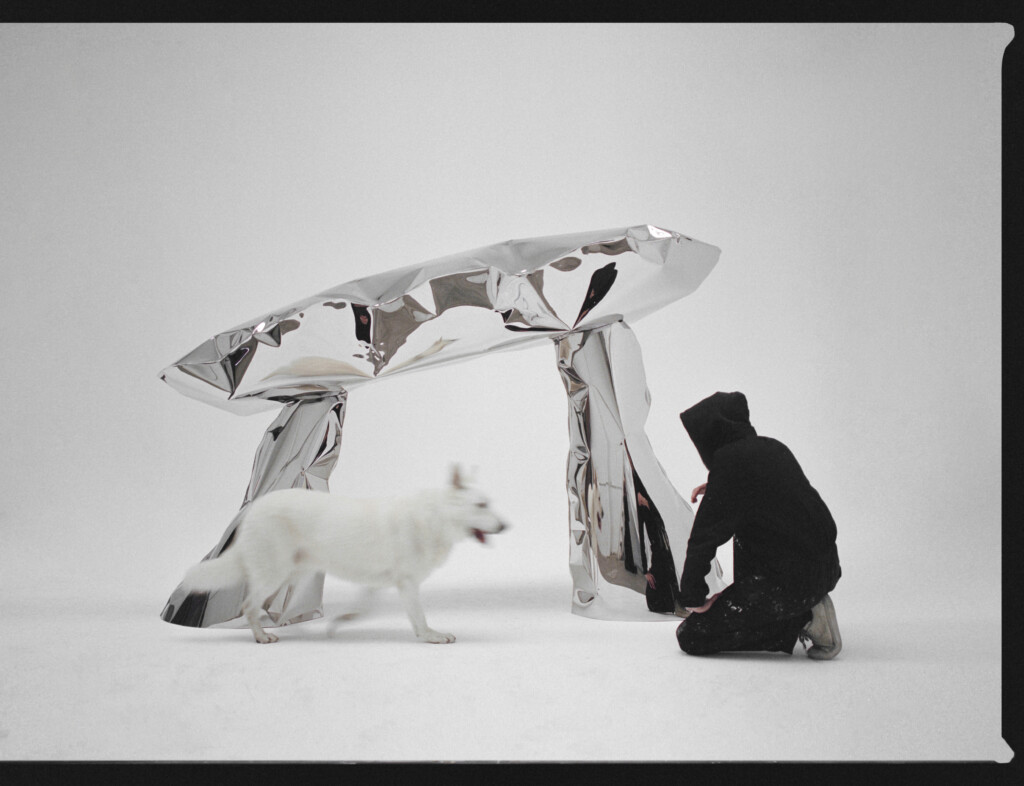
It is when he closes his eyes and dreams that Guzmán finds the meaning and inspiration for his works. In his dreams, the artist interacts with megalithic metallic structures that give him a very deep sense of peace. Menhirs and dolmens that, although they look like abstract bodies, are figurative pieces because they copy what the artist sees in his dreams. Guzmán chooses stainless steel because he seeks to emulate the metallic material with which he interacts in his dreamlike journeys. In addition, for practicality, this type of metal is resistant to the exterior, which is essential in order to be faithful to what he had previously dreamed. Stainless steel is the ideal material for his structures, as it offers him the necessary technical and visual properties to build his pieces.
Guzmán’s dream ritual
Gonzalo Guzmán, in an interview for Metal magazine, explains the mental process he carries out to connect with his dreams. He talks about the state of “duermevela”, a state of disconnection where the body remains asleep, but the mind remains awake. As bodily movements and sensations are cancelled out, they intensify in the head, and that is when the dream adventure begins. The trick, according to Guzmán, is to have a clear objective when dreaming. “[…] it is easier to experience these dreams if you have a goal, if during the day you are motivated by thinking about having a lucid dream, and you set yourself something you would like to accomplish within the dream.”
In Gonzalo Guzmán‘s case, his goal when dreaming is to better understand the meaning of these structures he sees in his dreams and to interact with them again. His ritual begins at four in the morning at the sound of his alarm. The artist half wakes up and does a series of exercises in that drowsy state that make it easier for him to begin to experience lucid dreaming when he goes back to sleep.
Exhibitions and participations
Gonzalo Guzmán has exhibited his pieces in different parts of the world such as Germany, Switzerland, Italy and the United Kingdom, among many other places. His most recent solo show is the exhibition “Colisión” (2023) at Galeria SENDA, framed within the Art Nou festival, an emerging art festival in Barcelona and Hospitalet de Llobregat that offers the possibility for young national and international artists to establish their first professional relationships in the art market, galleries, self-managed spaces and institutions dedicated to emerging art. The central piece of the exhibition and the one that attracted the most attention was an installation composed of the representation of a three-metre stainless steel stalactite that was suspended from the ceiling of the gallery on a reflective surface. The reflection of the stalactite on the surface generated the optical illusion that there was also a second stalactite about to touch the suspended one. The strength of the composition lies in the closeness of an impossible collision, hence the name of the exhibition.
In the context of art fairs, Guzmán has participated in a couple so far this year. Firstly, his dreamlike works made a visit to ARCO Madrid along with other artists from the gallery in a leading art scene. In addition, recently, his pieces were also exhibited at the SENDA stand at the Art Brussels fair.
Dolmen_04 and its link with the Meeting of the Círculo de Economía
On the occasion of this year’s 39th Meeting of the Círculo de Economía, framed under the title “The world on trial. Strategies to boost productivity and well-being in times of change”, the work Dolmen_04 by Gonzalo Guzmán will have a special place at the Palau de Congressos de Catalunya.
This structure shares a close link with the theme of the symposia at this meeting. We often need to go back to our origins to see how far we have come. Raimon wrote that he who loses his origins loses his identity. Perhaps what he meant in this verse is that those who have abandoned their history are not capable of understanding their present in all its grandeur, nor will they be able to face the challenges of the future in all their complexity.
Dolmen_04 takes us from the origins of humanity to the most rabid present in fractions of a second. In the blink of an eye. The dolmen is a quantum object, which seems to be in two different spaces at the same time: physically planted in this meeting space and, with its infinite reflection, in our deepest vision of ourselves. And it is quantum also because it occupies two different places in space/time. Art challenges, as much or more than physics, our perception of the universe and is able to make us perceive an object, like this Dolmen_04, in two very different moments in the history of mankind.
A sample of these first and rudimentary architectural constructions that man built can be seen here today transformed into a modern object, without losing its prehistoric symbolism. We find it here, in a place where the most mundane humans reflect on the present and the future, and its vision challenges us and announces to us where we come from, lest by having our feet on the ground we lose our origins and forget that humanity, since its beginnings, has always wanted to rise above the most mundane reality, and find, wherever it is, a spiritual meaning in the routine moments that we live every day.
That is why this dolmen of the 21st century takes us back to our ancestors and wants to remind all of us gathered here that outside, not so far from here, there is another world. A world created, among others, by hundreds of millions of years of artists, writers, sculptors, musicians, etc., and also by ordinary people, the common citizen who goes to work every day and who, in some way, has to be present in our discussions. Because, in the end, we all have to work for the common man, for the human race in its entirety. This dolmen transports us to the millenary history of the human race, of ordinary people.
A dolmen has landed in these days as an artist’s piece that summarises this journey from antiquity to modernity in tenths of a second and reminds us that this journey would not have been possible without the people in the street, without those who work and produce, who, in short, must always be the main actor in human progress. Let’s keep him here, let’s see him, and let’s never forget why he is here. His work, his production and his creativity is our future.
A small sample of his dreams
Here is a small selection of works by Gonzalo Guzmán that evoke those induced dreams that the artist creates from scratch in his mind.
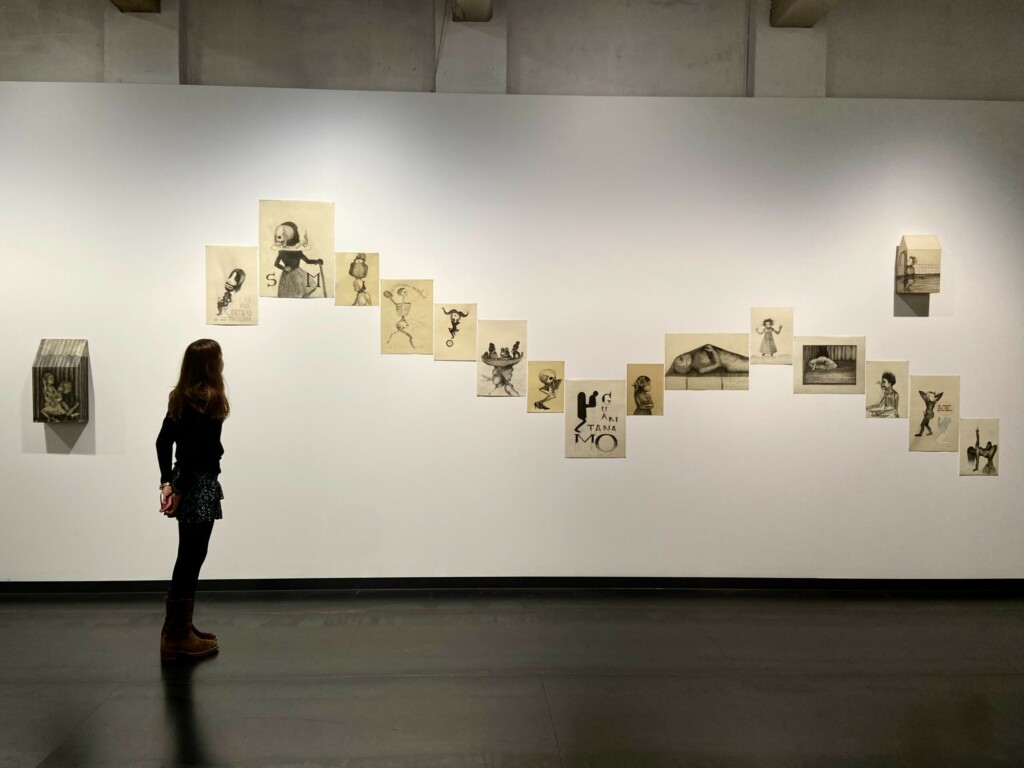
From Galeria SENDA, we are pleased to announce that Chilean artist Sandra Vásquez de la Horra has been awarded the Käthe Kollwitz Award. For those who don’t know about the history of this annual award, it was born in 1960 and is named after the German artist Käthe Kollwitz. Kollwitz was a painter, sculptor and printmaker in the realist movement, who was very socially committed to this style during the 19th century and who embraced expressionism in the early 20th century. The Akademie der Künste – Berlin Academy of Arts – has awarded its prize this year to Vásquez de la Horra, who has been living in Germany since 1995.
More about the artist
Sandra Vásquez de la Horra, born in 1967 in Viña del Mar (Chile), graduated in Visual Communication at the University of Design in her hometown and subsequently completed her studies in Fine Arts at the Academy of Art in Düsseldorf (Germany). Abroad, in 2002, he studied photography, film and new media at the Kunsthochschule für Medien Köln – Academy of Visual Arts in Cologne. It should also be noted that since he moved to Germany in 1995, he has continued to produce his work from Berlin. Therefore, we can observe the great esteem and the indissoluble bond that the artist and the German country have created after years of living and creating new projects from there.
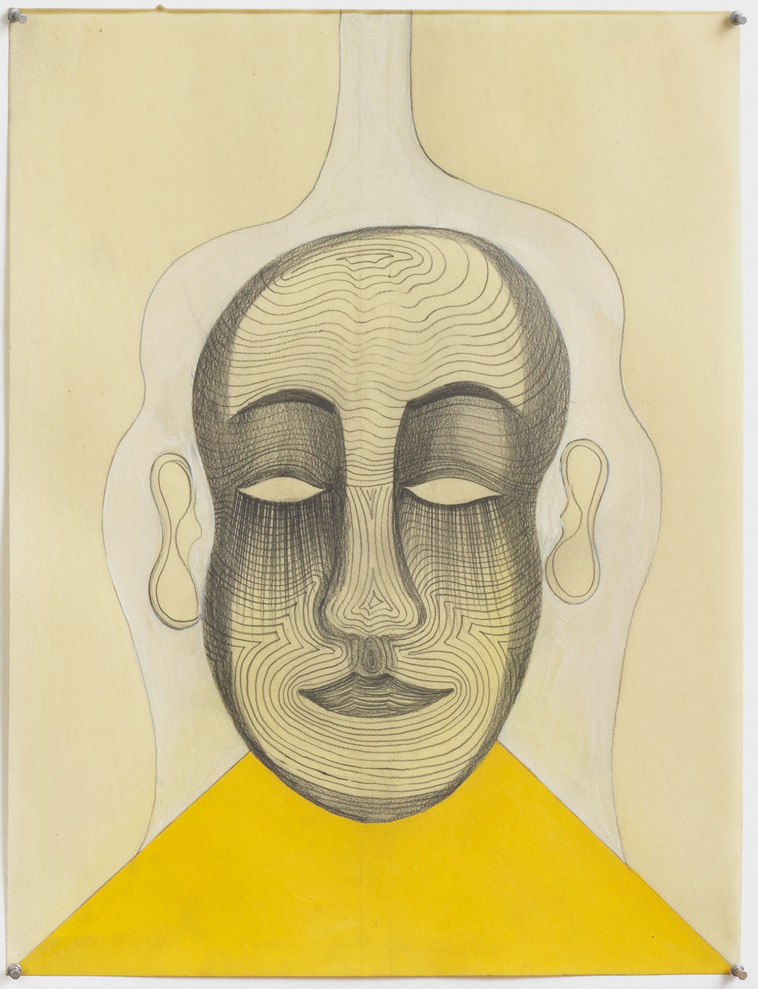
In Vásquez de la Horra‘s works, the artist uses wax crayon to construct a dark imaginary that evokes an imaginary and fantastical world that touches on subversive themes such as religion, mythology, sex, popular culture, social networks and death. Through this dystopian execution, the spectator is introduced into a universe of fictitious and enchanted creatures characterised by carnal and psychological concerns, a resource that Vásquez de la Horra uses to make us reflect on social issues that affect us directly, although we often leave them aside. Therefore, we could say that she is an artist whose visual language thematises the conflicts faced by today’s society.
Her works bring together a series of archetypes of the collective consciousness, questions of gender and sexuality, intercultural reflections and themes of spiritual practices. The reason for this artistic discourse that is so rooted in social protest can be explained when one gets to know the artist’s biography. Vásquez de la Horra grew up in an era which, following the coup d’état of the Chilean military junta in 1973 and the seizure of power by Augusto Pinochet, was dominated by torture, repression, disappearances and numerous human rights violations for more than seventeen years.
With the return of democracy in 1990, the population was able to digest and come to terms with the country’s history, the imprint of which can be seen in Sandra Vásquez de la Horra‘s artwork. In addition to showing the barbarities that her country experienced, her projects depict family confrontations, the mythologies of the indigenous population and the colonial domination of Europeans in Central and South America.
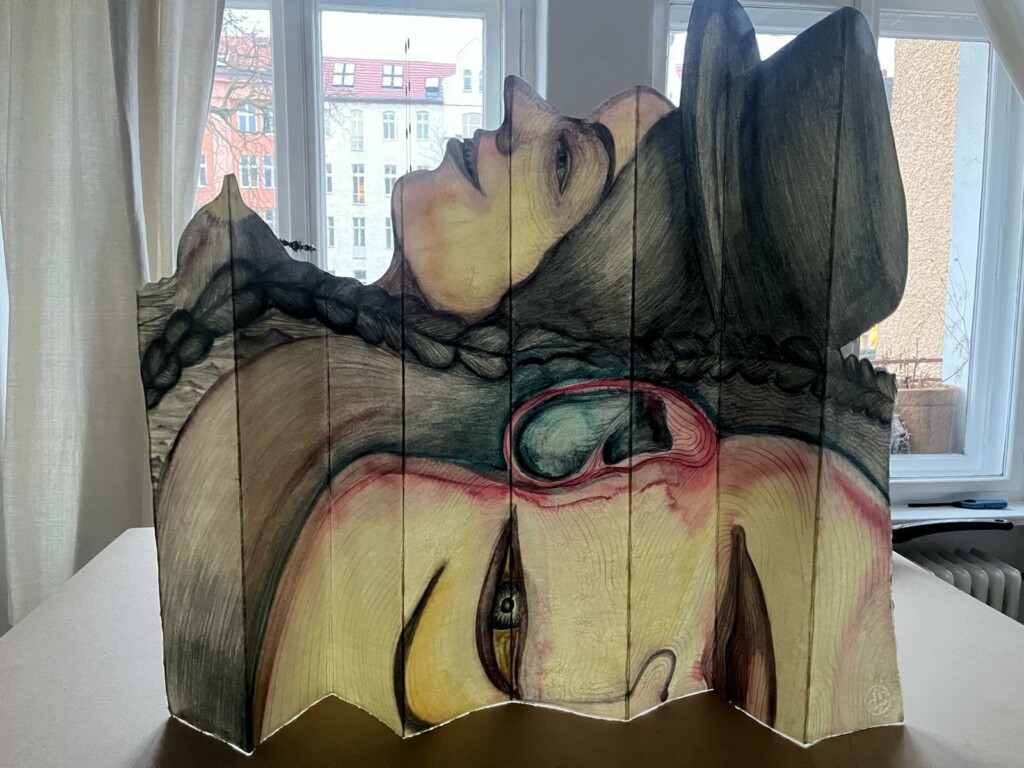
The drawings Vásquez de la Horra creates are both small and large format, on paper and cardboard, and are characterised by their density, colours and precision. Some of his creations are dipped in wax, a treatment that adds depth to the drawing and allows him to construct three-dimensional works in the form of an accordion.
Prize and celebration
On the occasion of the award ceremony of the Käthe Kollwitz Award 2023, the Akademie der Künste will exhibit a selection of Vásquez de la Horra‘s works; a total of more than 60 drawings, photographs and objects that will be exhibited in a site-specific installation. The ceremony will take place at the Akademie der Künste itself on 18 June at 7 p.m. and the special exhibition will be open to the public from 19 June to 25 August.
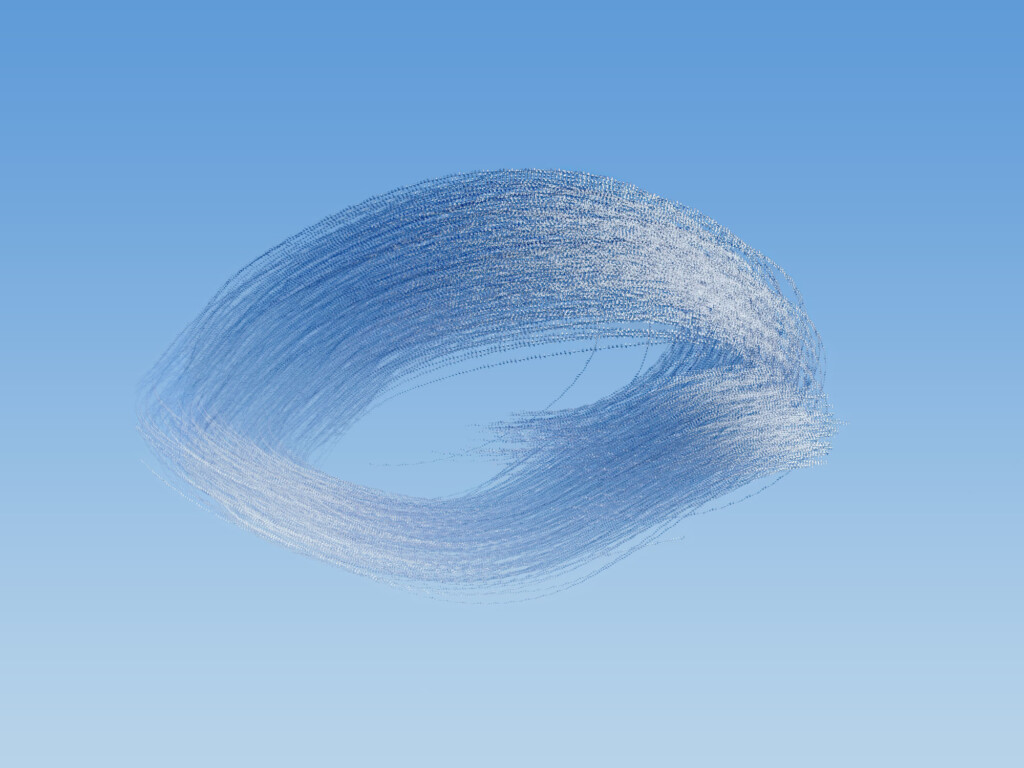
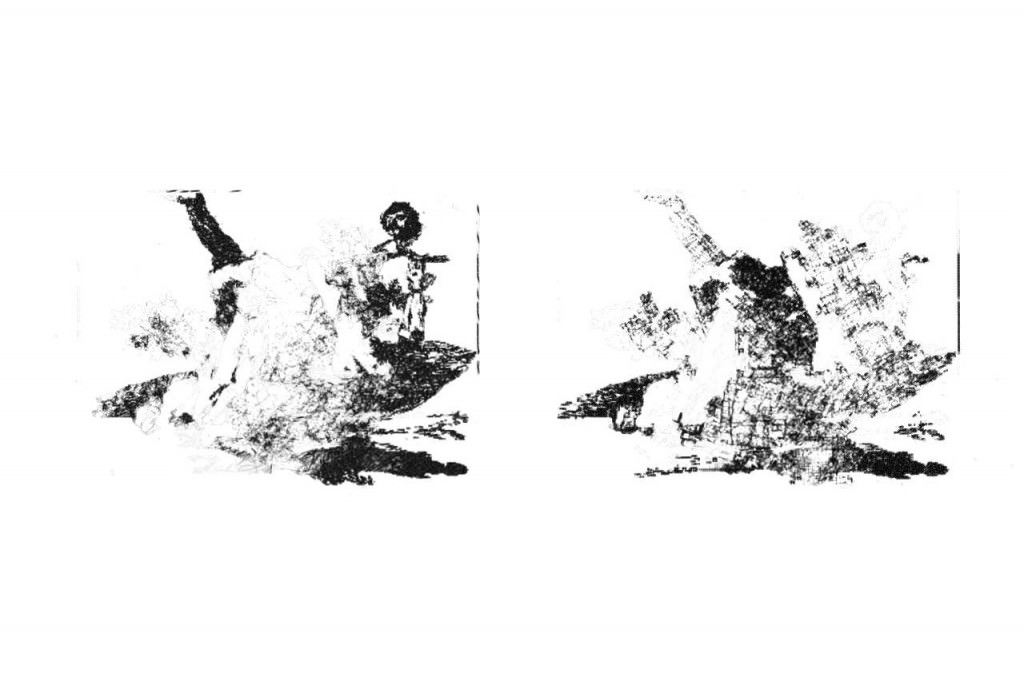
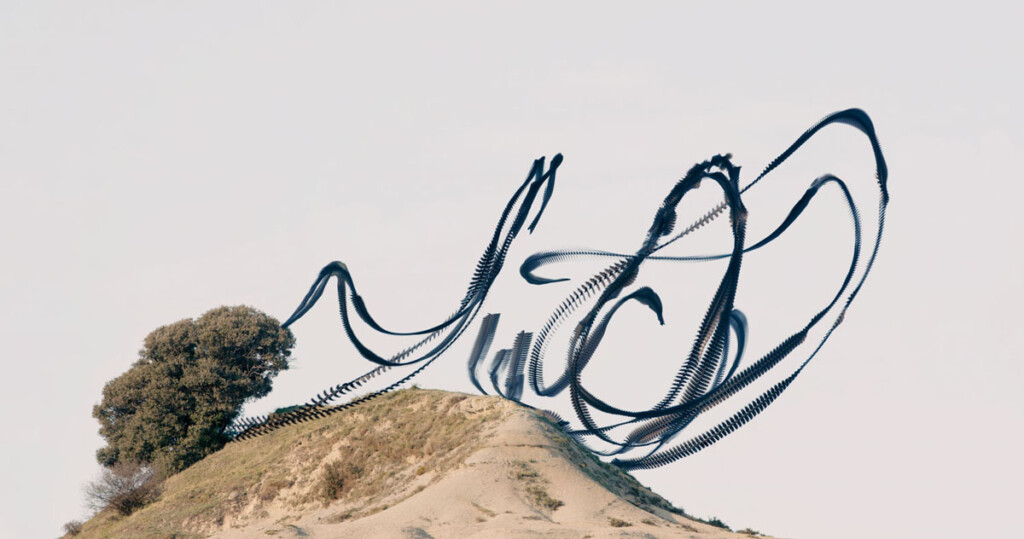
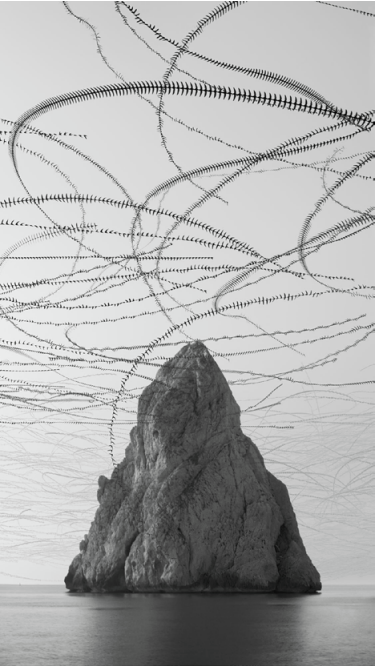
Mostly black lines of captivating geometry snake or swirl, some even in several strands, across the monochrome image grounds of the photographs — making one think of abstract drawings or paintings. The almost artificial perfection of the minimalist formations, however, gives the impression that they are mathematically generated. Yet the enigmatic structures show flight figures of birds recorded in the old method of chronophotography and modern computer technology. The Barcelona-born artist Xavi Bou has decontextualized them in the sense that they unfold on a cloudless sky, which he has transformed into a canvas through appropriate digital processing. According to the photographer, his fascination with birds and their movement is rooted in his childhood. Growing up in El Prat de Llobregat on the southern outskirts of Barcelona, allowed him to take countless walks in nature with his bird-loving grandfather. His great interest in nature remained with him even after his studies in geography and photography and during his stage working in the fashion photography sector. Soon after his debut in 2015, the artist received praise from numerous publications in daily newspapers or magazines of different orientations worldwide.
From an art-historical point of view, such a concentration on non-figurative representations began in Germany in the 1950s with “subjective photography”; it brings to mind its inventor Otto Steinert, who depicted reality without narrating, documented in a reportage-like manner and placed ornamentation as an external phenomenon in the picture. Incidentally, a similar case was that of the Catalan photographer Marcel Giró, who emigrated to Brazil. Xavi Bou is familiar with Eadweard Muybridge’s purely scientific chronophotography, which somehow is related to his ornithographic approach.
Meanwhile, Xavi Bou has given shape to the movements of numerous bird species in his ornithographic works, as well as exploring the medium of photography to visualize and archive these flowing and fluctuating energies. This, in the whole series and in concept, is quite like the photo archive of international utility buildings by the artist couple Hilla and Bernd Becher, which is more poststructuralist-conservationist than system-critical. Similarly, Bou strives to ensure that the beauty of the abstract formations he puts into the picture always allows for open reading. In other words: only a few of the lines drawn by birds with their flight figures, as well as the tangle of lines of entire flocks of birds, reveal their creators. This is true of the goldfinches appearing in the picture amidst the swirls of ochre lines —becoming the artist’s least appreciated photographic works precisely because of its clear legibility. Xavi Bou sees himself as a “curator” who tracks down the choreography of birds and makes it visible.” Very rarely, therefore, landscapes or cloud formations in the sky remain visible on the monochrome image backgrounds at the bottom of the picture and may hardly contribute to deciphering the actual image subject without relevant background knowledge.
The amazing geometry, precision, and complexity of the birds’ flight figures have been occupying the 43-year-old artist for around ten years now, and many of the cooperation partners for his artistic work are recruited from the bird world, or rather tracked down. Sparrows, swallows, swifts, seagulls, starlings, but also flamingos or eagles as well as other birds of prey… He finds them not only in the wild – very often nearby or even in places like Gibraltar or Iceland – but surprisingly also in the Gracia quarter in the heart of Barcelona.
This short film has emerged from Xavi Bou’s artistic residence with the UCLouvain university in Belgium within the Reveal Flight project.
In his videos, the artist records the collective development of bird flight lines, an entire bird migration, while he underlays the sequences with original sound or music composed by one of the artist’s friends. In the future, Bou plans to expand his archival practice with a new series of photographs — through sculptural abstractions, by using footage of insects in motion, and then digitally manipulating them to appear both three-dimensional and in the natural coloring of the animals.
For the 40th edition of Art Brussels, we have been selected for the “REDISCOVERY” section by the Art Brussels Committee, composed of Belgian and international gallerists. On this occasion, we bring back the unclassifiable Zush/Evru, to whom we dedicate the exhibition “Back to being” (2020) after eight years of absence by the artist. The “REDISCOVERY” section is dedicated to underrated, undervalued or forgotten artists of the 20th century, living or deceased. It aims to explore and highlight surprising, unknown and original practices that have not yet entered the mainstream of art history.
The human condition through dreams seen by three generations of artists
It is a pleasure to participate again in Art Brussels, as it presents a strong, international program and a unique mix of established artists and emerging talents that align with our vision. In addition to the “REDISCOVERY” section, the galleries have been divided into three more sections: PRIME, DISCOVERY, INVITED and the SOLO subsection of the fair.
In addition to having a special section to put the focus back on the work of Zush/Evru, we added Sandra Vásquez de la Horra and Gonzalo Guzmán, thus creating a dialogue between three artists of three different generations who address realities of the human condition that are not obvious. Very personal visions of the subconscious. Their own experiences serve as an engine to create unique and personal dream worlds that open spaces for reflection.
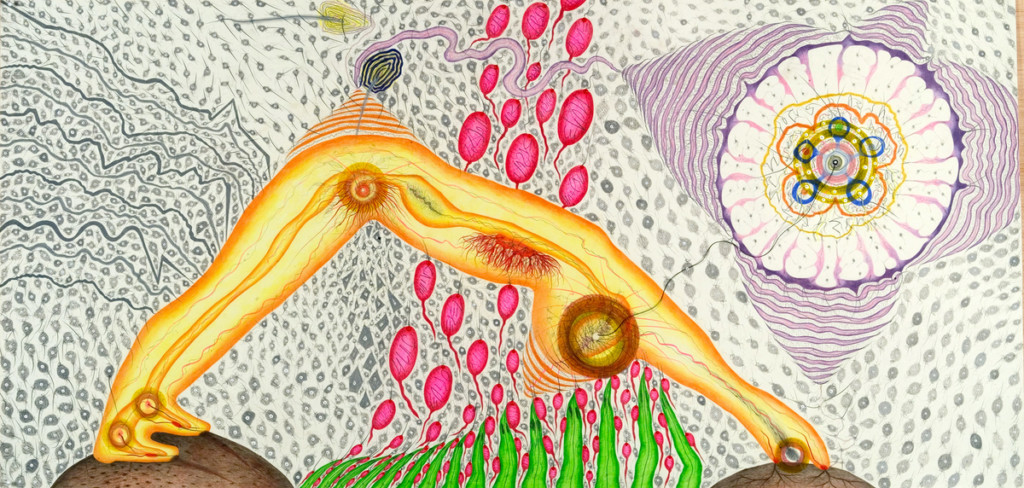
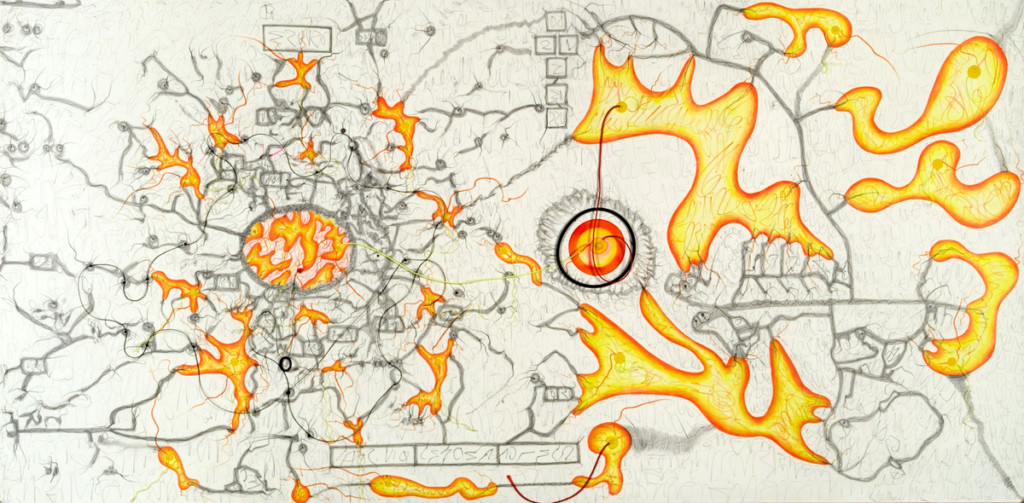
The personal aesthetic universe of the Barcelona-born artist who, under different names – Albert Porta, Zush and now Evru – has been the protagonist since the sixties of an itinerary that takes us through the most innovative expressive supports. His fluid work is rooted in his even more fluid persona, which has given rise to the Evrugian Mental State, a self-sufficient imaginary world in which he often resides to reflect on concepts such as identity, otherness and the state of being. His artworks act as tangible mediators between the audience and the dreams, emotions, creatures and beings that reside in his dream world. His work blurs the planes of dream and reality with an expression close to surrealism.
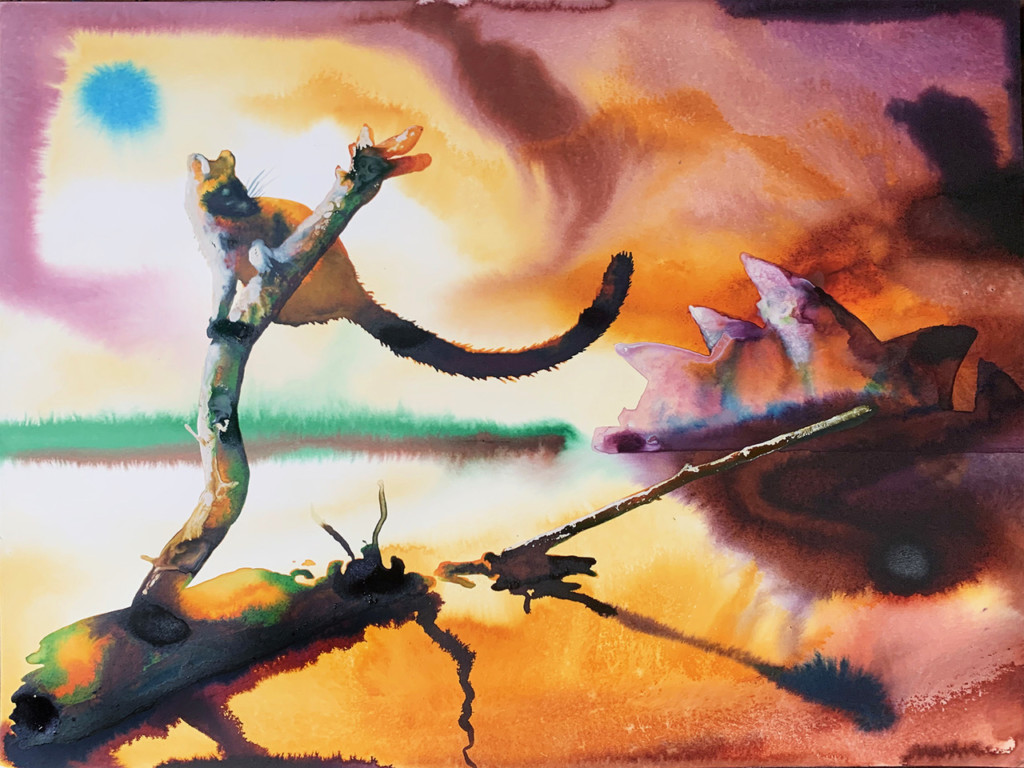
As a complement to Zush/Evru, Sandra Vásquez de la Horra (Viña del Mar, Chile, 1967) proceeds to work on the plane of her imagination. Her characteristic wax drawings, which could be seen in the exhibition “Meridians” (2018) and “Aura” (2022), evoke a dreamlike state of emotion and fantasy, where her internal expression deals with subversive themes of religion, sex, mythology, death and personal experiences.
Both Vasquez de la Horra and Zush share an interest in the dreamlike and the surreal, but approach these subjects from different perspectives. While Vasquez de la Horra focuses on exploring the deeper aspects of the human unconscious and deconstructing cultural taboos, Zush immerses himself in creating his own alternative worlds. However, both artists share an innate ability to capture the essence of the unreal and the fantastic in their works, inviting the viewer to reflect on the nature of reality and imagination. Like Zush/Evru, Vasquez de la Horra‘s work is rooted in the desire to embody and understand the intangible inner state.
Sandra Vásquez de la Horra. “Aura”‘s exhibition view
Finally, to link the dialogue, we contrast the work of these established artists with one of our latest additions to the gallery, which we exhibited during Art Nou 2023 with the exhibition “Collision“.
Trained as an industrial designer, Gonzalo Guzmán (Madrid, 1991) began to dedicate himself to sculpture in the wake of the pandemic. During that time of chaos and uncertainty, he experienced “lucid dreams” in which he was aware of living his own dream and could control its development. In these dreams, dolmen-like figures repeatedly appeared to him and served as inspiration. The shaping of these forms in sculptures is a way of research to transfer them to reality. That is to say, the fact of materializing them makes it possible for Guzmán to interact with them on the real plane and at the same time for other people to do so.
To intertwine Gonzalo Guzmán‘s work with that of Zush/Evru, we can highlight how both artists explore the intersection between the tangible world and the world of dreams. Both challenge the conventional perception of reality and lead us to reflect on the limits of imagination and artistic materialization. While Zush/Evru shows us the landscapes of our dreams, Guzmán offers us the opportunity to touch those ephemeral forms and bring them into the physical world.
Gonzalo Guzmán. Dolmen_04 (2022)
190 x 270 x 100 cm
See you at Art Brussels!
For all these reasons, we are pleased to announce our twenty-first participation in the 40th edition of Art Brussels. This prestigious fair is one of the most recognized in Europe and an event marked in our calendar. With a wide variety of proposals, it represents the cultural and artistic richness of the European scene that attracts many collectors, curators, galleries, art professionals from all over the world. This year, the fair will take place at the Brussels Expo, in Halls 5 and 6, and you can find us at stand 5A-22.
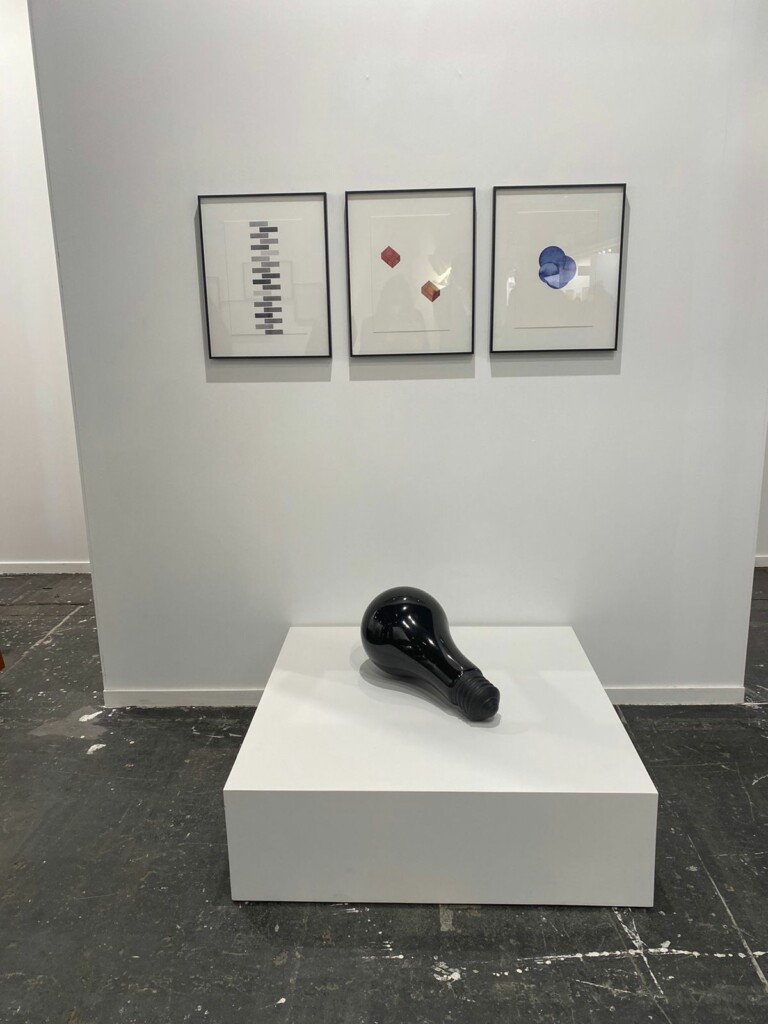
ARCO Madrid is an obligatory annual event that we have been attending for more than 30 years, but this year we were not satisfied with doing things the same way as always. In this edition, we opted for a new way of participating that was more sustainable, and we assumed our responsibility towards the environment.
Waste reduction
One of the most significant challenges we face as exhibitors at fairs is the transportation and packaging of artwork. Not only is this process crucial to ensure the safety of the pieces, but it can also generate a lot of waste, especially plastics.
This year, we set out to address this challenge differently, with a focus on sustainability and waste reduction. One of the first steps we took was to replace traditional plastic packaging with recycled cardboard boxes and blankets. Previously, paintings and sculptures used to be wrapped in bubble wrap for protection during transport. However, this year, we made a cardboard box specifically for each of the paintings and carefully packed the sculptures with blankets. This simple choice allowed us to significantly reduce our plastic footprint and still ensure the safety of the works. In addition, by using recycled cardboard, we are supporting the circular economy and encouraging more sustainable practices throughout our supply chain.
Reusing resources: the second life of carpeting
In addition, we had the opportunity to reuse the carpet that covered part of the fair. This carpet, which would otherwise have been discarded at the end of the event, was a valuable source of material for us. Thanks to the collaboration with the ARCO organization, they allowed us to take this carpet and give it a second life. Now, this recycled carpet is being used to wrap our sculptures during transport. Its soft, cushioned texture provides excellent protection for the artworks, ensuring that they arrive at their destination in perfect condition.
Committed to a sustainable future in the art world
The art world faces significant challenges in terms of sustainability. From the intensive use of resources in the production of artworks to the generation of waste during packaging and transportation, many practices in the industry are not environmentally friendly. In addition, the organization of exhibitions and art events can have a significant impact in terms of energy consumption and waste generation. However, as awareness of the importance of sustainability grows, so does the number of individuals and organizations within the art world that are committed to more environmentally friendly practices. With measures such as the reuse of materials and the adoption of renewable energy, efforts are being made to make the art world more sustainable.
We understand that every small action counts when it comes to protecting our planet, and we are committed to doing our part as members of the artistic community. By taking concrete steps to reduce our environmental impact and promote more sustainable practices, we are taking a step in the right direction towards a greener and more prosperous future.
In short, our experience at ARCO this year was not only about exhibiting art, but also about doing so in a way that respects and protects the environment. We are proud to have taken significant steps toward more sustainable packaging, and we hope this initiative will inspire others in our industry to adopt more responsible practices.
The countdown has begun. ARCO Madrid is just around the corner and from Galeria SENDA we are finishing all the details so that this year we can show you in our stand, 9B23, the latest creations of our beloved artists of the house.
For our thirty-first participation in ARCO, one of the most influential fairs on the international scene, we have invited those who are pillars of our identity and history as a gallery, as well as new young and emerging proposals.
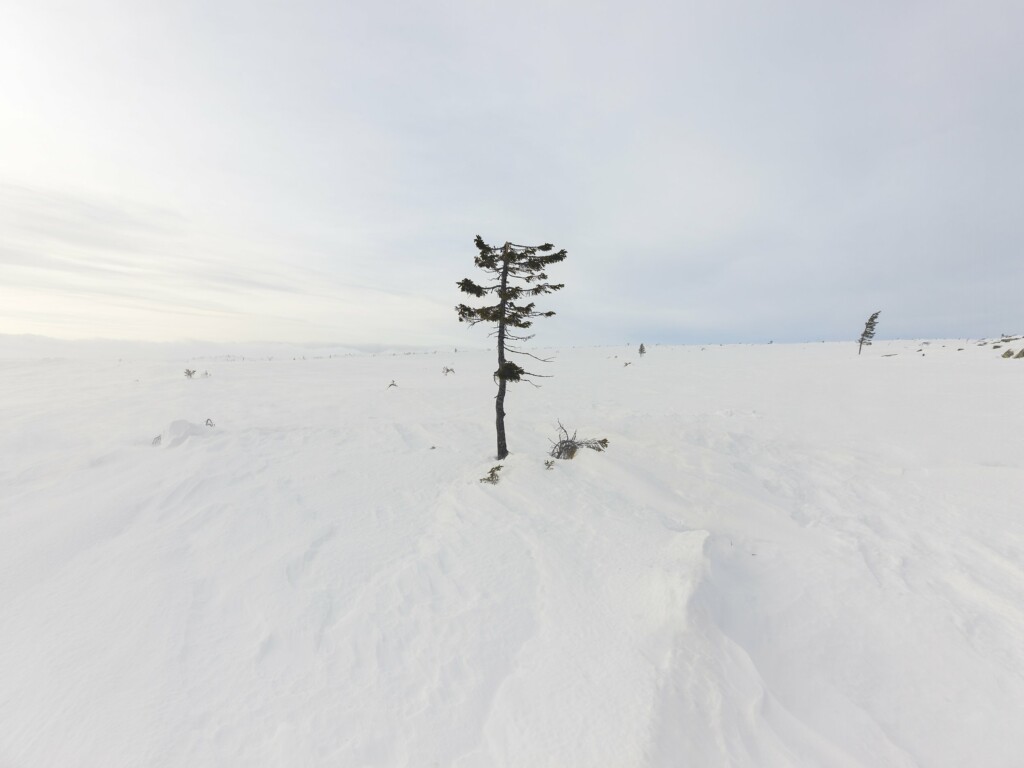
This year we are very happy to show you part of Jordi Bernadó‘s new photographic project, “LAST & LOST“. This series of eight photographs, shown in a solo exhibition at Galeria SENDA and part of a larger project, question the ecological and philosophical challenges of the present, dealing with issues such as sustainability, the relationship between technology and nature, the horizons of our future or the role that democracy will play in the fight against new environmental threats. The photographs in “LAST & LOST” portray lost places, endangered ecosystems, areas rendered unfit for habitation due to pollution, and life forms struggling to survive in practically barren landscapes. The artist becomes, then, a witness and spectator of ecological catastrophes in an ambiguous state between existing and not being able to be; just surviving.
Jordi Bernadó. Old Tjikko, Mörkret, Sweden (S 6.2)cc (2022) UV printing on methacrylate, mounted on dibond., 180 x 240 cm
Another of the artists that backbone and shape the personality of our gallery is Jaume Plensa, the famed sculptor from Barcelona with an unparalleled international projection. For this edition of ARCO Madrid, Plensa presents his work based on contradictions: light and darkness, the trace of the past and the opening towards the future, natural contradictions and the creations of man’s hand, the immensity of noise and the most intimate spheres of silence.
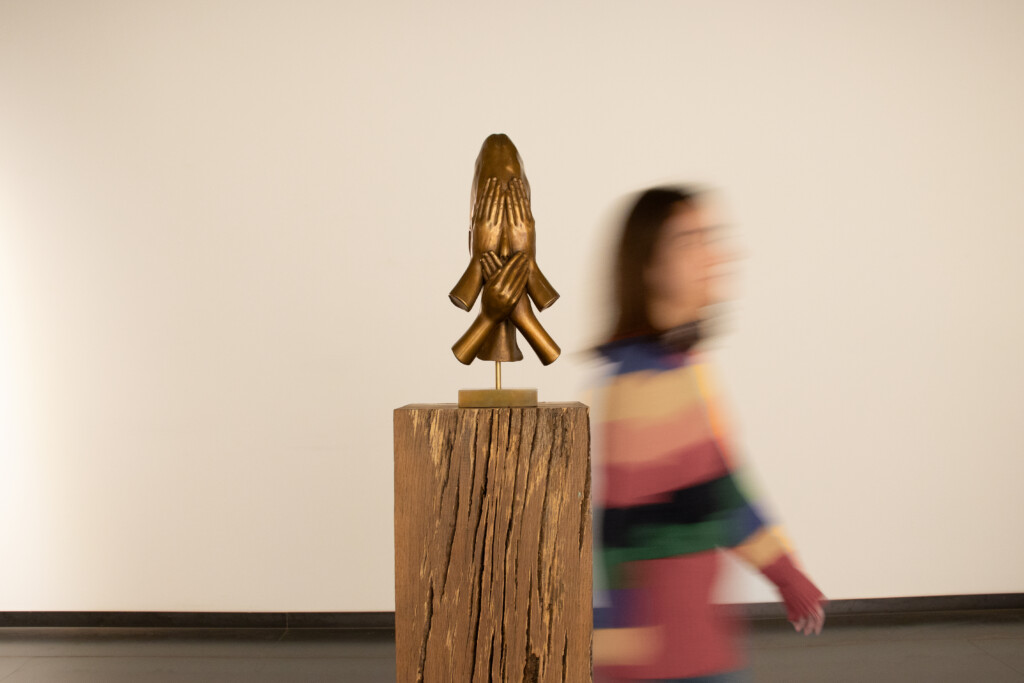
Jaume Plensa. Who Are You? VI (2016) Bronze, 38 x 15 x 15 cm
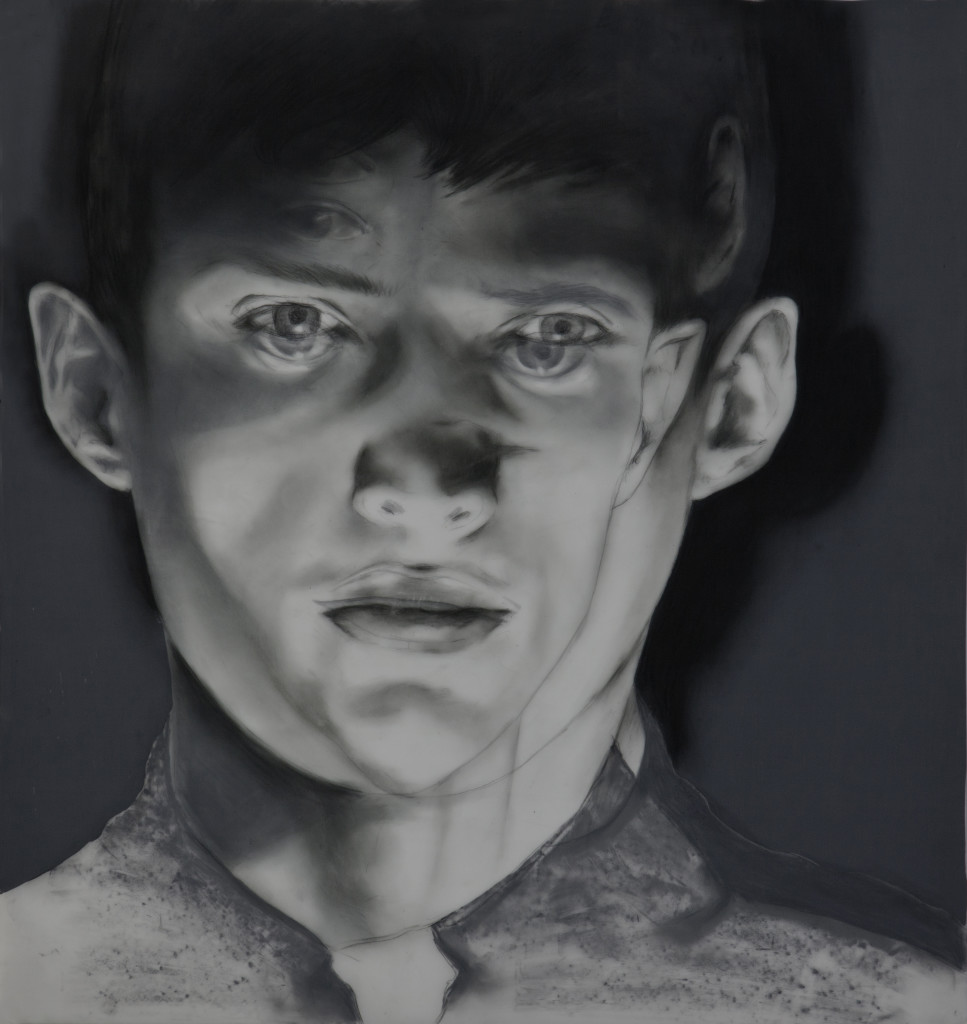
In contrast, Anthony Goicolea shows us that art can mean brutality, capturing in his plastic works the different prisms and perspectives of social issues such as gender, culture or traditions. Goicolea pours into his artwork his personal and family history, marked by being born Cuban, being gay and practicing the Catholic religion in the south of the country in the early seventies. These factors forged his awareness of social constructions, such as regional traditions or rituals, and how these elements influence and define our identities. In this edition of ARCO, Goicolea will show works in graphite and on oil, where visitors will be able to find themselves in front of subjects that could well be taken from theatrical performances or novels.
Anthony Goicolea. The Magician’s (2023) Oil on canvas, 127 x 254 cm
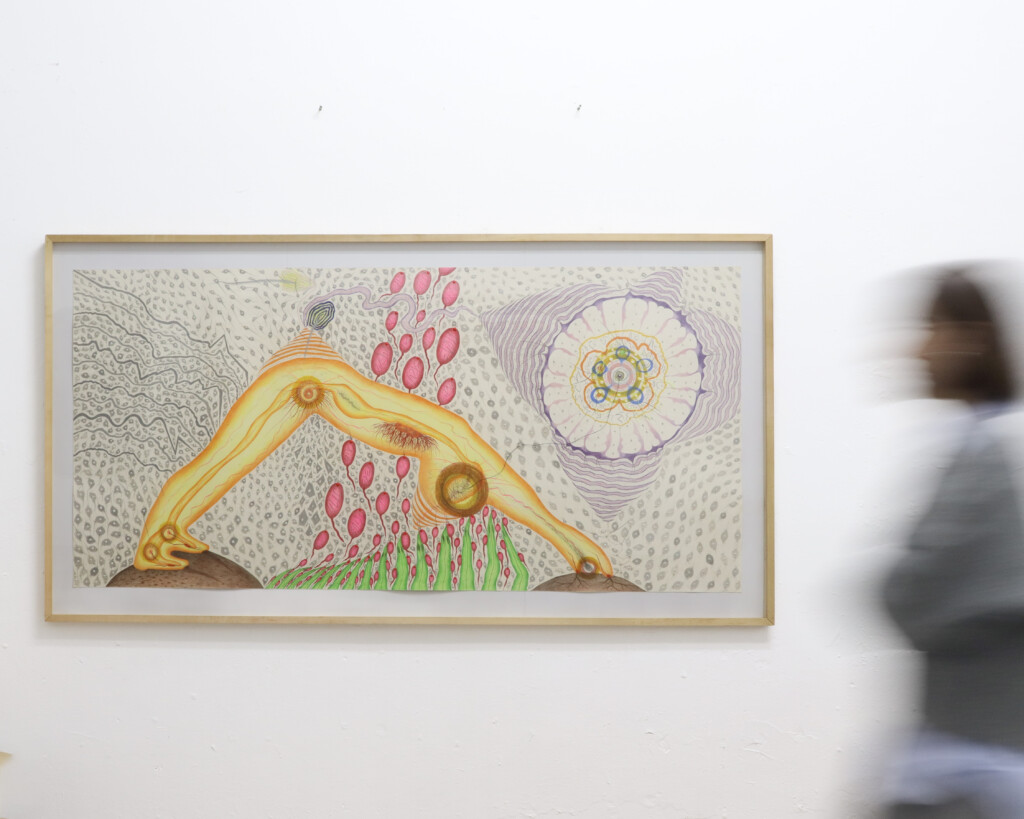
Another artist invited to exhibit at our stand at ARCO Madrid is the Chilean Sandra Vásquez de la Horra. Through a multiplicity of techniques ranging from three-dimensional pieces, charcoal, watercolor and wax; Vásquez de la Horra traces bodies that she conceives as geographical entities. These bodies, now territories, are divided into two planes: the physical-terrestrial and the mystical. In the physical aspect, the artist narrates with her work the political charge of the people’s resistance against the Chilean dictatorship. On the other hand, in the mystical aspect, Vásquez de la Horra takes the concept of the seven planes or chakras to dialogue in unison between the universe and the Earth.
Sandra Vásquez de la Horra. Las Cholitas (2024) Graphite and watercolor on waxed paper, 106 x 77 cm
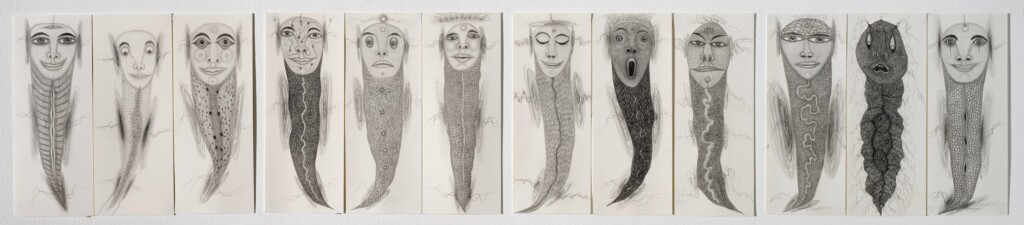
It is also characterized by the creation of unique and fantastic forms, Evru Zush. With a mix of techniques and disciplines, Zush presents his “Naga” series, made up of creatures that seem to come out of a science fiction movie.
Evru Zush. Serie Naga(2018) Graphite on paper, 24.7 x 9.7 cm
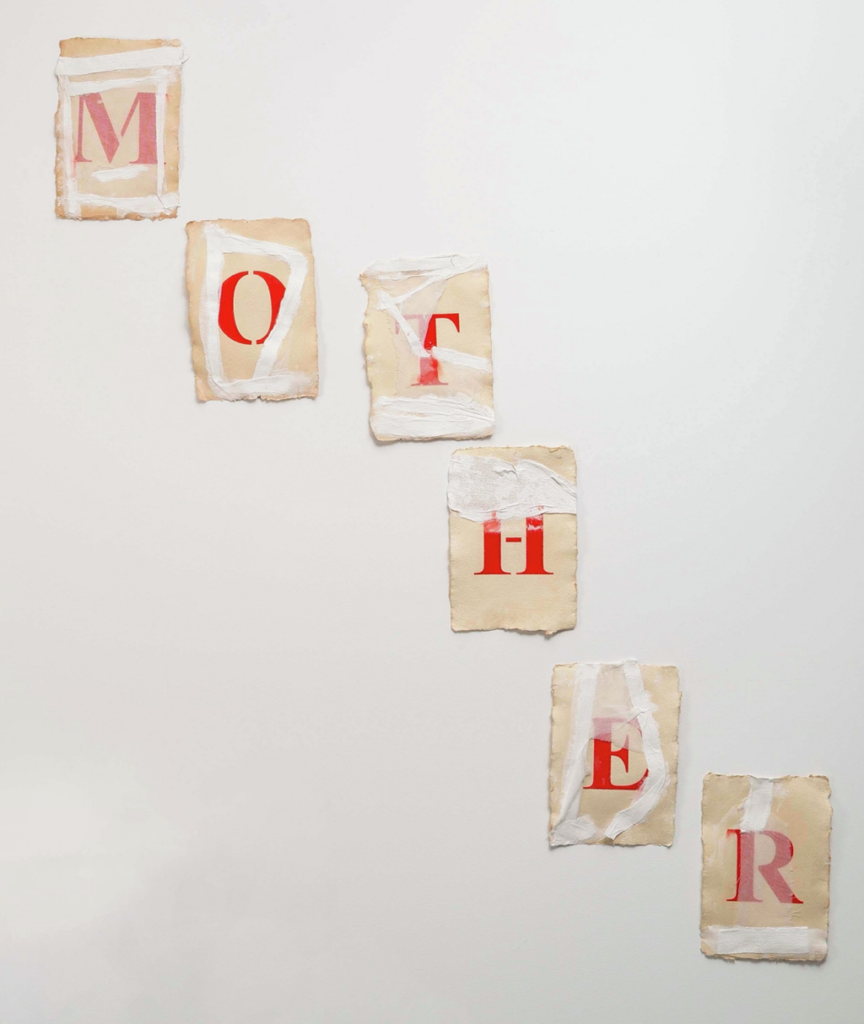
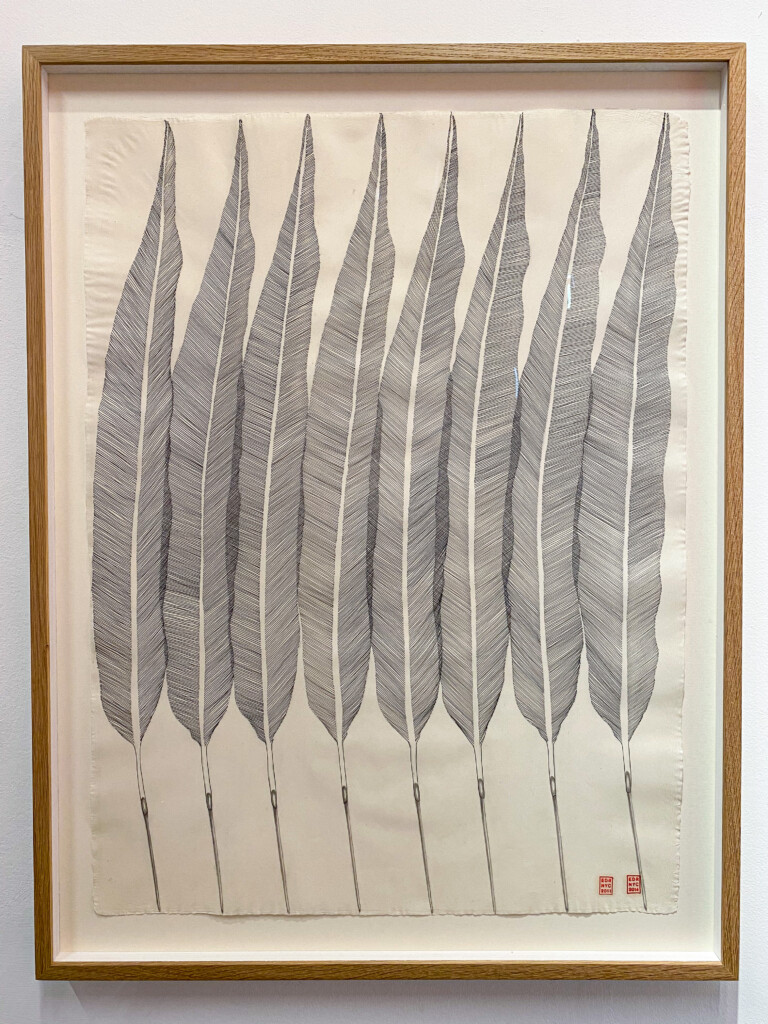
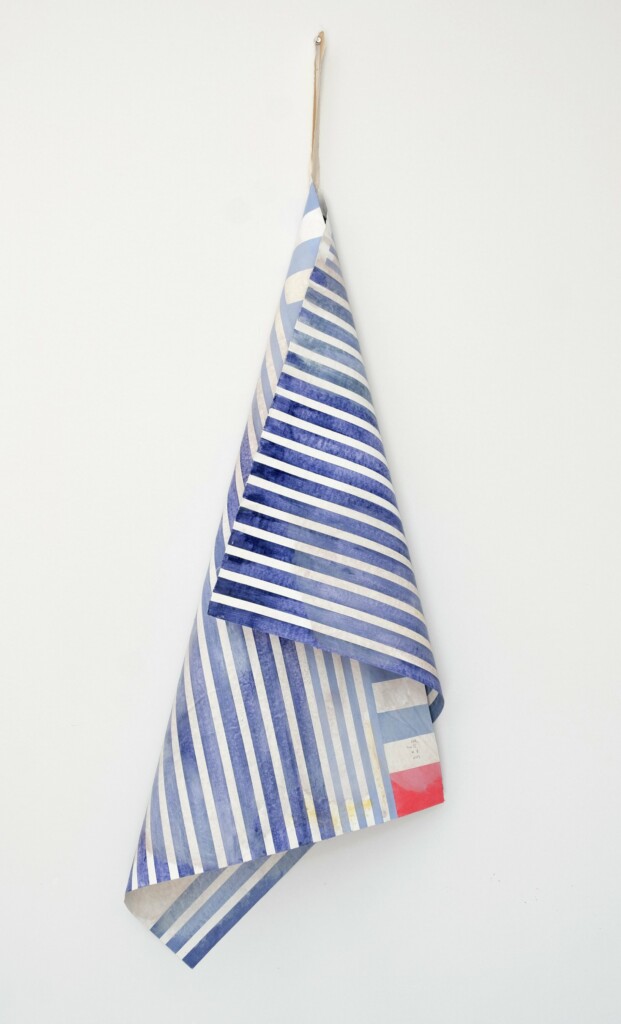
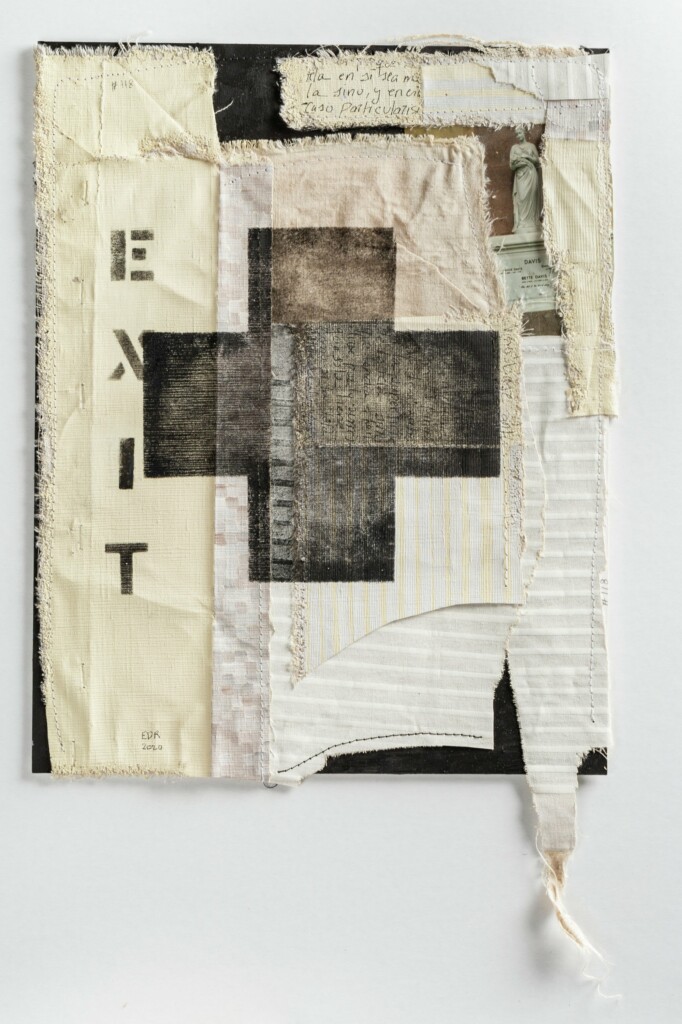
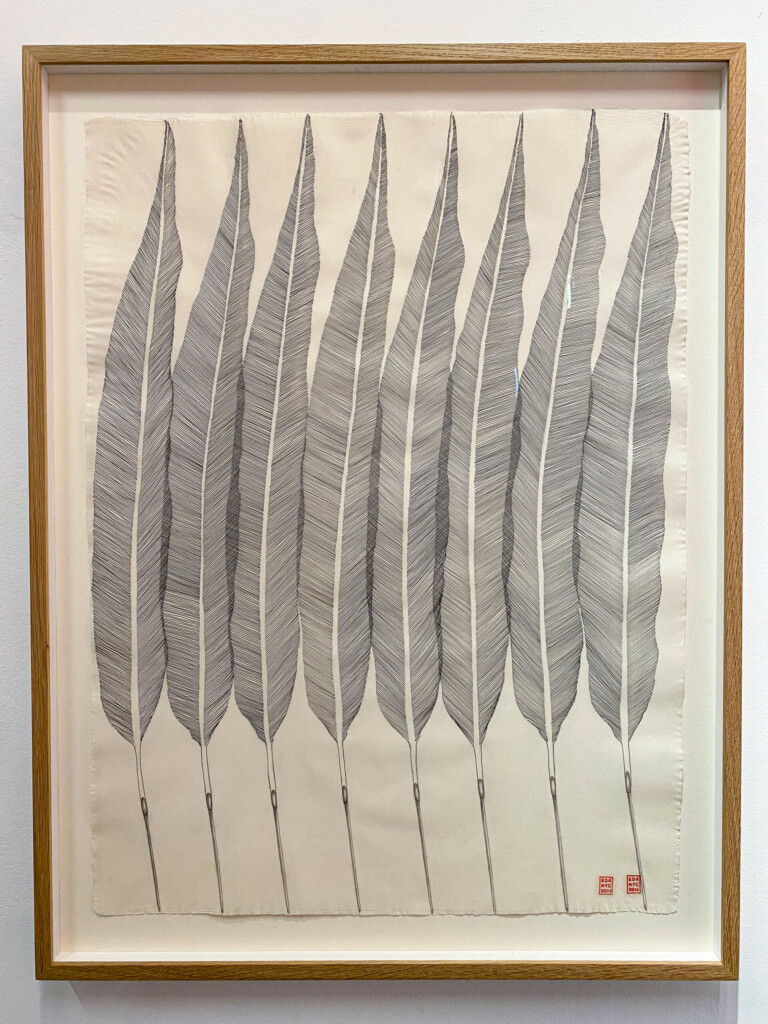
In addition, we will have the presence of the Valencian Elena del Rivero, an established artist who, from New York, continues to produce her artistic projects. Elena Del Rivero‘s work is divided into two lines: a historical one, exploring the collective pain of loss, and a personal one, focused on the construction of existential pillars.
Elena del Rivero. Flying Letter #24(2011-2014) Drawing, 73 x 54.6 x 21.5 cm
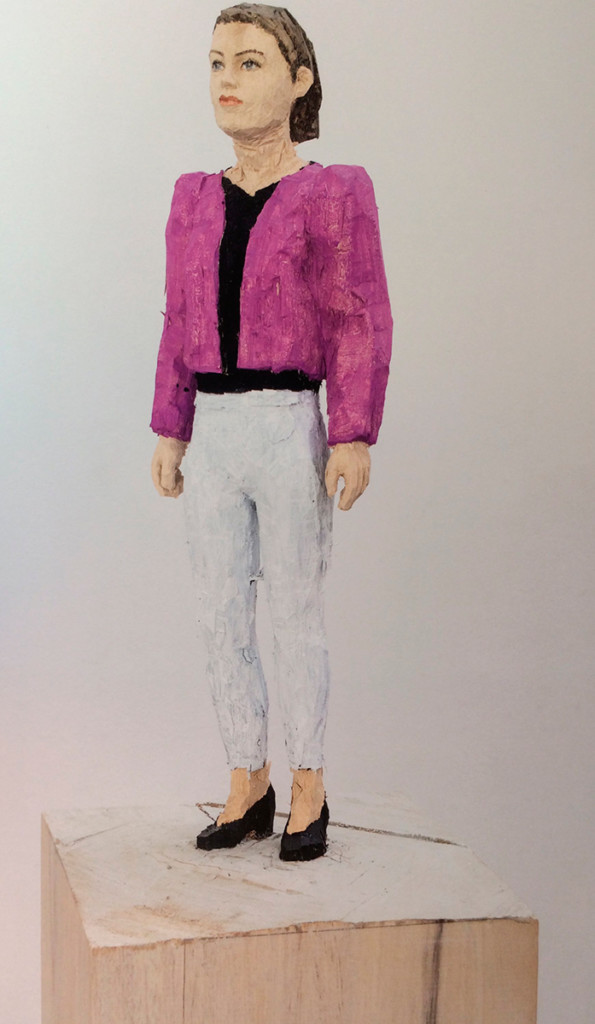
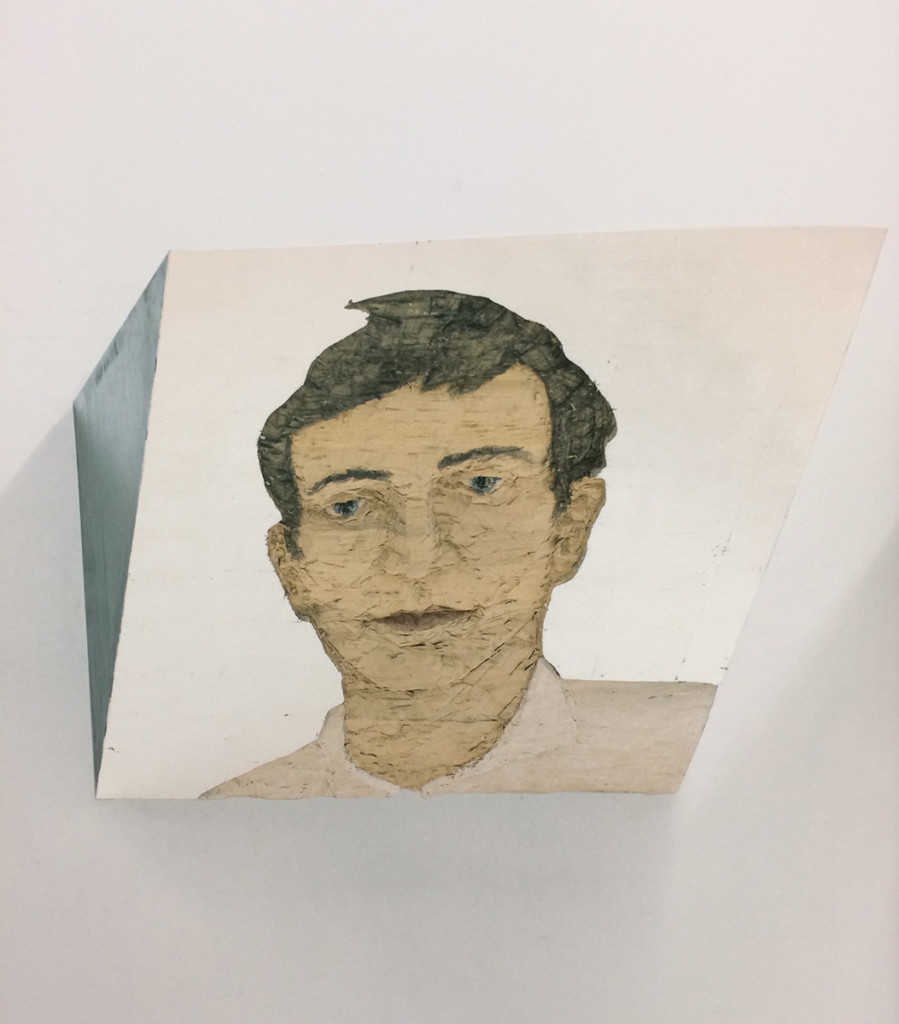
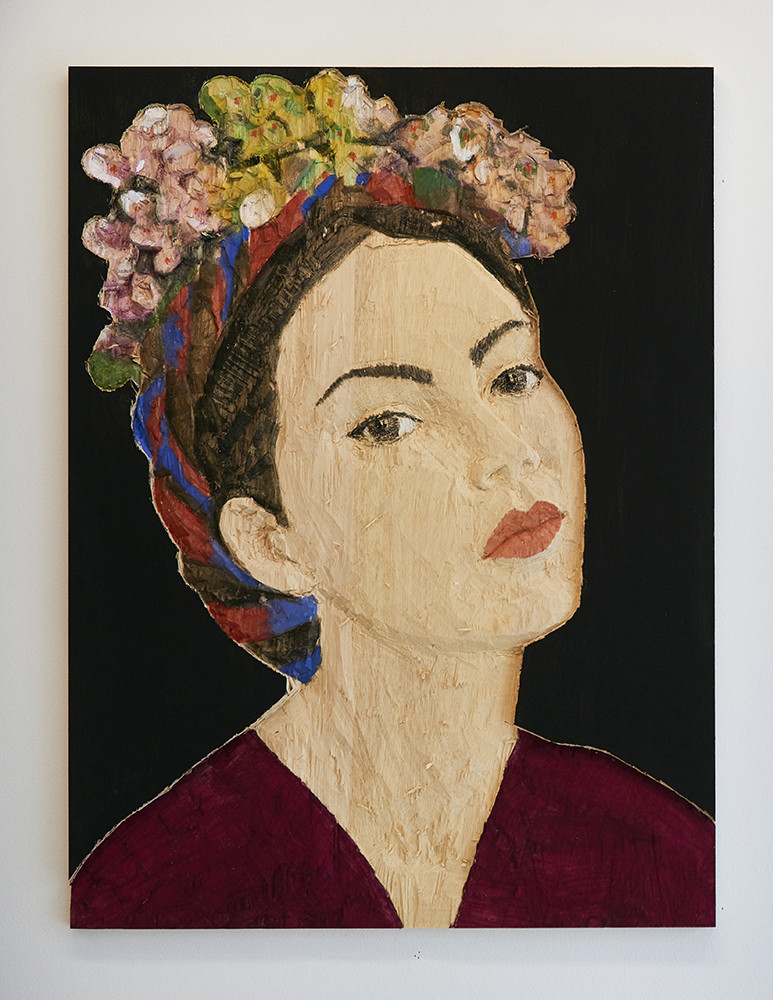
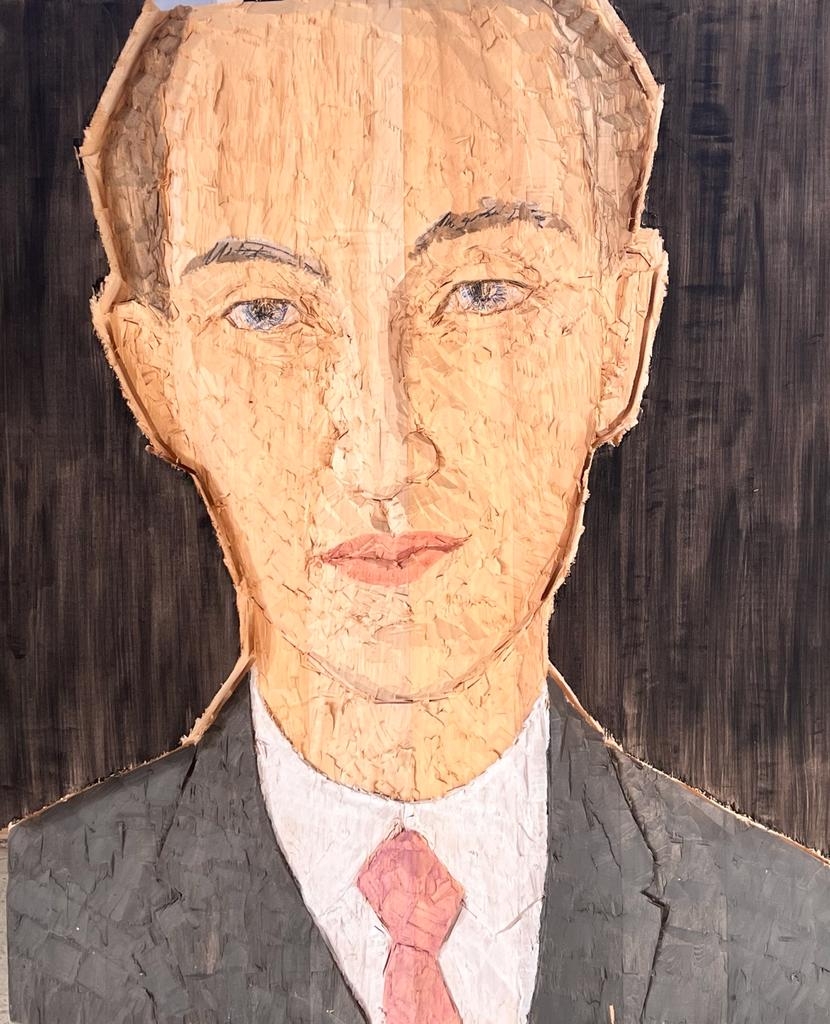
Stephan Balkenhol will also participate in ARCO Madrid with his wooden work “Man with pink tie“. Balkenhol has managed over the years to establish himself as an artist who perseveres to reintroduce figurative sculpture in the current contemporary scene. His polychrome works are characterized by the contrast between the splinters and shavings that Balkenhol leaves when he effusively carves the raw material of his creations, wood, and the polished areas of the same.
Stephen Balkenhol. Man with pink tie (2022) Carved wood, 120 x 95.5 x 11.7 cm
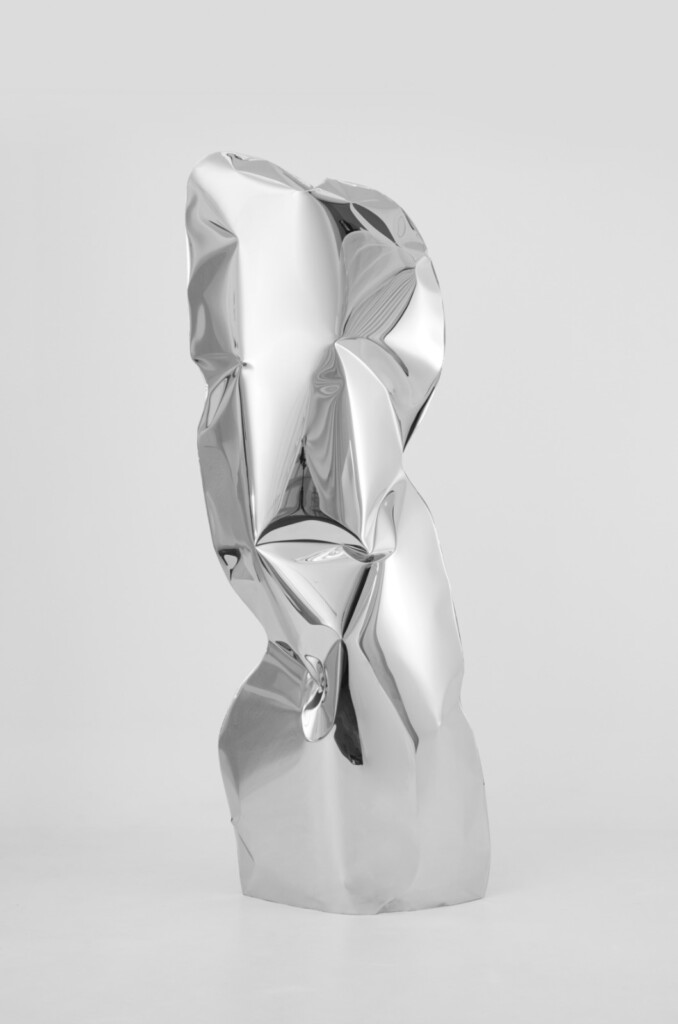
Another artist of monumental carvings that joins ARCO is Madrid-born Gonzalo Guzmán. The artist presents in this edition of ARCO his new sculptural project through which Guzmán has tried to explore the inner self using lucid dreams as tools of inspiration and self-knowledge to create works that challenge our belief system. This is why his sculptures represent the metallic structures that appear in his dreams and explore the possibility of reproducing the sublime of the subconscious in reality.
Gonzalo Guzmán. Menhir_06(2023) Stainless steel, 275 x 100 x 60 cm
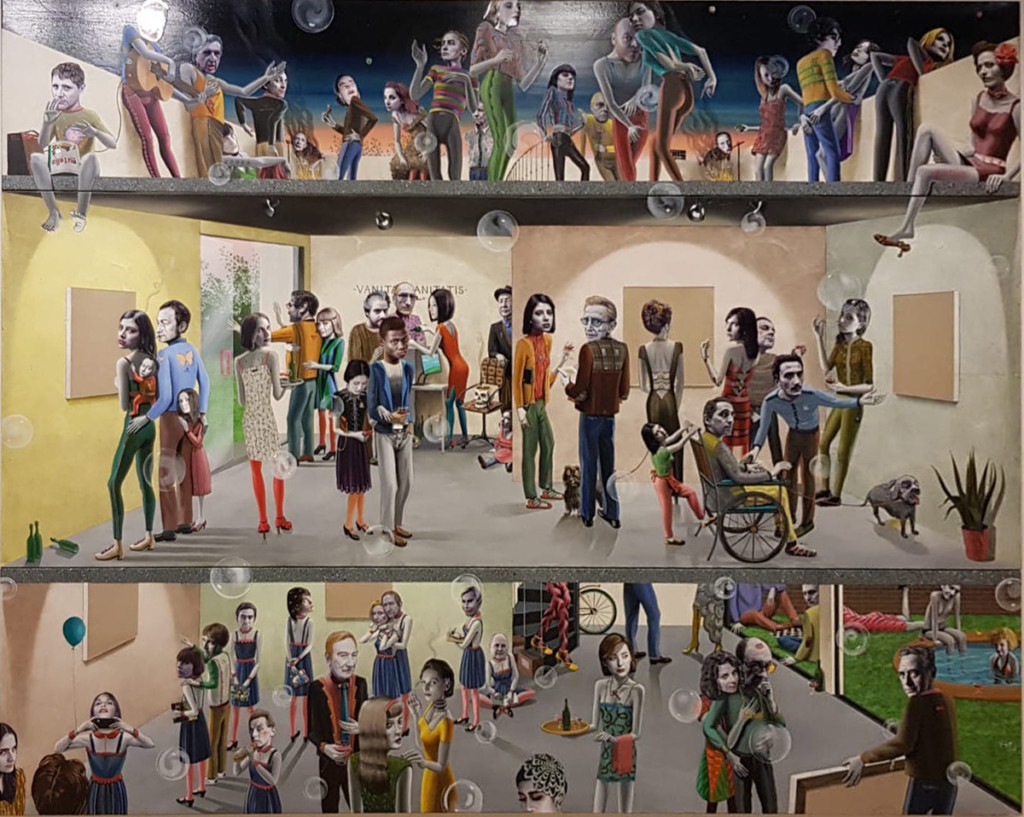
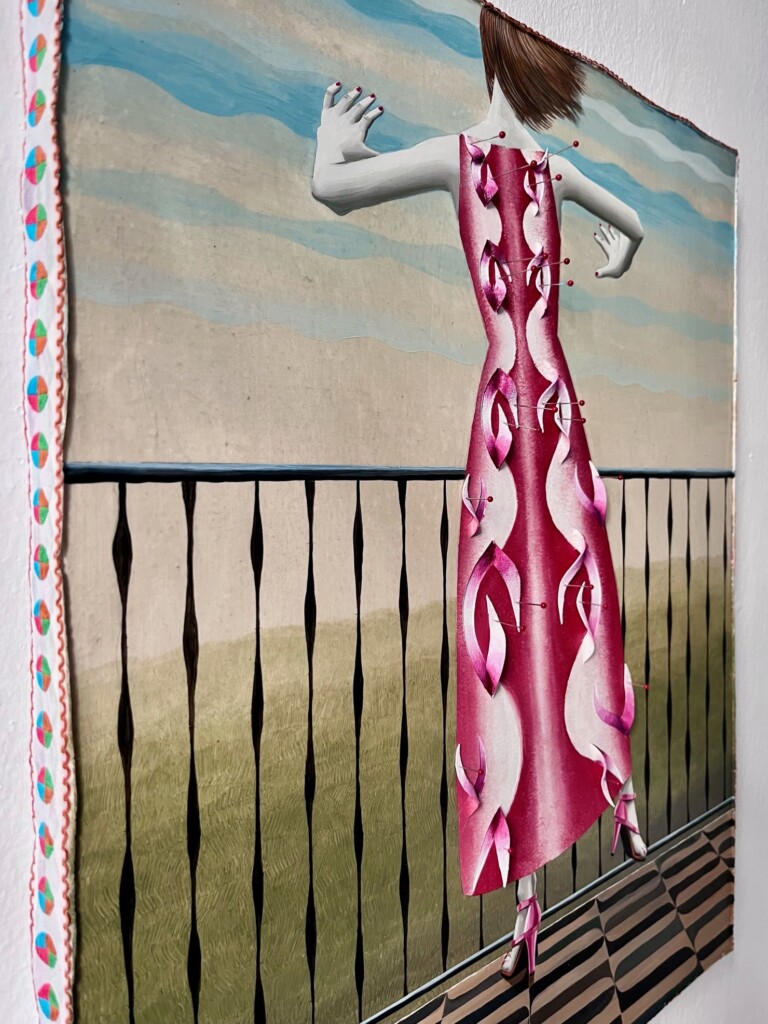
Committed to seduce the eye with the works he creates in order to invite reflection, Gino Rubert represents experiences and emotions through a fusion of artistic disciplines. With a complex technique that mixes the collage of photographs and everyday materials with acrylic and oil, the artist represents the figure of the new woman and the new man, their functions, dysfunctions, conflicts and rhetoric.
Gino Rubert. La Barana (2024) Mixed/canvas, 55 x 46 cm
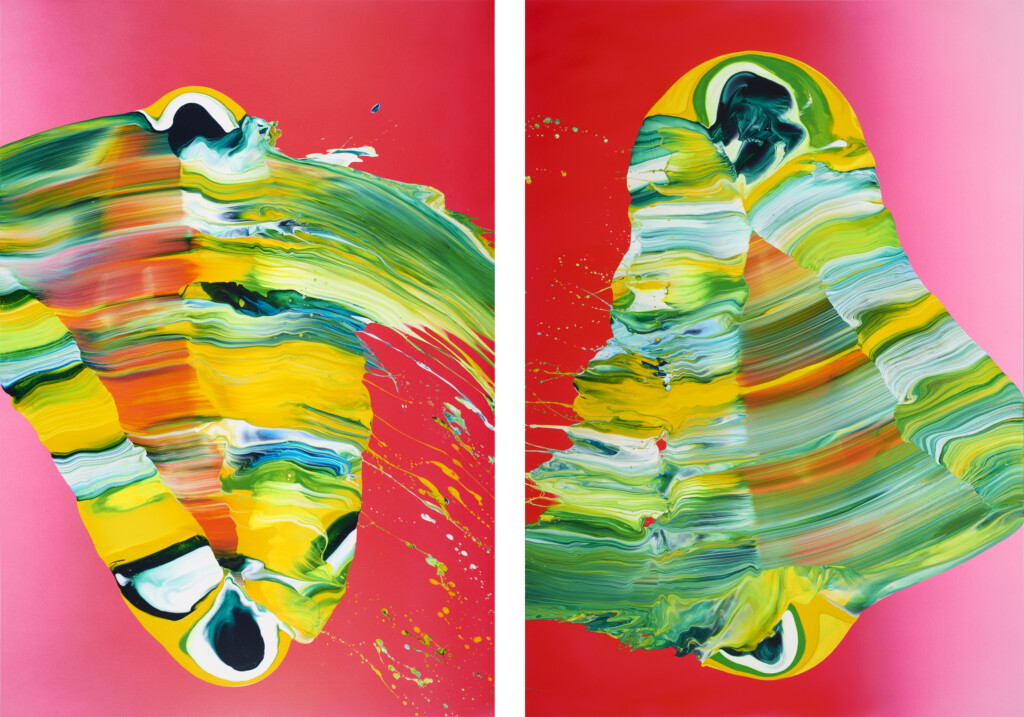
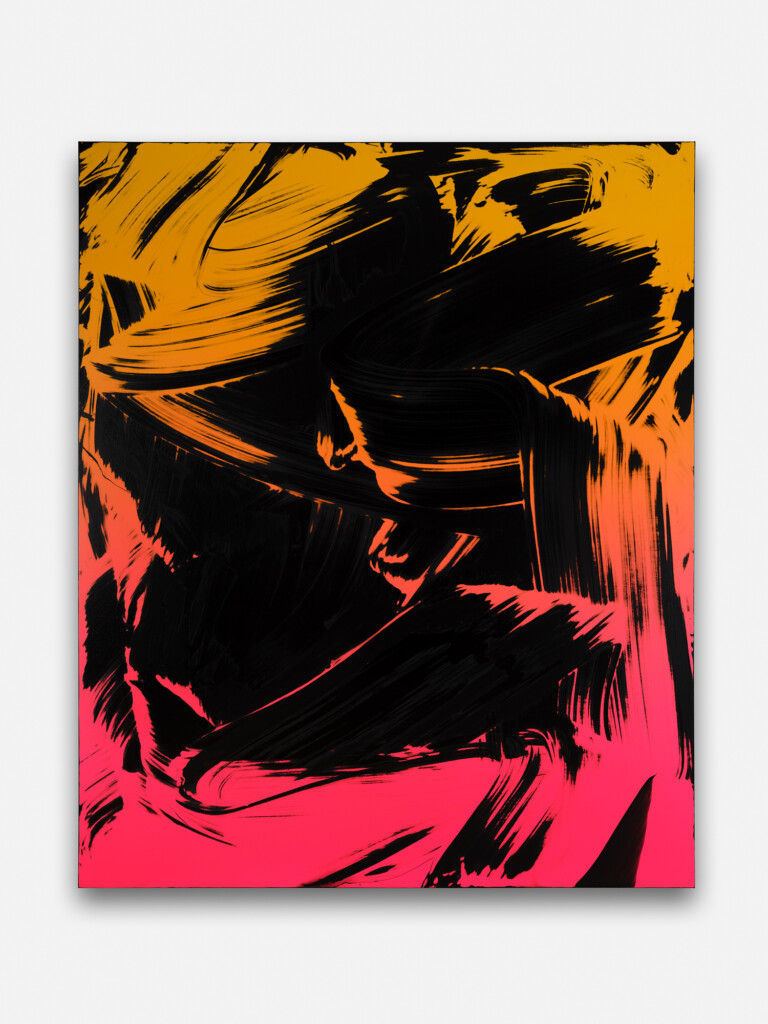
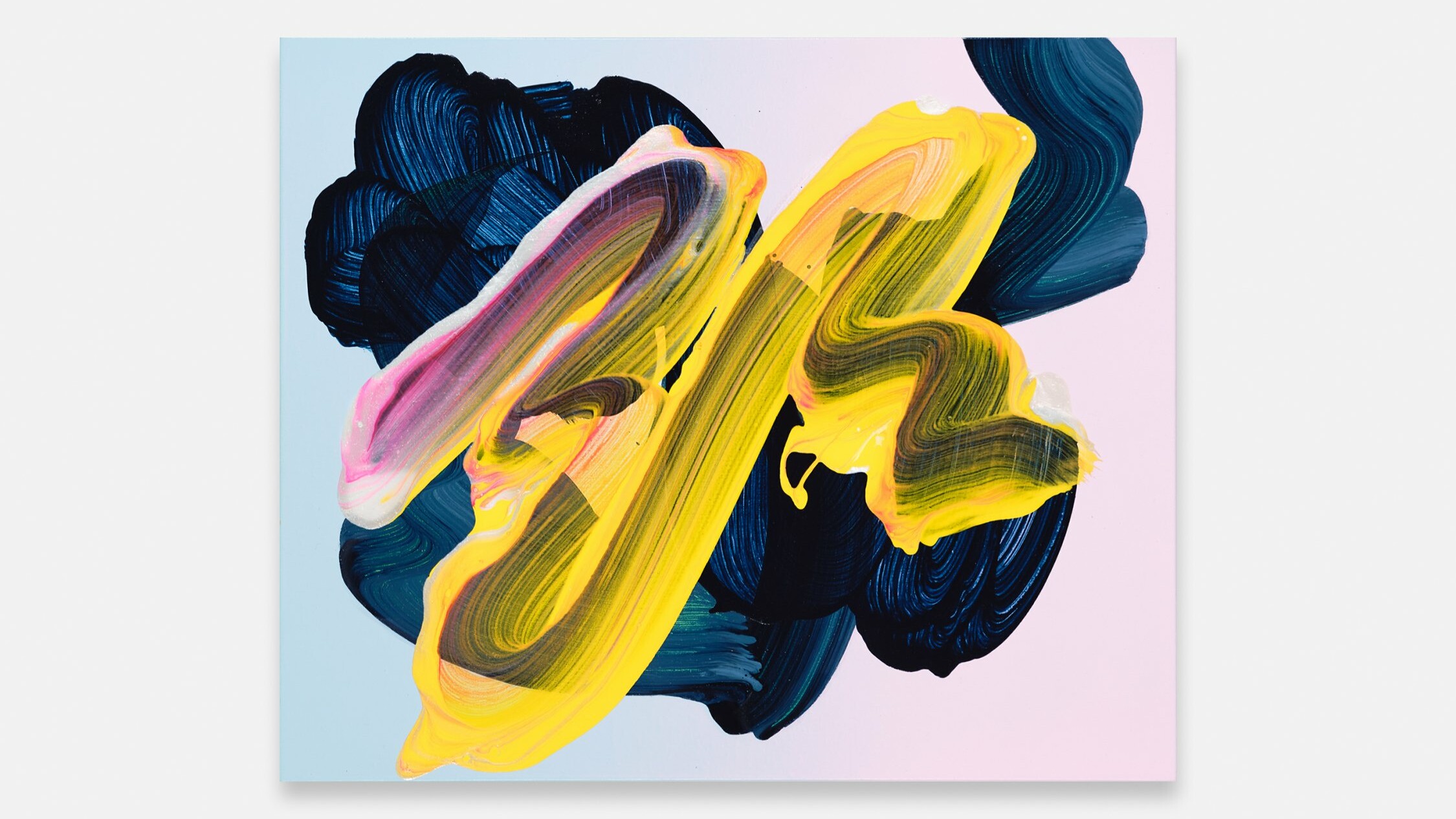
Yago Hortal maintains a close relationship between the artwork itself and the action painting itself. For Hortal, the canvas is part of a performance in which the artist consciously creates spontaneous color forms in an infinite range, expressing passion and vivacity. The paint seems to come out of the canvas, provoking the desire to want to touch it.
Another artist who stands out for his spectacular composition is Xavi Bou. With his well-known series “Ornitographies“, a chronophotography project that reveals the invisible patterns that birds trace in the sky when they fly, Bou creates a balance between art and science and, in turn, builds a series of works loaded with visual poetry that hypnotize viewers.
Xavi Bou. ORNITOPGRAPHY #275 (2018-2019) Digital print on Hahnemühle Fine Art Pearl 285 gr/m2, 140 x 200 cm
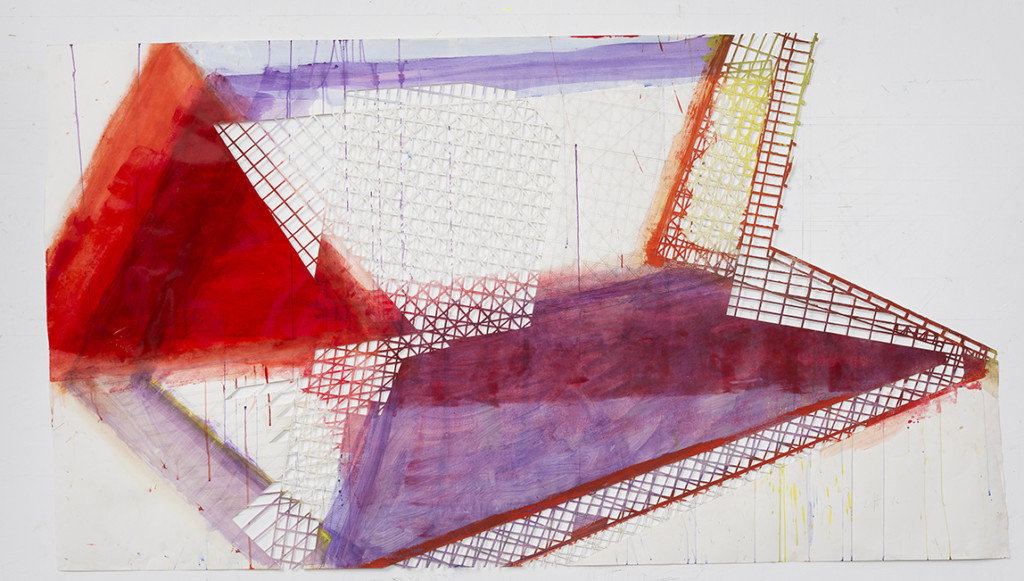
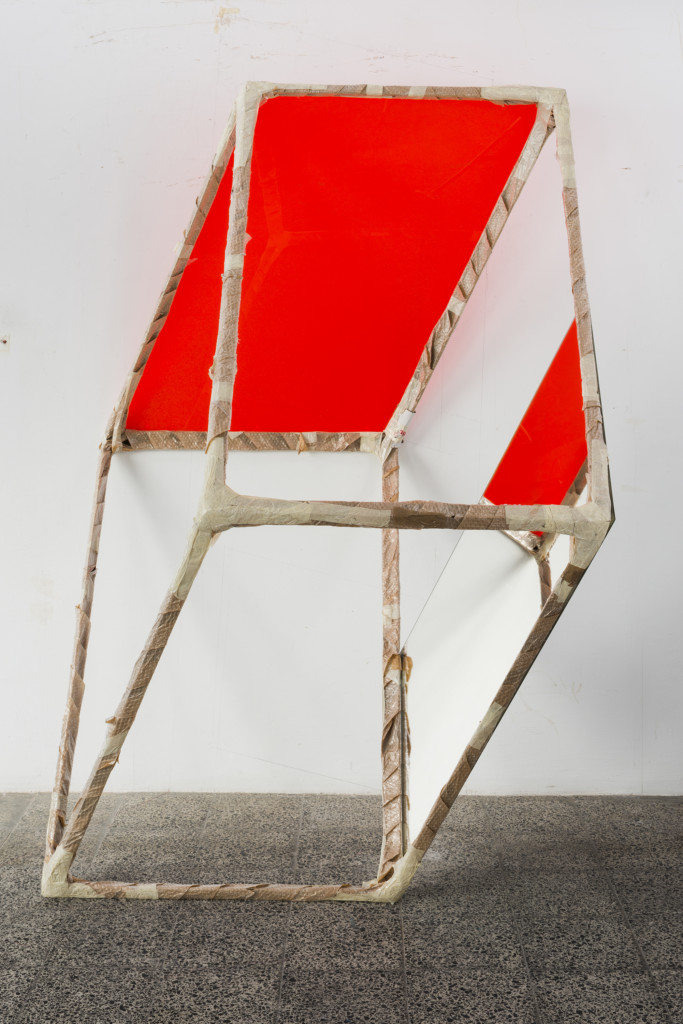
Peter Halley will be in our Artist Project space as an artist, with a solo show that connects his past stages with his most recent work. In this exhibition visitors will be able to analyze in detail the artist’s most emblematic piece: “Exploding Cell” (1983). The animation that represents this computer is directly inspired by the Cold War and its ravages.
This year we will also be able to enjoy the work of multidisciplinary artist Glenda León, both in our general program and as a guest in the special session entitled “La orilla, la marea, la corriente: un Caribe oceánico“, an exhibition space within ARCO with 23 guest artists that will be curated by Sara Hermann, chief curator of the Centro Cultural Eduardo León Jimenes (Dominican Republic), and Carla Acevedo-Yates, from the Museum of Contemporary Art Chicago.
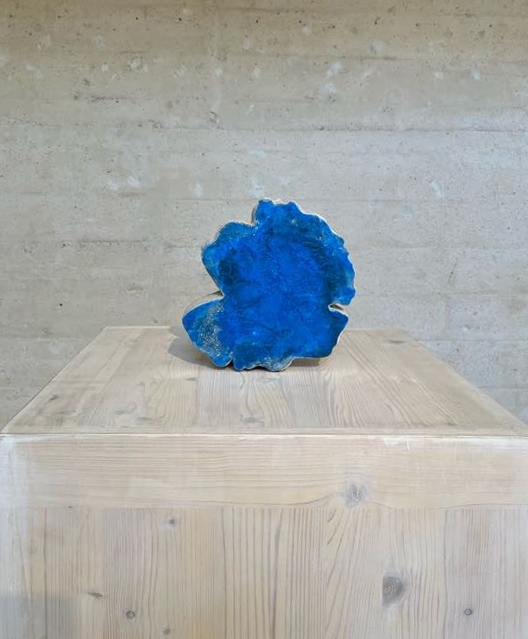
Glenda León. Sueño concreto de Miró (2022) Concrete and acrylic, 20 x 20 x 7 cm
We look forward to seeing you in the corridors of ARCO enjoying the art that will be condensed these days in Madrid and that, of course, we can meet at stand 9B23 of the gallery. If you want to be surprised with a wide and rich gallery proposal in disciplines, you will always have a corner where you can escape from the overwhelming atmosphere that a fair as imposing as ARCO can cause. SENDA will always be a space, the path, where you can find yourself again.