

Jaume Plensa’s new doors at the Gran Teatre del Liceu are inaugurated

“The letter seems to me a beautiful metaphor for society: a single letter is nothing; but together with others it can form words, concepts; this is the power of the community. – Jaume Plensa

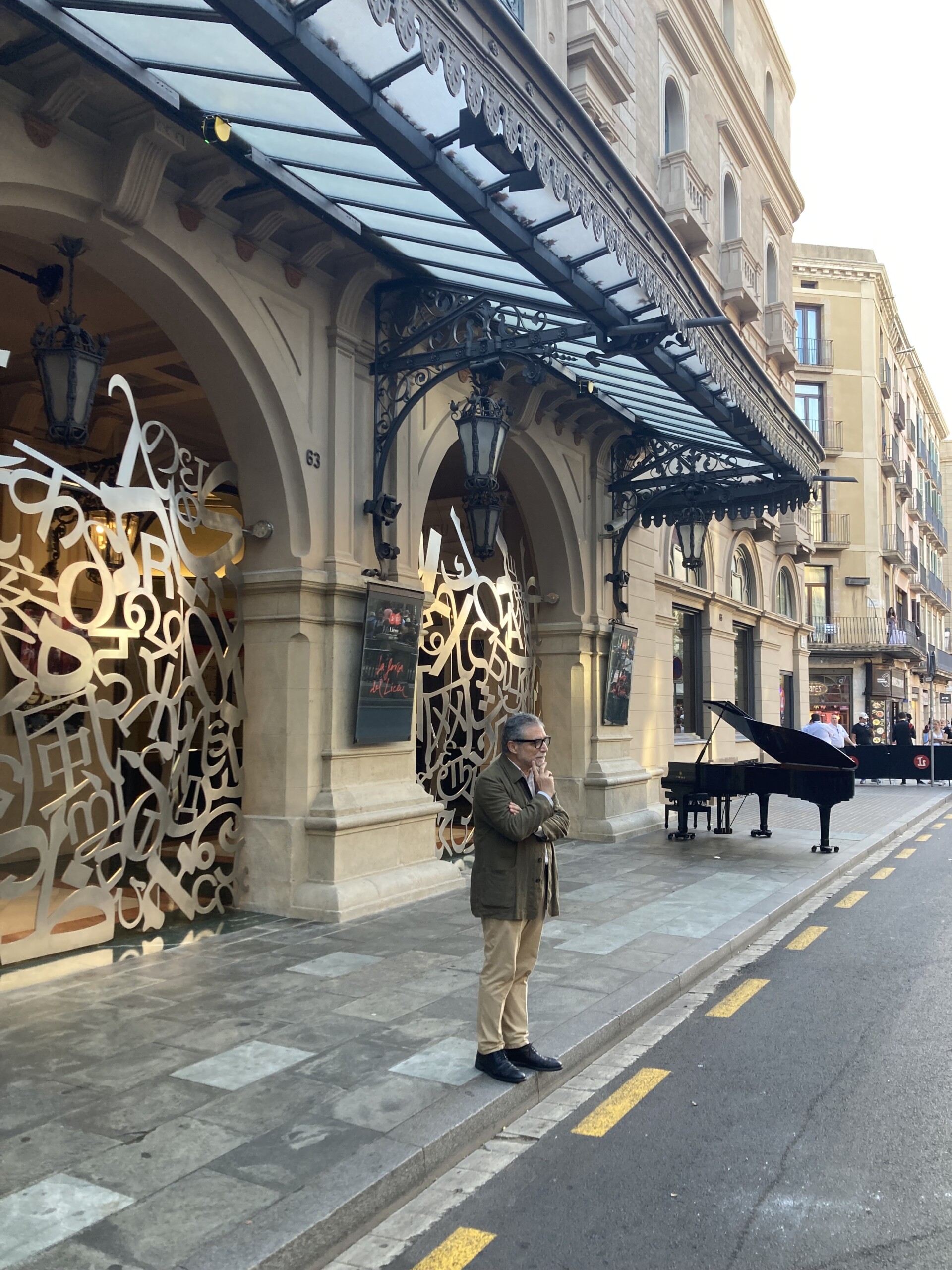
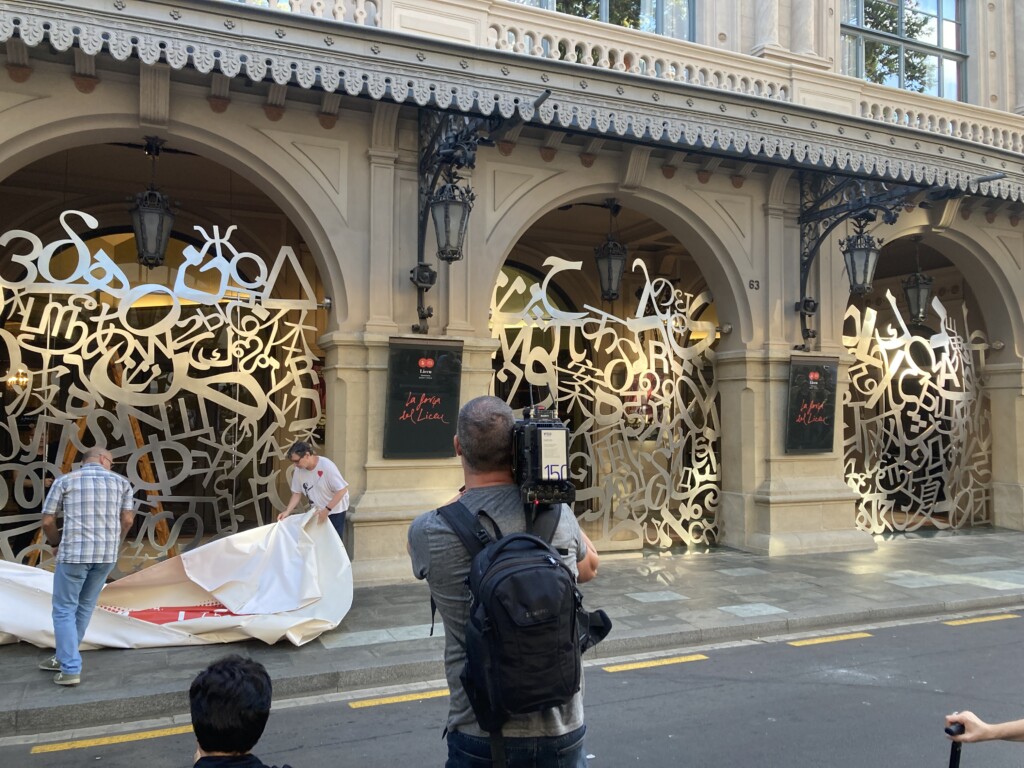
The Gran Teatre del Liceu inaugurated its 2022-2023 season on Monday with the new doors, or “Constel·lacions“, the work of sculptor Jaume Plensa, enhancing the celebration of the 175th anniversary of the historic Barcelona institution.

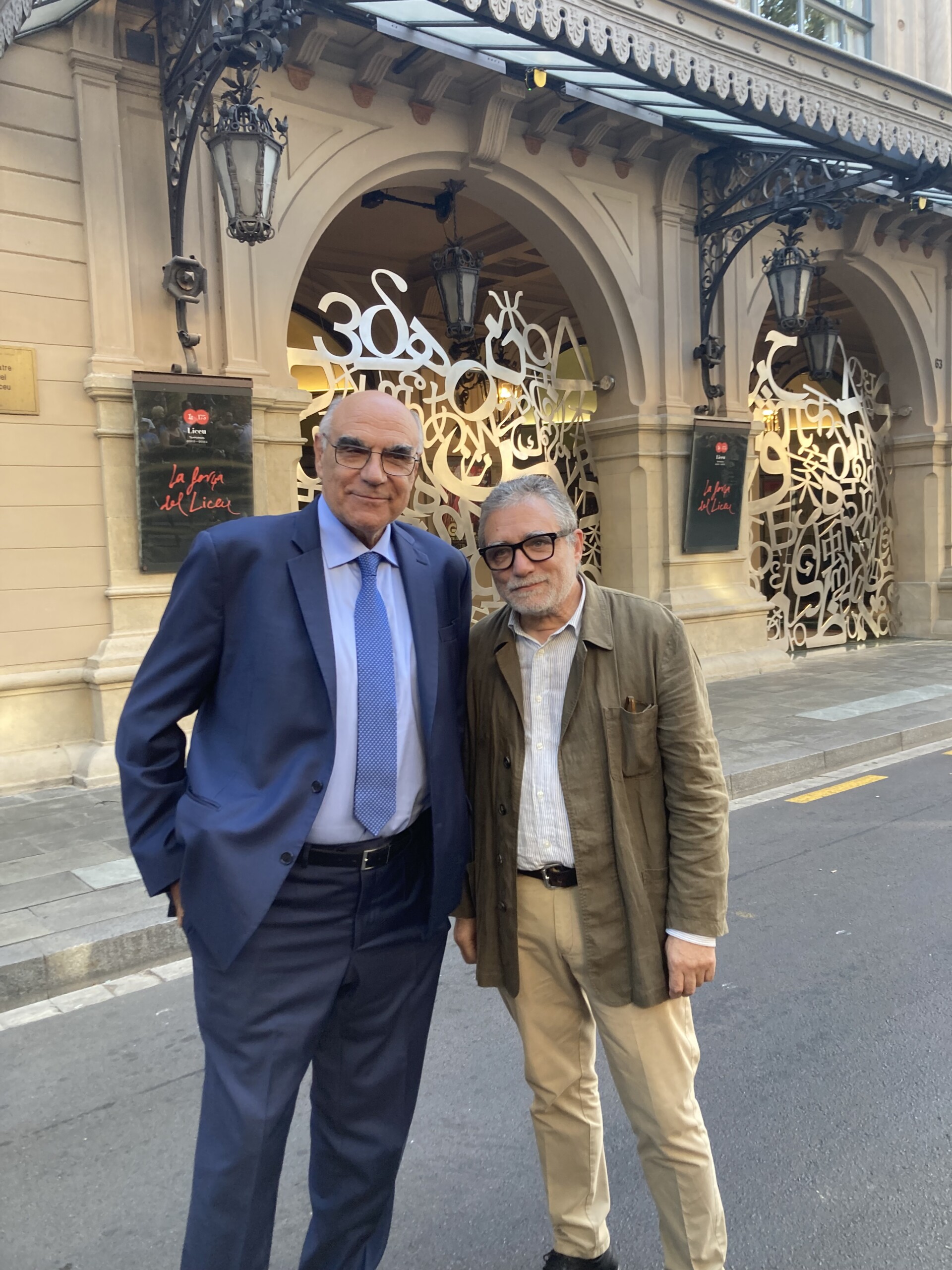
Photograph of two men posing in front of the Liceo gates

The artist Jaume Plensa together with Salvador Alemany, president of the Fundació del Gran Teatre del Liceu

The doors (stainless steel, 4 x 4 m) are inspired by two classics of Catalan culture: the architect Antoni Gaudí, and the painter Joan Miró, with his nearby Pla de la Boqueria mosaic, as well as the close relationship with the name of one of his most original series “Constel·lacions (1939)”.

Photograph of a man in front of the doors of the Liceo and next to a grand piano

This dialogue between the past and the future I think gives us the key to the present: the contemporary gesture in the heart of society, embracing music with the word and the voice with writing“, said the artist yesterday at the opening ceremony in Las Ramblas.

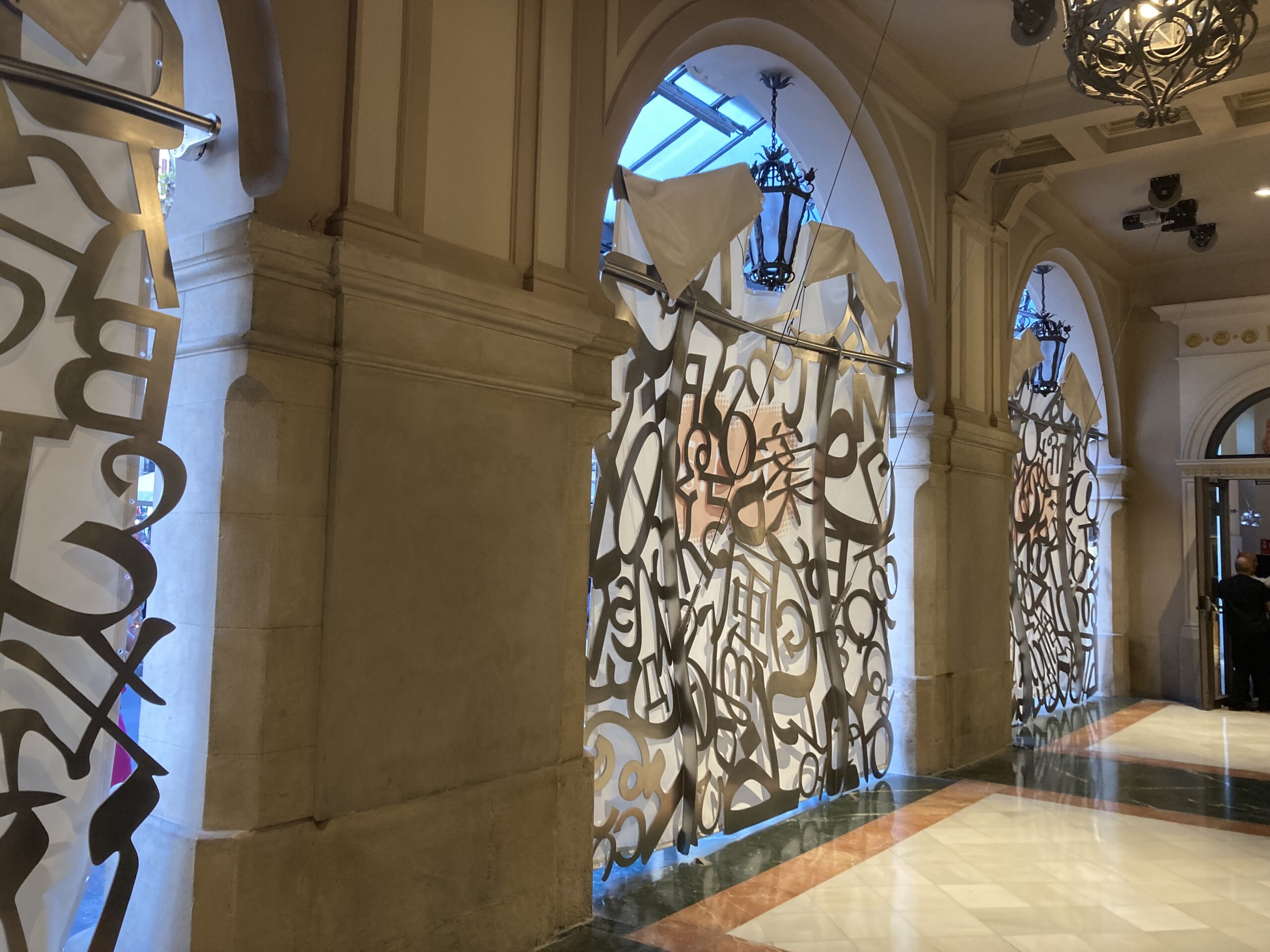
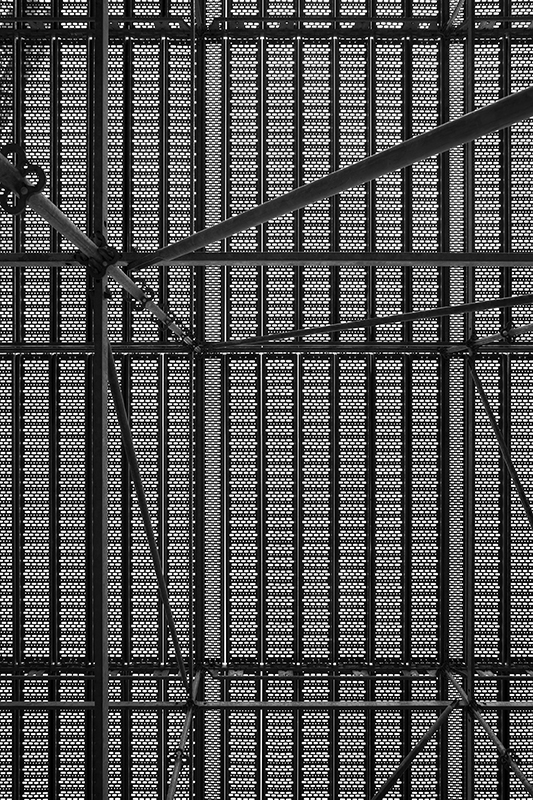
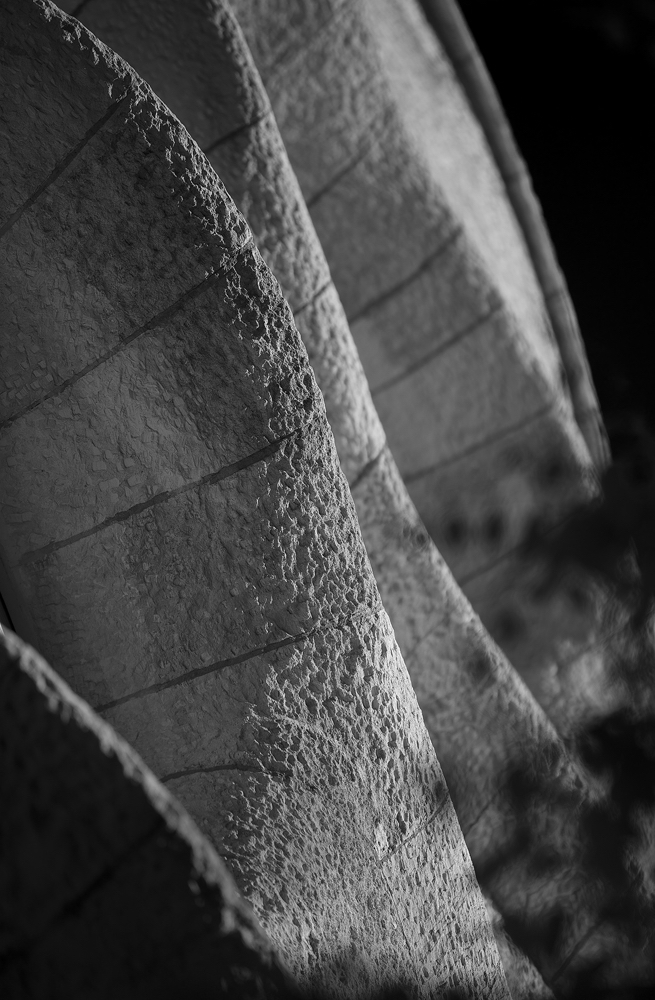
Plensa intends to vindicate the diversity of the promenade with letters of nine alphabets engraved on the railings – intermingling Arabic, Latin or Chinese – that will reflect their moving shadows on the floor of the entrance, when the doors reach the light of the lamps of the portal.

Interior image of the doors of the Liceo

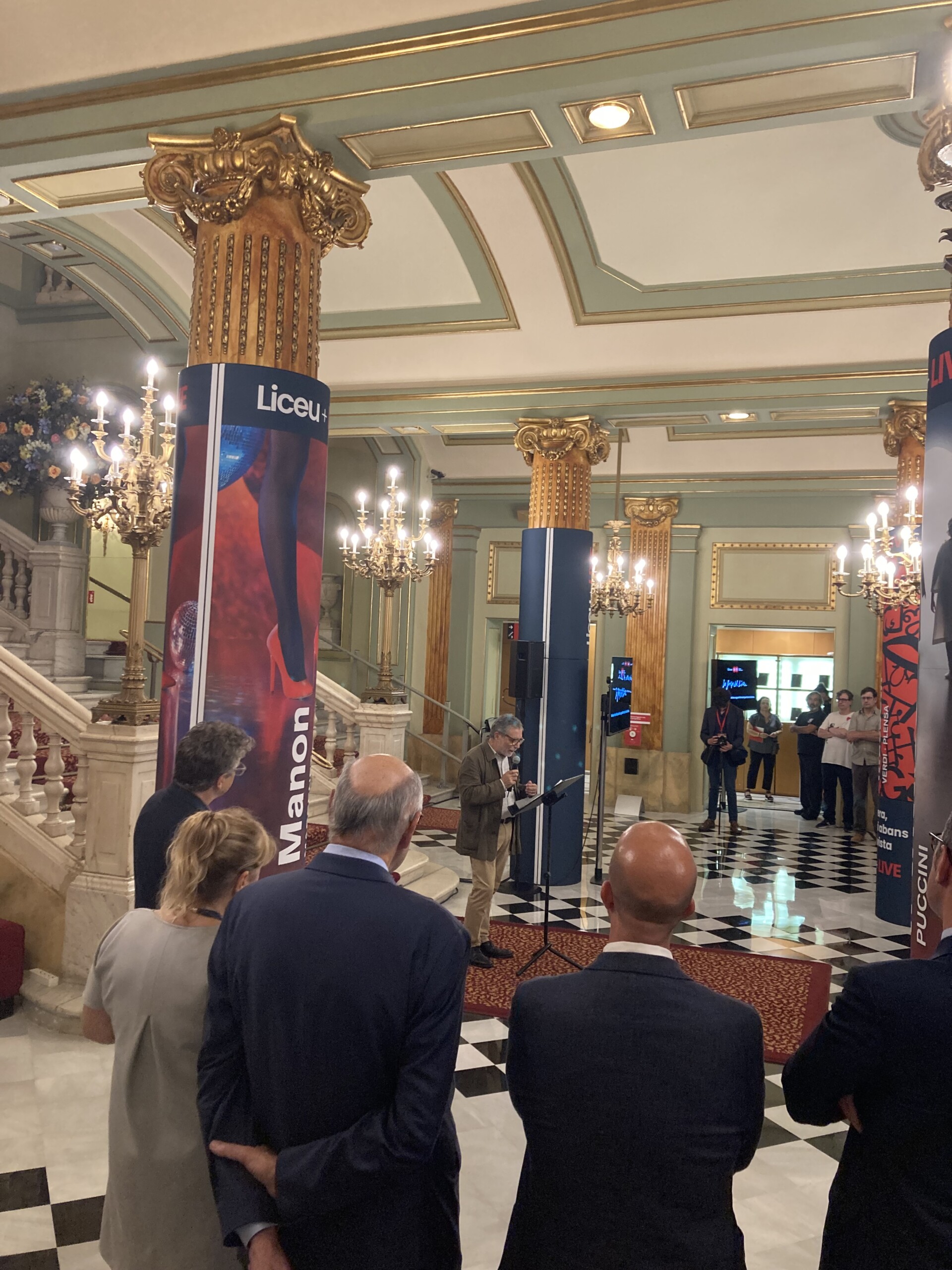
During the presentation of the doors, the Councilor for Culture, Natàlia Garriga, also expressed the importance of this work for the city: “I want to thank all the members of the Board of Trustees for accepting it so quickly, for seeing with such lucidity that this proposal would be key for the Liceu, but also for the Ramblas, Barcelona and Catalonia“. And she added that “having art within everyone’s reach means that the public can get to know and appreciate it. I am sure that these doors will awaken the love of art in many pedestrians, and in the spectators who pass through them to enjoy the opera in this important facility“.

For his part, the Deputy Mayor for Culture, Education, Science and Community of the Barcelona City Council, Jordi Martí, has emphasized above all the Liceu‘s commitment to “link with contemporary artists of the city and to do so in a total and decisive way, not just with a small gesture. Today we are opening three doors, but we will also be able to see Macbeth with stage direction by Jaume Plensa“. Martí insisted that the doors “improve the artistic environment of Las Ramblas” and thanked the artist for his “humble gesture and restraint because Constellations are integrated into the landscape and do not become an isolated work of art“.

The opening of the doors was also attended by Joan Francesc Marco, director general of the Instituto Nacional de las Artes Escénicas y la Música (INAEM) of the Ministry of Culture, who wanted to highlight the importance of this day: “As a lycee and as director general of INAEM I feel a great happiness because this work of the renowned Jaume Plensa adds even more value to the theater and the city of Barcelona“.

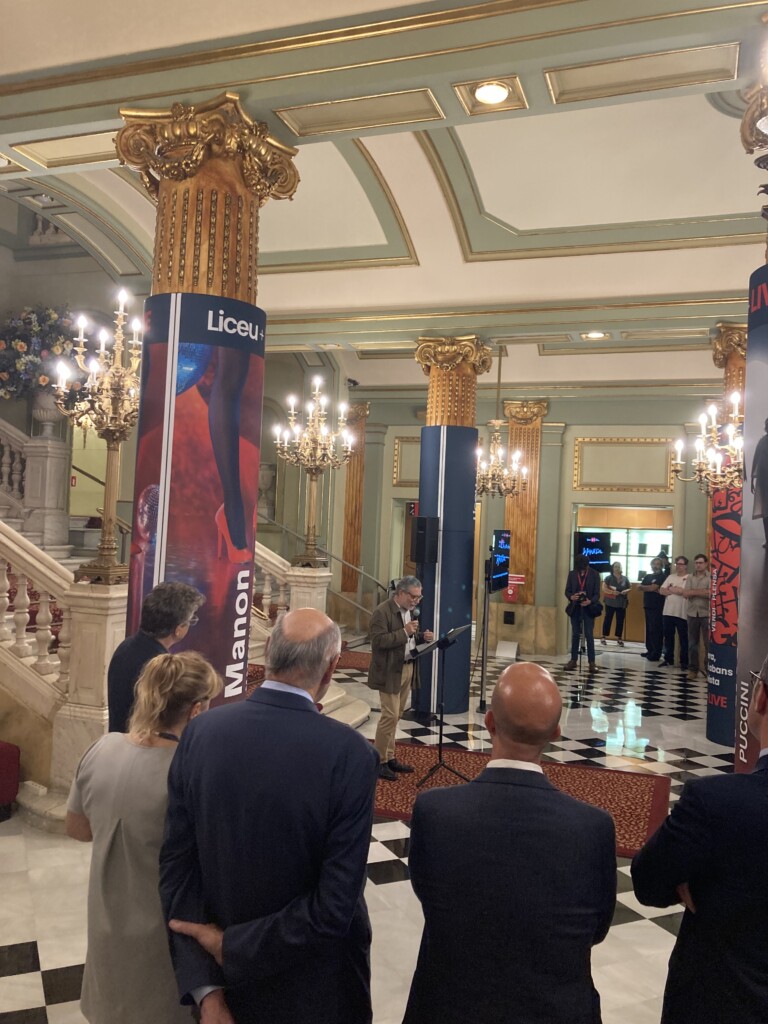
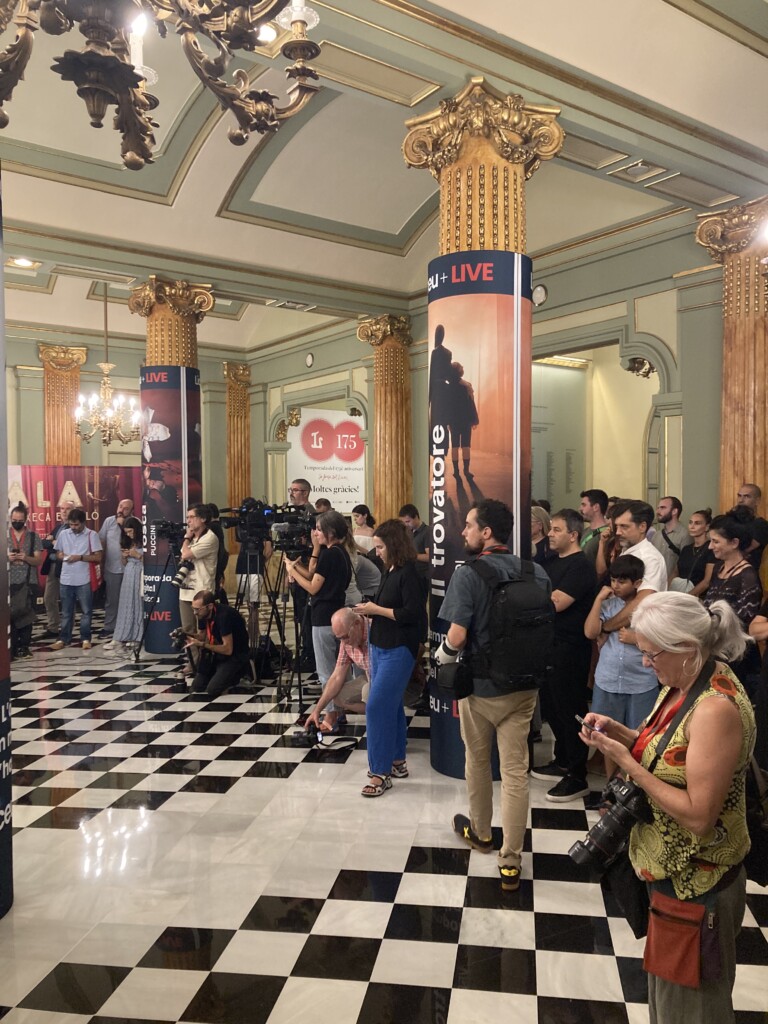
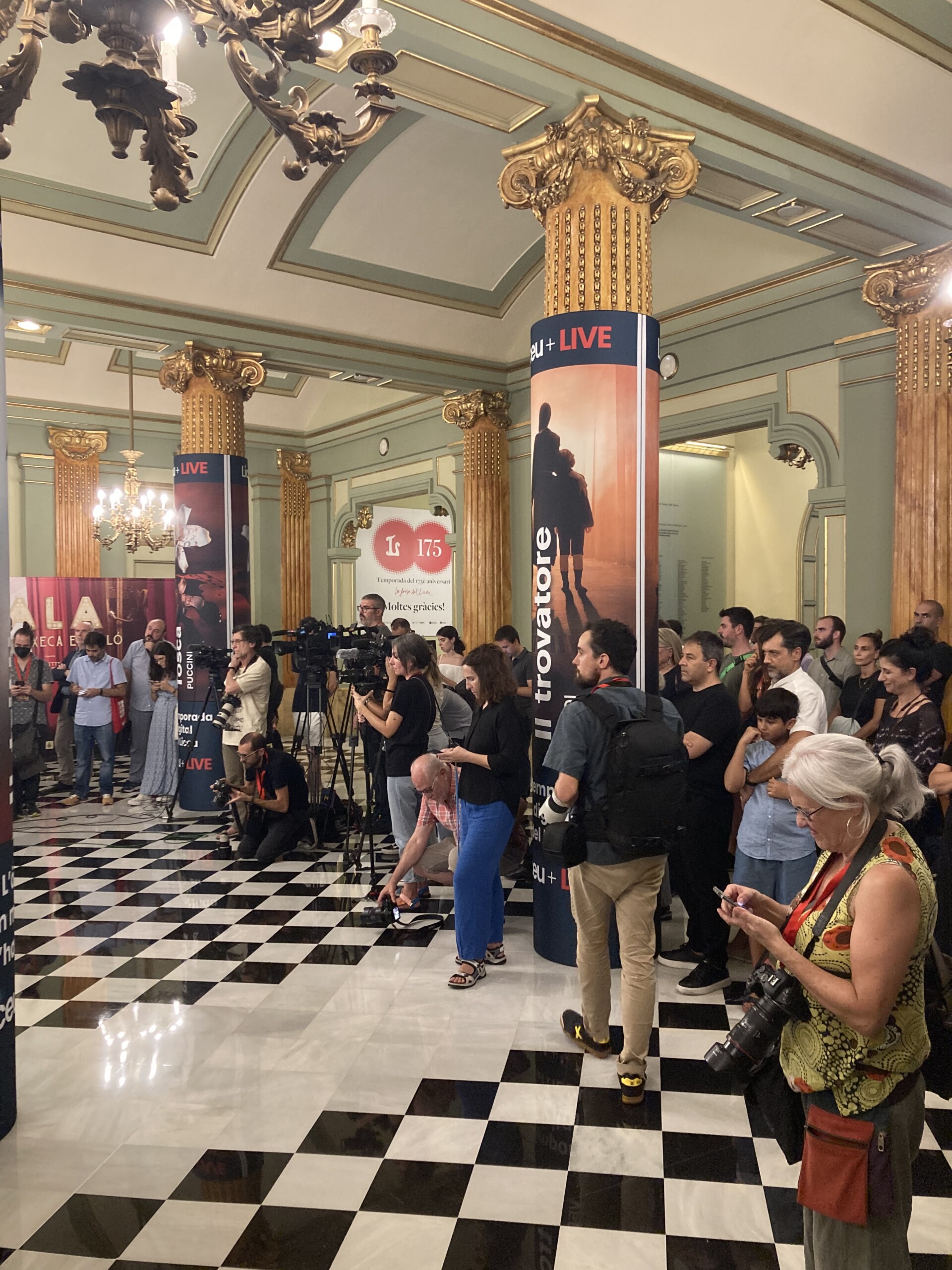
After the institutional speeches, the event continued with the first official opening of the doors while the Choir of the Gran Teatre del Liceu performed in Las Ramblas the Wagnerian piece “Freudig begrüß en wir die edle Halle” (Tannhäuser, act II), conducted by the choir director, Pablo Assante, and accompanied on the piano by David-Huy Nguyen-Phung. A piece from the second act of Tannhäuser that celebrates the entrance of the guests and that wants to be a symbolic and metaphorical gesture of doors that invite the public to enter and enjoy the universal language that is music.

Image of the interior of the Liceo

The alphabet represents a harmony that celebrates the great diversity of the world“, said Plensa. The president of the Liceu Foundation, Salvador Alemany, said that the sculptor’s work is “a gift that gives prestige to the Rambla and the Liceu“.

It is not the first time that the sculptor has a work near a cultural center of the city. Carmela, a four-meter face, half girl and half teenager, presides over the facade of the Palau de la Música. The artist, winner of the 2012 National Plastic Arts Award, has projected his well-known faces in other capitals such as Madrid (“Julia“) or New York (“El alma del agua“).

Plensa will maintain his relationship with the Liceu in the new season as the person in charge of the scenography of Verdi’s Macbeth, which will be premiered next February.

Image of the facade of the Liceo

Technical and operating elements

As for the technical details, these doors weigh about 500 kilograms each and migrate on a single shaft that is embedded in the start of the arch just above the capital of the pilasters. The convexity of the doors does not exceed the outer plane of the pilasters and makes the minimum passage under the open sheepfold about 3 m high. One of the characteristics of the structure is that the doors do not open laterally, but have a bottom-up opening movement. In this way, in addition to the physical sculpture, a game of dialogues with spaces, reflections and optical visions of light and shadow is also sought. Thus, all those who step on the floor of the Rambles will be able to walk on this carpet of shadows of the installation itself. The work is integrated without affecting any other past element previously incorporated into the facade of Oriol Mestres of 1874 and recovered in 2019.

Excerpts from Liceu, El País and La Vanguardia (“Plensa enriquece la fachada del Gran Teatre” and “Las puertas del Liceu no se abren ni se cierran, levitan”)

Erwin Bechtold: In Memoriam
(1925 – 2022)

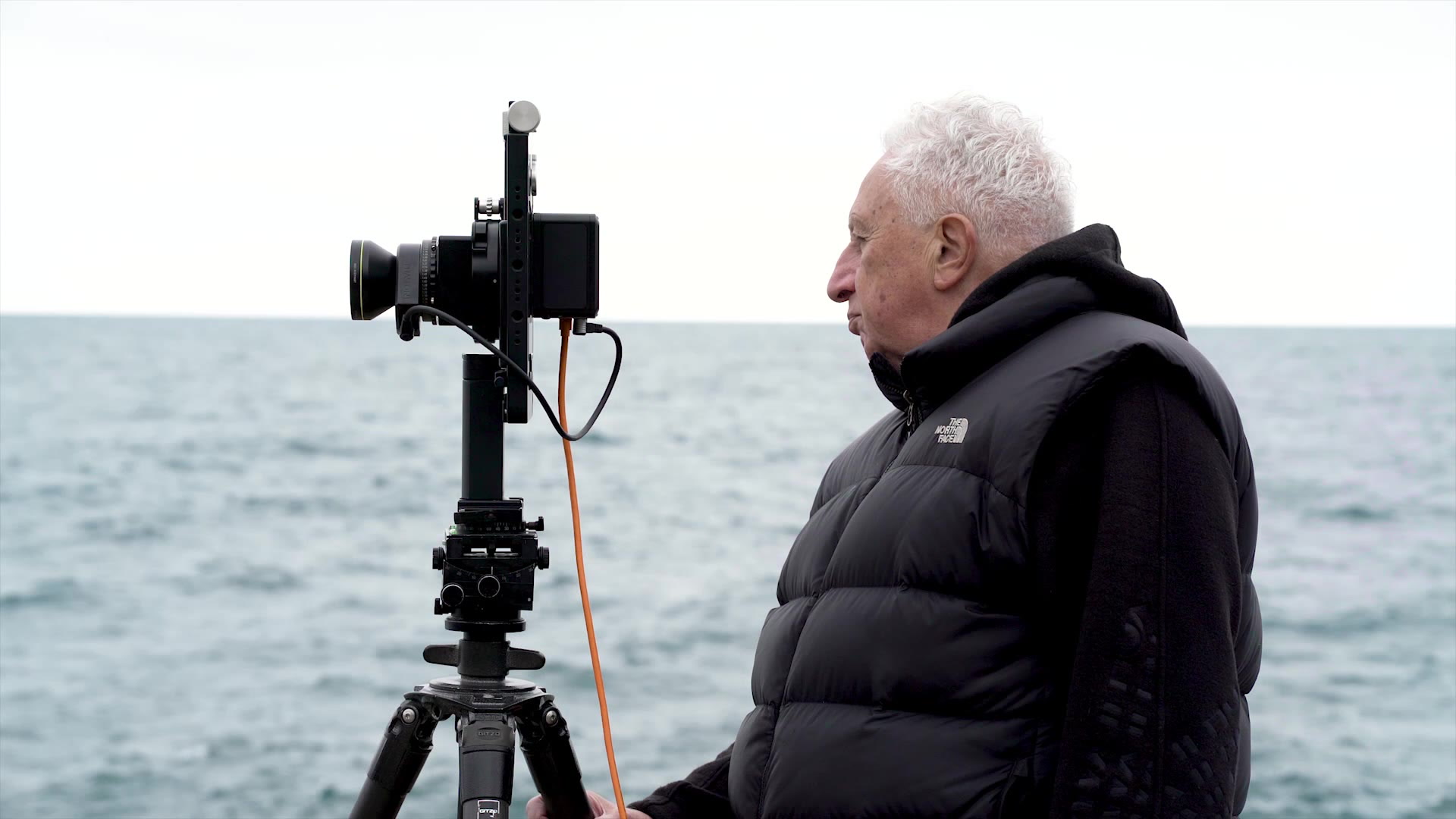
We are saddened to announce the death of the Ibizan artist of German origin Erwin Bechtold, at the age of 97, whom we visited this summer in Ibiza.

An artist much admired and loved by Galeria SENDA. A strong friendship of more than 40 years with our co-director Chus Roig that will not be forgotten.

Erwin Bechtold with Cristina, his wife, and Nilo Casares talking with Carlos Durán, director and founder of Galería SENDA.

Much to our regret, we bid farewell to a great reference in avant-garde painting in Ibiza. Erwin discovered the island in 1954 when, after obtaining a master typesetter and printer diploma in his city, he began to hold his first exhibitions after his stays in Paris and Barcelona, where he had met the members of the group Dau al Set and those from Madrid El Paso.

He settled in Ibiza in 1958, where he found his place in the world and decided to build a studio forever, from where he created all the works that have filled collections and museums around the world, including of course the Museu d’Art Contemporani d’Eivissa who decided to dedicate one of his last exhibitions to him in 2017 and 2018.

Warehouse of works by Erwin Bechtold, on the right: Elena Ruiz, director of the Museum of Contemporary Art of Ibiza.

Our visit to his studio this summer was a long-awaited appointment that could be made with the company of Elena Ruiz, who manipulated the stars so that this conjunction was possible. Thanks, Elena!
It was a very interesting meeting in which we were able to see his work and talk about a new project in Barcelona that we recently revealed on social media:

It was our idea to exhibit his work at Senda – in mid-November – with a selection of works that will surely surprise more than one. Especially excited to be able to see “MONISERIE” installed, from 1979, the polyptych in which he pays homage to Jose Luís Sert and Joan Miró and which is, without a doubt, a seminal work in his career.

Erwin Bechtold talking to Carlos Durán inside his studio in Ibiza.

With his loss, the international cultural scene loses one of its referents. Bechtold maintained a long artistic life until recently and can be considered one of the referents of the plastic arts in Europe and, particularly , in the area of ​​the Balearic Islands. From its beginnings in the 40s until now, it has always shown a personality and a curiosity that deeply marked its work and made it worthy of multiple recognitions“, they point out in the note from the City Council, among these is the Gold Medal of the Consell de Ibiza, which was awarded to him in 2020 and the Illes Pitiüses Award from Diario de Ibiza, in 2005.

 “For years, Erwin Bechtold set up his studio and residence in the town of Sant Carles and showed his involvement with his neighbors, in general, and with culture in particular, collaborating in the production of catalogs and other elements to publicize the Music Festival and International Piano Competition of the population“, adds the City Council.

The artist together with Elena Ruiz, director of the Museum of Contemporary Art of Ibiza

& Nilo Casares, member of the Committee of experts of the MACE.

In Memoriam

Erwin Bechtold (1925 – 2022)

TÚLIO PINTO at the 13th edition of the Bienal do Mercosul

Anyone passing through Borges de Medeiros Avenue, in the Historic Center of Porto Alegre, should be curious about the bands of orange colors that connect between the buildings.

This is the work “Batimento”, by Túlio Pinto, which is participating in the 13th edition of the Bienal do Mercosul.

In this edition of the Bienal do Mercosul, the artist reflect on collective experiences. With free access, the exhibitions – which focus on the theme Trauma, Dream and Escape – aim to provide immersive essays through the senses and perception of visitors.

The event is signed by the general curator, Marcello Dantas, and the assistant curators Tarsila Riso, Laura Cattani, Munir Klamt and Carollina Lauriano.

It is a project that uses the city as a support to carry out a great pictorial graphic intervention through the use of an industrial material that is the canvas used for the facades of buildings under construction or restoration.

The orange color of the vectors intends to generate a pictorial touch with the blue color of the sky. This is due to the complementary relationship of colors.

Túlio Pinto

Follow us & stay updated

@galeriasenda #galeriasenda

Studio Visit with Anthony Goicolea

#SendaInTheCity

VOLUME I

‘I normally start my day drawing,’ says Anthony Goicolea at his studio in Williamsburg, Brooklyn. ‘Eventually, one of those drawings will tell a story, then it becomes a painting.’

The New York based artist, first-generation Cuban-American, invited us to his luminous studio a Sunday afternoon in New York City.

Making use of a variety of media, Goicolea explores topics ranging from particular history and identity, through cultural tradition and heritage, to alienation and displacement.

His diverse oeuvre encompasses digitally manipulated self-portraits, landscapes, narrative tableaux executed in a variety of media, including black-and-white and color photography, sculpture & video installations, and multi-layered drawings on Mylar.

@anthonygoicolea x @galeriasenda

As I walk in, I am immediately captivated by the atmosphere of the studio. In the heart of Brooklyn, illuminated by a radiant mid-afternoon sun, we are greeted by some of Goicolea’s most recent pieces displayed around the space. All of them dialogue with one another creating at first an aura of contemplation and after a few minutes, of debate.

Goicolea at the studio, behind him: ‘Vigil, 2021’
The artist showing one of his recent projects

Anthony moves comfortably around the room picking out different paintings and carrying them from one place to another to get a better view. His active and energetic spirit gracefully guides us around the studio, showing us his latest creations and allowing us to enter his most personal creative space.

In ‘Crossing, 2021’, an oil on linen from 2020, four visible figures stand in front of an inflatable boat full of old bicycles, two other figures stand behind merging with the background.

Goicolea holding ‘Vigil, 2021’
The artists points at one of his recent works: ‘Crossing, 2020’

As an unresting curious artist, he’s always looking for innovating challenges. I noticed the great variety of sizes of the canvases and discovered that the dimensions weren’t random. Goicolea builds his own canvases to give life to his paintings, facilitating the process of projecting his drawings onto the fabric in a more personal and approachable way.

Goicolea’s pencil drawings on the wall
In the far back: ‘Portrait of A Franciscan Monk Giving A Confessional Reading to Aldo Londi Circa 1962, 2020’
The artist carrying ‘Fountain, 2021’

In past series, many of the images were devoid of humans. In those works, primitive lean-tos and crudely constructed shanties coexist in an uneasy union with the technological vestiges of an industrialized society. Suggesting a world on the brink of obsolescence, these chilling images further cement the pervasive undercurrent of human alienation—from one another as well as the natural environment—that can be traced throughout the artist’s work.

Odalisque with Kickstand, 2021′

However, it seems like Goicolea has officially entered –or, revisited– a phase in which his own personal history becomes the root of his inspiration by, once again, exploring his roots and family heritage with a different technical perspective.

These poignant, almost cinematic images are characterized by a fervent search for ancestral & social connections to his homeland: Cuba— revealing nostalgia for a past that the artist didn’t experience & a sense of cultural dislocation and estrangement.

‘Vigil, 2021’
Anthony posing for Galeria SENDA during our Studio Visit

See anything you like?

Visit our shop or send us an e-mail to: info@galeriasenda.com

Follow our social networks so you don’t miss any news or gallery activity!

#galeriasenda @galeriasenda

Featured pieces:

New sculptural doors of Jaume Plensa at the Liceu de Opera in Barcelona

The stainless steel sculptural doors by Jaume Plensa at the entrance to the Liceu are already in place at the Rambla Coliseum. Although its final assembly has not yet been completed, this Tuesday it has already been possible to see how the three impressive trellises made by the Catalan artist, who has closely followed the work, will look.

Its placement has captured the interest of many passers-by due to the originality of the large structures, half a ton each. Its inauguration is scheduled for September, coinciding with the return to activity at the Lycée Until then, they will be covered with a tarp.

Baptized with the name of ‘Constelaciones’, they are “a homage to the Liceu, to music, to the bars of Gaudí and also to  Miró, which is close by”, commented Plensa in reference to the latter’s mosaic in Pla de l’Os, at the presentation of the project last May.

“It is also a tribute to the diversity of the Rambla, which is the artery of diversity in Barcelona.” For this reason, the reflected piece is made based on letters of alphabets from many cultures.

Beyond giving a special seal to the building the function of the doors will prevent people from staying in the arcade at night, as usually happens. Although he publicly apologized for his “unfortunate words”, that is how Víctor García de Gomar described the problems at the entrance to the Liceu as:

Sometimes we find ourselves in hell. It is necessary to protect this space so as not to be complicit in things that happen here, from people who shoot heroin, people who want to sleep, situations such as rape and prostitution.

Text, information and images:

https://www.elperiodico.com/es/ocio-y-cultura/20220809/puertas-escultoricas-jaume-plensa-liceu-la-rambla-primera-imagenes-14250609

https://www.lavanguardia.com/cultura/20220809/8458396/puertas-plensa-liceu-instalacion.html

Jaume Plensa’s doors are installed at the Liceu in Barcelona

Jaume Plensa‘s stainless steel sculptural doors stand majestically at the entrance to the Gran Teatre del Liceu, marking a new era for this iconic coliseum on Barcelona’s Ramblas. Although their final installation is still in progress, passersby can already glimpse the magnificence of these monumental structures, each weighing half a ton.

On Tuesday, onlookers witnessed how the three imposing trellises designed by the acclaimed Catalan artist, who has closely supervised every stage of this ambitious project, will look. As the September opening date approaches, coinciding with the expected return of activity at the Liceu, these works of art will be temporarily covered with a tarp, further heightening anticipation among citizens and art lovers alike.

Image of the facade of the Liceu's steel doors

Christened with the evocative name of “Constel·lacions“, these doors represent much more than simple architectural elements. They are a tribute to the Liceu itself, to the music that has filled its halls over the years, to the emblematic grilles designed by Gaudí and to the nearby legacy of Miró, whose mosaic adorns the nearby Pla de l’Os.

But beyond their aesthetic value, the doors also have a practical function: to preserve the safety and integrity of the surrounding space. By preventing people from taking refuge in the arcade at night, these works of art play a crucial role in protecting the environment, as Víctor García de Gomar, artistic director of the Liceu, pointed out in a previous statement. “Sometimes we find ourselves in hell. It is necessary to protect this space so as not to be complicit in things that happen here, from people shooting heroin, people who want to sleep, situations like rape and prostitution“.

Plensa‘s art not only beautifies the Liceu, but also serves as a reminder of the diversity and cultural richness that defines Barcelona’s Ramblas. Made with alphabet letters from diverse cultures, these doors are a symbol of inclusion and respect for the plurality that characterizes this emblematic artery of the city.

In the midst of controversy and discussion about the fate of public space, Plensa‘s doors represent a balance between aesthetics and functionality, between artistic expression and practical necessity. With their placement, it is hoped that the Liceu will not only be a place of artistic excellence, but also a safe and welcoming refuge for all who visit it.

Interior image of the doors of the Liceu

Excerpt from El Periódico and La Vanguardia

The Museum of Reus exhibits Jaume Plensa’s work

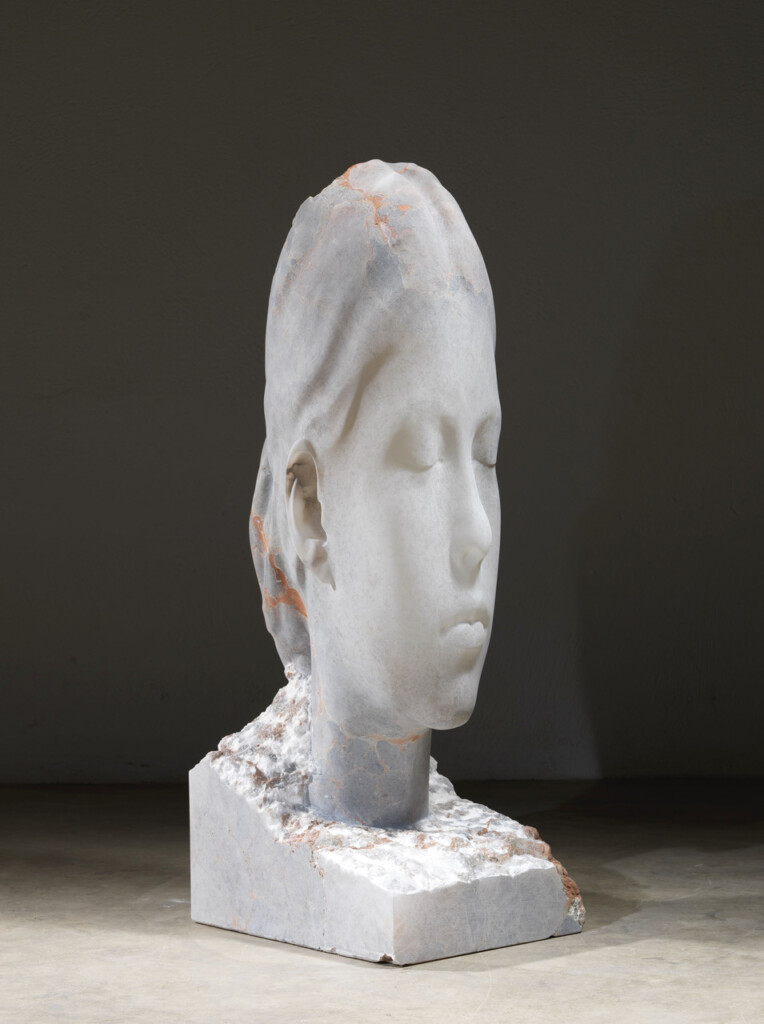
The Reus Museum exhibits at its headquarters in the Raval de Santa Anna the piece “Duna’s World II”, a work by the sculptor Jaume Plensa, which is part of a col private collection, lent to the city by the Senda Gallery.

Jaume Plensa born in Barcelona in 1955 is one of the greatest exponents of the current sculpture scene, and internationally known, especially for his pieces of art in public spaces.

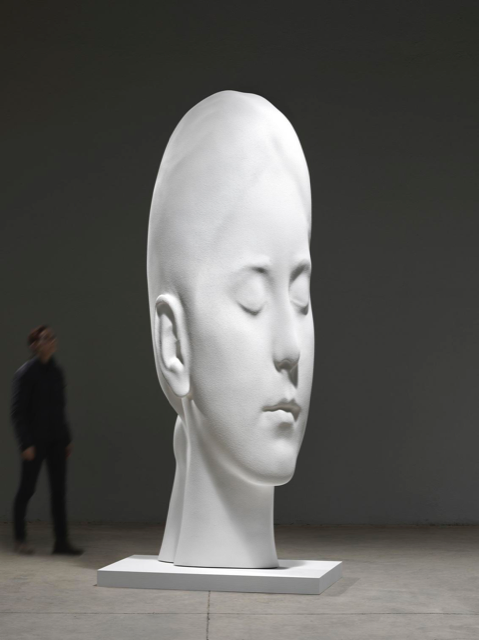
“Duna’s World II” is another representation of Jaume Plensa‘s idea, a young face, sculpted directly on the marble, with an incredibly smooth surface that is a clear tribute to the purity of youth.

The face, with closed eyes transports us to the world of inner reflection, of introspection, of peace, like a utopian portrait of human thought. With its contemplation Plensa invites us to better feel our deepest being and abandon ourselves to the time of thought.

The face, with closed eyes, transports us to the world of inner reflection, introspection, peace, like a utopian portrait of human thought. With its contemplation, Plensa invites us to feel better our deeper being and leave us in the time of thought.

El rostro, con los ojos cerrados, nos transporta al mundo de la reflexión interior, de la introspección, de la paz, como un retrato utópico del pensamiento humano. Con su contemplación Plensa nos invita a sentir mejor nuestro ser más profundo y abandonarnos en el tiempo del pensamiento.

“Duna’s World II” is a unique piece of marble, 183 x 67 x 58, created in 2015

With the sale of this piece, Reus will have two works by Jaume Plensa. In 2003, the sculptor created the piece ‘Body of Light’ which is installed at the entrance of the Xavier Amorós Central Library.

Follow our social networks so you don’t miss any news or gallery activity!

#galeriasenda @galeriasenda

Museo de Reus receives “Duna’s World II” by Jaume Plensa

Museo de Reus has opened its doors to present a true jewel of contemporary art: the exceptional piece “Duna’s World II” by acclaimed sculptor Jaume Plensa. This work, part of a private collection on loan from Galeria SENDA, has found its home in the historic headquarters of the Santa Ana district, adding a new and vibrant cultural dimension to the city.

Duna’s World II” transcends the mere category of sculpture to become a gateway to the artist’s fascinating universe. It is a living testimony of his artistic ideology and a celebration of eternal youth. Masterfully carved in marble, the delicacy and smoothness of its surface invite the viewer to approach and be enveloped by its mystical aura. The face, with eyes closed in a gesture of serene contemplation, suggests a state of deep reflection, an irresistible invitation to explore the innermost recesses of our own consciousness.

Jaume Plensa, renowned for his ability to capture the very essence of the human being in his works, leads us on a journey of self-discovery towards inner peace and spiritual harmony. “Duna’s World II” reminds us of the vital importance of introspection and invites us to immerse ourselves in the time of thought, where we find the serenity and balance so longed for in the tumult of modern life.

Sculpture of a marble face by Jaume Plensa
Image of a person photographing a sculpture of a marble face

Duna’s World II” is a unique marble piece, 183 x 67 x 58, created in 2015

The transfer of this masterpiece represents an invaluable gift for Reus, which can now boast of having two works by the renowned sculptor in its city In 2003, Plensa left an indelible mark on the city with his monumental creation “Body of Light“, which majestically adorns the entrance of Biblioteca Central Xavier Amorós. With the incorporation of “Duna’s World II“, Reus consolidates its position as an unavoidable cultural destination on the map of contemporary art, attracting visitors and art lovers from all over the world.

If you want to explore more closely “Duna’s World II“, in addition to approaching Museo de Reus, you can watch this video of Canal Reus where the details of the work are explored, in addition to hearing a few words from the councilor of culture of the City of Reus, Daniel Recasens, and the delegate of the Government of the Generalitat in Camp de Tarragona, Teresa Pallarès.

To keep up to date with the latest news and activities of Galeria SENDA, you can follow us on our social networks. Don’t miss any updates about our exhibitions, special events and much more. Join our community and be part of the exciting world of contemporary art!

#galeriasenda @galeriasenda

MINA HAMADA’s project for LA ROCA VILLAGE: ‘Un Paseo Colorido’

The artist based in Barcelona has just presented a new series of sculptures in the shopping center La Roca Village. The collection represents a novelty for the artist who usually works on large-scale public murals.

Striking sculptures by American-born Japanese artist Mina Hamada dot the streets of the space. In June, the creator inaugurated a project conceived together with La Roca Village and the gallery LAB36. The idea behind Colorful Walk, conceived ex profeso for that place, is to support local talent.

Three colorful geometric sculptures and a set of hanging wooden mobiles can now be seen at the entrance of La Roca Village. A final three meter tall sculpture will be installed later this summer. Mina talks about her work process, her iconic style and how she approaches a new medium.

Hamada transmits its good vibrations through its free and organic forms, in a style characterized by color, rhythm and improvisation. Although it is mostly known for its mural art of enormous dimensions, the artist explores other formats such as canvas or sculpture without abandoning the artistic language that identifies her. You can currently enjoy his circular and rectangular canvases in an individual exhibition that he has done for the gallery LAB36 titled Transition.

The La Roca Village project began to take shape in 2021 and, after several meetings, Hamada and the team created for the occasion, chose to develop strong>works with volume. The artist, who has worked in various disciplines, from paintings to murals or work on paper, is the first time that she has developed such large works in three dimensions:

“It’s a new challenge for me. With Paseo Colorido I can bring people closer to my work and make them interact with it.”

Hamada’s proposal is articulated through three groups of sculptures: Dream Passage, with large-scale works (300 x 200 x 150 cm) ; Summer whims, which are three small format pieces; and Aerial landscape, a mobile installation. The artist is excited about the opportunity to give volume to her creations, because “they look like characters that come out of my paintings and have a soul.”

Follow the full story on our social networks @galeriasenda #galeriasenda

Fragments of:

https://www.lavanguardia.com/gente/20220630/8372598/estallido-color-roca-village.html

https://www.revistaad.es/lugares/articulos/arte-urbano-mina-hamada

https://metalmagazine.eu/en/post/interview/mina-hamada

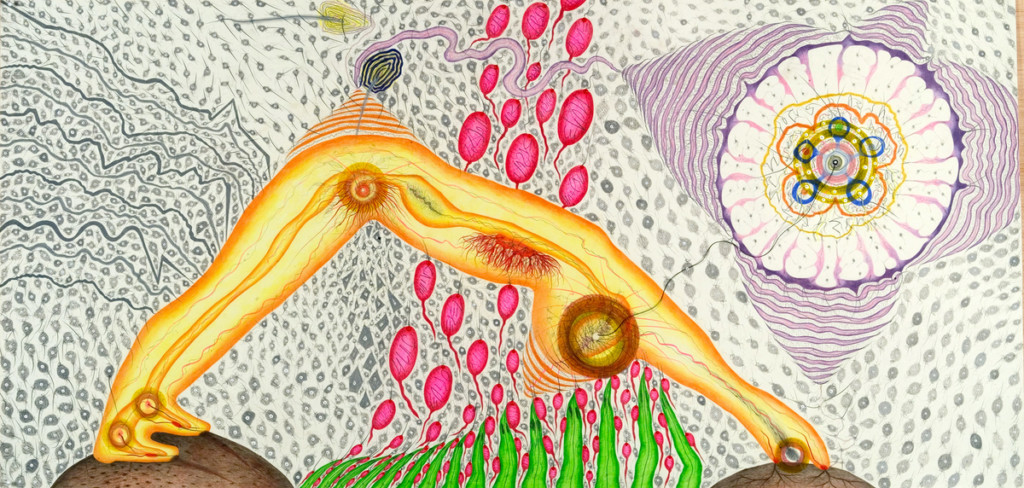
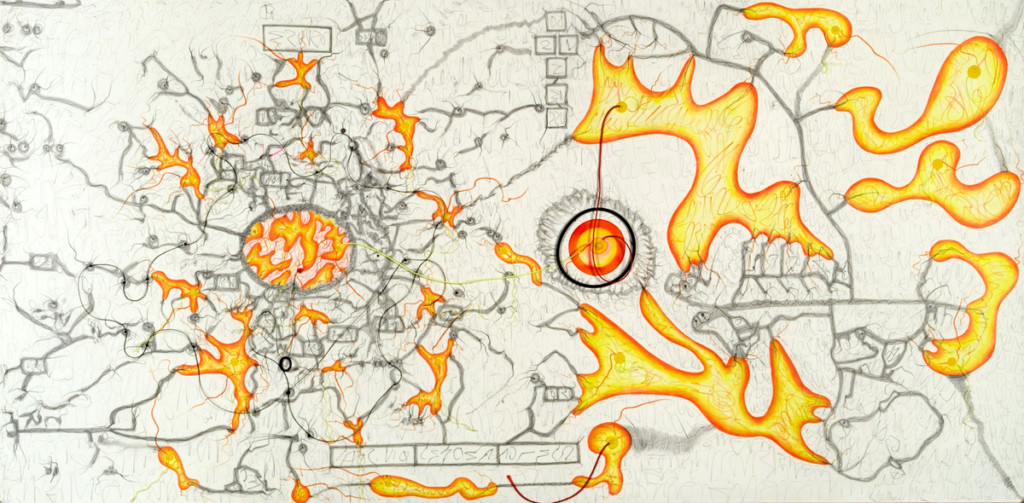
ZUSH at the Museum Of Contemporary Art Of Ibiza

From June 3 to November 30, 2022 | Museum of Contemporary Art of Ibiza
Curators: Enrique Juncosa, Xavier de Luca (Fundación Suñol) & Elena Ruiz.

Collaborator Galeria SENDA

The Councilor for Culture of the Eivissa City Council and president of the Board of Trustees of the Eivissa Museum of Contemporary Art, Pep Tur, the director of the Eivissa Museum of Contemporary Art, Elena Ruiz, and the artist Zush have presented the exhibition “Zush en Eivissa” which was inaugurated on Friday, June 3 at 7:00 p.m. and will remain on display until November 30, 2022.

The Councilor for Culture and President of the Board of Trustees of the Pep Tur Museum of Contemporary Art has stated that:

Zush is one of the essential artists to understand the evolution of Spanish art in the 70s and 80s mainly. We are lucky that a large part of this production was made on the island of Eivissa. Getting a part of it together makes it one of the most important exhibitions of the season, not only in Ibiza or the Balearic Islands, but throughout the country. This exhibition demonstrates the increasingly ascending line that MACE has had in recent years.

The exhibition focuses on the period between 1968 and 1983 in which Zush resided on the island of Ibiza, a period that became a moment of intense creativity for the artist, who experimented with very diverse formats and techniques, such as fluorescent painting illuminated by black light. This exuberant diversity of artistic proposals will be reflected in an exhibition that will present more than a hundred works, some seventy from the Suñol Soler Collection, which will be exhibited in the Arms Hall of the Ibizan museum.

The artist Zush has stated that: The works that can be seen in this exhibition correspond to the period of 18 years that he lived on the island. He has also added that what gives him the most joy is thinking that his works give people joy. “

The curator of the exhibition, Enrique Juncosa, has highlighted that Zush is an artist who:

Has known how to create an inner world, creating characters and turning them into myths; He is a pioneering and current artist, as is the study of identity, his relationship with drawing, collaborations with other artists, his relationship with electronic music, and he is an advanced figure in the artistic currents of surrealism and pop art.”

We invite you to follow us on social networks so you don’t miss any news or activities of the gallery.

Share your experience with us using #galeriasenda!