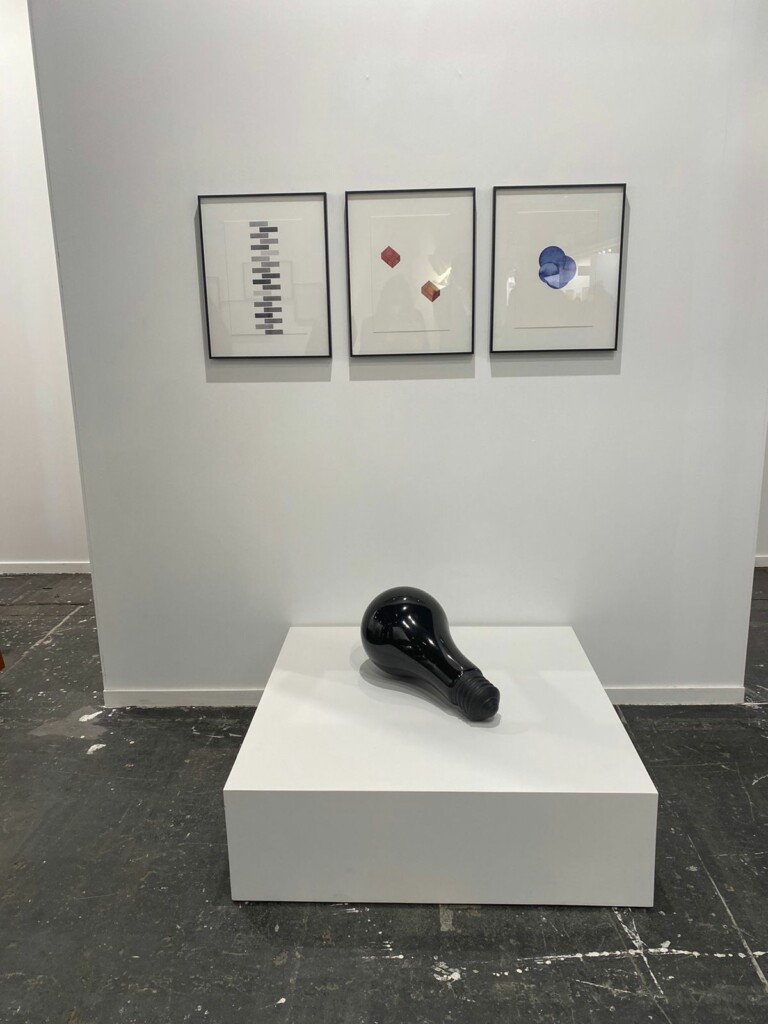
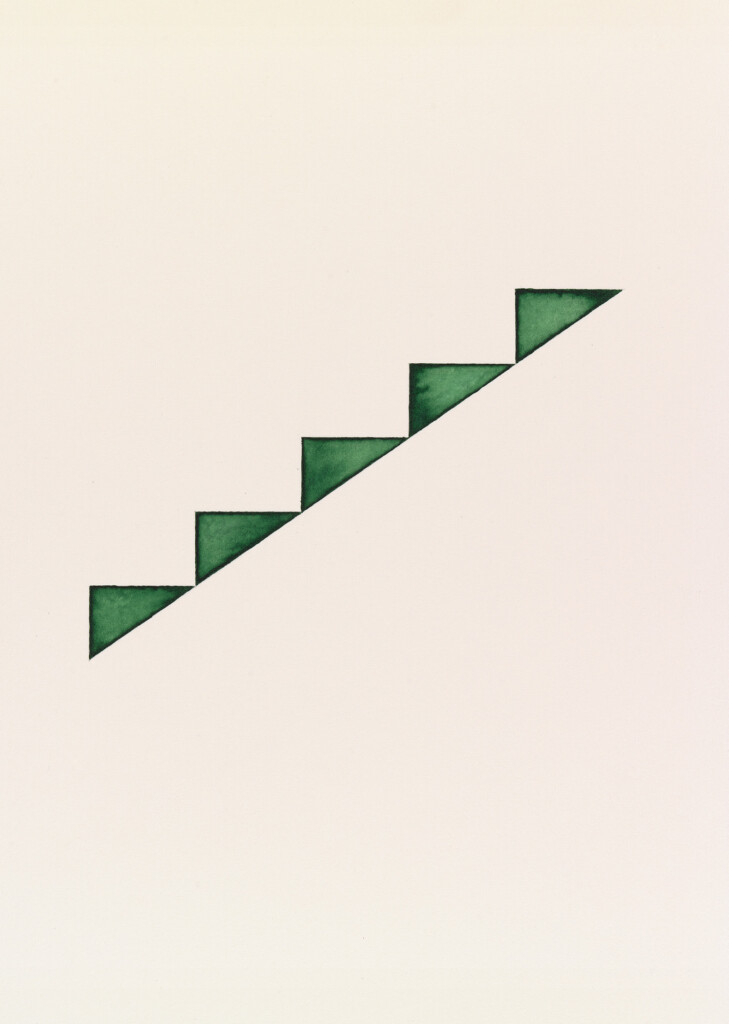
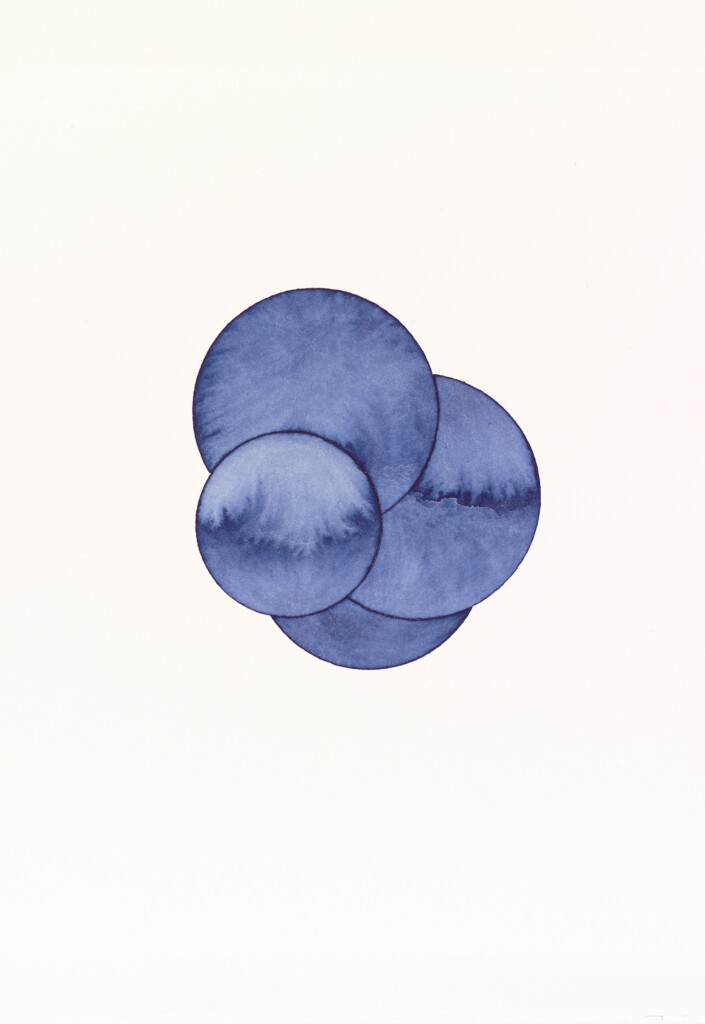
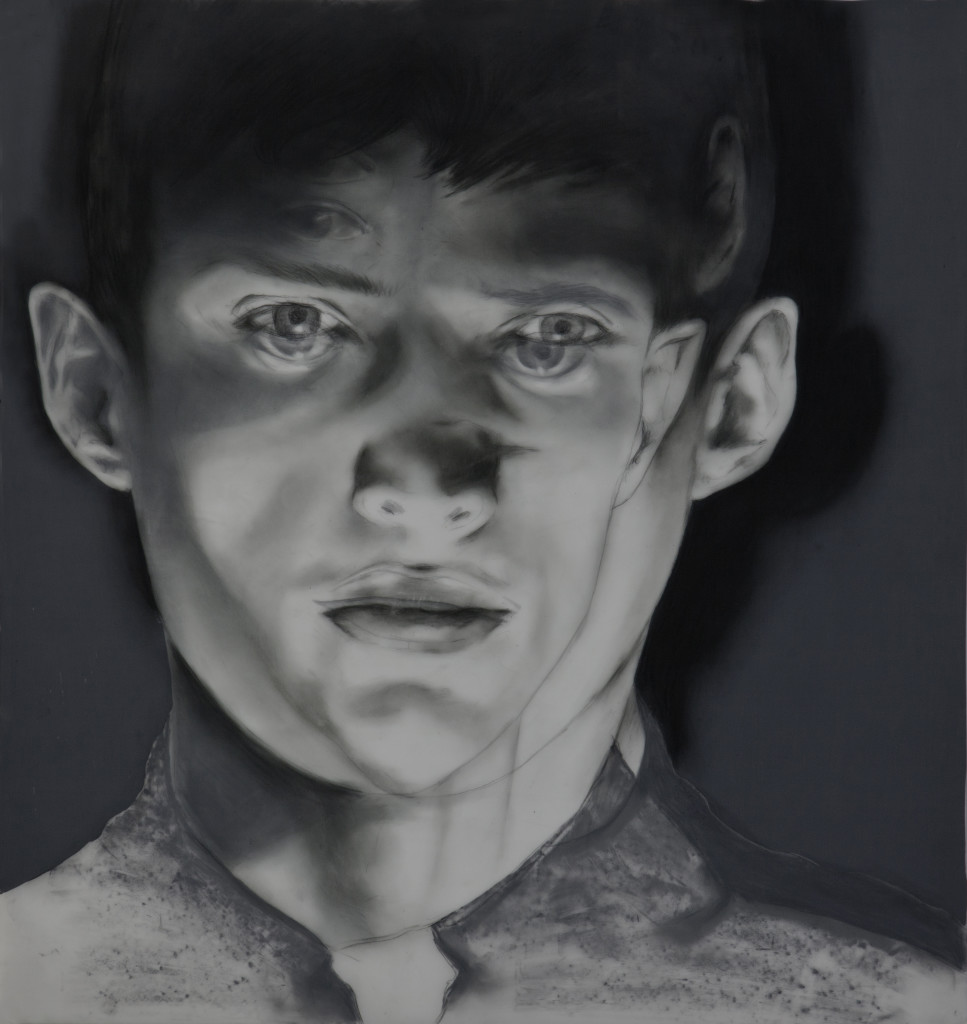
In 1982, IFEMA commissioned Juana de Aizpuru, thereafter Juana de Arco, to launch the first edition of ARCO, the international contemporary art fair in Madrid. The first edition was inaugurated in February 1983 in a two-story building at the end of Paseo de la Castellana, past Plaza de Castilla, which was later demolished to erect a new building. I was lucky enough to participate in that first edition, which was very different from the current ones. Initially, far fewer galleries participated and the public was also smaller, not to mention sales that were practically nil.

The first two editions, as I said before, took place in the Paseo de la Castellana building and without a doubt, were quite neglected for all the participating galleries, which were still very few. People in Spain were not used to art fairs. I remember one year, I think it was the second, that Juana de Aizpuru came to our booth and asked me if we had a red dot, wow she had sold !! I told her that I had little faith, that how could she go to an art fair without red dots, but she, who was very smart told me: look dear, the red dots, in this fair, with one bringing them for the whole building is enough. And, unfortunately, she was right.


In 1985, ARCO moved to the Palacio de Cristal de la Casa de Campo, larger and with better facilities, and important foreign galleries also began to participate. The public began to be much more abundant, actors start to attend, television presenters come, some truly interested, others simply to be seen. On weekends, collectors and art lovers from outside the capital are received, as well as entire busses of Fine Arts students from all Spanish cities.

I remember that in the first editions they used to give public announcements with the loudspeaker like: the director of the gallery X is requested to immediately attend in his stand, something quite annoying and that fortunately later disappeared. One day a well-known actress was taking a tour of the fair. Impossible not to notice her. She wore a blouse two sizes smaller than her size, a huge belt, what she was wearing could not be called a skirt, and shoes with heels that provoked vertigo. And suddenly the speakers were announced: The young lady (name of the actress) is asked to stop by the stand of Gallery X. And not once, but several times. So, if someone had not seen her walk, well, everybody already knew that she had been at the fair. Good publicity and also free.

ARCO has always been opened by the kings who visit some previously selected stands. In 1996 it was our turn. After a strict control and registration of the stand, security gave the go-ahead and Queen Sofia visited us. That year we presented a monograph by Gino Rubert and the visit was very entertaining. The queen stood before each work and asked Gino questions, who explained everything she asked for. Suddenly she stares at some artwork and addressing Gino she says: she looks like Irene Papas. In case someone from the entourage did not know who it was, she added. She is a wonderful Greek actress.

We could continue telling anecdotes that arose during the 38 editions of ARCO, talk about the galleries that have participated and the artists that have shown their works, but the best thing of all is to visit it, be there. I invite you to do it, surely you will not regret it.


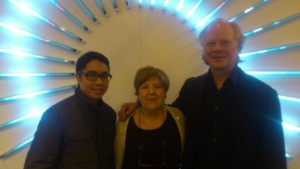
Chus Roig en compañía de los artistas James Clar y Ola Kolehmainen, Arco Madrid 2012.

Chus Roig in company of the artists

James Clar y Ola Kolehmainen, Arco Madrid 2012.

Glenda León, Metamorphic Stridency by Andrea Violeta Rojas

Fantasy is not a means to evade reality, but rather a more pleasant way of approaching it.

                                                                                                                                 Michael Ende.


The ordinary objects in Glenda León’s artwork grace it with a carefully argued, quasi utopian entelechy, which unquestionably brings us closer to reality when contemplating her work. Her personal touch is distinctive, authoritative, peculiar, and physical, where raw material, such as chewed bubble gum or strands of hair, directly interacts with the artwork, making this form of artistic intervention her personal signature.


After discovering at a very young age that her relationship with ballet came directly from music, the element of synchronization between two artistic demonstrations, then translated into an instrument, guides her career and becomes a representative and recognizable component of her work. Hinting that the importance of art is not within the material itself, but in the manner in which the piece is concocted. Glenda León reaffirms this through a new artistic vision that is in no way reductionist, but rather more integrative, multi-conceptual, even nearing deconstruction.

Her perpetual search on how to express an experience aesthetically has led her to dissect her art in an uncommon manner, since she sees in the most graceful and ordinary objects a metamorphic and philosophical connotation that she translates into a mirror of her intention. Everything she sees and encounters is an element for the representation of her work. Her art is therapy and her therapy is a claim, and simultaneously, this claim is the end result of a contemporary representation of daily elements that with a twist creates an experience that moves in light of conflict, message, public space, and intimacy.


View this post on Instagram

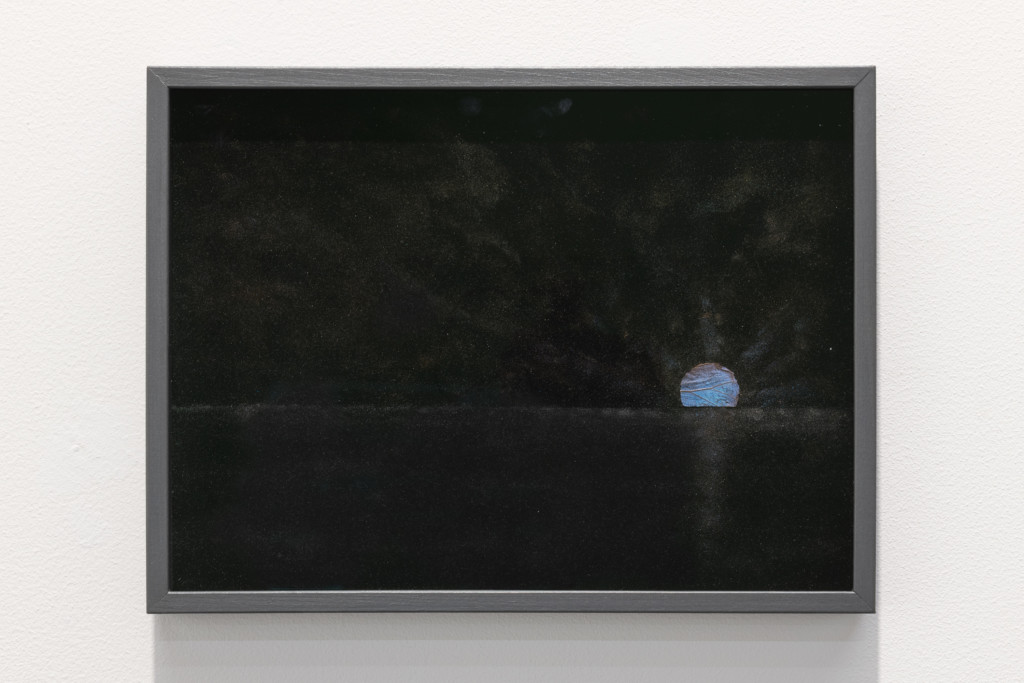
?‍? Tras su participación en la Bienal de La Habana con la instalación Mecánica Natural @glenda.leon emprende una reflexión dialéctica sobre la fragilidad y fuerza de la naturaleza. En un gesto simbólico de empoderamiento, la artista transforma el polvo de la ala de una mariposa en una galaxia imaginaria descubriendo su poder alegórico y desvelando lo invisible a nuestros ojos? ⠀⠀⠀⠀⠀⠀⠀⠀⠀ ?#opening de #mecanicaceleste de @glenda.leon este VIERNES 15 a las 19:30h ?? entrada libre! ⠀⠀⠀⠀⠀⠀⠀⠀⠀ #next #exibition #glendaleon #galeriasenda #conceptualart #contemporaryart #latinamericanart #cubanartist #galeriasendaartist #artgallery #artistsoninstagram #art #barcelona

A post shared by Contemporary Art Gallery (@galeriasenda) on


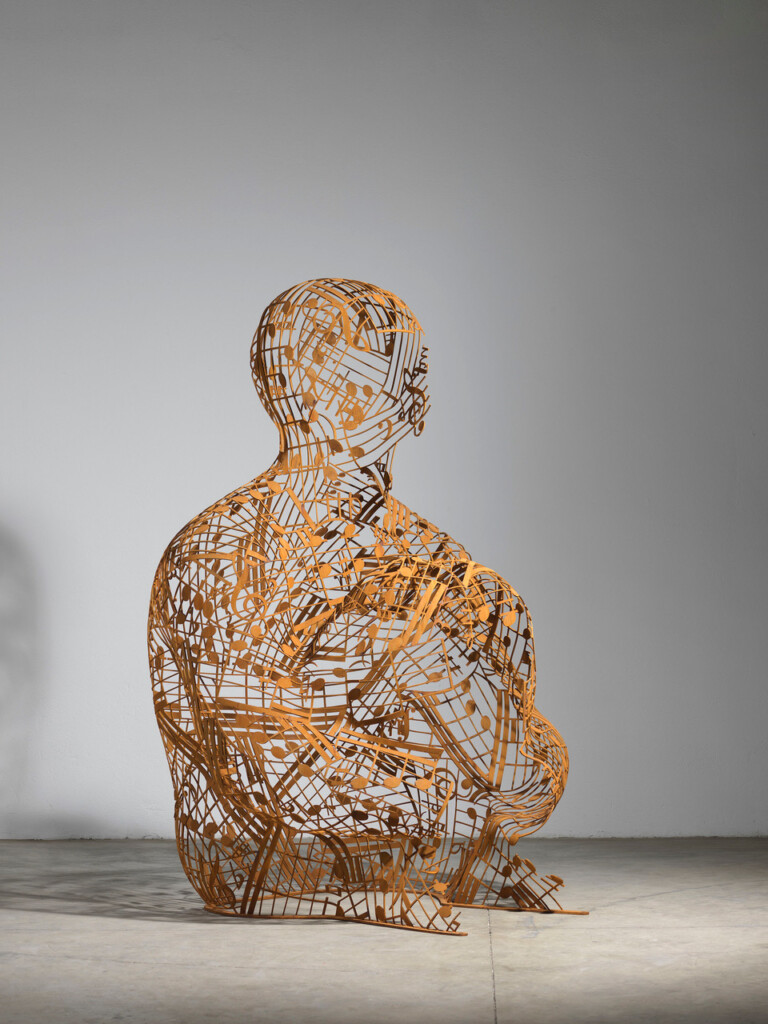
Her way of doing photography emerges from an intervention into the public sphere, implying the emotional state of the individual as a participant in the artwork, and of his inherently ambiguous behavior. These traits are clearly discernable in her work Todas las Flores (All the Flowers), (Habana, primavera 2002). In 2012, her piece Escuchando el Azar (Listening to the Chance), focuses on placing objects on a music score like musical notes, in order to stage a physical interaction with her installation which provokes a dynamic intervention and manipulation of her photos. Even though, for her, the most naïve and futile forms can express something ever so complex such as the quality of an experience, she focuses more on the catharsis that arises between the photo and its audience, where an image has the ability to sprout and expand like a pulsating root whether in public or private. It can be both powerful and seductive, as much as it can be benevolent and ungrateful. This image, those pixels and points of light, that are then revealed on ink and paper, will hold a moment, a personality, a smell, a fabric, a sound, and an identity just like that of a human being, from where a link can be established. She succeeds in creating this triangle, or trinomial, that combines the moment, lens, and perceptive awareness. Something that Glenda maneuvers with finesse.


“Every piece of art I make, I think it over and over again to see if it has something to tell me. I care deeply about the concept, about what the piece has to communicate. I ponder over it and, especially, through the title I try to ensure this communication, which doesn’t mean that I am interested in only one interpretation.”

Glenda León


The artist plays the role of a voyeur looking through the small keyhole; snooping around, stalking in disguise, waiting to see what does not want to be shown or what we don’t dare revealing, until she attains this intimate undressing that she exposes in the spotlight. She embodies our deep desire to intrude into intimacy, whether our own, that of others, or of something. She may give the impression of not being present, but she is, entirely. Displaying an isolated image devoid of argumentation is easy. When that image holds a seemingly artistic meaning, stylized by a cosmetic and intellectual process, then a synaesthesia of sorts emerges, combined within the framework of the self, a self that is governed by mediation. The aim of her work is to reach out by arousing the spectator’s emotions through a touch of seduction that, perhaps, may alter his or her way of seeing the world. Glenda León tries to find the balance between the musical objects, that she meticulously selects for their potential in evoking euphony, and their visual condition. In this way, her artistic process is a manifestation of her quest for imaged allusion to music


 ~ Andrea Violeta Rojas

Behind the Walls, the new face of Plensa at the Rockefeller Center

Rockefeller Center transforms into a spectacular sculpture park to usher in Frieze Sculpture 2019, a monumental exhibition fusing art and architecture in the heart of New York. From April 25 through June 28, 2019, this iconic building will house a unique collection of twenty stunning works by internationally renowned artists, including Jaume Plensa, Goshka Macuga, Ibrahim Mahama, Joan Miró, Paulo Nazareth, Sarah Sze and Hank Willis Thomas, among others.

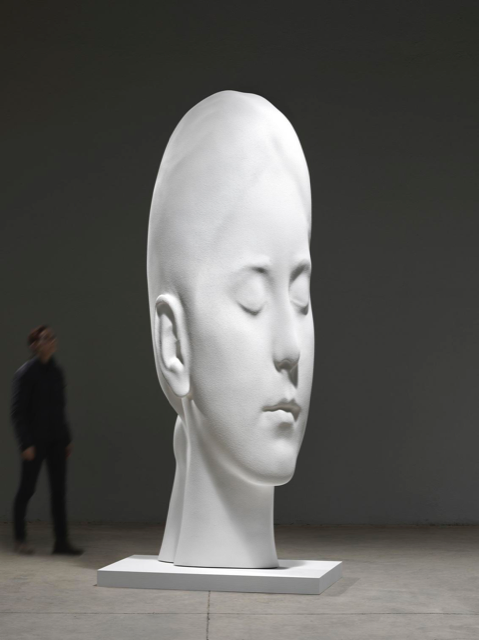
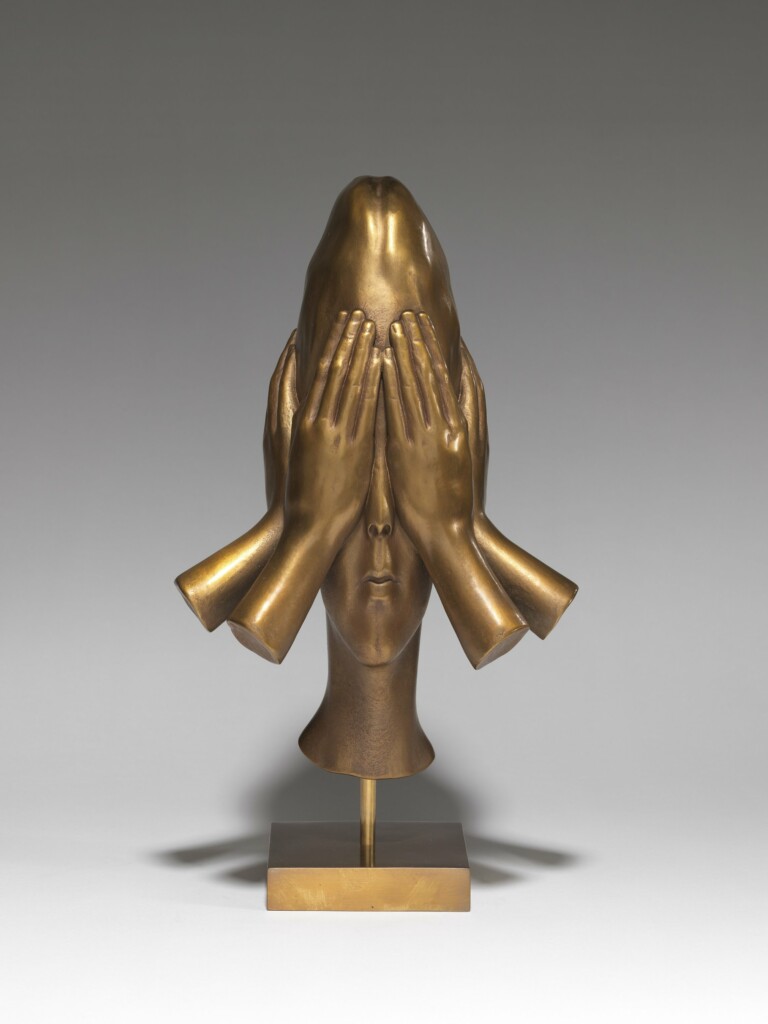
One of the highlights of the exhibition is Jaume Plensa‘s imposing sculpture “Behind the Walls“, a 7.5-meter-tall figure of a girl made of white resin, with her hands covering her eyes. Located at the entrance of the Channel Gardens on Fifth Avenue, this work invites viewers to reflect on self-imposed blindness and the need to face reality. For Plensa, the piece is a direct representation of how we sometimes close ourselves off from the world around us in order to feel more comfortable, and he hopes the work will function as a mirror for viewers, prompting them to examine their own lives and choices.

The curatorship of Frieze Sculpture 2019 by Brett Littman, director of the Garden Museum, has succeeded in creating an immersive art experience that attracts visitors from far and wide. Although initially hesitant to place Plensa‘s sculpture in this location, Littman recognized that it was the perfect place for this provocative work, capable of arousing curiosity and introspection in those who view it. In addition to “Behind the Walls“, works by other prominent international artists adorn the surroundings of Rockefeller Center and the various lobbies of the surrounding buildings, creating a cityscape full of art and meaning. This has been thanks to the partnership of Frieze New York and the real estate company Tishman Speyer, which will open the doors of these emblematic spaces to fill them with the monumentality of the twenty pieces on display.

«It’s almost the way I feel every morning», Littman said. «You put your hands over your eyes and think: “I can’t believe we have to deal with another day like this”».

For his part, Jaume Plensa confesses that it is a very direct piece. «On many occasions, we are blinding ourselves with our hands to feel in a more comfortable position». On a personal level, the artist hopes that the work can function to the viewer as a mirror in which «you can look inside yourself and think about your options, your aptitudes, what you are doing in your life». (Quinn, 2019)

From the grandeur of Ibrahim Mahama’s works to the delicacy of Joan Miró’s creations, each piece on display offers a unique perspective on themes ranging from the personal to the political, the spiritual and the social. It is a unique opportunity to immerse yourself in the world of contemporary art and explore the diverse ways in which artists interpret and respond to the world around them.

Frieze Sculpture 2019 at Rockefeller Center is much more than just an exhibition; it is a testament to the power of art to inspire, provoke and transform, and a celebration of the pivotal role it plays in our society. Through June 28, visitors have the opportunity to be part of this unique experience that fuses aesthetic beauty with deep reflection, in the heart of the Big Apple.

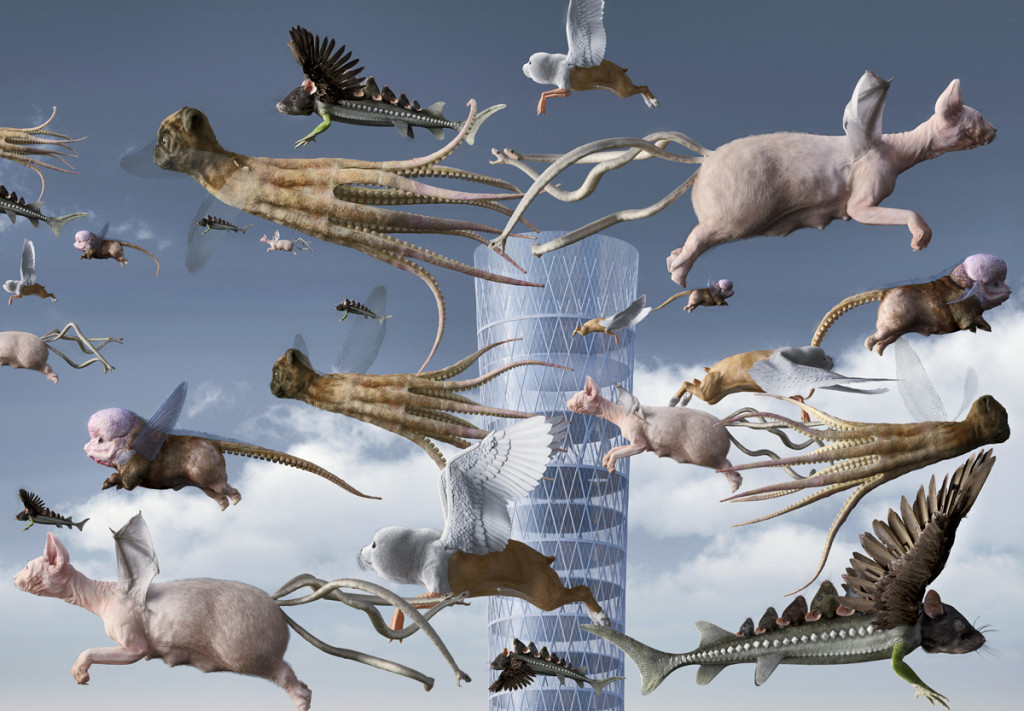
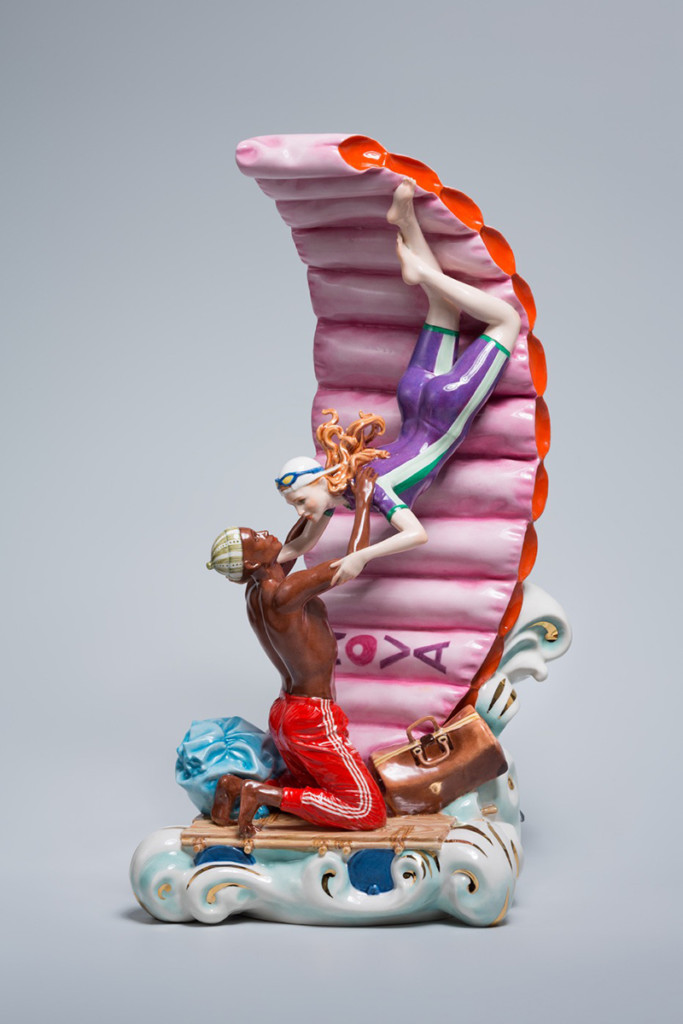
AES+F. THEATRUM MUNDI in the Musée d’art et d’histoire, Genève

AES+F is pleased to announce their first major survey exhibition at the Musée d’art et d’histoire in Geneva, Switzerland.

Active since 1987, the Russian collective AES+F,  Tatiana, Lev, Evgeny and Vladimir develops an open and prolific narrative universe, mixing classical reminiscences (mythological or religious allusions, references to western art from the Renaissance to the 18th century) and the aesthetic codes of today’s globalised world (video games, technology, fashion, cinema…).

Since The Last Riot, a video presented at the Venice Biennale in 2007, their work has focused on carefully-orchestrated digital photographs and from which they create spectacular immersive videos, genuine animated contemporary frescoes.

This syncretic and artificial universe, still in direct contact with the present-day world, is also materialised in the form of digital paintings, sculptures and drawings that update the consecrated forms of art history. Structured around their two most recent videos, Allegoria Sacra (2011-2013) and Inverso Mundus (2015), the exhibition offers visitors a full-on display through its panorama of the last ten years of this baroque and multifaceted artistic output, including digital paintings, sculptures and installations from several other recent series.


Opening: May 17th.
Curated by Lada Umstätter.

Video: Immerse yourself in the world of JOAN PONÇ in Brasil | Dra. Mar dos Santos

The Dra. Margareth dos Santos ( São Paulo University) presents ” A cartography of friendship” in which her proposes an in – depth reading of the the living and works of the catalan artist  during his decade of activity in Brasil. The post – doctoral research  bid to have a dialogical and organic look  around the Ponciana production in Brasil.


Galería SENDA presents their first editorial project through the work of Oleg Dou

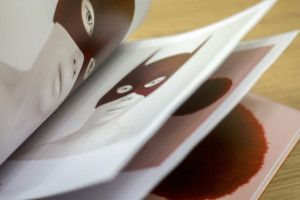
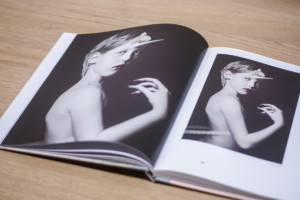
After years of having celebrated exhibits and developing projects together, Galeria Senda brings to light the second edition of Russian photographer Oleg Dou’s first monograph, introducing us to his new series produced between 2012 and 2016.

The first edition was published four years ago, when Dou was 28 years old. This includes some of his most remarkable works, such as Cubs (2009 – 2010) which demonstrates the results of curious mutations, the ghostly series Nuns (2006 – 2007) and the unsettling and experimental series Another Face (2011).

Oleg Dou says he uses photography as a medium to allow the spectator to enter a world that ranges between “what is beautiful and what is repulsive”. He is fascinated by the curiosities of the human face and the limits between reality and what is behind it, rendering that which is strange and different as a base of his aesthetics.

In our second edition, a new series called Mushroom Kingdom is presented. Here Dou demonstrates the adorably haunting faces of childhood, which, according to him, is  a time “full of clowns and monsters under the bed”. He also introduces the piercingly elegant series Heaven in My Body, which gives off traces inspired in the sacred and mystical art of the XV and XVI centuries, especially Madonna with a child (c. 1452). Currently, some of these works, within others, are being shown in the exhibit “Lonely Narcissus” in Moscow.

28|32 is the first monograph of this young artist, but it will not be the last. As the gallery owner Carlos Durán says in the prologue, “many other [of Dou’s monographs] will be brought to light in the years to come.” It is clear that Dou will continue to promote and develop his work and will never cease to surprise us.

libro-01_5-new-size libro-01_4-1-new-size

New Measures Initiated to Remedy the Surprising Pitfalls of Collecting Video Art

vía artsy.

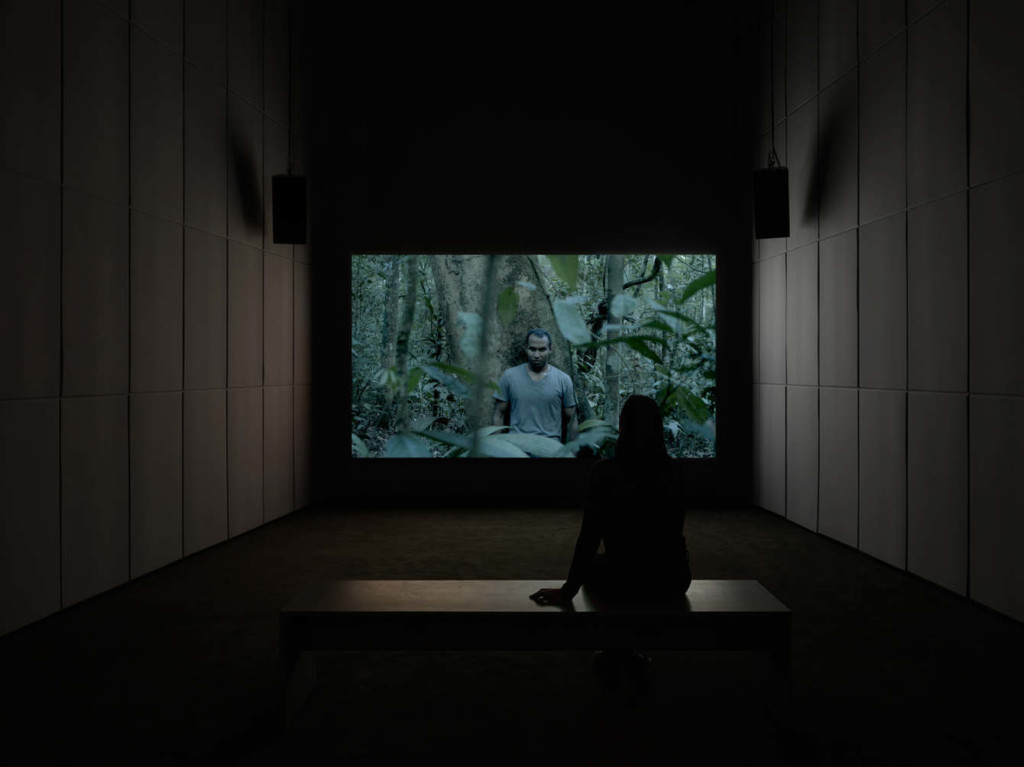
Imagine you’re an art collector (for some of you who already are, that won’t be very hard). Not a big-time buyer with a slew of lawyers to review a purchase, but someone looking for a work that strikes your fancy. And as you walk through the aisles of an art fair, suddenly you see a dazzling video projected onto the wall of a booth. You reach for the proverbial wallet. But right before the purchase takes place, from the depths of your mind a strange question materializes, one you might never ask yourself if you were buying a sculpture or a painting or a drawing: What are you actually buying when you buy a work of video art?

The answer isn’t quite what the uninitiated might expect. The tricky nature of video art has proven to be an unpleasant surprise for collectors in the past. In all likelihood, if you’re even asking this question it means you’re savvy enough to know something about the particular pitfalls of video art. “The first problem was that people didn’t understand what they were buying when they were buying a video,” says Carlos Durán, founding co-director of LOOP, the Barcelona-based art fair dedicated to video art. “Buying a piece is not buying the rights.” Recently, LOOP has released a non-legally binding protocol that artists, galleries, and collectors can use to discuss and clarify what a purchaser is and is not receiving when they buy a work of video art.

When it comes to video, it is the rights to the work that confer the powers and privileges typically associated with actual ownership of a piece of art. These rights reside not with a physical object but with the artist, so buying a USB stick in a fancy box from a gallery doesn’t necessarily transfer these rights. Thanks to the way copyright laws are formulated, video pieces are governed like a movie downloaded from iTunes—specifically, the artist retains the rights to data migration, exhibition, and distribution long after the work is sold. Stories abound of collectors trying to lend videos to museums only to be told that they cannot without the permission of the artist. Trouble can also arise when collectors try to move a video work from one format to another—say VHS to DVD. Again, this is the artist’s prerogative, though Durán says that today collectors copying and moving work is much more widely accepted than it was a few years ago.

Much of the protocol introduced in LOOP’s new initiative echoes how physical art is treated while attempting to address the specific challenges that come with video work. The protocol asks the parties (collectors, gallery, and artist) to agree to, among other things, the edition number of the video, technical details for installation, and channels through which the work has and will be distributed (to avoid it unexpectedly popping up on YouTube). Among the rights discussed and agreed to are those of copying and exhibiting the work, while the purchaser agrees to inform the artist when the work is being loaned or sold.

Such agreements are not required for most transactions involving paintings or other physical mediums, as they are automatically governed by a different set of legal strictures. Purchasing a sculpture generally means it can be lent to a museum by the owner. It can be shown off at a party. The collector can rest easy that infinite copies of it will not be made. And it will never face technological obsolescence and cease to be viewable. The case is markedly different for intangible video works.

Though a lack of transparency certainly isn’t foreign to the art market at large, the complex legal status of video art brings special challenges. The edition number, museum lending rights, and format of the piece are among the key aspects the document requires to be laid out in black and white. The goal is for the parties involved in the transaction to go through document together step-by-step, in order to ensure clarity and confidence between parties. According to Durán, the protocol was used in several sales at the most recent edition of LOOP in Barcelona. Even if confusions around video art are large, LOOP is betting that a simple, straightforward document can be part of solution.

Alain Servais—a longtime collector who has written on issues inherent to the video art market—is more skeptical. “Recognizing that something must be done is one step,” said Servais. “But I am positive that this is not what needs to be done as it does not begin from a sound and objective understanding of what ‘legal item’ art video is.” Servais argues that, because of their digital intangibility, videos simply cannot be governed like physical works, and that there are other contracts out there which legally secure your rights to a video, unlike the LOOP protocol. “Either it’s a contract, or it’s not. A contract is something you can challenge and enforce in court. This is what it should be.” For his part, Durán says that the protocol can be useful to those looking for clarity rather than a contractual obligation (the two are also not mutually exclusive and the fair offers a 17-page accompanying legal document).

LOOP itself is using the document to purchase a video by Ângela Ferreira that was shown at the fair. “We’re getting the exact details of the film—how exactly she’s going to send it to us (on what device, in what file format)—on paper, which is always tricky, especially when you think about the obsolescence of the technology in 10 years’ time. She’s also agreeing on something that is really important to us as a purchaser, which is that we can lend this work to institutions,” LOOP fair manager Anna Penalva Halpin told me. She also noted that the work is to go on view at Museu d’Art Contemporani de Barcelona, adding that “[the protocol] is a way to set the conversation about all these things.” Indeed, though some disagree over what conversation must be had and about how to ultimately solve the issues surrounding video art, there is general agreement that if the market is to grow the discussion cannot wait.
José Pedro Croft, the representative of Portugal in Venice Biennale, will exhibit at Galeria Senda on March 2017

Critics consider José Pedro Croft one of the renovators in Portuguese sculpture, and one of the most representative figures in the artistic international panorama. He personifies a coherent and constant artistic trajectory, who aside from working with Galeria Senda for more than fifteen years, Croft will have a solo show in the space in Barcelona in March 2017.

Invited by Álvaro Siza, one of the most important names in the architecture field, José Pedro Croft will work together with him in a large project that will begin in the Architecture Biennial in Venice and will culminate in the Arts Biennial in 2017. Although Portugal does not have an official pavilion in any of the Biennials, his project will represent the country for both events.

The Portuguese exhibit is the only one, because it will be installed in the island of Giudecca in Venice, where Siza’s social dwelling project, created in 1985, can be found: Campo di Marte. This project, related with social architecture, was formed by four architects (Aldo Rossi, Arlos Aymonino, Rafael Moneo and Siza himself) and he was never able to complete it because he didn’t have enough funding. Campo di Marte was composed by four buildings that conform an interior patio where José Pedro Croft is in charge of creating a source of dialogue with a space built by these buildings. All of this will take place in the 15th Architecture Biennial, which will be from May 28th until November 27th of this year.

In reference to the 57th Arts Biennial in Venice (from May 13th until November 26th in 2017), Croft also represented Portugal with an installation curated by João Pinharanda, which will create dialogue with Siza’s architecture project. The artist will build a monumental sculpture in the Campo di Marte and it will be made with iron, mirrors and glass, three elements that characterize Croft’s artistic proposal.
¿Who was really Ángeles Santos?

As part of the Women’s Views Biennial  2016, galería  SENDA  has organized a talk focused on  life and work of Spanish artist Ángeles Santos Torroellla.

The  WVB-2016 it is an event that brings together different initiatives to show the creative activity of women and their large demonstrations in a national and international way. It’s taking place from March to December 2016, the Women’s Views Biennial will bring together initiatives that make women and gender issues a source for reflection, debate and creation.

Ángeles Santos Torroella is a painter  that  deserves an special place in the Spanish surrealist painting, born in Portbou in 1911, moves at sixteen years old to Valladolid where she takes painting classes and two years later created, whats it’s going to be  his first major work, Un Mundo,  large format oil that caused a sensation among the intellectual media of the time, particularly considering that the artist was a young woman living in the provinces, too far from the capital’s cultural scene to have come across any of the advances of the new art movements.  Currently this work is exposed as a permanent work in the National Museum Centro de Arte Reina Sofia. In 1929 she has his first solo show at the Ateneo of Valladolid , since that she begins a long artistic career full of  ups and downs that ends after his dead in 2013.

Talk:  Life and work


Speakers:

 Anna Capella, art historian, curator of expositions , ex director of  the Museo del Empordà and  current director of   Museo of Mataró, author of the book  Ángeles Santos, Between life and painting (2011).

 Cristina Massanes, Journalist and writer , was curator of the exposition  (Re)visions del món. 100 anys d’Ángeles Santos Torroella (2011).


 Rosa Brugat, Visual art,  Author of the  video art Buenas noches, Inspired  in the paint, El mundo de Mª Santos Torroella, the video will be displayed after the talk.


Date: 7 julio 2016

Time:  19 hrs

Galeria SENDA organises talks about Europe

Regarding this year’s topic of DOCfield>16 “Europe: Lost in translation”, Galeria SENDA has organised a series of conversations with interesting characters in the context of the work “Europa” by Jordi Bernadó.

In this project, Bernadó starts a journey through 27 cities, portraying landscapes and perspectives of the continent to create the book “Europa”. The following conversations are inspired in those images:


First talk: “Europe has not always existed”
Tuesday May 24th, 2016. 19h.
Galeria Senda

docfield_lahuerta

Juanjo Lahuerta: He’s an Architect and professor of Art History and Architecture in the School of Architecture of Barcelona. He has been a member of the Collegio Docenti della Scuola Dottorati del Istituto Universitario di Architettura IUAV of Venice and has had the title of the Kina Juan Carlos I Chair of Spanish Culture and Civilization in New York University. He’s currently the Chief of Collection of MNAC.


Second talk: “Europe and its ghosts”
Monday June 13th, 2016. 19h.
Galeria Senda

docfield_roma

Valentín Roma: He holds a PhD in Philosophy and a BAS in Art History. He was the Head Curator of MACBA until 2015. In 2009, he won the contest to curate the first Catalonian Pavilion for the Venice Biennale. He’s currently the Director of La Virreina Centre de la Imatge.


Third talk: “Europe in the labyrinth”
Monday June 27th, 2016. 19h.
Galeria Senda

docfield_corona

Juan Corona: He holds a PhD in Economic Sciences; he’s a professor in Applied Economics and a permanent member of the Royal Academy of Doctors. Author of a vas work in economics and enterprises matters, he has also been an advisor for the World Bank, the Inter-American Development Bank and several programmes of the European Union.