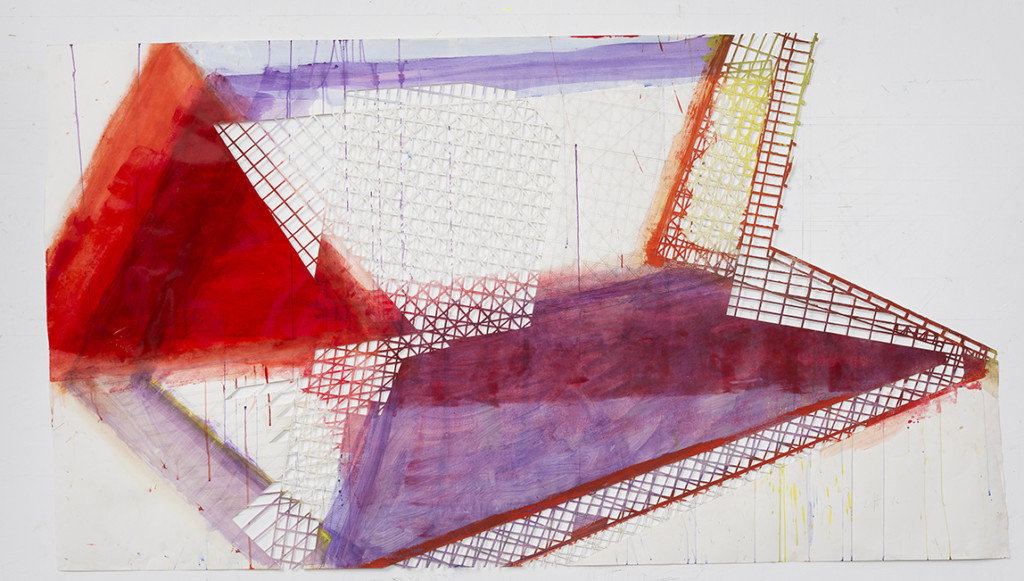
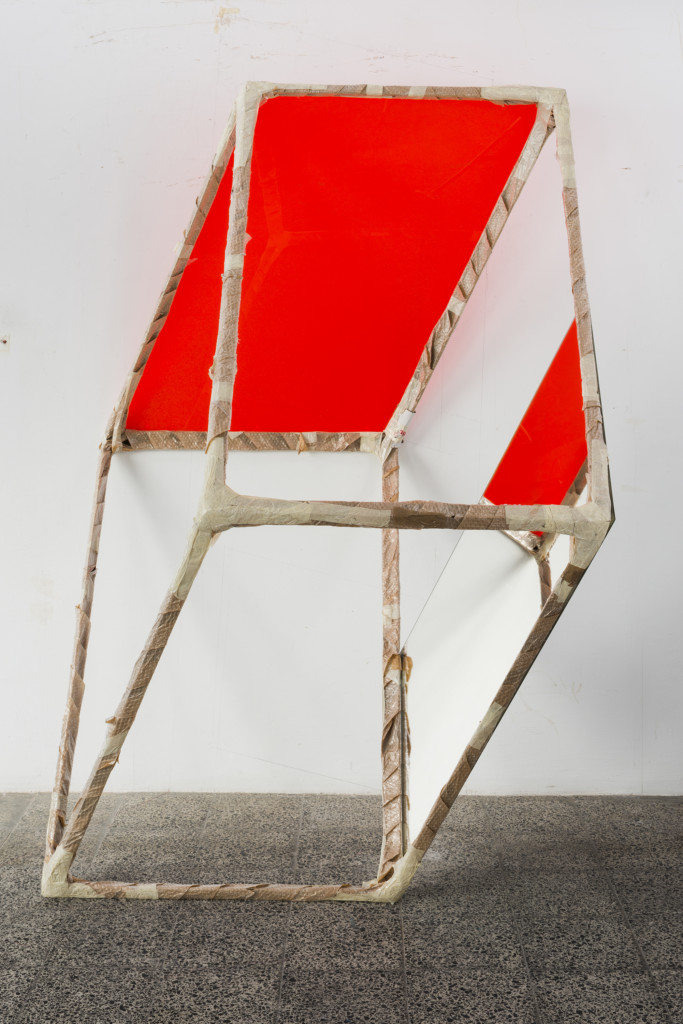
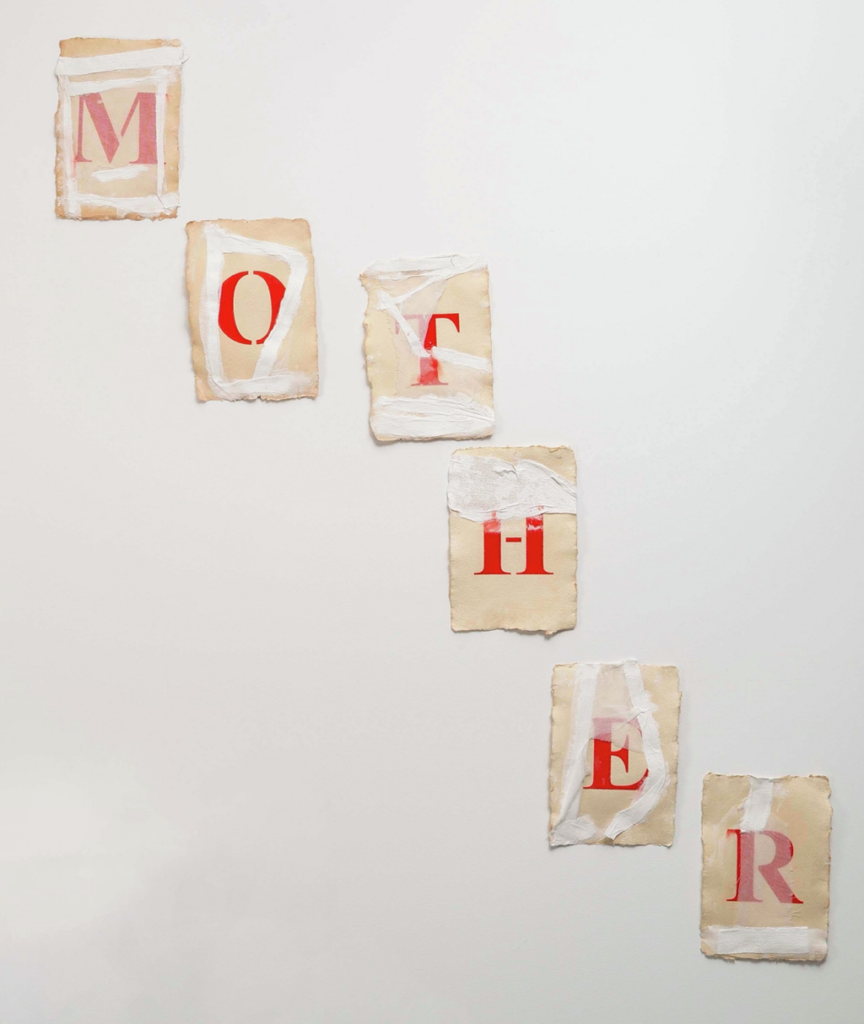
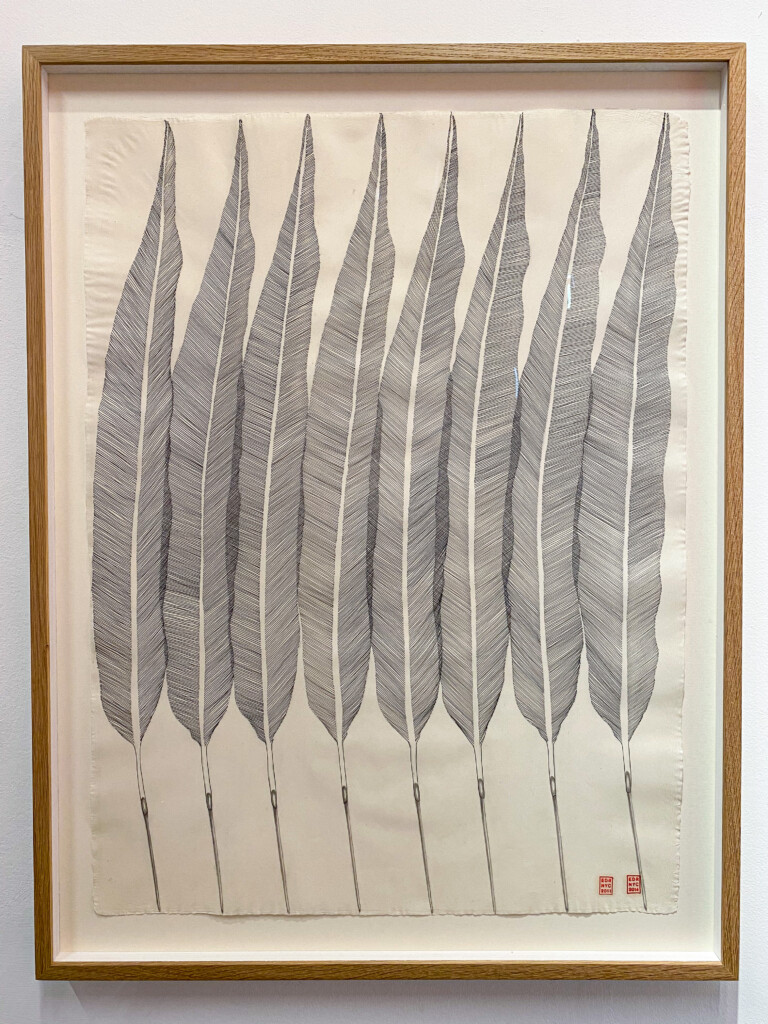
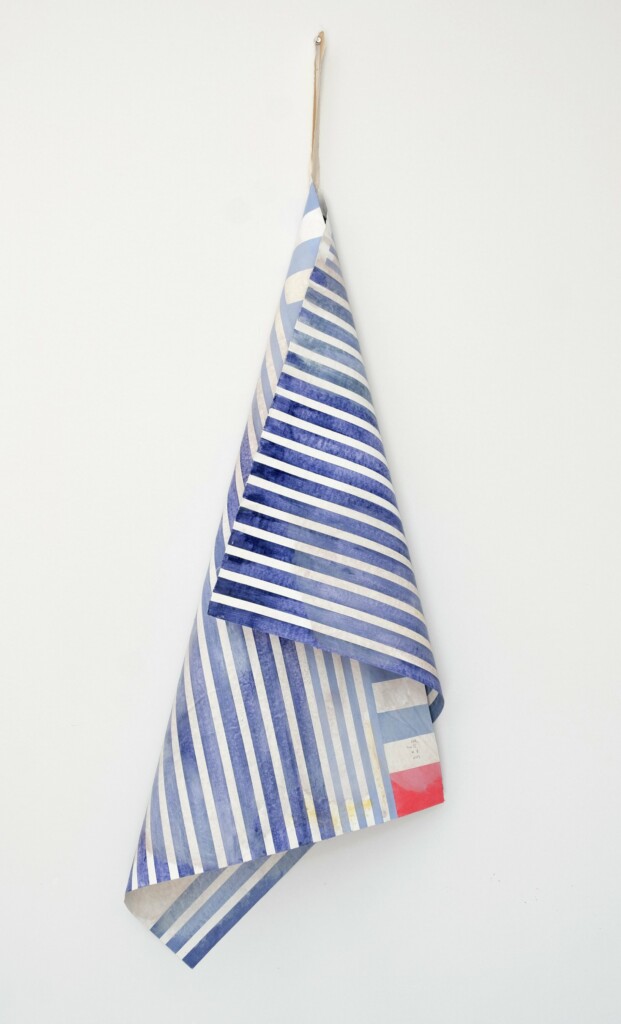
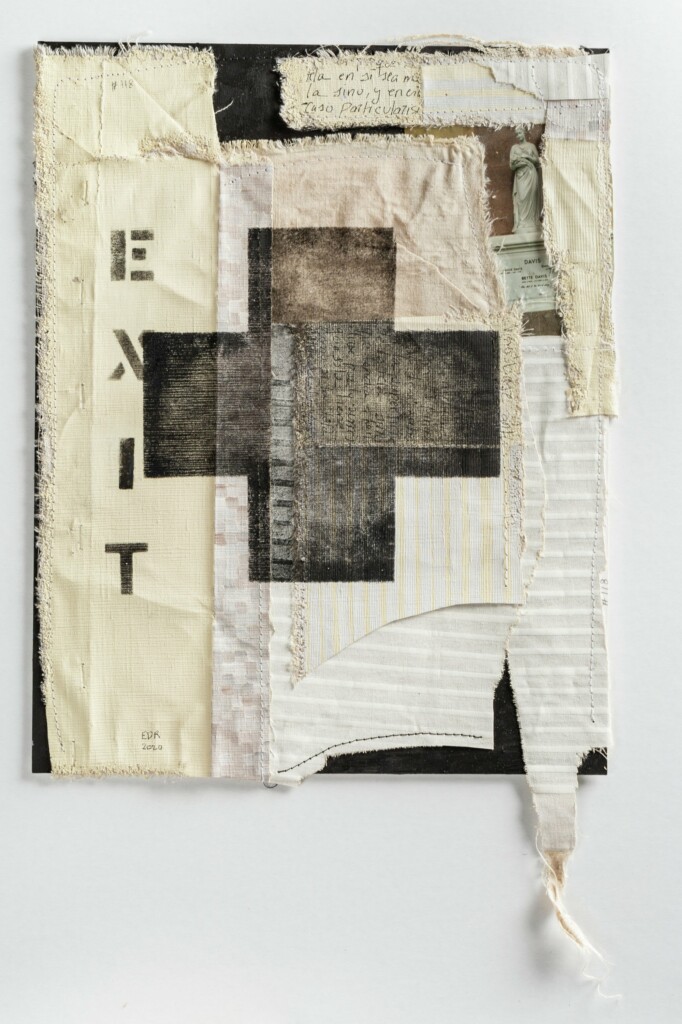
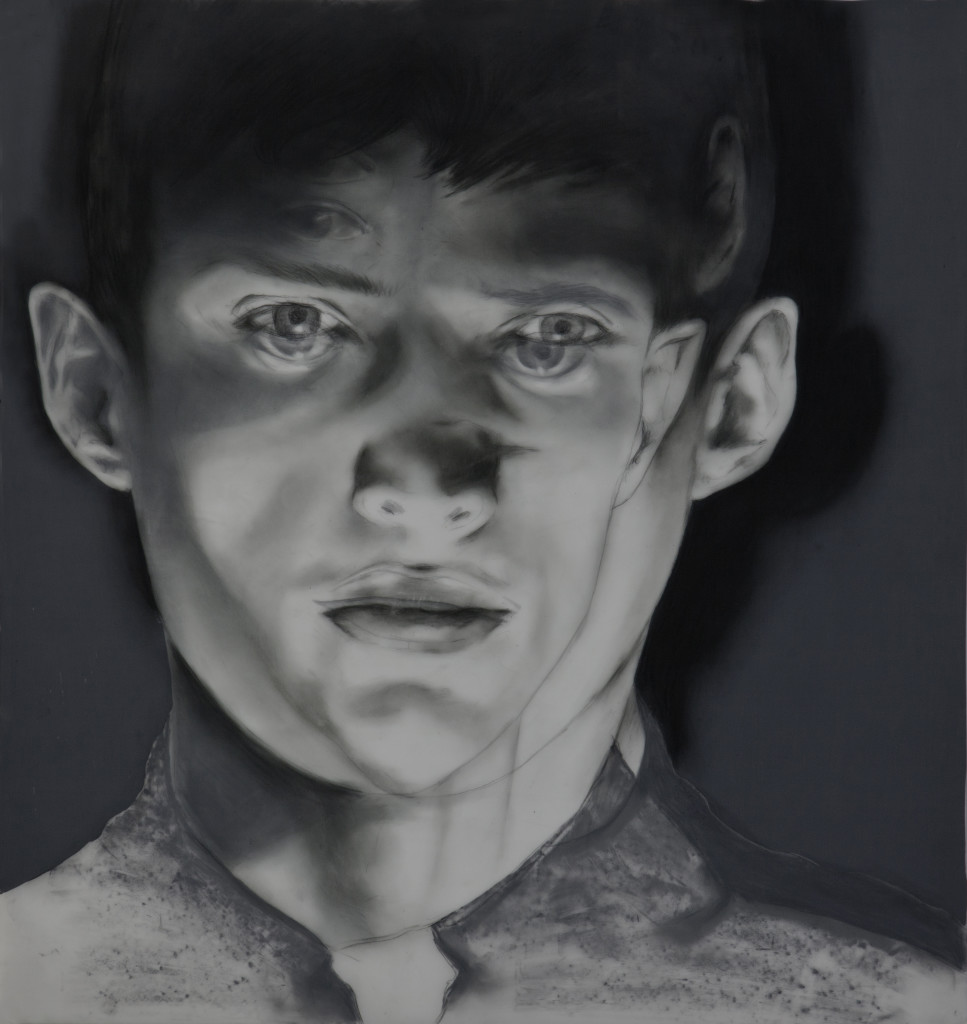
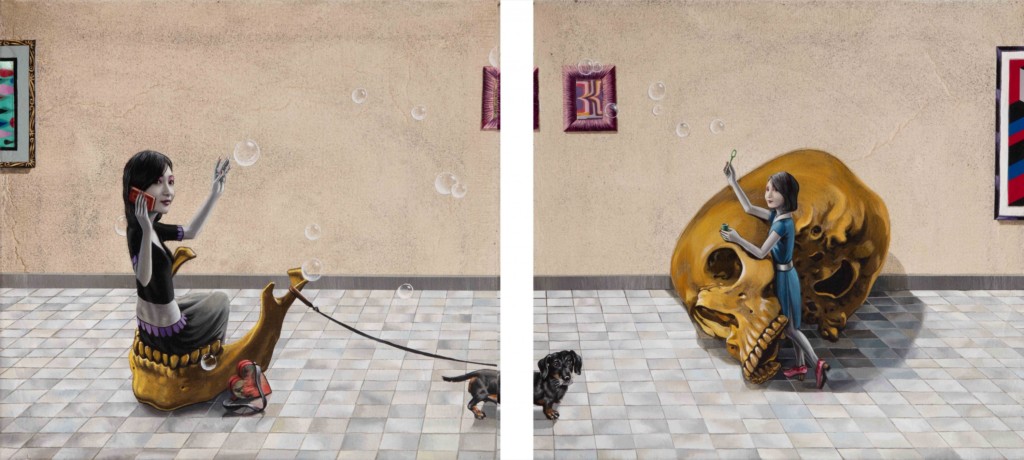
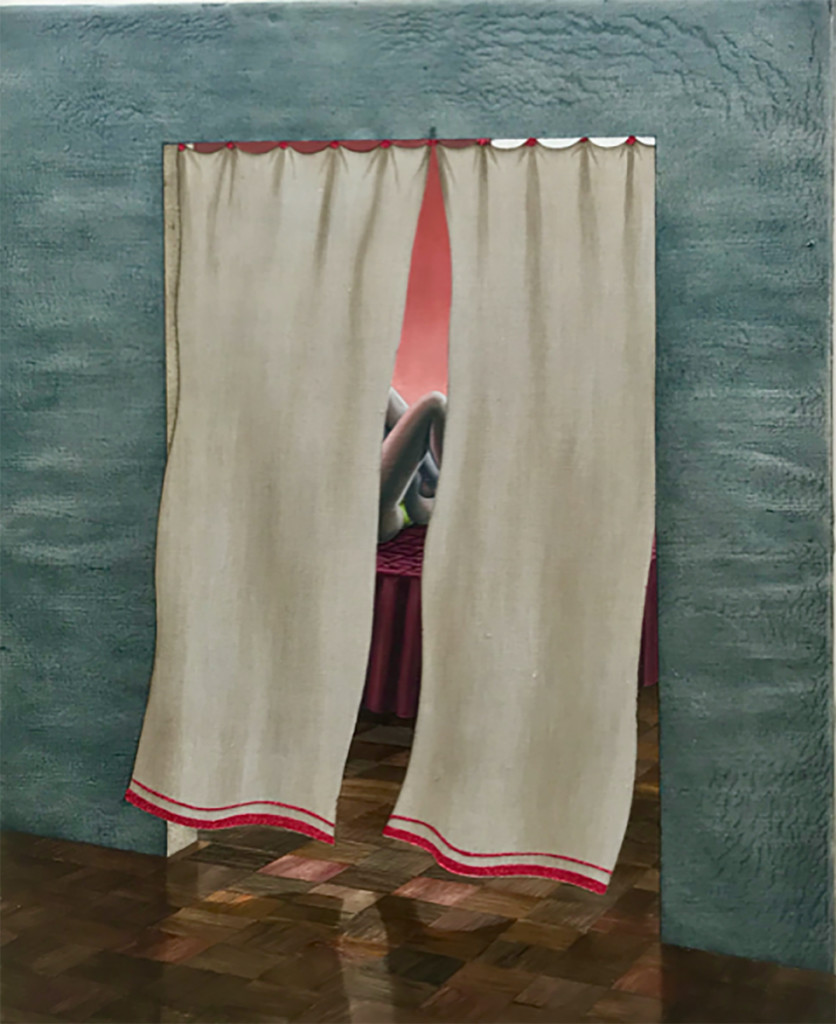
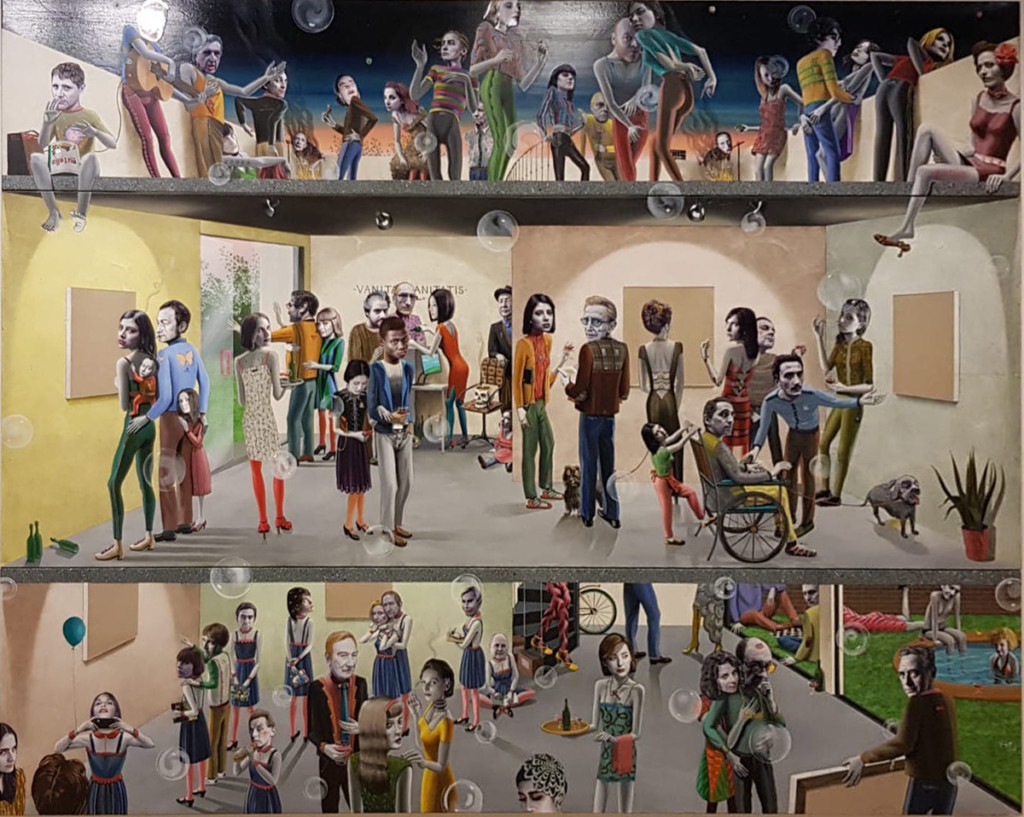
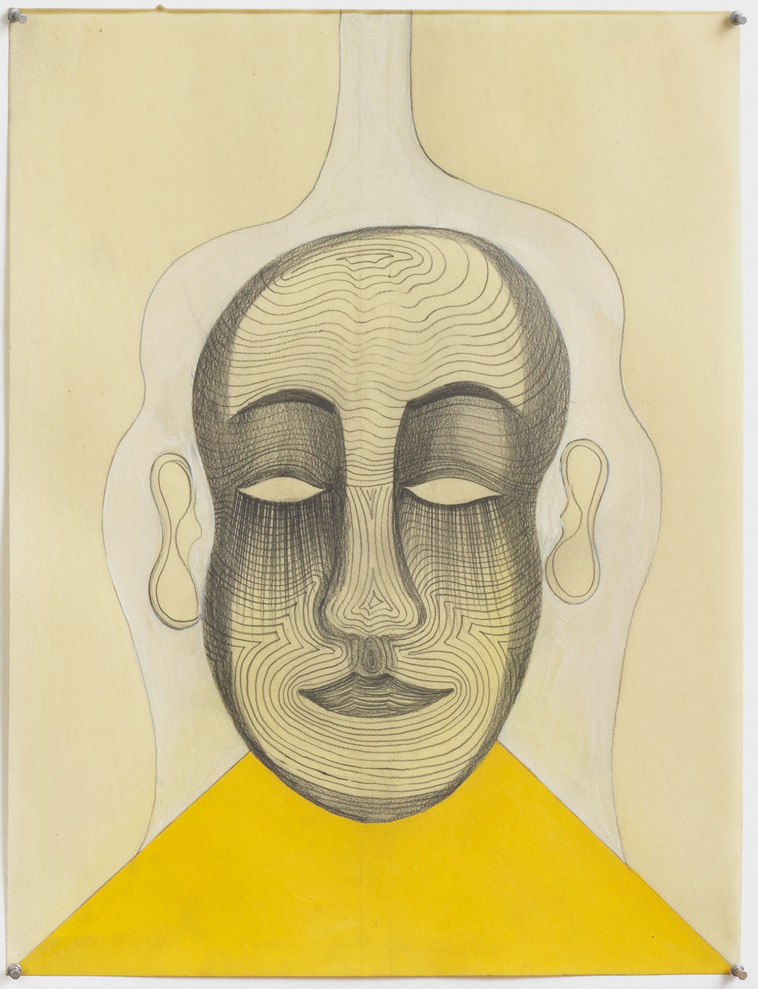
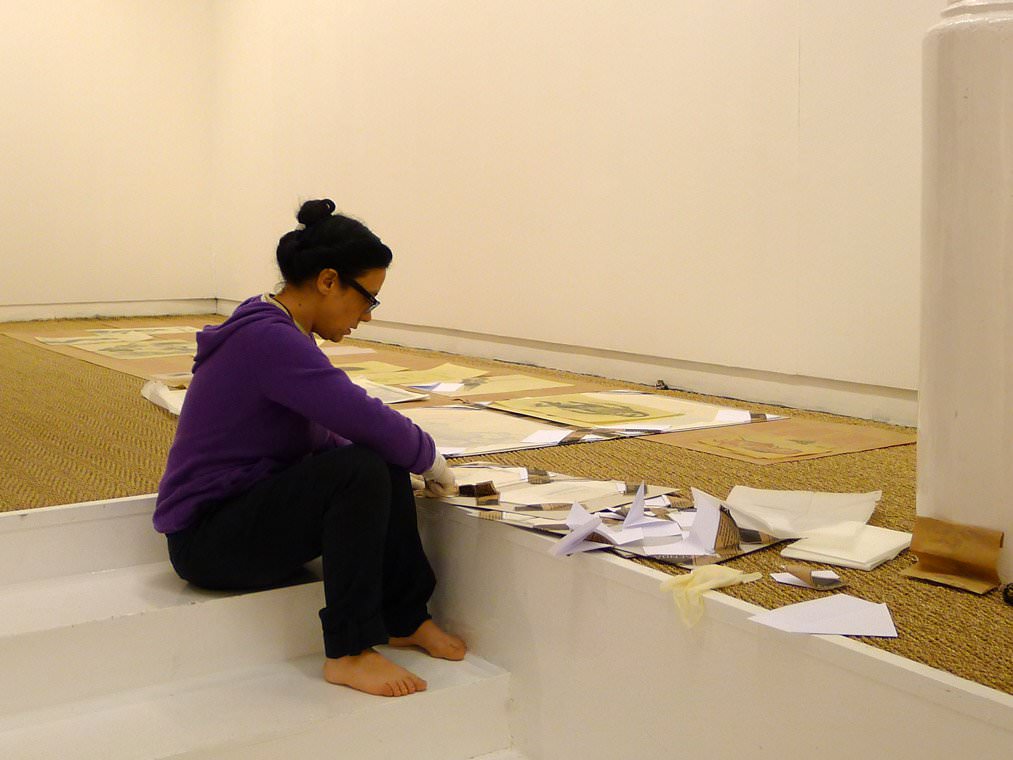
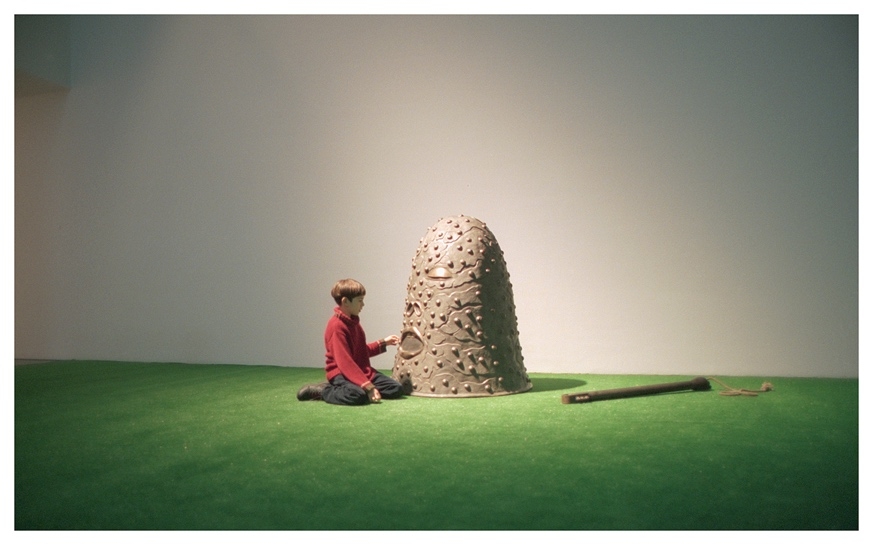
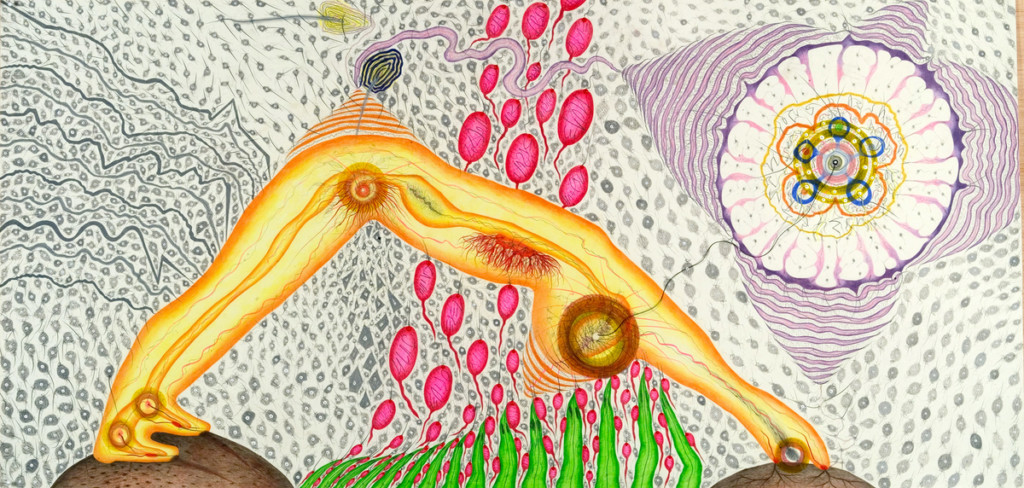
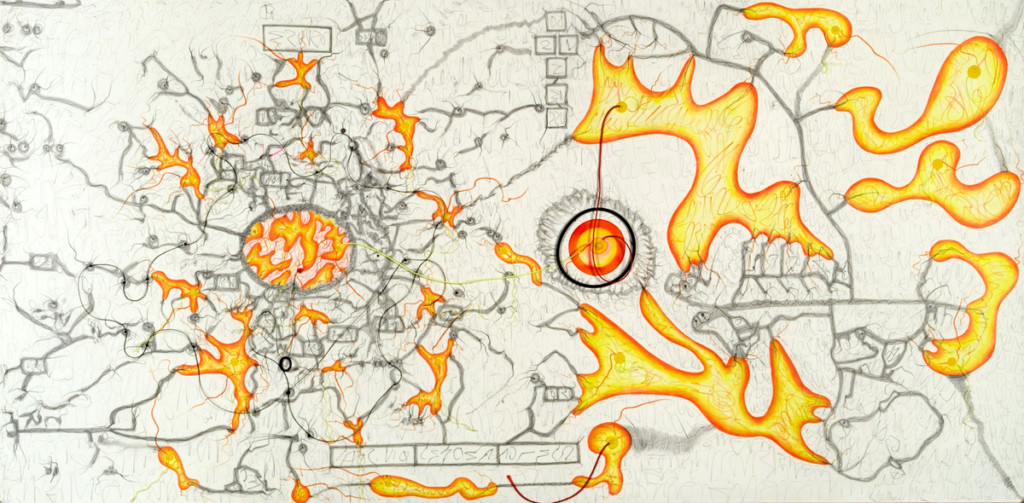
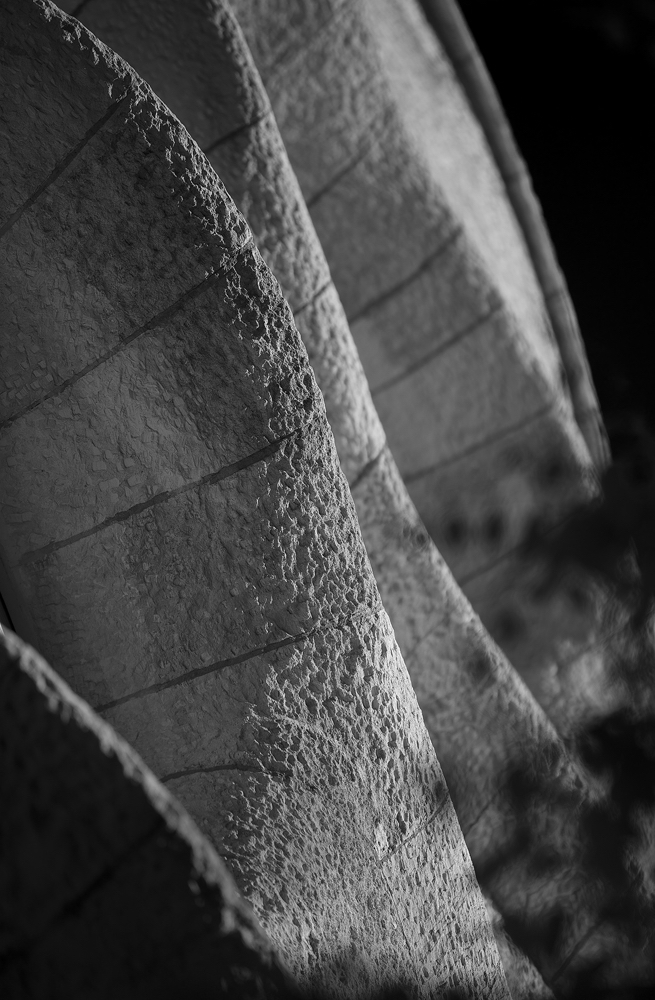
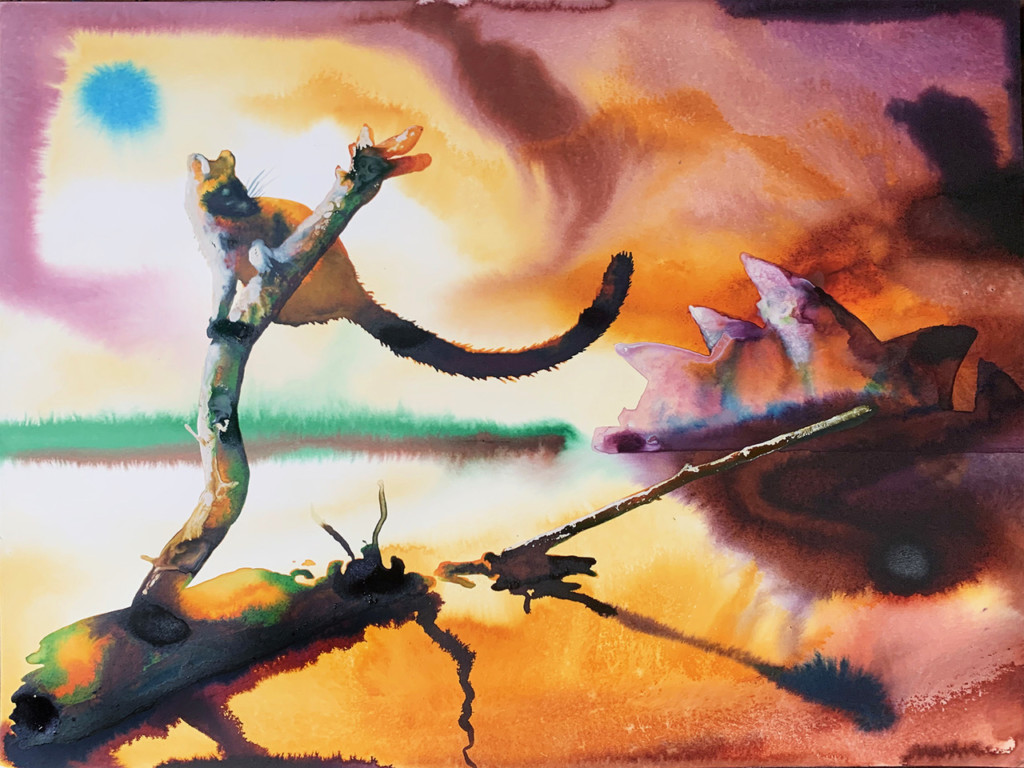
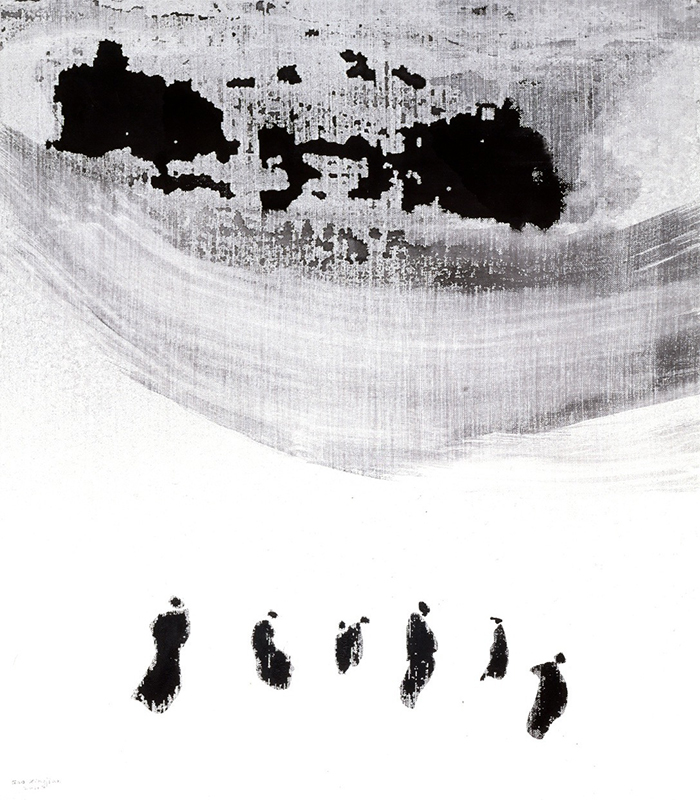
When speaking about method, the repetition is mentioned, but rarely the insistence. To insist is synonymous of to research, and at the same time implies the development of an almost unbearable continuity sustained by the nerve, by a reliance which knows it will find a reward, not only in the effect, but also in the construction of a character. This exhibition explores -from the work of an artist devoted to painting-, the possibility of a different contemporary world, open to an esthetic that does not allow any kind of assimilation to our present and, thus, it opens itself in a radical way to futurity.
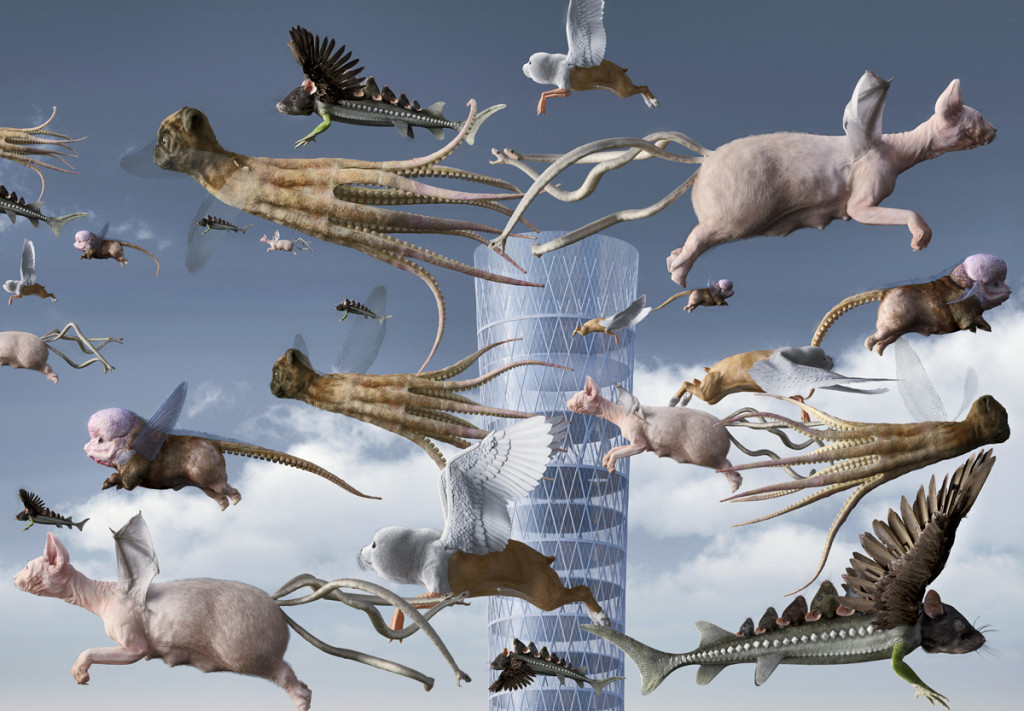
Engravings in the genre of “World Upside Down”, known since the 16th century, depict such scenes as a pig gutting the butcher, a child punishing his teacher, a man carrying a donkey on his back, man and woman exchanging roles and dress, and a beggar in rags magnanimously bestowing alms on a rich man. These engravings contain demons, chimeras, fish flying through the sky and death itself, variously with a scythe or in the mask of a plague doctor.
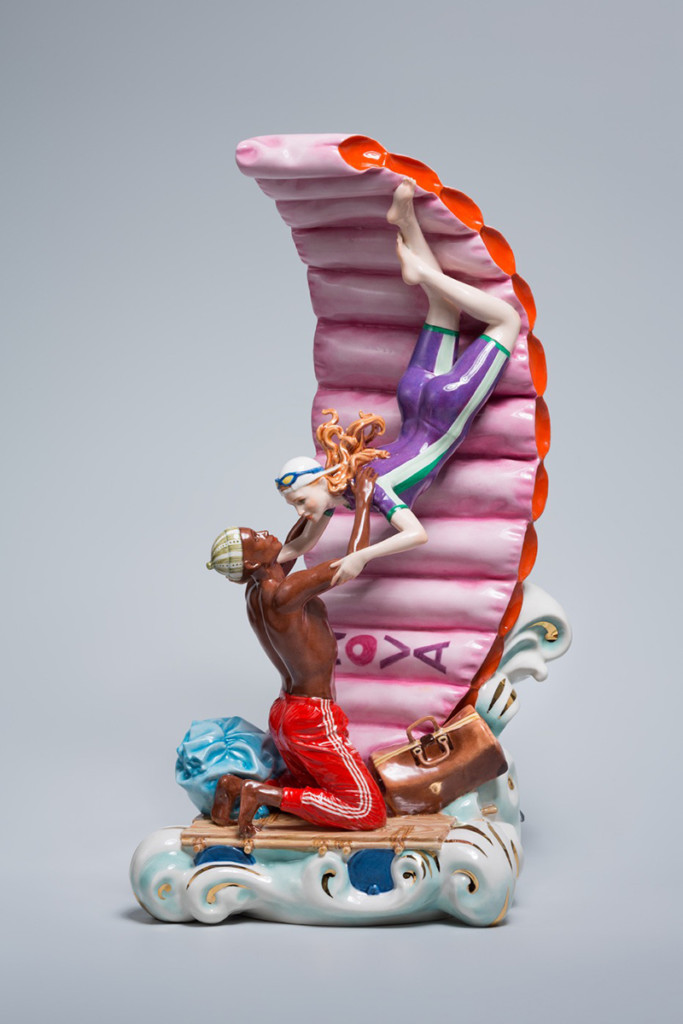
Mundus – the Latin “world” and Inverso – is both an Italian “reverse, the opposite” and the Old Italian “poetry,” which alludes to the art processing. In AES+F’s interpretation, the absurdist scenes from the medieval carnival appear as episodes of contemporary life in a multichannel video installation. Characters act out scenes of absurd social utopias and exchange masks, morphing from beggars to rich men, from policemen to thieves. Metrosexual street-cleaners are showering the city with refuse. Female inquisitors torture men on IKEA-style structures. Children and seniors are fighting in a kickboxing match. Inverso Mundus is a world where chimeras are pets and the Apocalypse is entertainment.
“Inverso Mundus” was created with the generous support of Blavatnik Family Foundation (USA) and Faena Art Foundation (Argentina), and with kind assistance from Fortuny (Italy-USA), PhotoFactory (Russia) and Triumph Gallery (Russia)
Senda began working with Peter Halley in 1992, when the Halley presented his work for the first time in its space on Pasaje Mercader. Since then, he has done four solo exhibitions at the gallery over a period of 23 years.
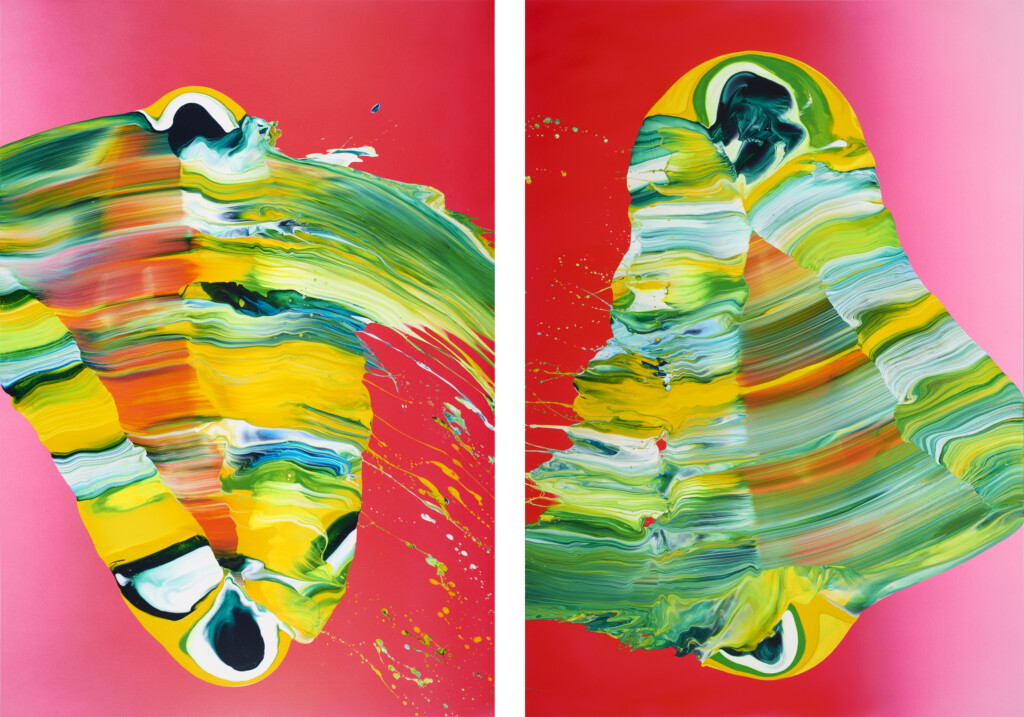
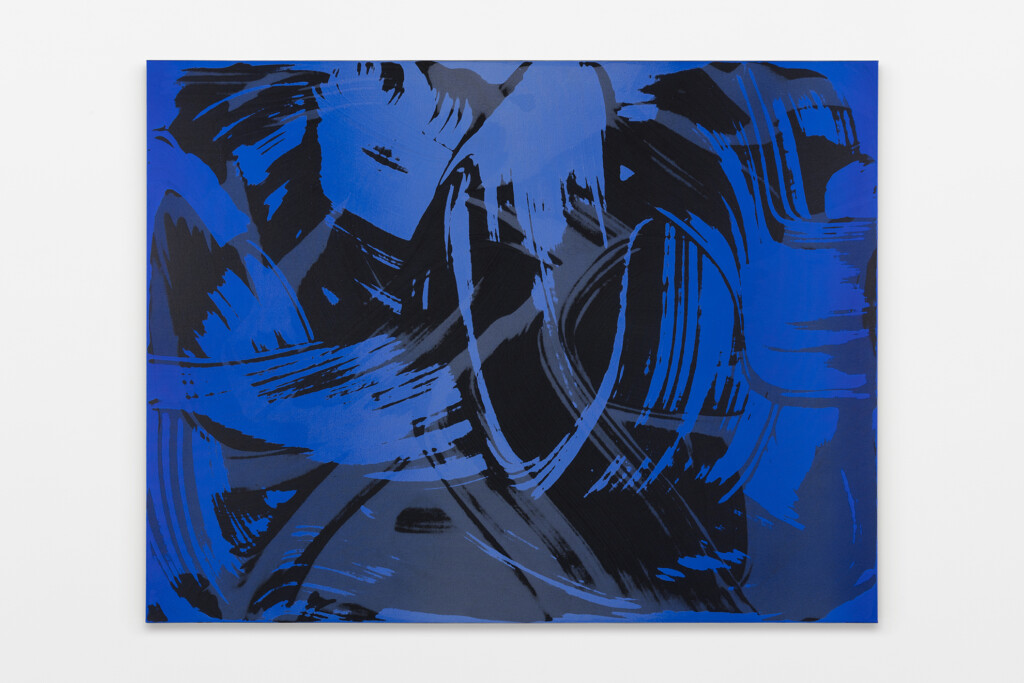
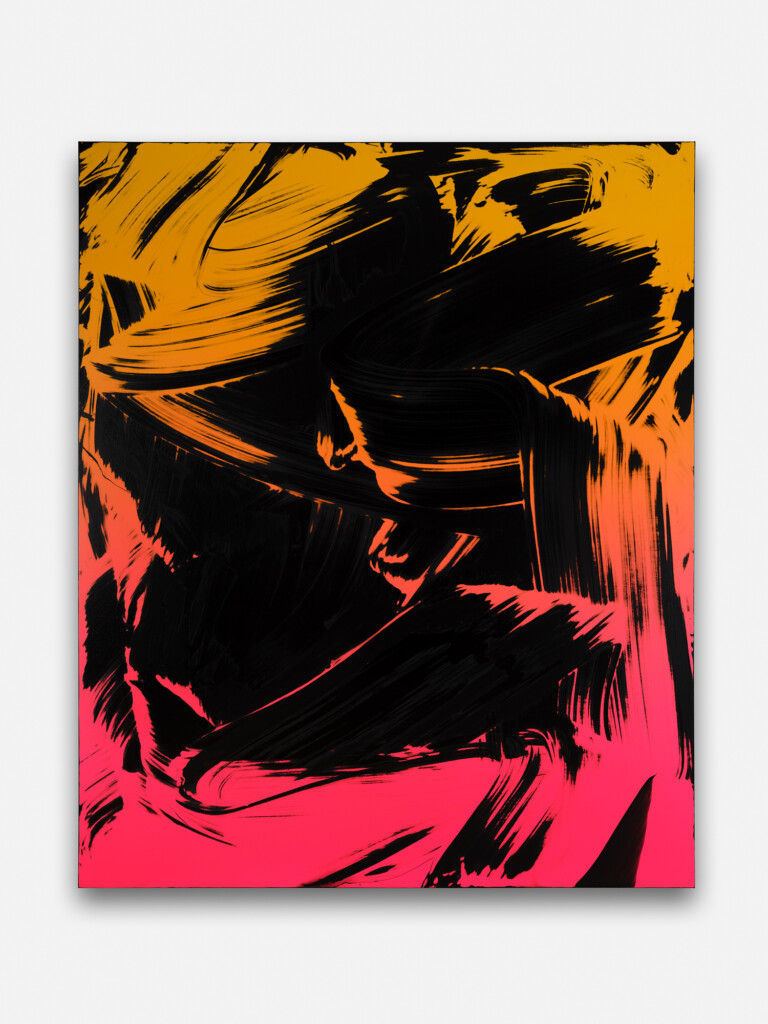
It was after a conversation with Halley, in which we spoke to him about the gallery’s new exhibition program, that the artist from New York proposed a four hands exhibition, a collaborative project with Barcelona’s Yago Hortal, who regularly exhibits with Senda.
The enthusiasm of these two artists for taking part in this collaboration has turned this exhibition into a unque event of special importance, something that goes further than the usualsolo painting show.
The exhibition ‘H-H. Halley meets Hortal’ has come together after eight months of conversations, e-mail exchanges, and the cross-posting of ideas, studies, and drafts in which both artists responded to each other’s practice.
This led to conversations about things they have in common — and others that differentiate them — inside the world of abstract painting. It highlights the New Yorker and the Catalan, experience and youth, rationalism and randomness, geometry and gesture, two approaches to the mastery of color… a back and forth dialogue about what unites them and what distances them.
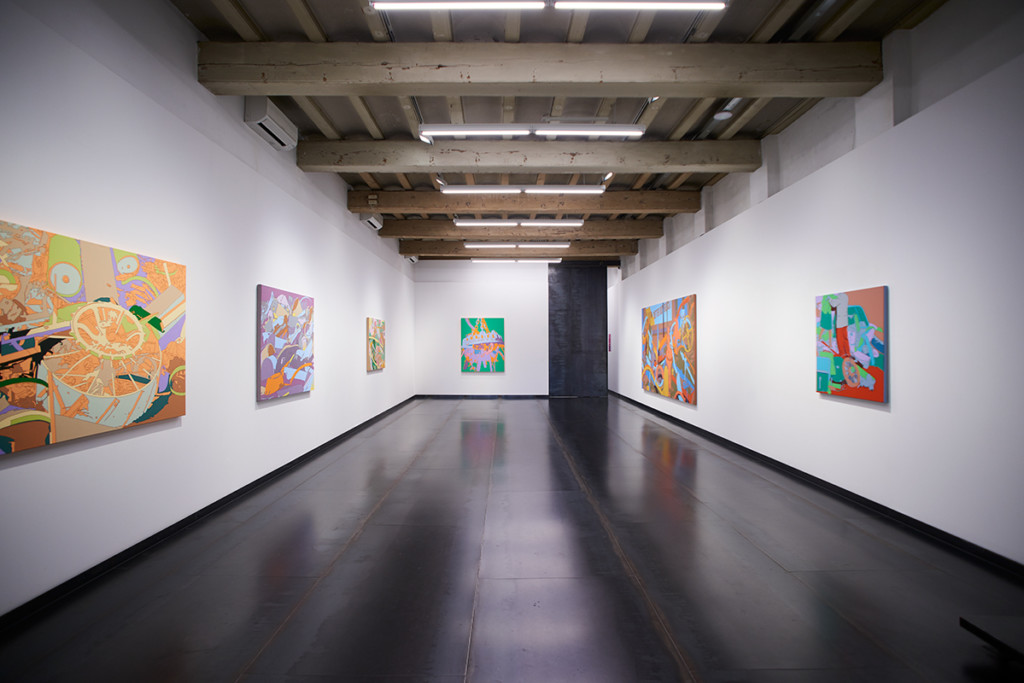
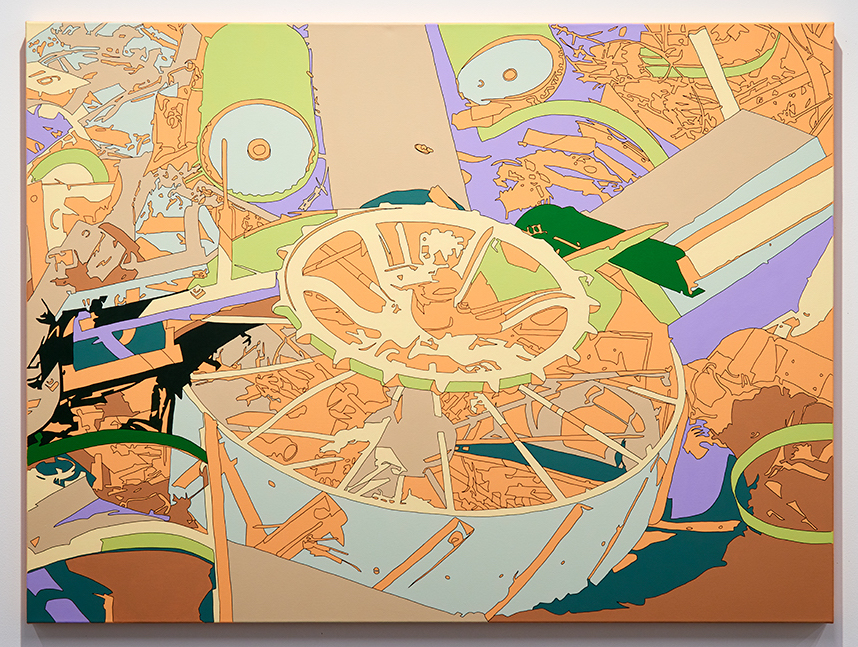
At Senda, each artist will exhibit three large paintings, conceived of with the goal of establishing a conversation. In addition, Peter Halley and Yago Hortal have created five collaborative works on paper, signed by both artists.
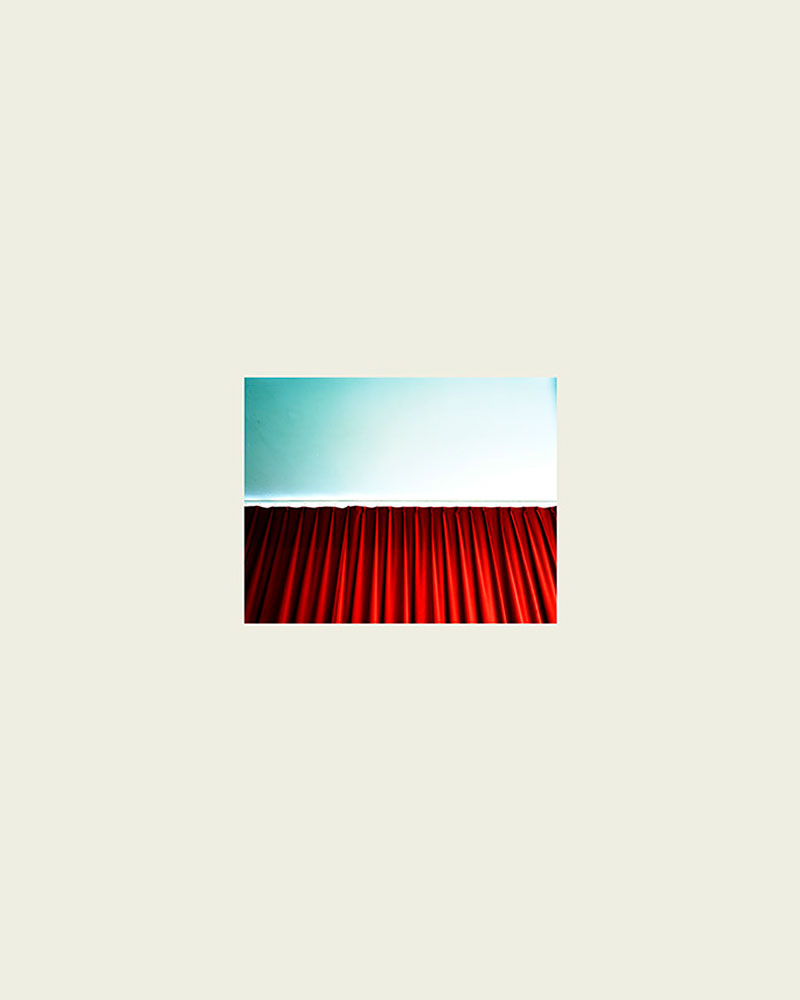
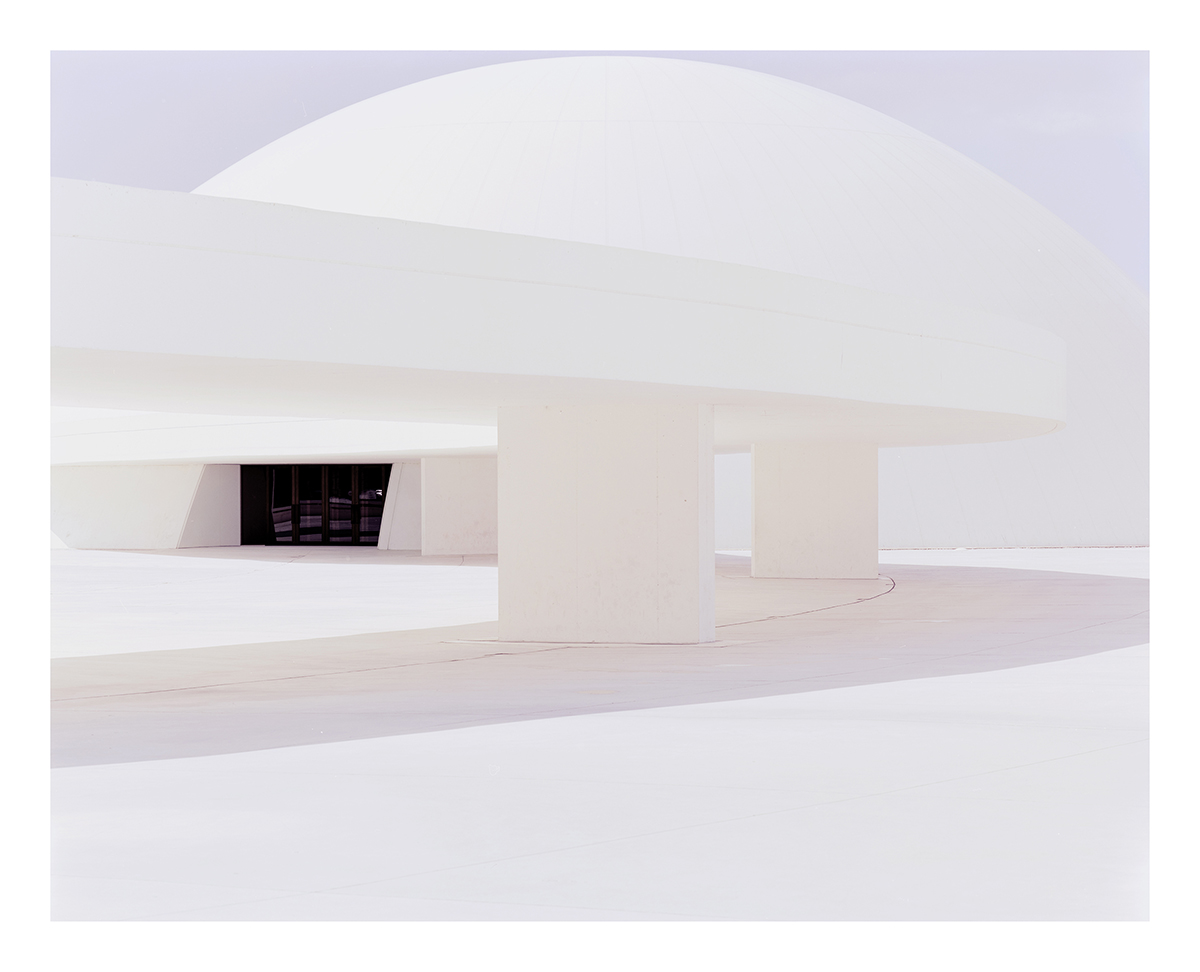
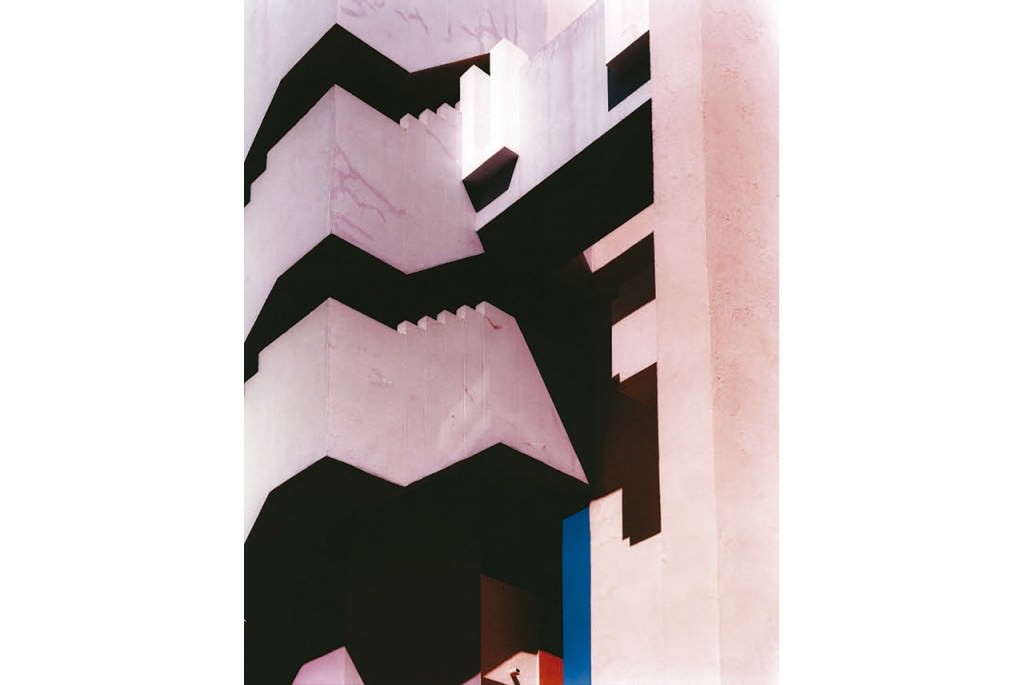
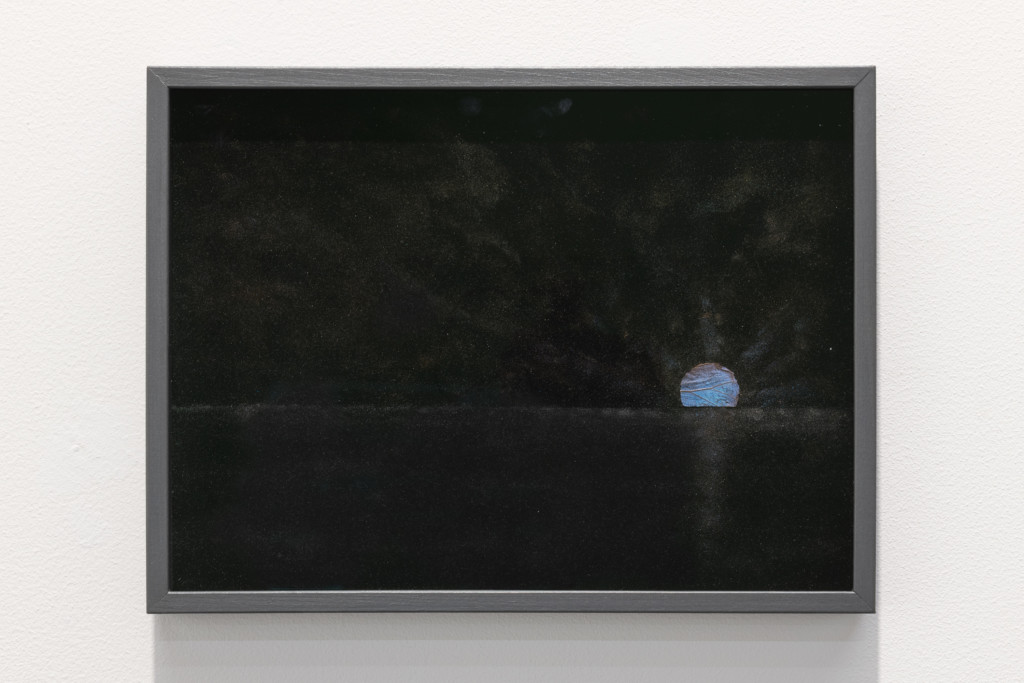
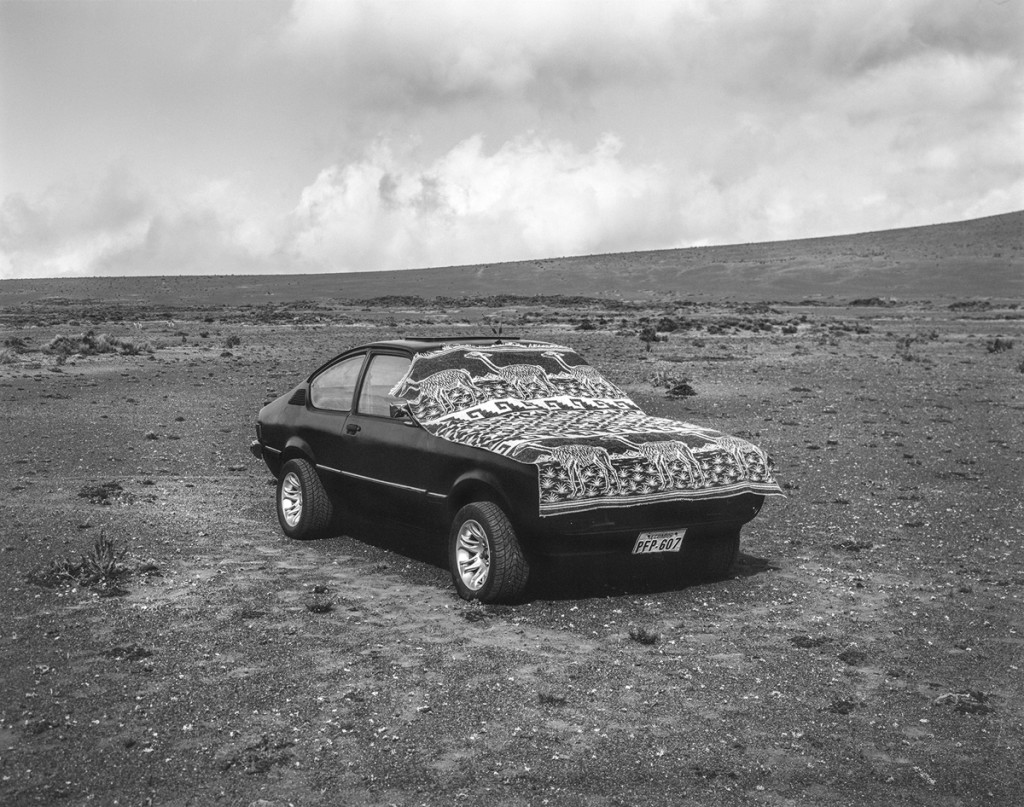
Galeria Senda presents a new exhibition by Jordi Bernadó (Lleida, 1966) in which the artist sophisticates his critical view and shows a new angle on his own work. He presents his latest mural photographs simultaneously to the show ‘Henri Cartier-Bresson e gli altri’, curated by Giovanna Calvenzi in the Palazzo della Ragione de Milano.
To Bernadó, this exhibition is born from the premise: ‘To see is to invent’. Traditional documentary photography offers a genuine and evident representation. However, the moment when Bernadó chooses what he wants to portray and the way he wants to capture it, photography becomes a reinvention beyond pure representation.
For Pernot’s first exhibition at the gallery, the artist has chosen his most important series-investigations that have never been presented in Spain before.
In ‘Destruction’, Mathieu Pernot proposes a photographic narrative which originates from the gesture of destruction and questions memory through the images of disappearance.