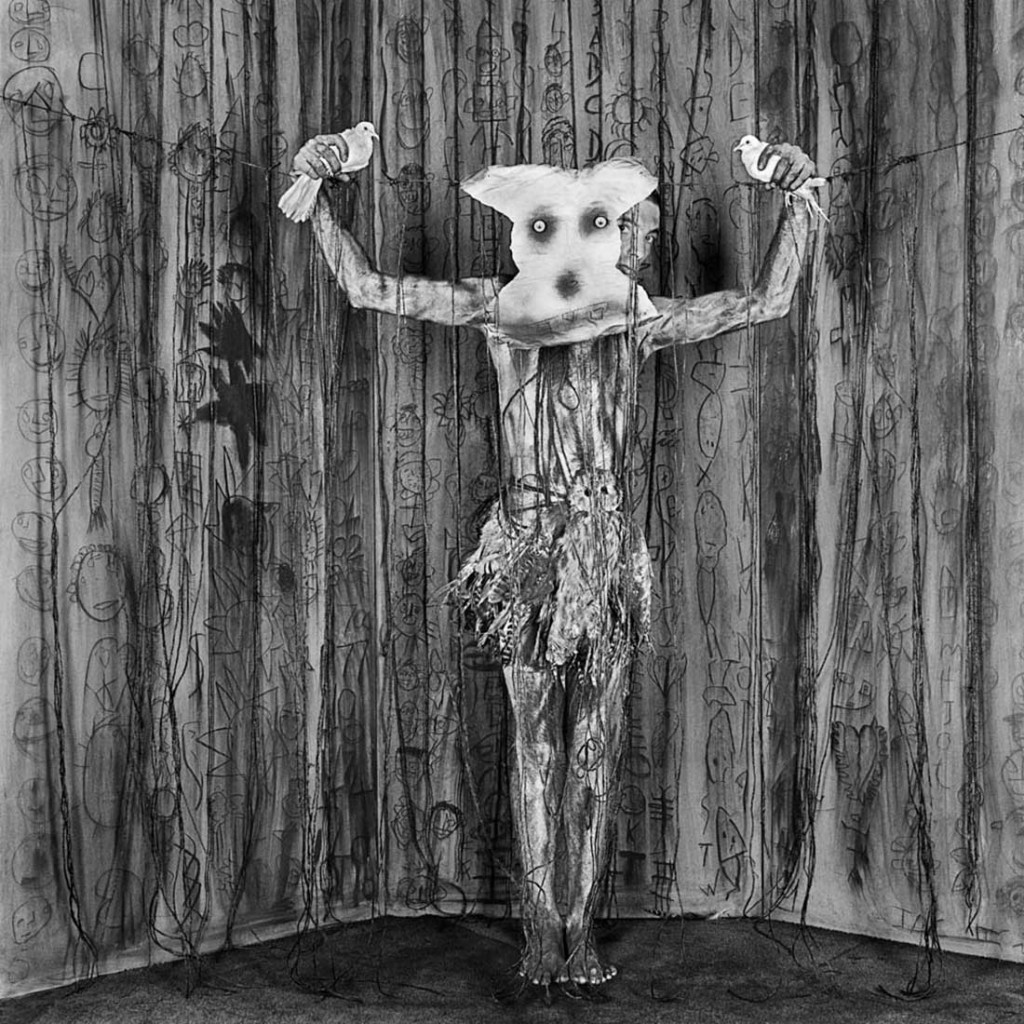
Roger The Rat Ballen at Loop Fair 2022, ROGER BALLEN
Roger Ballen, “Roger The Rat” for LOOP Fair Barcelona
15- 17 November 2022
📍Room 304, Almanac Barcelona
We’re happy to announce Roger Ballen as this year’s artist for Loop Fair with his work: “Roger the Rat”, which will be exhibited at #LOOP22 (15-17 Nov) where a selection of contemporary artists’ films and videos will be presented by international galleries in a unique viewing experience in Barcelona.
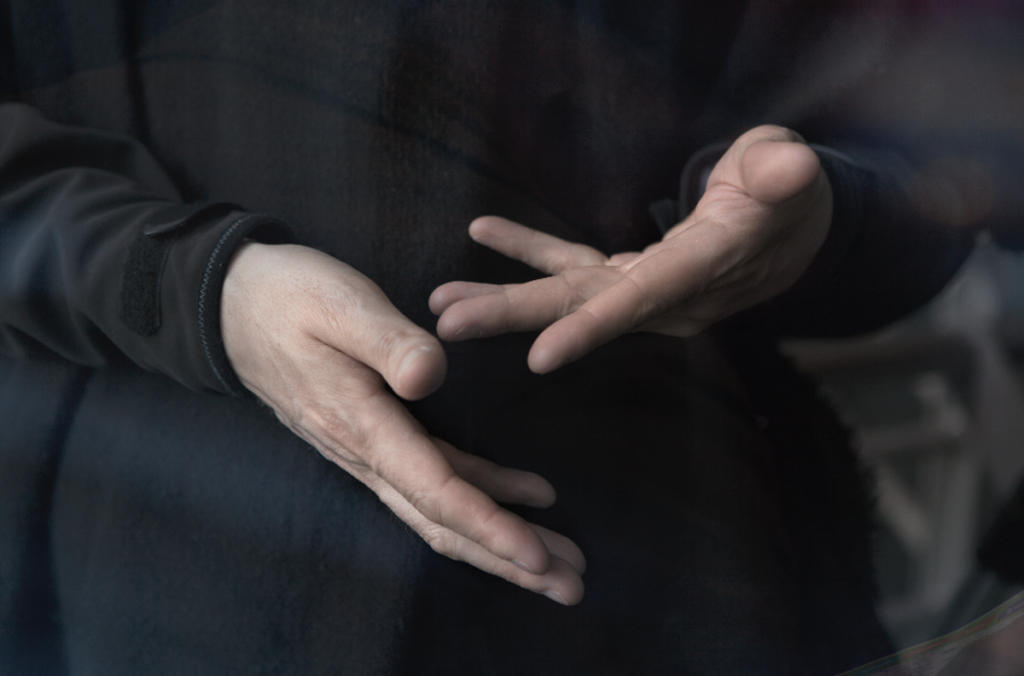
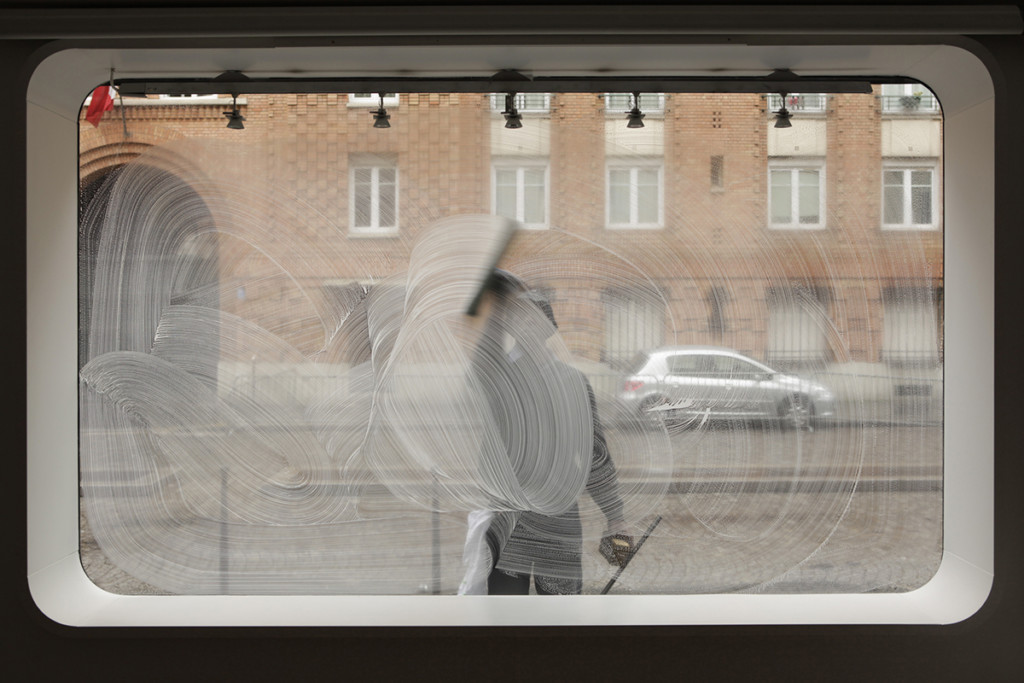
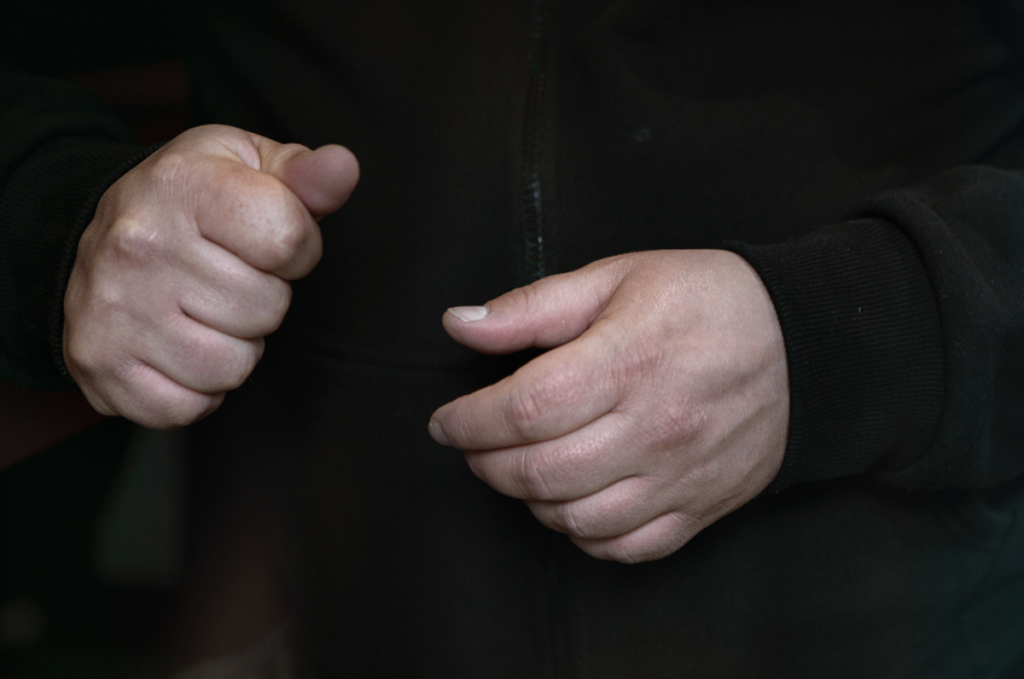
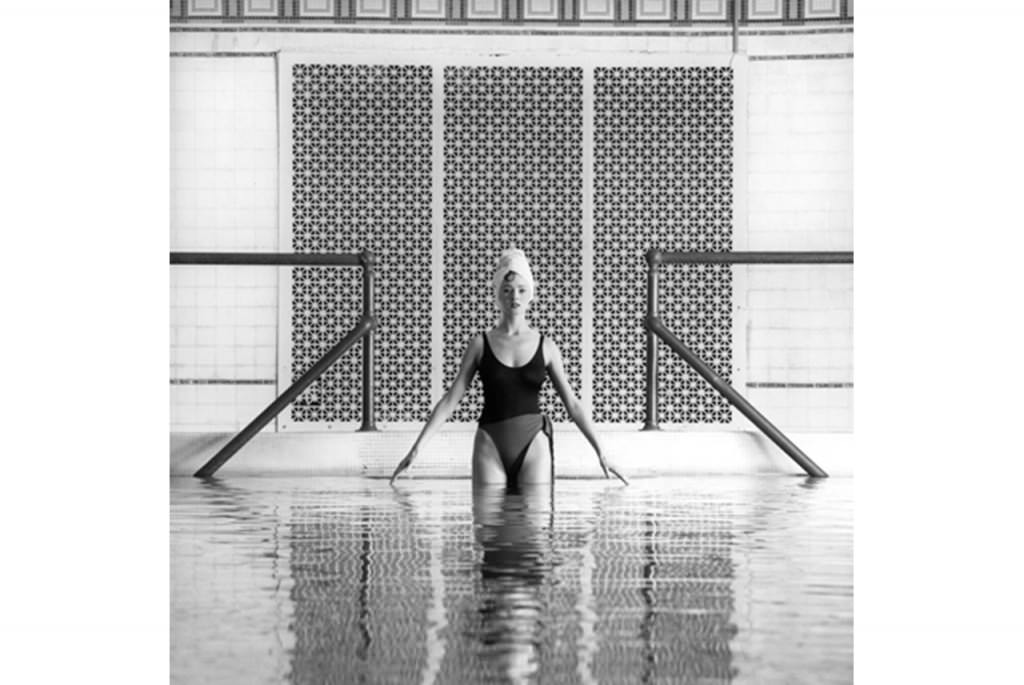
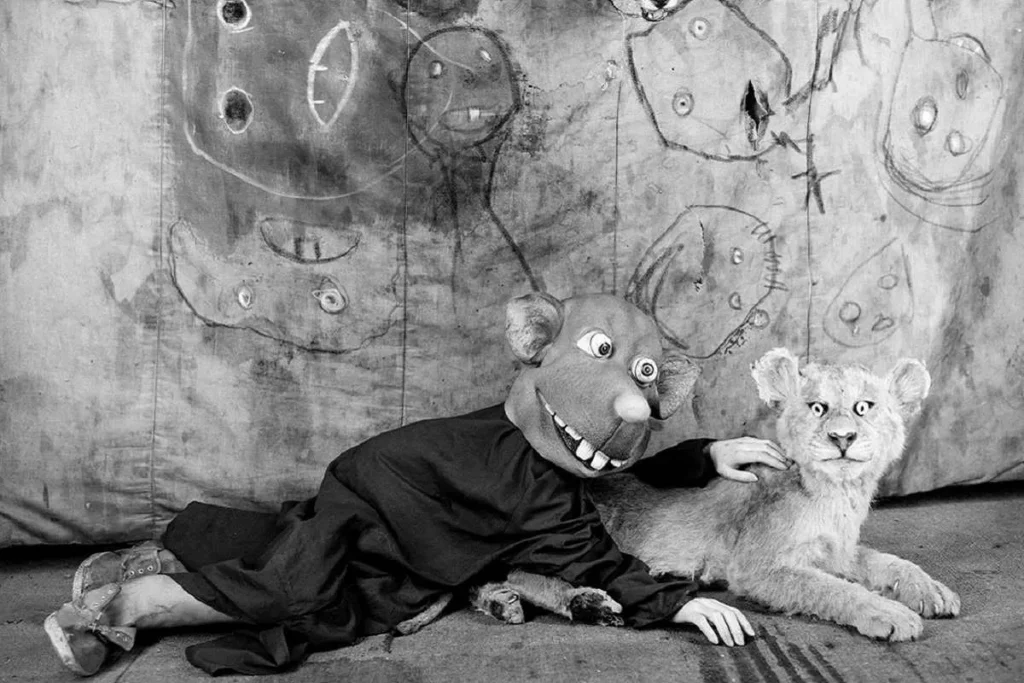
Roger Ballen created a persona, Roger the Rat. Here, the artist creates and documents an archetypal persona who is a part-human, part-rat creature who lives an isolated life outside of mainstream society. In this film, we follow Roger the Rat, as he moves out of his restrictive hovel to an abandoned graveyard of discarded mannequins taking them to his house to dress and communicate with them.
Initially Roger the Rat was ecstatic with his newfound companions as he could dress them, talk to them and share his feelings. As time passes, he comes increasingly frustrated by their lack of response which leads to his outbursts of violent and irrational behavior. Roger the Rat, gives expression to the corroding effects of loneliness, seclusion, and uncomfortable suffocation in confined spaces afflicted on the human psyche as a consequence of the isolation.

ARTIST BIO
Roger Ballen was born in New York in 1950, son of a photograph editor at Magnum.
Ballen has worked as a geologist and mine consultant before launching his own photographic career, documenting small towns in rural Africa and their isolated inhabitants, spending more than 40 years living there.
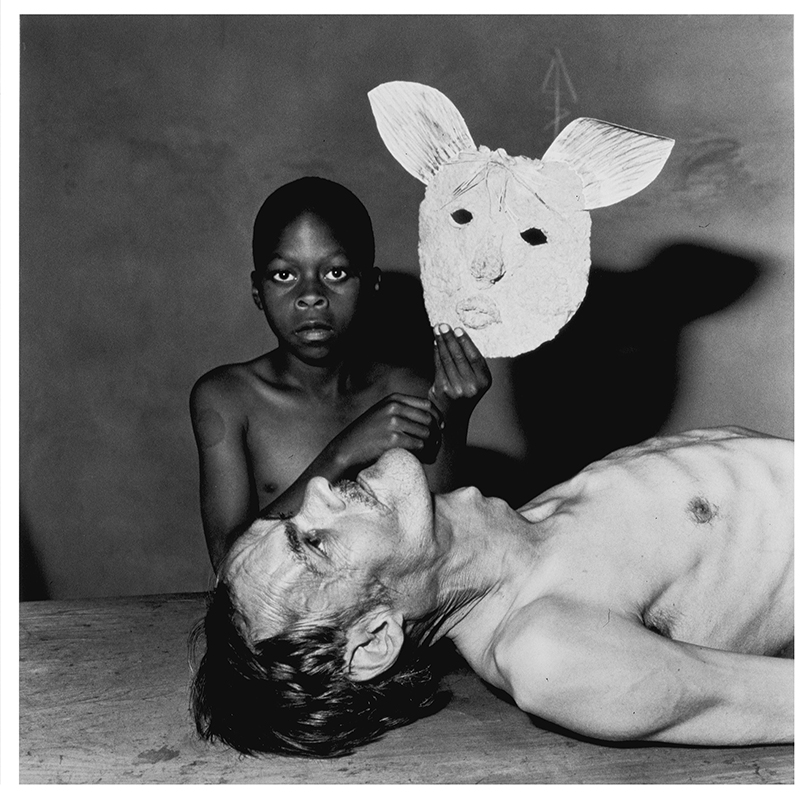
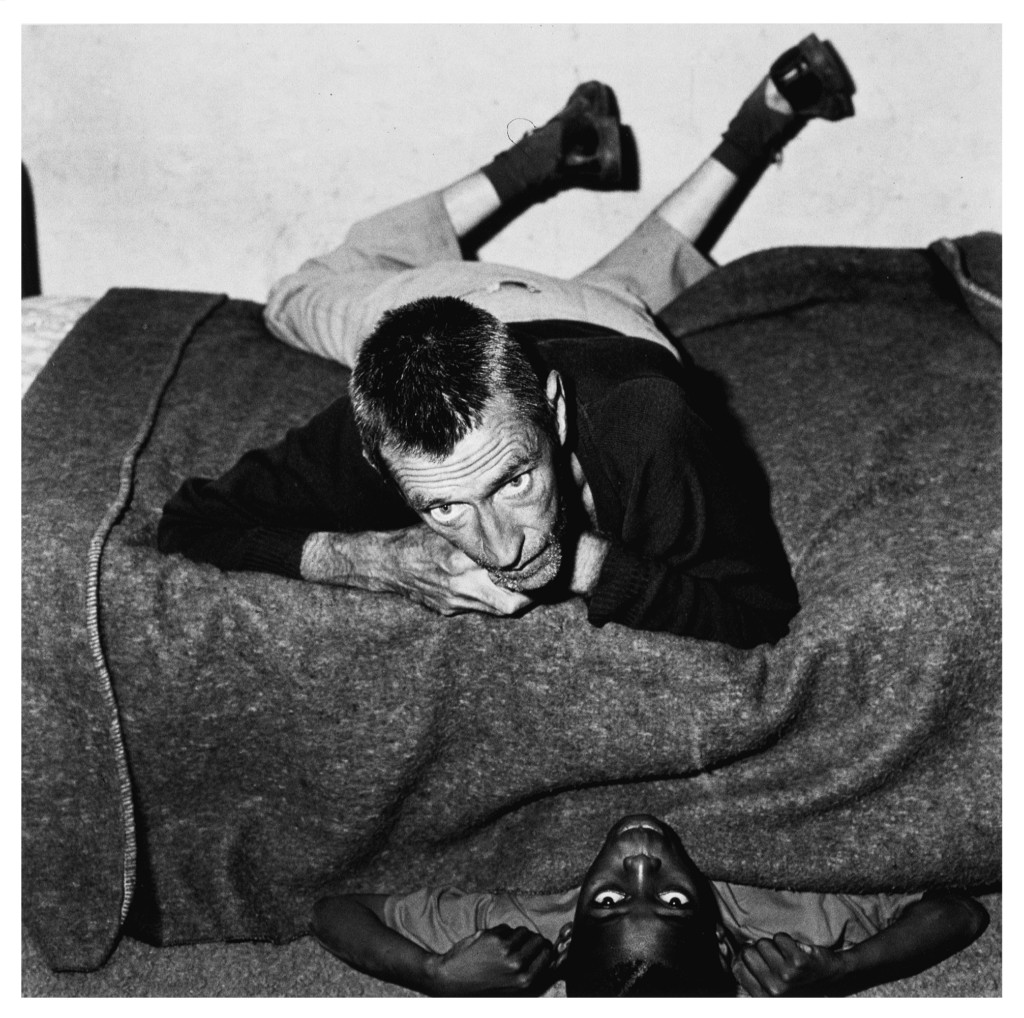
It was in the 90s when his style changed, trying the black and white technique and a more ‘documentary fiction’ approach to his work. Ballen has always been intrigued by the idea of a hybrid between photography and drawing, as well as the expansion of his visual language, making him experiment with video works where the human conditions are his main subject matter.
He is considered one of the most influential artists of the 21st century, having published over 25 books internationally and being part of multiple solo and group exhibitions since 1981.
Inverso Mundus, by AES+F at Recontemporary, Torino
The work is signed by the AES+F collective, artists who have represented Russia on various occasions and events such as the Venice Biennale and Sao Paulo, and who at this time have openly distanced themselves from the politics of their country. A choice intended to support artistic production regardless of the country of origin.
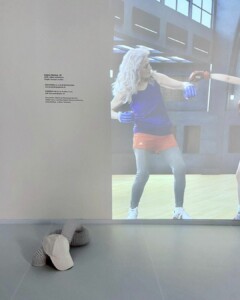
Inverso Mundus is a critique of the despotic situation we live in today, in the midst of the climate, social and economic crisis, exploitation and gender inequality. The video work, about 40 minutes long, is presented with an ad hoc setting designed by the designer Andrea Isola with the input of the participants in the Exhibition Design workshop organized by Recontemporary in the days immediately prior to the opening.
To enrich the exhibition, the suggestive Mon Viewing Room by collector Michele Forneris, in collaboration with Recontemporary, hosts another work by the artists, Psychosis, which can be visited by appointment by sending an email to spazioomon@gmail.com: a little hidden gem in the city for the most curious.
The work “Inverso Mundus” has as its initial point of reference the carnivalesque engravings of the 16th century in the “upside down world” genre, an early form of populist social criticism that emerged with the arrival of Gutenberg’s printing press. The title of the project mixes old Italian and Latin, from a centuries-old stratification of meanings, combining “Inverso”, the Italian “reverso” and old Italian “poetry”, with the Latin “Mundus”, which means “world”. “.
This work reinterprets contemporaneity through the tradition of printmaking, depicting a contemporary world consumed by a tragicomic apocalypse where social conventions are turned upside down to highlight underlying premises we take for granted:
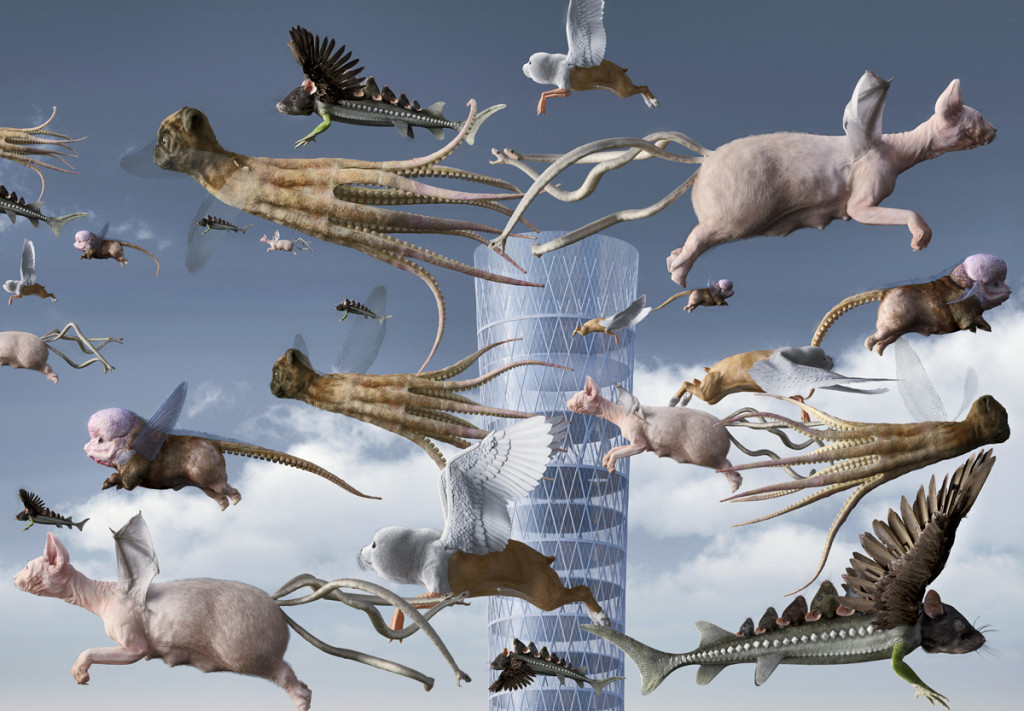
Metrosexual garbage men bathe the streets with sewage and garbage. An international board of directors is usurped by its impoverished doppelgangers. The poor give alms to the rich. Chimeras come down from the sky to be petted like pets. A pig guts a butcher. Women dressed in cocktail dresses sensually torture men in cages and devices inspired by IKEA furniture in an ironic reversal of the Inquisition. Tweens and octogenarians fight a kickboxing match. Riot police embrace protesters in an orgy on a huge luxurious bed. Men and women carry donkeys on their backs and virus-like radiolaria in Haeckel’s illustrations, peering out and perching on unsuspecting people who are busy taking selfies.
The video’s background music is an amalgamation of Léon Boëllmann’s 1895 Gothique, an original piece by contemporary composer and media artist Dmitry Morozov (also known as VTOL), along with excerpts from Ravel, Liszt, Mozart and Tchaikovsky, with a special emphasis on “Casta Diva” by Norma by Vincenzo Bellini.
Recontemporary message:
“The works are a reference to the current situation of sudden changes and extreme instability, a moment in which more than ever it is necessary to be carried away by the communicative power of art and the power it has to unite and make people reflect, synthesizing universal messages.”
Inverso Mundus, por AES+F en Recontemporary, Torino
The work is signed by the AES+F collective, artists who have represented Russia on various occasions and events such as the Venice Biennale and Sao Paulo, and who at this time have openly distanced themselves from the politics of their country. A choice intended to support artistic production regardless of the country of origin.
Inverso Mundus is a critique of the despotic situation we live in today, in the midst of the climate, social and economic crisis, exploitation and gender inequality. The video work, about 40 minutes long, is presented with an ad hoc setting designed by the designer Andrea Isola with the input of the participants in the Exhibition Design workshop organized by Recontemporary in the days immediately prior to the opening.
To enrich the exhibition, the suggestive Mon Viewing Room by collector Michele Forneris, in collaboration with Recontemporary, hosts another work by the artists, Psychosis, which can be visited by appointment by sending an email to spazioomon@gmail.com: a little hidden gem in the city for the most curious.
The work “Inverso Mundus” has as its initial point of reference the carnivalesque engravings of the 16th century in the “upside down world” genre, an early form of populist social criticism that emerged with the arrival of Gutenberg’s printing press. The title of the project mixes old Italian and Latin, from a centuries-old stratification of meanings, combining “Inverso”, the Italian “reverso” and old Italian “poetry”, with the Latin “Mundus”, which means “world”. “.
This work reinterprets contemporaneity through the tradition of printmaking, depicting a contemporary world consumed by a tragicomic apocalypse where social conventions are turned upside down to highlight underlying premises we take for granted:
Metrosexual garbage men bathe the streets with sewage and garbage. An international board of directors is usurped by its impoverished doppelgangers. The poor give alms to the rich. Chimeras come down from the sky to be petted like pets. A pig guts a butcher. Women dressed in cocktail dresses sensually torture men in cages and devices inspired by IKEA furniture in an ironic reversal of the Inquisition. Tweens and octogenarians fight a kickboxing match. Riot police embrace protesters in an orgy on a huge luxurious bed. Men and women carry donkeys on their backs and virus-like radiolaria in Haeckel’s illustrations, peering out and perching on unsuspecting people who are busy taking selfies.
The video’s background music is an amalgamation of Léon Boëllmann’s 1895 Gothique, an original piece by contemporary composer and media artist Dmitry Morozov (also known as VTOL), along with excerpts from Ravel, Liszt, Mozart and Tchaikovsky, with a special emphasis on “Casta Diva” by Norma by Vincenzo Bellini.
Inverso Mundus, por AES+F en Recontemporary, Torino
La obra está firmada por el colectivo AES+F, artistas que han representado a Rusia en diversas ocasiones y eventos como la Bienal de Venecia y Sao Paulo, y que en este momento se han distanciado abiertamente de la política de su país. Una elección destinada a apoyar la producción artística independientemente del país de origen.
Inverso Mundus es una crítica a la situación despótica que vivimos hoy, en medio de la crisis climática, social y económica, la explotación y la desigualdad de género. La obra de vídeo, de unos 40 minutos de duración, se presenta con una ambientación ad hoc diseñada por la diseñadora Andrea Isola con la aportación de los participantes en el taller de Diseño de Exhibiciones organizado por Recontemporary en los días inmediatamente anteriores a la inauguración.
La obra “Inverso Mundus” tiene como punto de referencia inicial los grabados carnavalescos del siglo XVI en el género del “mundo al revés”, una forma temprana de crítica social populista surgida con la llegada de la imprenta de Gutenberg. El título del proyecto mezcla el italiano antiguo y el latín, a partir de una estratificación de significados centenaria, combinando “Inverso”, el “reverso” italiano y la “poesía” italiana antigua, con el latín “Mundus”, que significa “mundo”.

Installation at Recontemporary, Torino
Esta obra reinterpreta la contemporaneidad a través de la tradición del grabado, representando un mundo contemporáneo consumido por un apocalipsis tragicómico donde las convenciones sociales se trastornan para resaltar las premisas subyacentes que damos por sentadas:
Los basureros metrosexuales bañan las calles con aguas negras y basura. Una junta directiva internacional es usurpada por sus dobles empobrecidos. Los pobres dan limosna a los ricos. Las quimeras bajan del cielo para ser acariciadas como mascotas. Un cerdo destripa a un carnicero. Mujeres vestidas con vestidos de cóctel torturan sensualmente a los hombres en jaulas y dispositivos inspirados en los muebles de IKEA en una irónica inversión de la Inquisición. Preadolescentes y octogenarios pelean un combate de kickboxing. La policía antidisturbios abraza a los manifestantes en una orgía sobre una enorme cama de lujo. Hombres y mujeres llevan burros a la espalda y radiolarios similares a los virus de las ilustraciones de Haeckel, se asoman y se posan sobre personas desprevenidas que están ocupadas tomándose selfies.
La música de fondo del video es una amalgama del Gothique de 1895 de Léon Boëllmann, una pieza original del compositor y artista de medios contemporáneo Dmitry Morozov (también conocido como VTOL), junto con extractos de Ravel, Liszt, Mozart y Tchaikovsky, con un énfasis especial en “Casta Diva” de Norma de Vincenzo Bellini.

Installation at Recontemporary, Torino
AES+F in THE ARMORY SHOW 2022 “Mare Mediterraneum”
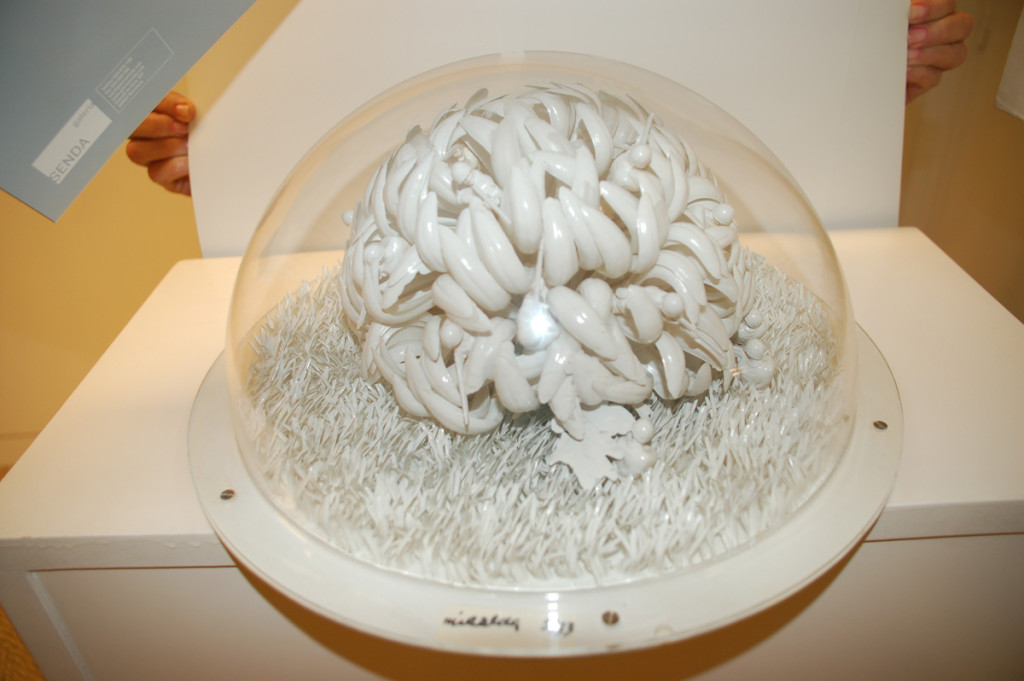
The Russian collective AES+F exhibits once again through galeria SENDA: “Mare Mediterraneum“, after passing through the Teatro Massimo in Palermo, Italy in 2018 –an official event at the same time as the Manifesta art fair– and its follow-up exhibition at Trafalgar, 32, in 2019. This time, we present a single show for this edition of The Armory Show in New York, from September 9 to 11, 2022 at the Javits Center.
Press release (excerpt):
The Mediterranean Sea is the reserve of civilization: its heart has pumped people, cultures and religions from one coast to another like blood. The Phoenicians and the Carthaginians expanded to the north, the Romans and the Crusades to the south, the Genoese to the east, the Byzantine empire to the west, the Islamic caliphate to the east, west, north, and south. Sicily is right in the middle and the storm waves of all civilizations have splashed on its shores. This is still happening today.
The Mediterranean Sea is once again the epicenter of the ideological contradiction. The war has pushed refugees and migrants who, to save themselves, have had to swim and survive to face Europe with a difficult choice. (In ancient mythology, Europe was also forced to cross this sea.) His election has led to political and ideological clashes, the polarization of public opinion and the rise of xenophobia and ethnic violence.
This tragic situation has become a political conflict, as well as an issue of negotiation and ideological speculation. In this way, it has been transmitted by the media as a concept defined today as “post-truth”. The ethical situation that has developed is paradoxical.
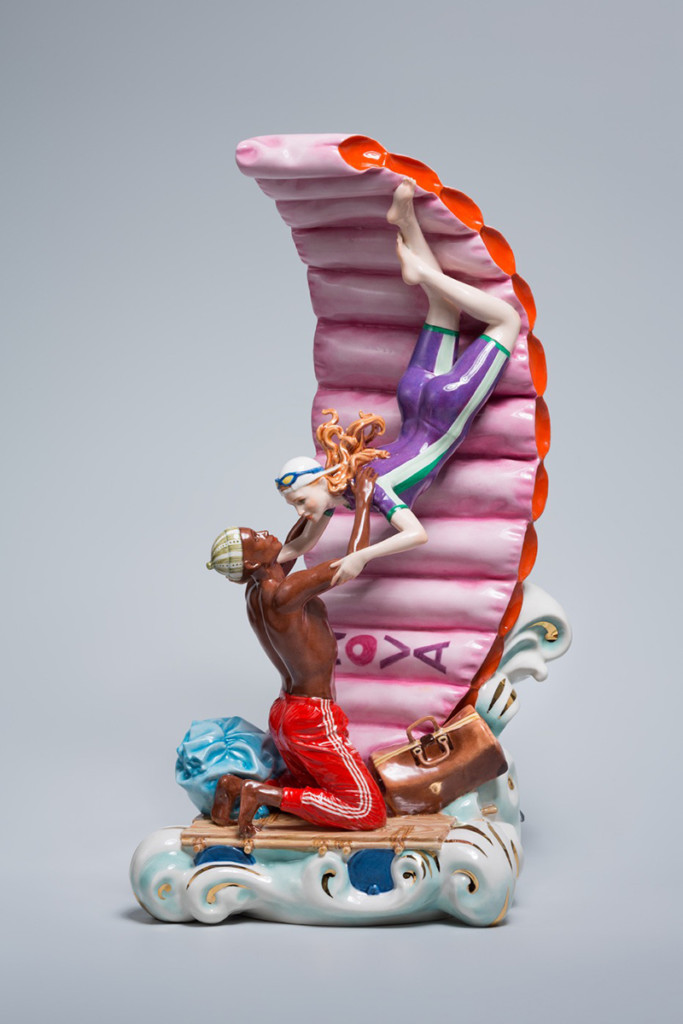
Working with porcelain figures in this theme could be considered an extreme manifestation of this paradox, from a distance an artistic image can be more radical than reality itself because it can push conceptual boundaries.
Porcelain has always been a symbol of satisfaction and bourgeois comfort. The recent waves of migration have confronted Europe with a dilemma: whether to accept the refugees, allowing them to enter at the expense of the material and psychological comfort of their hosts; or to reject them in an immoral, inhuman and cynical act that would damage the cooperative ethical basis of Europe itself.
Comfort is fallible and fragile, like the china associated with it. Kept safe for generations in high places, porcelain figurines are carefully guarded but their fragility encapsulates the threat of instant loss. They break easily.
The chosen form and material of these works contrast with the drama of what is unfolding in the Mediterranean today. A reflected ray of light illuminates better than a direct one. We think this bears truth about this work.
Edited by David Elliott
Follow us on social media & don’t miss any activity or news from the gallery!
Connect with us: @galeriasenda #galeriasenda
AES+F presents Turandot
His work is based on the tensions created between the traditional and the contemporary, from technology to narrative and aesthetics. This is also true for their recent production of Turandot. The collective brings together the classic Turandot, adapted to today’s socio-political dynamics, with the Euro-Oriental fusion aesthetic for which AES+F is so well known. The result is a magnificent wave of surreal visual and aural stimuli.
This work raises existential questions about China from a Western perspective, women’s revenge and authoritarianism, and a mixture of past and future, each of these themes intertwined.
Lab 36 features Ivan Forcadell : The Vegans Buy Flores
We join in with great ideas that we are unable to fully sustain. Many of them represent progress, change and evolution, but they are also the origin of hypocritical attitudes in our society. Vegans buy flowers is an exercise of self-criticism that highlights the contradictions we all tend to fall into. Iván Forcadell (1993) crosses the limit of everything that should not be said with this experiment that vindicates his need to end the hypocrisy and silences imposed by contemporary morality.
The exhibition is a tribute to flowers, main characters of an excessive universe of fun and carefreeness that floods the gallery’s room. The artist wants to give a voice to these beings, talk about their feelings and build a safe space for them; show that not all are the same, not all enjoy the same mental state or have the same dreams … Shall we talk about the flowers’ fetishes? In a constant humorous mood, the author imagines how the day to day of a flower must be like. He wonders: Does anyone ever thinks how the rose feels when its used indiscriminately for funerals and celebrations? What is the chamomile doing? Or what happen’s when the lavander isn’t in the mood to hide bad smells?
The key of this exhibition is the irony, present in each symbol, in the language, and even in its colors. As seen in the artist’s first piece of video art titled “Another Price in Love”, the artist’s main intention is to transport the viewer to the precise moment when a flower is being defoliated while screeching screams fill the space through a strident and agonizing sounds. Thus he reveals the pain of others and how others use it for their own benefit.
The Virgin of Flowers, the second axis of the show, embodies that tradition that is always present in Forcadell’s proposals. This virgin sculpture with a kitsch air that alludes to those pre-Christian cultures in which flowers were the central element of the offerings; meant to convert the viewer into a devotee and, with a certain sarcasm, invites them to participate in this rite that consists of offering a flower while condemning it to observe the world from impotence. The judges of the act are the vessels located in front of the virgin. Which alude to the great contradiction of the show, in which they are at the same time containers of life, inasmuch as they keep the flowers fresh, but at the same time they become funeral urns, since in the background they are spaces without escape for them.
Forcadell plays with the viewer and in a witty manner proposes an exercise in self-criticism. He represents the subtlety of contradictions and asks whether we will be able to perceive in all of those in which we incur. Vegans buy flowers is evidence of that fine line that sustains our morals.
To learn more about the exhibition, schedule your appointment and learn more about the Lab 36 visit the website at www.lab36.org and its social networks at www.instagram.com/lab36.bcn
Lab 36 features Bea Sarrias and Morrosko Vila-Sant-Joan in Welcome to La Ricarda!
“Bienvenidos a La Ricada” (Welcome to La Ricarda” is intended to be an open window from Lab 36 by Galeria Senda to the house and its surroundings. A celebration of a way to understand and embrace culture, which has always been portrayed by the welcoming spirit of La Ricarda. The bright and cheerful colors of the paintings pay a festive tribute to La Ricarda and textures of the audiovisuals show us her skin, the richness of the materials that compose her, and her natural environment.
“Bienvenidos a La Ricarda” is intended to be an immersive experience, a guided tour that transmits emotions similar to the produced when visiting the house. Painting and audiovisual come together and complement each other to offer a complete portrait of a truly special and unique place. A place that in addition to being an architectural jewel recognized throughout the world holds the story of a family, a way of perceiving life and culture.
The exhibition will be released at Gallery Weekend on 15 September from 17.00 to 20 hrs.
To learn more about the exhibition, schedule your appointment and learn more about the Lab 36 visit the website at www.lab36.org and its social networks at www.instagram.com/lab36.bcn
ARCO Madrid 2021
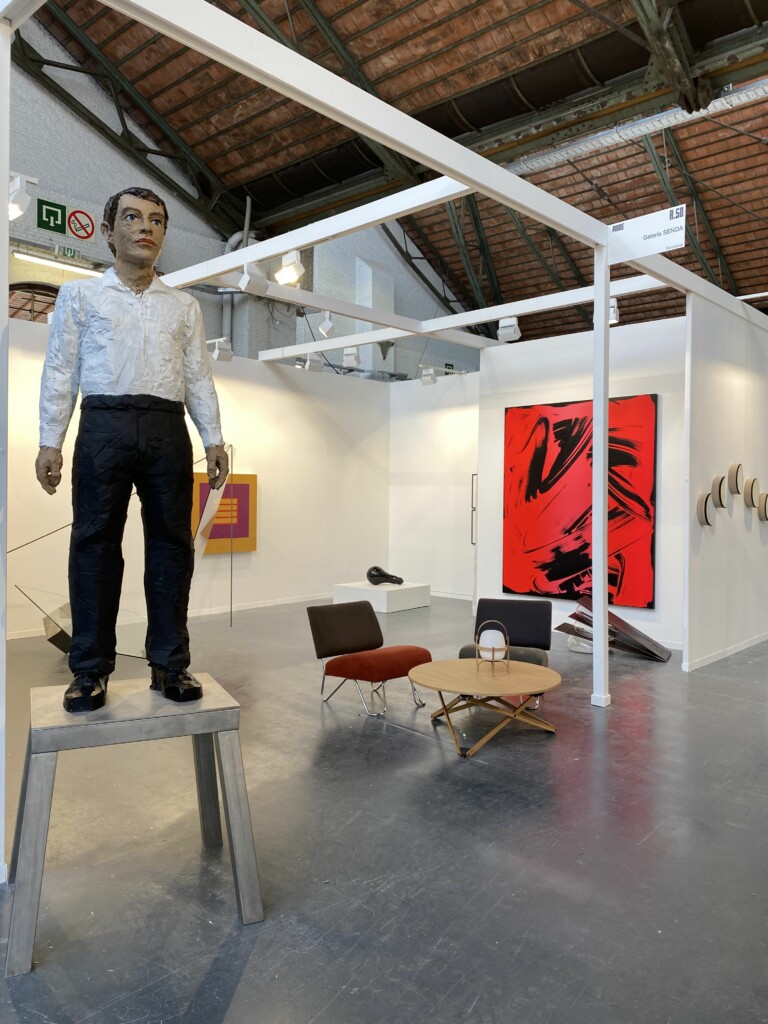
In our 28th participation at the ARCO fair in Madrid, we present a selection of the latest creations by a series of artists with whom we have worked over the last few years. Both national and international artists, who are the pillars of our identity and history as a gallery, as well as new proposals by younger or emerging artists.
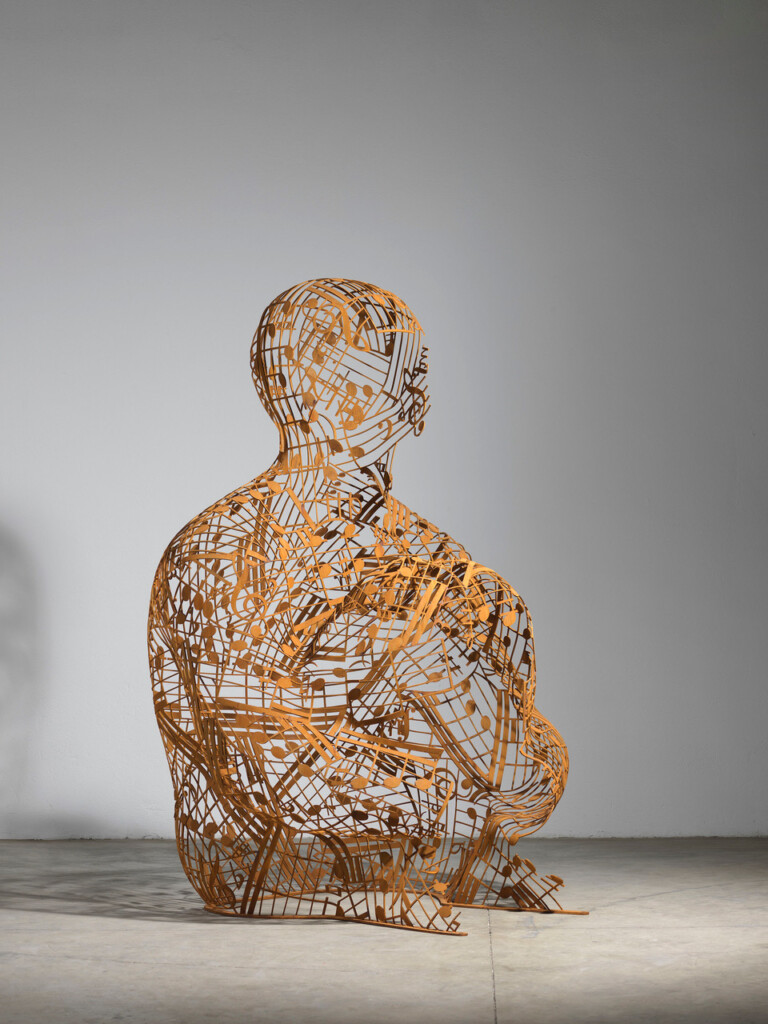
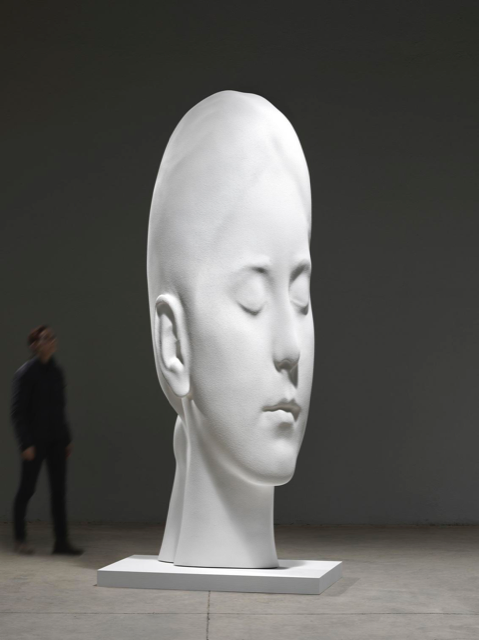
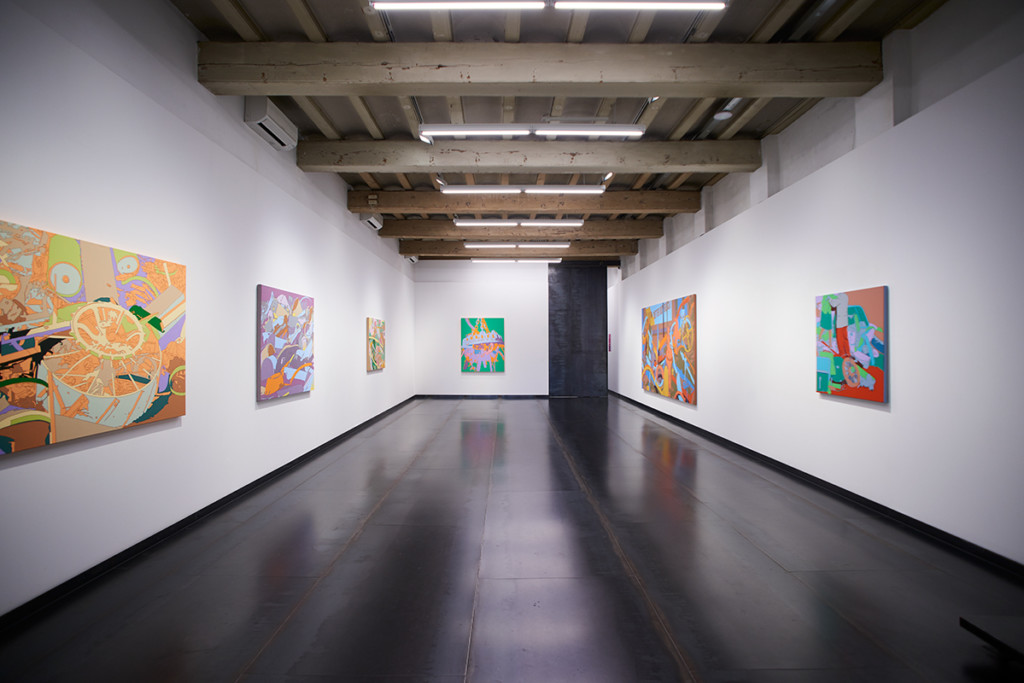
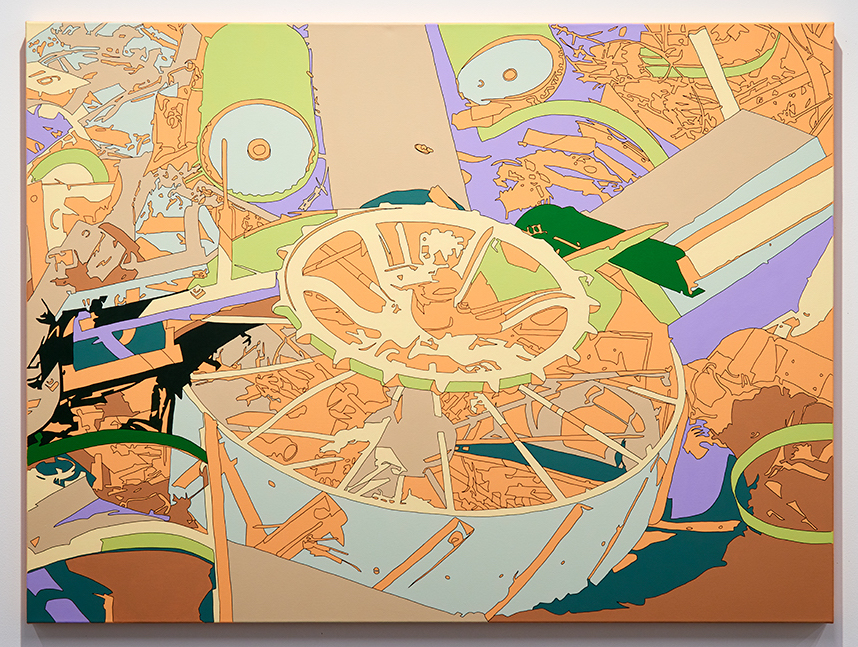
This year we will once again count on the presence of Jaume Plensa (Barcelona, 1955), an iconic figure of sculpture at an international level, who has just closed an exhibition in our gallery a few months ago, and of whom we will present a piece at ARCOmadrid 2021. Peter Halley (New York, 1953), whose exhibition “New Paintings” opened the 2020-2021 season at SENDA Gallery, will also be present with one of his latest works. Photographs by Jordi Bernadó (Lleida, 1966), whose ID series will be shown at the end of the year at MNAC in Barcelona, and Ola Kolehmainen (Helsinki, 1966) will not be missing; both artists are currently working on new projects. Painter Yago Hortal (Barcelona, 1983) will present his monographic book edited by SENDA Ensayo and a series of large-format paintings with which he inaugurates a new formal turn; some of these works have been part of Hortal’s solo show at the Vila Casas Foundation (Barcelona).
Following the success of the solo show at ARCOmadrid 2020 by Brazilian artist Túlio Pinto (Brasilia, 1974), who has joined the gallery’s roster, we will present one of his most recent sculptures. Our proposal also includes a series of small-format works on paper by EVRU/ZUSH (Barcelona, 1946), an artist who returned to the national art scene last year with the exhibition “Volver a Ser” (SENDA gallery, 2020), after more than eight years of absence. Madrid-based Cuban artist Glenda Leon (Havana, 1976), after participating in the TEDIUM video art group exhibition at the Pushkin Museum in Moscow, made up of SENDA artists and the solo show Music of Forms at the MEIAC in Badajoz, will be present with a conceptual work from the series “Every Form is a Form of Time” (2020). We will also have the presence of a new artist, the American Donald Sultan (Asheville, 1951), with a large-format painting. He has just inaugurated his first solo exhibition at SENDA gallery.
Following our previous participations in ARCOmadrid, we will propose to expand our stand with an adjacent space dedicated to an artist’s project, which this year will be dedicated to Carla Cascales.
Translated with www.DeepL.com/Translator (free version)