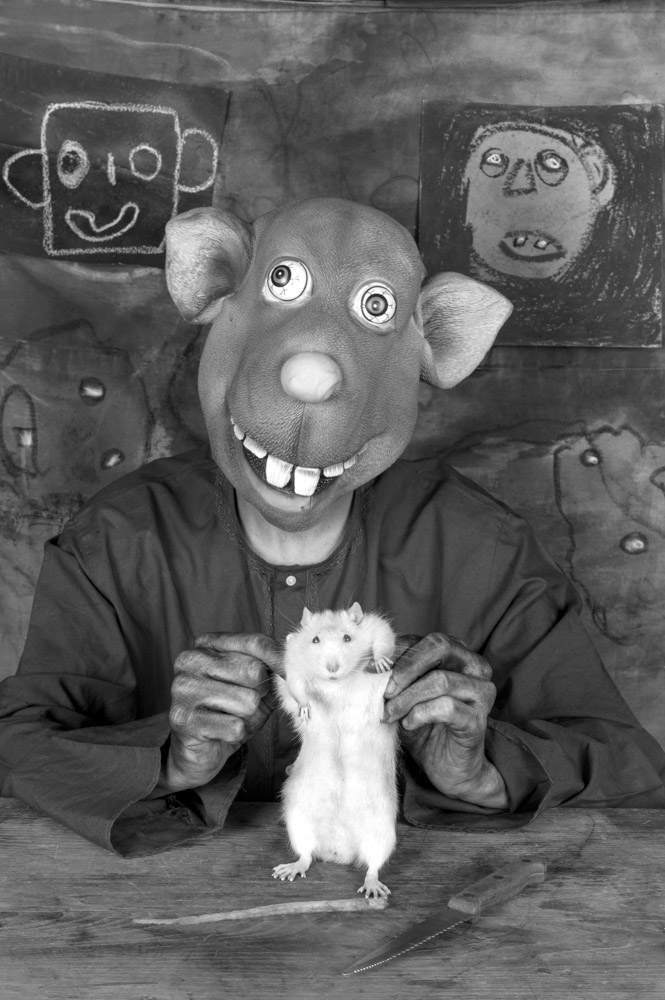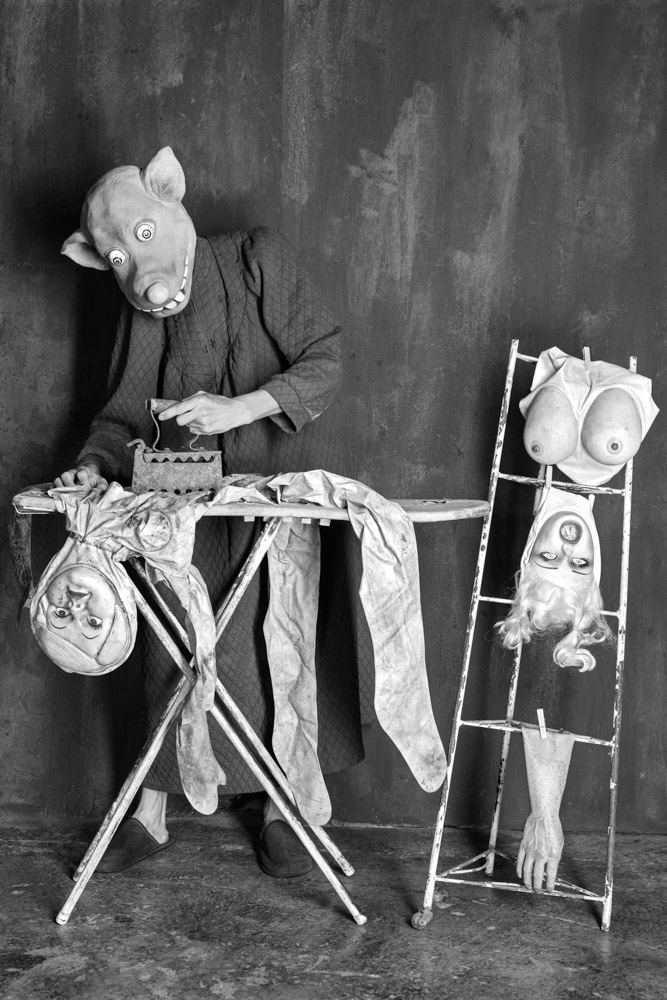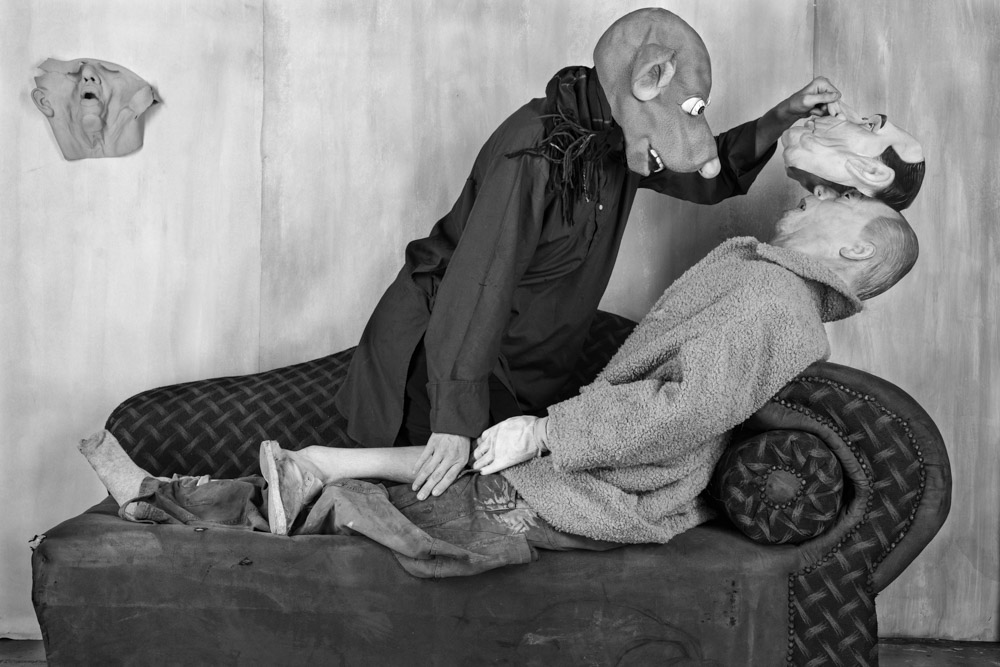
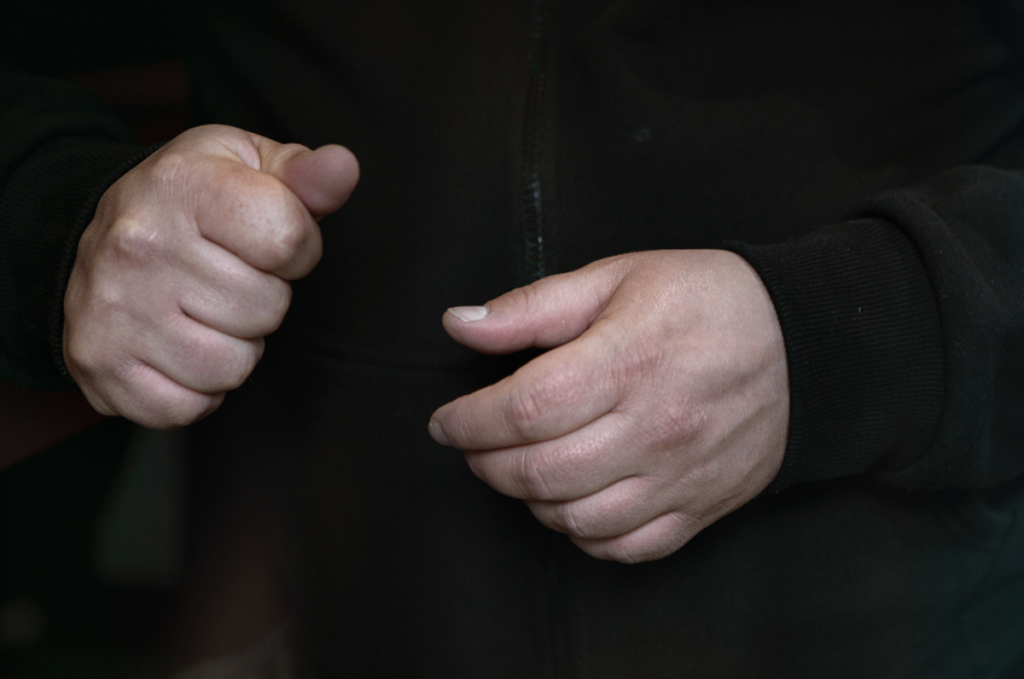
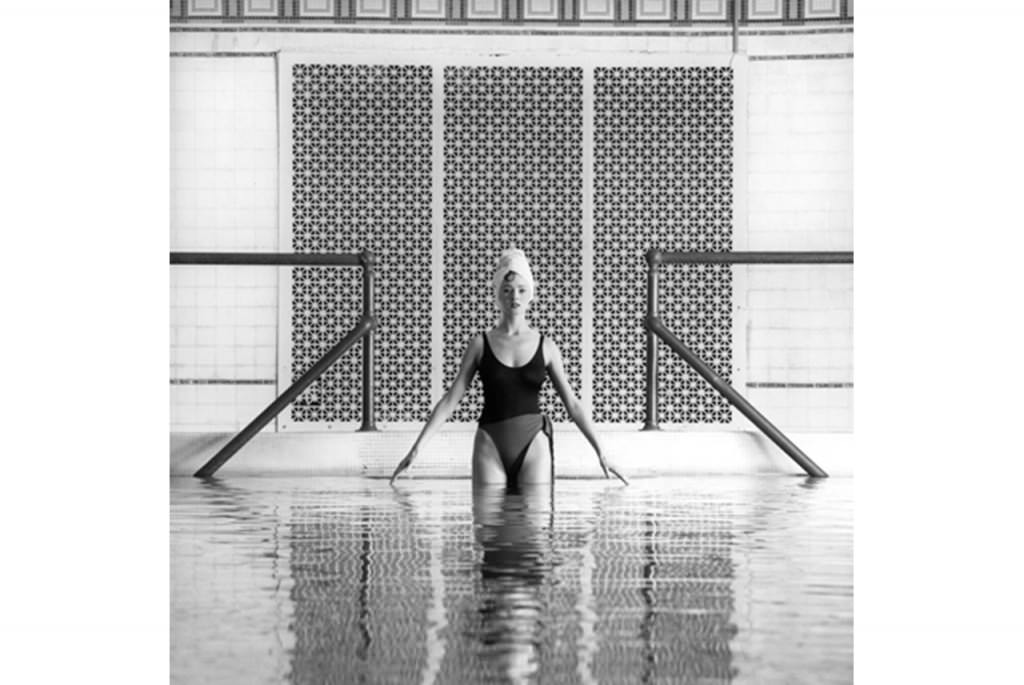
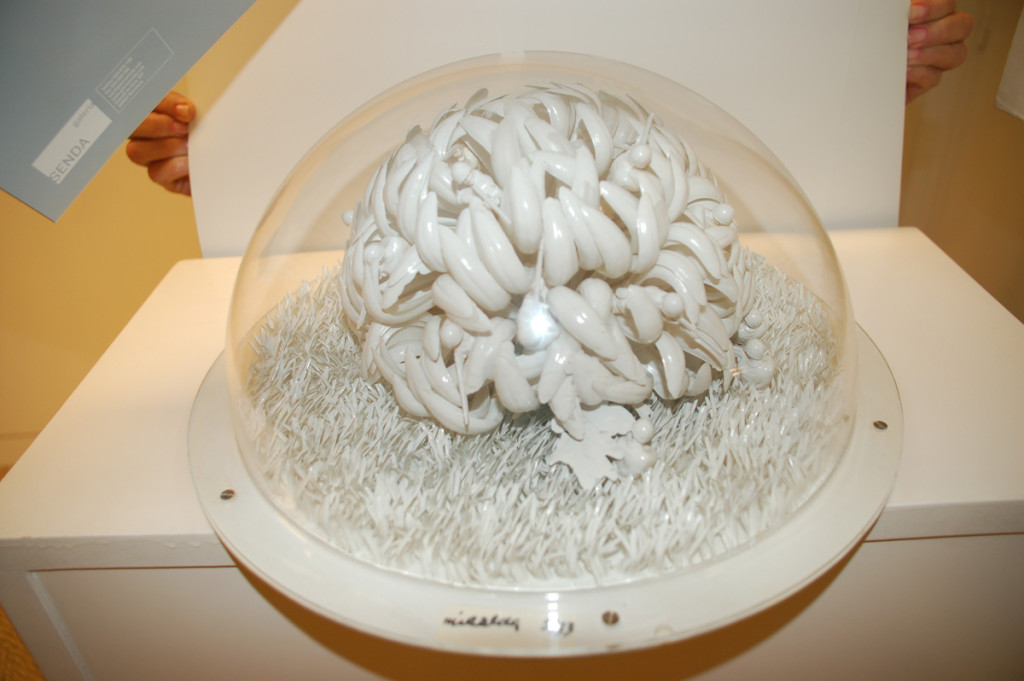
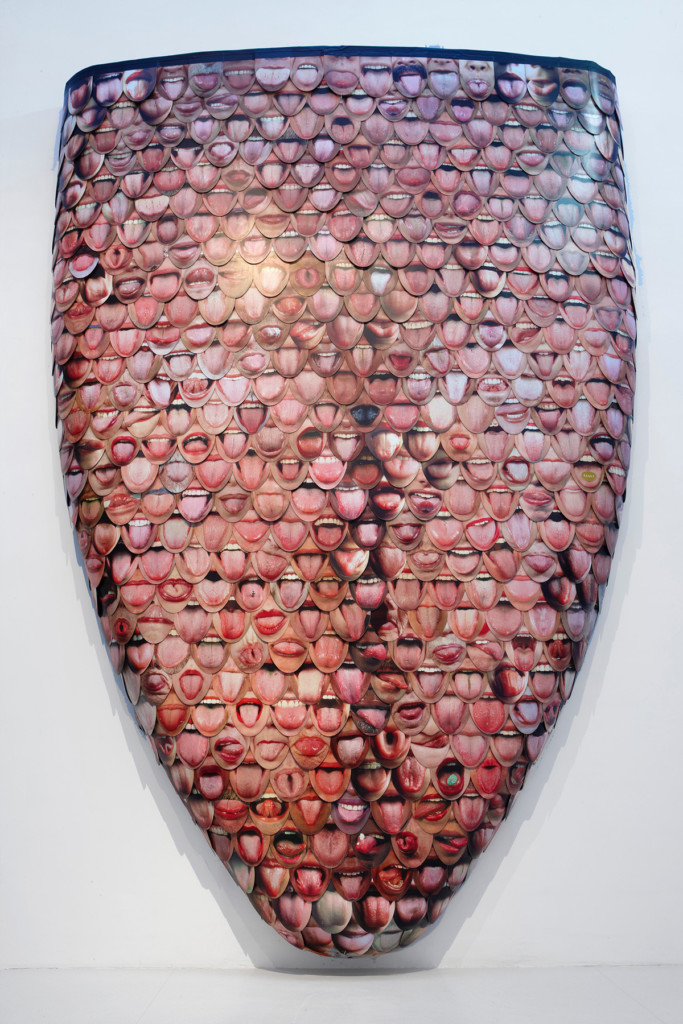
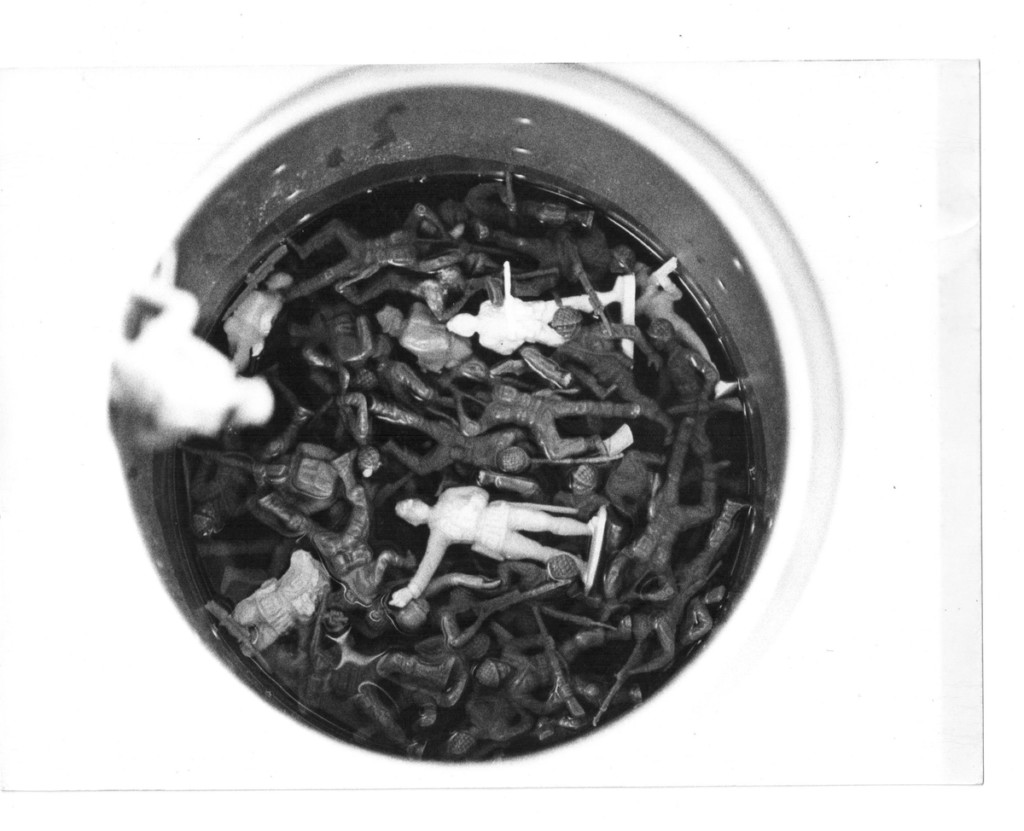
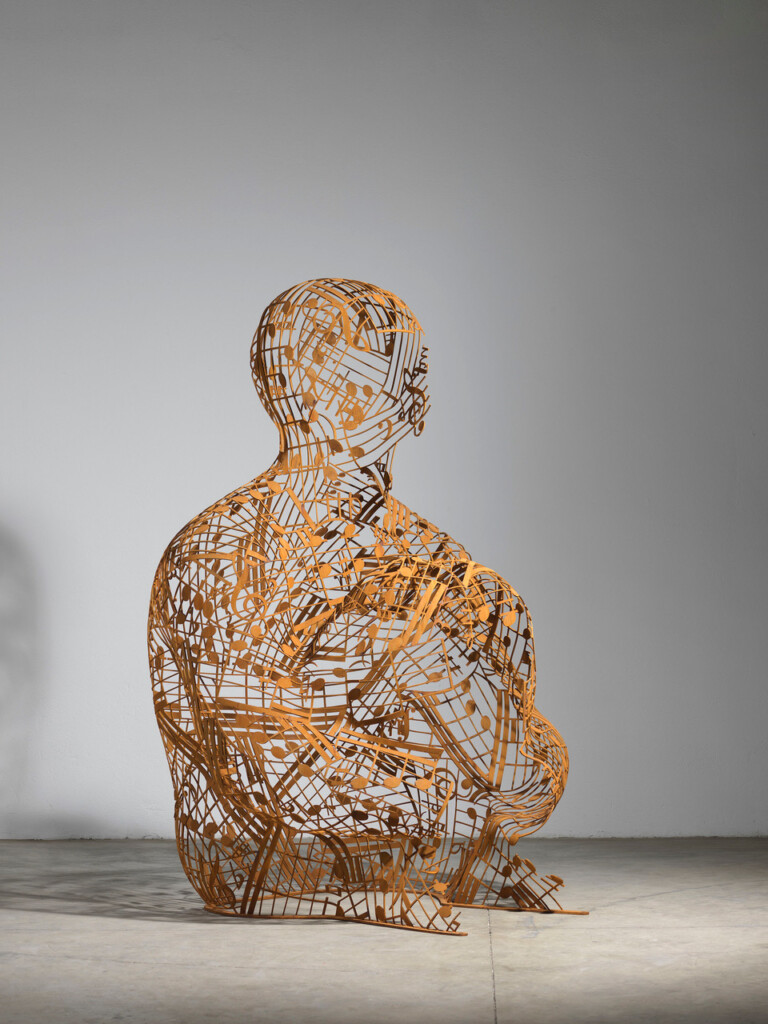
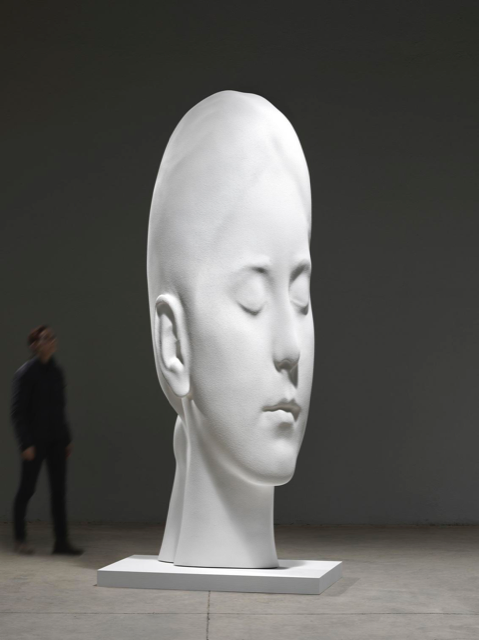
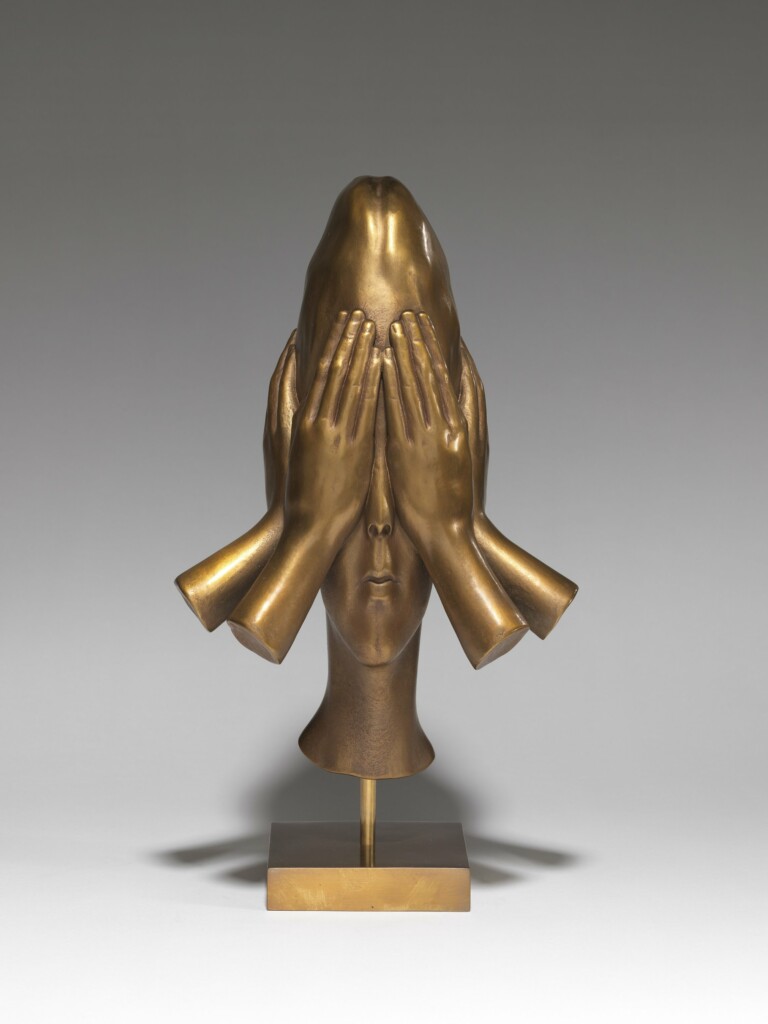
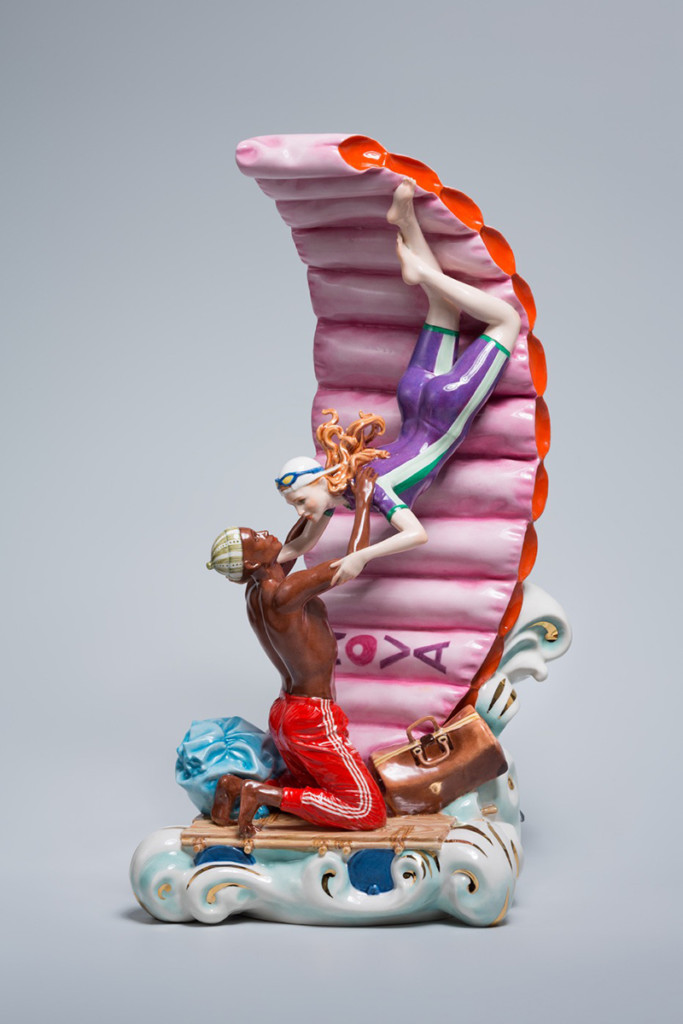
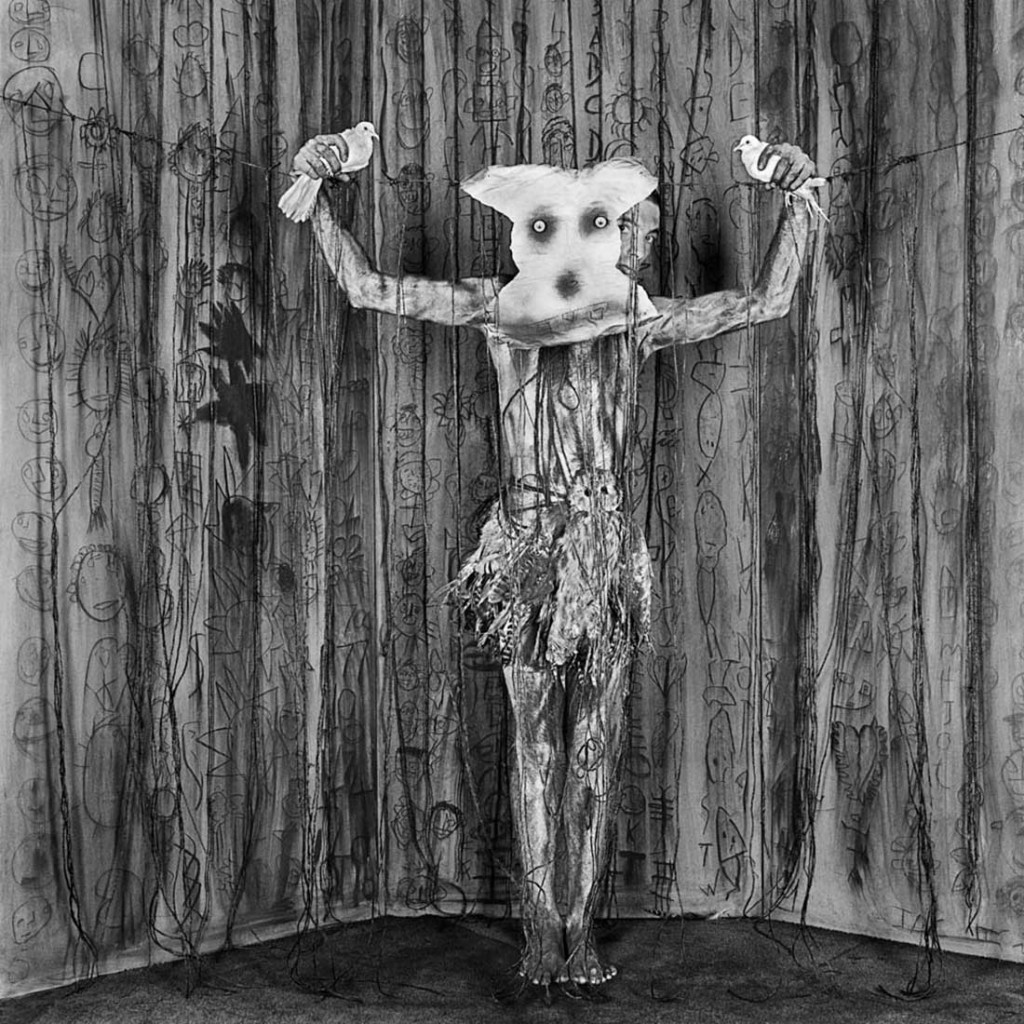
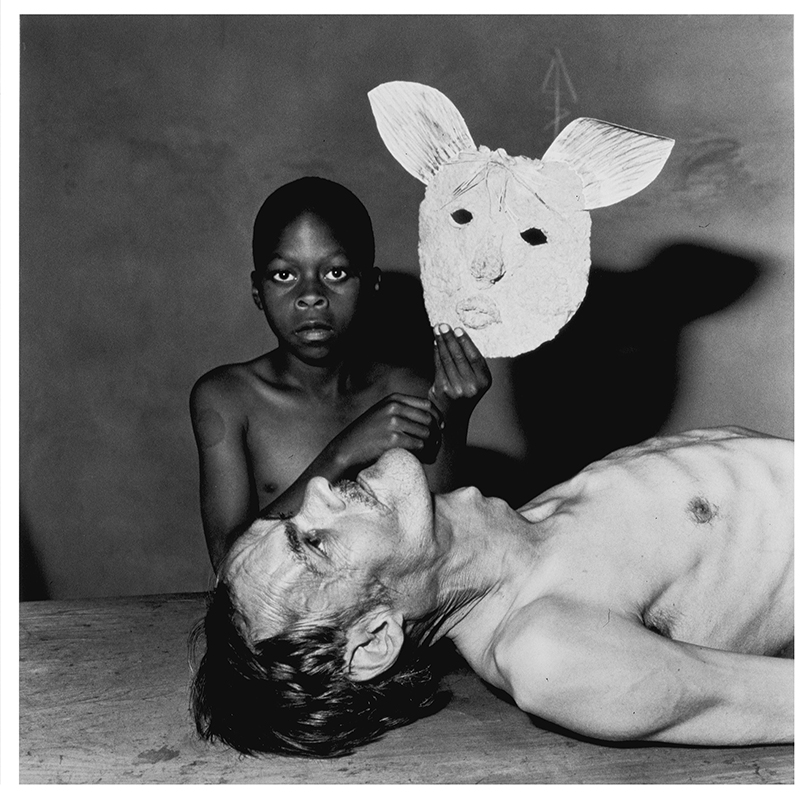
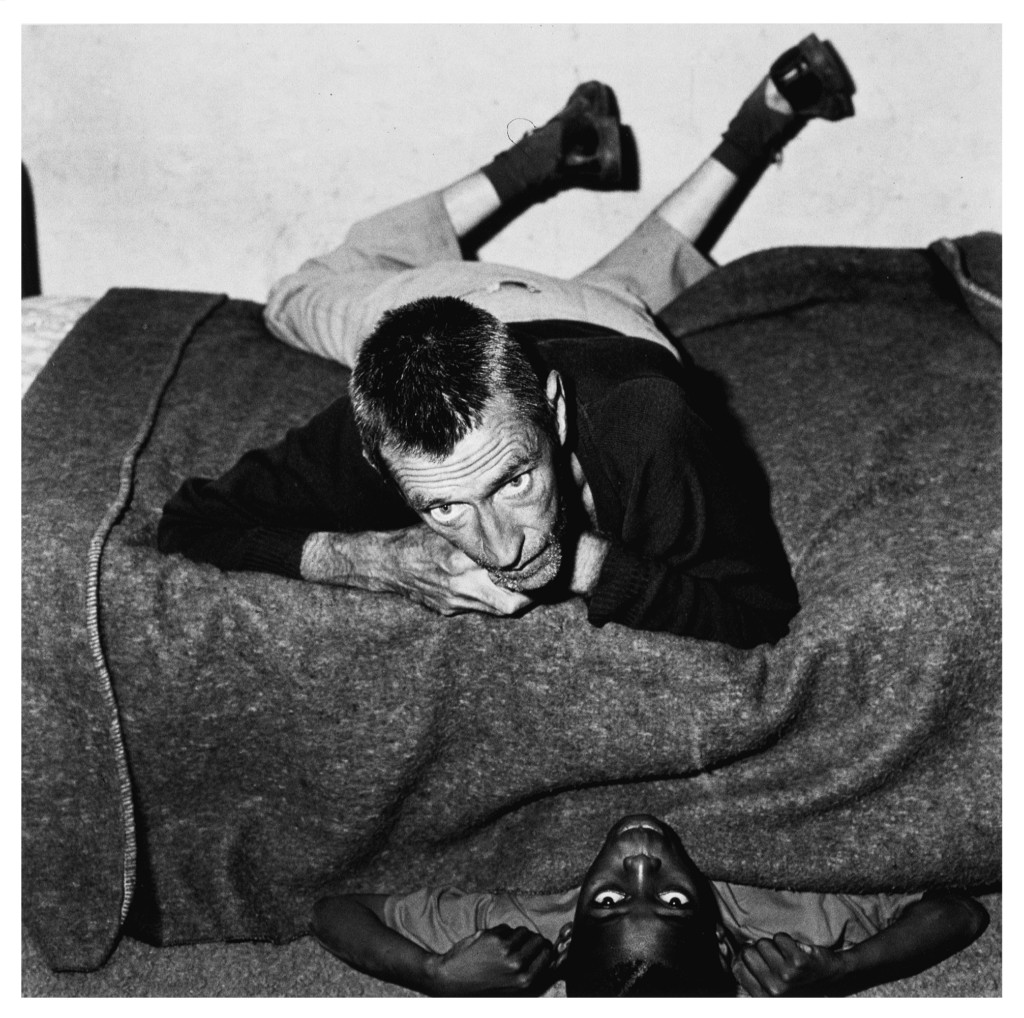

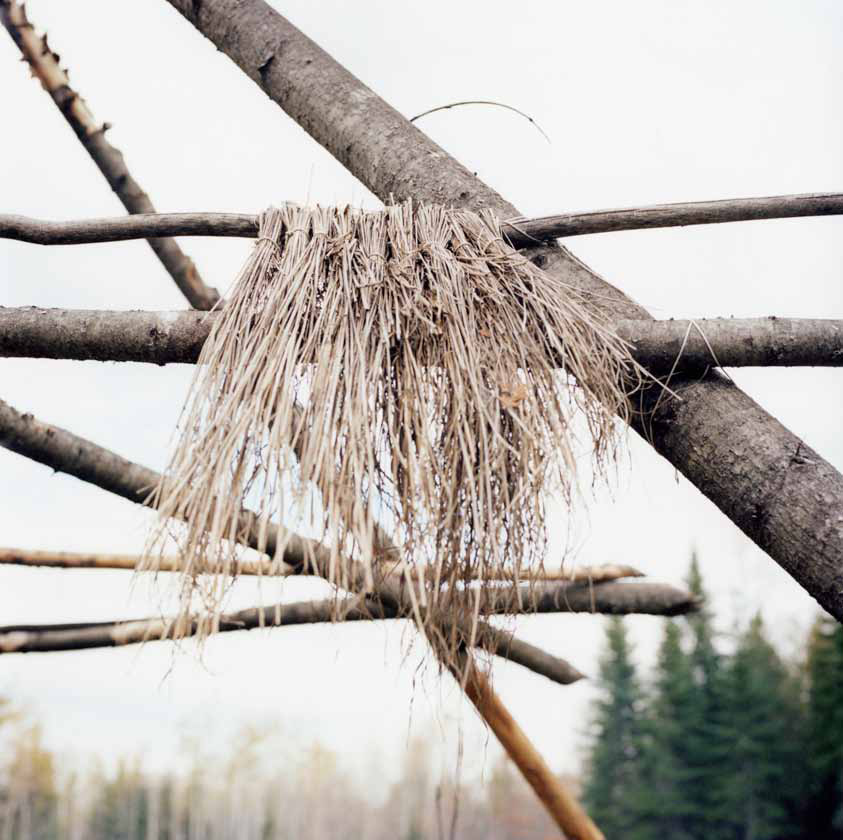
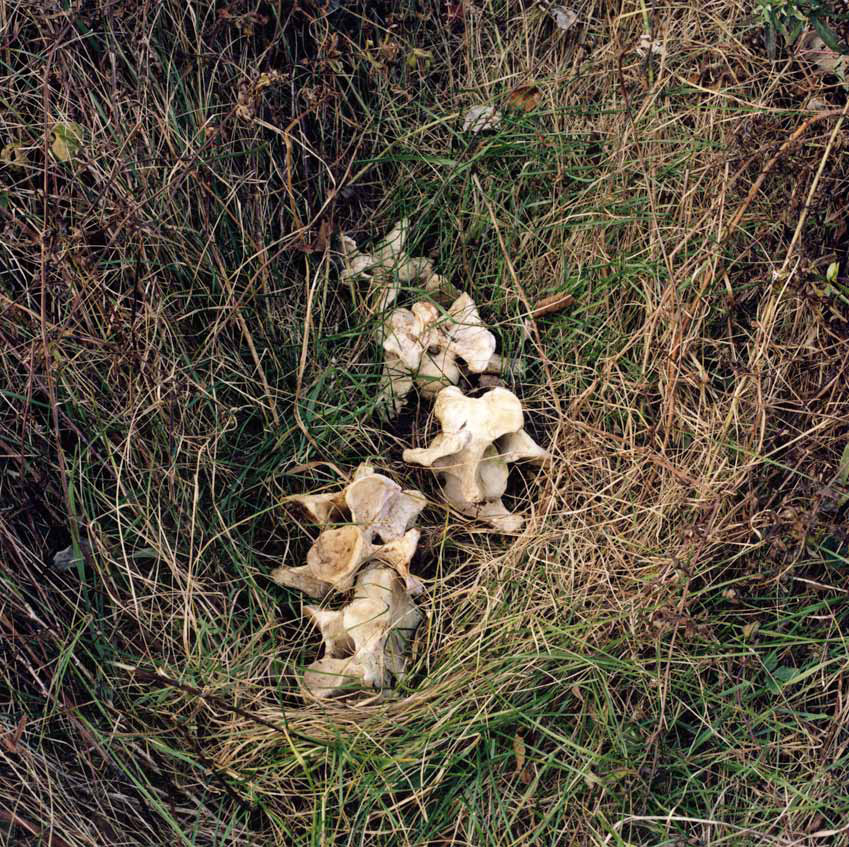
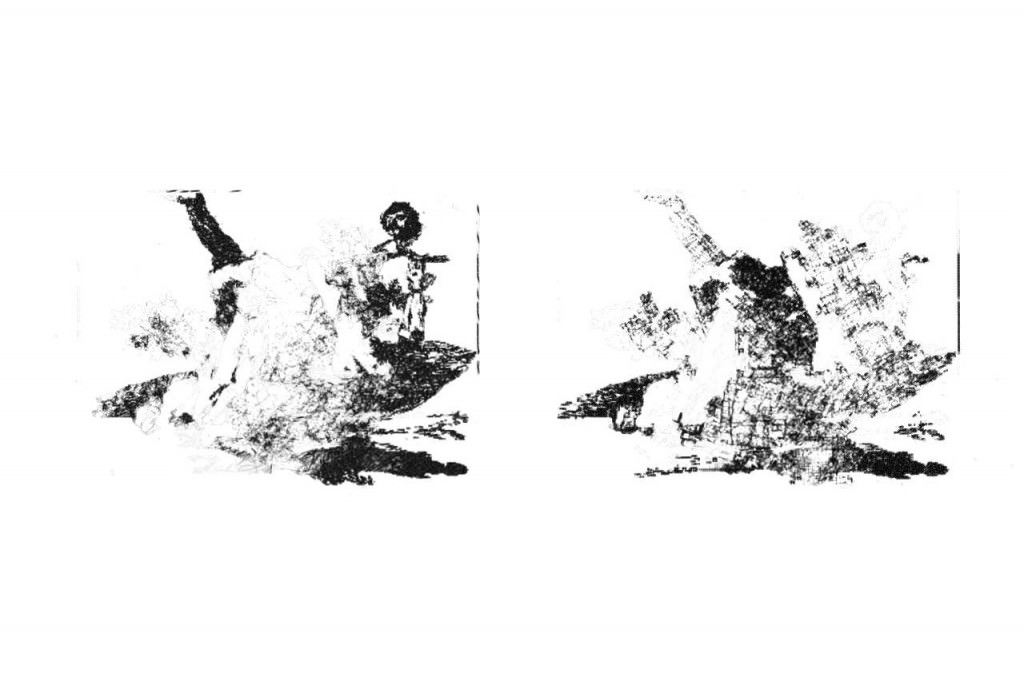
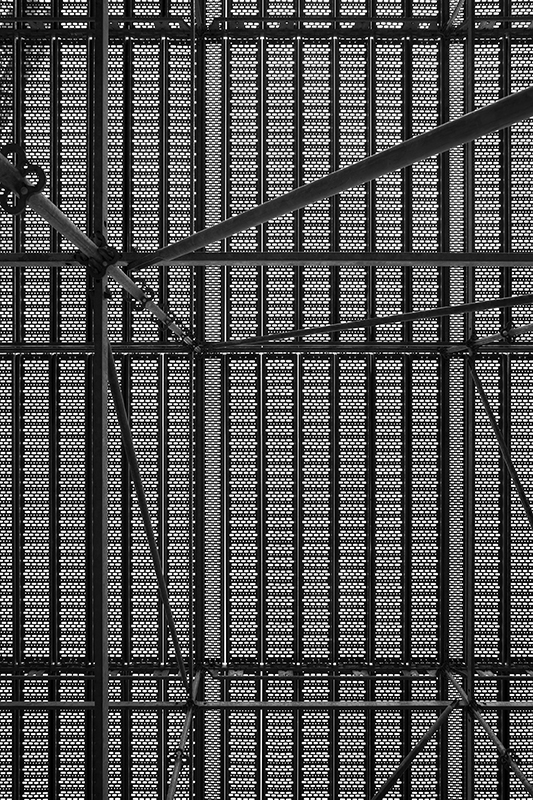
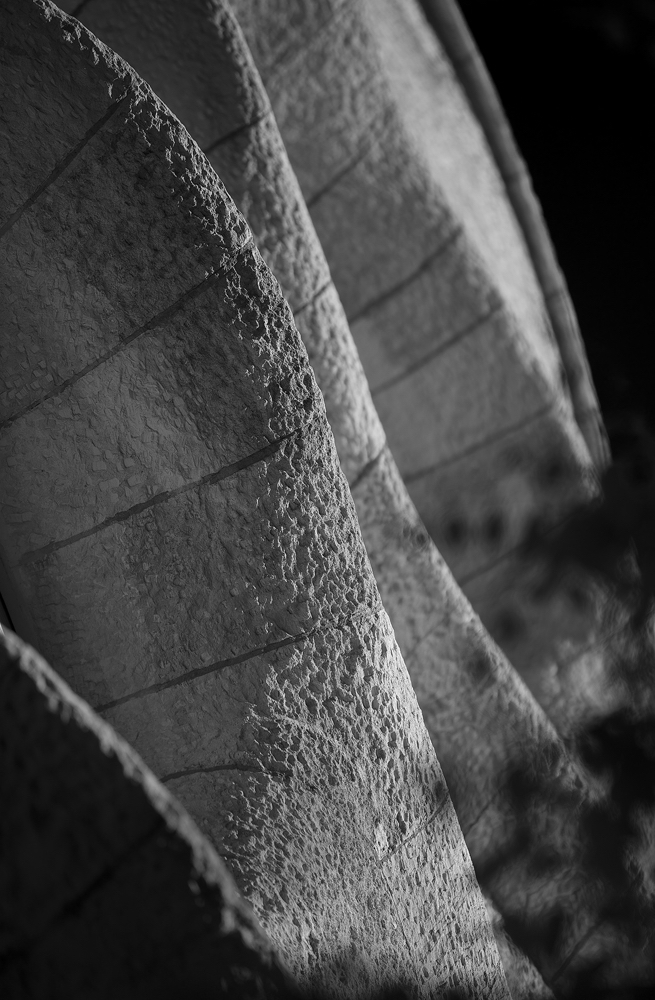
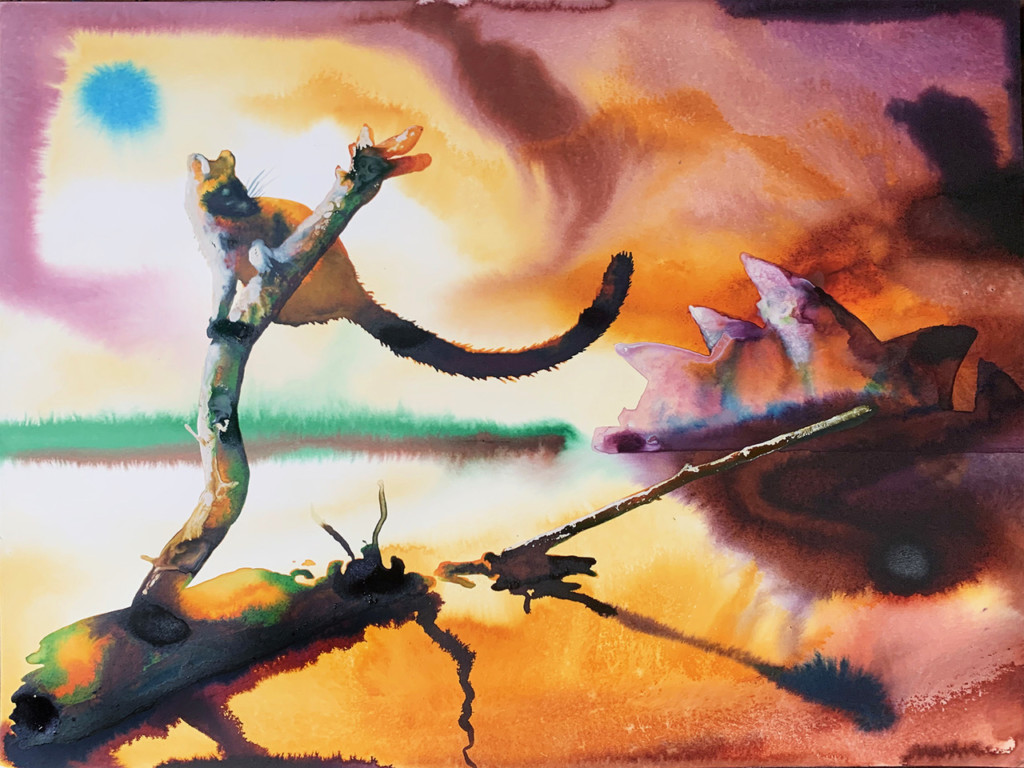
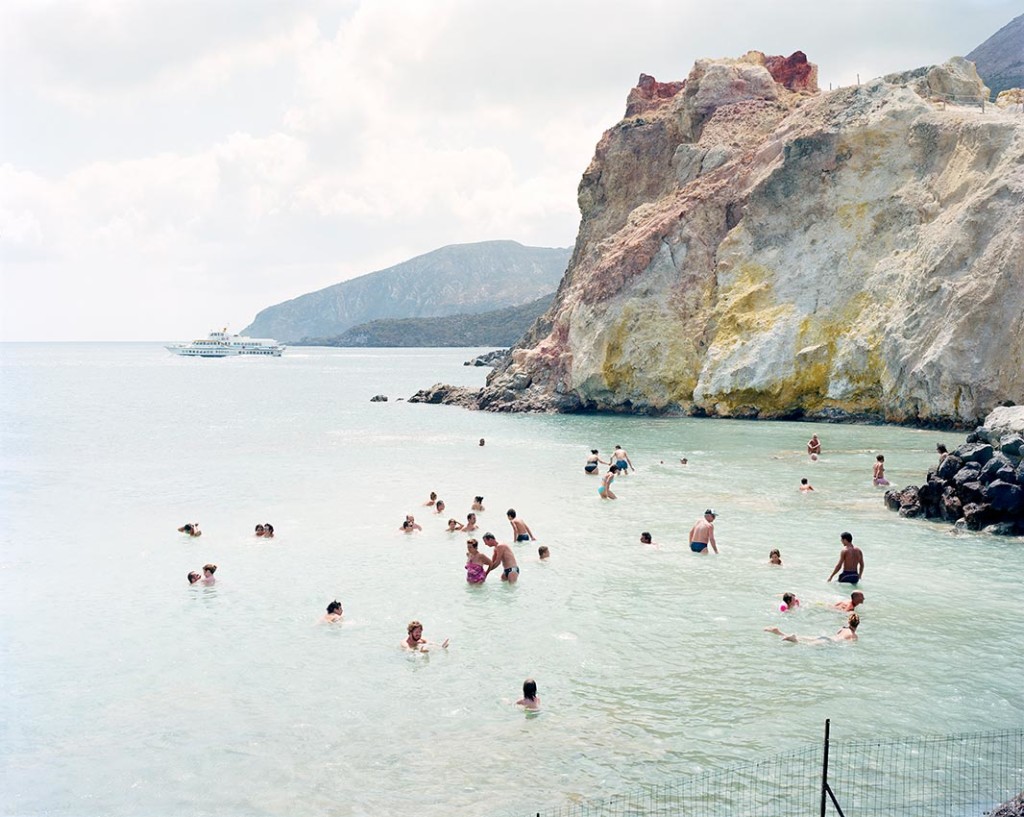
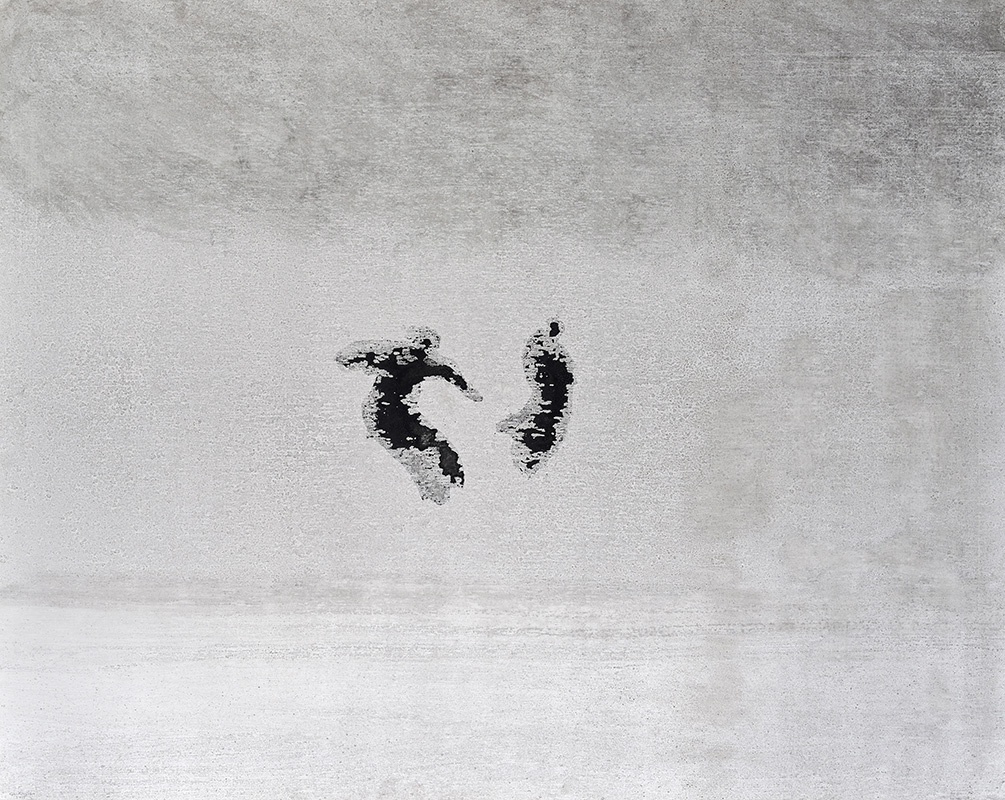
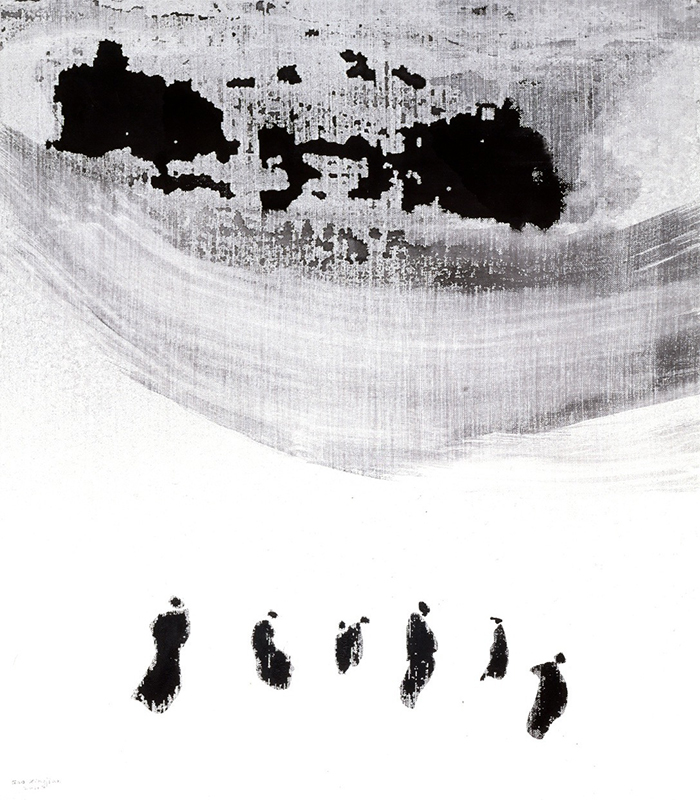
The work is composed of a series of black and white photographs produced in Johannesburg between 2015 and 2020, accompanied by a video made during the months of confinement.
Through these images, Roger Ballen documents a creature half-human, half-rat, living in isolation from society. The character, motivated by his loneliness, attempts to create new companions to share his daily life, but the isolation generates feelings of frustration and rage.
Roger the Rat personifies the impact of loneliness, exclusion, and the uncomfortable feeling of suffocation that afflicts human beings when confined in enclosed spaces. The psychic consequences of the pandemic are explored throughout the images through the absurd actions of the protagonist, which produce a feeling of identification and empathy on the part of the visitors.
The son of a photo editor at Magnum, Ballen has worked as a geologist and mining consultant before launching his own photographic career, documenting small villages in rural Africa and their isolated inhabitants. His images are at once powerful social allegories and disturbing psychological studies. Ballen’s work “Terrallende” was considered one of the most extraordinary photographic documents of the late 20th century. It was awarded Best Photographic Book of the Year at PhotoEspaña 2001 in Madrid. He was awarded Best Photographic Book of the Year at PhotoEspaña 2001 in Madrid.
His distinguished photographic style has evolved using simply a square format and a black and white color scheme. His early work has a clear influence on documentary photography, but during the 1990s he developed a style that he described as documentary fiction. His distinctive photographic style has evolved using simply a square format and black-and-white color scheme.
Roger Ballen, Amputee. Archival pigment print. 61 x 43 cm. 2015
Roger Ballen, Flattened. Archival pigment print. 61 x 86 cm. 2020Roger Ballen, Revealed. Archival pigment print. 61 x 43 cm. 2020
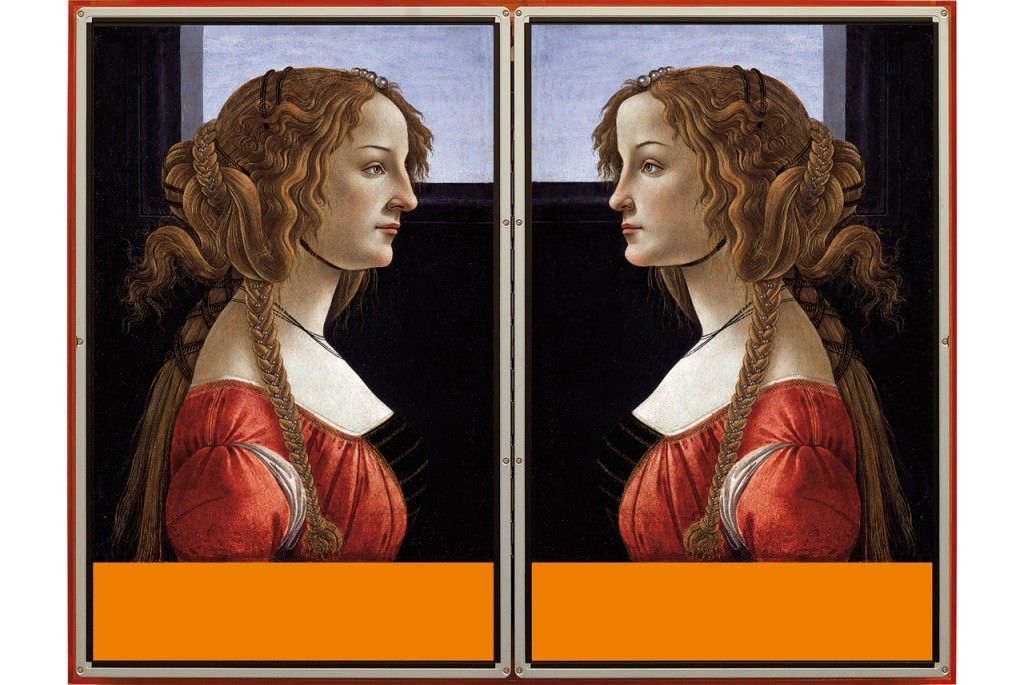
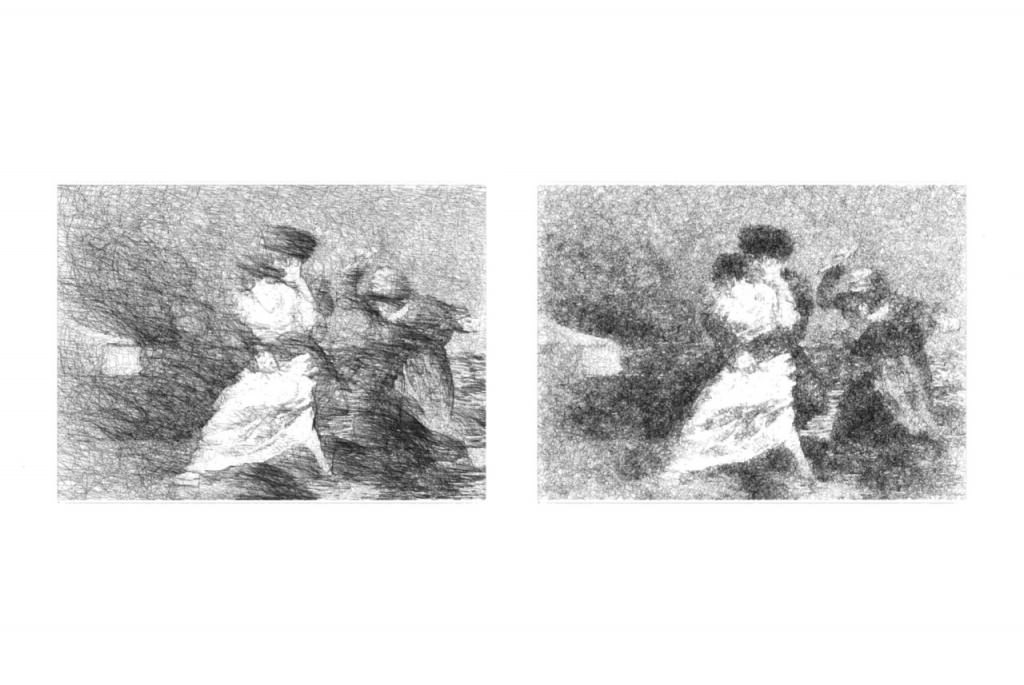
Dels 67 projectes presentats en aquesta categoria, el jurat, ha decidit atorgar el premi al projecte Cada so és una forma del temps II
Cada so és una forma del temps II són una sèrie de partitures visuals que l’artista guanyadora pretén recrear mitjançant la serigrafia. Pren les formes de les branques dels arbres, les venes del cos, els rius, els terratrèmols, el desplaçament de formigues, abelles, dofins, huracans, el contorn de núvols, de muntanyes i del món per superposar a pentagrames, fent evident la seva similitud formal, i al seu torn proposant una mirada més atenta, amb tots el nostre sentits alertes, per poder escoltar-los. Al veure totes aquestes formes juntes se’ns fa obvi que darrere d’elles hi ha una energia única, universal. El missatge d’escoltar la natura que vol plasmar en el seu treball des d’un inici sembla urgent en aquests temps. aquesta és una obra que si vol és una crida a apropar-nos més a allò del que venim i que la civilització ha fet que oblidem.
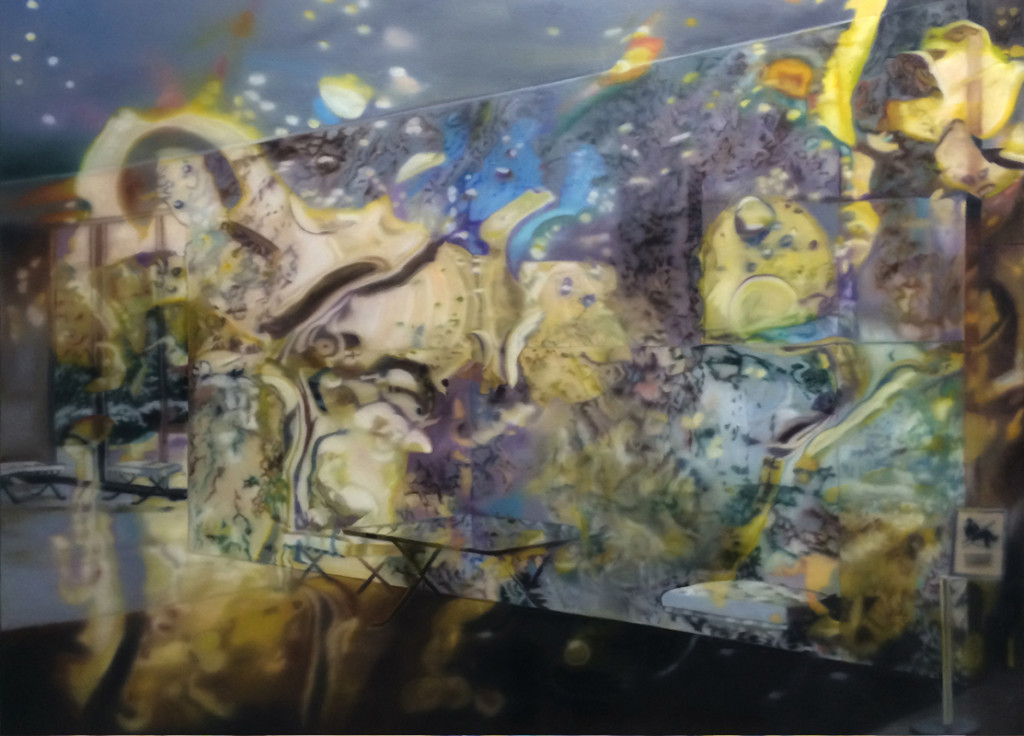
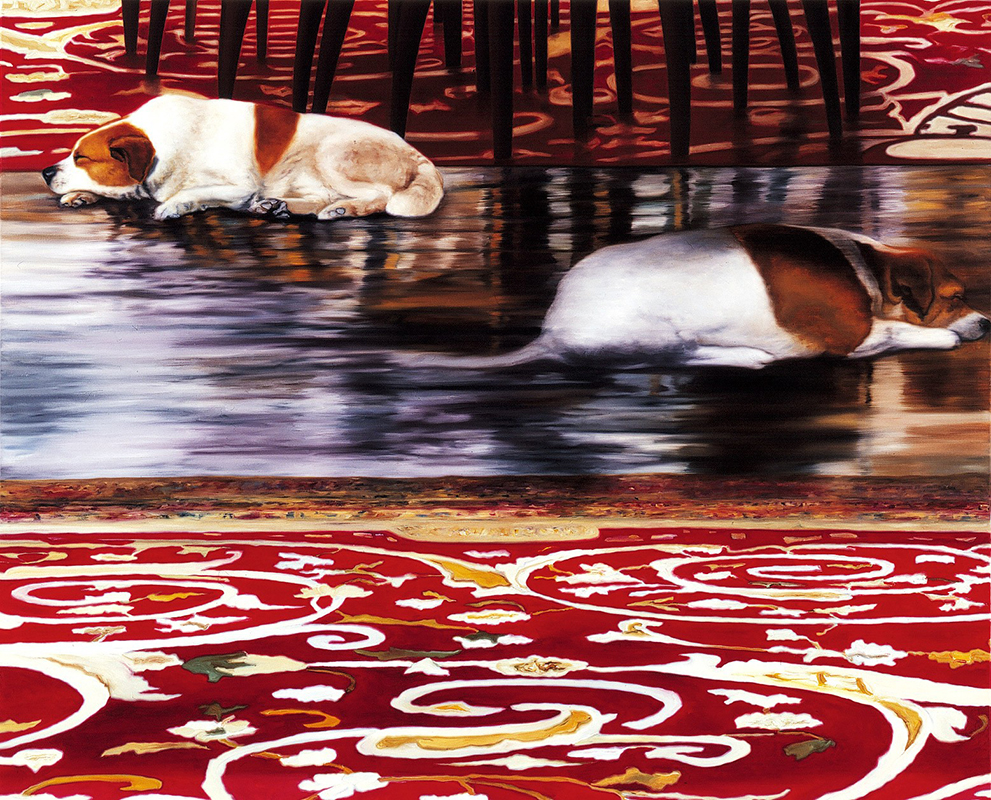
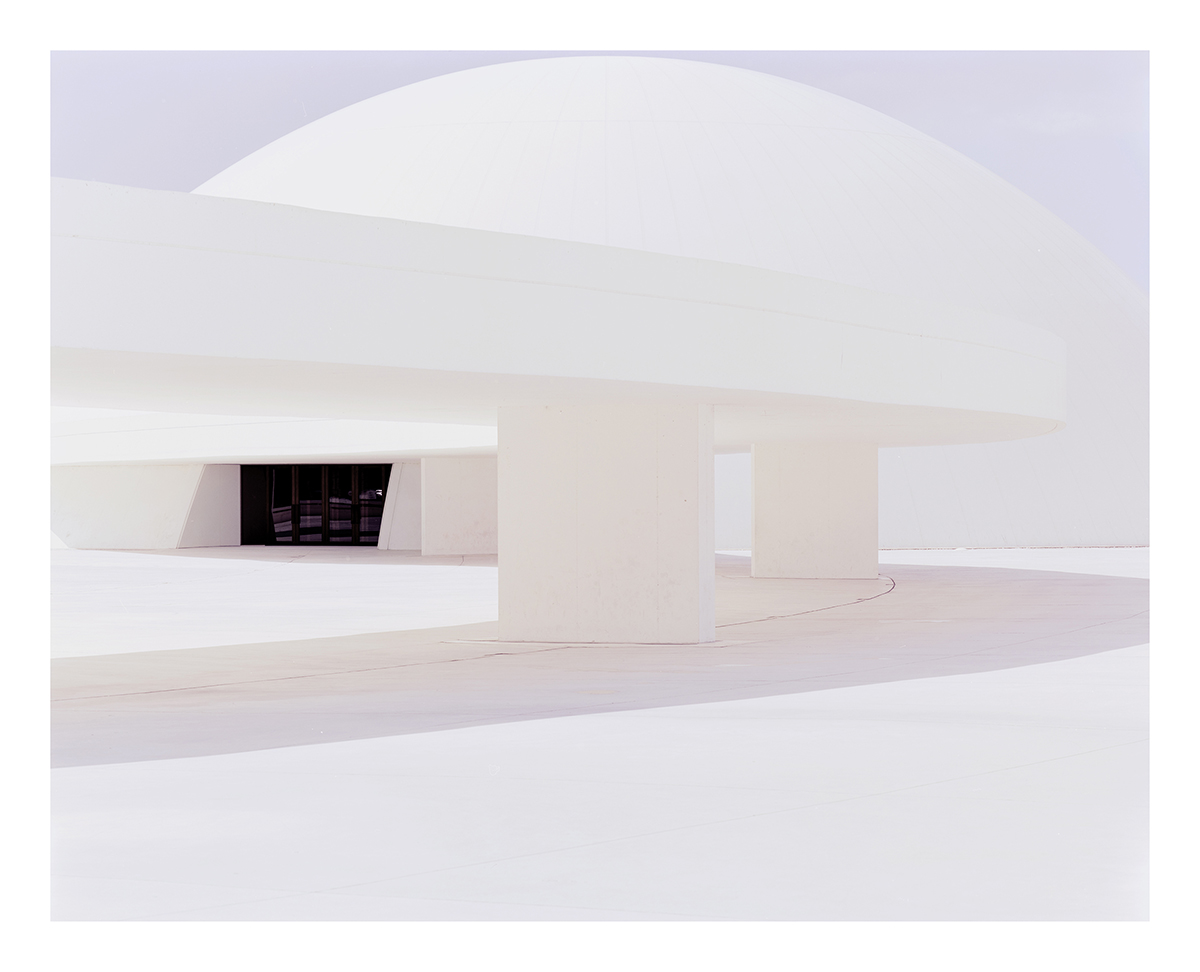
El mejor ejemplo de racionalismo en Catalunya y una de las obras maestras de Antonio Bonet Castellana. Esto es la Casa Gomis para aficionados y profesionales de la arquitectura aquí y allende de los mares. Y una experiencia sensorial a la par que un motivo de inspiración para Bea Sarrias y Morrosko Vila-San-Juan. Los dos artistas afirman estar fascinados por la singular construcción; tan rendidos a ella, que la primera suma ya casi 40 de óleos sobre la casa y el segundo, dos cortometrajes. Parte de esta producción la estrena ahora la galería Senda (del 15 de septiembre al 9 de octubre) en un espacio que también es novedad, el Lab36 (Trafalgar, 36), la sala que la galería quiere dedicar única y exclusivamente a la creación que nace en Barcelona y el entorno metropolitano.
Bonet Castellana no fue la primera opción de Gomis; ni la actual casa, el primer diseño presentado por el arquitecto. Gomis, persona cultivada y vinculada a los movimientos de vanguardia, quiso contactar con el arquitecto Josep Lluís Sert. Lo hizo a través del promotor cultural Joan Prats, que, como Gomis, era miembro del Club 49, asociación privada que tenía como objetivo promocionar las actividades artísticas en los grises tiempos de la dictadura. A saber que una vez levantada, la Casa Gomis funcionó como una suerte de nodo cultural, lo mismo se hacían conciertos -Gomis era un melómano de pro- que representaciones teatrales. Así, por los suelos de piedra caliza, gres y gresite de la joya del racionalismo catalán han dejado su huella Mestres Quadreny, Joan Brossa, Antoni Tàpies, Joan Miró y John Cage, entre otros. Y en su piscina se han bañado los miembros de la compañía de Merce Cunningham tras su primera actuación en España, por poner un ejemplo.
Pero en 1949 Sert estaba en el exilio sin ganas de trabajar en España de manera que declinó la oferta. Fue entonces cuando Prats sugirió el nombre de Bonet Castellana, un joven que había trabajado con el mismísimo Le Corbusier y había sido el benjamín del Gatcpac. Bonet Castellana también estaba en el exilio, en Argentina, pero aceptó. La primera propuesta, recuerdan los hijos de Gomis, “era mucho más pomposa, con dos plantas, rampas y el techo al revés” y fue rechazada por la matriarca. La segunda prosperó y el resultado es una acogedora y luminosa construcción en medio de un pinar, perfectamente integrada con su entorno, donde interior y exterior se confunden, y donde todo está cuidadosamente escogido, pensado y diseñado.
Una obra integral
Una obra integral nacida de la “complicidad estrechísima entre arquitecto y comitente”, puntualiza Marita Gomis, una de las descendientes del matrimonio impulsor. Integral porque Bonet Castellana no solo diseñó la casa con sus cierres acristalados -espectacular el pasillo que une el amplísimo salón con el llamado pabellón independiente -, sus celosías de cerámica y sus inconfundibles techos abovedados, sino que también se encargó de pensar en el mobiliario, las alfombras y las cortinas. Todo, colores y texturas, está perfecta y detalladamente pensado y listado. Y documentado. La familia Gomis Bertrand guarda la inmensa correspondencia que generó la construcción, pues se levantó con Bonet Castellana en la distancia. Cartas y fotografías. De Joaquim Gomis, hermano de Ricardo, son las imágenes que se mandaban al arquitecto para seguir la evolución de la casa. Y de Moisés Villèlia, las esculturas que pueblan el jardín. Algunas desaparecidas a golpe de mar, cada vez más cercano.
Los hijos Gomis recuerdan cuando la finca daba a un arenal de 100 metros de anchura que ya no existe. También, de cuando circulaban con bicicletas por las pistas del aeródromo del Prat. El desvío del delta del Llobregat y las sucesivas ampliaciones del puerto han acabado con la playa; y el aeropuerto, con la vida en la casa. La cabecera de la tercera pista está a apenas 400 metros de la edificación, de manera que el ruido de los aviones calentando motores para despegar es ensordecedor. De haber prosperado los planes de Aena, la pista aún se hubiera acercado más. Aunque el estruendo actual ya les ha obligado a no pernoctar en La Ricarda, pero no a abandonarla: siguen celebrando reuniones familiares y cuidándola. “Sin ayudas”, puntualizan. Pero es patrimonio -tiene la máxima protección de la Generalitat- y no piensan dejar que se pierda. La financiación sale de las visitas guiadas y del alquiler del espacio para publicidad.
Por todo esto, “por la singularidad del espacio y por la heroicidad de sus propietarios, queríamos hacer un homenaje a la casa y darla a conocer”, apuntan Sarrias y Vila-San-Juan. Su salto precipitado a la fama ha sido cosa de la providencia.
El espacio de experimentación creativa Lab 36 de la Galeria Senda, en Barcelona, propone una exposición pictórica y audiovisual como “experiencia inmersiva y una visita guiada” por la casa de La Ricarda, ubicada en el Prat de Llobregat (Barcelona), y por los alrededores del espacio natural.
‘Bienvenidos a La Ricarda’ es una iniciativa de la artista audiovisual Bea Sarrias y del realizador y periodista Morrosko Vila-San-Juan que se podrá ver desde el 15 de setiembre y hasta el 9 de octubre, ha informado el LAB 36 en un comunicado.
En la muestra, pintura y audiovisual se unen y complementan para ofrecer una retrato completo de un lugar “especial y único, que además de ser una joya arquitectónica apreciada en todo el mundo es también la historia de una familia, de una forma de entender la vida y la cultura”.
El dúo artístico propone esta exposición el mismo año que La Ricarda ha sido designada como Bien Nacional de Interés Cultural y que, al mismo tiempo, “ve su futuro seriamente comprometido” por la posible ampliación del Aeropuerto de Barcelona-El Prat.
Ante este escenario, a ambos artistas les “parecía el momento ideal para reivindicar, rendir homenaje y celebrar la existencia de La Ricarda” con cuadros de colores vivos y alegres y audiovisuales que muestran la riqueza de ese entorno natural
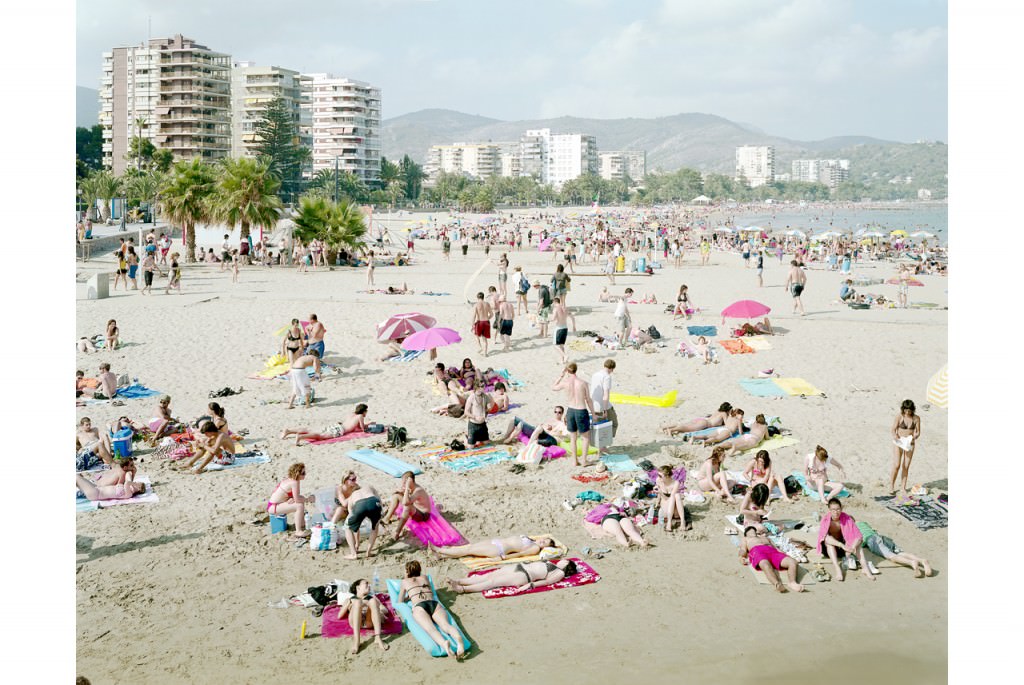
Jordi Bernardó, in collaboration with gallery SENDA, presents a new exhibition in Casinet Space.
Catalan photographer Jordi Bernadó always gets an amazing view of reality, either because he captures moments and scenes that reveal the contradictions of a whole society or because it demonstrates a poetic look capable of finding a great capacity for emotional evoke, transforming corners from around the world into scenes of a dream. With his work, he is present in galleries, exhibition spaces, institutions and fairs from many countries.
From September 17 until 17 October
Check it more: http://www.elmasnou.cat/media/repository/cultura/cicle_arts_visuals/2021/Arts_Visuals_Programacio_2021_2.pdf
A couple of art critics visit the Senda gallery during the hours before the opening of Yago Hortal’s exhibition “Otra vez”. With their conversation around the room sheet and the artist’s work, the two critics, without proposing it, represent a small parody of the relationship between culture and the market, focusing on empty and pretentious language often used in art galleries, cultural institutions and art criticism in explaining to the public an artist’s work. These texts (which, thankfully, hardly anyone reads) are perverse in that they most often hinder rather than the contrary the relationship of the public with quality works, while they evaluate and mask insignificant or trivial works.
This performance is an adaptation of a fragment of his show The World of Art produced by the Romea Foundation.
Gino Rubert (Mexico City, 1969)
He studied Fine Arts at the Parsons School of Design in New York. His work has been shown in galleries and museums such as the Akiyoshidai International Art Village (Japan), the K).nstlerhaus Bethanien (Germany), the Contemporary Culture Centre in Barcelona, the Claire Oliver Gallery (New York), the Michael Haas Gallery (Berlin), the Mizuma Gallery (Toquio). In writing two books: Apio (canina notes) Errata Naturae. 2011 y S. Quiéro, Lunwerg. 2019. In 2021, he premiered his show The World of Art (A Tragicomedia) at the Romea theatre.
Lab 36 Art Gallery és un espai polivalent i multifuncional que desenvolupa una sèrie de projectes artístics a través de la galeria Senda, així com d’altres aliens a ella. Es tracta d’un espai de creació experimental que també serveix per a promoure artistes locals i de fora del país que tinguin relació o que treballin a Barcelona. Actualment ofereix una visió totalment nova que “atengui les necessitats del temps present”.
Anteriorment aquest centre artístic es denominava Espai 292, però des de fa cinc anys que porta el nom actual. Està situat al costat mateix de la galeria Senda, encara que des d’aquest any té vida pròpia ja que funciona de manera independent, va més enllà de les seves propostes creatives i mostra un “programa versàtil i sensible a l’efervescència de les dinàmiques actuals”.
Ara a Lab 36 es presenta la col·lectiva Dispositius de resistència, on s’exhibeixen els treballs de 10 artistes procedents de la darrera promoció del Màster de Producció i Recerca Artística, dins de l’apartat Art i Contextos Intermèdia (2020-2021), de la Facultat de Belles Arts de la Universitat de Barcelona.
Els artistes participants són Donny Ahumada, Salua Arconada, Adrià Gamero Casellas, Oscar Gartín, Felipe García Salazar, Andria Nicolaou, Romina Pezzia, Sergio Quiroga, Gabriel Tondreau i Ying Ye. El títol de l’exposició fa referència al fet adequar-se a unes condicions adverses, així com al de crear una sèrie de peces en un determinat període de temps que darrerament ha provocat moments d’incertesa i preocupació. Cal valorar la diversitat de les seves propostes, principalment pels seus “processos d’exploració de la nostra quotidianitat i entorn amb una mirada crítica del món”.
Galeria Senda welcomed spring with “Day and Night: New Paintings and Drawings,” the first exhibition in Spain of renowned American artist Donald Sultan. Consisting of a collection of large sacale pieces with the mimosa flower as its motif, Sultan demonstrated that a result can be accomplished with an unusual formula. It’s the case of Spring Mimosa Dec 12: painted flowers that were watered with tar and enamel, instead of water.
You are probably thinking: still life? The frenzy over dead nature and wine glasses left undrunk has long been dead, hasn’t it? The bread crumbs, the pear, the worm-eaten apple…Or those who opt for flowers, in order to come across as romantics, or perhaps because they were on offer and spring isn’t the season for pears. A white canvas, stained with the pigment of earthy colours — green, brown and dijon yellow.
Perhaps the death of conventional still life paintings did occur. Cézanne took with him the last sigh of the artist-admirer-of-fainted-fruits-over-ceramics, and Van Gogh that of sunflowers, which turned their heads away from the minds of those who claim to “know about art.” Maybe only a few of us still find peace in the representation of nature, even if it doesn’t come accompanied with conceptual affairs and ulterior motives. A bouquet of marigold, a strawberry, a landscape or something as mundane as a cigarette that dances in the darkness of a flat near 6 W & 24th st.
Sometimes that’s all one needs. A breath of relief in the stifle that becomes living in a time where one suffers from having to narrow their taste to a world that is quick to decide who is worthy of taking up a white wall and who will never leave their paint and hormone scented room.
Forget about the white wall, and while you are at it, forget the white canvas too. Instead, picture yourself in a concrete plant, where the tar fumes and the heat emerging from the pyramid of pebbles conceal your lungs and make your blood boil. In the midst of all that industrial landscape — metal, wood, iron and fire — grows a flower. It isn’t easy to imagine, in fact, it’s almost impossible for a flower to grow among so much hardship, yet, against all odds, it does. It is an orange flower, round like the sun, like the moon, like a dandelion that hasn’t granted its wish yet.
Cézanne’s still life emits an aroma of a tablecloth marinated with peach nectar and the little puddle that your father spilled in what was his fourth glass of wine. Van Gogh’s sunflower brings about the smell of summer fields and the distant saltiness of the sea. However, Donald Sultan’s mimosas play with your senses: you can see minimal circles, surrounded by a bunch of olive leaves and it makes you think: south of France, dry and fruity air… but when you get closer to the piece all schemes fall down. You no longer think of the French countryside, but of the way there — the voyage. The heat emerging from the asphalt when you step off the car to spread your legs, and the smell of tar coming from a factory that was built far from human life; to avoid shortening the very same with the impurity of the fumes steaming from its high chimneys.
You see, Cézanne’s provincial scenery and Van Gogh’s thick-brushtroked flowers had become far removed from my mental archive of beloved pieces. It’s not that I don’t admire the works, nor a need for art to tell me “something.” It’s more that I am in a constant quest of works that will allow me to appreciate beauty in a world in which very rarely beauty comes without aftershocks. To believe, for once, that within industrial land, life can grow.
If you get close to Sultan’s work you’ll be able to ‘smell’ your childhood in the countryside, the sweet taste of sun-ripened fruit, and the breeze that caresses your skin as you read under the olive tree on a sunny August afternoon… although what you are really smelling is masonite, enamel and tar.
I think that is the whole point of it — stimulating your senses with what you think it is, what you would like it to be and what it truly is. If you wish to see it for yourself, the exhibition will be open until the end of July.
On June 18th the MARCO museum of Vigo will have the opening of Glenda León’s “Música de las formas”, which has been commissioned by José Jiménez.
The cuban artist return with a series of works which are representative of the bond between poetry and objects, thus creating a synthesis between visual and sonic worlds. León uses mundane objects and raw materials and she transforms them in a way that reveals their metaphorical power. That way, the works present a sensible look towards what is quotidian. His works transit between spheres of intimacy and openness, manifesting her ability to create new meanings through a process of contextualising, manipulating and associating objects.
In “Música de las formas,” the artist evidenciares music’s influence on her growth, both on a personal and an artistic level, and how interconnected it is to the movement of the stars. José Jiménez mentions Pithagoras to justify this phenomenon to which the latter refers to as the “cosmo’s harmony” as well. León manages to connect the ground with the sky, the mundane and the extraordinary.
Estrellas Masticadas (2015) is a great example of the aforementioned, given that the artist creates celestial bodies by linking together gums that were disposed and stuck to the ground. By doing so she is creating a debate between the mundanity of something so basic as chewing gum and the solemnity of those starts that so many other geniuses had observed in a past.
All those months spent inside feeling trapped within four walls triggered Peter Halley into re-thinking the artistic world he had been inventing since the 80’s. Changes in mode of life resulted in changes in mode of expression, as the New Yorker began to opt for alternative confines to his previously “conduit” and “cell-like” paintings.
Nine months after his exhibition New Paintings at galeria Senda, Peter Halley has taken his laberinthian explosion of colors to the walls of the Nivola Museum in Orani, Sardegna. ANTESTERIA, which gives name to the exhibit, references the Greek festivity in devotion of the god Dyonisus and the arrival of spring.
Parting away from the static, rectangular and lethargic aspect of the conventional canvas, Halley has adapted his color induced shapes to the walls of the museum in a manner resemblant to those done by previous artists throughout history. Reminiscent of the legacy that traces back to cave paintings all the way to fourteenth-century fresco paintings such as those done by Giotto in the Arena Chapel at Padua, Halley has brought out a cathartic experience by combining his signature neon colored shapes with the geometric motifs of the room. The arched windows, with stained glasses similar to those in churches, are in conversation with the dynamic and psychedelic paintings of the American artist.
A pristine place brought to life; a secular space made to receive an attention that dances the line between admiration and devotion. The signature cell structure of Halley’s work is distorted, made to appear as a continuum of lines that lead the viewer’s gaze from one side of the room to the other, stopping in between to stare into the kaleidoscopic splatters on the west and east walls, as well as the lower panels, which combine geometric shapes with more free draw lines.
Peter Halley is reinventing himself according to the contemporary world we live in. His art fluctuates in the same way customs, culture and capitalism do. He proved so when he exhibited New Paintings in the gallery last September, when he moved away from the square canvas and took on a different meaning for it. To him the canvas no longer ought to be static, but by combining luminous colors with irregular confines, he contrasted textures and reliefs that brought together the industrial and urban register, and the sensuality of tactile experience.
To the artist, the cells and conducts are not simply geometric compositions, but rather, symbolic images of the social schemes that surround us. A turn in his analysis of the models of organisation and communication in contemporary societies.