






- No products in the cart.
Share:
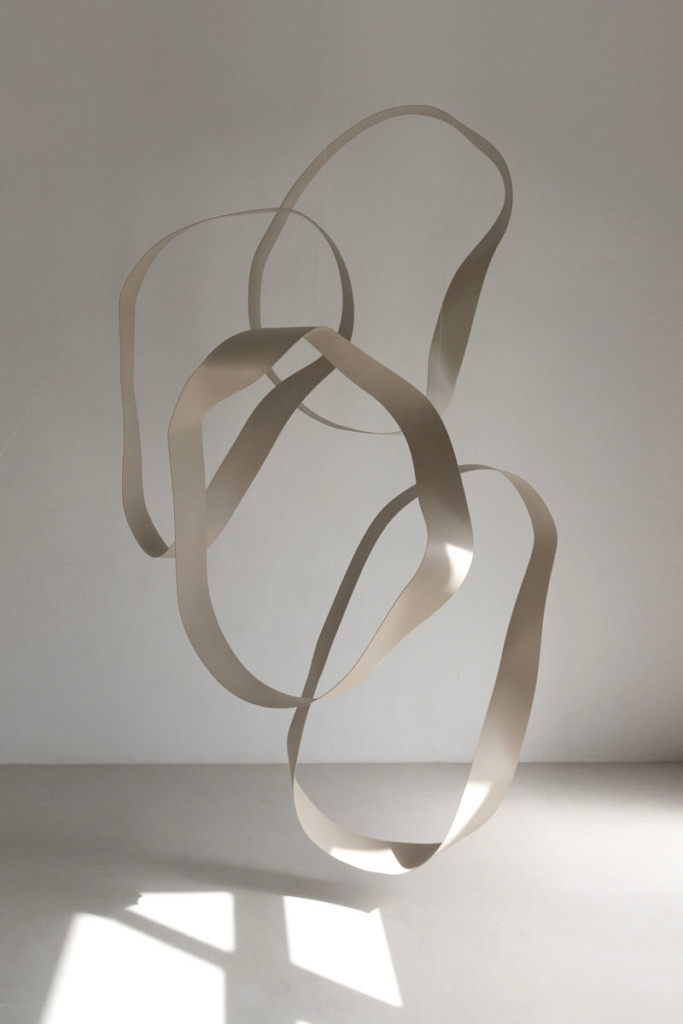
For years, Gonzalo Guzmán has developed a working process based on the transformation of two sheets of steel welded together. Subjected to water pressure, they expand until they acquire a volume that has not been modelled in advance. Although the artist determines the initial conditions, the form emerges through forces that he cannot fully control. The metal surface retains the tensions generated during this process, becoming a record of what has taken place within it.
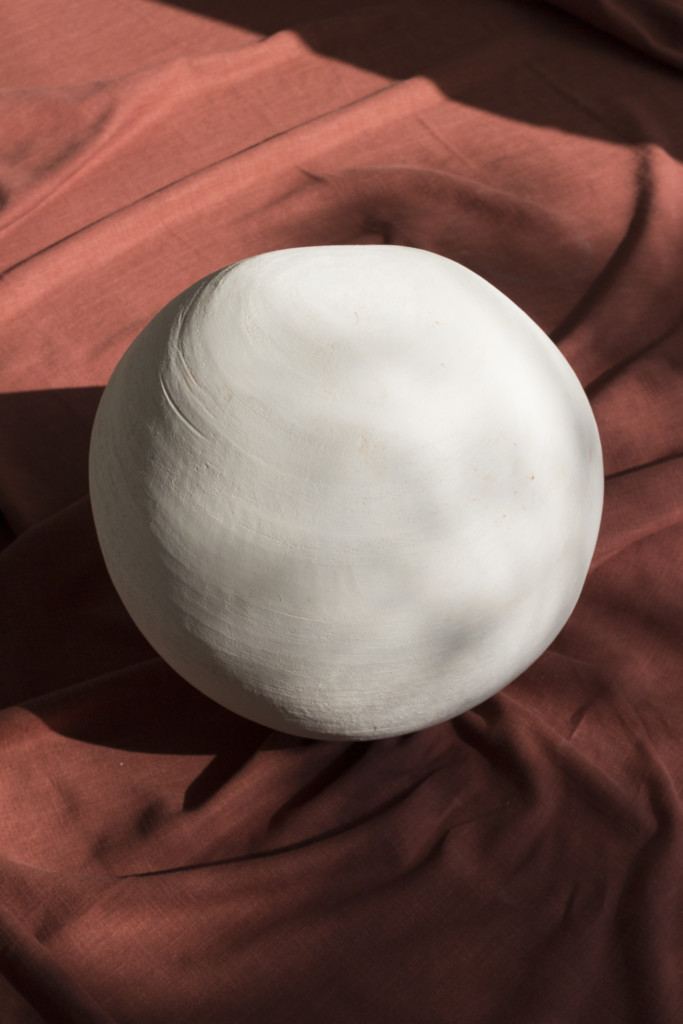
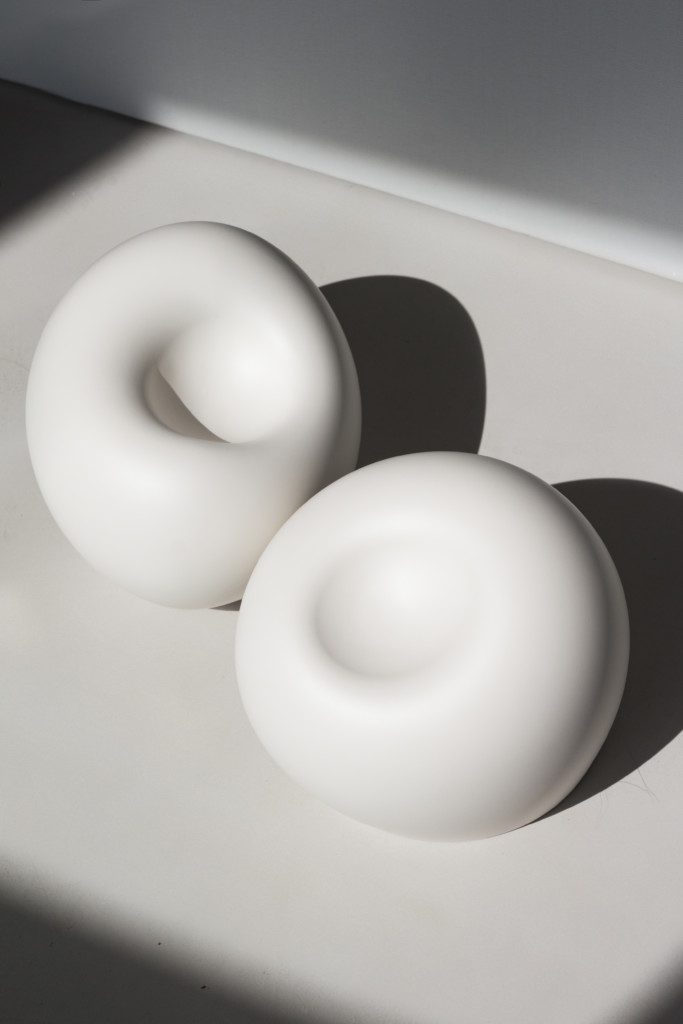
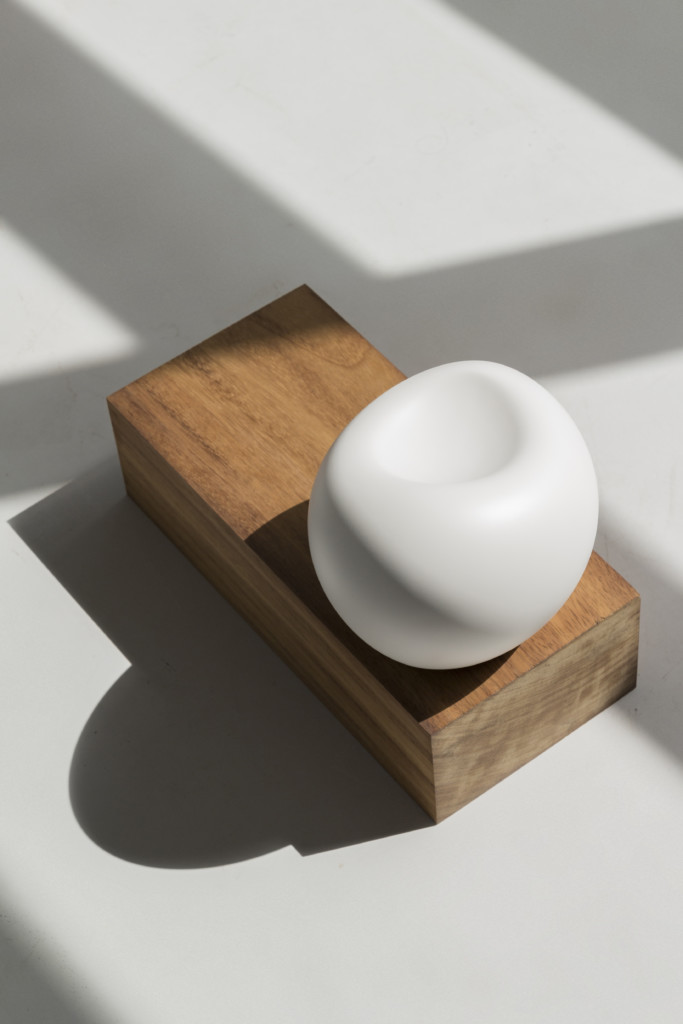
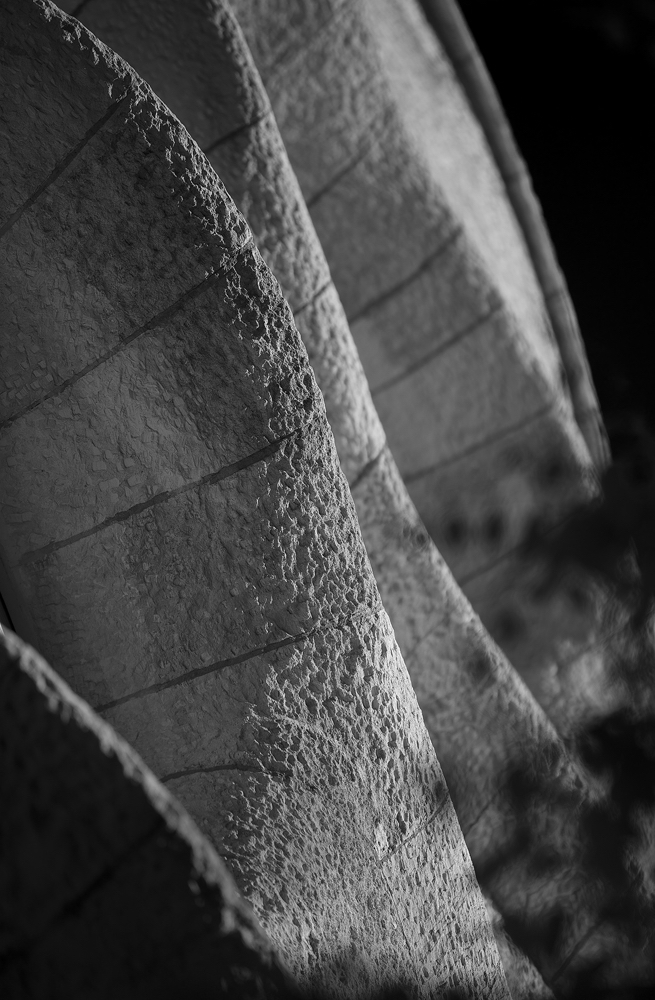
INTUS, a Latin adverb meaning “within,” “on the inside,” or “inward,” indicates the movement that structures the exhibition. Attention shifts towards the space defined by these surfaces, previously inaccessible to view. The sculptures from the INTUS series, made of plaster and marble, materialise fragments of the cave’s negative space. By isolating these volumes and presenting them as autonomous bodies, the artist makes visible a form that had previously existed as a cavity. The void acquires material presence while retaining traces of contact with what once enclosed it.
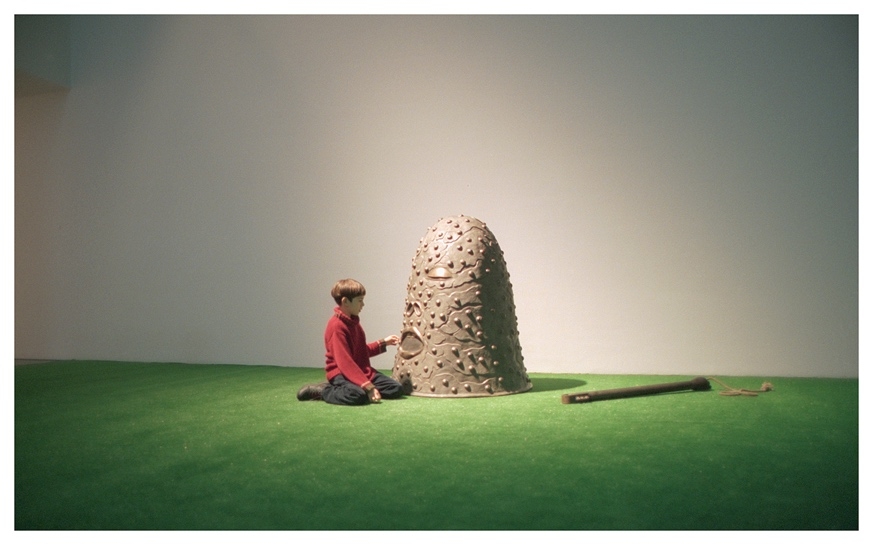
This line of enquiry takes on an architectural scale in the exhibition’s central work: a cave constructed from a thin membrane of polished stainless steel that visitors can enter. A cave ordinarily exists as a cavity surrounded by the mass of a mountain. In this installation, Guzmán removes that mass and retains only the surface that distinguishes inside from outside. Architecture is reduced to its boundary, while the absence of the mountain becomes perceptible through the space it has left behind.
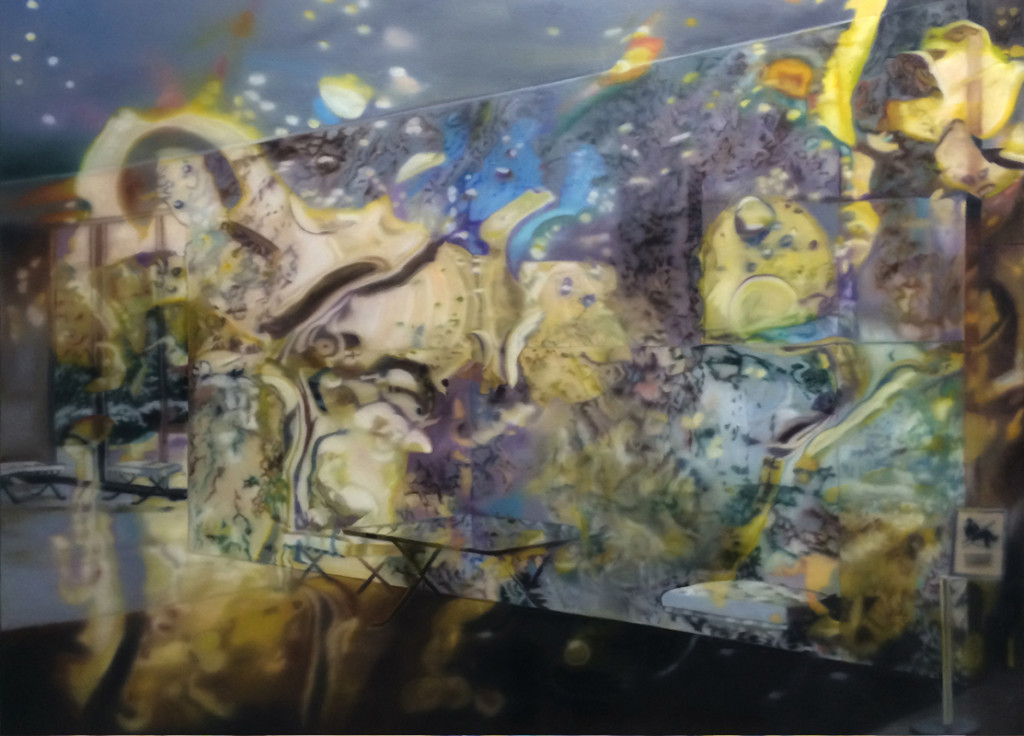
The reflective surface incorporates the gallery and the bodies of those who move through the work. Its folds fragment the images and alter their appearance with each movement, allowing visitors to participate actively in shaping what they see. The cave therefore generates images through the encounter between matter and the viewer’s presence.
This capacity recalls prehistoric caves, where the irregularities of the rock contributed to the configuration of the figures represented. In INTUS, the folds of the steel perform a similar function, although the images they produce are temporary and depend on what takes place around them. Space and bodies appear across the surface and re-emerge transformed.
Finally, an inverse yet complementary relationship is established between the installation and the sculptures: the plaster and marble pieces turn the void into matter, while the cave preserves the membrane that makes it perceptible. Through these two operations, Gonzalo Guzmán presents the surface as an active element that contains, transforms, and makes visible what occurs within it.
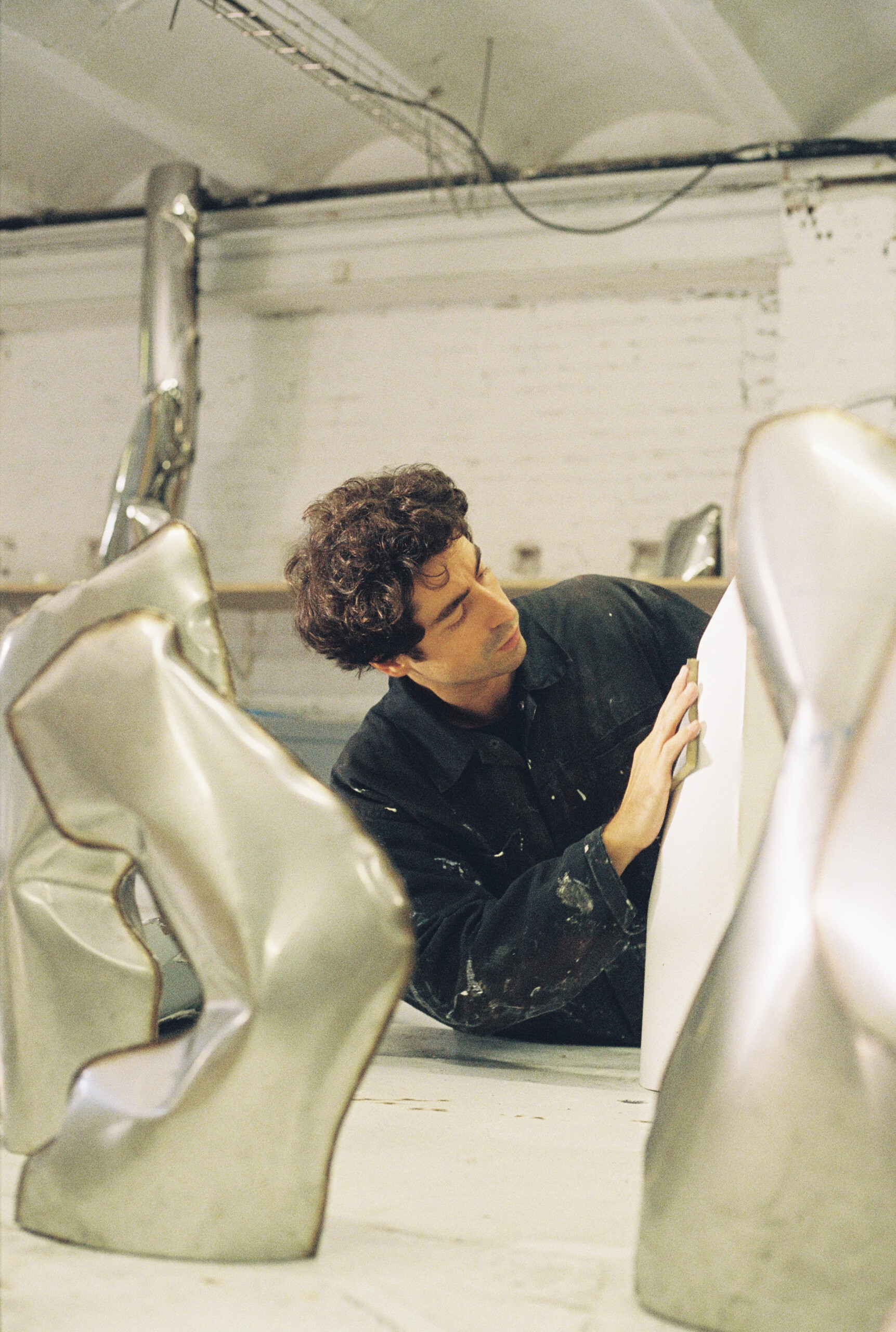
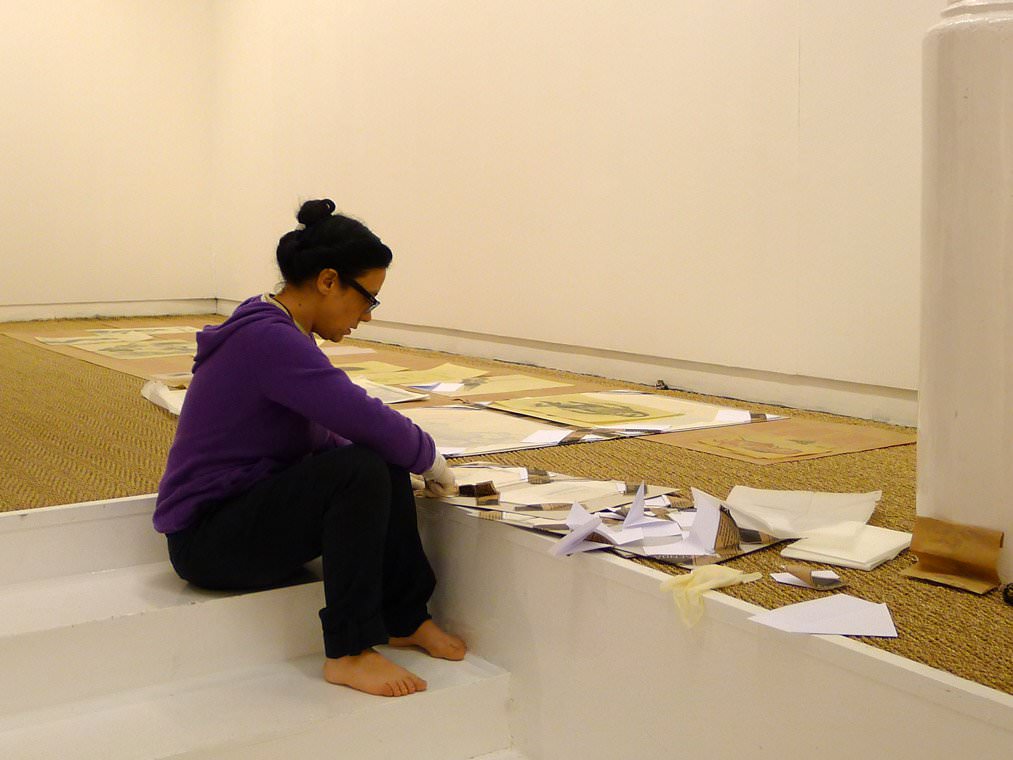
Artist’s studio. Credits: Max Vallès
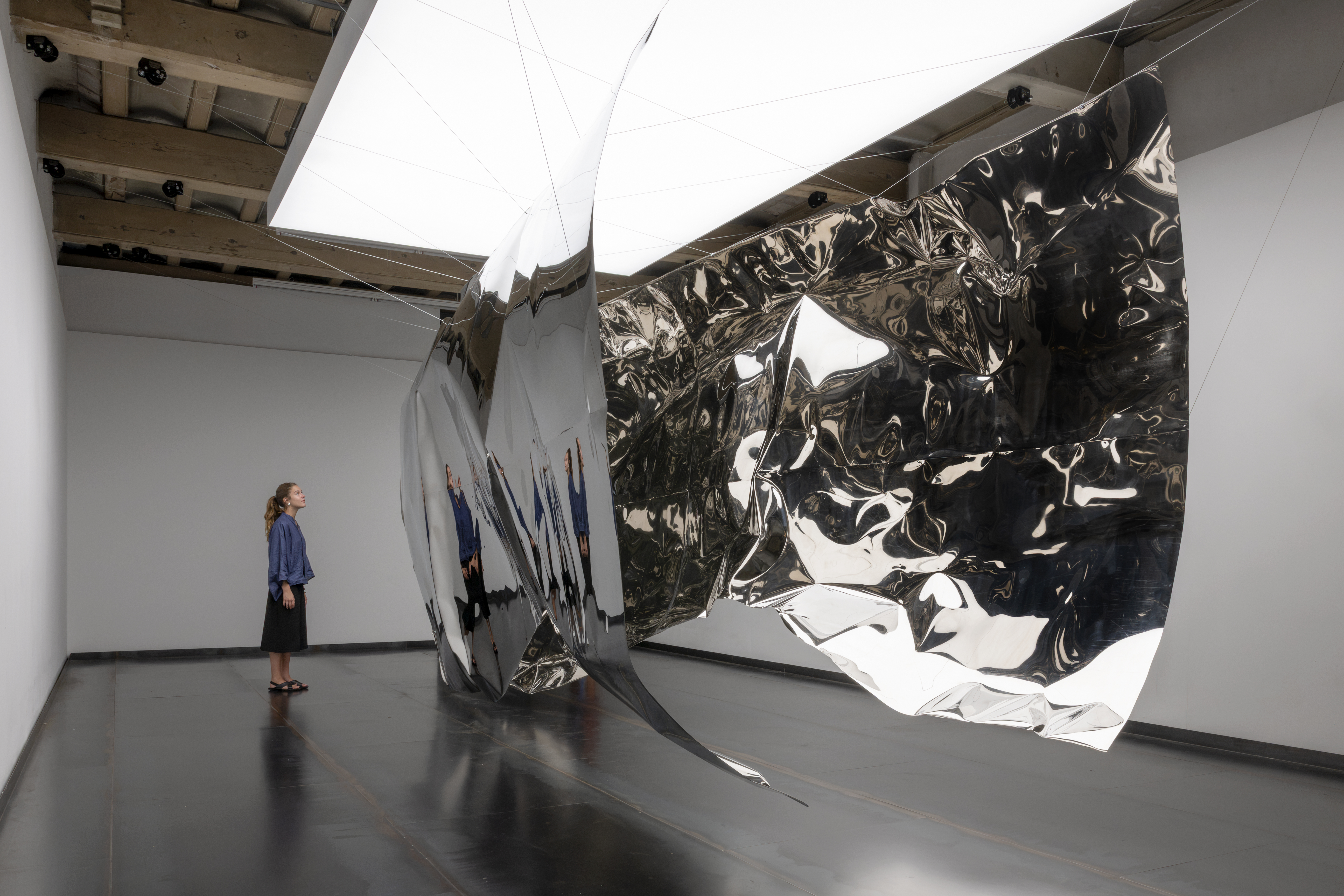
Exhibition visit, Galeria Senda, 2026
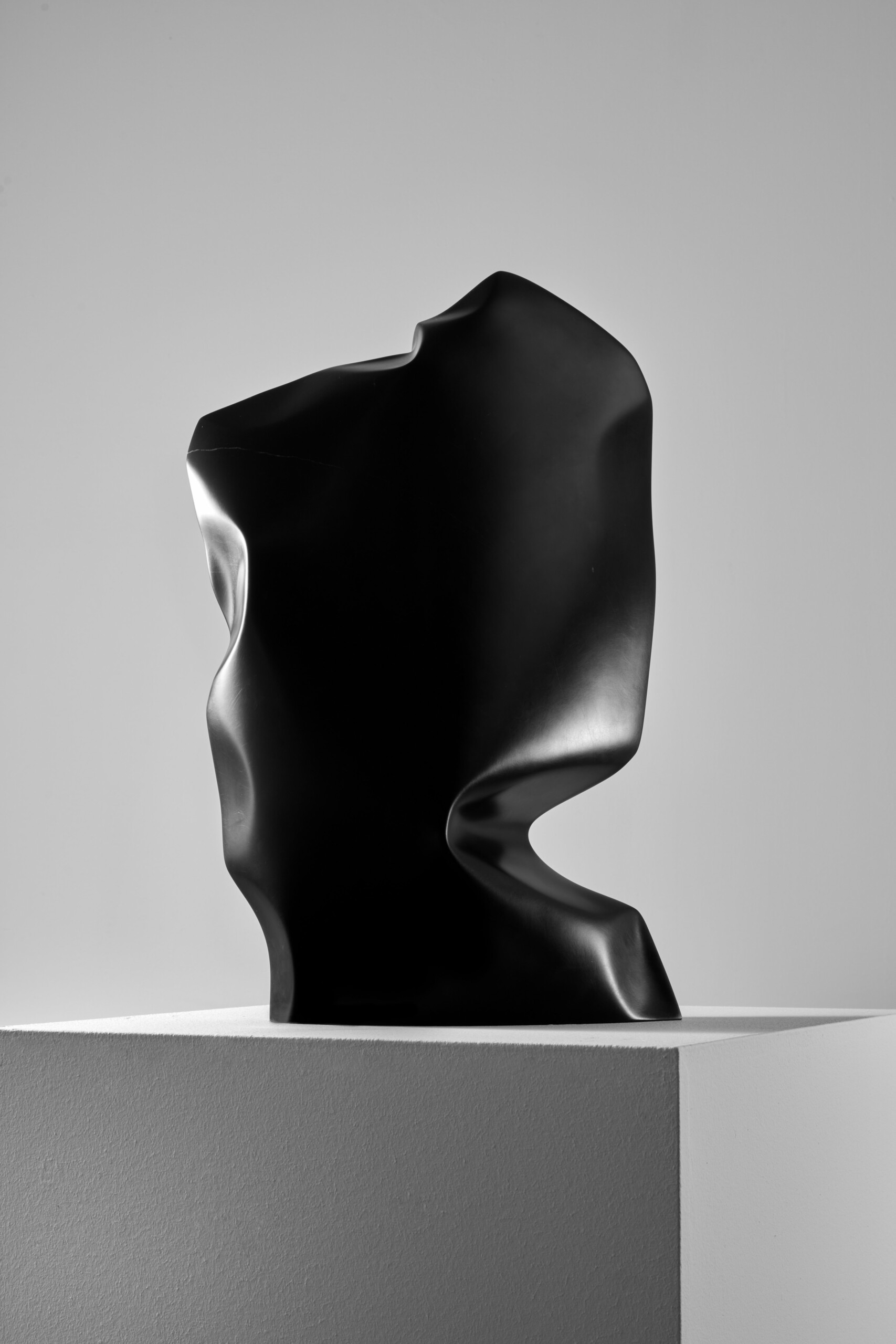
INTUS_01, 66 x 43 x 25 cm. Belgian black marble
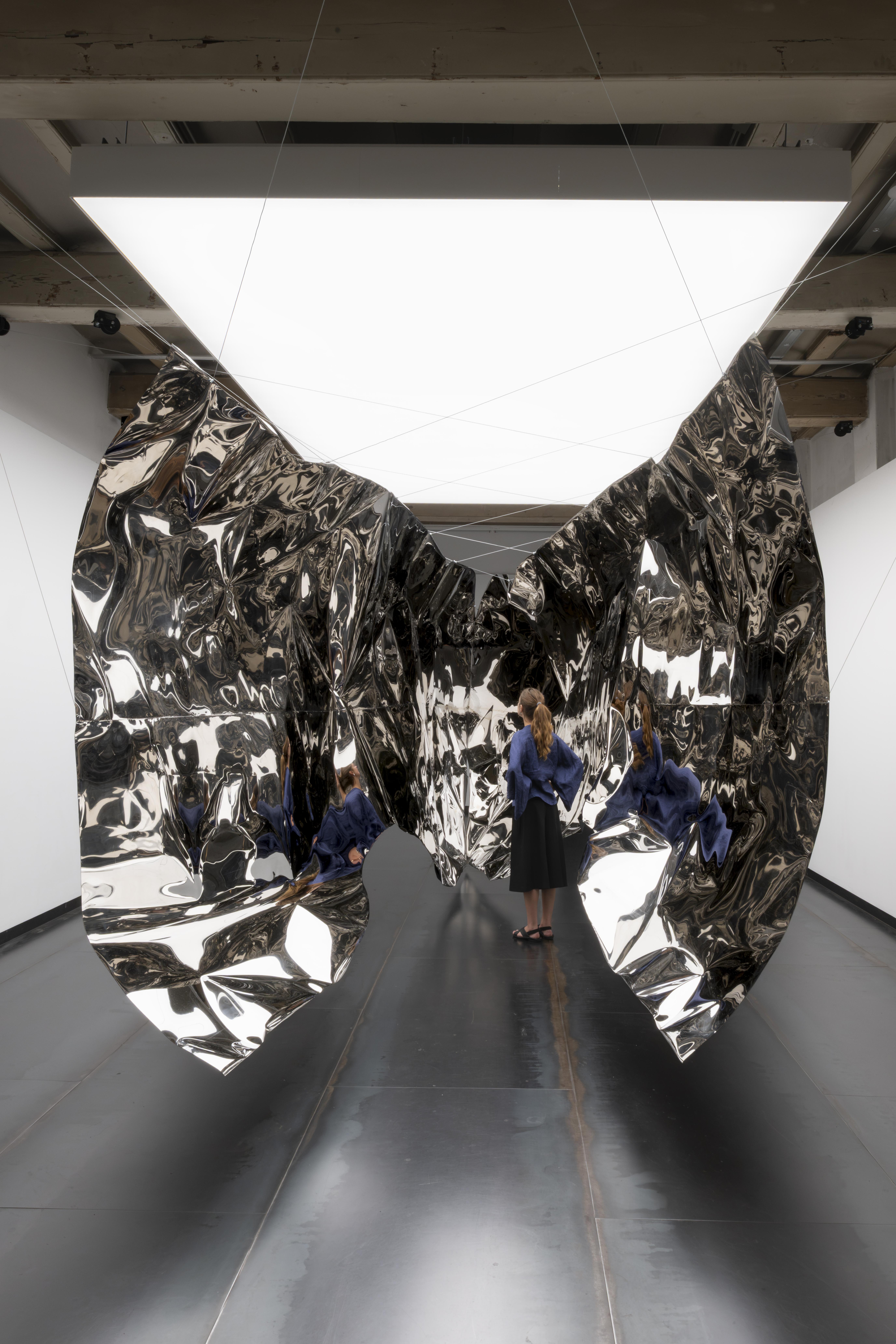
Exhibition visit, Galeria Senda, 2026
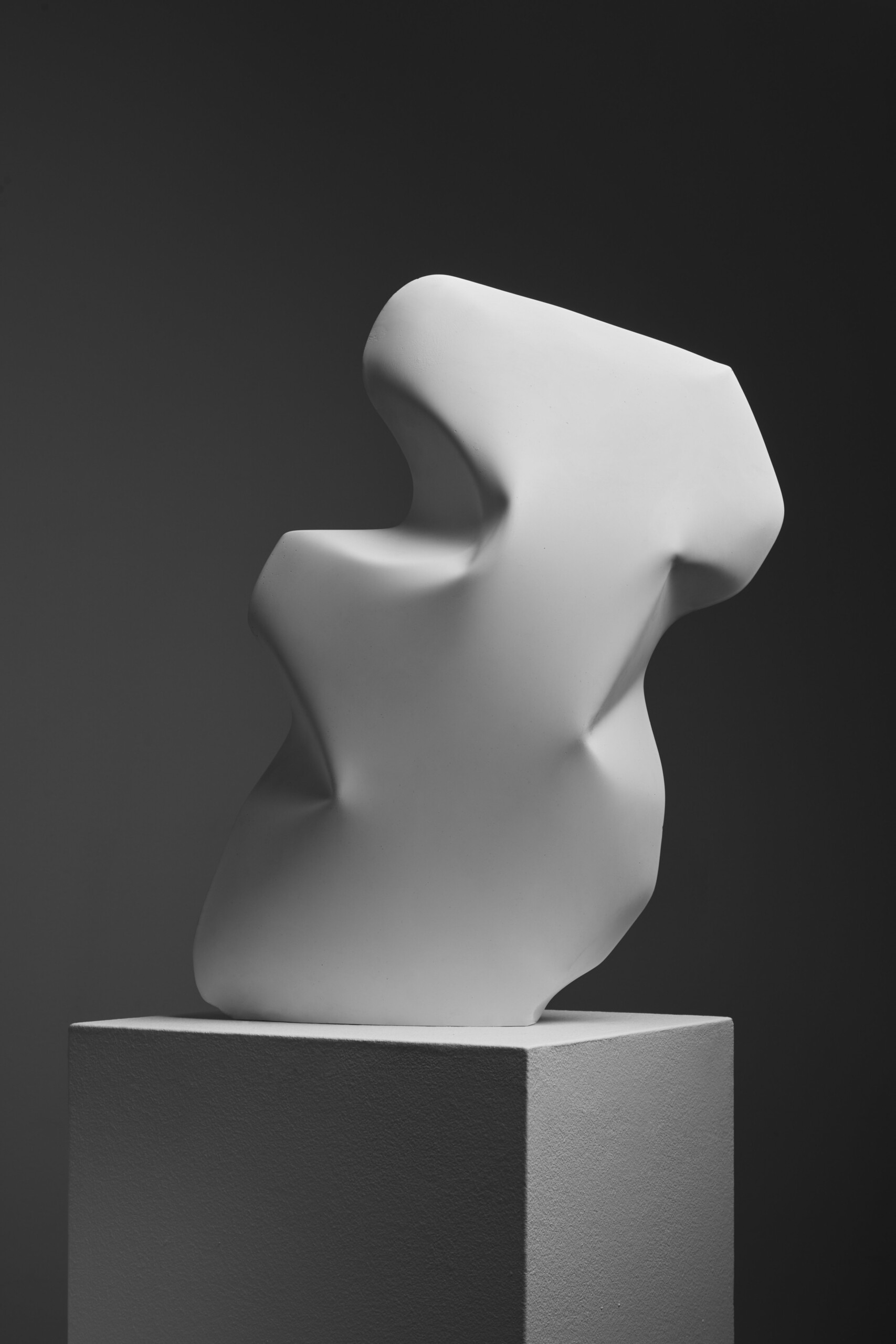
YESO_01, 54 Xx 41 x 18 cm, plaster
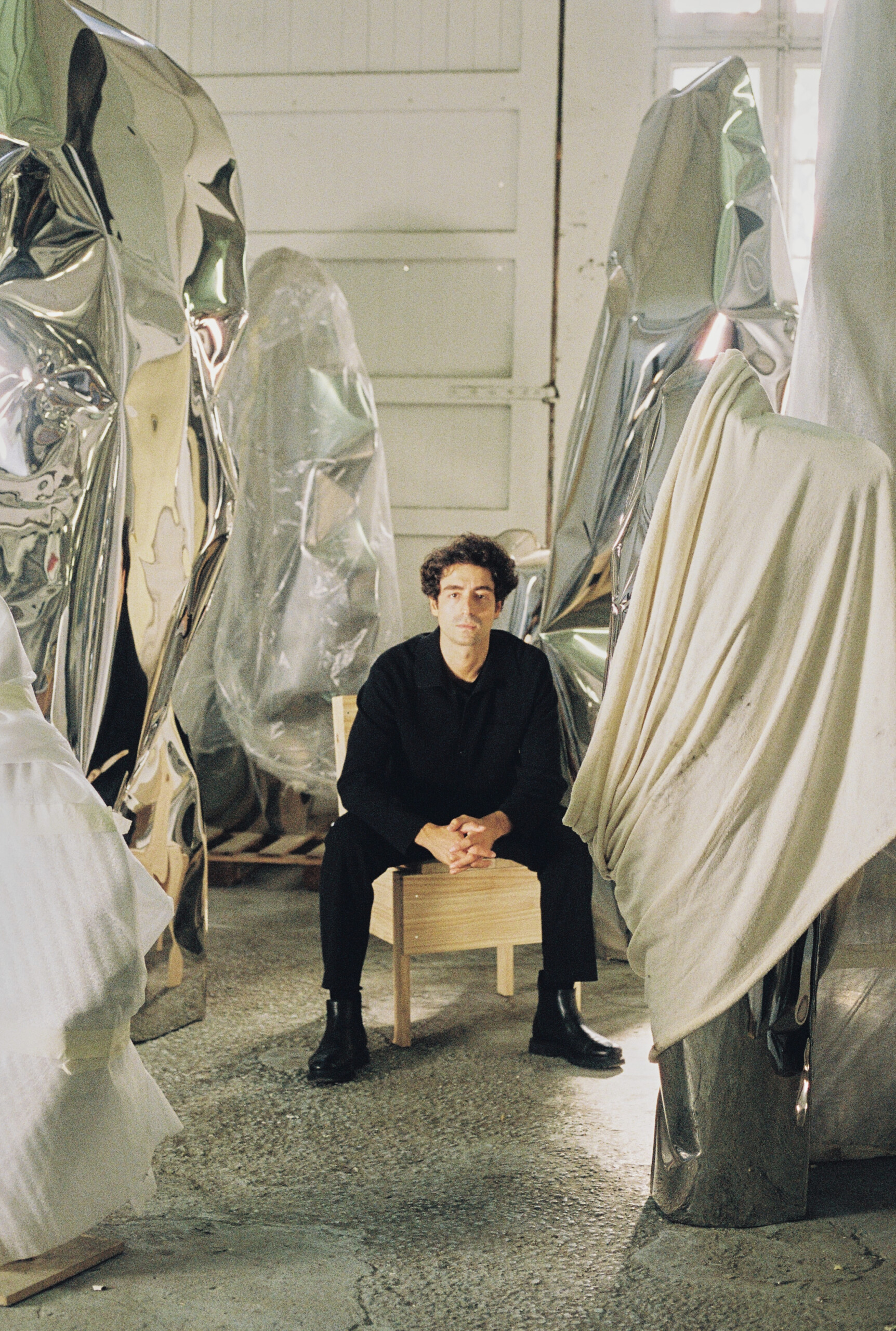
Artist’s studio. Credits: Max Vallès
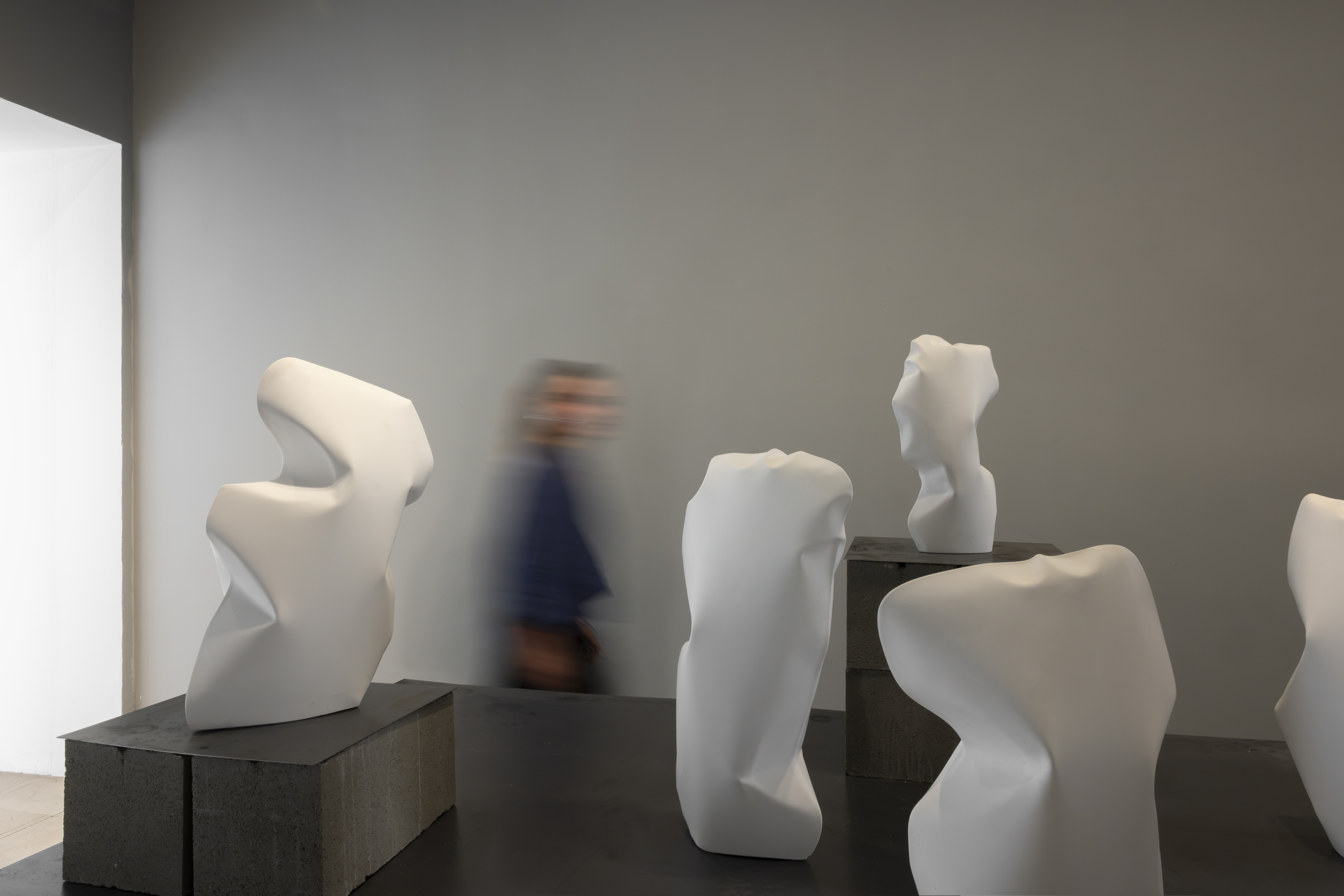
Exhibition visit, Galeria Senda, 2026
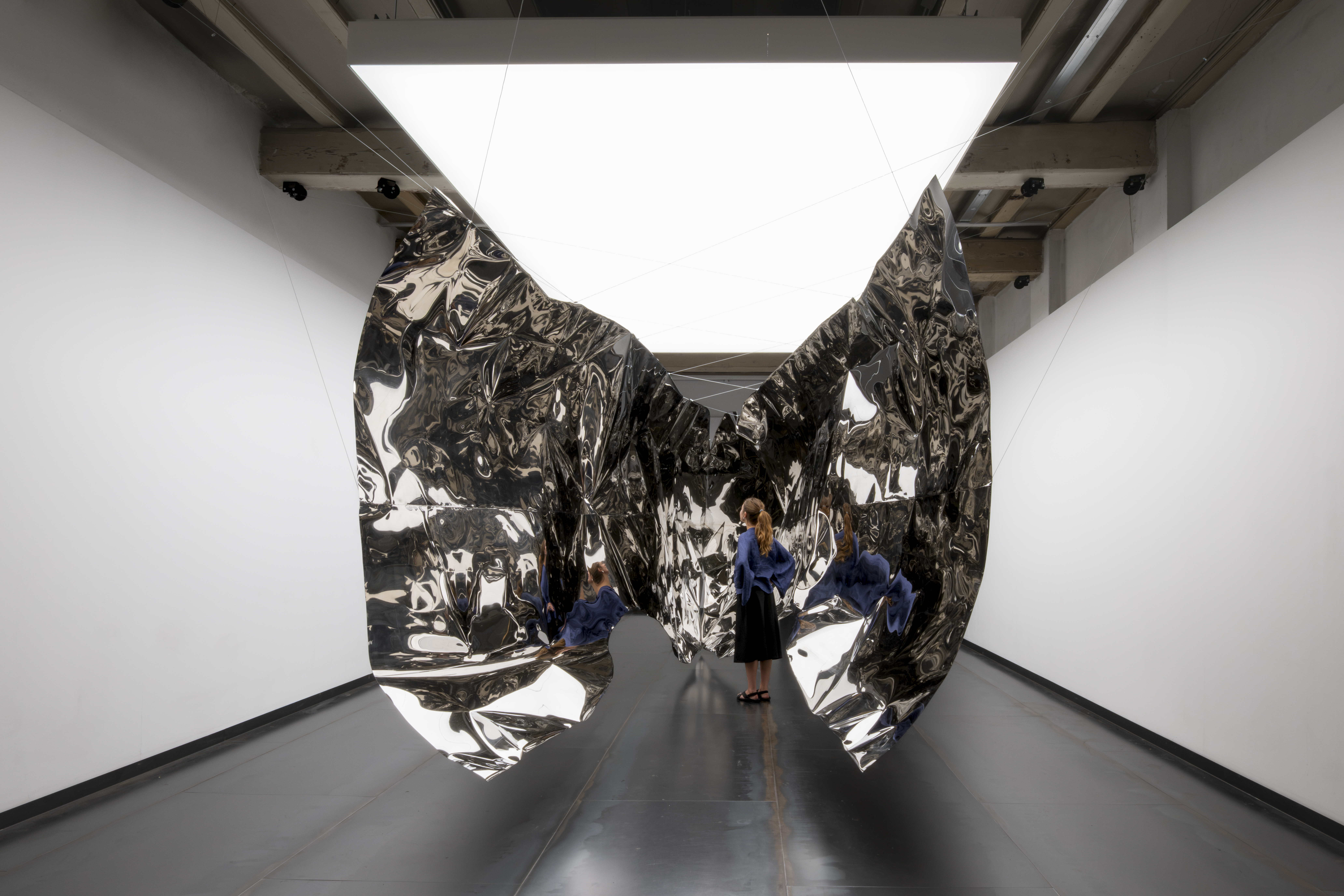
Exhibition visit, Galeria Senda, 2026
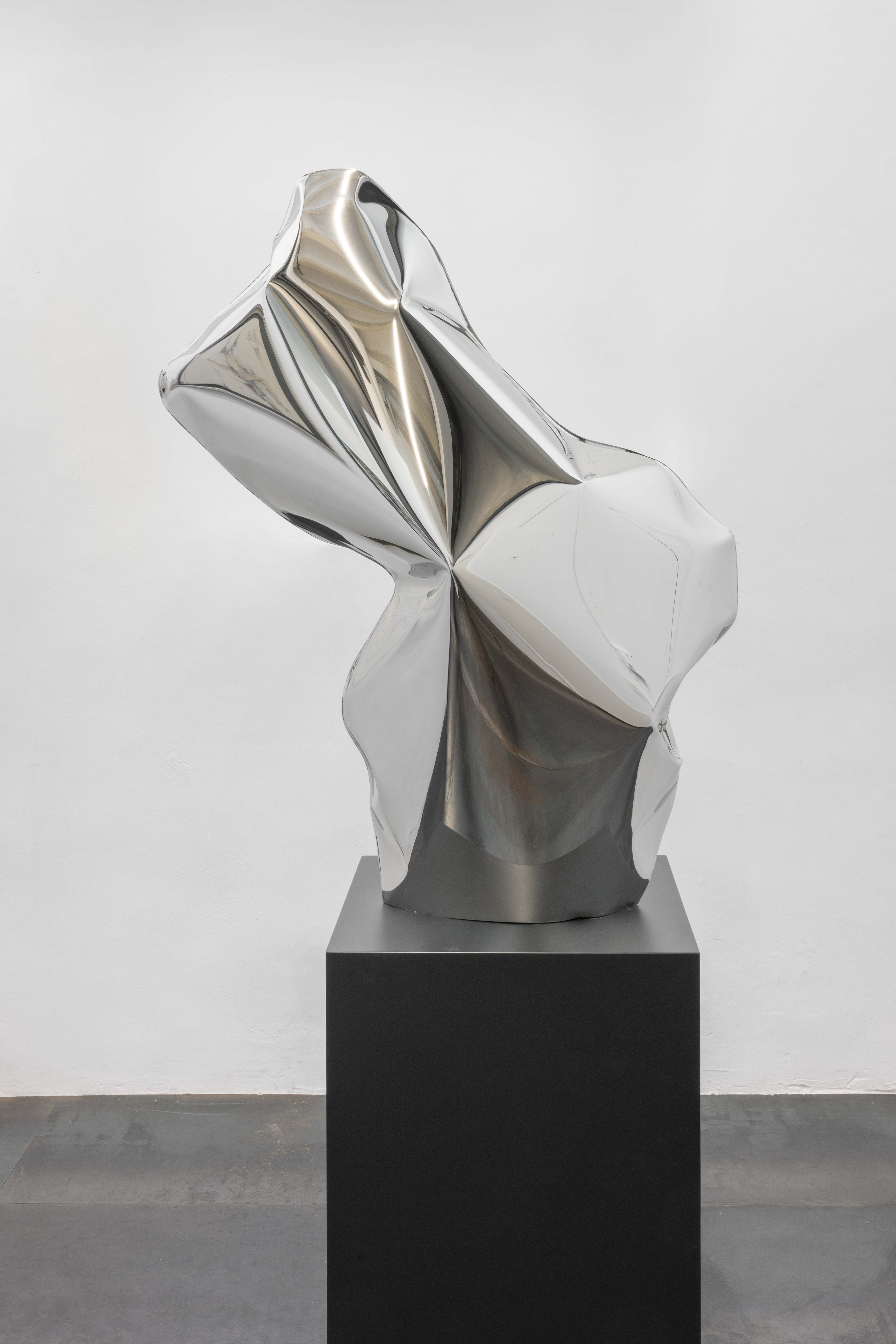
Estela_26, 110 x 85 x 44 cm, stainless steel
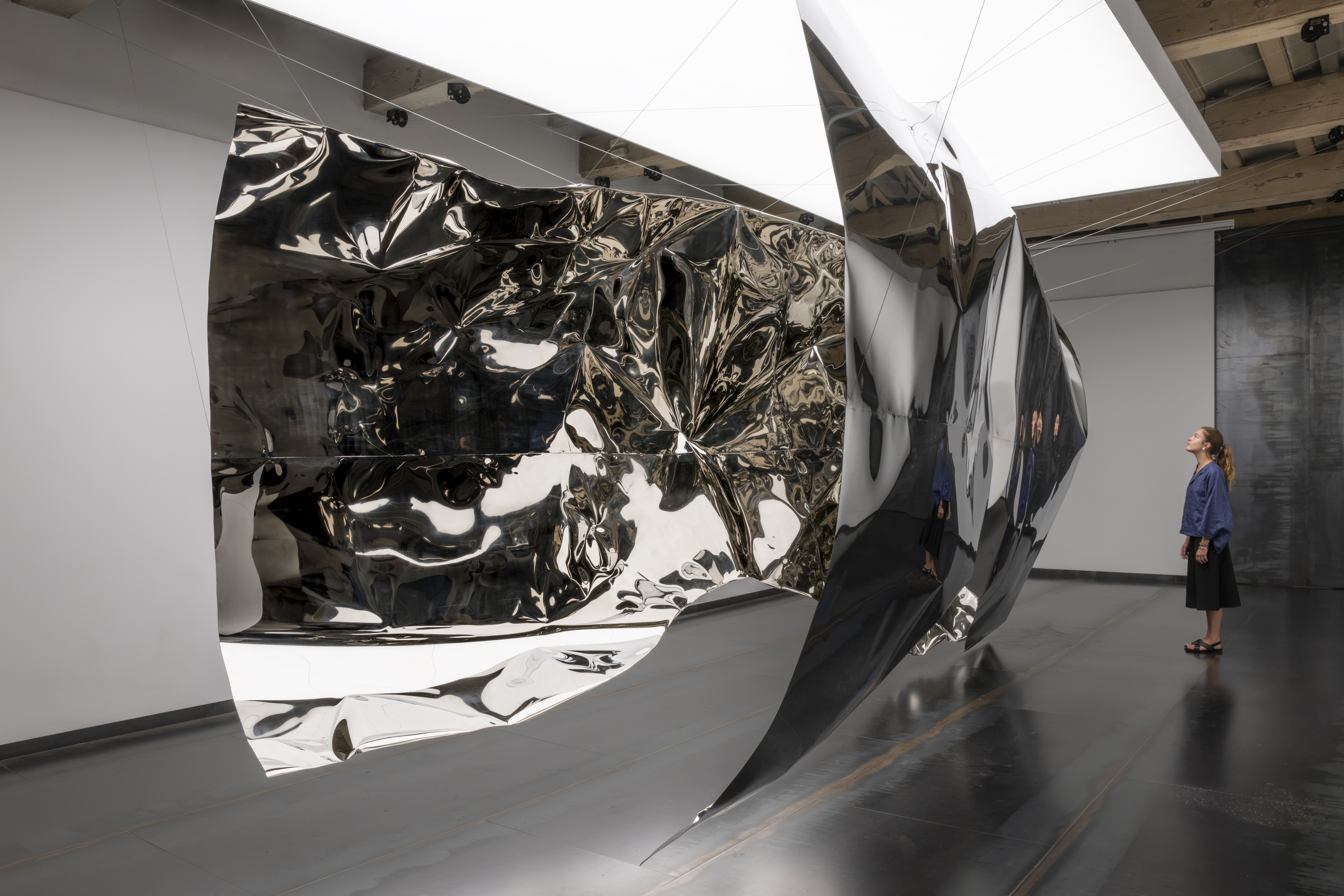
Exhibition visit, Galeria Senda, 2026
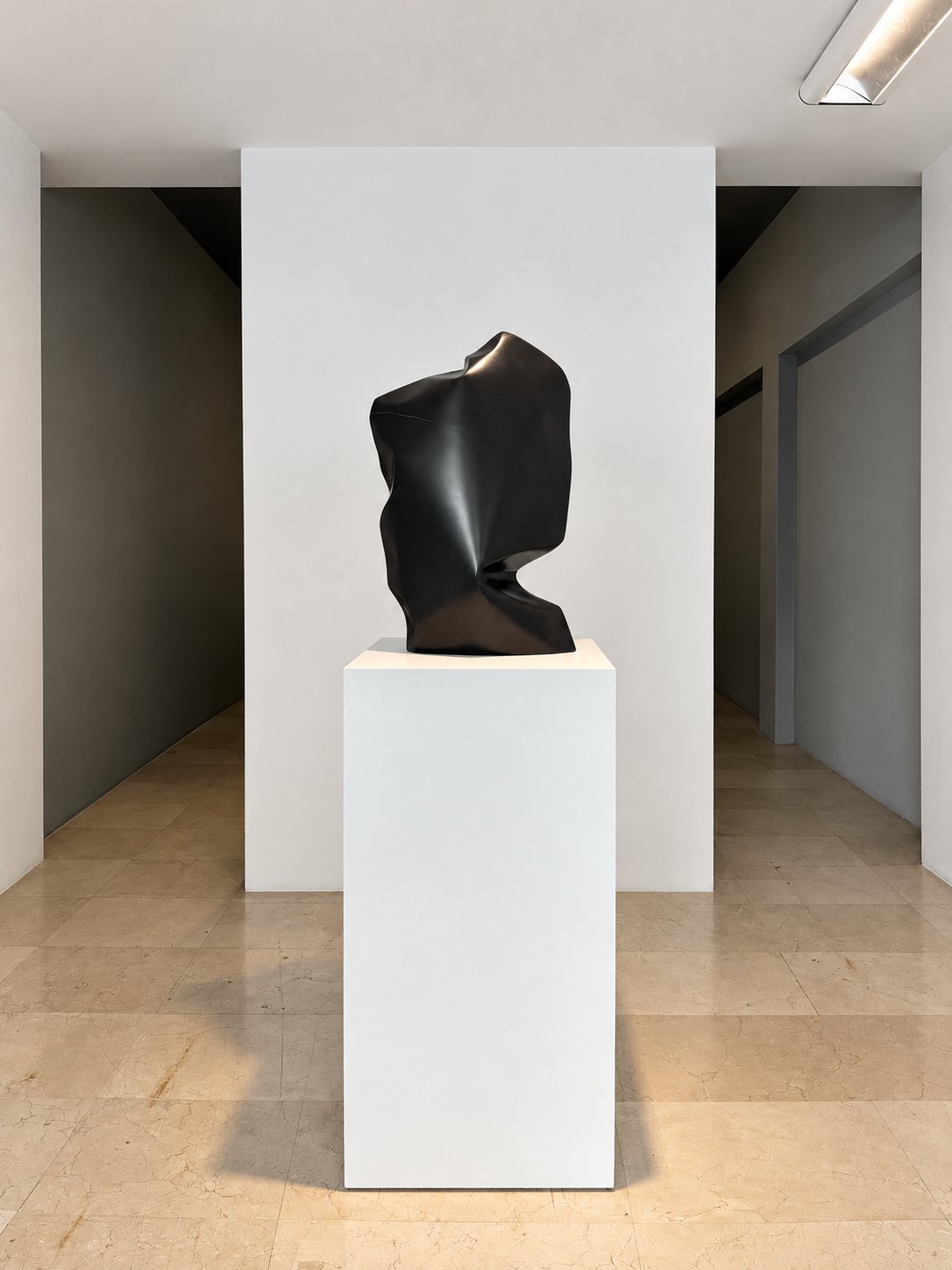
Exhibition visit, Galeria Senda, 2026