




































- No products in the cart.
Share:
The recent awarding of the 2026 Princess of Asturias Award for the Arts to Patti Smith—one of the most prestigious cultural distinctions in the Spanish-speaking world—offers an opportunity to celebrate the career of one of the most influential figures in contemporary culture. Singer, poet, writer, and intergenerational icon, Smith has developed a body of work that transcends the boundaries of music, establishing her as a central voice in shaping the artistic sensibility of the last several decades.
Widely regarded as one of the precursors of punk and a defining force in the renewal of musical language during the 1970s, Patti Smith redefined the role of language within popular music, introducing into song a poetic, political, and performative intensity previously uncommon in the realm of rock. Her emergence represented not only a sonic transformation, but also an aesthetic and cultural one, projecting an image of the artist as radically free—an image that continues to resonate across generations of musicians, writers, and visual creators.
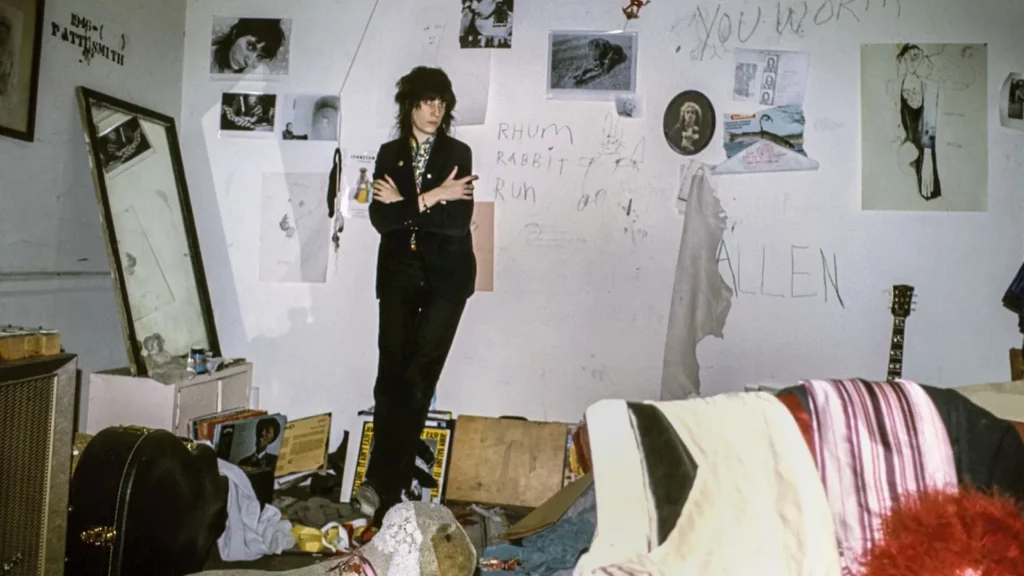
Yet to reduce her legacy to music alone would be insufficient. Smith’s practice has always been shaped by a deeply interdisciplinary vocation, in which writing, image, performance, and thought converge as inseparable parts of a single creative project. Her work exists precisely at this intersection, blurring the boundaries between poetry and song, autobiography and myth-making, document and performative gesture.
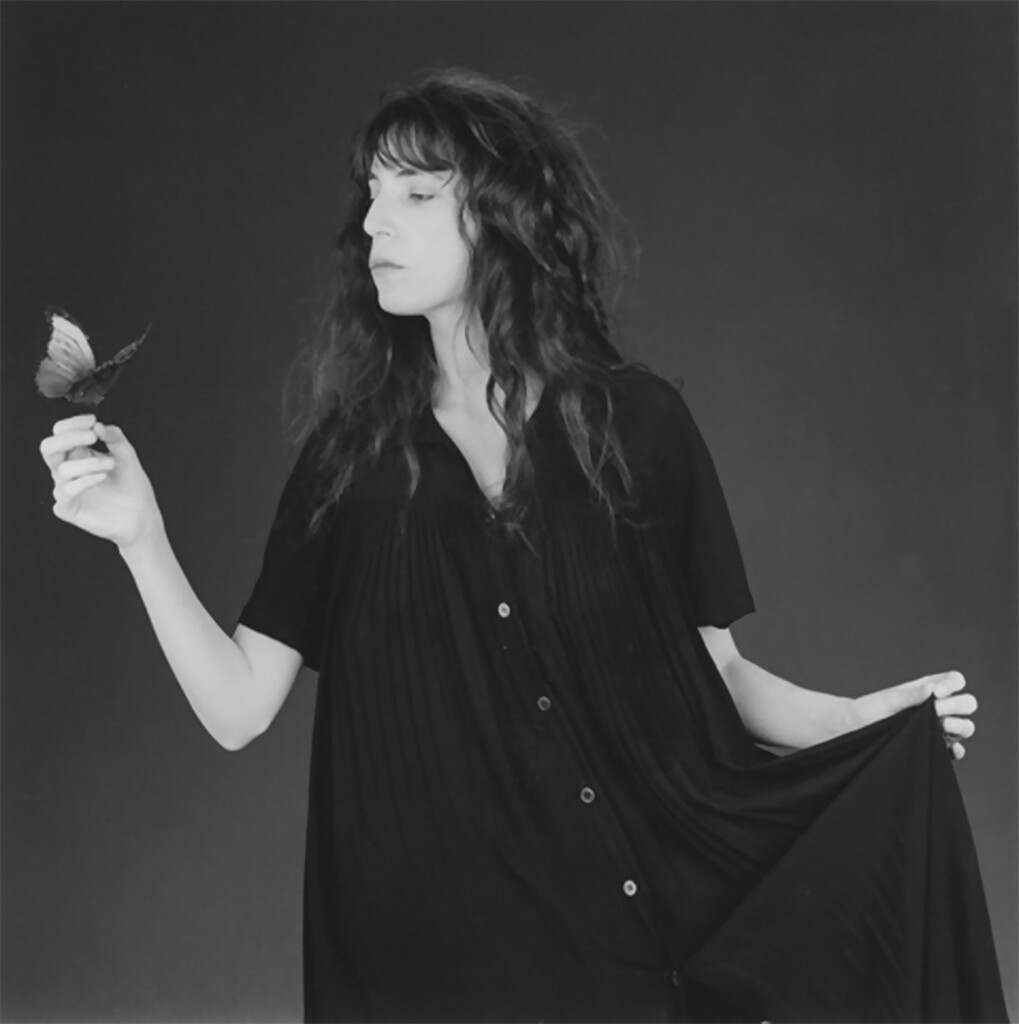
Within this framework, her relationship with Robert Mapplethorpe—immortalized by Smith herself in Just Kids—constitutes one of the most emblematic episodes of a career defined by the intersection of life and creation. More than a biographical anecdote, that bond embodies a foundational moment within the New York counterculture of the late 1960s: a creative alliance grounded in mutual admiration, artistic experimentation, and the shared construction of new forms of sensibility.
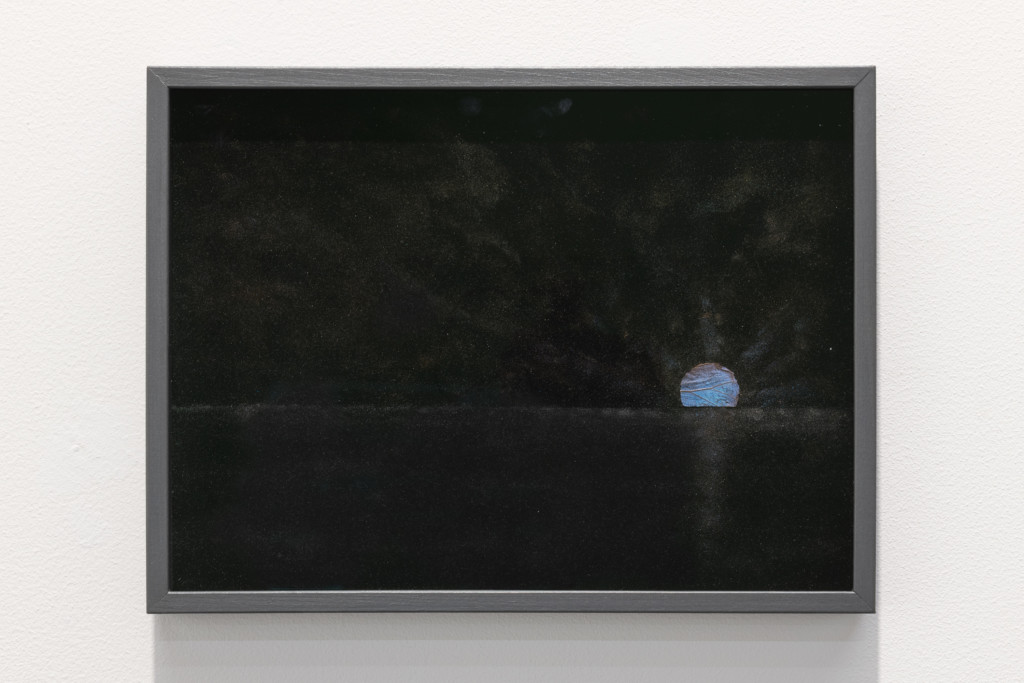
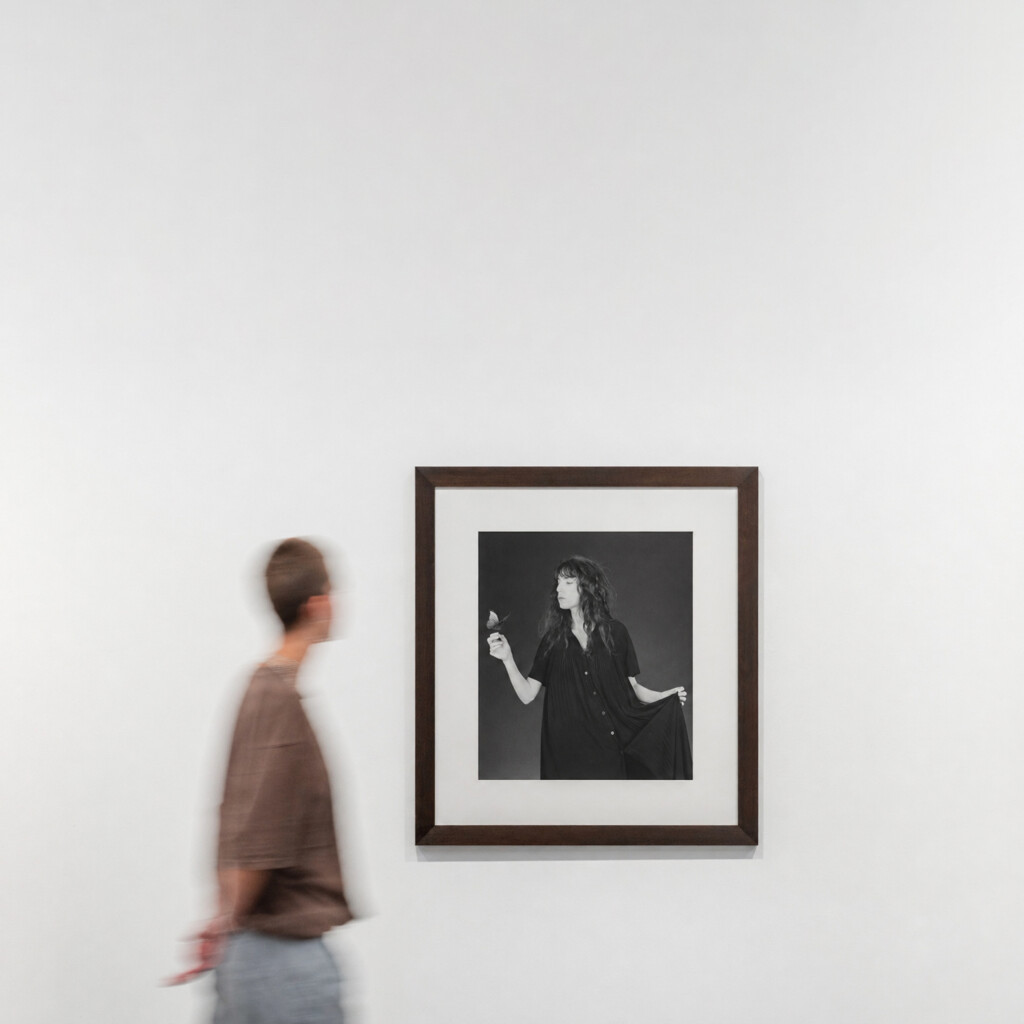
One of the most remembered episodes of that relationship took place during one of their final photographic sessions together, when Mapplethorpe handed Smith a blue morpho butterfly to incorporate into the portrait. Smith would later recall the gesture as the introduction of a “symbol of immortality,” an image that now resonates as an eloquent metaphor for her own legacy: that of an artist whose influence continues to expand far beyond her own time.
To celebrate Patti Smith today is to recognize not only one of the most singular voices in contemporary music, but a total artist whose work has profoundly transformed the relationship between art, poetry, music, and identity in the visual and sonic culture of the last half century.